ALL SAINTS SUNDAY
Prayer of the Day: Almighty God, you have knit your people together in one communion in the mystical body of your Son, Jesus Christ our Lord. Grant us grace to follow your blessed saints in lives of faith and commitment, and to know the inexpressible joys you have prepared for those who love you, through Jesus Christ, our Savior and Lord, who lives and reigns with you and the Holy Spirit, one God, now and forever.
“Beloved, we are God’s children now; what we will be has not yet been revealed. What we do know is this: when he is revealed, we will be like him, for we will see him as he is.” I John 3:2.
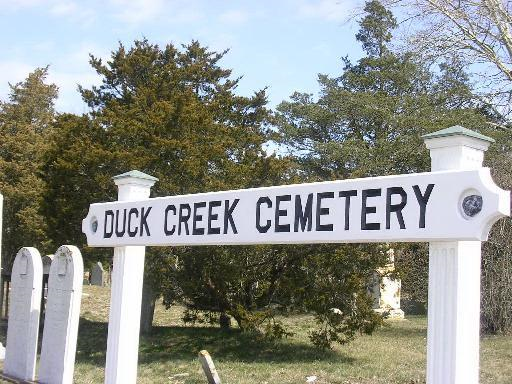
Duck Creek Cemetery is a historic cemetery located in my now home town of Wellfleet, Massachusetts. It is situated at the intersection of Route 6 and Cahoon Hollow Road-just a long block from my street. The cemetery has been in use since the early 1700s and is the final resting place of many of Wellfleet’s early settlers, some of whom were Revolutionary War veterans. All of the stones and monuments are weathered and worn, some so thoroughly that the inscriptions have been altogether erased. Those remaining are, for the most part, terse. They give the names, dates of birth and death of those resting beneath them. Often they display a favorite bible verse or line of poetry. A few provide glimpse of the deceased’s story. For example, the stone pictured below of Elisha Higgins indicates that he died in a ship wreck. He was the son of Elisha and Rebecca Higgins. Dated 1830, the stone bears the following verse:
“My body in the wreck was found
And now lies buried beneath the ground.
From the raging sea my spirit did fly
To reign with God beyond the sky.”

The rest of his family is also buried in the vicinity.
Recently there has been some backlash against cemeteries. The cost of traditional burials has increased substantially over the years, leading many of us to seek less expensive alternatives, such as cremation. Some folks object to the inordinate waste of space for the dead when there is a critical shortage of affordable housing for the living.[1] There also seems to be a movement away from traditional funeral and burial rites. Many of my friends and family members are opting for scattering of their ashes over the ocean or at some place that is meaningful to them. Others prefer “green burials” in which bodies are returned to the earth without embalming to be naturally re-absorbed into the biosphere.
I do not wish to disparage anyone’s decisions in these matters. But my own preference is for burial on ground that has been sanctified for that purpose. I tend to agree that the cost of embalming, caskets and burial vaults is excessive and wasteful. For that reason, I plan to be cremated and to have my remains interred at the columbarium behind my church. There are two reasons for my decision: the communion of saints and the resurrection of the body. As to the first, we need a reminder that we present disciples of Jesus are but a tiny part of a great parade of saints through time. We need to be reminded that the walk of faith we take from cradle to grave has been well traveled by many millions who have lived faithfully and died well in the faith we confess. The graveyards surrounding churches that once commonly served as a sign, symbol and reminder of that reality have all but disappeared. Our columbarium and those of other churches built over the last decade seek, in part, to reclaim that symbolism.
Burial should also be a testimony to our faith in the resurrection of the body. The grave is not, as is often said in common parlance, “the final resting place.” To be sure, the human body finally does decompose and return to the earth from which it was made. To be sure, there comes a time when even the headstone forgets the name inscribed upon it. But our faith insists that there is One who does not forget. Resurrection faith insists that God is bringing the physical universe into something totally and radically new. Moreover, we believe that it is the will and purpose of God that we share in this “new heaven and new earth.” For that, we will need a body. Think of it: we experience everything through the bodily senses of sight, hearing, touch, taste and smell. Our bodies are what differentiate us from one another and make us recognizable. For that reason, a body should be treated with reverence and respect in death. It should be planted in or on the earth with the same tenderness as one plants a seed, because that is, in effect, what we are doing in burial.
Cemeteries remind us that we are part of a larger narrative stretching back generations to the prophets and apostles of Holy Scripture. They remind us of who we are: “Beloved, we are God’s children now.” But they also direct our gaze forward. “Very truly, I tell you,” says Jesus, “unless a grain of wheat falls into the earth and dies, it remains just a single grain; but if it dies, it bears much fruit.” John 12:24. As Paul points out, “What you sow does not come to life unless it dies. And as for what you sow, you do not sow the body that is to be, but a bare seed, perhaps of wheat or of some other grain. But God gives it a body as he has chosen, and to each kind of seed its own body.” I Corinthians 15:36-38. The cemetery testifies to God’s assurance that, what in our little lives we can but begin, God will complete and weave into the fabric of a new creation. It is not a final resting place. It is ground in which we plant seeds of hope.
Here is a poem by Don Thompson giving voice to the evocative power of a cemetery.
Oak Grove Cemetery
Just enough rain an hour ago
to give the wispy dry grass some hope,
turning it green instantly.
This place has been abandoned,
the old faith overgrown, confused
by brambles,
and in these hard times,
its upkeep cut from the budget.
But we walk, soaked to the knees,
making our slow pilgrimage
among gravestones, speaking
blurred names back into the world.
Source: The Cortland Review, (# 66,2016) c. 2016 by Don Thompson. Don Thompson (b. 1942) is an American poet born in Bakersfield, California. He has lived in the southern San Joaquin Valley for most of his life. Thompson has published six books of poetry and was the recipient of the Sunken Garden Poetry Prize in 2008 for his book, Back Roads. He retired recently from a teaching position at a nearby prison. He and his wife, Chris, currently live on her family’s cotton farm. You can learn more about Don Thompson and sample more of his poetry at the Poetry Foundation website.
[1] It seems to me that the same argument could be made against public parks, flower gardens, playgrounds and green spaces. I am all for affordable housing, but I don’t believe it has to come at the expense of public space dedicated to enjoyment of nature, play or, for that matter, honoring the memory of our departed loved ones.
 Peter's Outer Cape Portico
1 thought on “In Defense of Cemeteries”