
FIRST SUNDAY IN LENT
Prayer of the Day: Holy God, heavenly Father, in the waters of the flood you saved the chosen, and in the wilderness of temptation you protected your Son from sin. Renew us in the gift of baptism. May your holy angels be with us, that the wicked foe may have no power over us, through Jesus Christ, our Savior and Lord, who lives and reigns with you and the Holy Spirit, one God, now and forever.
“And the Spirit immediately drove him out into the wilderness. He was in the wilderness for forty days, tempted by Satan; and he was with the wild beasts; and the angels waited on him.” Mark 1:12-13.
Mark’s account of Jesus’ temptations is brief, terse and short on detail. Still wet from the baptismal waters of the Jorden, Jesus is driven into the wilderness. To what end? Mark doesn’t tell us. We know only that he was “among the wild beasts,” “tempted by Satan” and “ministered” to by angels. But want was the Spirit’s purpose? What was the nature of the temptations Jesus faced? And what about the wild beasts-the one detail Mark gives us that is not found in the parallel accounts of Matthew and Luke? It is tempting to fill in these lacunae with information from the other gospels. But, this being Lent, we ought to be on the lookout for temptations of all kinds-including laziness of intellect. I believe the better course is to sit with Mark’s gospel as the Evangelist gives it to us and apply our imagination to the questions it raises and pray for the guidance of the Holy Spirit.
Temptation is a subtle creature. Seldom am I confronted with stark choices between good and evil. The most difficult decisions I have had to make in life are between one good and another. The demands and responsibilities of my job pull me in one direction while the needs and requirements of my family draw me in another. I have always considered the financial support of my church a priority-but so was saving money to provide a college education for my children. The most bitter church dispute I have ever witnessed grew out of a substantial undesignated bequest to the congregation. Some felt that the money should be used to make the century old sanctuary accessible for persons with mobility issues. Others felt that it should be used to open a drop in center for homeless teens. Those favoring the drop in center accused those supporting renovation of being selfishly fixated on the building instead of focused on mission. Those wishing to renovate the sanctuary insisted that the drop in supporters were excluding the most vulnerable members of the church from worship by failing to take the opportunity to make it fully accessible. Both proposed uses of the bequest were reasonable, compassionate and well intended. They were both good. But discernment requires ascertaining the highest good. Perhaps temptation can actually help us here. Rather than simply resisting temptation, maybe we need to listen carefully to the numerous desires calling us and reflect on how each of them might help or hinder us in loving God and our neighbor.
Saint Augustine of Hippo, one of the church’s greatest theologians, teaches us that what we call “sin” is not a matter of breaking rules. It is basically a matter of disordered desires. We were created to love God with all the heart, with all the mind and with all the strength. Thus, we are most genuinely human when God is the primary focus of our love and devotion. That does not mean that we are to love our families, friends or homes any less. To the contrary, love for God liberates and enables us to love them rightly and well. Problems arise when we begin to love things, people and God in the wrong order. The greatest temptations we face entice us to love people, pursue noble goals and strive for honorable positions with zeal, devotion and dedication to which only God is entitled.
There is nothing wrong with loving one’s spouse and children-unless that love becomes possessive, controlling and smothering, which is likely to happen when one looks to one’s family for the deepest love that only God can provide. There is nothing wrong with loving one’s country. But when loyalty to one’s country is elevated over faithfulness to God and love for our neighbor-wherever in the world that neighbor might be- patriotism degenerates into idolatrous nationalism. There is nothing wrong with desiring to serve Christ as his faithful minister, unless one’s ministry becomes a means for satisfying one’s own needs for recognition, importance and self worth. When love is disordered, it can become toxic, hurtful and destructive. The wilderness is a good place to go in order to sort out one’s many “loves.” It was the place to which Jesus went to figure out what it might mean to be God’s beloved and how he was to live as God’s Son in the world.
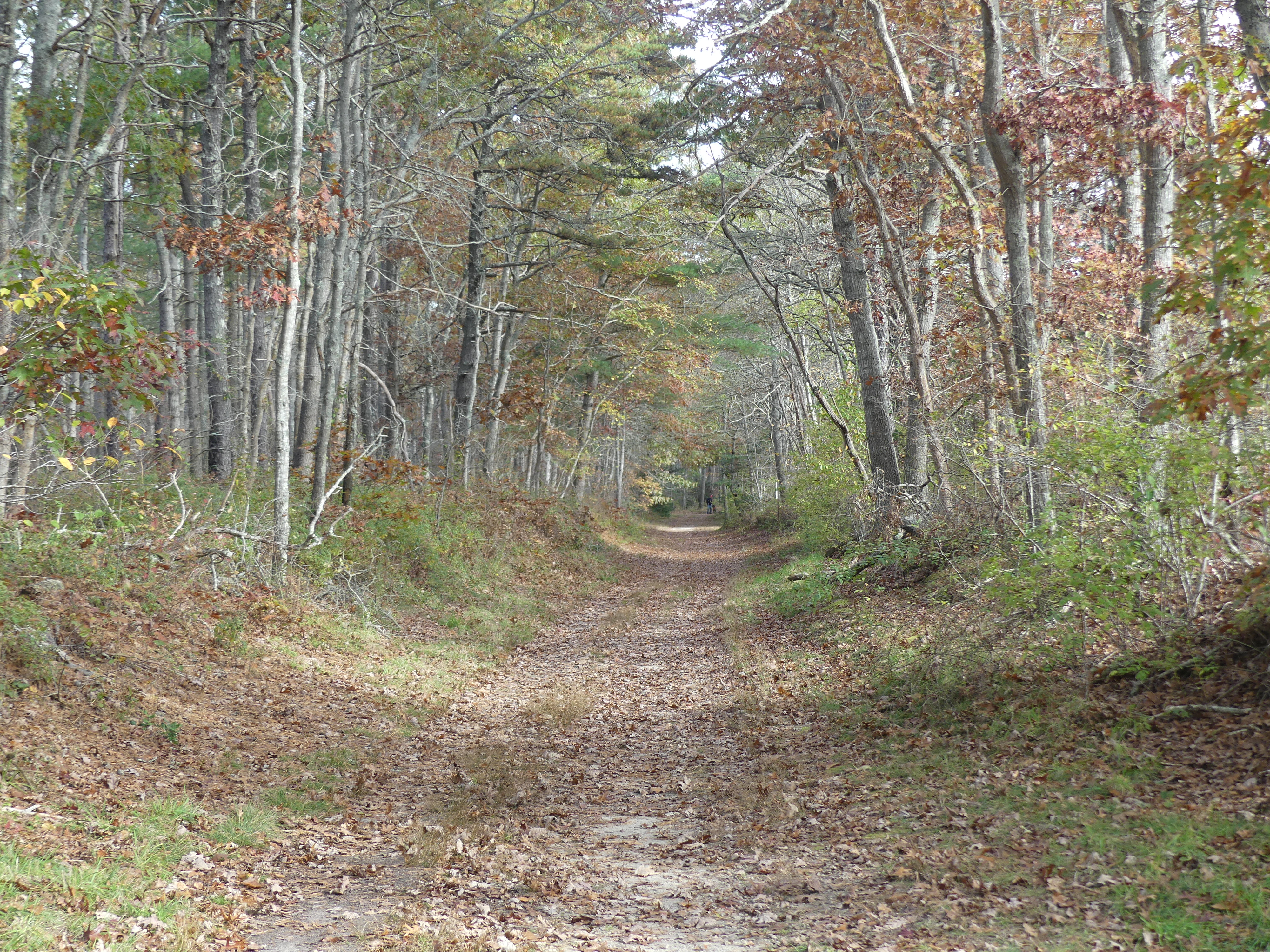
I get that. I spend a lot of time these days in the wilderness. As with walking on the beach, an hour in the woods is worth a month of therapy. It is the place I go when I need to re-order my loves. In the forest, surrounded by trees that sprouted before I was born and will likely be growing still when I am gone, it is hard to escape the reality that I am dust and to dust I will return. Coming upon centuries old stone fences in the midst of the woods that once demarcated the boundaries of someone’s farm, I am reminded how fleeting are the works of human beings on the land and the land’s remarkable ability to heal itself and erase the scars we inflict upon it. Those same stones hauled from some distance to build makeshift walls were formed before the dawn of humanity and sometimes bear the marks made by indigenous peoples sharpening their tools. If they could speak, I can only imagine the stories they could tell. I do not know how much Jesus knew or did not know about the particulars of his messianic destiny. But I am sure he came away from the wilderness knowing that, after pouring out his brief life in love for God’s world, he would be committing it back into the hands of the One from whom it came.
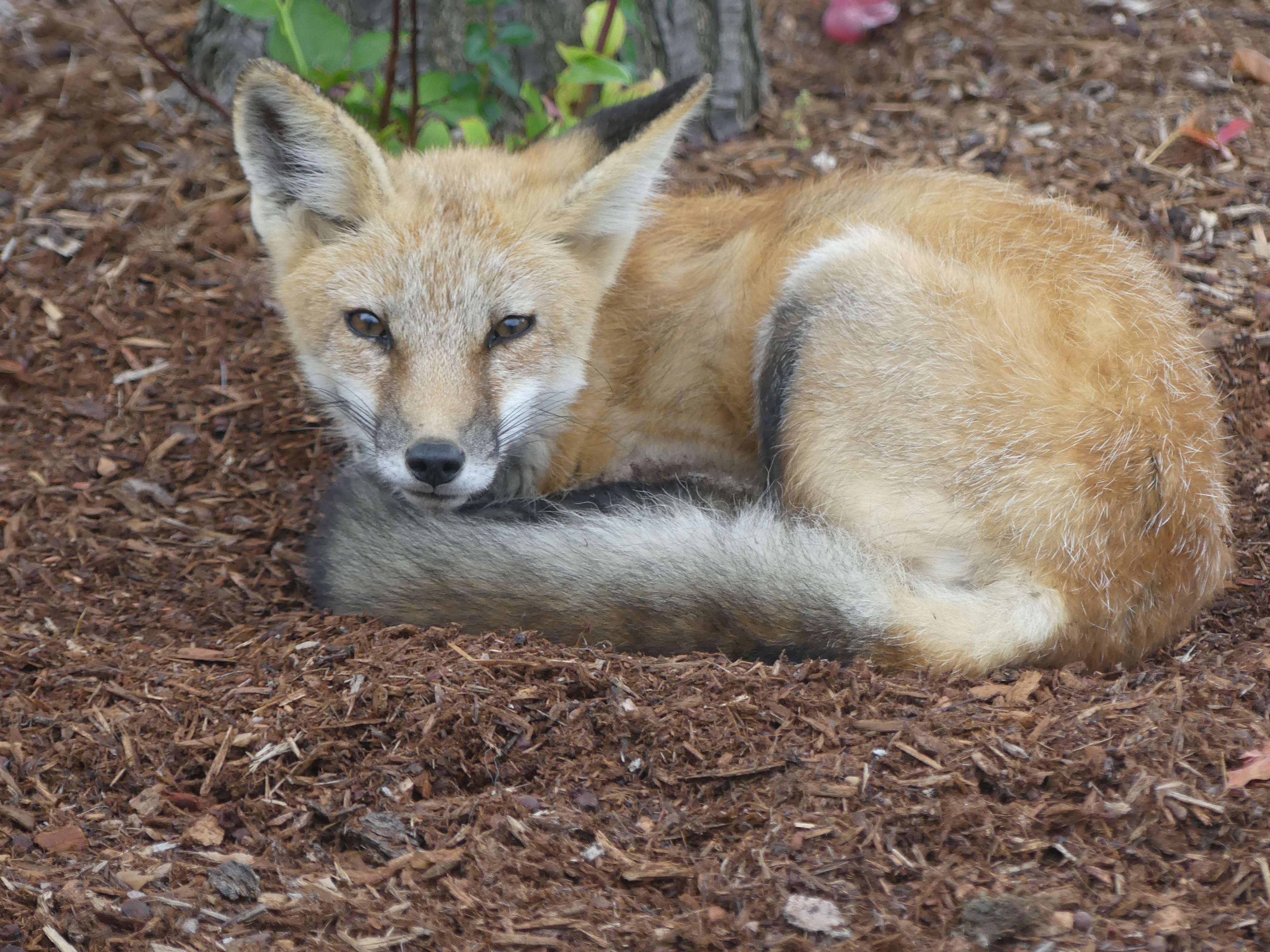
And then there are the beasts. I don’t know which animals Jesus encountered. The woods in which I walk these days are not home to any animals dangerous to human beings. I meet only coyotes, racoons, foxes and deer-the usual suspects. The only beast that strikes terror into my heart is the deer tick, bearer of lyme disease and other nasty ailments. Yet even dangerous animals, deer tick or grizzly, bear us no malice. They seek only to live and take only what they need to that end. They do not strip forests, pollute rivers or foul the air, wasting the earth in an insatiable lust for more. They do not seek to dominate anyone or anything outside of their territory. I can see in their balanced existence within the biosphere echoes of Jesus’ sermon about the birds of the air and the lilies of the field. The wilderness is a parable of childlike trust in the Creator.
Every year as the season of Lent approaches, I can count on someone asking me what I plan to “give up” for Lent. In recent years, it has become fashionable to “take up” rather than give up something for Lent. That might be a spiritual discipline like reading a psalm per day, or spending an hour volunteering at a food pantry or forming a healthy habit such as a daily walk. I have nothing but praise for anyone taking up any of these things. There is certainly something to be said for the discipline of abstinence as well. Nevertheless, I have always been leery of both giving up and taking up things for Lent. To me it smacks too much of what Luther would call “works of the law.” They are promises we make to ourselves that bind rather than liberate. Like New Year’s resolutions, these Lenten commitments too often set us up for failure and guilt. Lent is not about being “guilted” into becoming a better person. It is about making space in your life for the Holy Spirit to form in you the mind of Christ.

With all of this in mind, I would like to suggest that, for this Lenten season, you make it a point to spend some time each week in the wilderness. Of course, I know that I am privileged in that respect, living as I do on the edge of the forest in the Cape Cod National Sea Shore. But even when I lived in the urban landscape of northern New Jersey there was wilderness to be found. There were wildlife sanctuaries, parks and wooded “green spaces” where wild things were given free reign. Spend an hour under an ancient tree, listen to the chatter of sparrows and the raucous screams of crows, run your hand over the soft, green moss and enjoy the scent of decayed leaves. Let these ministering angels school you in what is true, beautiful and good. No doubt the devil will attempt to distract you, reminding you of everything else that you should be doing and what you might be missing by disconnecting from your computer or cell phone. Do not give in to the temptation of rushing through your time in the wilderness. Be still, listen and allow what matters, what is genuinely important and the One who alone is worthy of your deepest devotion to come bubbling up to the surface.
Here is a poem by Wendell Berry about finding an island of wilderness in the shadow of urban wasteland. His reflections might very well have been those of Jesus during his time in the wilderness. I believe our gospel lesson invites us to find Jesus in the wilderness where our loves will be re-ordered.
The Wild
In the empty lot-a place
not natural, but wild-among
the trash of human absence,
the slough and shamble
of city’s seasons, a few
old locusts bloom.
A few woods birds
fly and sing
in the new foliage
-warblers and tanagers, birds
wild as leaves; in a million
each one would be rare,
new to the eyes. A man
couldn’t make a habit
of such color,
such flight and singing.
But they’re the habit of this
wasted place. In them
the ground is wise. They are
its remembrance of what is.
Source: The Peace of Wild Things, (c. 1964 by Wendell Berry; pub. by Penguin Random House 2018). Wendell Berry (b. 1934) is a poet, novelist, farmer and environmental activist. He is an elected member of the Fellowship of Southern Writers, a recipient of The National Humanities Medal and the Jefferson Lecturer for 2012. He is also a 2013 Fellow of The American Academy of Arts and Sciences. Berry was named the recipient of the 2013 Richard C. Holbrooke Distinguished Achievement Award. On January 28, 2015, he became the first living writer to be inducted into the Kentucky Writers Hall of Fame. You can read more about Wendell Berry and sample more of his works at the Poetry Foundation website.
 Peter's Outer Cape Portico