Monthly Archives: May 2024

When Work is a Waste of Time

SECOND SUNDAY AFTER PENTECOST

Deuteronomy 5:12-15

Psalm 81:1-10

2 Corinthians 4:5-12

Mark 2:23—3:6

Prayer of the Day: Almighty and ever-living God, throughout time you free the oppressed, heal the sick, and make whole all that you have made. Look with compassion on the world wounded by sin, and by your power restore us to wholeness of life, through Jesus Christ, our Savior and Lord.

“The sabbath was made for humankind, and not humankind for the sabbath…” Mark 2:27.

The same is true for the other nine commandments. They were made for the benefit of humankind. The Commandments are our servants, not our masters. In our gospel lesson, Jesus’ opponents stand the law on its head by making it the master of humankind rather than its servant. There is plenty of religion around taking that approach. There is plenty of religion, much of it purporting to be Christian, that preaches a god obsessed with his rules. This is the god who allows school shootings to punish the Supreme Court for its decisions on the legality of school sponsored prayer in our public education. This is the god who sent AIDS to punish gay men simply for being who that same god supposedly created them. This is a god incapable of forgiveness, who must have a blood sacrifice to punish every infraction of his rules. This is the god who is obsessed with each particular of a teenager’s sexual conduct but doesn’t give a flying fruitcake when legislators attempt to deprive millions of people of health care insurance in the name of balancing the budget. This spiteful, narcissistic, egotistical and mean-spirited little god does not exist. He is only the imaginary product of spiteful, narcissistic, egotistical mean-spirited little people. This pathetic little deity is not the God who gave us the sabbath.  

Note well that the sabbath is not about going to church. It is all about rest, rejuvenation and re-creation. It is more a labor law than a religious ordinance. Jesus does not abrogate the sabbath or suggest that it is not important. To the contrary, the sabbath is the oldest commandment in the Bible, being grounded in the Genesis account of creation. There we read that after six days of creative work, God rested and sanctified the seventh day as one of rest. Being the generous God that God is, God makes provision to share the divine joy of rest with creation. Hence, the sabbath. God is serious about ensuring that we-and all creation-get our rest. Jesus knew that it is hard to rest when your stomach is empty or your hand is crippled and painful. He was therefore affirming the importance of the sabbath by ensuring that his hungry disciples and the fellow with the crippled hand could share fully in the rest it affords.

“Remember,” says Moses to the people of Israel, “that you were a slave in the land of Egypt, and the Lord your God brought you out from there with a mighty hand and an outstretched arm; therefore the Lord your God commanded you to keep the sabbath day.” Deuteronomy 5:15.

Israel had had firsthand experience of life without rest. They were slaves, after all. The Egyptian empire regarded the Hebrews as units of labor. They could be worked to death without consequence. Their numbers could be regulated by genocidal laws mandating infanticide. For four hundred long years they knew nothing but unrewarded toil under ruthless exploitation with no hope for anything better. The God who liberated the people of Israel from that bleak condition was determined not to allow them to sink back into the same kind of existence in the land of promise. To that end, sabbath law mandated rest not merely for the people, but also for their oxen, donkeys and livestock. Deuteronomy 5:14. As observed by the author of the Letter to the Hebrews, the sabbath has an eschatological dimension. “So then,” says the anonymous writer, “a sabbath rest still remains for the people of God; for those who enter God’s rest also cease from their labors as God did from his.” Hebrews 4:9-10. It is God’s desire that all creation enter into God’s rest, a state of justice, reconciliation and peace.

The Israelites are commanded to include also their male and female slaves in their sabbath observance. Clearly, slavery existed in Israel with no indication of divine disapproval. While I do not wish to be understood as justifying or rationalizing slavery in any way, shape or form, it is worth noting that the wellbeing God desires for Israel extends to slaves as well as non-Israelite resident aliens. Before being too critical of Israelite culture in the bronze age, we progressive white and ever polite American Christians should reflect on how the working poor in our own land are often holding down multiple jobs without adequate health insurance or any vacation, maternity or sick leave, yet still find it difficult to shelter and feed themselves and their families. There is little if any sabbath rest for them or for our resident aliens living daily with the threat of deportation. American capitalism is in most ways as ruthless a slave driver as any Egyptian overseer. So, let us be mindful of the proverbial glass house before casting stones in the direction of ancient Israel.

We are a people who make a god of work. The highest compliment you can pay a person in our culture is to say “she’s a hard worker,” “he’s a real go-getter,” “that family has a strong work ethic.” Conversely, the worst thing you can say of people is that they are “lazy,” “unproductive,” “slackers.” As I look back on my years of pastoral ministry, I often muse on the habits and practices I developed unconsciously. For example, when a colleague asked how I was doing, my reflexive response was, “busy.” I generally received the same response form such quarries directed to them. Truth be told, I was often not particularly busy. To be sure, there were always things I could be doing. There were always calls to be made, worship planning to be done, meetings for which I needed to prepare. But these matters were seldom urgent, requiring my immediate attention. I had the time, or with a modicum of planning, could have made the time for leisure, rest and recreation. But something deep inside made me ashamed to admit that and I always felt twinges of guilt when, for example, I slipped away from the office to enjoy an ice cream sundae at the nearby Dairy Queen on a sunny afternoon. At times like these, as I sat in the shade with my ice cream, I could never quite silence the voice in my head reminding me of all that I could (and therefore should) be getting done. As the full weight of cultural guilt for wasting a valuable work hour overshadowed me, it never occurred to me that, in all my frantic devotion to getting more work done, I was actually wasting precious sabbath time.

My advanced Hebrew language professor in college, who was a reformed Rabbi, used to say that God commanded us to rest on the seventh day because God knew, if we were not so commanded, we would never rest. God knew we needed a day to stop all the work we imagine to be so important. Only so will we ever learn that, lo and behold, the sun still rises and sets and the earth keeps rotating even though we have not completed the last item on our to do list. We need the sabbath to remind us that there is more to our existence than work, that we are more than the dollar value of our labor, that just sitting in the shade with an ice cream sundae, being alive and breathing the good clean air and drinking in the beauty of God’s good world is time well spent without need for justification or apology. This sabbath joy is God’s gift to the human race and to all of creation. What a shame it would be for us to miss out on it because we were just too damned busy!

Here is a poem by Nikita Gill describing beautifully what a sabbath day might look like.

The Present

As I was sad today, I went out walking again.

And some people will say that isn’t poem-worthy.

But poetry lives in everything ordinary

even walks where you pretend the trees are your family.

And though it was cold,

I bought some strawberry ice cream.

I also sang back at a blackbird’s scream

while an old man laughed delightedly and called me crazy.

I stopped at the corner park

to watch autumn’s first call,

as a show of ochre and amber

and flame leaves danced and fell.

On the way back home,

I thought of all these little happenings

and how well they helped me survive.

Despite anguish-ridden bones, I returned home feeling most

alive.

Source: Where Hope Comes From, Nikita Gill (c. 2021 by Nikita Gill; pub. by Hachette Books) p. 48. Nikita Gill is a British/Indian poet and playwright who lives in southern England. She is editor of SLAM!, a poetry anthology, and has produced several collections of her own poetry. You can learn more about Nikita Gill and sample more of her poetry at her Instagram site.
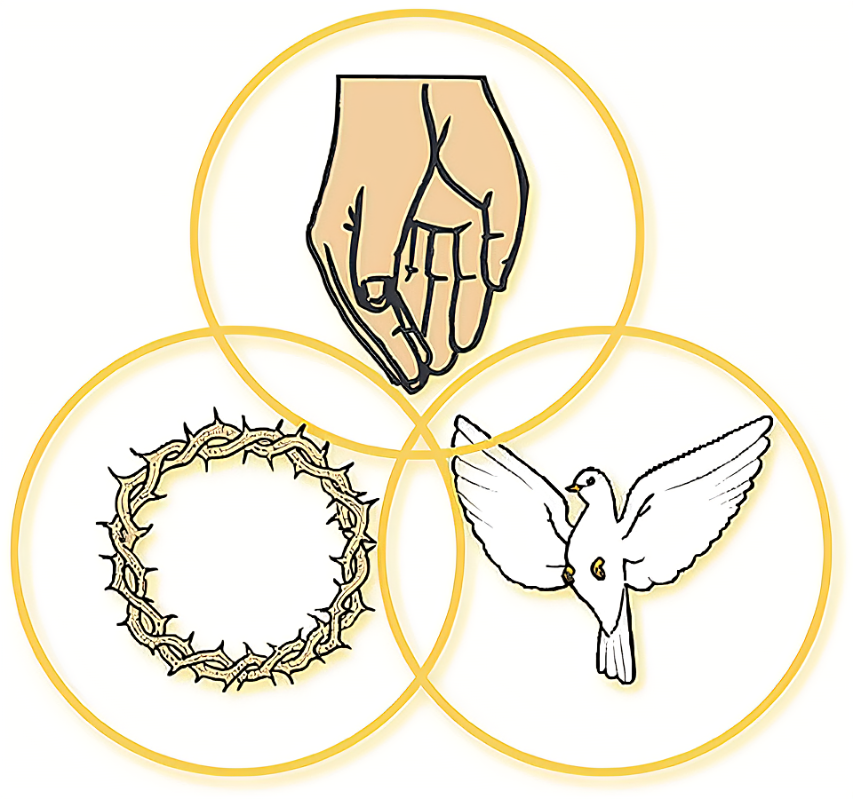
Worshiping Trinity

HOLY TRINITY

Isaiah 6:1-8

Psalm 29

Romans 8:12-17

John 3:1-17

Prayer of the Day: Almighty Creator and ever-living God: we worship your glory, eternal Three-in-One, and we praise your power, majestic One-in-Three. Keep us steadfast in this faith, defend us in all adversity, and bring us at last into your presence, where you live in endless joy and love, Father, Son, and Holy Spirit, one God, now and forever.

“Ascribe to the Lord, O heavenly beings,
   ascribe to the Lord glory and strength.
Ascribe to the Lord the glory of his name;
   worship the Lord in holy splendor.” Psalm 29:1-2.

I was raised in the traditions of the Lutheran Church-Missouri Synod, one of the most conservative branches of American Lutheranism. On Holy Trinity Sunday we affirmed together the Athanasian Creed. For those of you who might not be familiar with this lengthy statement of Trinitarian doctrine, allow me a brief introduction. The official title of this statement of faith is “Quicunque Vult.” That is Latin for “What must be believed.” It was almost certainly not written by the great bishop, pastor and theologian Athanasius. Though frequently identified as one of the three ecumenical creeds, along with the Apostle’s Creed and the Nicene Creed, the Eastern Church had no part in formulating it and never accepted it as authoritative. Thus, I question whether it ought to be considered “ecumenical.”

Furthermore, while the Athanasian Creed does lay out what I believe to be a sound, orthodox understanding of our Trinitarian faith, some of its language is more than a little problematic. Most notable is the withering admonition at the end of the creed to the effect that “One cannot be saved without believing this firmly and faithfully.” There are a couple of problems here. In the first place, our faith has never been about believing a doctrine, however sound it might be. Our faith is about trusting a person, namely, Jesus Christ. When all is said and done, can anyone really say they understand the Triune God? Can anyone claim to understand the miracle of the Incarnation? Can we really explain the glorious promise of resurrection and eternal life? As important as our creeds and confessions are, they can take us only to the precipice of human understanding from which we view “as through a glass darkly” mysteries that surpass human understanding. Thus, it seems more than a little presumptuous to imply that salvation is contingent on possessing a body of knowledge.  

The second problem is the presumption that all who do not affirm the propositions set forth in the creed “will doubtless perish eternally.” That is not what Jesus and the New Testament witness say. Though the New Testament does say those who reject Jesus and the reign of God he proclaims face judgment and potential rejection, it also proclaims that salvation is bigger than the church. As our gospel lesson points out, God loves the world enough to send the Son to save it, not condemn it. John 3:16-17.  It is not God’s will that any perish. II Peter 3:9. Jesus has told us that he has other sheep that are not of his fold that he intends to gather in. John 10:16. There are many outside the church who, though not among Jesus’ disciples, are with him in furthering the gentle reign of God. Mark 9:38-41.

Trinitarian faith is an outgrowth of Trinitarian worship. Before there was a “doctrine of the Trinity” the lyrical account of creation in Genesis spoke of God’s lifegiving breath blowing over the waters and creating the universe by God’s Word of Power. The poetic prologue to John’s gospel speaks of the unity of God’s word with God’s self. I do not mean to say that any of the aforementioned texts articulate, much less “prove” the doctrine of the Trinity. They are addressed not chiefly to metaphysical assertions about God, but to the worship of God whose marvelous and passionate love for us is revealed in acts of salvation, yet who remains beyond the reach of our partial and limited capacity for understanding. The Apostle’s and Nicene Creeds grew out of and are a part of the church’s liturgical language of worship and praise. They “ascribe to the Lord the glory of his name” and serve the church in “worship[ing] the Lord in holy splendor.”

That being said, the Athanasian Creed makes a valid point. What we believe, teach and confess about God matters. While failure to subscribe to what the church understands to be correct teaching may not lead one to “perish eternally,” there are understandings of who God is and what God requires that are toxic and potentially lethal. People driven by their twisted ideas of God and what God demands have launched bloody wars, shot up Planned Parenthood clinics, conducted suicide bombings, carried out mass shootings and led lynch mobs to commit murder. Belief in God has led to the ruthless persecution of LGBTQ+ folk in the name morality, the banning of literature in our schools and racism thinly disguised as border security. I wish I could tell you how many people I have encountered who left the church because they were introduced to a god that bore no likeness to the Triune God we claim to worship. Bad religion produces warped faith and perverse actions.

Trinitarian faith has some important things to say about God that need to be heard. Perhaps the most important is the affirmation that God is love. Let us be clear about what this means. It does not mean that what we experience and understand as love is God or that love leads us to a knowledge of God. It is quite the other way around. As John the Evangelist reminds us, we know love only because God has revealed it to us. I John 4:7-12. Love preexists creation. Saint Augustine teaches us that perfect love is the glue binding the Trinity, the love between Father, Son and Holy Spirit. God, as lover, beloved and the love between them, is complete in God’s self. There was no necessity for creation in the sense that God needed it. The universe is not the product of God’s loneliness and boredom. Yet one could say that creation was necessary in this sense, namely, that love is always seeking to expand, to embrace and to become more. So, as the hymn says, “the universe of space and time did not arise by chance; but the Trinity in love and hope made room within their dance.”[1] God said, “Let there be…” God makes space for something other than God to exist, to become, to have agency and freedom. The world God made is a theater into which Trinitarian love expands, gets entangled, becomes flesh, embraces suffering, brings healing, hope and newness. This expansion of God’s self into the world God made will cost God dearly. But nothing, not even the cross, can deter God from sending the Son to become flesh in the midst of it.

It follows, then, that God does not need anything from us. God does not need our worship, service, prayers, love and, certainly, God does not need our defense. But our neighbors do need our love, care and defense. Disciples of Jesus need the sustenance of prayer and worship to persevere in such love, which can be as costly as the love God first showed them. It ought to be clear from all this that there is no room for violence on God’s behalf, as though the reign of God needed strength of human arms to establish it; no necessity to make America a Christian nation, as though God were so feeble and impotent that God needed a nation, society or culture to prop God up; no need to protect Christian faith from “godless” literature and dangerous ideas, as though God’s truth were so unsound and indefensible that it cannot withstand critical inquiry. Trinitarian truth, the truth as it is revealed to us in Jesus seeks only faithful witness, not defense.

Here is a rendering of the well known Prayer of St. Patrick that I believe reflects a worshipful expression of Trinitarian Faith

The Prayer of St. Patrick

I arise today

Through a mighty strength, the invocation of the Trinity,

Through belief in the Threeness,

Through confession of the Oneness

of the Creator of creation.

I arise today

Through the strength of Christ’s birth with His baptism,

Through the strength of His crucifixion with His burial,

Through the strength of His resurrection with His ascension,

Through the strength of His descent for the judgment of doom.

I arise today

Through the strength of the love of cherubim,

In the obedience of angels,

In the service of archangels,

In the hope of resurrection to meet with reward,

In the prayers of patriarchs,

In the predictions of prophets,

In the preaching of apostles,

In the faith of confessors,

In the innocence of holy virgins,

In the deeds of righteous men.

I arise today, through

The strength of heaven,

The light of the sun,

The radiance of the moon,

The splendor of fire,

The speed of lightning,

The swiftness of wind,

The depth of the sea,

The stability of the earth,

The firmness of rock.

I arise today, through

God’s strength to pilot me,

God’s might to uphold me,

God’s wisdom to guide me,

God’s eye to look before me,

God’s ear to hear me,

God’s word to speak for me,

God’s hand to guard me,

God’s shield to protect me,

God’s host to save me

From snares of devils,

From the temptation of vices,

From everyone who shall wish me ill,

afar and near.

I summon today

All these powers between me and those evils,

Against every cruel and merciless power

that may oppose my body and soul,

Against incantations of false prophets,

Against black laws of pagandom,

Against false laws of heretics,

Against craft of idolatry,

Against spells of witches and smiths and wizards,

Against every knowledge that corrupts man’s body and soul;

Christ to shield me today

Against poison, against burning,

Against drowning, against wounding,

So that there may come to me an abundance of reward.

Christ with me,

Christ before me,

Christ behind me,

Christ in me,

Christ beneath me,

Christ above me,

Christ on my right,

Christ on my left,

Christ when I lie down,

Christ when I sit down,

Christ when I arise,

Christ in the heart of every man who thinks of me,

Christ in the mouth of everyone who speaks of me,

Christ in every eye that sees me,

Christ in every ear that hears me.

I arise today

Through a mighty strength, the invocation of the Trinity,

Through belief in the Threeness,

Through confession of the Oneness

of the Creator of creation.

Source: Though attributed to the legendary Irish Saint Patrick, no one knows the precise origin of this beautiful expression of faith which appears in many abbreviated forms and has inspired numerous hymns, including “I Bind unto Myself Today,” by Cecil Frances Alexander in Evangelical Lutheran Worship, (c. 2006 by Evangelical Lutheran Church in America; pub. by Augsburg Fortress Press) Hymn # 450.  


[1] “Come Join the Dance of Trinity,” by Richard Leach, Evangelical Lutheran Worship, # 412.

Pentecost and Ecology

PENTECOST SUNDAY

Acts 2:1-21 or

Ezekiel 37:1-14

Psalm 104:24-34, 35b

Romans 8:22-27 or

Acts 2:1-21

John 15:26-27; 16:4b-15

Prayer of the Day: Mighty God, you breathe life into our bones, and your Spirit brings truth to the world. Send us this Spirit, transform us by your truth, and give us language to proclaim your gospel, through Jesus Christ, our Savior and Lord, who lives and reigns with you and the Holy Spirit, one God, now and forever.

“May the Lord rejoice in his works….” Psalm 104:31.

Here the psalmist prays that God may rejoice in God’s works-a puzzling expression. We might wonder, to whom is the psalmist speaking? Who other than God is capable of causing God to rejoice in God’s works? Yet the expression is problematic chiefly because we protestants tend to view prayer as a one way transaction. We pray, praise, supplicate and lament. God is the recipient who may or may not respond in a way we desire, hope or expect. As the Psalms demonstrate, however, prayer is dialogical. To be sure, the complete range of human experience of awe filled worship, longing, despair and hope are given full expression in the Psalms. But the voice of God is also heard encouraging, rebuking and instructing. The voice of the wicked and the oppressor are also heard. It is occasionally difficult to discern who is speaking in the Psalms. Sometimes this unclarity results from difficulties in translating them from the original Hebrew. But for the most part, the alternating voice in these prayers reflects the Hebrew understanding of prayer as a boisterous and uninhibited interchange. The Psalms are as messy, conflicted and mysterious as life itself.

So what does the psalmist mean in praying that the Lord will “rejoice in his works?” In the first place, the psalmist is affirming that God delights in all that God has made. More than that, God is intimately involved in caring for the earth’s inhabitants, humans and all other living things. Thus, in addition to providing bread to sustain human life and “wine to gladden the human heart,” God gives water to the wild ass, vegetation to feed cattle, refuge in the heights for the mountain goat and trees to shelter the birds. Psalm 104:14-18. God carefully balances night and day so that diurnal and nocturnal creatures can pursue their livelihoods without conflicting with one another. Psalm 104:19-23. All creatures “look to [God] to give them their food in due season.” Psalm 104:27. God cares deeply about the earth, its climate, ecosystems and the wellbeing of all of its creatures.

Second, in spite of what some of our poorer theological work reflects, human beings are not the center of the created order. If one goes back to the second chapter of Genesis, the first human being was entrusted with the task of tilling and keeping the Garden of Eden. Genesis 2:15. We humans are the earth’s gardeners, not its lords.[1] If you were to hire a landscaper to care for your yard, you might give her some discretion. If, like me, you are not big on yard maintenance, you might trust her to select shade tolerant plants for areas of the yard that do not get much sun. You might let her select flowering plants that bloom at various times throughout the growing season so that your yard is always adorned with blossoms. But if you were to return home and discover that your landscaper had decided to store her collection of non-functioning vehicles on your front lawn, I suspect you might not be happy with her. I expect God feels the same way about our strip mining, fracking, deforestation, industrial discharges of waste into the air and water. Such conduct on our part not only exceeds, but violates our mandate to care for God’s earth.

Third, God grieves over the wounds God’s human creatures inflict upon God’s good creation. The most horrible distortion that has arisen out of western enlightenment culture is the objectification of the natural world. Modern industrial society views the earth as a “thing,” a ball of resources to be exploited for whatever can be sold for profit. In the words of conservative commentator Ann Coulter, “God gave us the earth. We have dominion over the plants, the animals, the trees. God said, ‘Earth is yours. Take it. Rape it. It’s yours.’” In the biblical view, the land is not a “what” but a sentient “who.” Like people and animals, the land is entitled to a sabbath rest. Leviticus 25:1-4. The land suffers from and mourns the violence and exploitation of the people inhabiting it. Hosea 4:1-3; Isaiah 24:20; Jeremiah 4:28; Jeremiah 12:4. The land possesses a degree of agency and will not tolerate abuse and exploitation indefinitely. Should the wickedness of its inhabitants become extremely excessive, the land will “vomit” them out. Leviticus 18:25-28. The land is one of God’s creatures and the object of God’s deep affliction. As much as God delights in the beauty of the created world, God laments the wounds inflicted upon it by God’s human creatures. It is the psalmist’s prayer that God may at last rejoice in all that God has made without any cloud of grief.

In our second lesson, Saint Paul tells us that “the whole creation has been groaning in labor pains until now.” Romans 8:22. It is now beyond dispute that our relentless exploitation of the land, our excessive reliance upon fossil fuels and other unsustainable means of production, transportation and development are wreaking havoc on our environment. The world literally groans as it “waits with eager longing for the revealing of the children of God.” Romans 8:19. One way to read this passage is to understand that the well being of the earth hinges on the redemption of its human creatures. When human beings, transformed by the Holy Spirit, cease their quest to conquer, dominate and exploit God’s good earth and learn to live faithfully within their creaturely limitations as devoted caretakers, the earth will be liberated to become the garden God intended it to be from the beginning.

Here is a poem by Wendell Berry imagining how a redeemed humanity might make way for the redemption of the good earth and the very unredeemed human inclinations standing in the way.  

The Dream

I dream an inescapable dream
in which i take away from the country
the bridges and roads, the fences, the strung wires,
ourselves, all we have built and dug and hollowed out,
our flocks and herds, our droves of machines.

     I restore then the wide-branching trees.
I see growing over the land and shading it
the great trunks and crowns of the first forest.
I am aware of the rattling of their branches,
the lichened channels of their bark, the saps
of the ground flowing upward to their darkness.
Like the afterimage of a light that only by not
looking can be seen, I glimpse the country as it was.
All its beings belong wholly to it.  They flourish
in dying as in being born.  It is the life of its deaths.

     I must end, always, by replacing
our beginning there, ourselves and our blades,
the flowing in of history, putting back what I took away,
trying always with the same pain of foreknowledge
to build all that we have built, but destroy nothing.

     My hands weakening, I feel on all sides blindness
growing in the land on its peering bulbous stalks.
I see that my mind is not good enough.
I see that I am eager to own the earth and to own men.
I find in my mouth a bitter taste of money,
a gaping syllable I can neither swallow nor spit out.
I see all that we have ruined in order to have, all
that was owned for a lifetime to be destroyed forever.

    Where are the sleeps that escape such dreams?

Source: The Peace of Wild Things, Berry, Wendell (c. 1964 by Wendell Berry, pub. by Penguin Random House, 2018) p. 21. Wendell Berry (b. 1934) is a poet, novelist, farmer and environmental activist. He is an elected member of the Fellowship of Southern Writers, a recipient of The National Humanities Medal and the Jefferson Lecturer for 2012. He is also a 2013 Fellow of The American Academy of Arts and Sciences. Berry was named the recipient of the 2013 Richard C. Holbrooke Distinguished Achievement Award. On January 28, 2015, he became the first living writer to be inducted into the Kentucky Writers Hall of Fame. You can read more about Wendell Berry and sample more of his works at the Poetry Foundation website.


[1] A great deal of mischief has been unleashed by the misinterpretation of a single verse in the first chapter of Genesis in which human beings are commanded to “fill the earth and subdue it.” That one passage has been lifted out of context to justify wholesale rape of the environment by commercial entities for profit and a tragic indifference to the natural world by Christians convinced that God will rapture the righteous out of this world and leave it for the devil to wreak a ruinous “tribulation” upon it. We need to understand that the Hebrew word “CABASH” translated in Genesis 1:28 as “subdue” is the same word employed in God’s command for Israel to subdue the land of Canaan. Numbers 32:22Numbers 32:29Joshua 18:1. The subjugation of the land meant more than merely driving out Israel’s enemies. Very specific commands were given to Israel directing the people to care for the land and its non-human inhabitants. For example, trees were to be spared from the ravages of war. Deuteronomy 20:19-20. Egg producing birds were to be spared from slaughter. Deuteronomy 22:6-7. The sabbath rest mandated for all human beings, from king to servant, extended also to animals. Exodus 23:12. Moreover, the land itself was to be given a year’s sabbath rest from cultivation every seven years. Exodus 23:10-11. God was worshiped not only as the provider for human beings, but for all living creatures. Psalm 104:10-23. The Bible is big on ecology. In fact, insofar as the New Testament declares that God’s goal for the universe is the reconciliation of the world in Christ (II Corinthians 5:19), you could say that the Bible is all about ecology.

The Two Ways

SEVENTH SUNDAY OF EASTER

Acts 1:15-17, 21-26

Psalm 1

1 John 5:9-13

John 17:6-19

Prayer of the Day: Gracious and glorious God, you have chosen us as your own, and by the powerful name of Christ you protect us from evil. By your Spirit transform us and your beloved world, that we may find our joy in your Son, Jesus Christ, our Savior and Lord, who lives and reigns with you and the Holy Spirit, one God, now and forever.

“And now I am no longer in the world, but they are in the world, and I am coming to you. Holy Father, protect them in your name that you have given me, so that they may be one, as we are one.” John 17:11.

“Happy are those
   who do not follow the advice of the wicked,
or take the path that sinners tread,
   or sit in the seat of scoffers;
but their delight is in the law of the Lord,
   and on his law they meditate day and night.” Psalm 1:1-2.

“There are two ways, one of life and one of death, and there is a great difference between the two ways. The way of life is this. First of all, thou shalt love the God that made thee; secondly, thy neighbor as thyself.” The Didache

“There are two ways…” says the anonymous ancient early Christian epistle, The Didache. That sentiment is reflected in the psalm and Jesus’ words in this Sunday’s gospel reminding us that disciples of Jesus remain “in the world.” Lest there be any misunderstanding here, this is the same world to which God sent the only Son to save and not condemn. Yet it is a world hostile to God, so hostile in fact that it rejected and murdered the most precious gift God had to give. It is a world governed by a culture of human greed and retributive violence. In the midst of this world, disciples of Jesus are invited to become a counter-cultural community governed by love. The church is to be, as Koinonia Farms founder Clarance Jordan once remarked, a “demonstration plot” for the kingdom of God. It is the place where Jesus invites us to recover our humanity, to have the mind of Christ formed in us, to regain the divine image in which we, along with all humanity, were created. The good news of Jesus is that there is a better way of being human, a better way for the world to be the world. This, according to our lessons and the Didache, is the way of life.

It may appear that the choice between “the two ways” is a once and for all decision. Or perhaps it presents itself only in circumstances where the choice literally involves either life or death, such as it did for those few heroic souls in occupied Europe during the Second World War who risked their lives sheltering Jews in their homes from the Nazis. Such occasions constitute the “moment of truth,” the time of trial that defines who a person truly is. But that is not really the case. Contrary to popular lore, the devil never buys a soul outright in a single transaction. He takes it piece by piece, one small moral decision at a time. Just as courage, integrity and honesty are habits of the heart formed by the practice of small, daily ordinary acts of selfless compassion that build character capable of standing firm in the time of trial, so these virtues are stolen one white lie, one practical compromise with evil, one small theft, one inconsequential act of deception at a time.   

I know whereof I speak. I have taken a stroll on the path of death myself. For eighteen years I practiced law at a firm specializing in civil defense. We were employed by insurance companies to defend their policyholders against law suits ranging from professional liability claims to simple slip and fall cases. I feel compelled to say from the outset that my firm’s record and reputation for ethics cannot be matched. We were nothing if not scrupulous when it came to honesty with our clients, honesty with the court and honesty and fairness toward our adversaries in the litigation process. But as everyone knows, most cases are not resolved through the formal litigation process. Typically, civil cases are settled at some point before trial through negotiation. Attorneys representing the plaintiff usually initiate negotiations by making a settlement demand far in excess of what they actually expect to get. Attorneys for the defendant, like me, will respond with a settlement offer far below what we actually believe will be required to resolve the case. “I am authorized to offer seventy-five thousand to put this matter to bed,” I say to the plaintiff’s attorney. Plaintiff’s counsel responds, “I will convey that to my client, but I cannot recommend it. I am prepared to recommend one hundred fifty thousand, however. I think I can convince my client to take that.” The truth is, I am actually authorized to offer up to one hundred thousand and the plaintiff’s attorney has probably already discussed with the client a bottom line number, which is likely below the one hundred fifty thousand for which they are asking. But we will go back and forth several more times before finally resolving the matter. I will lie about how much settlement authorization I have and the plaintiff’s attorney will lie about the client’s bottom line. That is how we get to “yes.”

I rationalized all of this on grounds that nobody was really being deceived. Every seasoned plaintiff’s attorney knows what a case is worth and will not settle it for less. The plaintiff’s attorney also knows very well that defense attorneys like me never put all our settlement authorization on the table in the first go-round. Defense counsel understand that a settlement demand is just an opener to get negotiations going. It is not a line drawn in the sand. Long before a case gets close to trial, both attorneys have a pretty good idea of the risks and exposure involved. They will resolve the case on that basis-or not. So what is the harm? Nobody is deceived and no one is getting hurt. If all this posturing gets us to a place where a dispute can be resolved without the risk and expense of trial, doesn’t the end justify the means?     

However much the interests of our respective clients and the administration of justice might benefit from this process and the lying it entails, I still believe that there exists a mortal threat to the soul. The first case I settled left me feeling very ill at ease and, frankly, a little nauseated. Having been raised in a home where honesty was taught and expected, having taught and preached honesty from the pulpit for years, I was now horrified that I had willfully and knowingly practiced deceit by speaking untruths. The second case was easier. After a few more cases, I had become quite the natural when engaging in settlement negotiations. If I may say so, I got to be rather good at it. Thankfully, however, I never reached the point where I was at peace with it.  

There is, I think, danger in becoming comfortable with lying, no matter how established a custom and practice of settlement negotiations it may be. If it is easy for me to lie in settlement negotiations, would it not become as easy for me to lie to my wife? Why not tell her that I am home late because I got caught up in traffic rather than reveal that I stayed late to have a drink or two with a couple of colleagues? My little fib will make her more sympathetic and less exasperated with me. That, in turn, will make for marital tranquility instead of strife. We will both enjoy a happier evening together. So what’s the harm? The harm is that the practice of lying becomes more pronounced and begins to spill over into all other aspects of one’s life. Once you become comfortable with lying, as soon as you get to the point where it comes effortlessly, where lying becomes a regular habit employed to avoid difficult and embarrassing confrontations, it spirals out of control. Lying begins to undermine your relationships, cloud your professional judgement and ruin your spiritual wellbeing. The truth becomes your dreaded enemy, always threatening to blow down the wall of illusions you have built around yourself. In the end, you wind up lying to yourself. The most dangerous lies are the ones we tell to ourselves about ourselves. When you have finally lost altogether the capacity to distinguish between the lies you tell and the truths you believe, you have fallen victim to a lethal moral pathology, a sickness of the soul that devourers the core of your being. You no longer know who you are. That is the end stage of the “way of death.”

I am thankful that throughout the period in my life during which I practiced law, I was also part of a community of truth tellers. As good as I may have gotten at the settlement game, my church’s preaching, teaching and example ensured that I never became truly comfortable with it. I was surrounded by people I knew would never let me get away with excuses, rationalizations and “alternative facts.” However good I may have gotten at lying, my fellow disciples saw to it that I could never be at peace with it. I can see now, if only in retrospect, how my community of faith steered me away from “the way of death” and kept re-directing me to “the way of life.”

Our rejection of God’s beloved Son should have, according the way and logic of death, resulted in God’s wrath and punishment. But God chose the way of life and forgiveness for us instead. For that reason, it is now possible for us to choose the way of life rather than remaining in death. It is now possible for us to stop hiding behind the lies we use to justify, excuse and rationalize our behavior. It is possible now to escape the cycles of vengeance and retribution driving our politics, twisting our religion and fueling our wars. It is now possible to be motivated by God’s wide open future instead of being shackled with chains of guilt, resentment and regret to our dark and constricted past. Jesus embodies a stark alternative to the way of death. The way of life is now before us. From dawn to dusk, the old way of death pulls us back while the new way of life calls us forth. Each step taken in this new direction builds character, shapes in us the mind of Christ and empoweres us for living faithfully in a dying world.         

We need each other if we are to remain on the “way of life.” That is why Jesus prays that his disciples will be one just as he is one with God the Father. The way of death is always before us. We meet it at school, in the work place, within our homes and families. It is easier to turn away from one who is in need, shut the door in the face of strangers, opt for the easy lie instead of the difficult conversation, keep quiet in the face of injustice instead of speaking out for its victims. We need each other to remind each other that ours is the way of life, the way of our God who passionately loves our world and calls upon us to love our neighbors across the street and across the world. We need to support one another in the practices that build the mind of Christ among us.

Here is a poem/pray by Jan L. Richardson celebrating the freedom given us to choose the way of life.

In the center of ourselves

you placed the power

of choosing.

Forgive the times

we have given that

power away,

when we have sold

our birthright

for that which

does not

satisfy

our souls.

And so

in your wisdom

may or yes

be truly yes

and our no

be truly no,

that we may

touch with dignity

and love with integrity

and know the freedom         

of our own choosing

all our days.

Source: Night Visions, Richardson, Jan (c. 1998 by Jan Richardson; pub. by Wanton Gospeller Press). Jan Richardson is an artist, writer, and ordained minister in the United Methodist Church. She grew up in Evinston, a small community outside of Gainesville, Florida. She is currently director of The Wellspring Studio and serves as a retreat leader and conference speaker. In addition to the above cited work, her books include The Cure for SorrowCircle of Grace, A Book of Blessings for the Seasons, In the Sanctuary of Women, and Sparrow: A Book of Life and Death and Life. You can learn more about Jan Richardson and her work on her website.