SIXTH SUNDAY AFTER PENTECOST
Prayer of the Day: Almighty and merciful God, we implore you to hear the prayers of your people. Be our strong defense against all harm and danger, that we may live and grow in faith and hope, through Jesus Christ, our Savior and Lord.
“You see the crowd pressing in on you; how can you say, ‘Who touched me?’” Mark 5:31.
There were good reasons for the woman who touched Jesus to remain invisible. She had a flow of blood that, according to religious law and tradition, rendered her perpetually unclean. That meant she should not have been out and about in public at all. Moreover, for a woman to lay hold on the clothing of a man who was neither spouse nor family was, in itself, highly improper. To make matters worse, Jesus was in the company of Jairus, ruler of the synagogue, a man whose responsibilities included making sure the requirements of faith and common decency were respected. The last thing this woman wanted was for someone to see her, witness what she had done and call her out in the presence of Jesus, the leader of the synagogue and the rest of the crowd.
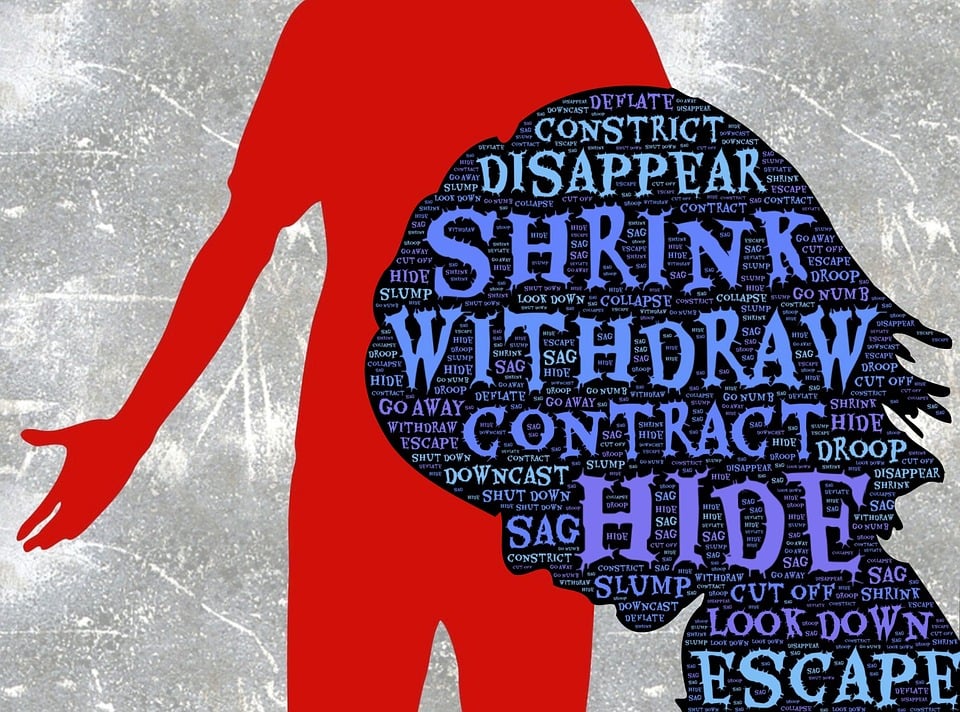
The invisible woman in our gospel was just that. Her disease compelled her to live in the shadows, avoid human contact and remain isolated from community life. She was there and yet not there. She was one of the many people that come into one’s field of vision, but is never really seen. We have many of those folks out here on the Outer Cape. Wellfleet, the town in which I live, is generally an affluent community made up of retired folk (like me), summer time residents who maintain vacation homes here and owners of businesses catering to seasonal visitors. These are the people I meet and greet at the post office, the library and the transfer station (otherwise inelegantly known as the town dump). But they are by no means the only residents of the Outer Cape. We need doctors offices,pharmacies, banks, gas stations and grocery stores open all year. That means we need people to work the check out counters, clean the offices and do the other necessary tasks for which we do not expect to pay wages capable of sustaining a family or even an individual in our community. Housing is out of reach for low wage earners as is the cost of living generally.
When I do actually see these otherwise invisible folks, I cannot help wondering where they come from, where they live and how they manage to get by. I know that many of them live in uninsulated seasonal cottages, sometimes with and sometimes without the consent of the owners. Others drive out here from great distances burning overpriced gas, an expense that eats into their ability to pay the rent, put food on the table and set aside an emergency fund in case their car breaks down, putting them on a trajectory of unemployment, eviction and homelessness. I know that some live with relatives, hoping to find a place of their own before they wear out their welcome. I know just enough not to wonder too long and hard because I am not sure I want to know the whole story. It is easier to let these people and their struggles remain invisible.
At first blush, it seems unnecessarily cruel of Jesus to focus everyone’s attention on this poor woman who sought only relief from a very personal and deeply humiliating health condition. Yet while she may have preferred to remain invisible, Jesus was determined to let her know that to him and to his Heavenly Father she was anything but. Unlike Jairus, the crowd and even Jesus’ own disciples, Jesus noticed the woman’s touch, noticed that she had been the recipient of God’s healing power, noticed that she had a name, a story and a face worthy of looking upon. She was important enough to be recognized, loved and commended for her faith-even though there was pressing business at the home of Jairus, ruler of the synagogue.
Notice that Jesus addresses this woman as “daughter,” a term that no doubt reflects his affection and concern for her. But I also wonder whether Jesus was not also sending a message to Jairus, whose daughter he was about to raise from death. It is as though Jesus were saying, “Jairus, I am about to exercise life giving compassion on your little daughter. See to it that you do the same for mine.” That admonition, I am afraid, is also directed to me and the members of my community-the members who are visible, the ones who are able to benefit from the good life we have here on the Outer Cape because of the work done by people who remain largely invisible, the ones we do not take the time to see, recognize and care for.
Jesus challenges us to see all of those persons globally whose intense suffering, while pitiable, does not seem materially to affect our own well being. God is the one who “sees” the used, abused and discarded slave turned out into the wilderness to die. Genesis 16:13; Genesis 21:15-21. God is the one who sees the affliction of slaves doing the dirty work of the Empire. Exodus 3:7-8. As our psalm reminds us, God hears the cries of those sinking into the depths where we fear to look. Psalm 30:3. One cannot worship, believe in or trust this God without seeing the people God sees, recognizes and holds dear. Our inability or unwillingness to see, really see the distress of our neighbors on the Outer Cape, the agony of the Palestinian people in Gaza, the persons dying daily of starvation in Sudan and the victims of violent conflicts the world over is as dangerous to us as it is deadly to them. This spiritual disability of ours is a symptom of hearts growing cold, minds closing and souls slowly dying. In losing sight of the neighbors we would rather not look upon, we are losing sight of the God who has claimed us. Indifference is not only akin to murder. It is spiritual suicide.
In the chilling parable of the Last Judgment in the twenty-fifth chapter of Matthew, the refrain of the condemned is “when did we see you hungry or thirsty or a stranger or naked or sick or in prison…?” As I have often said before, I believe this parable is less about judgment at the end of time than it is about judgment today upon our blindness and indifference rendering us unable to recognize the face of God in those we deem “least” among us. What will it take to make us see the invisible people around us, learn their names and hear their stories? What will it take to make us recognize that behind the wartime “collateral damage” reports, behind the gun violence statistics, behind growing numbers of our fellow citizens deemed “food insecure” are people God sees, people whose cries of despair God hears and people through whom God is appealing to us? Must we wait until the last day for our eyes to be opened?
Here is a poem by Mariana Llanos about the violence of invisibility.
Invisible Children
Invisible children fall
through the cracks of the system
like Alice in the rabbit hole.
But these children won’t find
an eat-me cake or a drink-me bottle.
They won’t wake up on the lap
of a loving sister.
They’ll open their eyes on the hand
of a monster called Negligence
who’ll poke them with its sharp teeth
and bait them with its heartless laughter,
like a wild thing in a wild rumpus.
But the children won’t awake
to the smell of a warm supper,
nor will they find a purple crayon
to draw an escape door or a window.
Instead they’ll make a mirror
of a murky puddle on the city street
which won’t tell them they’re beautiful
but it’ll show their scars, as invisible to others
as these children are.
Source: Poetry (March 2021). Mariana Llanos is a Peruvian-born writer based in Oklahoma. She was born and raised in Peru but moved to the United States, and after having her first child. There she pursued her lifelong ambition of becoming an author. Llanos is a prolific poet and has also published several children’s books, including Run, Little Chaski (Barefoot Books, 2021) and Luca’s Bridge (Penny Candy Books, 2019). You can read more about Mariana Llanos at the website, Las MUSAS, and sample more of her poetry at the Poetry Foundation website.
 Peter's Outer Cape Portico