Monthly Archives: September 2024

Reading the Bible Imaginatively

NINETEENTH SUNDAY AFTER PENTECOST

Numbers 11:4-6, 10-16, 24-29

Psalm 19:7-14

James 5:13-20

Mark 9:38-50

Prayer of the Day: Generous God, your Son gave his life that we might come to peace with you. Give us a share of your Spirit, and in all we do empower us to bear the name of Jesus Christ, our Savior and Lord.

“Let the words of my mouth and the meditation of my heart
   be acceptable to you,
   O Lord, my rock and my redeemer.” Psalm 19:14.

A lot of preachers I have heard over the years begin their sermons with a recitation of this verse. It serves as a prayer that the preacher’s message might faithfully convey the good news of Jesus Christ and its implications for the hearers. Though I have never used this verse of scripture in that way, I find no fault with such usage. Nonetheless, the scope of the psalmist’s prayer far exceeds whatever concerns we might have about the quality of our preaching. These words concluding the psalm must be understood in light of all that comes before. This psalm is a meditation on the “Torah,” translated in our English Bibles as “law.” That is an unfortunate rendering. We tend to think of “law” in terms of rules, statutes and legal requirements. American Christians, deeply individualistic as we are, view law as antithetical to faith or “spirituality.” The Pharisees get a bad wrap in a lot of our preaching because they have been painted as “legalists” who put rules ahead of human needs, compassion and justice. No doubt some of them fit that description-as do a lot of Christians today. But, on the whole, modern Judaism, which derives largely from the Pharisaic tradition, views the Torah much differently.

While the rituals, customs and requirements spelled out in the first five books of the Hebrew Scriptures might strike us as restrictive, they were designed to guard Israel’s liberty won for it by its God in the Exodus. A reminder of God’s faithfulness was found in each task of daily life. Preparing and eating meals, washing clothes, butchering animals and planting crops all contained seeds of meditation, symbolic acts and reminders of the new existence to which the people of Israel had been called. It is also important to understand that the Torah is not a changeless prescription written in stone. Judaism has always recognized that the Torah speaks to the here and now. It requires interpretation, reinterpretation and fresh application to ever changing circumstances.

It is for this reason that the psalmist meditates on the Torah. Its commandments are not a collection of dry regulations. They are windows into a deeper understanding of God and the world God made. They are not a legalistic prison enclosing the heart and mind, but a platform from which the psalmist is enabled to look into mysteries, a launching pad for the imagination.

I think there is much to be learned from this understanding of Torah. A lot of Christians I have encountered over the years, some within my own Lutheran tradition, tend to view the Bible as the sealed container of divine truth. There is, in the minds of these folks, a single “biblical worldview” built out of a fixed set of doctrinal assertions and moral absolutes found within the four corners of the biblical text. For such a constricted perspective, information, learning and imagination are dangerous. They can lead one to question the truth and doubt the integrity of the Bible. Banning books, restricting the academic freedom of teachers and subjecting text books to legislative mandates are all simply desperate efforts to protect a feeble and unsustainable faith from the rigors of intellectual critique. Such an outlook kills the kind of interaction with the Bible to which the psalmist testifies. It is hard to meditate on the Bible when you are expending all your energy and attention to protecting it.

While my own biblical training in seminary was nothing like the literalist approach I just described, it did little to encourage meditation. The historical critical method in which I was instructed acknowledged and even celebrated the complexity of the scriptures and the diversity of voices in and through which it speaks. But the method brought with it the same rationalistic and colonialistic biases of the nineteenth century in which it was birthed. We were warned against letting our imaginations run away with us when interpreting texts. Our job was, through a dispassionate application of textual criticism, source criticism, form criticism, redaction analysis and properly framing of the text in its “Sitz im Leben” (roughly translated, “historical setting”), unearth the grain of historically valid biblical truth to be proclaimed. Though much of what I learned about the Bible’s composition, history and transmission was helpful in a general way, it was not particularly useful in preaching or in meditating on the Word.

Of equal concern regarding the historical critical method is the nineteenth century baggage that comes with it. There is in the method a bias toward rationalism and empiricism that tend to boil all of reality down to what can be demonstrated in the lab. No doubt, empiricism has proven enormously useful in advancing the physical sciences. Applied to history, anthropology and religion, not so much. Nineteenth century protestant Christianity tended to view itself as the pinnacle of world religious evolution just as western society viewed itself as the peak of human civilization. Having shaken off the primitive beliefs in spirits, magic and divine agency, the church had evolved into a rational religion compatible with western culture as a whole. As a result, “lesser” religions tied to inferior cultures were generally dismissed as “superstitions.” This is precisely the same sort of arrogance that fuels the engines of right wing Christian nationalism.

Thankfully, there are many pastors, teachers and theologians who have moved beyond such narrow thinking. Liberation theologians, such as Gustavo Gutiérrez, Leonardo Boff and Jon Sobrino encourage us to read the gospels imaginatively through the eyes of the poor, oppressed and exploited. Black liberation theologian James Cone invites us to recognize the cross and resurrection as lived out by Black Americans struggling against systemic racism. Womanist theologians like Natalia Imperatori-Lee, Mercy Amba Oduyoye and Ivone Gebara call upon us to read the scriptures through the eyes and experiences of Black women. Employing the imagination to scriptural interpretation unleashes its redemptive power and makes space for the Holy Spirit to work. This, I believe, is what the psalmist means by “meditating” on God’s words.

Here is a poem by Billy Collings about the transformative power of books. In many respects, I believe it mirrors the dynamics found in the psalmists’ meditation on the Torah and the way in which we are invited to meditate on scripture as disciples of Jesus.

 Books

From the heart of this dark, evacuated campus

I can hear the library humming in the night,

an immense choir of authors muttering inside their books

along the unlit, alphabetical shelves,

Giovanni Pontano next to Pope, Dumas next to his son,

each one stitching into his own private coat,

together forming a low, gigantic chord of language.

I picture a figure in the act of reading,

shoes on a desk, head tilted into the wind of a book,

a man in two worlds, holding the rope of his tie

as the suicide of lovers saturates a page,

or lighting a cigarette in the middle of a theorem.

He moves from paragraph to paragraph

as if touring a house of endless, panelled rooms.

I hear the voice of my mother reading to me

from a chair facing the bed, books about horses and dogs,

and inside her voice lie other distant sounds,

the horrors of a stable ablaze in the night,

a bark that is moving toward the brink of speech.

I watch myself building bookshelves in college,

walls within walls, as rain soaks New England,

or standing in a bookstore in a trench coat.

I see all of us reading ourselves away from ourselves,

straining in circles of light to find more light

until the line of words becomes a trail of crumbs

that we follow across the page of fresh snow;

when evening is shadowing the forest

small brown birds flutter down to consume them

and we have to listen hard to hear the voices

of the boy and his sister receding into the perilous woods.

Source: Poetry (April 1988). Billy Collins (b. 1941) is an American poet. Though born in Ireland, he grew up in Queens and White Plains, New York. He served as the Poet Laureate of the United States from 2001 to 2003 and was a Distinguished Professor at Lehman College of the City University of New York. Collins has been recognized as a Literary Lion of the New York Public Library and was selected as the New York State Poet for 2004 through 2006. Collins has been inducted into the American Academy of Arts and Letters. He currently teaches in the MFA program at Stony Brook Southampton. You can read more about Billy Collins and sample more of his poetry at the Poetry Foundation Website.

Time to Declare the Republican Party a Hate Group

“A hate group is an organization that—based on its official statements or principles, the statements of its leaders, or its activities—has beliefs or practices that attack or malign an entire class of people, typically for their immutable characteristics.” Southern Poverty Law Center.[1]

With that in mind, consider the following statements by the current GOP presidential candidate, Donald J. Trump.

  1. On the campaign trail in 2016, Trump repeatedly made explicit racist remarks, from calling Mexican immigrants criminals and rapists, to proposing a ban on all Muslims entering the US, to suggesting a judge should recuse himself from a case solely because of the judge’s Mexican heritage.
  2. While in office, Donald Trump referred to Haiti and African nations as “shithole countries” during a meeting with a bipartisan group of senators at the White House.
  3. Trump has used terms such as “animal” and “rabid” to describe Black district attorneys.
  4. During his debate with Vice President Kamala Harris, Trump baselessly accused Haitian residents of Salem, OH of being “in the United States illegally” (they are not) and of eating the pets of white residents (for which there is no evidence). As a result, numerous bomb threats have been made against schools and civic centers.

I honestly cannot see what more we need to classify the Republican Party as a hate group. I can understand the reluctance to do so. We are not talking about a fringe group, but one of America’s two major political parties. The danger of further polarizing the country is real and substantial. But more substantial than the danger of polarization is the danger of putting in power a party that has vowed to use the power of the national guard, local authorities and even the United States armed forces to carry out the “largest deportation program in American history”[2] against legal residents of the United States for crimes that they did not commit. And don’t think it will stop there. Trump has vowed that, once elected, he will “root out” his political opponents “like vermin.”[3] What does he mean by that? Maybe the same thing Adolph Hitler and Bonito Mussolini meant when they said it.

Think I am being hysterical? Let us focus on what cannot be disputed, namely, that the candidates at the top of the GOP ticket are spreading incendiary lies about an ethnic minority, thereby inciting acts of intimidation and threats of violence against them. And lest there be any doubt about the falsity of the claims made against Haitian residents of Salem 1) the mayor and the chief of police both say emphatically that the Haitian residents of the town are present legally; 2) that Haitian residents hold jobs, own businesses and pay taxes; 3) there are no reports of Haitians eating anyone’s pets.[4] Furthermore, Republican vice presidential candidate J.D. Vance admitted in a publicly televised interview that he made up the stories about Haitian immigrants eating family pets to get media attention.[5]

Enough is enough. It is time to stop pretending that the GOP is a benign political party vigorously participating in a healthy democracy. It is time to stop waiting for the Republican ship to right itself. You might just as well wait for the KKK to institute a program of cultural diversity. I hereby call upon the Southern Poverty Law Center to declare the Republican Party a hate group subject to monitoring and reporting. I further call upon all bishops, priests, pastors and church leaders to denounce specifically by way of public statements and from every pulpit the racist incitement of Donald Trump, J.D. Vance and the GOP, making clear that nobody associating with a political party spewing racist hate can claim to be a disciple of Jesus.   

Still think you can afford to ignore Republican attacks on Haitian residents of Salam, Ohio? Do you think none of this pertains to you? Do you imagine that you can safely stick to voting your pocket book and fixating on “kitchen table issues” and to hell with the rest? Then I invite you to reflect on these words of Martin Niemöller, a pastor, teacher and theologhian imprisoned under the Third Reich. What Republicans do to Haitians, Mexicans and the other groups they don’t like they can just as easily do to you.

First they came for the Socialists, and I did not speak out—
Because I was not a Socialist.

Then they came for the Trade Unionists, and I did not speak out—
Because I was not a Trade Unionist.

Then they came for the Jews, and I did not speak out—
Because I was not a Jew.

Then they came for me—and there was no one left to speak for me.

This Quotation from Martin Niemöller is on display in the Permanent Exhibition of the United States Holocaust Memorial Museum.  You can find out more about Martin Niemöller by visiting the site for the Holocaust Encyclopedia.   


[1] Southern Poverty Law Center website.

[2] See Republican Platform 2024.

[3] See “Trump compares political opponents to ‘vermin’ who he will ‘root out,’ alarming historians,” BySoo Rin Kim and Lalee Ibssa, ABC News, November 13, 2023

[4]  See interview with CNN’s Dana Bash, Rob Rue, mayor of Springfield, Ohio.

[5] See report by Luke Garrett, NPR 9/15/2024. In response to information refuting claims of Haitians eating dogs and cats, Vance replied: “If I have to create stories so that the American media actually pays attention to the suffering of the American people, then that’s what I’m going to do.”

Putting the Child in the Midst

EIGHTEENTH SUNDAY AFTER PENTECOST

Jeremiah 11:18-20

Psalm 54

James 3:13 — 4:3, 7-8a

Mark 9:30-37

Prayer of the Day: O God, our teacher and guide, you draw us to yourself and welcome us as beloved children. Help us to lay aside all envy and selfish ambition, that we may walk in your ways of wisdom and understanding as servants of your Son, Jesus Christ, our Savior and Lord.

“Then he took a little child and put it among them; and taking it in his arms, he said to them, ‘Whoever welcomes one such child in my name welcomes me, and whoever welcomes me welcomes not me but the one who sent me.’” Mark 9:36-37.

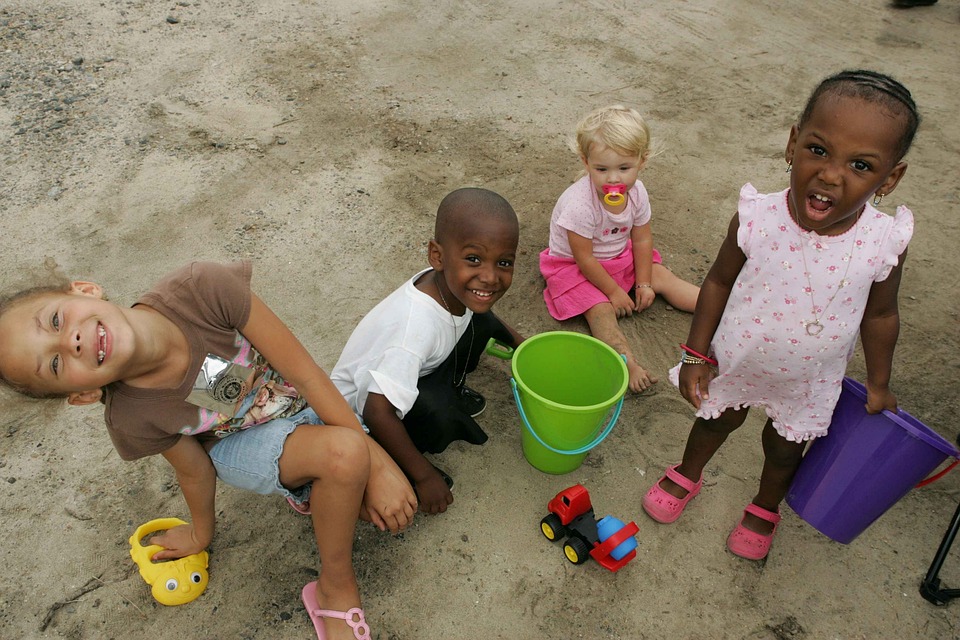
Our relationship with children in this country is more than a little complicated and conflicted. We doll them up with designer cloths, throw wildly expensive parties celebrating each milestone in their lives, equip them with the latest digital doohinckies and spend hundreds of thousands to educate them. Yet for all that, our children suffer increasingly from anxiety, depression and substance abuse. Children are multibillion dollar consumers contributing substantially to our economy as Mattel, Playmobile, Lego and numerous other toy manufacturers can attest. Nevertheless, for all they contribute to the GNP, they have no voice, no vote, no super pac’s or lobbying organizations to represent their interests. Couples spend tens of thousands on IVF to conceive children even as we have children nobody seems to want warehoused in group homes throughout the country. Children, it seems, are more fungible products than persons; more objects than subjects in their own right.

In a newly published book, The Kingdom of Children, theologian and child advocate, R. L. Stollar observes:

“Our days-marked by extreme climate change, extreme wealth disparities, and extreme prejudice against marginalized people-are apocalyptic because they reveal the desires of our hearts in stark terms. As we grow numb to the sounds of mass shooters massacring children in schools, as parents watch their children suffer through formula shortages and school shutdowns and empty medicine aisles in the midst of a worldwide pandemic, it’s becoming strikingly clear how little our world values the lives of children. Our days reveal how much abuse and violence the powers-that-be will allow children to experience, provided it enriches their pockets or furthers their agendas to benefit adults.”

Sadly, the church does not have a great track record when it comes to prioritizing children. Church isn’t exactly the most child friendly environment. The two most common things a child hears in church are “be quiet” and “sit still.” That so many of our churches segregate children into nurseries and Sunday school during worship services speaks volumes. Church, as we practice it, is for adults. We have stood Jesus’ priorities on their head! I cannot begin to tell you how many people I have met over the years who left the church because of the way they were treated as children. We have not always been very helpful to children and young people struggling with tough issues, especially questions about gender identity and sexual orientation. Indeed, our traditional teachings on these matters have often led young people to believe that they are morally defective, unclean and unworthy of God’s love.

Sometimes, clergy and other church leaders have taken advantage of children’s natural trust and their vulnerability to abuse them horribly. I recently learned that a colleague of mine who served a neighboring parish to the one I recently served was arrested for repeatedly sexually assaulting an underage girl. I have always been aware that atrocities like these happen with shocking frequency among us clergy. But when it occurs in your own back yard, the stark horror of it all is brought into sharp relief.   How God’s heart must break when God’s church becomes an agent of harm to God’s little ones.

Today’s gospel invites us to imagine what the church-what our world-would be like if, like Jesus, we prioritized children. What would worship that includes children look like?[1] I am not suggesting that we turn Sunday Eucharist into a children’s service or reduce the liturgy to single syllables set to nursery rhymes. But I believe there are ways to integrate children into worship, giving them space to express themselves in their own terms. Further, I believe children belong in church on Sunday morning. Most of the teachable moments with my children came when they raised questions like: “Why do we have to go to church? Why does the pastor have to talk so long? Why does everyone up in front of the church wear those white robes?” The genius of such pedagogy is nowhere better illustrated than in the Jewish Seder, which begins with the youngest child asking, “Why is this night unlike all other nights?”

Recognizing that children will be children, accommodations must be made for their attention spans and arrangements for them to move about freely. To that end, my last parish equipped the fellowship room adjoining and open to the sanctuary with a carpeted play area with soft toys to which children could go during the service. Yes, sometimes they got a bit noisy and some people complained that they were disruptive. But on the whole, this arrangement allowed for our children to be children while still remaining a part of the worshiping community. This is the message we, as church, need to be modeling for our world.   

The world is not a safe place for children. Like many families today, Jesus’ family fled across an international border seeking sanctuary from political violence. Not much has changed. According to available data, approximately one in five children worldwide are affected by armed conflicts, with estimates suggesting that around 40% of civilian casualties are children. Some 148 million children in the world — about 1 in 5 — are chronically malnourished. And we are not talking only about the so-called developing world here. Nearly 14 million children in the United States faced hunger in 2023. According to the USDA, one in every five children, in this wealthiest nation in the world, is unsure where they will get their next meal. According to the National Coalition for the Homeless, 1.2 million children in the United States are homeless on any given night. However, the Coalition gets its information from schools. So when you consider that there is no accounting for children under 6 who are not in school, that number is probably much greater. Violent crime is particularly unkind to little ones. Anymore, simply going to school carries a risk of death or injury. Children and teens are more likely than the rest of us to die by gun violence.

What would the world look like if, like Jesus, we prioritized children? What if we determined that the life of a child is more important than any military objective? What if we determined that the lives of our children were more important than corporate profits that line the pockets of venture capitalists, inflate the salaries of CEOs and pad our retirement plans? What if we were more concerned about the kind of planet we will be leaving to our children than cheap fuel, fast cars and huge energy consuming homes? What if our children mattered more to us than any flag, nation, ideology or political affiliation?

Here is a poem by Michael Simms reflecting upon the legacy we adults have prepared for our unwitting children-the consequence, I believe, of making them an afterthought.

Who Will Tell Them?

It turns out you can kill the earth,

Crack it open like an egg.

It turns out you can murder the sea,

Poison your own children

Without even thinking about it.

Goodbye passenger pigeon, once

So numerous men threw nets over trees

And fed you to pigs. Goodbye

Cuckoo bird who lays eggs

In the nests of strangers.

Goodbye elephant bird

Who frightened Sinbad.

Goodbye wigeon,

Curlew, lapwing, crake.

Goodbye Mascarene coot.

Sorry we never had a chance to meet.

Who knew you could wipe out

Everything? Who knew

You could crack the earth open

Like an egg? Who knew

The endless ocean

Was so small?

Right now, there are children playing on the shore.

There are children lying in hospital beds.

There are children trusting us.

Who will tell them what we’ve done?

Source: Poetry (March 2021) Michael Simms (b. 1954) is an American poet, novelist and literary publisher. His poems and essays have been published in journals and magazines including Scientific AmericanPoetry MagazineBlack Warrior ReviewMid-American Review, Pittsburgh Quarterly, Southwest Review, Plume and West Branch. His poems have also appeared in Poem-a-Day published by the Academy of American Poets. Simms was born in Houston, Texas and attended the School of Irish Studies in Dublin, Ireland. He received his BA from Southern Methodist University and his MFA from the University of Iowa. Simms founded the literary publisher, Autumn House Press in Pittsburgh, Pennsylvania. He served as its Editor-in-Chief until 2016. He is the founder of the online literary magazine Coal Hill Review and the publisher of the political magazine Vox Populi. You can read more about Michael Simms and sample more of his poetry at the Poetry Foundation website.


[1] I feel compelled to say that I do not believe “children’s sermons” are effective tools for inclusion. Most such sermons I have observed serve mainly to entertain adults in the congregation at the expense of children. Few things are more terrifying for a small child than being singled out and called up in front of large crowd, most of whom are probably strangers to them. Worse yet is having to be questioned in front of that crowd.

Hope for a Wounded Planet

SIXTEENTH SUNDAY AFTER PENTECOST

Isaiah 35:4-7a

Psalm 146

James 2:1-17

Mark 7:24-37

Prayer of the Day: Gracious God, throughout the ages you transform sickness into health and death into life. Open us to the power of your presence and make us a people ready to proclaim your promises to the whole world, through Jesus Christ, our healer and Lord.

“For waters shall break forth in the wilderness,
   and streams in the desert;
the burning sand shall become a pool,
   and the thirsty ground springs of water;
the haunt of jackals shall become a swamp,
   the grass shall become reeds and rushes.” Isaiah 35:7.

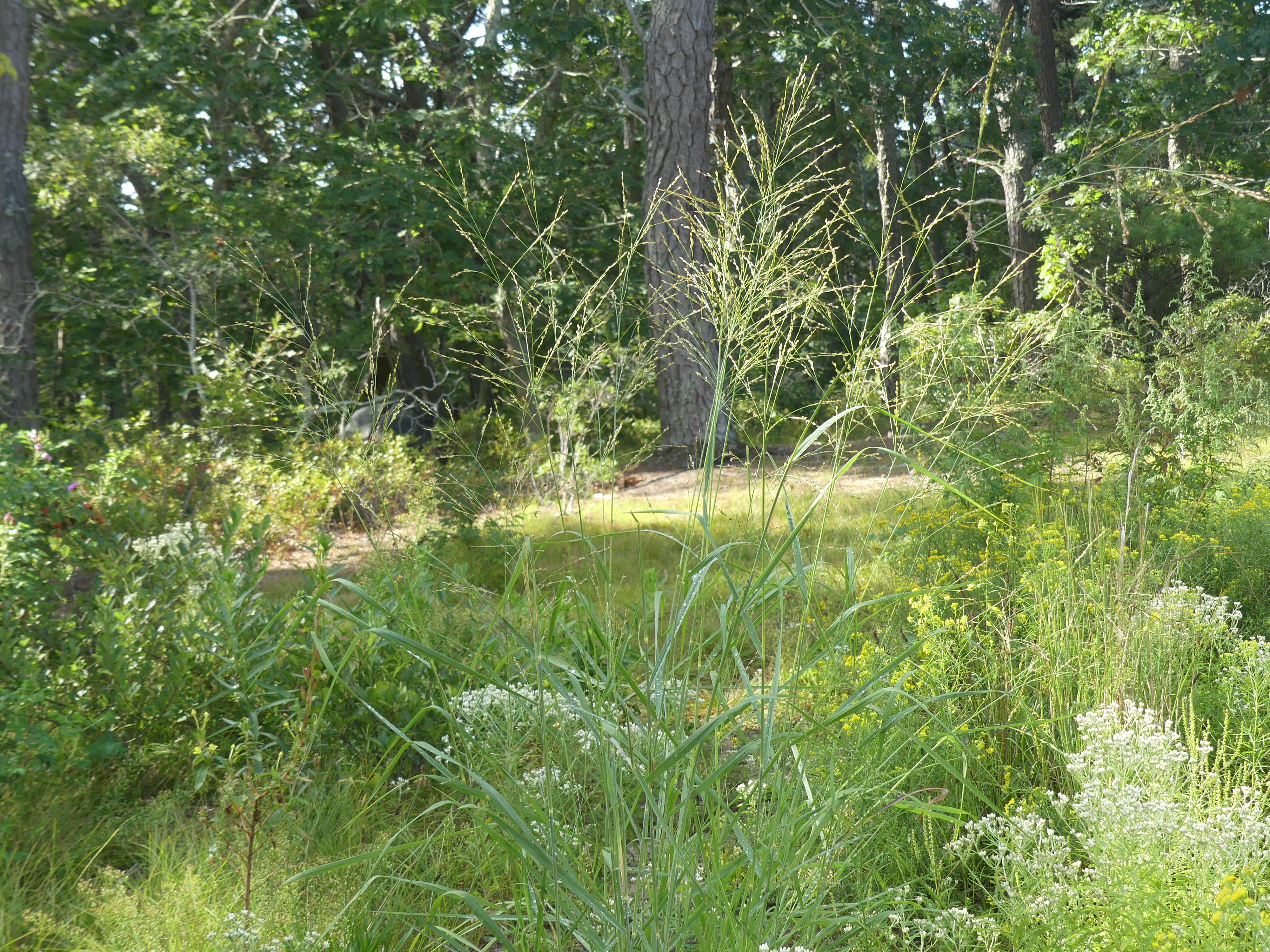
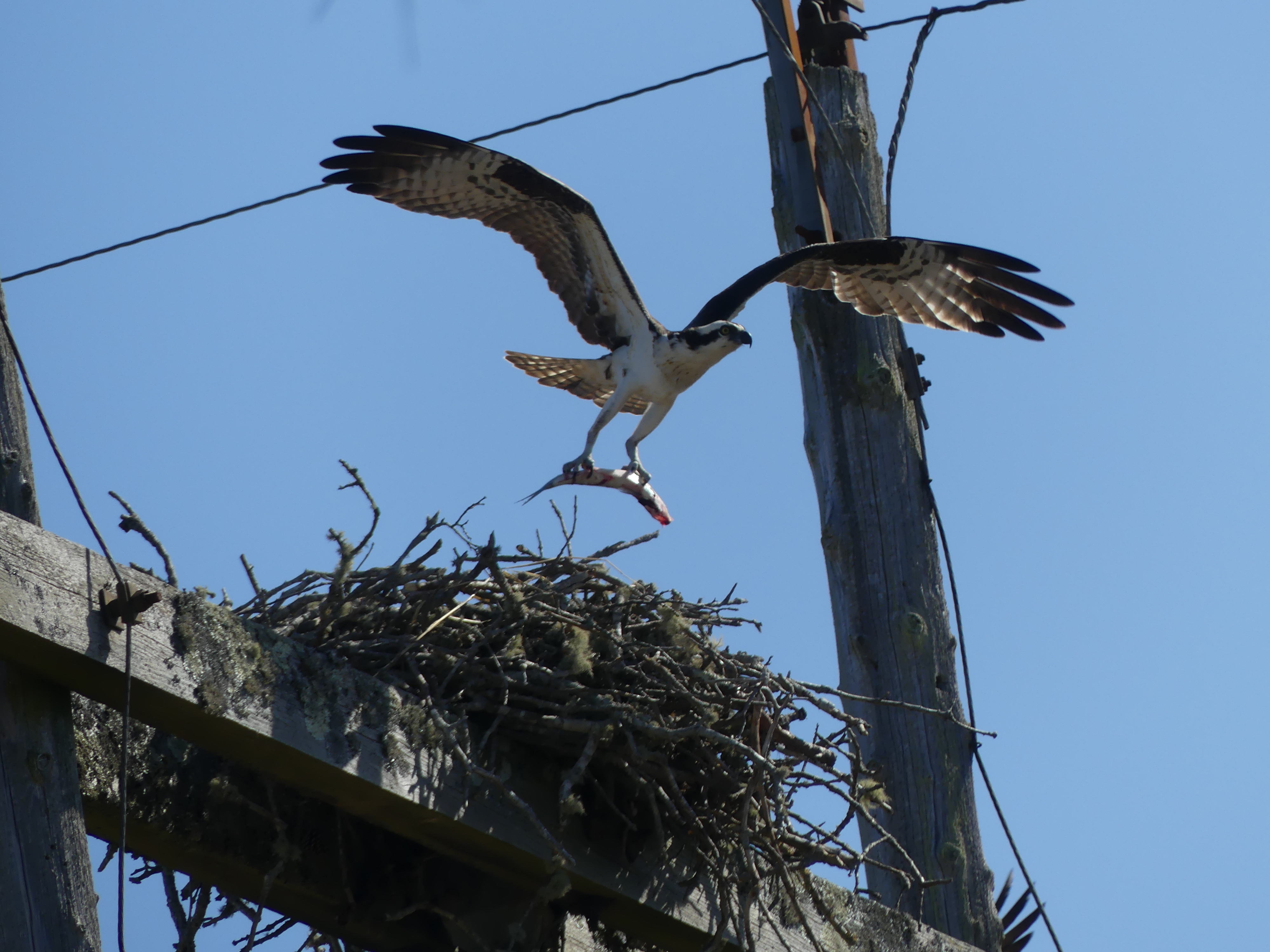
I now live on the edge of a right-of-way through the National Seashore held by our electric power company, Eversource. The way stretches for several miles across Cape Cod to accommodate the company’s power lines. In addition to this homocentric utilitarian purpose, the right-of-way incidentally hosts a unique ecosystem. Osprey nest on the many polls towering over the trees from which they can view the three nearby ponds. They can frequently be seen flying over the house with a fish in their talons. Reptiles, black racer snakes and eastern box turtles sun themselves on the face of this miles long gash in the forest. Wild flowers, mosses and bushes that would not otherwise grow in the constant shade of full grown trees thrive on this narrow strip of open space. Walking to the edge of my property in the spring and summer months, passing through the tangle of pitch pines and white oaks onto the right-of-way is like steping into an alpine meadow.

Of course, the forest is not so easily put to flight. The pitch pines and oaks re-seed themselves in the open areas where they take root and begin growing again. Within a short time their height reaches my head. That means, of course, that Eversource must make a return every three years or so to clear the land lest the trees grow to the point where they obstruct its workers’ access to the power lines. For the greater (human)good, the right-of-way community of living things must be ploughed under and reduced to a barren waste. The first time I witnessed this violent incursion, I was convinced this remarkable, biodiverse meadow was gone forever. But before the season had ended, the flowers, plants and shrubs were already beginning to make a comeback. The following spring saw an explosion of life where a year past there had been only broken sod. Today the pines and the oak are back-as soon will be Eversource, I have no doubt.

My son, the evolutionary biologist, sees in this remarkable tenacity evidence of life’s dogged determination to adapt to the most adverse circumstances. It is surely that. But I choose to see in it also, as does the prophet Isaiah, a sign of God’s faithfulness to creation.

“As long as the earth endures,
   seedtime and harvest, cold and heat,
summer and winter, day and night,
   shall not cease.” Genesis 8:22.  

However many scars we human creatures inflict upon the earth, God continues to work the miracle of healing. We may yet succeed in making this planet or many parts of it uninhabitable for our selves and future generations. God may not intervene to save us from the consequences or our own selfishness, stupidity and blindness. But those consequences will not come from God’s hand. God, for God’s part, will be as persistent, indeed, more persistent in reviving, healing and restoring God’s good earth as we are headstrong in our lust to exploit it. Will God’s tender, healing touch prevail over the violent and destructive work of our hands? The prophet Isaiah seems to think so.

The Christion tradition of my childhood had little interest in creation as such. The earth, its geographic features, animals and plants were little more than the stage for God’s redemption of humanity. Whenever God finishes with all God intends to do with the human race, the world ends. The redeemed will be welcomed into eternal life, the wicked cast into outer darkness. The earth? The sun? The other planets? The Stars? The galaxies? Presumably they will simply be discarded like a candy wrapper. That always seemed wrong to me. A universe thirteen billion years old and ninety-three billion light years in diameter built solely for a single species on a planet infinitesimal by comparison with the whole and whose existence is less than a nanosecond in this great expanse of time? It seems a terrible waste of time and material.

I have come to believe, however, that the biblical view of creation is much larger than the Sunday School version I learned. Human beings show up only at the end of creation. Their commission to rule over the earth in the first chapter of Genesis must be interpreted through the lens of  the second chapter where the human creature is charged with tilling and keeping the garden. As offensive as it may be to our homocentric pride, the earth was not made for human beings. Human beings were created to care for God’s good earth. The earth’s problems arise from humanity’s refusal to accept its created limits and its desire to exploit rather than care for God’s garden. The ensuing violence that filled God’s good earth was so powerful and pervasive that God was tempted to make an end of humanity altogether. The flood narrative makes clear God’s rejection of this solution to human violence. Instead, God calls Abram and his family to become the blessing humanity was intended to be.

What climate scientists tell us today about the precarious state of the earth’s oceans, lands and ecosystems echoes what the Hebrew prophets have been trying to tell us for centuries. Our sinful conduct has severe consequences for the environment. The evil we do to one another has a profound impact on the ecosystems of which we are all part. The Prophet Isaiah warns us that

“[t]he earth staggers like a drunkard,
   it sways like a hut;
its transgression lies heavy upon it,
   and it falls, and will not rise again. Isaiah 24:20.

God hates nothing that God has made and so will not destroy the human race. But God’s human creatures might very well succeed in doing exactly what God has vowed not to do. We may well succeed in making this planet, or substantial parts of it, uninhabitable for our children. But I do not need to be convinced that the end of the world is imminent to be deeply saddened by what we are doing to it. It is enough for me to know that my great grandchildren may never see an elephant or gorrilla except in picture books, that they might never know a wilderness area big enough for them to get lost in, that they might never witness the return of monarch butterflies to the Cape in midsummer. If such is the world we bequeath to our children’s children, there is good reason for mourning.

But while the prophet leads us to mourn for ourselves and our planet, that is not where we are left. As our lesson illustrates, Isaiah foresees the day when “waters shall break forth in the wilderness, and streams in the desert.” His hope and expectation is that the world will be healed. Clean water will cleanse the parched ground, rushes and reeds will grow where once only rocks and sand could be found. I have seen enough evidence of that on the Eversource right-of-way to be convinced that God never gives up hope for creation. If God refuses to give up on this planet, how can we?      

Though we humans are surely not the “be all and the end all” we imagine ourselves to be, Saint Paul nevertheless makes the case that creation’s redemption is tied up with that of humanity. “The creation,” Paul tells us, “waits with eager longing for the revealing of the children of God; for the creation was subjected to futility, not of its own will but by the will of the one who subjected it, in hope that the creation itself will be set free from its bondage to decay and will obtain the freedom of the glory of the children of God.” Romans 8:19-21. Once freed from its lust for dominance, its addiction to privilege, its captivity to the cycles of vengeance and violence, its allegiance to the false gods of nation, race, blood and soil, humanity will finally be in a position to recognize the earth as God’s sacred possession and accept with joy, gratitude and faithful obedience its role as the earth’s caretaker. Then creation, or the piece of it for which we are responsible, will be free from bondage to the savagery of our consumeristic greed, our exploitation of its land, waters and air and our destructive wars. When humanity is set free from the power of sin, creation will be set free from exploitation.

In the miracle of the Incarnation God went all in, not just for humanity, but for all creation. In Jesus’ Resurrection God made clear that God will not be deterred from God’s redemptive purpose by the worst evil of which we are capable. God refuses to give up hope for this world God has birthed. That is the basis of my hope-along with the tell tail signs of that redemption in places like the Eversource right-of-way.

Here is a poem by Marge Piercy celebrating spring time vegetation with an exuberance like Isaiah’s. Hope springs eternal because it springs from the One who is eternal.   

More Than Enough

The first lily of June opens its red mouth.

All over the sand road where we walk

multiflora rose climbs trees cascading

white or pink blossoms, simple, intense

the scene drifting like colored mist.

The arrowhead is spreading its creamy

clumps of flower and the blackberries

are blooming in the thickets. Season of

joy for the bee. The green will never

again be so green, so purely and lushly

new, grass lifting its wheaty seedheads

into the wind. Rich fresh wine

of June, we stagger into you smeared

with pollen, overcome as the turtle

laying her eggs in roadside sand.

Source: Colors Passing Through Us (c. Marge Piercy; pub. Alfred A. Knopf, 2003). Marge Piercy (b. 1936) is an American progressive activist, feminist and writer. She was born in Detroit, Michigan. While her father was not religious, Piercy was raised Jewish by her mother and her Orthodox Jewish maternal grandmother. Piercy was a poor student in early childhood. But when she was bed ridden with German measles and rheumatic fever, she developed a love of reading-which was about all she was able to do. After graduation from high school, Piercy became the first in her family to attend college, receiving a B.A. from the University of Michigan. After graduating, Piercy and her first husband went to France, but soon after returned to the United States. Living in Chicago, Piercy supported herself by working various part-time jobs. During this time, Piercy realized she wanted to write fiction that focused on politics, feminism, and working-class people. She became involved in the organization Students for a Democratic Society. Piercy’s first book of poetry was published in 1968 and her first novel was accepted for publication that same year. You can read more about Marge Piercy and sample more of her poetry at the Poetry Foundation website.