EIGHTEENTH SUNDAY AFTER PENTECOST
Prayer of the Day: O God, our teacher and guide, you draw us to yourself and welcome us as beloved children. Help us to lay aside all envy and selfish ambition, that we may walk in your ways of wisdom and understanding as servants of your Son, Jesus Christ, our Savior and Lord.
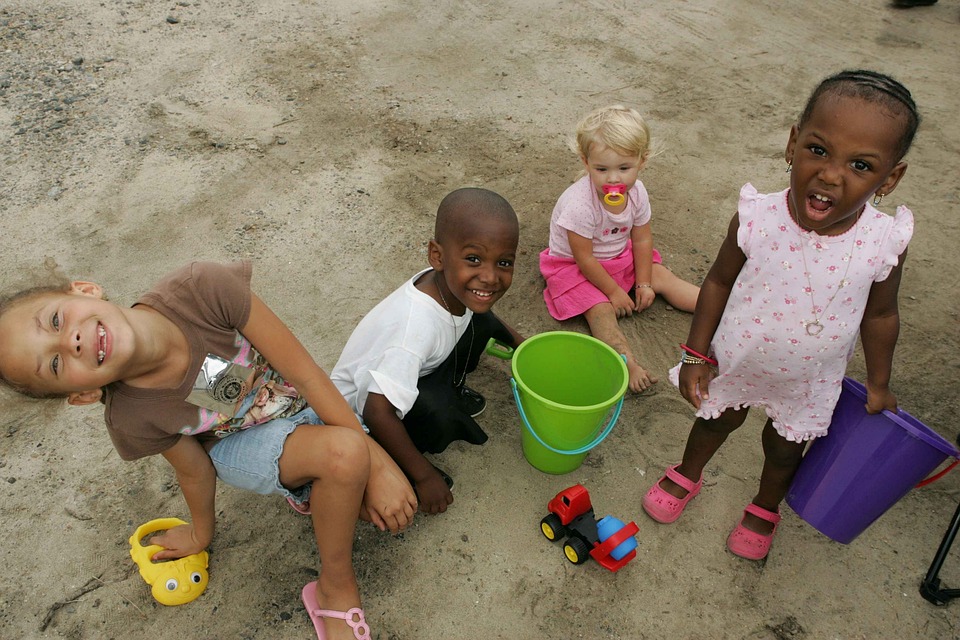
“Then he took a little child and put it among them; and taking it in his arms, he said to them, ‘Whoever welcomes one such child in my name welcomes me, and whoever welcomes me welcomes not me but the one who sent me.’” Mark 9:36-37.
Our relationship with children in this country is more than a little complicated and conflicted. We doll them up with designer cloths, throw wildly expensive parties celebrating each milestone in their lives, equip them with the latest digital doohinckies and spend hundreds of thousands to educate them. Yet for all that, our children suffer increasingly from anxiety, depression and substance abuse. Children are multibillion dollar consumers contributing substantially to our economy as Mattel, Playmobile, Lego and numerous other toy manufacturers can attest. Nevertheless, for all they contribute to the GNP, they have no voice, no vote, no super pac’s or lobbying organizations to represent their interests. Couples spend tens of thousands on IVF to conceive children even as we have children nobody seems to want warehoused in group homes throughout the country. Children, it seems, are more fungible products than persons; more objects than subjects in their own right.
In a newly published book, The Kingdom of Children, theologian and child advocate, R. L. Stollar observes:
“Our days-marked by extreme climate change, extreme wealth disparities, and extreme prejudice against marginalized people-are apocalyptic because they reveal the desires of our hearts in stark terms. As we grow numb to the sounds of mass shooters massacring children in schools, as parents watch their children suffer through formula shortages and school shutdowns and empty medicine aisles in the midst of a worldwide pandemic, it’s becoming strikingly clear how little our world values the lives of children. Our days reveal how much abuse and violence the powers-that-be will allow children to experience, provided it enriches their pockets or furthers their agendas to benefit adults.”
Sadly, the church does not have a great track record when it comes to prioritizing children. Church isn’t exactly the most child friendly environment. The two most common things a child hears in church are “be quiet” and “sit still.” That so many of our churches segregate children into nurseries and Sunday school during worship services speaks volumes. Church, as we practice it, is for adults. We have stood Jesus’ priorities on their head! I cannot begin to tell you how many people I have met over the years who left the church because of the way they were treated as children. We have not always been very helpful to children and young people struggling with tough issues, especially questions about gender identity and sexual orientation. Indeed, our traditional teachings on these matters have often led young people to believe that they are morally defective, unclean and unworthy of God’s love.
Sometimes, clergy and other church leaders have taken advantage of children’s natural trust and their vulnerability to abuse them horribly. I recently learned that a colleague of mine who served a neighboring parish to the one I recently served was arrested for repeatedly sexually assaulting an underage girl. I have always been aware that atrocities like these happen with shocking frequency among us clergy. But when it occurs in your own back yard, the stark horror of it all is brought into sharp relief. How God’s heart must break when God’s church becomes an agent of harm to God’s little ones.
Today’s gospel invites us to imagine what the church-what our world-would be like if, like Jesus, we prioritized children. What would worship that includes children look like?[1] I am not suggesting that we turn Sunday Eucharist into a children’s service or reduce the liturgy to single syllables set to nursery rhymes. But I believe there are ways to integrate children into worship, giving them space to express themselves in their own terms. Further, I believe children belong in church on Sunday morning. Most of the teachable moments with my children came when they raised questions like: “Why do we have to go to church? Why does the pastor have to talk so long? Why does everyone up in front of the church wear those white robes?” The genius of such pedagogy is nowhere better illustrated than in the Jewish Seder, which begins with the youngest child asking, “Why is this night unlike all other nights?”
Recognizing that children will be children, accommodations must be made for their attention spans and arrangements for them to move about freely. To that end, my last parish equipped the fellowship room adjoining and open to the sanctuary with a carpeted play area with soft toys to which children could go during the service. Yes, sometimes they got a bit noisy and some people complained that they were disruptive. But on the whole, this arrangement allowed for our children to be children while still remaining a part of the worshiping community. This is the message we, as church, need to be modeling for our world.
The world is not a safe place for children. Like many families today, Jesus’ family fled across an international border seeking sanctuary from political violence. Not much has changed. According to available data, approximately one in five children worldwide are affected by armed conflicts, with estimates suggesting that around 40% of civilian casualties are children. Some 148 million children in the world — about 1 in 5 — are chronically malnourished. And we are not talking only about the so-called developing world here. Nearly 14 million children in the United States faced hunger in 2023. According to the USDA, one in every five children, in this wealthiest nation in the world, is unsure where they will get their next meal. According to the National Coalition for the Homeless, 1.2 million children in the United States are homeless on any given night. However, the Coalition gets its information from schools. So when you consider that there is no accounting for children under 6 who are not in school, that number is probably much greater. Violent crime is particularly unkind to little ones. Anymore, simply going to school carries a risk of death or injury. Children and teens are more likely than the rest of us to die by gun violence.
What would the world look like if, like Jesus, we prioritized children? What if we determined that the life of a child is more important than any military objective? What if we determined that the lives of our children were more important than corporate profits that line the pockets of venture capitalists, inflate the salaries of CEOs and pad our retirement plans? What if we were more concerned about the kind of planet we will be leaving to our children than cheap fuel, fast cars and huge energy consuming homes? What if our children mattered more to us than any flag, nation, ideology or political affiliation?
Here is a poem by Michael Simms reflecting upon the legacy we adults have prepared for our unwitting children-the consequence, I believe, of making them an afterthought.
Who Will Tell Them?
It turns out you can kill the earth,
Crack it open like an egg.
It turns out you can murder the sea,
Poison your own children
Without even thinking about it.
Goodbye passenger pigeon, once
So numerous men threw nets over trees
And fed you to pigs. Goodbye
Cuckoo bird who lays eggs
In the nests of strangers.
Goodbye elephant bird
Who frightened Sinbad.
Goodbye wigeon,
Curlew, lapwing, crake.
Goodbye Mascarene coot.
Sorry we never had a chance to meet.
Who knew you could wipe out
Everything? Who knew
You could crack the earth open
Like an egg? Who knew
The endless ocean
Was so small?
Right now, there are children playing on the shore.
There are children lying in hospital beds.
There are children trusting us.
Who will tell them what we’ve done?
Source: Poetry (March 2021) Michael Simms (b. 1954) is an American poet, novelist and literary publisher. His poems and essays have been published in journals and magazines including Scientific American, Poetry Magazine, Black Warrior Review, Mid-American Review, Pittsburgh Quarterly, Southwest Review, Plume and West Branch. His poems have also appeared in Poem-a-Day published by the Academy of American Poets. Simms was born in Houston, Texas and attended the School of Irish Studies in Dublin, Ireland. He received his BA from Southern Methodist University and his MFA from the University of Iowa. Simms founded the literary publisher, Autumn House Press in Pittsburgh, Pennsylvania. He served as its Editor-in-Chief until 2016. He is the founder of the online literary magazine Coal Hill Review and the publisher of the political magazine Vox Populi. You can read more about Michael Simms and sample more of his poetry at the Poetry Foundation website.
[1] I feel compelled to say that I do not believe “children’s sermons” are effective tools for inclusion. Most such sermons I have observed serve mainly to entertain adults in the congregation at the expense of children. Few things are more terrifying for a small child than being singled out and called up in front of large crowd, most of whom are probably strangers to them. Worse yet is having to be questioned in front of that crowd.
 Peter's Outer Cape Portico