TWENTY-THIRD SUNDAY AFTER PENTECOST
Prayer of the Day: Eternal light, shine in our hearts. Eternal wisdom, scatter the darkness of our ignorance. Eternal compassion, have mercy on us. Turn us to seek your face, and enable us to reflect your goodness, through Jesus Christ, our Savior and Lord.
“Immediately [Bartimaeus] regained his sight and followed [Jesus] on the way.” Mark 10:52.
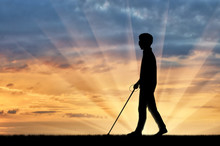
I have always read this story as one of healing, a journey from blindness to sight, incapacity to wholeness. Now I am not so sure. We are told that Bartimaeus was “blind.” I take that to mean, literally, that his eyes were inoperable such that he could not see with them. But does it follow that he was “blind?” I have had the privilege of knowing well two persons lacking the sense of sight. One of them was born without sight and the other lost her sight gradually in her teens. But I would not characterize either of these individuals as blind. I learned from them that, when one loses one’s sight, the remaining senses become more acute. My friend Dave (not his real name) was born without sight, yet he had a keen appreciation for sound, texture, smell and taste. He picked up on emotions, moods, conviction (or lack thereof) in the speech of others most of us frequently missed. He noticed the song of the chickadee, the call of a cricket and the sound of an acorn hitting the pavement, all of which is often just “white noise” to the rest of us. Though unable to see at all from the age of nineteen on, Melony (not her real name) managed to maintain a virtual library of remembered visual experiences that translated into stunning works of poetry evoking images that broadened the view of her readers well beyond the scope of normal sight.[1] For both of these individuals, it was their limitations that spurred their perception, insight and creativity to extraordinary levels.
So, too, I think that Bartimaeus had “eyes to see” notwithstanding his impaired vision. He was desperate to get Jesus’ attention, to the point of annoying his followers. Though told to pipe down, he shouted all the more to “Jesus, son of David.” When asked by Jesus what he wanted, he replied that he wished to receive his sight, but I think there was more to his request than that. We read that once he was able to see, he “followed Jesus in the way.” Can we assume that Bartimaeus desired to receive his sight to that end? Could it be that this “blind man” understood what Jesus’ disciples failed to grasp, namely, the “way” in which Jesus calls us to follow him? Is Bartimaeus among the few people, like the anonymous woman who anointed Jesus with oil and the centurion at the foot of the cross, who understood who Jesus was and what he was up to? Did he, like Dave and Melony, possess an enhanced perceptiveness honed by his impairment? People are not defined by their limitations. To the contrary, they define themselves in their struggle with those limitations. Some such limitations are physical disabilities, like blindness. Others include the challenge of being a parent in the midst of a bitter divorce; putting life together again after being fired; fighting addiction; dealing with depression. Of course, all of us face the limits imposed on us by our mortality. It is in these struggles that character is shaped, empathy developed, new skills discovered, forgiveness learned, hearts strengthened and minds expanded. As the poet reminds us, “that which ties us to the earth/enables us to fly.”
Tied to the Earth
She, a blue, checkered diamond with her tattered
tail fluttered in the wind.
I, a bug on the third floor of a glass house,
waited impatiently for my meeting to end.
All day I watched her through the glass
the wall clock took the measure of each hour
refusing to let it pass
until at last with painful effort
his hands embraced each of its sixty minutes.
She climbed heavenward, shimmying back and forth,
as if to join the sun in a game of hide and
seek behind the fluffy, white fair weather clouds.
And just when it seemed she might reach the sky,
I saw her dive,
and just before she hit
the branches of the topmost tree, catch herself
and once again began to climb.
What child, I thought, would stand
for the better part of the day
holding the string of a kite
when there are so many other games to play?
A thoughtful boy or girl it had to be.
One, perhaps, who dreams of flying?
Or merely longs to be free
like that checkered spirit dancing in the breeze?
The sun was setting as I reached my car.
Tired and broken I was from a day’s worth of nothing.
She, without a hint of fatigue, danced on.
I had to learn who held her string.
The answer lay a hundred yards or so up a dirt road
Leading to a house which I’m sure
had not seen a child in many a year.
There, caught on the end of a rusty gate,
was the string of the kite.
As the hour was getting late,
I carried on this inward debate:
To cut the string and set her free,
or walk away and simply leave her be?
Knowing that freedom would end her flight
and send her drifting downward in the night,
I turned and left things much the way they were.
A dancing silhouette against the sunset
is how I will forever think of her.
I learned from her the secret of how to reach the sky.
that which ties us to the earth
enables us to fly.
Source: Anonymous
[1] Both John Milton and the ancient bard, Homer are said to have been blind. Regardless whether that is historically accurate, it testifies to the longstanding recognition among artists and poets that human creativity transcends and is even enhanced by sensual limitations.
 Peter's Outer Cape Portico