
FIRST SUNDAY IN ADVENT
Prayer of the Day: Stir up your power, Lord Christ, and come. By your merciful protection alert us to the threatening dangers of our sins, and redeem us for your life of justice, for you live and reign with the Father and the Holy Spirit, one God, now and forever.
“Now when these things begin to take place, stand up and raise your heads, because your redemption is drawing near.” Luke 21:28.
“These things” about which Jesus speaks include “on the earth distress among nations confused by the roaring of the sea and the waves.” Thousands living throughout the southern United States can relate directly to that. This last September Hurricane Helene hit Florida with 140 mph winds, torrential rains and was accompanied by a record storm surge inundating Tampa Bay. Of course, storms have been with us from the dawn of time. Still, the increasing number and severity of hurricanes are reminders of a larger looming crisis of global proportions. The steady warming of our planet, due in large part to increased human generated carbon emissions, has resulted in rising sea levels, more extreme weather events, disrupted ecosystems, reduced biodiversity, food insecurity, water scarcity and potential mass migration from areas of the world that will soon be unable to sustain their populations.
Our responses to these effects of climate change run the gamut. Some of us are angry over the destruction of our planet and the consumptive economy that continues to drive it. Some of us are overwhelmed with the complexities and difficulties involved in addressing the issue. Some of us are in a state of despair, convinced the destructive forces unleashed by our exploitive behavior are already beyond prevention or mitigation. Some of us are in denial, refusing to believe that there really is a threat to our global environment. “Distress among nations,” “fear,” “foreboding of what is coming upon the world.” That seems to fit the description of our time.
In times like these, the wise keep their heads low, maintain a subdued profile and hunker down. But Jesus tells his disciples to “stand up and raise your heads.” What can be the rationale for such an irrational response? Just this: “your redemption is drawing near.” That was hardly evident in the first century when the Romans were sacking Jerusalem, burning its temple and erecting a virtual forest of crosses bearing writhing victims. It is no more evident in the twenty-first century as we face not only a global climate crisis, but also the demise of democratic institutions worldwide and the rising threat of catastrophic world wars. Nevertheless, says Jesus, there are signs of the inbreaking of God’s just and gentle reign to be seen for those looking for them.
Jesus tells a parable of trees budding in early spring to make his point. The seasons change no matter who is in power, which nations are on the ascendence and regardless the legislation passed by governments. Like the onset of Spring, so the reign of God comes with or without human involvement. We cannot make it come any sooner, nor can we finally stand in its way. That is liberating news. Establishing the the reign of God is not our responsibility. It is a slow process involving infinite patience and infinite time that only God possesses. Redemption is a long game-too long for any one lifetime or the lifespan of any nation. An impatient humanity has done a good deal of harm to the world by its misguided efforts to establish the reign of God-or some secular version of it. The classless society; the thousand year Reich; “civilization” of “primitive” societies; manifest destiny-what is all of that but an effort to impose God’s reign (or some twisted secular facsimile) on a world that is not yet ready for it. Such efforts, born of our insufferable impatience, invariably end in violence and injustice.
To an anxious and impatient people, the Advent message is this: wait. That does not come easily. We have grown used to having the answers and information we want at a keystroke. The latest news pops up on our smart phones. The state of the markets appears in real time at the lower corner of our computer screens. Weather forecasts for every time zone and locale can be found online twenty-four/seven. Every household product, food item and digital doohickey can be ordered from Amazon and delivered within a day. We are a people used to getting what we want when we want it. Jesus tells us, however, that God moves at God’s own leisurely pace. God’s kingdom will come when God is good and ready for it to come, not a moment sooner. And there isn’t a damn thing we can do about it.
None of this should be taken to mean that what we do does not matter or that human agency is nonexistent. The way we live matters precisely because God uses our actions, small and inconsequential as they might appear to us, in forming God’s new creation. Our faithful action is never simply our own. God’s Spirit works “in, with and under” what we do to accomplish God’s own purposes. For that reason, our small acts might turn out to be more consequential than we could have imagined. How do you know that the refugee child you sponsor will not someday discover the vaccine for AIDS? How do you know that teenager you befriended and mentored might otherwise have turned to violence against his classmates in loneliness and despair? The reality is that we will all die, leaving behind a lot of unfinished business, loose ends and unmet goals. But, as Saint Paul reminds us, “the one who began a good work among you will bring it to completion by the day of Jesus Christ.” Philippians 1:6. Or, as a rabbi preaching at an interfaith Thanksgiving service reminded me today, “we cannot expect to finish the great work of saving our planet, but we cannot abandon it either.”
Though the arrival of Spring is inevitable, the blossoms acting as its harbingers are fragile signs. Like the grass of the field, they are destined to wither and fade. So, too, the signs of God’s coming gentle reign are delicate, vulnerable and subject to damage, loss and reversal. The hard won civil rights achieved under the leadership of Martin Luther King, Jr., Ceasar Chavez and John Lewis have sadly been reduced and undermined by a hostile Supreme Court. The progress made in this country toward reducing dependency on fossil fuel is likely to be reversed by the incoming Trump administration. The church in which I was baptized and grew up, a lively and vibrant center of ministry, closed its doors a few years ago. Nevertheless, though the blossoms fade, Spring is still bound to come. With that assurance, I lift up my head and look to the eastern horizon with hope, dark though the sky seems to be at the moment. I continue to do my daily work of care giving, pick up the plastic bottles I find as I walk on the beach, make my communion visits and write articles like this. None of this is likely to change the world, but I do it just the same, offering it up for whatever use it might be to the One who makes all things new.
Here is a poem by Keith Leonard speaking about what it looks like to do justice, love kindness and walk humbly with God-in small but faithful ways that are signs pointing beyond themselves.
Boléro
From the kitchen, I catch the neighbor
cross the street to switch off my car’s interior lights.
He returns to his house without announcing the favor.
For the last three years, a friend has woken early
and walked the beach, combing for bottle caps
and frayed fishing line. She mentions this
only casually at lunch, after I’ve asked
what she did that morning.
Care has a quiet soundtrack: the sycamore’s
rustling leaves, your nails tracing my shoulder blades.
A melody that repeats—a bit like Ravel’s Boléro.
When it was first performed, a woman shouted,
Rubbish! from the balcony. She called Ravel
a madman. I think I understand. I wish I didn’t.
I’ve been taught that art must have conflict,
that reason must meet resistance.
Source: Poetry (December 2023) Keith Leonard is the author of Ramshackle Ode (c. 2016; pub. by Ecco/Harpercollins). He has been awarded grants from the Sustainable Arts Foundation, the Greater Columbus Arts Council and the Ohio Arts Council. He has been awarded fellowships to the Bread Loaf Writers’ Conference, the Sewanee Writers’ Conference and Indiana University where he earned an MFA. Leonard’s recent poems can be found in Poetry, American Poetry Review, the Believer and elsewhere. He lives in Worthington, Ohio. You can sample more of Kieth Leonard’s poems at the Poetry Foundation website.
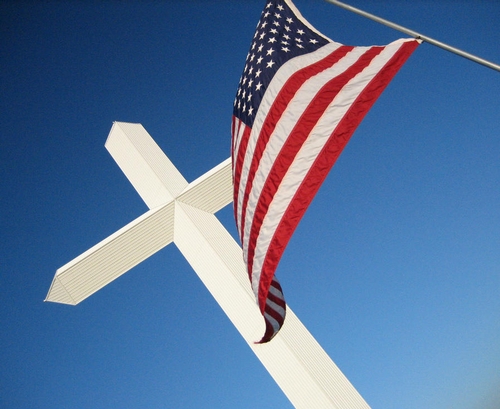


 Peter's Outer Cape Portico