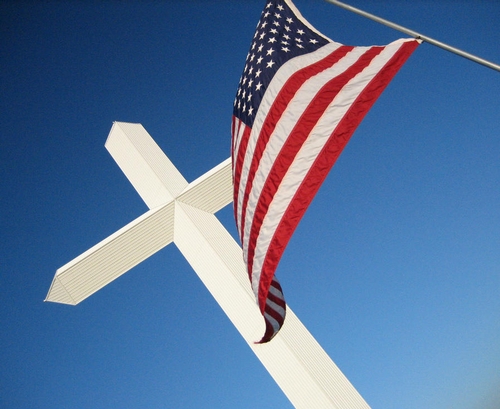
SUNDAY OF CHRIST THE KING
Prayer of the Day: Almighty and ever-living God, you anointed your beloved Son to be priest and sovereign forever. Grant that all the people of the earth, now divided by the power of sin, may be united by the glorious and gentle rule of Jesus Christ, our Savior and Lord, who lives and reigns with you and the Holy Spirit, one God, now and forever.
“Jesus answered, ‘My kingdom is not from this world. If my kingdom were from this world, my followers would be fighting to keep me from being handed over to the Jews. But as it is, my kingdom is not from here.’” John 18:36.
The celebration of Christ the King on the last Sunday of the church year is a relatively new addition to the liturgical calendar. It was instituted in 1925 by Pope Pius XI in response to what he characterized as growing secularism. The old monarchies governing Europe had been dissolved or relegated to mere ceremonial functions by this time. Power and governance had passed to the modern nation state. As Pius saw it, the new order was turning into a breeding ground for dangerous and dehumanizing ideologies elevating loyalty to the nation state and its rulers over all other claims. This exaltation of the nation state amounted to idolatry in his view, constituting a threat both to Christian faith and human worth and dignity. Sadly, the horrific events that unfolded in the following decades proved him right. Sadder still is our generation’s failure to learn from this history the dark places to which nationalistic idolatry invariably leads. Saddest of all is the American church’s failure to address the godless ideology of nationalism as it rears its ugly head once again, not only within our nation, but within the very heart of our congregations.
My first encounter with Christian nationalism did not come from the far right. It occurred within what I would characterize as a moderately liberal congregation in my progressive Evangelical Lutheran Church in America (ELCA). I was serving then as the assistant to the pastor. One Sunday I arrived with my alb and stole ready to serve as liturgist to the presiding senior pastor, who informed me that this Sunday had been designated Girl Scout Sunday. I was to introduce the scout leaders and offer up a short prayer, after which a troop of young girl scouts would march up bearing the flag of the United States. The flag would be posted in front of the altar and the scouts were to lead the congregation in the Pledge of Allegiance. I have to tell you that, on a scale of conflict avoidance from one to ten, I am a fifteen. I am very much inclined to go along to get along. But I just could not bring myself to take part in this ritual.
Needless to say, the senior pastor was more than a little upset with me. He pointed out that I could have given him notice weeks in advance if I had a problem taking part in Girl Scout Sunday. He was probably right about that. At the time, I was practicing law full time while serving as assistant pastor. I didn’t always pay close attention to the church calendar and that was on me. He also felt that I was being unreasonable, that the Girl Scouts served an important role in providing community, support and activities for young girls. He pointed out that they were partners in teaching many of the civic and moral values we also hold dear. This was an opportunity for us to engage with the larger community, show our support for an organization supportive of young girls and welcome and include in our worship many children who would never have had any contact with the church before. There was no hint of right wing jingoism in any of this. My senior pastor’s arguments were all ones to warm the cockles of a progressive’s heart. So, why not just hold my nose and do it?
To make a long story short, I held my ground. The senior pastor took over the role I was supposed to play during the first half of the service while I remained in the sacristy. I joined the service later to assist with communion. You might think me unreasonably stubborn to make such a fuss about a benign ceremony for children. Would I really want to spoil these girls’ experience for the sake of making an abstract theological point? To be clear, I do have a stubborn streak and there have been times when I have dug my heels in when I ought to have compromised. That said, this was one stand I do not regret having taken. I say that because I believe the places in which we worship are holy ground. It matters which objects we place in front of the altar, which symbols we absorb into our worship and who and what we worship and venerate. We gather on the Lord’s day to worship the Triune God, not to venerate the state. We confess our faith in that God by reciting the ecumenical creeds, not by pledging allegiance to the state. The “we” gathered about the altar to receive the Body and Blood of Christ are not gathered as fellow Americans. We are gathered as members of the one, holy, catholic and apostolic church which recognizes no singular nation “under God.” To the contrary, we believe “God shows no partiality, but in every nation anyone who fears him and does what is right is acceptable to him.” Acts 10:35. There is no reconciling the God and Father of Jesus Christ confessed in the creeds and the patron deity of the United States.
I tell this story because there is much talk these days about Christian Nationalism, particularly as it pertains to conservative white evangelicalism. I have had a lot to say about it myself. However, it is important (and only fair) to recognize that the Christian right is not the sole propagator of this heresy. The religion of nationalism is deeply imbedded in the DNA of nearly all American Christianity. Enter the sanctuary of any church, protestant or catholic, liberal or conservative and the chances are very high that you will find there, usually on the same level as the altar, an American flag with its evil twin, the red, white and blue so-called “Christian flag” facing opposite. Christian clergy, including yours truly, routinely offer benedictions, prayers and blessings for celebrations of America’s wars and its casualties. Christian churches in this country provide chaplains to soldiers and sailors who, in addition to their ordination vows, swear allegiance to the armed forces. Although the United States has never had a state sponsored church with an official religion, it is itself a religion that imposes itself into the heart of congregations in numerous ways that we have come to consider part and parcel of what it means to be Christian. Thus, when we point the Christian nationalist finger at conservative evangelicals, we need to acknowledge the three pointing back at ourselves.
Perhaps we need to take a step back and question some basic assumptions typically made about states and statehood. The modern nation state is, well, modern. It has been with us only for the last couple of centuries which, in the grand historical scheme of things, is rather brief. We Americans assume, however, that constitutional democratic republics are on the precipice of a social evolutionary path from the darkness of tribalism, tyranny and autocracy. But in truth, constitutions have been as much an ally of tyranny as an opponent. The United States Constitution has been employed to uphold slavery, enable Jim Crow and legalize the dispossession of indigenous American tribal communities. The same constitution that for fifty years guaranteed bodily integrity to women is now interpreted, without amendment, to guarantee nothing of the kind. If the constitution means whatever the current make-up of the supreme court says it means with no deference to precedent, it doesn’t guarantee anything to anyone.
Faith in democracy is likewise dubious. The Union County Courthouse in Elizabeth, New Jersey, a venue I frequented in the days when I still practiced law, bears on its stone façade the Latin phrase, “Vox populi, vox dei.” Translated, it means “the voice of the people is the voice of God.” That sentiment is not born out in scripture or history. In the Bible, the voice of the people demanded a king against the advice of God’s prophet Samuel. They got their wish-along with some dire consequences. The voice of the people acclaimed the false promises of the prophet Hananiah rather than the dire warnings of the prophet Jeremiah. That did not go well. The voice of the people demanded Barabbas instead of Jesus. Historically, democracies have shown themselves quite capable of voting themselves out of existence. In short, constitutional democracies are only as sound as the wisdom, fairness, integrity and compassion of the persons they govern. Absent these virtues, democracy is simply mob rule.
I am not suggesting we abandon democracy or give up on the rule of law. I am certainly not recommending autocracy. I believe, however, that the degeneration of our civil discourse, indifference to injustice and the paralysis of our government are attributable in large part to a near divinization of the state. Politics has become the new religion and our political campaigns have become holy wars. Rather than a deliberative pursuit of the common good through reasoned argument, debate and compromise, it has become a zero sum game, a contest between good and evil. Our churches have contributed to this trend by internalizing and sanctifying American mythology into our hymnody, teaching and practice. The gospel of Jesus Christ has been conflated with the American dream, manifest destiny and national exceptionalism. The narratives glorifying American wars, justifying its ruthless conquest of indiginous cultures and the exploitation of their lands have become comingled with the history of Israel’s conquest of Canaan and the martyrdom of the saints. We have made of our nation an idol which, like all idols, eventually demands a blood sacrifice, the offering of what is most precious to us. And like all idols, it fails to deliver on all of its grandiose promises.
The lessons for Christ the King Sunday pass judgment on nationalism of all kinds. The crowd of five thousand would have crowned Jesus king after he fed them. Jesus would not have it. Neither will he let Pilate pin that label on him. His kingdom, he tells us, “is not of this world.” That does not mean it is not in this world or that it exists only “way beyond the blue.” It does mean that God’s reign will not come through the instrumentality of government or the practice of politics. That is precisely why Jesus would not accept the devil’s offer to place in his hands the authority of all the world’s kingdoms. Such power is of no use in building the new creation God longs to give us. God has no interest being the sort of king the crowd desires or that Pilate imagines. God will not impose God’s reign by means of military power or political authority. God will reign through love, or not at all.
Does this mean that government is evil or that politics is inherently sinful? No. When government is not idolized, when politics is not seen as the tool for banishing evil, destroying perceived enemies or building what we imagine to be the ideal society it loses its toxicity. When the political process is understood as the means by which we corporately work together to love our neighbors and care for the most vulnerable among us, then it can be a blessing, like all of God’s good gifts. Politics cannot give us a new heaven and a new earth, but it can help us build a framework under which common ground is found and the common good pursued. It cannot reconcile all of our conflicts, but it can create forums where conflicts that might otherwise lead to violence can be mediated. Politics can curb the most destructive human instincts and make space for the breaking in of God’s reign of justice, peace and reconciliation. It can hold society together until God’s reign comes in its fullness. For that reason, it deserves our attention and participation.
To acknowledge that God alone is truly sovereign, that the earth is the Lord’s and everything in it, that nations, our own included, are but a drop in the bucket and that humanly constructed systems of authority and governance are merely provisional liberates us from bondage to the destructive and hateful ideologies that make gods of nation, race, blood and soil. To acknowledge Jesus Christ as king frees politics to become merely politics once again.
Here is a poem by Ha Jin addressing the idolatry of nationalism.
All You Have is a Country
You are so poor that all you have is a country.
Whenever you open your mouth
you talk about the country
to which you can no longer return.
China is a giant shield that you use
to conceal your cowardice and to preempt
the onslaught of duties and hardships.
You dare not take these as your rights:
the warm sunlight, clean water, fresh air,
a happy mood for an ordinary day.
As long as you live, you want to grieve
for the fairy tale of patriotism.
You dare not take a country as a watchdog—
a good dog wags its tail to please its master,
becomes fierce in deterring burglars;
a bad dog ignores invaders
and only bites and barks at its master.
You dare not clasp the dog’s ear,
telling it, “You won’t have food
if you continue to misbehave like this.”
Actually, you are merely a grain of rice
that fell through China’s teeth,
but you treat it as your god,
your universe, and the source
of your suffering and happiness.
Source: A Distant Center (c. 2018 by Ha Jin; pub. by Copper Canyon Press). Jin Xuefei (b. 1956) is a Chinese-American poet and novelist. He publishes under the pen name Ha Jin. He was born in Liaoning, China and grew up in the chaos of early communist China. At thirteen, Jin joined the People’s Liberation Army during the Cultural Revolution. He left the army when he was nineteen and entered Heilongjiang University. There he earned a bachelor’s degree in English studies. Thereafter he earned a master’s degree in Anglo -American literature at Shandong University. He was on a scholarship at Brandeis University when the 1989 Tiananmen Square protests and massacre occurred. Jin emigrated to the United States thereafter. He currently teaches at Boston University in Boston, Massachusetts. Prior to that he taught at Emory University in Atlanta, Georgia. You can read more about Ha Jin and sample more of his poetry at the Poetry Foundation website.
 Peter's Outer Cape Portico
i do agree with so much of what you say. But, i would just raise one question. To me, politics and government are, in fact, inherently sinful since they are man-made. This just means that our dealings with them are with discernment, not worship. Because they exist through the agency of sinful humans, they are equally corrupt and self-dealing and injust. There are many other structures and systems that are sinful. We do need to go deeper to understand how to root out unredeemable systems such as slavery, and wrestle more with the unjust aspects of systems such as corporations.
Thank you for taking a stand in the scenario you described. It bothers me that the American flag is thoughtlessly/piously displayed at the front of so many churches.
LikeLike