Monthly Archives: December 2024

Divinity of Humanity

SECOND SUNDAY OF CHRISTMAS

Jeremiah 31:7-14

Psalm 147:12-20

Ephesians 1:3-14

John 1:1-18

Prayer of the Day: Almighty God, you have filled all the earth with the light of your incarnate Word. By your grace empower us to reflect your light in all that we do, through Jesus Christ, our Savior and Lord, who lives and reigns with you and the Holy Spirit, one God, now and forever.

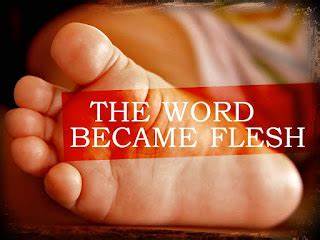
“And the Word became flesh…” John 1:14.

Over the years my prayers, preaching and teaching have shifted, slowly and almost imperceptibly, away from a singular focus on the cross and redemption to the miracle of the Incarnation and what the Eastern Church calls “deification” or “theosis.” This, I believe, has nothing much to do with humans attaining divine attributes like “omniscience,” “omnipotence” and “omnipresence.” It is more like Saint Paul’s admonition last week in our lesson from Colossians, urging us “to clothe yourselves with compassion, kindness, humility, meekness, and patience.” Colossians 3:12. It involves having “the same mind…in you that was in Christ Jesus.” Philippians 2:5. This is a possibility now precisely because the Word became flesh, God became human-and remains so.

I do not mean to say that the cross and redemption have lost any degree of significance in my understanding of the faith. Rather, they have taken on a deeper and more profound meaning as my appreciation of the Incarnation has grown. The Incarnation, as John the Evangelist tells us, was God’s intent for humanity and the world from the beginning. The cross illuminates the terrible price God was willing to pay in order to carry through with this intent in spite of human sinfulness and the worst depravity of which we are capable. However much selfishness, cruelty and indifference is manifest in human existence, God remains indwelt there. Every human being is therefore the image and temple of God. The desecration of sanctuaries, temples and cathedrals can never desecrate or diminish God. But each act of violence, unkindness and indifference inflicts wounds on the body of the resurrected Christ.

It is for this reason that racism, defamation of migrants, vilification of LGBTQ folk, criminalization of begging and homelessness, pouring arms into the conflicts in Gaza and Ukraine, prosecuting church organizations providing humanitarian aid to immigrants at the border are not merely immoral. They are frontal attacks on the Word that became flesh. That is why, when asked which commandment is first of all, Jesus responded that the first commandment requires us to “love the Lord []our God with all []our heart, and with all []our soul, and with all []our mind.” Note well, however, that Jesus adds that the second is like it, namely, “You shall love your neighbor as yourself.” Matthew 22:34-40. The two commandments are, in fact, one. To love God is to love one’s neighbor and all who love their neighbors are loving God, whether they know it or not. On these two commandments, Jesus insists, rest the entire law and the prophets. Matthew 22:40. Jesus was frequently compelled to point out that the Sabbath and, indeed, the entire law was created to serve the needs of people, people were not created in order to follow rules.  

Much of Christian ethical reflection has been grounded in readings of the scriptures that are not grounded in the miracle of the Incarnation, but based rather on casuistic reasoning from specific biblical texts, often torn from their context. Such reasoning has given us hat mandates for women, exclusion of women from positions of church leadership, prohibitions against long hair for men and particularly cruel treatment of gay, lesbian and transgender persons. Then, too, there are the many prohibitions that find no basis in Scripture but reflect belief in a god obsessed with rule keeping and eternally incensed with the slightest infraction. I refer to the prohibitions against dancing, drinking alcohol, playing pool, playing card games, two piece bathing suits for women and other forbidden practices. Such religion makes of the law a ruthless slave master rather than a servant of humanity for facilitating justice, reconciliation and peace. [1]  

Making the Incarnation the starting point for ethical reflection is transformative. No longer is God’s assuming human flesh a distasteful necessity for dealing with human sin. Instead, it represents the culmination of God’s eternal purpose for humanity and for all creation. The cross, then, is a twofold revelation. In the first place, it reveals the depths of human depravity in our rejection of the very best God has to give us. Second, and more importantly, it reveals God’s determination not to be deterred by the world’s rejection of the Son. God will not be drawn into the vortex of retributive violence by which we are enslaved. Rather than responding to our violence with divine retribution, God responds by raising up the rejected Son and offering him to us again. The cross and resurrection is a triumph of mercy over judgment in the heart of the Triune God, God’s refusal to be driven from the flesh God assumes. At our very worst, God remains Immanuel, God with us. It is this belief that enables disciples of Jesus to meet hostility with hospitality, abuse with forgiveness, violence with a witness for peace, hatred with understanding, the darkness of fear with the light of hope.  

Here is an incarnational poem/prayer by Michel Quoist dwelling on the Word that sanctifies human flesh.

The Pornographic Magazine

Lord, I am ashamed of this magazine.

You must be profoundly hurt in your infinite purity.

The office employees all contributed to buy it.

The boy ran to fetch it,

And pored over it on the way back.

Here it is.

On its shining pages, naked bodies are exposed;

Going from office to office, from hand to hand-

Such foolish giggles, such lustful glances….

Empty bodies, soulless bodies,

Adult toys for the hardened and the soild.

And yet, Lord, man’s body is beautiful.

From the beginning you, the supreme artist, held the model

          before you, knowing that one day you would dwell in a

          human body when taking on the nature of man.

Slowly you shaped it with your powerful hands; and into its

          inert matter you breathed a living soul.

From then on, Lord, you asked us to respect the body, for the

          whole body is a conveyer of the spirit,

And we need this sensitive instrument that our spirits may

          commune with those of our brothers.

Words, in long processions, lead us toward other souls.

A smile on our lips, the expression in our eyes, reveal the soul.

The clasp of a hand carries our soul to a friend,

A kiss yields it to the loved one.

The embrace of the couple unites two souls in quest of a new

          child of God.

But it was not enough for you, Lord, to make of our flesh the

          visible sign of the spirit.

Through your grace the Christian’s body became sacred, the

          temple of the Trinity.

A member of the Lord, and a bearer of this God,

Supreme dignity of this splendid body!

Here, Lord, before you tonight, are the bodies of sleeping men:

The pure body of the tiny child,

The soiled body of the prostitute,

The vigorous body of the athlete,

The exhausted body of the factory worker,

The soft body of the playboy,

The surfeited body of the rich man,

The battered body of the poor man,

The beaten body of the slum child,

The feverish body of the sick man,

The painful body of the injured man,

The paralyzed body of the cripple,

All bodies, Lord, of all ages.

Here is the body of the fragile new-born baby, plucked like a ripe

          fruit from its mother.

Here is the body of the light-hearted child who falls and gets up,

          unmindful of his cuts.

Here is the body of the worried adolescent who doesn’t know that

          it’s a fine thing to grow up.

Here is the body of the grown man, powerful and proud of his

          strength.

Here is the body of the old man, gradually failing.

I offer them all to you, Lord, and ask you to bless them, while

          they lie in silence, wrapped in your night.

Left by their sleeping souls, they are therefore before your eyes,

          your own.

Tomorrow, shaken from their sleep, they will have to resume

          work.

May they be servants and not masters,

Welcoming homes and not prisons,

Temples of the living God, and not tombs.

May these bodies be developed, purified, transfigured by those

          who dwell in them,

And may we find in them, at the end of their days, faithful

          companions, illumined by the beauty of their souls,

In your sight, Lord, and in your mother’s,

Since you both belong to our earth,

And all the bodies of men will be the guests in glory of your

          eternal heaven.

Source: Quoist, Michel, Prayers (c. 1963 Sheed & Ward, Inc.) Translated by Agnes M. Forsyth and Anne Marie de Cammaille. Michel Quoist (1921-1997) was ordained a priest in1947. A French Catholic of the working-class, Quoist reveled in presenting Christianity as part of gritty daily reality, rather than in forms of traditional piety. He was for many years pastor to a busy city parish in Le Havre, France serving a working class neighborhood and developing ministries to young people through Catholic Action groups. Prayers, the book from which the above poem was taken, has been translated from the original French into several languages including Hungarian, Polish, Chinese, Portuguese, Swedish and English.


[1] Coupled with this misconception is the over simplistic rendering of the doctrine of “substitutionary atonement,” a rendering of which is spelled out in the tract popular among Evangelicals entitled “The Four Spiritual Laws.” According to this theory, God is in an impossible position. Being completely righteous, God cannot abide the slightest infraction of God’s rules, the punishment for which is eternal damnation. Yet God also desires to show mercy and forgiveness to God’s creatures, but without compromising God’s perfect righteousness by simply overlooking human sin. By taking on flesh in the person of Jesus who, in turn, takes the wrap for our sins, God is now able to forgive human sin while retaining God’s perfect righteousness. Problem solved. While the math works, the theory seems to indicate that God is helplessly trapped in the mechanics of God’s own metaphysic. Like the sympathetic meter maid who would love to give you a pass on parking illegally for just a second, but cannot do it because, alas, the ticket has been written out and is now in the system, so God cannot forgive sin without a payment of some kind. Yet the proposition that God cannot forgive sin without a suitable punishment strains credibility. If my Mom could forgive my breaking an antique lamp she inherited from Grandma that could never be replaced, I find it hard to believe God is incapable of being similarly magnanimous. For more on this, see “The Cross-Because Love Hurts.”  

Walking With Our Neighbors through the Largest Mass Deportation in US History

FOURTH SUNDAY OF ADVENT

Micah 5:2-5a

Luke 1:46b-55

Hebrews 10:5-10

Luke 1:39-55

Prayer of the Day: Stir up your power, Lord Christ, and come. With your abundant grace and might, free us from the sin that binds us, that we may receive you in joy and serve you always, for you live and reign with the Father and the Holy Spirit, one God, now and forever.

“[God] has shown strength with his arm;
   he has scattered the proud in the thoughts of their hearts.
He has brought down the powerful from their thrones,
   and lifted up the lowly;
he has filled the hungry with good things,
   and sent the rich away empty.” Luke 1:51-52.

This theme echoes throughout Luke’s gospel and, indeed, throughout the scriptures. God’s preferential option for the poor is unmistakable. As I have said previously, this does not mean that God cares less for the rich. It only means that salvation for the rich means being liberated from the grip of greed and from lives of ruthless consumption and exploitation. For those who have grown accustomed to believing they are entitled to more than daily bread, being reduced to a sustainable lifestyle will likely feel like being “sent away empty.” To those who imagine that they are entitled to taking what they want when they want it, having to take their place in line will no doubt seem like an afront. For those who imagine that they are “self made” and absolutely entitled to everything they own, an economy based on distributive justice will feel like robbery.

None of this plays well in a season where consumption reaches epic proportions. Every year at this time I hear again and again form some quarters, “put Christ back into Christmas.” I am not convinced he was ever there to begin with. Moreover, when I have asked people what they mean by putting Christ back into Christmas, I get answers like “Merry Christmas” instead of “Happy Holidays.” Keep the plastic Nativity display in the town square or that sculpture of Santa kneeling at the manger-it’s that sort of thing people imagine “puts Christ back into Christmas.” But it seems to me that if one really wants to put Christ back into Christmas-and the rest of the year as well, you take the side of the poor, the marginalized, the folks at the bottom of the social later, the victims of the world’s unsustainable practice of exploitation and oppression. Among these are migrants who are facing an unprecidented threat from the incoming Trump administration.

Jesus calls us to take sides. There is no neutrality, no “good people on both sides” waffling, no room for middle ground, not when it comes to choosing whether to stand with the oppressed or join their oppressors. Depending on whether the current administration’s threat to carry out the “greatest mass deportation” in this country’s history is just more Trumpian hot air or whether it actually will translate into policy, we may be confronted with the call to take the side of our neighbors facing deportation in some very concrete ways.    

Now I will grant that it is sometimes hard to find one’s footing under these circumstances. You may find yourself asking, “what am I supposed to do?” I ask myself the same question every day. But I refuse to be cowed by the enormity of the task to which Jesus calls us and I refuse to be convinced that anything I do is too small, too late and too ineffective. So Sesle and I are starting with the opening paragraph to our annual Christmas letter to family and friends which reads as follows:    

“Dear Family and Friends,

Our Lord’s Nativity reminds us that we worship as God’s Son a child born out of wedlock to a homeless couple forced to flee as refugees from political violence in their homeland and to seek sanctuary in a foreign country. So we invite you to pray with us this Christmas for all refugees in our midst who have fled persecution, poverty and violence. May they find among us a warm welcome, a helping hand and friends willing to come to their defense. May we treat these neighbors with such kindness that we shall not have to hear our Lord say to us, ‘I was a stranger and you did not welcome me.’”

This might seem like a small thing and it is. But the longer I live, the more convinced I am that tectonic changes come through the dynamics of human relationships. Attitudes toward LGBTQ+ folk change when Ms. Jones, who has played the organ and taught Sunday school from the time Adam and Eve were in the third grade, comes out. Fear of “illegals” melts away when you find out that the couple who has lived next door to you for a decade, whose children play with your children, who have been active in the PTA and organizers for the annual summer block party happen to be undocumented. Like me, you may have friends and family who see the world through the lens of right wing media convincing them that undocumented people are criminals, dangerous and need to be expelled from among us, and that people who think otherwise are “enemies from within” seeking to destroy our country. They might be surprised to learn that you, a person they know and love, are one of those “enemies from within” and that might be just enough to give them pause. It might be enough to open up the potential for dialogue and a change of heart. Very seldom does one change minds with a single letter, conversation or sermon. But sometimes it is enough to sow a little doubt into the rock hard certainty with which people hold their erroneous views. Minds often change slowly, but they are capable of change. That is why, folks, it is critical that we speak up whenever the opportunity presents itself. Substantial changes happen one changed mind at a time.

Of course, loving our neighbor requires more than talk. That is why we are also making a substantial donation to Global Refuge this year. For more than 85 years, Global Refuge has advocated for a fair and generous national culture of welcome. It is committed to dispelling disinformation and hateful rhetoric about immigrants and refugees. Global Refuge also provides resources, guidance and community to help restore a sense of home to immigrants, asylum seekers, and refugees. Through its persistent and faithful work, 750,000 persons have been resettled in the United States where they have contributed to the nation’s society and economy. Now, more than ever, the work of this organization needs our support.

Finally, we of the Evangelical Lutheran Church of America (ELCA) need to think long and hard about what we meant back in 2019 when we publicly declared ourselves a “sanctuary church.” According to our website, being a sanctuary church means “that the ELCA is publicly declaring that walking alongside immigrants and refugees is a matter of faith.” So far, so good. But what does walking alongside immigrants and refugees look like in the face of “the greatest deportation this country has ever seen?” We know the price paid by African Americans in the fight to win equality, human dignity and basic freedoms. The blood shed on the Edmund Pettus Bridge witnesses to the price of faithfulness, of taking the side of the oppressed against the powerful. I am not sure we possess the moral courage, spiritual maturity or theological depth to walk the walk we talk so well in our public declarations. I am not sure we are ready to “offer up our bodies as a living sacrifice” in the service of our neighbors. See Romans 12:1.  

It is therefore important, I believe, that we press our bishops, pastors and lay leaders to open our sanctuaries, colleges and homes to shelter our neighbors against arrest and deportation. We need leadership to put us in touch with persons skilled in non-violent resistance and civil disobedience. The civil rights movement was successful largely because it exposed the depth of our nation’s cruelty and depravity practiced against people of color. It shocked the nation’s conscience deeply enough to turn the tide against overt discrimination. Though the struggle is far from over, there is no denying that systemic racism was delt a substantial blow through the efforts of a movement that began with and was supported largely by the Black churches.

A similar struggle may be required to turn the tide of animosity away from immigrants and refugees. I believe that our leaders genuinely want our church to walk with our neighbors in this way. But they are only human. Within our church there are many who, poisoned by disinformation, share the fear and hatred of migrants so prevalent in our culture. Bishops, pastors and lay leaders need to know that we are there to support them, that we have their backs and that they can depend on us to defend them as they seek to lead us in the way of the cross to which Jesus calls us.

I honestly hope that the threat of governmental action against our immigrant and refugee neighbors is over blown, that reasonable minds will prevail over the harsh rhetoric. But the MAGA mob demonstrated on January 6, 2021 that it is quite capable of lawlessness, cruelty and violence. A pastor recently remarked to me that she met a person who confided that he would probably need to ask forgiveness for what he would need to do as a patriot in the days ahead. Donald Trump has promised retribution against all who opposed him in the past and those of us who might do so in the future. It would, I believe, be foolish to dismiss these threats out of hand.

The good news in today’s gospel readings is that justice for the oppressed is God’s end game. No matter how the scoreboard looks today, Mary reminds us that the outcome of the game is not in doubt.  The wall builders, ethnic cleansers, border hawks and America First adherents are all on the wrong side of history. The earth belongs to the bridge builders, the throng made up of every nation, tribe and tongue, those who seek first the kingdom of God and Gods righteousness. To side with the most vulnerable, join in the divine mandate to upend the hierarchies that imprison the powerless among us is to side with the God and Father of Jesus Christ.

Here is a poem/song by Bob Dylan that I believe sounds the disrupting and liberating note heard in Mary’s Magnificat.

Come gather ’round people
Wherever you roam
And admit that the waters
Around you have grown
And accept it that soon
You’ll be drenched to the bone
If your time to you is worth savin’
And you better start swimmin’
Or you’ll sink like a stone
For the times they are a-changin’

Come writers and critics
Who prophesize with your pen
And keep your eyes wide
The chance won’t come again
And don’t speak too soon
For the wheel’s still in spin
And there’s no tellin’ who
That it’s namin’
For the loser now
Will be later to win
For the times they are a-changin’

Come senators, congressmen
Please heed the call
Don’t stand in the doorway
Don’t block up the hall
For he that gets hurt
Will be he who has stalled
The battle outside ragin’
Will soon shake your windows
And rattle your walls
For the times they are a-changin’

Come mothers and fathers
Throughout the land
And don’t criticize
What you can’t understand
Your sons and your daughters
Are beyond your command
Your old road is rapidly agin’
Please get out of the new one
If you can’t lend your hand
For the times they are a-changin’

The line it is drawn
The curse it is cast
The slow one now
Will later be fast
As the present now
Will later be past
The order is rapidly fadin’
And the first one now
Will later be last
For the times they are a-changin’

Source: LyricFind © Universal Music Publishing Group. Bob Dylan (born Robert Allen Zimmerman, 1941) is an American singer-songwriter and a major figure in popular culture, having risen to prominence in the 1960s. The lyrics of the above song written in 1964 became an anthem for the civil rights and antiwar movements of the Vietnam era. His lyrics incorporate political, social and philosophical influences that resonated with the burgeoning counterculture of the sixties. Dylan has been inducted into the Rock and Roll Hall of Fame, Nashville Songwriters Hall of Fame and the Songwriters Hall of Fame. In 2008, the Pulitzer Prize Board awarded him a special citation for “his profound impact on popular music and American culture, marked by lyrical compositions of extraordinary poetic power.” In 2016, Dylan was awarded the Nobel Prize in Literature.  

Killing of Brian Thompson and Insurance Rage

Let me start with the obvious. The murder of United Healthcare’s CEO, Brian Thompson, on a sidewalk in New York City was a brutal, lawless and cowardly act.  It cannot be justified under any rationale and those on social media and other forums suggesting otherwise are just plain wrong. Furthermore, as a disciple of Jesus and a lifelong pacifist, I hold that taking the life of a human being can never be morally justified. God alone gives life and God alone is entitled to take it when and under whatever circumstances God will. Every human life is a work in progress. As long as life and breath remain with an individual, there is potential for that individual’s repentance, redemption and transformation. Murder deprives God of the opportunity to work the miracle of repentance, forgiveness and amendment of life. I am therefore saddened by the killing of Brian Thompson. My heart goes out to his family and all who loved him.[1]

That said, I believe we need to look beyond Brian Thompson’s murder and try to understand the explosive anger it has unleashed over the internet, in print and on the street. More attention needs to be paid to the plight of Thompson’s and his company’s victims. Take, for example, Christopher McNaughton, a young college student who suffered from a crippling case of ulcerative colitis — an ailment that caused him to develop severe arthritis, debilitating diarrhea, numbing fatigue and life-threatening blood clots. McNaughton was insured through a plan by United Healthcare for students at Penn State University. It was a great deal for United Healthcare. What could be more lucrative than a large pool of young, healthy students paying premiums, but who would not likely be incurring high medical bills? Of course, there are always exceptions. Even young students are subject to devastating illnesses requiring expensive medical treatment. That is precisely why one pays for insurance. You never know whether you will be that one unfortunate person like Mr. McNaughton.

But here is the thing. Private insurance companies are corporately owned by shareholders who want to see their stock go up. These shareholders elect a board of directors they expect to make that happen. The directors hire CEOs like Brian Thompson to ensure that the company maximizes profits for the benefit of its shareholders. You don’t need an MBA to understand the implications. Private insurers make money by charging as much in premium as they can get away with and paying as few claims as possible. This isn’t higher math. It is just simple addition and subtraction. Thus, as you might expect, when the cost of McNaughton’s care was nearing $2 million, United Healthcare flagged it as a “high dollar account” eating into its profit margin. The company began working aggressively on a strategy to deny coverage for the expensive cocktail of drugs crafted by a Mayo Clinic specialist, a treatment regimen that successfully brought McNaughton’s disease under control. It should come as no surprise, then, that the company’s staff doctors reviewed the case and found that his treatment was “not medically necessary.” Payment of his claim was thereafter terminated on that basis.

United Healthcare’s agents discouraged McNaughton from appealing the decision, telling him “we’re only going to say no.” This tactic usually works. One study found that only 0.1% of claims denied by private insurers are appealed.[2] McNaughton, however, was one of the few who refused to take no for an answer. He contested the denial and finally brought a lawsuit against United Healthcare. The wonderful thing about law suites is that they allow the parties to obtain “discovery” from each other in the form of witness testimony through depositions and by production of documents. McNaughton’s lawsuit uncovered a treasure trove of documentation for United Healthcare’s bad faith efforts to discredit his doctor’s diagnosis and treatment, misrepresent his medical condition to evaluators and intimidate him. In the end, United Healthcare settled with McNaughton, but only after a lengthy and costly battle that took a toll on his health and wellbeing.[3]   

United Healthcare attempted to justify its finding of no medical necessity for McNaughton’s treatment by appealing to the soaring cost of medical care generally and the need to be judicious in approving highly expensive treatments. To put this in context, the cost of McNaughton’s care at that point had reached $1.7 million. That same year United Healthcare reported more than $16 billion in operating profits and United Healthcare’s then-CEO David Wichmann was paid $17.9 million in salary and other compensation. The company’s priorities could not be any clearer. Shareholder profits matter. Compensation for CEOs who are successful in generating profits matter. The persons who finance these profits with their premium dollars and depend on the medical coverage they think they obtained from the company, not so much.

Christopher McNaughton is not the only victim of United Healthcare and the several other private insurers that demonstrate ruthless efficiency when it comes to collecting premiums but sluggishness in processing claims. Data from state and federal regulators shows that insurers reject about 1 in 7 claims for treatment. Insurers know that their claimants are sick people, often without assistance or advice. They understand that, by throwing in their way bureaucratic roadblocks, procedural hurdles and labor intensive appeal processes, they can likely wear down the resolve of their claimants. They know that bringing a lawsuit is costly, time consuming and beyond the physical and mental stamina of most of their claimants. Time, money and the law is on their side and they know it.

You might think I am being overly harsh and judgmental here. But I know whereof I speak. When my wife began working as a nurse in a large New York hospital, she took out a disability insurance policy from a private insurer[4] through her employer to protect the income she had worked hard to achieve in the event she became unable to work due to accident or illness. After more than a decade of work, an autoimmune condition flared up, causing severe inflammation of her joints, dangerous anemia and extreme fatigue. She was deemed unable to work by Social Security and awarded disability benefits. These, however, hardly compensated for her lost salary. The disability policy, pursuant to the contract, made up the difference. That lasted for about a year before the company decided, on the basis of an “occupational review” and notwithstanding Social Security’s determination to the contrary, that she was now able to work. Accordingly, benefits were terminated.

The long and short of it is that, after a fruitless appeal to the company, we retained a lawyer. We were forced, at our own considerable expense, to fight the company for two years in order to obtain the benefits for which my wife had been paying premiums for over a decade. In the meantime, her condition continued to deteriorate. Throughout this time, the insurer hired investigators to videotape my wife surreptitiously, follow my children to school and monitor my home. I will never forget the day when I received a call from the insurer to inform me that our case had been referred to their “special investigation unit” to be reviewed for possible fraud. At this point, my wife was recovering from a week in the ICU following a seizure that put her into a coma. I asked the insurance rep whether he had contacted the state department of insurance, a requirement when an insurer suspects insurance fraud. After a lengthy silence on his end, I offered to get the attorney general for the department on the line for him. He hung up and not a minute later I received a conciliatory call from the company’s legal department apologizing for the apparent “misunderstanding” on my part. He assured me there was no fraud investigation, no criminal inquiry or anything of the kind going on. Summoning up all the self control I could muster, I graciously thanked him for the clarification and added that if anyone from his company ever uttered the “F” word to me again they had best be able to prove it in a court of law. Eventually, the company rolled over and honored its contractual obligations.[5]  

So although I do not condone them, I can well understand the anger, the rage, the uncivil social media comments and threats made in response to the shooting of Brian Thompson. If you leave your dog tied up out in the cold, starve him and kick him around from the time he is a pup, you can’t pretend to be shocked, horrified and morally outraged when finally one day he turns and bites you. Instead of whining about all the anger and threats, instead of putting up barriers to protect its headquarters, perhaps United Healthcare should consider honoring its contractual obligations to its claimants, dealing honestly and fairly with people who are sick and desperately in need of the care their premiums were supposed to buy. Maybe it’s time to consider whether perhaps medicine should no longer be practiced by corporate overlords and driven solely by profit motive. Maybe it’s time to think about junking the whole corrupt private insurance cartel and replacing it with a single payer system answerable to the voters rather than corporate shareholders.

In conclusion, let me say again that I wish Brian Thompson had not been ruthlessly gunned down. I wish, rather, that he was still alive. I wish that he could have lived long enough to face all the people who have been wronged by his company, like Christopher McNaughton. He should have had to face parents whose children died without treatment that might have been life saving. He should have had to look into the eyes of people who have lost siblings, spouses and partners due to his company’s willful efforts to avoid its contractual obligations. Brian Thompson should have lived long enough to see face to face the human cost of his handsome compensation package and his company’s profits. He should have lived long enough for his heart to be broken and his mind changed. He should have had the opportunity to use whatever time he had left on this earth to make amends to the victims of his company as far as possible. But now that he has been robbed of that opportunity, I can only pray God will have mercy on his soul.       


[1] I also feel compelled to add that Thompson’s death from what appears to have been the bullet of a “ghost gun” is one more sad reminder of our country’s sick and twisted gun fetish fed by an industry flooding our streets with lethal weapons. For more on that, see “Our Real Problem with Gun Violence-It’s as American as Apple Pie and as Addictive as Crack Cocaine”.

[2] See “Claims Denials and Appeals in ACA Marketplace Plans in 2021,” KFF

[3] For the full story of Christopher McNaughton’s struggle with United Healthcare and the company’s shameful bad faith efforts to avoid its contractual obligations, see ProPublica Article, February 2, 2023.

[4] I have not named the insurer as I believe the settlement agreement might have contained an NDA or something of the kind. But sadly, I do not think this matters much as they are all basically the same.

[5] I should add that we never recovered the attorney fees we were forced to incur. Moreover, the contract of insurance required us to deduct the amount of all social security payments we had received from the settlement amount, but left us with the tax liability for said payments.

Over Stuffed Refrigerators and Crowded Closets

THIRD SUNDAY OF ADVENT

Zephaniah 3:14-20

Isaiah 12:2-6

Philippians 4:4-7

Luke 3:7-18

Prayer of the Day: Stir up the wills of your faithful people, Lord God, and open our ears to the preaching of John, that, rejoicing in your salvation, we may bring forth the fruits of repentance; through Jesus Christ, our Savior and Lord, who lives and reigns with you and the Holy Spirit, one God, now and forever.

 “Whoever has two coats must share with anyone who has none; and whoever has food must do likewise.” Luke 3:11.

Last week’s gospel lesson John the Baptist echoed the words of the prophet Isaiah calling upon us to “Prepare the way of the Lord, make his paths straight.” The Prophet Malachi warned us that the coming mediator of God’s covenant would purge God’s people of sin that they might stand without fear in the presence of their God. The message was as clear as it was unsettling. Repent! That is, change your direction. Turn away from your self destructive and exploitive lifestyle that the messiah’s coming might be for you light rather than darkness; salvation rather than condemnation; vindication rather than judgment. In the face of such a message, one might well wonder, as did John’s hearers, “what shall we do?”

This week John gives us a simple and direct answer. The way you make “the crooked…straight, and the rough ways…smooth” is to erase the gap between the haves and the have nots. You have an extra coat, get it out of the closet and onto the back of someone who needs it. You have food in the fridge nearing the expiration date, get it to those whose fridge is empty. Wonder why God allows people to starve? God doesn’t. God has provided a solution to world hunger, homelessness and poverty. That solution is in your pantry, in your closet and in your wallet. Open your larder, open your wallet, open your home, open your border. God has given you a planet that can sustain you and provide for yours and everyone else’s needs. All you have to do is share it freely and equitably. Is that so hard?

Of course, generosity is hard. In the first place, it is hard because we have convinced ourselves that there is not enough to go around. That lie-which has its origin in the Garden of Eden-has been drummed into us from day one. We have been conditioned to believe that the world is a shrinking pie, that its going fast and that if we don’t get ours now and hang onto it for dear life, there won’t be anything left. There is no shortage of political demagogues these days who know how to exploit that fear, turn us against one another and convince us that we are being robbed of what is rightfully ours. There is nothing like fear to make one stingy, tight-fisted and defensive.

Secondly, we moderns have developed the peculiar notion of “private property” which, according to that religion called America, is a sacred precept. But the notion that near total ownership and control of land and property can be conferred upon any individual or people is foreign to the biblical understanding. Even the promised land was not given to Israel in fee absolute. Abuse of and exploitation of the land and its people could-and ultimately did-lead to Israel’s loss of the land. Inhabiting the promised land, or any land for that matter, is a privilege, not a divine right. Truth be told, most of us are living on land that our ancestors took away from somebody else. Call it settlement, colonization or whatever other name you like, it boils down to theft in the end. Thievery is, to say the least, a shaky moral foundation for claims of ownership. It is reminiscent of the following dialogue:

Get off my land!

Who says it’s your land?

My deed.

Where did you get that deed?

I inherited it from my father.

Where did he get it.

From his father.

And where did he get it?

He fought for it.

Well, then. I’ll fight you for it!

The bottom line is that the “earth is the Lord’s and all that is in it.” Psalm 24:1. We do not own a single inch of anything in any absolute sense. We are tenants responsible for the earth’s care and the care of all who live on it. Everything we “possess” is merely a trust to be managed with care for the benefit of the true Owner. Our hymnody says as much:

 “We give thee but thine own,

What ‘er the gift may be.

All that we have is thine alone,

A trust, O Lord, from thee.”

There is no room here for any notion of property being “private.”

Jesus taught his disciples to pray only for today’s physical needs. Matthew 6:11; Luke 11:3. Paul reminds Timothy that “if we have food and clothing, we will be content with these.” I Timothy 6:8. Everything else above and beyond that in our possession has been given for the service of our neighbor and the care of the earth. It’s that simple, hard as it may be to accept for those of us who have been hard wired to accumulate, hoard and safeguard. But as the following poem by Duchess of Newcastle, Margaret Cavendish, illustrates, this hard wiring is our undoing, bondage from which we desperately need liberation, both for our own sakes and for the sake of the world. We dare not be caught at Jesus’ coming with extra coats in our closet and expired food in the fridge!

Man’s Short Life and Foolish Ambition

In gardens sweet each flower mark did I,

How they did spring, bud, blow, wither and die.

With that, contemplating of man’s short stay,

Saw man like to those flowers pass away.

Yet built he houses, thick and strong and high,

As if he’d live to all Eternity.

Hoards up a mass of wealth, yet cannot fill

His empty mind, but covet will he still.

To gain or keep, such falsehood will he use!

Wrong, right or truth—no base ways will refuse.

I would not blame him could he death out keep,

Or ease his pains or be secure of sleep:

Or buy Heaven’s mansions—like the gods become,

And with his gold rule stars and moon and sun:

Command the winds to blow, seas to obey,

Level their waves and make their breezes stay.

But he no power hath unless to die,

And care in life is only misery.

This care is but a word, an empty sound,

Wherein there is no soul nor substance found;

Yet as his heir he makes it to inherit,

And all he has he leaves unto this spirit.

To get this Child of Fame and this bare word,

He fears no dangers, neither fire nor sword:

All horrid pains and death he will endure,

Or any thing can he but fame procure.

O man, O man, what high ambition grows

Within his brain, and yet how low he goes!

To be contented only with a sound,

Wherein is neither peace nor life nor body found.

Source: This poem is in the public domain. Margaret Cavendish (1623-1673) was an English philosopher, poet, scientist, fiction writer and playwright. She produced more than twelve literary works. Her writing became well known due in part to her high social status.  As a teenager, Cavendish became an attendant on Queen Henrietta Maria and travelled with her into exile in France. There she lived for a time at the court of the young King Louis XIV. Cavendish had the opportunity, rare for woman of her time, to converse with some of the most important and influential minds of her age. You can read more about Margaret Cavendish and sample more of her poetry at the Poetry Foundation website.

Message of Advent: Stay Woke!

SECOND SUNDAY OF ADVENT

Malachi 3:1-4

Luke 1:68-79

Philippians 1:3-11

Luke 3:1-6

Prayer of the Day: Stir up our hearts, Lord God, to prepare the way of your only Son. By his coming give to all the people of the world knowledge of your salvation; through Jesus Christ, our Savior and Lord, who lives and reigns with you and the Holy Spirit, one God, now and forever.

“Blessed be the Lord God of Israel,
   for he has looked favorably on his people and redeemed them.
He has raised up a mighty savior for us
   in the house of his servant David,
as he spoke through the mouth of his holy prophets from of old,
   that we would be saved from our enemies and from the hand of all who hate us.” Luke 1:68-71.

Prepare the way of the Lord,
   make his paths straight.
Every valley shall be filled,
   and every mountain and hill shall be made low,
and the crooked shall be made straight,
   and the rough ways made smooth;
and all flesh shall see the salvation of God. Luke 3:4-6.

“The messenger of the covenant in whom you delight—indeed, he is coming, says the Lord of hosts. But who can endure the day of his coming, and who can stand when he appears?” Malachi 3:1-2.

Zechariah sings an encouraging song about a coming savior for Israel. This savior from the house of David will be “mighty.” He will demonstrate God’s favor toward God’s people, save them from the hands of their enemies and protect them from all who hate them. He will liberate them from the oppressive bureaucracy of empire, free them from crushing taxation and military occupation, all to the end that they “might serve [God] without fear, in holiness and righteousness before him all [their] days.”  This sounds like a savior made to order. A strongman savior who will seal the border against the hoards of migrants seeking to invade our country and “poison our blood,” put the nation first over global competitors, destroy our “enemies” and give us the security for which we long.

The prophet Malachi, whose words are recited in our lesson from the Hebrew Scriptures, was one of those “holy prophets from of old” to which Zachariah refers. Luke 1:70. He, too, promises a savior for God’s people. But Malachi sounds a cautionary note. Do you really want the savior God would send? Are you ready for a savior whose salvation will begin with the rigorous cleansing of your own life and the idols to which you cling? Are you prepared to follow a savior who forsakes the power of arms and instead confronts evil and injustice with truthful speech and nonviolent resistance? Are you ready to stand with this savior who sides with the poor, the sinner and the outcast even to the point of going to the cross? Can you stand in the presence of the God who will ask you where you were and what you did when God’s beloved children were hungry, naked, homeless, refugees, persecuted and imprisoned? Yes, says Malachi, the mediator of God’s covenant will come. But are you ready for him? Do you really want him to come? When you pray, “Come Lord Jesus,” do you really know what you are asking?

The gospel lessons from the last two Sundays have given us what seem to be grim news. They were filled with images of war, ecological destruction, social unrest and cosmic disturbances. But perhaps these images are grim only because they threaten to undo the status quo, the established order, the patterns of regularity that most of us who have to leisure to read articles like this find comforting. For most of the world, the established order has not been particularly kind. Peoples all over the world who have been victims of colonialization, exploitation and crushing poverty now find themselves the primary victims of climate change, a crisis for which they are the least responsible. The United Nations, for all the good it does, nevertheless serves to ensure the continued dominance and control of the wealthiest and best armed nations of the world at the expense of the rest. Many of us who enjoy the fruits of prosperity and opportunity this country offers do so at the price of the enslavement, exploitation and ongoing discrimination experienced by Black Americans. For all “those who sit in darkness and in the shadow of death,” the break up of the old order, the erosion of its foundations and the signs of its imminent collapse look less like the end of the world than the prelude to a new age. Luke 1:79.   

In north America and Europe, Christianity has served historically as the religion of the wealthy, the powerful and the conqueror. The empires, kingdoms and nation states under which it thrived throughout much of its history gave it a position of privilege, power and prestige. In return, the church’s art, teaching, liturgy and practices lent legitimacy and support to the governments under which it lived, honoring their leaders, blessing their wars and condemning all who dared criticize them. The church served as the arbiter and enforcer of morality for the dominant class, sanctifying their possession of wealth, monopoly on power and exercise of violence against those deemed a threat to the existing order. Defending the status quo is our natural reflex when threatened. Even those of us who identify as “progressive” find ourselves working to make the existing order more just, more equitable and more humane rather than entertaining its replacement.

That, however, is not where the church began. The community called church grew out of discipleship to a marginalized person within a marginalized community in the backwaters of the Roman Empire. The early church worshiped as the Son of God a child born out of wedlock to a homeless couple in a stable who were refugees from political violence seeking sanctuary in a foreign country. The one Christians called messiah was cruelly executed by the state under color of law. The New Testament church was a diverse collection of small communities made up of individuals from all walks of life, including outcasts and misfits. It had no legal standing, no representation in the imperial bureaucracy and no societal influence. When the early church had dealings with the Empire, they were not friendly. The Book of Revelation reveals a church experiencing the full weight of oppression under the established world order and could see a better hope only beyond its dissolution. The new heaven and the new earth, according to John of Patmos, would come through revolution, not evolution.

The church’s chief problem is that it has been struggling for centuries to pound the square peg of God’s good news for the poor into the round hole of state religion. The fit has never been right. We have had to downplay the life and teachings of Jesus in order to justify state violence, individual accumulation of wealth, inequality and indifference to human well being, all in the interest of legitimizing, rationalizing and defending our patron states, their institutions and their social orders. Perhaps the greatest miracle of all time is the fact that the gospel of Jesus Christ survived at all-in spite of us. The great theologian, preacher and martyr, Dietrich Bonhoeffer, found a meaningful and formative witness to that gospel in America, not in the halls of Union Seminary where he studied, but in the preaching of the Black churches of Harlem. Among the cruelly colonized people of Central and South America we have seen the birth of liberation theology focused on the life, teaching and practices of Jesus. Remarkably, these preachers and teachers understood Jesus and the reign of God he proclaims far better than the conquerors who sought to impose it on them. The church, it seems, is most at home on the margins among the poor, the oppressed and excluded.

Liberation theologians have often referred to God’s “preferential option for the poor” as the starting point for reflecting on the meaning of the gospel. That rubs a lot of folks the wrong way. “Do you mean to tell me, pastor, that God doesn’t care about people who aren’t poor?” That from a woman in a congregation I once served. The answer is, “no.” God loves all people, rich and poor alike. God means to redeem all people, rich and poor alike. But for those of us who are not poor, persecuted or outcast, salvation takes a different shape. For us, salvation means liberation from our lust for dominance and control, our addiction to wealth and privilege, our captivity to the cycles of revenge and retribution, our allegiance to the idols of nation, race, blood and soil. These are the sins that harden our hearts, turn us against one another and distort the image of God within us. Thus, the liberation of the poor from injustice and oppression will be our salvation as well. Seeking to see the world through the eyes of the poor is perhaps the best way for the likes of us to “stay awake” (dare I say wok?) for signs of the coming reign of God.

Here is a poem by Harriet Beecher Stowe speaking to the new creation lying hidden in the old.

Think Not all is Over

Think not, when the wailing winds of autumn

Drive the shivering leaflets from the tree,—

Think not all is over: spring returneth,

Buds and leaves and blossoms thou shalt see.

Think not, when the earth lies cold and sealed,

And the weary birds above her mourn,—

Think not all is over: God still liveth,

Songs and sunshine shall again return.

Think not, when thy heart is waste and dreary,

When thy cherished hopes lie chill and sere,—

Think not all is over: God still loveth,

He will wipe away thy every tear.

Weeping for a night alone endureth,

God at last shall bring a morning hour;

In the frozen buds of every winter

Sleep the blossoms of a future flower.

Source: This poem is in the public domain. Harriet Elisabeth Beecher Stowe (1811–1896) was an American author and abolitionist.  She was born in Litchfield, Connecticut, one of 11 children. Her father was the outspoken Calvinist preacher Lyman Beecher. Harriet enrolled in the Hartford Female Seminary run by her older sister Catharine. There she received a traditional academic education with a focus in the classics, languages and mathematics. In 1832, Harriet moved to Cincinnati, Ohio. Cincinnati’s trade and shipping business on the Ohio River drew numerous migrants from different parts of the country, including many escaped slaves and the bounty hunters seeking them. At about this time, Lane Theological Seminary opened to students who in 1834 organized a series of debates about slavery. The students voted overwhelmingly that slavery should end immediately. Harriet was present at many of these encounters and was heavily influenced by them. In 1836 she met and married Rev. Calvin Ellis Stowe, a widower who was a professor of Biblical Literature at the seminary. The Stowes were fierce critics of slavery and supported the Underground Railroad, temporarily housing several fugitive slaves in their home.

In 1851 Harriot wrote the first installment of what was to become her most famous and influential work, Uncle Tom’s Cabin. The book was first published in serial form in the newspaper The National Era and later in book form. You can read more about Harriot Beecher Stowe and sample more of her poetry at the Poetry Foundation Website.