SECOND SUNDAY OF EASTER
Prayer of the Day: Almighty and eternal God, the strength of those who believe and the hope of those who doubt, may we, who have not seen, have faith in you and receive the fullness of Christ’s blessing, who lives and reigns with you and the Holy Spirit, one God, now and forever.
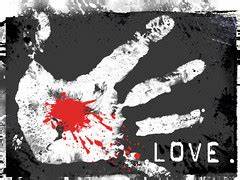
“But [Thomas] said to them, ‘Unless I see the mark of the nails in his hands, and put my finger in the mark of the nails and my hand in his side, I will not believe.’” John 20:25.
“Then [Jesus] said to Thomas, ‘Put your finger here and see my hands. Reach out your hand and put it in my side. Do not doubt but believe.’” John 20:27.
I do not believe my eldest daughter Sarah was more than five when on Easter Sunday, after church and a busy morning of easter egg hunts, I read the Easter story to her from a children’s picture book. As is the case for books of this kind, the pictures overpowered the words. So, not surprisingly, it was the pictures that captured Sarah’s interest more than my reading. Children tend to focus on things we adults deem peripheral and unworthy of our full attention. Such was the case with Sarah. The butterfly perched on a daisy growing in the garden where Jesus was buried proved more interesting to Sarah than the angels, the surprised women and the empty tomb. When we reached the place where Jesus made his appearance, Sarah looked puzzled. “Where are those things on his hands?” she asked. It took me a few seconds to realize that she was talking about his wounds from the nails. This picture book portrayed the resurrected Christ fully healed. He was dressed in a sparking white robe and looked as though he had just had a good, hot shower, a clean change of clothes and a manicure. Sarah knew the story too well not to question this portrayal of the resurrected Christ.
At the tender age of five, Sarah detected in the picture book I was reading to her an ancient heresy that had escaped my notice. It is called “Docetism,” from the Greek word “dοκηταίa,” meaning to “seem” or “appear.” This belief developed early in the life of the church. It took several different forms among various sects, but in general, docetists denied the humanity of Jesus. They taught that Jesus only appeared to have a physical body and that his earthly life, suffering, and death were merely illusions, not real experiences. Such a Christ cannot be wounded or injured and cannot really die. If Jesus really had a body, it was nothing more than a clever disguise, a costume he wore and discarded on the cross. The real Jesus could never be touched by human suffering and so one would hardly expect the resurrected Christ to bring the wounds of his now unnecessary body into his resurrected state.
I am sure the authors of that children’s book I read to Sarah all those years ago had no intention of propagating heresy. Nevertheless, portrayal of the resurrected Christ without his wounds is just that. Both Evangelists Luke and John make a point of telling us that Jesus’ body is a wounded body. The scars from the nails remain in his hands and feet. The wound inflicted by the soldier’s spear is fresh in his side. The glorified Christ is still the wounded, broken and bleeding Jesus of Nazareth. It is important to understand that these wounds were present on Easter Sunday and remain to this day. The Resurrection did not undo the Incarnation. The Word of God is still made flesh. The wounds inflicted upon all human flesh are his own. Jesus’ wounds will never be healed until all of creation is healed. Until then, the Incarnate Word suffers the sickness, loneliness, poverty, homelessness and violence we experience and inflict on one another. That is why Jesus warns us that what we do or fail to do for the least among us, we do or fail to do for him.
Progressive Protestantism, obsessed as it is with accommodating the rationalistic assertions of modernism, has always been at pains dealing with the resurrection narratives. In a world devoid of mystery where nothing exists beyond what can be verified empirically in the lab, how can Jesus’ resurrection be made intelligible? The physicality of the resurrected Christ has ever been an intellectual embarrassment to the Church in this modern world. For that reason, the old heresy of docetism continues to have theological to appeal. It offers a conceptual tool for making the Resurrection intelligible to the modern mind. Without offending our modernist biases, the Resurrection can be and often is preached as though it were a metaphor for some worthy cause or noble aspiration. Like John Brown’s body, Jesus’ body lies “a moldering in the grave,” but his truth goes marching on.
But the gospel narratives will admit of no such reductionist accomodation. There is, after all, the matter of the empty tomb. There is the matter of Jesus being embraced, being touched and sharing a meal with his disciples. To be sure, there is something very different about the body of the resurrected Christ. Jesus appears and disappears. Sometimes he is recognized by his disciples, sometimes not. He passes through closed and locked doors. He ascends to the right hand of God and so is omnipresent in a way that the pre-resurrection Jesus could not have been. The resurrected Christ is not merely a resuscitated corpse. But neither is he a disembodied spirit, a mere idea or the symbol of some great human aspiration. The scandal of our faith is that we believe God has a body. God has become and remains vulnerable to us. We are still capable of inflicting pain on God. Not only did the “Word become flesh,” but the Word remains flesh, suffering flesh, abused flesh, persecuted flesh, imprisoned flesh, starving flesh, dying flesh. That is why the two great commandments: Love God with all the heart, with all the soul, with all the mind and with all the strength; and love the neighbor are actually one commandment. There is no disembodied God who can be served apart from our flesh and blood neighbors.
It is for this reason poet John Updike insists that “if [Jesus] rose at all it was His body…” and that in the absence of such a resurrection, “the Church will fall.” Genuine faith in Jesus, true discipleship and real evangelism always puts the wellbeing of the neighbor, Christian or non-Christian, citizen or foreigner, documented or undocumented, friend, stranger or enemy above all else, because there is no other way to love and serve God than by loving and serving the neighbor. If your faith requires you to injure your neighbor, whether for the sake of religion, family or country, it is not faith in Jesus. The good news of Easter is that, in spite of the many wounds we have inflicted upon God throughout our bloody and violent history, chief of which was the murder of God’s own Son, God continues to abide in our suffering flesh, loving, forgiving and renewing God’s good creation.
Here is the poem by John Updike cited above.
Seven Stanzas at Easter
Make no mistake: if He rose at all
it was as His body;
if the cells’ dissolution did not reverse, the molecules
reknit, the amino acids rekindle,
the Church will fall.
It was not as the flowers,
each soft Spring recurrent;
it was not as His Spirit in the mouths and fuddled
eyes of the eleven apostles;
it was as His flesh: ours.
The same hinged thumbs and toes,
the same valved heart
that–pierced–died, withered, paused, and then
regathered out of enduring Might
new strength to enclose.
Let us not mock God with metaphor,
analogy, sidestepping, transcendence;
making of the event a parable, a sign painted in the
faded credulity of earlier ages:
let us walk through the door.
The stone is rolled back, not papier-mâché,
not a stone in a story,
but the vast rock of materiality that in the slow
grinding of time will eclipse for each of us
the wide light of day.
And if we will have an angel at the tomb,
make it a real angel,
weighty with Max Planck’s quanta, vivid with hair,
opaque in the dawn light, robed in real linen
spun on a definite loom.
Let us not seek to make it less monstrous,
for our own convenience, our own sense of beauty,
lest, awakened in one unthinkable hour, we are
embarrassed by the miracle,
and crushed by remonstrance.
Source: Updike, John, Collected Poems, (c. 1993 by John Updike, pub. by Alfred A. Knopf, Inc.). John Updike (1932-2009) was a prolific American author and poet. He grew up in Shillington, Pennsylvania. His early poems and fiction are grounded in the gritty industrial and cultural environment of the rust belt. His awards include the Pulitzer Prize for fiction, the American Book Award for fiction and the National Book Critics Circle Award for both fiction and criticism. You can learn more about John Updike and read more of his poetry at the Poetry Foundation website.
 Peter's Outer Cape Portico