FIFTH SUNDAY OF EASTER
Prayer of the Day: O Lord God, you teach us that without love, our actions gain nothing. Pour into our hearts your most excellent gift of love, that, made alive by your Spirit, we may know goodness and peace, through your Son, Jesus Christ, our Savior and Lord, who lives and reigns with you and the Holy Spirit, one God, now and forever.
“I give you a new commandment, that you love one another. Just as I have loved you, you also should love one another. By this everyone will know that you are my disciples, if you have love for one another.” John 13:34-35.
At this moment, Russian Orthodox Christians and Ukrainian Christians, both of whom were baptized into Christ Jesus, the same Lord who gave them the commandment to love each other, are killing each other. The governing administration of the United States, most members of which flaunt their Christian identity, terrify our immigrant neighbors with arrest by masked goons, incarceration, deportation and family separation. Preachers like Franklin Graham, Paula White, Mark Burns gush about the love of Jesus out of one side of their mouths while preaching hate against gay, lesbian and transgender persons out of the other. Vile and amoral people like convicted criminal Roger Stone and disgraced Army Lt. Gen Michael Flynn cloak their racist and antidemocratic propaganda champaigns with a thin veneer of Christian window dressing. Looking at us, would you ever guess that we are disciples of the one who called us to love one another as he loved us, that is, to the point of giving his life? Do we look even remotely like the community whose love for one another reflects the love God has for the world into which he sent the Son? Is it any wonder that the church has lost a truckload of credibility in recent years?
I know this is not the complete picture. I know that there are millions of Jesus’ disciples in all branches of the church catholic who are in so many ways seeking “to do justice, love kindness and walk humbly with God.” Unfortunately, though, the work of single individuals, the efforts of single congregations and even single denominations cannot carry the cross of faithful witness to the world or even be heard over the cacophony that is American Christianity. We need desperately to witness as one holy, catholic and apostolic church to Jesus and the reign of God for which he lived, died and continues to live.
My forty plus years of ministry have convinced me that most congregations are good at loving one another, caring for one another and meeting the needs of their own. Taking Jesus’ words in today’s gospel out of their narrative context might lead one to believe that this is enough. It is sufficient that a community of disciples care for its own and practice love within the confines of the church. Let us be honest, that alone is no easy task. The church is made up of people we would not necessarily choose as friends. Jesus, however, has chosen them. They are precious to him and so they must be to us as well. Our fellow disciples might not be people who are particularly easy to get on with. They might not even be people we like. Still, we are tasked with loving them. Living together as a caring community might seem like challenge enough.
But it’s not enough. In the first chapter of John’s gospel we read that Jesus is the “light that enlightens everyone.” John 1:9. John 3:16 declares that God loved the world so much that he sent the Son into the world to save it. Jesus announces that he is the light of the world. John 8:12. Jesus prays that his disciples be one, not for their own sake, but that “the world may believe” God sent him. John 17:21. The disciples are sent out into the world just as Jesus was sent to announce and bear witness to God’s redemptive mission of salvation for the world. John 20:21. Jesus calls his church to public ministry in a world which, though very much beloved by God, is nonetheless hostile to God’s gentle reign of justice and peace.
Sometimes it seems as though our public ministry conflicts with our efforts to promote a loving and harmonious congregational culture. Too many times pastors and congregational leaders sidestep opportunities for public support of immigrants facing deportation and family separation, support for LGBTQ+ persons facing increasing marginalization and violence, support for efforts to confront, name and oppose racism and discrimination, all in the interest of maintaining peace within the flock. I believe, however, that a vigorous public witness is also good pastoral medicine. Xenophobia, homophobia and racism are diseases of the soul. These spiritual contagions are as lethal to the hearts and minds of those infected as they are to the lives of those victimized by the harmful conduct they inspire. Leaders who bring their congregations into the arena of public discourse will, in addition to giving voice to the good news of Jesus to a troubled world, lance the spiritual boils afflicting their members and open the way to healing.
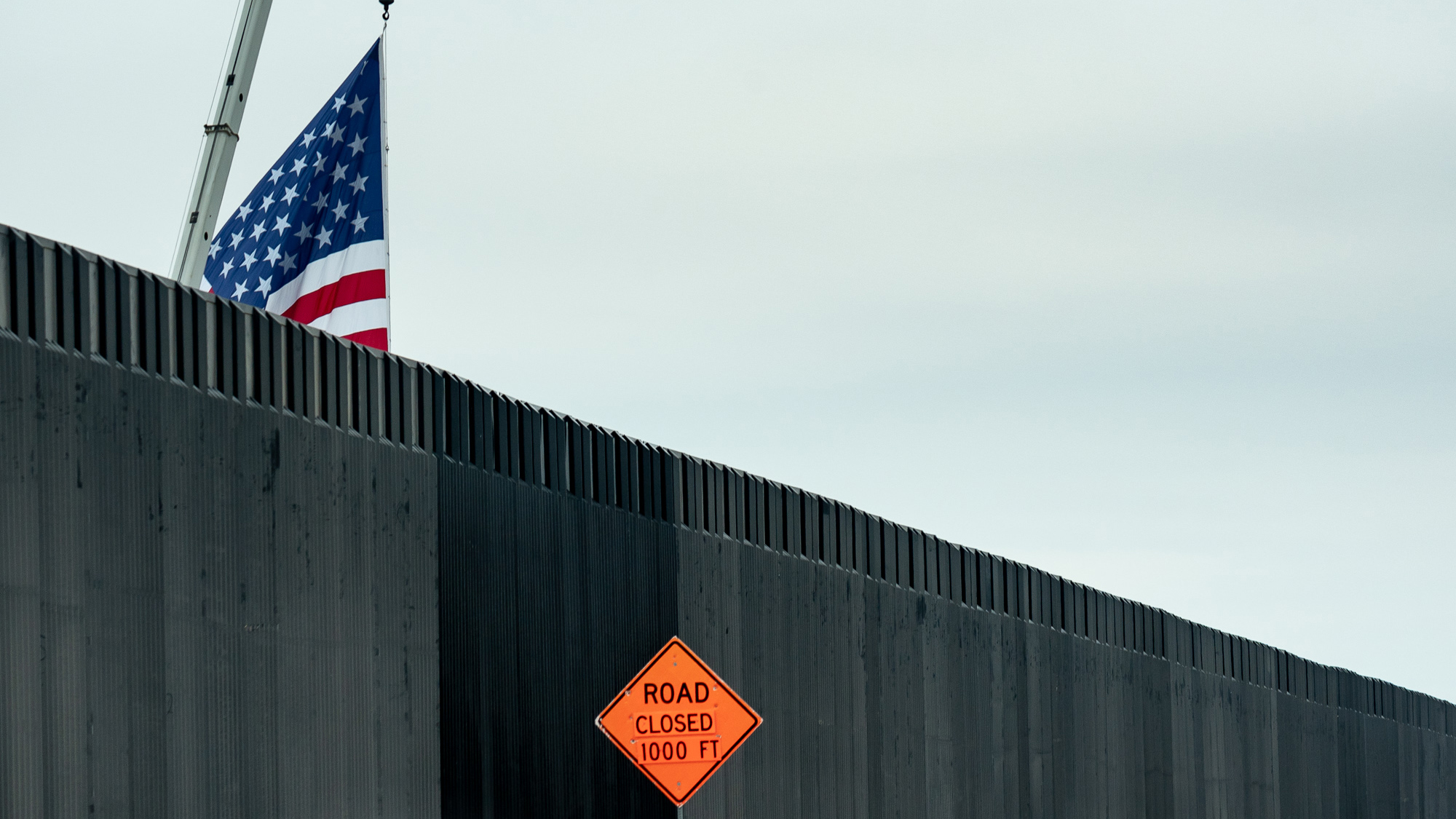
Of course, it is possible that the risk, scandal and public criticism resulting from public witness will offend and drive away some members of our churches. I strongly suspect that Peter’s baptism of the gentile Cornelius and his household recorded in our lesson from Acts drove some of the faithful out of the church. The inclusive reach of the gospel that recognizes no national border, is indifferent to citizenship, documentation, racial identity and sexual orientation is inherently threatening to sinful people like us, who seek shelter behind such humanly erected barriers. But the kind of love to which Jesus calls us is too big, too powerful and too broad to be confined within our own insular communities. The love to which Jesus calls us jumps the fences we build and unites us to our neighbors living on the other side. The church must not settle for anything less.
Here is a poem by priest, activist and poet Daniel Barrigan reflecting on the inclusive love of Jesus that “compels” all on the margins to come to him.
The Face of Christ
The tragic beauty of the face of Christ
Shines in the face of man;
The abandoned old live on
in shabby rooms, far from comfort.
Outside,
din and purpose, the world, a fiery animal
reined in by youth. Within
a pallid tiring heart
shuffles about its dwelling.
Nothing, so little, comes of life’s promise.
0f broken men, despised minds
what does one make-
a roadside show, a graveyard of the heart?
Christ, fowler of street and hedgerow
cripples, the distempered old
-eyes blind as woodknots,
tongues tight as immigrants’-all
taken in His gospel net,
the hue and cry of existence.
Heaven, of such imperfection,
wary, ravaged, wild?
Yes. Compel them in.
Source: Selected & New Poems, (c. 1973 by Daniel Berrigan, pub. by Doubleday & Company, Inc.) p. 80. Daniel Berrigan was born May 9, 1921, in Virginia, Minnesota. He entered the Jesuit novitiate at St. Andrew-on-the-Hudson, New York in August 1939 and graduated in 1946. Thereafter, he entered the Jesuit’s Woodstock College in Baltimore graduating in 1952. He was ordained the same year and appointed professor of New Testament studies at Le Moyne College in Syracuse in 1957. Berrigan is remembered by most people for his anti-war activities during the Vietnam era. He spent two years in prison for destroying draft records, damaging nuclear warheads and leading other acts of civil disobedience. He also joined with other prominent religious figures like Rabbi Abraham Joshua Heschel, the Rev. Richard John Neuhaus and the Rev. Martin Luther King Jr. to found Clergy and Laity Against the War in Vietnam. In February of 1968 he traveled to North Vietnam and returned with three American prisoners of war he convinced the North Vietnamese to release. Berrigan died on April 30, 2016 of natural causes at a Jesuit health care facility in the Bronx. He was 94 years old.
 Peter's Outer Cape Portico