SECOND SUNDAY AFTER EPIPHANY
Prayer of the Day: Holy God, our strength and our redeemer, by your Spirit hold us forever, that through your grace we may worship you and faithfully serve you, follow you and joyfully find you, through Jesus Christ, our Savior and Lord.
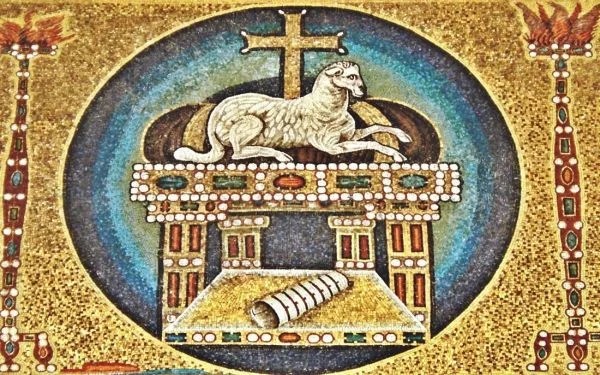
The next day he saw Jesus coming toward him and declared, “Here is the Lamb of God who takes away the sin of the world!” John 1:29.
“We live in a world in which you can talk all you want about international niceties and everything else, but we live in a world, in the real world, that is governed by strength, that is governed by force, that is governed by power. These are the iron laws of the world that have existed since the beginning of time.” -Stephen Miller, Whitehouse Deputy Chief of Staff.
“Political power grows out of the barrel of a gun.” -Mao Zedong, founder and former leader of the Chinese Communist Party.
“Those who beat their swords into plowshares usually end up plowing for those who kept their swords.” -Benjamin Franklin
“the only way to stop a bad guy with a gun is with a good guy with a gun.”-Wayne LaPierre, CEO and executive vice president of the National Rifle Association of America.
Stephan Miller, Mau Zedong, Benjamin Franklin and Wayne LaPierre make up a strange collection. Yet they all agree on one point: at the end of the day, power and the willingness to exercise it violently are the keys to survival. Raw power is the “iron law” that has “existed from the beginning of time.” Most near eastern religion contemporary with the Biblical witness would agree. According to the ancient Mesopotamian myth recorded in the Enūma Eliš, the creation of the world evolved out of a battle between gods in which the god, Marduk emerged triumphant. Marduk’s undisputed reign over the lesser gods served as a paradigm for the Babylonian empire’s undisputed dominance of its subjects.
That, however, is not the biblical witness. According to the Book of Genesis, the world comes into existence by the sovereign command of God. There is no struggle or strife involved. So far from being an “iron law” built into the nature of things, violence is a disruption of God’s ordered creation. God responds to the first murder not with retribution but forgiveness and protection from retribution for the murderer. Though God does at times respond forcefully to curb human violence, God’s nature is to be “merciful, slow to anger and abounding in steadfast love.” The depth of that love and the way in which God deals with hostility is nowhere better illustrated than in Jesus who John declares to be “the lamb of God.” The Lamb lays down his life for his friends. He does not resort to violence to defend himself from his enemies and he will not allow his disciples to employ it on his behalf. The just and gentle reign of God Jesus proclaims is worth dying for. Nothing is worth killing for.
John of Patmos builds on the lamb image in the Book of Revelation where, after receiving a series of messages from an angelic emissary for the churches in Asia Minor, he is carried up to the throne room of the Almighty. There he is presented with a sealed book containing the revelation to be shared with the church. However, no one in heaven, earth or under the earth is mighty enough to break the seal. John is at first dismayed, but then encouraged by the promise that the “Lion of the tribe of Judah, the Root of David, has conquered, so that he can open the scroll and its seven seals.” Revelation 5:5. After this buildup, we might expect a shirtless Rambo to come strutting onto the stage or for John Wayne to come galloping up on a restless steed. But what John sees is “a Lamb standing as if it had been slaughtered….” Revelation 5:6.
As everyone who has read the Book of Revelation knows, the latter chapters are replete with lurid images of fantastic predatory creatures woven together from attributes of lions, bears and leopards. The devil is portrayed as a fearsome dragon. The Roman Empire is likened to a fearsome, multiheaded “beast.” Throughout Revelation, the image of the slaughtered lamb is juxtaposed to the images of “the beast” and the “dragon” whose lethal capabilities a lamb could never match. But that is the whole point. The Lamb’s powers are not lethal. They are lifegiving. The power of the beast, so admired by folks like Stephen Miller, is overrated. Any fool with a gun can kill a person. Only the Lamb of God can raise a person from death to life.
Violence and the ability to inflict it upon others is and always has been deeply ingrained in the American psyche. Through years of education, religious teaching and entertainment media Americans have been programed to believe that this continent was delivered to white settlers by the hand of Providence, that the “settlement” of the land by driving out the indigenous peoples was a brave and noble undertaking, that our nation’s wars were heroic struggles to defend our freedoms and that the stories and experiences of indigenous, African, Chinese, Japanese, Mexican and other nonwhite Americans have no relevance to American history. Indeed, the stories of nonwhite Americans must be expunged from the historical record, particularly when they call into question the myth of American exceptionalism. The power we Americans have been taught to worship, the power we attribute to God, the power we have been led to believe is necessary to keep us safe is the power of the beast, not the power of the Lamb.
Last week saw numerous threats and acts of raw power. Lethal drone and missile attacks against Ukraine increased even as peace talks are supposedly continuing. Bombing continues in Gaza despite the alleged existence of a ceasefire. Violence has erupted in Iran and, as if this were not enough, our own nation in Hitleresque fashion is threatening to annex Greenland and take over Venezuela and for no better reason than because it can. To top all of this off, a masked gunman under the direction of our government shot to death an unarmed thirty seven year old mother of three just blocks away from where a Minneapolis officer murdered George Floyd in 2020. As her car careened out of control and crashed, the gunman called her an obscenity I will not dignify in print.
How, then, do disciples of the Lamb live under the reign of the beast? Lately, I have seen any number of signs saying simply “resist.” The obvious meaning is that oppressive measures of our government against immigrants, LGBTQ+ folk and people of color generally should be resisted. It is hard to argue with that. But mere resistance is insufficient. In the first place, allowing oneself to be defined by what one is against is dangerous. It is all too easy to fall into the same violent strategies employed by agents of our government against them, thereby becoming the mirror image of what we hate. More significantly, however, mere resistance says nothing about what one is for. Without the vision of an alternative future based on concrete convictions supported by thick faith practices, resistance frequently fizzles. Discipleship is not about fighting the beast. It is about following the Lamb.
We get some good advice from the opening chapter of Revelation containing the letters dictated to the seven churches of Asia Minor. These churches were living under the dominion of the beast and knew only too well its savagery. The messages to these churches from John do not provide any strategy for defeating the beast. There is no need for that. The beast and its empire will collapse under the weight of their own violence and corruption. Instead, the churches are urged to cling to their faith, remember the good news of God’s reign delivered to them, avoid corruption of their faith through the influences of hateful ideologies, false religion and violent politics that characterize the empire of the beast. They are encouraged to accept suffering and the cross as the shape God’s kingdom must necessarily take in a world dominated by the beast. Most importantly, they are reminded repeatedly that God is faithful and will bring to fruition in God’s own good time the reign of peace and justice for which Jesus lived, died and continues to live. Following the Lamb and witnessing in word and deed to that reign by standing with the marginalized invariably brings one into conflict with the beast. But defeating the beast is not our calling.
Here is a poem by William Stafford expressing the conviction that one “fierce in love to the death,” the primary attribute I would contend of the Lamb, triumphs where “abject anger” can only surrender.
Thought, the Pacifist
While the bullet was coming
out of the gun we saw bird blood
on the gras begin to be
where the quail were going to fall;
and something that used our voice
repented even while something in
our ears caroled quickened breath
before any sound arrived.
Thus disbelieving us while living
in our ears, the fame of the world
contends against judgement;
and fierce in love and death
our thought easily overcomes what
–offering only bullets and blinking—
abject anger only surrenders to.
Source: Poetry, (July 1960). William Edgar Stafford (1914 –1993) was an American poet. Born in Hutchinson, Kansas he was the oldest of three children. During the Depression, the Stafford family moved from town to town in an effort to find work. Stafford helped contribute to the family income by delivering newspapers, working in sugar beet fields, raising vegetables and working as an electrician’s apprentice. He graduated from high school in the town of Liberal, Kansas and received a B.A. from the University of Kansas. He was drafted into the United States armed forces in 1941 while pursuing his master’s degree at the University of Kansas, but registered as a conscientious objector. As such, he performed alternative service in the Civilian Public Service camps consisting of forestry and soil conservation work. During this time, he met and married Dorothy Hope Frantz, with whom he later had four children. When the war ended, Stafford completed work for his MA and went on to earn a Ph.D. His teaching career included positions at Manchester College, Indiana, Lewis and Clark College, Oregon and San Jose State College, California. He was the father of poet and essayist Kim Stafford. In 1970, Stafford was appointed the twentieth Consultant in Poetry to the Library of Congress. You can read more about William Stafford and sample more of his poetry at the Poetry Foundation Website.
 Peter's Outer Cape Portico
It has always been easier to kill than to heal. God made the world that does this, so it is not a failure or a design flaw – it is something we’re meant to learn to overcome.
Unfortunately, the downtrodden, sick, and vulnerable are way too often the victims and scapegoats – and it isn’t clear how to defend them from drones and warships.
LikeLike