All posts by revolsen

Unknown's avatar

About revolsen

I am a retired Lutheran Pastor currently residing in Wellfleet, Massachusetts. I am married .and have three grown children.

A Season of Pruning

FIFTH SUNDAY OF EASTER

Acts 8:26-40

Psalm 22:25-31

1 John 4:7-21

John 15:1-8

Prayer of the Day: O God, you give us your Son as the vine apart from whom we cannot live. Nourish our life in his resurrection, that we may bear the fruit of love and know the fullness of your joy, through Jesus Christ, our Savior and Lord, who lives and reigns with you and the Holy Spirit, one God, now and forever.

“I am the true vine, and my Father is the vine-grower. He removes every branch in me that bears no fruit. Every branch that bears fruit he prunes to make it bear more fruit.” John 15:1-2.

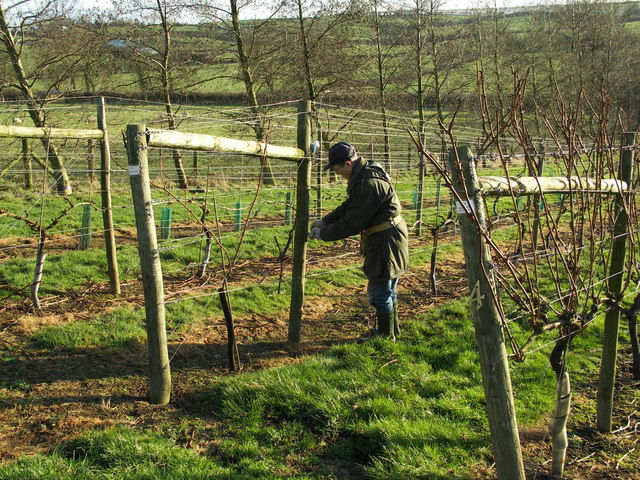
John Haig lived across the alley from the house in which I grew up. He was a tall, strong, dower man who mostly kept to himself. John took great pride in his house and yard. His hedges were always trimmed, the lawn mown and God help any weed that might dare poke up its head in John’s garden. In addition to his impressive stands of azaleas, rhododendrons and rose bushes, John grew grapes. That was quite a feat in my western Washington home. The weather, the soil and everything else about our climate is wrong for grapes. Though neither my folks nor, I suspect, anyone else in the neighborhood would ever have told John to his face, we were convinced that his vineyard project was doomed to failure. But we were wrong. Somehow, John got his grapes to grow and to yield a fruitful harvest each year.

One of my earliest memories of John Haig was watching him tend his grapes. Each fall in October or early November he would come out carrying a pair of shears that looked for all the world like medieval torture implements. With these fearful tools he cleared away the dead vines and cut the live ones down to a fraction of their original length. There was not a hint of gentleness in John’s pruning. To the contrary, there was a certain ruthless determination in his work. One could almost pity the poor vines facing the coming winter wounded, diminished and bare. For that reason, I am not so sure Jesus’ words in Sunday’s gospel are all that reassuring. It is no fun getting pruned, not for grape vines and not for the church.

Early this year I learned that the church in which I was baptized and spent my early childhood closed its doors. The church from which I received my first call and served for my first five years of ministry met the same fate in the mid nineties. Four congregations within my conference closed during the last ten years of my ministry. In the United States of America, the church as we have known it is vanishing. My own Evangelical Lutheran Church in America recently established a “Commission on a Renewed Lutheran Church,” the purpose of which is to reconsider statements of purpose for the church and its organizational structure. Finally, reality is setting in. Our leaders are at last acknowledging that our denomination, as currently constituted, is no longer sustainable. This is all very sad.  The congregations to which I refer were once vital communities of discipleship, witness and service. They bore much good fruit in their time. Over the last century, our church has developed global ministries that have provided disaster relief, anti-hunger programs, immigration assistance to refugees and many other important mission initiatives. Given our diminishing membership and support, it is possible that we might not be able to conduct these ministries in the near future or that the levels of our support for them will be drastically reduced. This season of pruning is a painful one.

I must admit that I do not much like the idea of having a God like John Haig coming after us with his iron shears. The only consolation here is that John Haig loved his grape vines just as God loves the church. John knew, as did Jesus, that grape vines left untended and unpruned are unlikely to survive the winter cold and probably will not bear fruit worth harvesting. In order to be fruitful in the coming year, the vines need to be pruned back. Unfruitful branches have to be loped off. Dead wood must be cut out. If the vine is to live, thrive and be fruitful, it must be cut down to within an inch of its life.

I believe that, too often, the church has measured its worth and success in terms of its influence within society, its ability to build and expand its institutions and its membership growth. In reality, however, these very markers of success point to areas of potential spiritual weakness. The exalted status enjoyed for much of the last century by the church in American culture is due in no small part to our willingness to play the role of upholding white middle class morality, blessing our nation’s wars and promoting patriotism as a spiritual virtue. Our pride in our institutions has often led to a reluctance to criticize, reform and re-center them on the good news of Jesus’ Christ. Our lust for growth has often led to our selling the church and all the programs, perks and benefits it can bestow rather than calling people to the privilege and challenge of discipleship with Jesus. As a result, we have ended up with a lot of unfruitful branches and dead wood. We need a good pruning and, if my instincts are correct, that is exactly what we are getting. Perhaps when we have been shorn of everything except the good word of the gospel, we will finally be small enough, poor enough and weak enough for God to make good use of us.

What makes Jesus’ unnerving words about the season of pruning hopeful is the fact that this season is, after all, a season. As such, it points invariably forward. There is for the pruned vine a “whither.” The day will come when, warmed by the sun, fed by the soil and watered with the spring rains, the vine will spring up renewed, strengthened and ready to bear fruit. We can know with certainty, then, that whatever shape, size and makeup the church may have in coming generations, it will be precisely the church God needs to proclaim the good news of Jesus and the reign of God for which he lived, died and continues to live.

Here is  poem by Robert Frost speaking to the melancholy of a season’s end, yet offers a faint hint of promise.

Reluctance

Out through the fields and the woods

   And over the walls I have wended;

I have climbed the hills of view

   And looked at the world, and descended;

I have come by the highway home,

   And lo, it is ended.

The leaves are all dead on the ground,

   Save those that the oak is keeping

To ravel them one by one

   And let them go scraping and creeping

Out over the crusted snow,

   When others are sleeping.

And the dead leaves lie huddled and still,

   No longer blown hither and thither;

The last lone aster is gone;

   The flowers of the witch hazel wither;

The heart is still aching to seek,

   But the feet question ‘Whither?’

Ah, when to the heart of man

   Was it ever less than a treason

To go with the drift of things,

   To yield with a grace to reason,

And bow and accept the end

   Of a love or a season?

Source: The Poetry of Robert Frost, (c. 1969 by Holt, Rinehart and Winston, Inc.) pp.29-30. Born in 1874, Robert Frost held various jobs throughout his college years. He was a worker at a Massachusetts mill, a cobbler, an editor of a small town newspaper, a schoolteacher and a farmer. By 1915, Frost’s literary acclaim was firmly established. On his seventy-fifth birthday, the U.S. Senate passed a resolution in his honor. The State of Vermont named a mountain after him and he was given the unprecedented honor of being asked to read a poem at the inauguration of John F. Kennedy in 1961. Through the lens of rural life in New England, Frost’s poetry ponders the metaphysical depths. His poems paint lyrical portraits of natural beauty, though ever haunted by shadow and decay. You can learn more about Robert Frost and sample more of his poetry at the Poetry Foundation website.

How Does God’s Love Abide in Me?

FOURTH SUNDAY OF EASTER

Acts 4:5-12

Psalm 23

1 John 3:16-24

John 10:11-18

Prayer of the Day: O Lord Christ, good shepherd of the sheep, you seek the lost and guide us into your fold. Feed us, and we shall be satisfied; heal us, and we shall be whole. Make us one with you, for you live and reign with the Father and the Holy Spirit, one God, now and forever.

“How does God’s love abide in anyone who has the world’s goods and sees a brother or sister in need and yet refuses help?” I John 3:17.

That question haunts me. One of the few regrets I have in life is that Sesle and I never took in a foster child. I have encountered a number of foster children who have found their way into loving and secure homes where they were able to thrive. But I have also encountered too many who have languished in group homes where they have received little in the way of personal attention, were compelled to wear ill fitting clothing and lacked sufficient space and privacy. I have encountered children with physical and emotional problems who were bounced from one foster care family or facility to another without ever receiving the care they needed. We could have taken in one or more of these children, but we did not. There were good reasons for that. We had three children of our own, after all. We had serious health issues in our family that were taxing on us and jobs demanding long hours and weekends in the office. Still, the truth is that we had the resources, we had the space and we could have made the time. So I have to ask myself, how does God’s love abide in me?

Hunger, poverty and the injustice that gives rise to these scourges have always been high priorities in my giving, volunteerism and ministry. Yet when I drive into Boston for doctor appointments (a frequent occurrence these days), I routinely drive past dirty and disheveled men and women with their soggy cardboard signs reading, “unemployed, three kids,” “hungry, haven’t eaten in days,” “need money for meds.” There are good reasons for not stopping. For one thing, I don’t carry much cash these days and I doubt I could readily get my hands on what little I have from behind the wheel. Furthermore, stopping on a busy street in Boston can easily result in an accident. Besides, these folks have problems bigger than I can solve with a few bills. Better to make a check out to the local charity and let the professionals deal with these people. Yet the truth is, I could pull over to the curb for the few minutes it would take to hand someone a few dollars. These folks are not asking me to solve all their problems-just the immediate one, namely, a meal. Moreover, the professionals are not out on the street where I meet these folks, but I am. So, again, I wonder how does God’s love abide in me?

These are just a few instances in which I could have helped a brother or sister[1] in need-but did not. My life experience reflects all too accurately the attitude that appears to have been taking hold in the faith community John addresses. It is an attitude that has taken hold in a world where nations guard their borders with guns, dogs and barbed wire against people desperate to find food, shelter and sanctuary. It is an attitude prevalent in communities like mine that resist affordable housing with law suits, letter writing campaigns and ballot initiatives. It is an attitude that has taken hold in congregations guarding their assets, facilities and resources against the needs of the communities in which they reside and against the call from the church at large to support global mission and ministry. How does God’s love abide in us, who are part and parcel of this tightfisted world?

Author, philosopher and Holocaust survivor Elie Wiesel warns us that the opposite of love is not hate. The opposite of love is indifference. The Nazis nearly succeeded in murdering the Jews of Europe because too many people simply did not care enough to stop them. I fear that, in much the same way, the hard won protections people of color have fought to put into law opening a way out from under the suffocating oppression of systemic racism will soon be erased because too few people care. I fear that women will increasingly be denied critical reproductive health care because it is simply not important enough to protect. I fear that transgender teens, already at risk for self harm and suicide, will lose access to the care and treatment they need due to misguided laws championed by religious extremists and implemented by state legislators eager to placate them, all because too few of us care. What matters to the American people, we are told repeatedly, are “kitchen table issues.” That may be the case. Just as so many people in Europe looked the other way as the Jews were being dispossessed and murdered, so too many of us Americans will be content to sit in the security of our kitchens stuffing our faces with roast beef, offering perfidious prayers while our siblings in the human family suffer. In the words of poet Robert Frost, “I think I know enough of hate/ To say that for destruction ice/ Is also great/ And would suffice.”  

How does God’s love abide in me? I think that the only comfort to be derived from this haunting question is that it haunts. If we are asking ourselves this question, it can only mean that our hearts have not yet turned to ice and that love for our siblings has not yet grown cold. It can only mean that there is yet some stirring of the Holy Spirit in our hearts. It can only mean that we are still capable of recognizing the voice of Jesus calling to us from people who desperately need the help, support and advocacy we are capable of offering. While the hour may be late, it is not too late, as long as we have life and breath left in us. Now, more than ever, we need to heed the Spirit posing to us this haunting question: How does God’s love abide in me?  

Here is the poem by Robert Frost to which I alluded above.

Fire and Ice

Some say the world will end in fire,

Some say in ice.

From what I’ve tasted of desire

I hold with those who favor fire.

But if it had to perish twice,

I think I know enough of hate

To say that for destruction ice

Is also great

And would suffice.

Source: The Poetry of Robert Frost, (c. 1969 by Holt, Rinehart and Winston, Inc.) p. 220. Born in 1874, Robert Frost held various jobs throughout his college years. He was a worker at a Massachusetts mill, a cobbler, an editor of a small town newspaper, a schoolteacher and a farmer. By 1915, Frost’s literary acclaim was firmly established. On his seventy-fifth birthday, the U.S. Senate passed a resolution in his honor. The State of Vermont named a mountain after him and he was given the unprecedented honor of being asked to read a poem at the inauguration of John F. Kennedy in 1961. Through the lens of rural life in New England, Frost’s poetry ponders the metaphysical depths. His poems paint lyrical portraits of natural beauty, though ever haunted by shadow and decay. You can learn more about Robert Frost and sample more of his poetry at the Poetry Foundation website.


[1] I am aware that many biblical commentators assert that Saint John is principally concerned with the faith community to which he writes and that “brother or sister” refers to fellow believers within the community. I am not convinced that is so. Nonetheless, whatever John may have intended in this context, we know that Jesus never limited our duty of love to any group or community. Just as God lavishes God’s good gifts on all people regardless of merit, so disciples are called to reflect that same love to all people, even the enemy. Matthew 5:43-48.

How Gentiles Hijacked the Great Commission

THIRD SUNDAY OF EASTER

Acts 3:12-19

Psalm 4

1 John 3:1-7

Luke 24:36b-48

Prayer of the Day: Holy and righteous God, you are the author of life, and you adopt us to be your children. Fill us with your words of life, that we may live as witnesses to the resurrection of your Son, Jesus Christ, our Savior and Lord, who lives and reigns with you and the Holy Spirit, one God, now and forever.

“Thus it is written, that the Messiah is to suffer and to rise from the dead on the third day, and that repentance and forgiveness of sins is to be proclaimed in his name to all nations, beginning from Jerusalem. You are witnesses of these things.” Luke 24:46-48.

So ends the Gospel of Luke-and so continued its sequel, the Book of Acts where Luke tells the story of how the church, which began as a local Jewish movement in Palestine, expanded into the heart of the Roman empire with the dream of reaching the end of the known world. The path was fraught with linguistic differences, class distinctions, legal barriers and cultural differences. Saint Paul and his missionary companions and contemporaries were compelled to deal with difficult questions as they sought to proclaim the good news of Jesus Christ to communities of the Jewish diaspora that had never heard of Jesus and knew nothing of his ministry. So, too, they struggled to make that good news intelligible to non-Jewish audiences that did not know the ancient scriptural narratives about Israel’s God and had no idea what a “messiah” was.

It was not smooth sailing. Saint Paul insisted that his gentile converts be received into the church as they were, without having to undergo circumcision or observe the ritual and dietary requirements of Israel’s faith tradition. From Paul’s perspective, the good news that is Jesus welcomed everyone into God’s redemptive covenant on the same terms, namely, through faith in God’s promises. Faith in Jesus alone made disciples of Jew, gentile, male, female, slave, free, citizen and non-citizen. After all, Abraham’s faith saved him before Israel, circumcision and the Torah existed. Why should more than faith be required to save anyone else?

Paul, however, experienced stiff resistance from within the church. In his letter to the Galatian church, he recounts a dispute he had with Saint Peter and Saint James over their segregation in table fellowship between Jewish and gentile believers. This practice outraged Paul. If there is but one Body, how can there be two tables? This was a point on which Paul could not compromise. As far as he was concerned, the integrity of the gospel was at stake. For many Jewish believers, both within and outside the church, Paul’s radical invitation for gentiles to enter into Israel’s covenant relationship with God without requiring their participation in Israel’s faith traditions was a bridge too far. Luke’s account in the Book of Acts indicates that Paul’s openness to receiving gentile believers led finally to his arrest, imprisonment and journey to Rome in chains to be tried before the emperor’s tribunal.

Being a life-long Lutheran, I have always tended to side with Paul. If there is one thing every Lutheran agrees on, wherever on the spectrum of high church, low church, conservative or liberal we may fall, it is this: Salvation is by grace alone through faith in Jesus Christ. God’s gifts of forgiveness, sanctification and eternal life can never be earned. They can only be received with gratitude and joy. Of course, I still subscribe to that assertion. But I have also developed a more sympathetic view of Paul’s critics. They were concerned, rightly I believe, that the good news of Jesus Christ was losing its grounding in the scriptures and traditions of Israel. Paul’s critics believed that the faithful life, obedient death and glorious resurrection of Jesus could never be understood rightly apart from its Jewish roots. Without the stories of the matriarchs and patriarchs, Moses and the Exodus, the Torah and the testimony of the prophets, “faith in Jesus” too easily becomes a mere abstraction. It is too readily reduced to mere intellectual assent to a doctrinal proposition.

Saint James recognized this danger and addressed it pointedly:

“But someone will say, ‘You have faith and I have works.’ Show me your faith without works, and I by my works will show you my faith. You believe that God is one; you do well. Even the demons believe—and shudder. Do you want to be shown, you senseless person, that faith without works is barren? Was not our ancestor Abraham justified by works when he offered his son Isaac on the altar? You see that faith was active along with his works, and faith was brought to completion by the works. Thus the scripture was fulfilled that says, ‘Abraham believed God, and it was reckoned to him as righteousness’, and he was called the friend of God. You see that a person is justified by works and not by faith alone. Likewise, was not Rahab the prostitute also justified by works when she welcomed the messengers and sent them out by another road? For just as the body without the spirit is dead, so faith without works is also dead.” James 2:18-26.

The above passage is the least favorite among us Lutherans. Indeed, Martin Luther is known to have referred to the Letter of James as “an epistle of straw.” But I believe James points to a danger that Paul may have failed to appreciate and that has, in fact, done great damage. Abstraction is not the only evil to arise from divorcing the gospel of Jesus Christ from its Jewish roots. Though hardly what Saint Paul intended, as the rift between the church and the synagogue grew, the New Testament began to be understood by the church as a repudiation rather than a commentary on the Hebrew Scriptures. Naturally, this implied a repudiation of Judaism as well. Read in the context of a gentile church now recognized as the religion of the empire and separate from the Jewish community, the gospels, and the Gospel of John in particular, take on a decidedly darker interpretation of Judaism. Rather than the beloved community of Israel in whose traditions Jesus understood himself and was understood by his disciples, “the Jews” become opponents of Jesus, enemies of the gospel and “Christ killers.” Luther’s vile rants against the Jews remain a painful and disgraceful stain on my own spiritual heritage as does our complicity in Europe’s horrendous history of antisemitic violence culminating in the Holocaust. However misguided they may have been in many respects, I believe that Paul’s critics were onto something important. Perhaps if Paul had been more attentive to and less confrontational with his critics and Martin Luther less dismissive of Saint Jame’s epistle, we might all have ended up in a much better place.   

To be clear, I do not believe that Paul intended to divorce the gospel of Jesus Christ from its Jewish roots. Neither do I believe James is suggesting that salvation is a reward to be earned by works of the law or that faith is not enough to make faithful disciples. Like Paul, James recognized that “every generous act of giving, with every perfect gift, is from above, coming down from the Father of lights.” James 1:17. That would include faith. But James would have us know that faith is always embodied in the lives of the faithful. It is not a doctrinal proposition. Faith is a habit of the heart on full display throughout the Hebrew Scriptures in the lives of the faithful-both patriarchs and prostitutes. “The Jews” are not Jesus’ enemies. They are his people, his family, his siblings and his disciples. Without their witness, we can never properly understand and follow Jesus. That is why, prior to commissioning his disciples to preach the gospel to the whole world, Jesus “opened their minds to understand the scriptures,” which at this point could only have been the “the law of Moses, the prophets, and the psalms.” Luke 24:44-45.

For the sake of the gospel of Jesus Christ and for the sake of our spiritual siblings in Judaism, we need to recapture in our liturgy, preaching and teaching the centrality of the faith in which Jesus lived, the traditions that shaped his life and ministry and the people of whom he was a member and who he loved. Here is a poem by Karl Shapiro reflecting the pain inflicted upon the Jewish people as a result of our flawed readings and interpretations of the scriptures.

Jew

The name is immortal but only the name, for the rest

Is a nose that can change in the weathers of time or persist

Or die out in confusion or model itself on the best.

But the name is a language itself that is whispered and hissed

Through the houses of ages, and ever a language the same,

And ever and ever a blow on our heart like a fist.

And this last of our dream in the desert, O curse of our name,

Is immortal as Abraham’s voice in our fragment of prayer

Adonoi, Adonoi, for our bondage of murder and shame!

And the word for the murder of Christ will cry out on the air

Though the race is no more and the temples are closed of our will

And the peace is made fast on the earth and the earth is made fair;

Our name is impaled in the heart of the world on a hill

Where we suffer to die by the hands of ourselves, and to kill.

Source: Poetry, (August 1943). Karl Jay Shapiro (1913-2000) was an American poet. He was born and raised in Baltimore, Maryland. He attended the University of Virginia during the 1932-1933 academic year. In a critical poem reflecting on his experiences there, he remarked that “to hurt the Negro and avoid the Jew is the curriculum.” He continued his studies at the Peabody Institute, majoring in piano. He attended Johns Hopkins University from 1937 to 1939. In 1940, he enrolled in a library science school associated with Baltimore’s Enoch Pratt Free Library, where he was also employed. Shapiro served as a United States Army company clerk during World War II in the Pacific theater. During this time, he wrote many of the poems that propelled him into recognition. Shapiro never completed an undergraduate degree. Nonetheless, he was retained at Johns Hopkins as an associate professor of writing from 1947 to 1950. From 1950-1956 he served as editor of Poetry and as a visiting professor at the University of California, Berkeley and at Indiana University. In 1956 he left the editorship and taught English at the University of Illinois while editing the Prairie Schooner at the University of Nebraska-Lincoln. He thereafter moved to the University of California, Davis, where he became professor emeritus of English in 1985. You can read more about Karl Shapiro and sample more of his poetry at the Poetry Foundation website

Biblical Economics and American Capitalism

SECOND SUNDAY OF EASTER

Acts 4:32-35

Psalm 133

1 John 1:1—2:2

John 20:19-31

Prayer of the Day: Almighty God, with joy we celebrate the day of our Lord’s resurrection. By the grace of Christ among us, enable us to show the power of the resurrection in all that we say and do, through Jesus Christ, our Savior and Lord, who lives and reigns with you and the Holy Spirit, one God, now and forever.

“Now the whole group of those who believed were of one heart and soul, and no one claimed private ownership of any possessions, but everything they owned was held in common.” Acts 4:32.

Along with Jesus’ urging the rich young man to “sell all that you have and distribute to the poor” and his command to the disciples generally to “sell your possessions and give alms,” this account of the early church’s disregard for private ownership is one of the most difficult for American Christians to digest. That is because it runs contrary the most sacred tenant of our religion of capitalism. Without private ownership, the argument goes, there can be no commerce, trade, economic growth or production of wealth. History has demonstrated repeatedly that command economies do not work. Efforts to construct national economic systems or religious communities on the basis of common ownership have failed repeatedly.[1] Thus, whatever the early church in Jerusalem may have done in its infancy cannot be taken as a model for imitation.

While the failures of command economies and “common purse” communities are lifted up repeatedly in defense of capitalism, capitalism’s own failures are frequently underplayed or flatly denied. Yet if the test for an economic system’s success is whether it “works,” then the next question must be, “for whom does it work?” Clearly, capitalism did not work for the indigenous communities in the Americas driven off their land by industrial hunger for land, water, minerals, petroleum and timber. It did not work for thousands brought to this country as slaves, whose labor turned the United States into an economic powerhouse, but who have been systematically excluded from the resulting benefits. Capitalism did not work to preserve the world’s forests, oceans, rivers and lakes from ruthless exploitation and environmental harm. It did not protect communities throughout the rust belt from collapse into poverty when their labor skills became obsolete or could be purchased more cheaply overseas by the industries around which those communities were built and upon which their livelihood came to depend. Capitalism does nothing for those among us who are too impaired, too sick or too old to be “gainfully employed” as that term is variously defined in terms of marketability. Capitalism is about one thing: profit. If the financial statements are in the black and the shareholders happy, nothing else matters.

Though I have taken a couple of graduate level courses in economics, I am hardly an authority on the subject.[2] Nonetheless, the Bible has a few things to say about economics-and they do not support the unfounded claims of sovereignty made by modern nation states or the claims of individuals to any absolute right of property ownership. First and foremost, “the earth is the Lord’s and all that is in it.” Psalm 24:1. When Adam and Eve were placed in the garden of Eden, they were not endowed with ownership. They were simply given the job of “tilling and keeping it.” Genesis 2:15. So, too, the people of Israel were not given sovereign control over the land of Canaan. They were given the privilege-and the accompanying responsibilities-of dwelling in it.[3] This privilege was not a “right.” It could be, and was for a time, revoked.[4] That surely throws into doubt the purported “rights” of modern nation states to regulate into non-personhood those who seek to share the land they claim as “theirs.”

Second, it follows that an individual’s possession of land or personal property is contingent. As the hymn says, “All that we have is Thine alone, a trust, O Lord from thee.” Or, as Saint Paul says, “What have you that you did not receive? If then, you received it, why do you boast as if it were not a gift.?” I Corinthians 4:7. Despite what prosperity gospel preachers would have us believe, wealth is not a sign of God’s favor or approval. Saint James reminds us in graphic terms that wealth and privilege are the result of ruthless exploitation of one’s fellow human beings. James 5:1-6. So what can be said of us who are rich? Those of us who have benefited from systemic racism, segregation and oppression? What is to be said for people like me who have managed to live well and accumulate enough wealth to retire comfortably? The answer lies in our lesson from Acts. Our wealth can be deemed a blessing only if it is put to the use of blessing others. The fact that we have within the Body of Christ people who struggle to put food on the table, people who cannot obtain adequate medical care, people who lack adequate shelter more than suggests that people like me are not doing an adequate job of managing what has come into our possession. I think the biggest impediment to the church’s witness is the fact that the church remains a microcosm of the rest of the world’s huge disparities between haves and have nots.  

You might be asking why it is that I confine my analysis to the Body of Christ, the church. Does not any of this apply to society as a whole? It does. The parable of the Last Judgment makes clear that “the nations” as well as individuals will be judged by how well or poorly they have treated the most vulnerable persons in their midst. Matthew 25:31-46. The church in Acts understood that very well. But they did not proclaim that word to the nations by way of preachy-screechy social statements condemning poverty, racism and injustice. They did it by practicing distributive justice, inclusion and care for the vulnerable within their midst. By their very existence they demonstrated that living under the reign of terror imposed by the empire, racial/cultural animosity, hunger and poverty is not the only way to be human. The church in Acts, by its very being, cried out “Hey world, it doesn’t have to be this way!”

Mark Twain is credited with observing that, “To be good is noble. To teach another to be good is more noble still-and a lot less trouble.” I do not believe that press statements from bishops, social statements adopted by church assemblies or campaigns to generate cookie cutter letters to congress move the societal needle much. Particularly is this so when their origin is a largely white, slightly left of center, upper middle class denomination from which such activities are expected. But what if the church were to begin being the kind of change it likes to advocate? What if American churches like my own Lutheran Church in America took the affirmative step of making reparations to Black churches doing ministry in communities hard hit by systemic racism?[5] What if our larger, suburban, wealthier churches began subsidizing the staff of smaller, poorer urban and rural congregations? What if our churches made a commitment to ensure that no family in any of our congregations would ever be without shelter, no individual would ever go hungry, no elderly person left abandoned in an institution, no one baptized in our church would ever die alone? If the Book of Acts is any indication, such action would lend “great power” to our “testimony to the resurrection of the Lord Jesus.” Acts 4:33. Maybe, just maybe our world might catch a glimpse of the reign God desires for us and begin to understand that the way of unrestrained greed and consumption that is capitalism is not the way things have to be.

Here is a poem by Roberta Hill Whiteman posing the question: “what makes property so private?” Who owns what and by what right?

Philadelphia Flowers

I

In the cubbyhole entrance to Cornell and Son,

a woman in a turquoise sweater

curls up to sleep. Her right arm seeks

a cold spot in the stone to release its worry

and her legs stretch

against the middle hinge.

I want to ask her in for coffee,

to tell her go sleep in the extra bed upstairs,

but I’m a guest,

unaccustomed to this place

where homeless people drift along the square

bordering Benjamin Franklin Parkway.

From her portrait on the mantel,

Lucretia Mott asks when

will Americans see

how all forms of oppression blight

the possibilities of a people.

The passion for preserving Independence Square

should reach this nameless woman, settling

in the heavy heat of August,

exposed to the glare of every passerby.

What makes property so private? A fence?

No trespassing signs? Militia ready to die for it

and taxes? Lights in the middle storeys

of office buildings blaze all night above me.

Newspapers don’t explain how wealth

is bound to these broken people.

North of here, things get really rough.

Longshoremen out of work bet on eddies

in the Schuylkill River.

Factories collapse to weed

and ruptured dream. Years ago, Longhouse sachems

rode canoes to Philadelphia,

entering these red brick halls.

They explained how

the law that kept them unified

required a way to share the wealth.

Inside the hearths of these same halls,

such knowledge was obscured,

and plans were laid to push all Indians ,

west. This city born of brotherly love

still turns around this conflict.

Deeper in the dusk,

William Penn must weep

from his perch on top of City Hall.

Our leaders left this woman in the lurch.

How can there be democracy

without the means to live?

II

Every fifteen minutes

a patrol car cruises by. I jolt awake

at four a.m. to sirens screeching

and choppers lugging to the hospital heliport

someone who wants to breathe.

The sultry heat leads me

to the window. What matters? This small

square of night sky and two trees

bound by a wide brick wall.

All around, skyscrapers

are telling their stories

under dwindling stars. The girders

remember where Mohawk ironworkers stayed

that day they sat after work

on a balcony, drinking beer.

Below them, a film crew caught

some commercials. In another room above

a mattress caught fire and someone flung it

down into the frame. A woman in blue

sashayed up the street

while a flaming mattress,

falling at the same speed as a flower,

bloomed over her left shoulder.

Every fifteen minutes

a patrol car cruises by. The men inside

mean business. They understood the scene.

A mattress burning in the street

and business deadlocked. Mohawks

drinking beer above it all.

They radioed insurrection,

drew their guns, then three-stepped

up the stairs. Film crews caught the scene,

but it never played. The Mohawks

didn’t guess a swat team had moved in.

When policemen blasted off their door,

the terrified men shoved a table

against the splintered frame.

They fought it out.

One whose name meant Deer got shot

again and again. They let him lie

before they dragged him by his heels

down four flights of stairs. At every step,

he hurdled above his pain

until one final leap

gained him the stars.

The news reported one cop broke his leg.

The film’s been banished to a vault. There are

no plaques. But girders whisper at night

in Philadelphia. They know the boarding house,

but will not say. They know as well what lasts

      and what falls down.

III

Passing Doric colonnades of banks

and walls of dark glass,

passing press-the-button-visitors-please

Liberty Townhouses, I turned

up Broad Street near the Hershey Hotel

and headed toward the doorman

outside the Bellevue. Palms and chandeliers inside.

A woman in mauve silk and pearls stepped into the street.

I was tracking my Mohawk grandmother

through time. She left a trace

of her belief somewhere near Locust and Thirteenth.

I didn’t see you, tall, dark, intense,

with three bouquets of flowers in your hand.

On Walnut and Broad, between the Union League

and the Indian Campsite, you stopped me,

shoving flowers toward my arm.

“At least, I’m not begging,” you cried.

The desperation in your voice

spiraled through my feet while I fumbled the few bucks

you asked for. I wanted those flowers—

iris, ageratum, goldenrod and lilies—

because in desperation

you thought of beauty. I recognized

the truth and human love you acted on,

your despair echoing my own.

Forgive me. I should have bought more

of those Philadelphia flowers, passed hand

to hand so quickly, I was stunned a block away.

You had to keep your pride, as I have done,

selling these bouquets of poems

to anyone who’ll take them. After our exchange,

grandmother’s tracks grew clearer.

I returned for days, but you were never there.

If you see her — small, dark, intense,

with a bun of black hair and the gaze of an orphan,

leave a petal in my path.

Then I’ll know I can go on.

IV

Some days you get angry enough

to question. There’s a plan out east

with a multitude of charts and diagrams.

They planned to take the timber, the good soil.

Even now, they demolish mountains.

Next they’ll want the water and the air.

I tell you they’re planning to leave our reservations

bare of life. They plan to dump their toxic

wastes on our grandchildren. No one wants to say

how hard they’ve worked a hundred years.

What of you, learning how this continent’s

getting angry? Do you consider what’s in store for you?

Source: Philadelphia Flowers (c. by Roberta Hill Whiteman; pub. Holy Cow! Press, 1996). Roberta Hill Whiteman (b.1947) is an Oneida poet from Wisconsin. She lived with her family on the reservation and also in Green Bay, Wisconsin. Hill earned a BA in creative communication from the University of Wisconsin-Green Bay, an MA in fine arts from the University of Montana, and a PhD in American Studies from the University of Minnesota. Hill married Ernest Whiteman, an artist, who illustrated her first collection of poetry. They have three children. Hill is currently an Associate Professor of English and American Studies at the University of Wisconsin-Madison. She is a recipient of the 1991 Wisconsin Idea Foundation’s Excellence Award. You can read more about Roberta Hill Whiteman and sample more of her poetry at the Poetry Foundation website.


[1] There are some notable exceptions. Monastic orders have existed for millennia holding to the belief that all goods are held by and for the community and its missions. Faith communities such as the Bruderhof have maintained themselves for decades on the basis of shared ownership and corporate responsibility for the sick, elderly and dependent among them. Keeping such communities healthy and intact requires an extraordinary degree of discipline and commitment to a shared vision of life together and agreed upon conventions of conduct and accountability.  

[2] For the record, I am not against business, commerce or markets. Markets serve a useful purpose enabling us to employ our skills and knowledge to obtain the goods we need and earn our livings. Capitalism, however, elevates the market to the metaphysical status of a godlike force, insisting that it can, if left to its own devices, deliver a just, prosperous and livable society. It teaches that the engine of greed can fuel the best possible good for all people. That, according to Saint Paul, Saint Augustine and Martin Luther, to mention just a few, is madness.

[3] Though the command given to the human race in Genesis to “fill the earth and subdue it” has been the source of much mischief, we need to recall that the Hebrew word “CABASH” translated in Genesis 1:28 as “subdue” is the same word employed in God’s command for Israel to subdue the land of Canaan. Numbers 32:22Numbers 32:29Joshua 18:1. The subjugation of the land meant more than merely driving out Israel’s enemies. Very specific commands were given to Israel directing the people to care for the land and its non-human inhabitants. For example, trees were to be spared from the ravages of war. Deuteronomy 20:19-20. Egg producing birds were to be spared from slaughter. Deuteronomy 22:6-7. The sabbath rest, mandated for all human beings from king to servant, extended also to animals. Exodus 23:12. Moreover, the land itself was to be given a year’s sabbath rest from cultivation every seven years. Exodus 23:10-11. God was worshiped not only as the provider for human beings, but for all living creatures. Psalm 104:10-23. The Bible is big on ecology. In fact, insofar as the New Testament declares that God’s goal for the universe is the reconciliation of the world in Christ (II Corinthians 5:19), you could say that the Bible is all about ecology.

[4] It is worth noting that, following their return from exile in Babylon to the promised land, an event attributed to God’s mercy and forgiveness, the people of Israel were once again allowed to live in the land of Canaan. Israel was not, however, permitted to exercise sovereignty there. The privilege of dwelling in the land does not come with the power to dominate it.  

[5] See Open Letter to the ELCA Presiding Bishop and Synodical Bishops: A Modest Proposal for Reparational Tithe.

God Bless the USA Bible: The Holy Writ You Have to Get

Kierkegaard’s Ghost

(News that’s fake, but credible)

Kierkegaard’s Ghost is proud to announce our sponsorship of the newly minted God Bless the USA Bible. This addition of Holy Writ, promoted by President (some scurriously allege “former president”) Donald J. Trump, is like none other. Unlike all the incomplete versions that contain only such quaint and boring relics as the words of Jesus, the Ten Commandments, sermons of prophets and epistles of apostles, this Bible comes with a complete copy of the divinely inspired United States Constitution, Declaration of Independence and the Pledge of Allegiance to the Flag. It bears the stamp of its promoter who urges us to “Make America ‘Prey’ Again-you know, on those sweet young things. Grab ‘em by the p#$&*! We’ll make America safe again for our boys to be boys!” Donald J. Trump

This handsome imitation leather bound volume comes complete with color illustrations, redlining for the words of Jesus (as well as real estate), a centerfold featuring Stormy Daniels and one of her steamiest DVDs. All this can be yours for just $59.99. The God Bless the USA Bible is not available in any retail outlets.

What conservative evangelical leaders are saying about the God Bless the USA Bible:

“God’s word from the hand of God’s champion. You can’t get holier writ than that!” Rev. Franklin Graham.

“I love it! I especially liked the DVD. It was almost as good as watching it live.” Former Liberty University president Jerry Fallwell, Jr.

“It’s wonderful that we have a political leader who not only promotes but embodies family values like rape, adultry and fornication-hey, it’s all in the Bible. Biblical families did it.” Tony Perkins, president of the Family Research Council.

“This is a true white man’s Bible! Every single illustration paints the bible heroes white, including all three wise men and the Ethiopian Eunuch. Now that’s a replacement conspiracy I can get behind!” Tucker Carlson

Now folks, this Bible is a great deal, but that isn’t the only reason we need you to buy it. As you know, with several criminal indictments and a civil judgement of almost five billion dollars against Donald Trump, his re-election campaign is in deep financial trouble. We need you to help us replenish the coffers by making the God Bless the USA Bible a best seller. If Donald Trump loses, our country will be overrun with liberal, Marxist, God denying, America hating vermin. I know you don’t want that to happen! So help us keep Donald from going broke and America from going Wok. This fine Bible on your coffee table, in addition to supporting our dear leader, will let your snowflake neighbors and relatives know exactly where you stand.

BUT WAIT! There’s more. If you place your order within the next thirty days, we will also send you, free of charge, the latest model of the Make America Great Again baseball cap. This fine head piece, lovingly assembled by child laborers in the People’s Republic of China, comes with an aluminum foil lining to protect your brain from lame stream media propaganda, radioactive breezes from wind turbines and dangerous ideas from those books your kids keep bringing home from school. Don’t let the facts upset and confuse you. Better dead than read. “Life is fraughtless when you’re thoughtless.”

So what are you waiting for? Call, write or order your God Bless the USA Bible online now and get your free tin foil lined MAGA cap today while supplies last.

**************************************************************

FAKE NEWS ALERT: The above article is satirical. The events it describes didn’t happen.  “There are people who will say that this whole account is a lie, but a thing isn’t necessarily a lie even if it didn’t necessarily happen.” John Steinbeck


The Incomplete Gospel

RESURRECTION OF OUR LORD

Isaiah 25:6-9

Psalm 118:1-2, 14-24

1 Corinthians 15:1-11 or

Acts 10:34-43

Mark 16:1-8

Prayer of the Day: God of mercy, we no longer look for Jesus among the dead, for he is alive and has become the Lord of life. Increase in our minds and hearts the risen life we share with Christ, and help us to grow as your people toward the fullness of eternal life with you, through Jesus Christ, our Savior and Lord, who lives and reigns with you and the Holy Spirit, one God, now and forever.

“So they went out and fled from the tomb, for terror and amazement had seized them; and they said nothing to anyone, for they were afraid.” Mark 16:8.  

So ends the gospel of Mark the Evangelist-or does it? To be sure, nearly all biblical scholars agree that the above sentence concludes the original gospel and that vss. 9-20 are later additions to that work. I assume that is why the makers of the lectionary exclude them from our gospel lesson for Easter Sunday. This raises two interesting questions. First, why does the Evangelist end the gospel on such an ambiguous and inconclusive note? Who is the young man dressed in white at the scene of the tomb? An angel? Perhaps, but the text does not say so specifically. Why does the Evangelist not include the resurrection appearances recorded in the other gospels? Did he not know about them? That seems unlikely. The gospel of Mark was written well after 70 C.E. But as our second lesson demonstrates, these accounts of encounters with the resurrected Jesus were commonly known throughout the church as early as 50-60 C.E. when Paul composed his letters. Was the end of the gospel “lost” or was Mark somehow prevented from completing it? That seems unlikely.[1] We are left, I believe, with the conclusion that Mark ended the gospel in precisely the way intended.

Secondly, then, what are we to make of the material in vss. 9-20? My New Testament professors in seminary urged us to ignore them. They are, after all, much later additions and thus further away in time from the “Christ event.” Moreover, they detract from the striking ending the Evangelist gives us and blunts its impact. Disciples of the historical critical method (HCM) as they were, they tended (whether intentional or not) to model an approach to the Bible based on skepticism. The gospels are, after all, not historical documents. They are theological works more concerned with the church’s claims about Jesus than Jesus himself and his teachings. If the way through the gospels to the true Jesus is already fraught, how much more these spurious addendums.

I believe biblical scholarship has left the HCM behind. So also have I. To be clear, I continue to value textual criticism, source criticism, redaction analysis, form criticism and all the other components of HCM. I believe it is important for us to understand how the Bible came to us. Thus, I have no problem with the “historical” and “critical” pieces of HCM. It is the “method” part I have come to reject. I do not view the Bible as a haystack through which one must sift to find the needle of relevant truth. However frustrating to our modernist sensibilities, the Bible is the oldest witness we have to the God of Israel and our Lord, Jesus Christ. So the real question is whether this messy, diverse and contradictory collection of narratives, poems, sermons, parables and sayings composed, written, edited and woven together over centuries of time and stemming from varying historical and cultural contexts manages to “get the God of Israel and Jesus right.” Neither HCM nor any other hermeneutical method can answer that question for us.

That said, I believe there is a way we can respect Mark the Evangelist’s gospel and the startling end to which he brings it while including within its sweep the alternative endings found in vss. 9-20. In order to do that, let us rewind the tape to the beginning of Mark’s gospel. The Evangelist opens his narrative with this stark announcement: “The beginning of the good news of Jesus Christ, the Son of God.” Mark 1:1. Granted, this “beginning” could refer to the ministry of John the Baptizer whose appearance comes immediately thereafter. But I think it just as likely that the “beginning” refers to the gospel as a whole. In other words, Mark’s entire narrative constitutes but the beginning of the good news. In this respect, Mark is consistent with the other three gospels. John’s gospel ends with the observation that “there are also many other things that Jesus did” and that “if every one of them were written down…. the world itself could not contain the books that would be written.” John 21:25. Luke writes a sequel to his gospel demonstrating that the good news of Jesus Christ continues through the ministry of his church. Matthew concludes with the promise that Jesus will be with his disciples to the end of the age. Matthew 28:20.

Mark points us into the future by inviting us to complete his narrative. Obviously, the women must have spoken up at some point. Obviously, the disciples must have been convinced by them to go to Galilee where they encountered the resurrected Christ. If the woman had remained forever silent, if the disciples had remained in hiding, we would not be reading Mark’s gospel. Can we read vss. 9-20 as faithful responses to Mark’s invitation to finish his story? And can we be encouraged by them to further develop the “Old, Old Story” with new episodes of encounters with the resurrected Christ in our own lives and ministries? Will we remain enslaved to our fears and doubts? Or will we find the courage to speak of what we have experienced and step out to meet Jesus where he has promised to meet us?

Here is a response to Jesus’ resurrection that further extends this good news into our literary present.

When Jesus early rose and breathed
The pungent air of new-dug earth,
Passed the stone, and passed the flesh,
Passed the mourners of his death,
(and left them dazed, but following)
He rose with such a limpid flight
As wind or wings could only clutter,
And left no scratches on the world,
No broken twig or parted cloud,
To draw our eyes away from him.

(c. 1972 by Joyce Hernandez) Joyce Hernandez is a teacher, nurse and poet living in Yakima, Washington whose publications include The Bone Woman Poems (c. 2009, pub. by Allied Arts and Minuteman Press). She is also, coincidentally, my sister.


[1] For those with a yen for conspiracy theories, the late Columbia University professor, Morton Smith’s book The Secret Gospel, provides an intriguing, if unpersuasive, explanation for Mark’s abrupt ending. His suggestion is that the gospel was abridged because it was too shocking and scandalous for the early church. You can read a thorough account of Morton’s book, his conclusions and the evidence with which he supports it in “The Secret Gospel,” an article in the Atlantic, April 2024.

The Passion and Profiles in Cowardice

PALM SUNDAY/SUNDAY OF THE PASSION

Processional Gospel: Mark 11:1-11 or

John 12:12-16

Isaiah 50:4-9a

Psalm 31:9-16

Philippians 2:5-11

Passion Gospel: Mark 14:1-15:47

Prayer of the Day: Everlasting God, in your endless love for the human race you sent our Lord Jesus Christ to take on our nature and to suffer death on the cross. In your mercy enable us to share in his obedience to your will and in the glorious victory of his resurrection, who lives and reigns with you and the Holy Spirit, one God, now and forever.

It was early afternoon on Valentine’s Day in 2018. Broward County sheriff’s deputy, Scot Peterson, was in his office at Marjory Stoneman Douglass High School. Peterson had spent most of his twenty-eight year career as a resource officer at a vocational school charged with enforcing safety procedures on campus and intervening as necessary when more than normal disciplinary action was required. Only rarely did he have to make an arrest and it appears that he was never required to use the gun he was authorized to carry. In 2010, he was transferred to Stoneman Douglass. Though the environment at Stoneman was more challenging in terms of requiring intervention, Peterson’s work involved chiefly dealing with student behavioral issues. He routinely, broke up fist fights, investigated claims of student drug possession, theft and bullying. Nothing in his career prepared him for what he was about to face on that fateful afternoon.

It was just after two in the afternoon that Peterson got a report over the school radio that there were “pops,” possibly fireworks, coming from a nearby building on campus. He climbed into a golf cart and headed toward the building with two other school employees. He arrived about three minutes later and, standing about ten feet from the door, heard a few more pops that he now suspected were gunshots. Switching on his radio, he entered a “code red.” By this time, Nikolas Cruz, a former student who had entered the campus with an AR-15 Assault rifle had already killed eleven students and wounded twelve others. Rather then enter the building, Peterson took cover behind a concrete wall at an adjacent building seventy-five feet away while Cruz killed six more students. He did not ever attempt to enter the building where the killings were taking place to confront the shooter.

Families of the Stoneman Douglass victims, the local community and, as the details of the massacre were reported nationwide, the American public excoriated Peterson. He was nicknamed, “Coward of Broward.” He was suspended from his position, criminally indicted and faced a barrage of civil actions for damages by relatives of the deceased and injured victims of the shooting. For days after the shooting, Peterson hid in his home seeking to avoid the persistent efforts of the press to question him and the expressions of anger by members of the community who sometimes gathered in front of the house. Ultimately, he moved into a cabin in the mountains of North Carolina accessed only by a dirt road. Though ultimately found not guilty in the criminal action, Peterson still faces several civil lawsuits. In the minds of most Americans, he remains an odious coward, a man who shrank from the call of duty and protected his own life at the expense of those with which he was entrusted.[1]

Why do I tell this story? Because it is also the story of the Church of Jesus Christ.  In addition to being Palm Sunday, this coming Sunday is the one on which many and perhaps most of our Lutheran Churches read through the full Passion narrative of our Lord’s arrest, trial and crucifixion. The following passages are of particular relevance here:

“When they had sung the hymn, they went out to the Mount of Olives. And Jesus said to them, ‘You will all become deserters; for it is written,
“I will strike the shepherd,
   and the sheep will be scattered.”
‘But after I am raised up, I will go before you to Galilee.’ Peter said to him, ‘Even though all become deserters, I will not.’ Jesus said to him, ‘Truly I tell you, this day, this very night, before the cock crows twice, you will deny me three times.’ But he said vehemently, ‘Even though I must die with you, I will not deny you.’ And all of them said the same.” Mark 14:26-31.    

We all know how that ended. All the disciples deserted Jesus and fled. Mark 14:50. Saint Peter followed Jesus from a safe distance-until he was questioned about his association with Jesus. Then he denied Jesus not once but three times and that with an oath. Mark 14:66-72. Thereafter, Peter broke down and wept. I suspect this weeping saint might have had a good deal more compassion and a great deal less condemnation for Scot Peterson than the American public. Peter knew first hand how, though the spirit be ever so willing, the flesh is week. Mark 14:38. Remarkably, this is the story we tell on ourselves each year at this time. It is a story in which our spiritual ancestors, the founding members of the church, do not come off well. There are no heroes of faith in the Passion narrative, only traders, deserters and cowards.  

There is a reason we pray “save us from the time of trial.” We would all like to believe that had we been with Jesus in the Garden or, for that matter, on the campus of Marjory Stoneman Douglass High School on Valentine’s Day 2018, we would have acted heroically. But honestly, can those of us who have never been tried, as were Saint Peter and Scot Peterson, know with any certainty how we would perform were we standing in their shoes? Can any of us know whether our willing spirits would be strong enough in the time of trial to master the weakness of our flesh and its powerful self-preservation instincts? Peter was confident that he had the wherewithal to make good on his promise to go with Jesus to prison or even death. He was wrong. He did not know himself half as well as he thought he did. I suspect that is probably true of us as well.  

As it turns out, the gospel of Jesus Christ is especially good news for cowards. We know that the Jesus who was betrayed, deserted and denied by his disciples and left to die alone, sought out these same cowardly disciples after his resurrection from death. He found them terrified and holed up behind locked doors-and proclaimed to them peace. Moreover, Jesus sent these same disciples who had failed him so profoundly out into the world to be his ambassadors of peace, reconciliation and forgiveness. Our God is the God of the second chance; the God who refuses to let us be defined by our failures, our defeats and our acts of cowardice. Our God is the one who sees in us more than we dare see in ourselves and challenges us to see our neighbors in the same way. As the Book of Acts testifies, Saint Peter’s act of cowardice did not determine his destiny. By the grace of God’s forgiveness and the power of God’s Holy Spirit, he became the bold witness of Jesus’ Resurrection to which he was called.  

That good word is what enables us to make a serious moral inventory of our own cowardice. It frees us to examine with a clear eye the ways in which we betray Jesus, by remaining silent in our pulpits when a contender for the highest office in our land refers to the stranger at our southern border as “animal” and “inhuman;” by failing to articulate in clear and unequivocal terms that LGBTQ+ folk and their families are fully welcome and accepted in all of our churches; by failing to address racist, sexist and homophobic remarks made within our families, in school or in the work place. Most important, the Passion narrative and the Resurrection story that follows remind us that Jesus continues to seek out his church as it cowers behind stained glass windows, entrenched in its bureaucracies and locked into its routine practices nursing its fears of decline, membership loss and irrelevance. After two millennia of cowardice stretching from the Garden of Gethsemane to the present, Jesus still entrusts his church with another chance to tell the world of its second chance.

Here is a poem about the kind of courage that is the antithesis of cowardice and suggestive of the sort called for in every day discipleship.

Some Notes On Courage

Think of a child who goes out
into the new neighborhood,
cap at an angle, and offers to lend
a baseball glove. He knows
how many traps there are–
his accent or his clothes, the club
already formed.
Think of a pregnant woman
whose first child died–
her history of blood.
Or your friend whose father
locked her in basements, closets,
cars. Now when she speaks
to strangers, she must have
all the windows open.
She forces herself indoors each day,
sheer will makes her climb the stairs.
And love. Imagine it. After all
those years in the circus, that last
bad fall when the net didn’t hold.
Think of the ladder to the wire,
spotlights moving as you move,
then how you used to see yourself
balanced on the shiny air.
Think of doing it again.

Source: Poetry, (January 1982). Susan Ludvigson (b. 1942) is an American poet. She was born in Rice Lake, Wisconsin to entrepreneur Howard Ludvigson and Mabel Helgeland. She entered the University of Wisconsin, River Falls in 1961 from which she earned a B.A. in English and psychology. She taught school in River Falls and in Ann Arbor, Michigan for seven years. In 1973 Ludvigson received an M.A. in English at the University of North Carolina at Charlotte. As an adult she became committed to poetry, publishing three volumes of verse. Ludvigson’s work has earned many awards, including Guggenheim and Fulbright Fellowships. You can read more about Susan Ludvigson and sample more of her poetry at the Poetry Foundation website.


[1] I am indebted to Jamie Thompson, author of Standoff: Race, Policing, and a Deadly Assault That Gripped a Nation, from whose excellent article in The Atlantic, (March 2024) entitled “American Cowardice” I gleaned the factual information concerning Scot Peterson’s role in the horrific Marjory Stoneman Douglass massacre. I strongly recommend this article as it provides a profound and nuanced view on the role of policing and its limitations with respect to preventing mass shootings.    

Is Original Sin Original?

FIFTH SUNDAY IN LENT

Jeremiah 31:31-34

Psalm 51:1-12 or

Psalm 119:9-16

Hebrews 5:5-10

John 12:20-33

Prayer of the Day: O God, with steadfast love you draw us to yourself, and in mercy you receive our prayers. Strengthen us to bring forth the fruits of the Spirit, that through life and death we may live in your Son, Jesus Christ, our Savior and Lord, who lives and reigns with you and the Holy Spirit, one God, now and forever.

Indeed, I was born guilty, a sinner when my mother conceived me. Psalm 51:5.

A parishioner at one of my churches, a young woman with small children, once took me to task for the language in our Lutheran Order of Confession: “we confess that we are captive to sin and cannot free ourselves.” “I find that offensive,” she said. “And I think making children recite it amounts to child abuse. Do you even understand what effect that has on their self-esteem?” I was tempted to inform her that our present language is tame compared to the confession I recited in my own childhood, to effect that “we are by nature sinful and unclean” deserving only “temporal and eternal punishment.” Of course, I refrained and what followed was a spirited and fruitful discussion of original sin, what it does and does not mean.

Offensive as it may be, “original sin” is a central teaching of the church and the psalm for this Sunday confirms as much. That being said, I do not believe our preaching and teaching on the subject of original sin have always been clear and correct. Indeed, some of our past liturgical expressions are just plain wrong. For example, to claim as does the Service of the Word in the old Missouri Synod Lutheran Hymnal, that human beings are sinful “by nature” suggests that they are essentially evil. But that is not what the biblical witnesses tell us. Human beings are, after all, God’s creatures whose creation God proclaims to be “very good.” Genesis 1:31. However much we may have fallen away from the intention God has had for us since the beginning, we remain God’s creatures in a world God deems precious enough to send the only Son to save. Still, though essentially good, we are nonetheless, “captive to sin and cannot free ourselves.”

Admittedly, it is difficult to view a newborn as “sinful.” Nevertheless, if sin is understood as being hopelessly turned in upon oneself and so incapable of loving God or neighbor, the baby is a perfect specimen.[1] An infant does not care that mom is completely worn out from caring for it all day or that dad, who has been walking it back and forth till midnight and is due to begin a project at work the next day, is also wiped. When a baby wants to eat, drink or just be amused, that is the extent of its concern. Even the best of us never quite escape the orbit of this natural self-centeredness. Through socialization, we learn that it is often in our long term best interest to consider the interests of others, sometimes even at the expense of our own. But even this is arguably a self-interested calculation. Yet, as compelling as this observation concerning human nature may be, I do not think it fully captures what it means for us to be “captive to sin.”

In discussing original sin, Saint Augustine traces its origin back to Adam and Eve with their transgression in the Garden of Eden. Through that “original” sin the rest of humanity is infected. Like a malicious congenital disease, sin is transmitted from one generation to the next through the act of procreation. While I think Augustine’s understanding of sin’s transmission through the reproductive act is mistaken, I believe that he was onto something important. Even if we were to be born a blank slate, a tabula rasa, we could not stay that way for long. We are born into families that have been shaped, for better or worse, by religious traditions, social conventions, cultural assumptions and parenting styles. Woven in with and under all these things are social pathologies, racial prejudices, class distinctions, nationalist loyalties and family animosities that invariably influence our developments. As a parent, I know that I have passed on false assumptions and prejudices my children have had to unlearn. Well meaning as I surely was, I nevertheless injured them with parenting practices that proved to be misguided. I did all of that in large part because I was shaped by the flawed customs, beliefs and practices of my own family of origin and the community in which it was situated. I was born in captivity to sin and was unable to free myself-and I suspect, sadly, that the same is true for my children and grandchildren.

We protestants tend to think of sin strictly in individual terms. Righteousness, we think, is a personal struggle. If only I were courageous enough to act with integrity; if only I were compassionate enough to be sufficiently generous; if only I had the will power to control my lust-then I would be righteous. But hungering and thirsting for righteousness is not an individual quest and it is not something individuals can attain alone. For example, it is impossible for a judge to apply the law fairly and impartially when law enforcement arrests and brings before the court a disproportionate number of defendants of color. It is impossible for a police officer to enforce the law in a just manner when the law favors some groups at the expense of others. It is impossible for an employer to treat male and female employees equally when health insurers routinely discriminate against women in the provision of health care. It is impossible for a preacher to proclaim with conviction the gospel of Jesus Christ for all people in a church that has been complicit in the sins of a nation guilty of displacing indigenous people with genocidal violence, kidnapping and enslaving African peoples for centuries and which continues to practice racial, gender and class discrimination to this day. As it turns out, an individual can only be as righteous as the society in which the individual lives. We are, individually and collectively, captive to sin and cannot free ourselves.

The really good news we call gospel is that, while we cannot free ourselves from sin, God sets us free. That happens through forgiveness. I hasten to add that forgiveness is not God’s shrugging the divine shoulders and remarking, “Well, boys will be boys. What are you going to do?” Forgiveness is not resignation to captivity in sin. It is instead the breaking open of the prison doors. Forgiveness does not make living with sin any easier. To the contrary, the struggle against it becomes all the more intense because we now know that sin does not have to dominate. The past need not determine the future. The violent cycles of vengeance between nations, clans and tribes do not have to continue. Because sin is forgiven, we can stop trying to justify it, make excuses for it and resign ourselves to it. We can name it, confess it for what it is and move on from it. In short, we are free to repent. Repentance, it must be understood, is more gift than obligation.

I am thankful for the gift of repentance and for those who have helped me find it. I am thankful for my children who have helped me recognize my blind spots and smallness of mind. It is rewarding to see them raising their children and avoiding many of the mistakes I made in raising them. I am thankful for teachers, mentors and friends who have enabled me to see beyond my own limited understanding of salvation and view more clearly God’s redemptive purpose for all creation. I am thankful for authors, actors, artists and musicians in whose work I have been able to envision a better world and a better version of myself. Am I righteous? Not by a long shot. But I am what “twelve step” folks would call “a recovering sinner.” By God’s grace, I am recognizing my addictions, their power over me and, with the support of my fellow disciples, struggling to remain sober in a world increasingly drunk on power, wealth and privilege. That is, I believe, the call and challenge of Lent.

Here is a poem by Sharon Olds whose reflection on prejudice approximates what the church has named “original sin.”      

Addiction Sonnet

A prejudice is an addiction, and it’s

contagious—parents infect their children.

And addiction’s obsessive, if a man finds it

difficult to show his love to his

son, it may be because his father

escaped with his life from the village in which

his own father had just been murdered

in a pogrom, his model as a father

a man in terror.

But addiction to such a silence can be

healed, as Carl and his son tried to do,

through hard work. Workers of the world,

unite, we have nothing to lose

but the death of the earth.

Source: Poetry (April 2023). Sharon Olds (b. 1942) is an American poet. Olds won the first San Francisco Poetry Center Award in 1980, the 1984 National Book Critics Circle Award and the 2013 Pulitzer Prize for Poetry. She was raised in Berkley, California in what she describes as an abusive family. She characterizes her alcoholic father as a staunch Calvinist. The strict religious environment in which Olds was raised restricted her exposure to the outside world. Olds was not permitted to go to the movies. The family did not own a television. She was, however, a voracious reader. Olds was sent to Dana Hall School, an all-girls high school in Wellesley, Massachusetts where she studied English History and Creative Writing. She earned her BA at Stanford University in 1964 and her Ph.D in 1972 from Columbia University in New York. She currently teaches creative writing at New York University. You can read more about Sharon Olds and sample more of her poetry at the Poetry Foundation Website.


[1] The biblical words for “sin” have numerous shades of meaning. A thorough examination of the context is required to understand what the word signifies in any given text. That discussion, however, requires more than any single article of this kind can deliver.  

My Boring Testimony

FOURTH SUNDAY IN LENT

Numbers 21:4-9

Psalm 107:1-3, 17-22

Ephesians 2:1-10

John 3:14-21

Prayer of the Day: O God, rich in mercy, by the humiliation of your Son you lifted up this fallen world and rescued us from the hopelessness of death. Lead us into your light, that all our deeds may reflect your love, through Jesus Christ, our Savior and Lord, who lives and reigns with you and the Holy Spirit, one God, now and forever.

“All of us once lived among them in the passions of our flesh, following the desires of flesh and senses, and we were by nature children of wrath, like everyone else. But God, who is rich in mercy, out of the great love with which he loved us even when we were dead through our trespasses, made us alive together with Christ-” Ephesians 2:3-4.

I remember well listening to Rev. Nadia Boltz Webber speaking at a nationwide youth event for my Evangelical Lutheran Church in America in July of 2012. She told a moving story about her life journey from addiction, poor choices and unhealthy relationships to redemption through faith. It reminded me of the many “testimonies” I heard in the years of my evangelical youth given by persons who had undergone dramatic conversions. They typically highlighted the process of transition from a life of unbelief and sinfulness to faith and salvation. They all testified of a distinct “before” and “after” life in Christ. It is hard not to be impressed by such powerful witnesses to the transformative power of God’s Spirit in such people’s lives.

Still, I find it hard to identify with these stories on a personal level. That is because, for me, there was no “before.” There was no time when I was “alienated from the life of God” and “abandoned….to licentiousness, greedy to practice every kind of impurity.” Ephesians 4:18-19. Child of the 60s and 70s though I was, I never did “sex, drugs and rock and roll.” I was what most would call a “straight arrow.” To be sure, there were times in my life, particularly my early teenage years, when faith, worship and prayer seemed less relevant. Nevertheless, if you had asked me at any point during those times whether I believed in God, trusted Jesus or identified as a Christian, my answer would have been an unqualified yes. There was never a time when I was not a believer, though, to be sure, there were times when I did (and do) not act that way. In sum, the totality of my life has been lived in the “after.”

I want to make it perfectly clear that I do not regard myself any less sinful than Rev. Boltz-Webber or any of the other testifying believers I have heard over the years. My sins are every bit as wicked as theirs. They are just less interesting. My life does not lend itself to dramatic testimony. I have nothing in the way of trauma of which to tell. I grew up in a stable home with two happily married parents. I was not abused as a child or young adult. I have my own very good marriage with three well adjusted and successful adult children. Throughout all of this, I have been blessed to be part of communities of faith that have nurtured and sustained me and my family. Make no mistake, I am profoundly grateful for these undeserved graces-and that is exactly what they are. I do not envy anyone’s “before.” Still, I cannot imagine this “testimony” of mine holding the attention of a stadium filled with teenagers. Who wants to listen to true confessions of laziness, envy, selfishness, carelessness and ungratefulness?

I find it much easier to identify with the children of Israel in our lesson from the Hebrew scriptures than with the Ephesian converts. Like me, they knew themselves as descendants of Abraham and Sarah from as far back as they could remember. Just as they followed Moses imperfectly, sometimes fearfully, often resentfully with plenty of doubts and questionings, so I have somehow managed, however imperfectly, to follow Jesus. Just as the people of Israel needed prodding, pushing, cajoling and a strong measure of “though love” to keep them on course to the Promised Land, so I have needed the discipline of loving parents, dedicated teachers and faithful pastors to show me the way of Jesus and restrain my most destructive impulses. I may be one of the ninety-nine sheep that did not stray. But that is due entirely to the tireless efforts of the Good Shepherd, not any inherent virtue of my own. By grace I have been saved from all that might have been, just as the strays have been saved from what was. Do not ask me why some of us feel the Shepherd’s rod reeling us back into the fold while others feel it barring us from wandering away. That is a matter well above my pay grade.  

I think that those of us who have never known a “before” have a particular need for Lenten discipline. That is because, for us, the “before” is so well hidden within our supposed “after.” Because we lead outwardly respectable lives, it is harder to see the many ways in which “the ruler of the power of the air, the spirit that is now at work among those who are disobedient” is wreaking havoc and destruction in and through us. We need to be reminded that our addictions to wealth and privilege are as evil and more destructive than addiction to drugs and alcohol. We need a reminder that cruelty, dishonesty, selfishness and envy are no less sinful merely because they manage to stay on the near side of the law. Jesus came “not to call the righteous, but sinners.” Mark 2:17. Until we can recognize ourselves as sinners, we cannot hear his gracious call to discipleship.

Here is a Lenten poem by Lawrence Rhu inviting just such self reflection.

Lenten Confessional

Morning again made promises it broke

though foolish hope had led us to expect

something somewhat different when we woke.

Now news reports from far and near reflect

the shaking image of another day,

and seven deadly sins seem to control

the better part of everybody’s soul.

But what made hope plate golden common clay?

Start with yourself, like the wise moralist,

and detail the disasters of your ways;

then, after you’ve compiled a nice long list,

turn to the errors that our earth displays;

if you still find good reason to express

the glowing void that stalks your skipping heart

and finds its likeness in the supermart,

play prophet, only after you confess.

Regard the riot of your furious blood,

its circuiting and surge at such swift pace

that hectic rhythms rock your simple head

and bring bright colors to your civil face.

Why here’s an animal who could make war,

who might not even pause at rape or pillage,

cruel tortures or the burning of a village,

the daily news you properly deplore.

And yet, enraged, you lavishly complain

of wrongs that centuries have failed to right

while torrid humors cause each fluent vein

and spawn, in all that foment, fierce insight:

perhaps it’s evil bothers us, or pain,

or maybe the way we try to counter it

and manage such a pleasant counterfeit

we’re loosely labelled as the so-called sane.

But when you see the castaway and odd,

who nightly prowl the brilliant thoroughfare

in lonesome discourse with the vagrant crowd,

you slip past fast, then, from a distance, stare.

You hear them rant their lectures to the dark,

and at your stomach’s fretful squirm of doubt,

blush lest the crazed eyes’ flicker pick you out.

You sense a kinsman in a madman’s lark.

Maybe you ought to join that brotherhood

and finally reckon with the wretch you’ve well

concealed, and simply yielding to the blood,

allow the rapid pulse to rage and swell

and flood. You can play the prophet to the air.

Since Brother Francis even deemed the words

of God and Gospel message for the birds,

you’ve a likely soul to follow, if you care.

Or since you’ve looked within awhile and seen

a little, but enough, you should perhaps

now offer thanks and vow to curb your spleen.

Accept the blessing of a moment’s lapse

when hints and glimpses undermine all cant.

We’ll someday learn what mercy’s up against.

We’ll suffer gladly someday when we’ve sensed

the terrible pardon clear-eyed love can grant.

Source: Poetry, February 1975. Lawrence Rhu is the Todd Professor of the Italian Renaissance emeritus at the University of South Carolina. He has written books and essays about the American and European Renaissances, edited Shakespeare’s The Winter’s Tale for the Evans Shakespeare series from Cengage. His poems have appeared in numerous publications. In 2018-19, three of his poems received named awards from the Poetry Society of South Carolina and a fourth received the 2018 Faulkner-Wisdom Poetry Award from the Pirate’s Alley Faulkner Society in New Orleans.            

The Discomforting Jesus

THIRD SUNDAY IN LENT

Exodus 20:1-17

Psalm 19

I Corinthians 1:18-25

John 2:13-22

Prayer of the Day: Holy God, through your Son you have called us to live faithfully and act courageously. Keep us steadfast in your covenant of grace, and teach us the wisdom that comes only through Jesus Christ, our Savior and Lord, who lives and reigns with you and the Holy Spirit, one God, now and forever.

 “Take these things out of here! Stop making my Father’s house a market-place!” John 2:16.

Jack was one of the most faithful people I have ever known. He had a zeal for Jesus that was unmatched. I will never forget the day he came down to the church on the day of our rummage sale and expressed his outrage. “Junk for Jesus!” he nearly shouted. “If Jesus were here, he’d knock over these tables the way he cleared the temple.” Jack was not simply being a killjoy. He felt very strongly that the church should be supported by committed giving, not by hawking everyone’s cast off junk. He believed that sales of the kind we were holding discredited the church and compromised its witness.

I tend to agree with Jack in principle. If a congregation is going to hold bake sales, rummage sales or raffles, the proceeds should go toward some community service such as the local food bank or to some larger church ministry beyond the congregation. The congregation’s operating costs and ministries should be supported by congregational stewardship. Yes, membership is shrinking in our churches and placing a greater burden on fewer people. Still, in a middle class congregation of twenty-five members, a congregation can still be viable if each of its members value their church and its ministry as much as they do a cruise or a trip to Disney World with the grandkids.

All that being said, I don’t think that is the issue for Jesus in our gospel lesson for this Sunday. In order to appreciate what is happening, we need some context. The temple in Jerusalem would surely be one of the world’s architectural wonders if it were still standing. Jesus’ disciples, who were perhaps seeing the temple for the first time after following him to Jerusalem, could not help but admire it. But the relationship of First Century Jews to their temple was complex. The temple was built by none other than Herod the Great of Holy Innocents fame. Herod was installed by the occupying Romans as “the King of the Jews,” though he didn’t have a drop of Jewish blood in his veins. For this and other reasons, he was not greatly loved and that is putting it mildly. The temple was as much a monument to Herod’s outsized ego as anything else. Still, the temple was the successor to that built by Solomon in the Eighth Century B.C and rebuilt following the return of the Jews from exile in Babylon in the Fifth Century B.C. As such, it had a claim to legitimacy, regardless whose power and money built it. Moreover, the arrangement with Herod made it possible for the Jews enjoy a minimal degree of autonomy in comparison with other colonized peoples and freedom to practice their religion without having to deify the emperor.

Of course, Rome did not grant these privileges free of charge. It retained the right to appoint and depose the high priests of the Sadducean party who oversaw the temple’s operations. That left the priesthood little choice other than to collaborate with its Roman overlords. Naturally, Rome took a substantial cut from taxes levied by the Sadducees in support of the temple and profits made by the “money changers” who sold animals for sacrifice to pilgrims coming to worship in the holy city. The temple was therefore a valuable cash cow for both Rome and the priestly families though which the empire exercised its control. Whatever else the Temple might have been, it had become under the operation of the Sadducees an instrument of imperial exploitation. Thus, Jesus’ cleansing of the Temple was a stark political protest, a frontal attack upon the ruthless and oppressive regime crushing his people.

It is far too easy to vilify the Sadducees and their supporters for their collaboration with Rome and for being complicit in Jesus’ crucifixion under Pilate. Yet however much we might criticize them, the Sadducees found a way to navigate the demands of an occupying power while preserving their religion, culture and the most precious symbol of their faith. In so doing, they were forced to make compromises that I am sure they found distasteful. They were compelled to meet Rome’s demands for revenue which resulted in their “devouring widows’ houses,” but our capitalistic economy has done much the same on a far greater scale and for less noble reasons than preserving faith and culture.

Most of us have lived our lives in a culture that is highly protective of religion in general and Christianity in particular. The church in the United States enjoys substantial tax benefits and immunity from laws against discrimination governing all other entities. It seems to me, therefore, that our complicity in our nation’s sordid history of enslaving Africans, exterminating indigenous peoples and discriminating against people of color is all the more egregious. For generations, those of us serving as clergy have been called upon at civic events to sanctify a false and sanitized version of American history and give our blessing to its wars. We benefit from and are slow to take meaningful action against systemic injustice keeping millions in poverty. I think that Jesus probably has plenty of tables to overturn in our sanctuaries. Living as we do in a glass house, we ought to be careful about casting stones at the Sadducees.

Jesus does not give us what we want and expect from this gospel. But he gives us exactly what we need. We need for our comfortable existence to be shaken up, for the furniture to be rearranged, for the tables to be turned over and our comfortable coexistence with systemic injustice disrupted. This isn’t the “tender Jesus meek and mild” who simply loves us as we are. Yes, Jesus comes to meet us exactly where we are and accepts us in any condition. But he loves us too much to leave us there.

Here is a poem by Phil Ochs reflecting, I believe, the shocking and disturbing side of Jesus and the reaction he frequently elicits.  

The Crucifixion

And the night comes again to the circle studded sky.
The stars settle slowly, in loneliness they lie
‘Til the universe explodes as a falling star is raised.
Planets are paralyzed; the mountains are amazed
But they all glow brighter from the brilliance of the blaze
With the speed of insanity, then he dies.

In the green fields a-turning, a baby is born.
His cries crease the wind and mingle with the morn.
An assault upon the order, the changing of the guard.
Chosen for a challenge that is hopelessly hard.
And the only single sighing is the sighing of the stars
But to the silence of distance they are sworn

So dance dance dance
Teach us to be true.
Come dance dance dance
Cause we love you.

Images of innocence charge him to go on
But the decadence of destiny is looking for a pawn.
To a nightmare of knowledge he opens up the gate
A blinding revelation is laid upon his plate
That beneath the greatest love there is a hurricane of hate
And God help the critic of the dawn.

So he stands on the sea and he shouts to the shore
But the louder that he screams the longer he’s ignored.
For the wine of oblivion is drunk to the dregs;
The merchants of the masses almost have to be begged
‘Til the giant is aware that someone’s pulling at his leg
And someone is tapping at the door.

To dance dance dance
Teach us to be true.
Come dance dance dance
Cause we love you.

Then his message gathers meaning and it spreads across the land;
The rewarding of the fame is the falling of the man.
For ignorance is everywhere and people have their way.
Success is an enemy to the losers of the day.
In the shadows of the churches, who knows what they pray
And blood is the language of the band.

The Spanish bulls are beaten; the crowd is soon beguiled.
The matador is beautiful, a symphony of style.
The excitement is ecstatic, passion places bets;
Gracefully he bows to the ovations that he gets.
But the hands that are applauding him are slippery with sweat
And saliva is falling from their smiles.

So dance dance dance
Teach us to be true.
Come dance dance dance
Cause we love you.

Then this overflow of life is crushed into a lie;
The gentle soul is ripped apart and tossed into the fire.
It’s the death of beauty, the victory of night;
Truth becomes a tragedy limping from the light.
All the heavens are horrified, they stagger at the sight,
And the cross is trembling with desire.

They say they can’t believe it, it’s a sacrilegious shame.
Now, who would want to hurt such a hero of the game?
But you know I predicted it; I knew he had to fall.
How did it happen? I hope his suffering was small.
Tell me every detail, I’ve got to know it all
And do you have a picture of the pain?

So dance dance dance
Teach us to be true.
Come dance dance dance
Cause we love you.

Time takes a toll and the memory fades,
But his glory is growing in the magic that he made.
Reality is ruined; there’s nothing more to fear;
The drama is distorted into what they want to hear.
Swimming in their sorrow, in the twisting of a tear
As they wait for the new thrill parade.

The eyes of the rebel have been branded by the blind.
To the safety of sterility the threat has been refined.
The child was created; to the slaughterhouse he’s led;
So good to be alive when the eulogy is read.
The climax of emotion, the worship of the dead
As the cycle of sacrifice unwinds.

So dance dance dance
Teach us to be true.
Come dance dance dance
Cause we love you.

And the night comes again to the circle studded sky.
The stars settle slowly, in loneliness they lie;
‘Til the universe expodes as a falling star is raised.
Planets are paralyzed, mountains are amazed.
But they all glow brighter from the brilliance of the blaze
With the speed of insanity, then he dies

Phil Ochs (1940-1976) was born in El Paso, Texas. He was a folk singer/songwriter and contemporary of Bob Dylan, Pete Seeger and Arlo Guthrie. He wrote hundreds of songs in the 1960s and 1970s and released eight albums. He performed at numerous anti-Vietnam War, civil rights and organized labor rallies. Ochs’s mental health deteriorated in the 1970s owing to what is now known as bipolar disorder and alcoholism. Tragically, he took his own life in 1976. You can find out more about Phil Ochs and his music at this website. If you would like to listen to the above song as performed by Phil Ochs, click here.