Category Archives: Uncategorized

Bevis and Butthead Do America First

Kierkegaard’s Ghost

(News that’s fake, but credible)

Bevis and Butthead, MTV’s animated pair from the 1990s, are embarking on what they hope will be their comeback tour titled, Bevis and Butthead do America First. The tour, sponsored by U.S. Representatives Marjorie Taylor Greene, Matt Goetz and the  Conservative Political Action Conference (CPAC), is intended to generate enthusiasm and support for the policies and agenda of the former (some say current) president, Donald J. Trump. “It’s like, you know, the deep state, Big Tech, the ‘fake news media,’ socialists, Antifa, and RINOs are taking us down,” said Mr. Bevis in an interview with our Ghost reporter. “Right,” added Mr. Butthead. Our country’s election’s been stolen. You know, like dead people voting, man. That zombie stuff, it’s not just movies and TV.” The America First tour will hold rallies throughout the United States promoting-well-America first. “Like, no brainer,” said Bevis. “America has the most atom bombs and the most guns.” Butthead agreed, pointing out that America leads the industrial world in gun violence. “But the good guys with the guns always win,” he said. “Just watch any cop show.” “And yet,” added Butthead, “we have Jews with satellites and laser guns starting forest fires, a dead guy in the jungle rigging the vote and the Chinese spraying viruses at us. But nobody is doing anything about it. Go figure.”

Republicans across the board have endorsed the America First tour. “Who better than Bevis and Butthead to make the case for the American people that Donald Trump should be the undisputed leader of the Republican Party,” said Senator Lindsey Graham of South Carolina. “These two guys are the embodiment of Republican values.” Senator Ted Cruz of Texas agreed. “Bevis and Butthead represent the best of all the Republican Party can be,” he said. “I think they have a tremendous future in the party.” When asked whether they were entertaining a potential run for office, both members of the America First duo declined to comment. But several attendees at their kickoff event were enthusiastic about the idea. “These guys would be great for the America,” remarked one participant sporting a MAGA hat. “What we need in the Republican Party today is fewer Liz Cheneys. It takes a Butthead to push our true agenda.”

Bevis and Butthead, however, have an objective behind their planned chain of appearances that is more personal than political. “We wanna score,” said Bevis. “Like, that’s why all our rallies are at middle schools. That’s were the cute ones are.” Our Ghost reporter pointed out that both actors are now well into their forties and that sexual advances toward middle school girls on their part would be a felony. “We’re animated characters,” Butthead responded. “Just like Trump, we never grow up. We’re as self absorbed, cruel, immature and ignorant as the day Mike Judge created us. So in a way, we’re still middle schoolers too.” “And we’re celebs,” Bevis added. “So, you know, its Ok if we kiss ’em, grab ’em by the [expletive deleted], whatever. So, like, it’s all cool.”

Stay tuned for further coverage of America First with Bevis and Butthead.

**************************************************************

FAKE NEWS ALERT: The above article is satirical. The events it describes didn’t happen.  “There are people who will say that this whole account is a lie, but a thing isn’t necessarily a lie even if it didn’t necessarily happen.” John Steinbeck

Love is a Violin

SIXTH SUNDAY OF EASTER

Acts 10:44-48

Psalm 98

1 John 5:1-6

John 15:9-17

Prayer of the Day: O God, you have prepared for those who love you joys beyond understanding. Pour into our hearts such love for you that, loving you above all things, we may obtain your promises, which exceed all we can desire; through Jesus Christ, your Son and our Lord, who lives and reigns with you and the Holy Spirit, one God, now and forever.

“This is my commandment, that you love one another as I have loved you.” John 15:12.

How does that work? How can you command someone to love? To be sure, you can command me to eat my spinach. But you can’t make me like it. Nothing illustrates the point better than my tortured relationship with the violin, an ill starred union that began in my fifth grade year. My teacher determined that my less than stellar handwriting was the result of a lack in manual dexterity. She suggested I take up an instrument that would require use of my hands and fingers. My parents encouraged me to choose the violin. I am not sure whether that was because we already had a violin that belonged to my brother and they were not keen on buying or renting another musical instrument, or whether they thought the finger action required to play it would best address my dexterity problems. Whatever the case may have been, I had no strong feelings either way. Thus, I readily acceded to my parents’ wishes, and so it was my career as a violinist began.

I entered into my studies with enthusiasm and determination. That lasted about a week. It soon became clear to me that learning to play the violin was going to be a long and tedious process. I had to learn to read music. There were scales to be memorized and tedious exercises to be repeated over and over again. I wanted out, but my parents were not the sort to look kindly upon quitting. So I persevered for the next two years, attending elementary orchestra practice where I occupied the last chair in the string section. When I reached middle school, I had a decision to make. The school required two years of music education. I could sing in the choir and ditch the violin. Or I could join the orchestra and continue playing that cursed instrument. I chose the orchestra. I was too self conscious to sing and so the choir was not an option. Although sitting in the last chair of the violin section was humiliating, it was at least a humiliation to which I had become accustomed. So I played violin in the orchestra (sort of) for the next two years, showing up to class and doing as little in the way of practice as I could get away with.

When I departed middle school for high school, I left the violin behind forever. I haven’t touched the violin again and never dreamed I would regret the parting. It was not until my mid fifties when I found myself married and living in a suburban neighborhood with three children of my own that I began to revisit my experience with the violin. It was Kira who brought back some of the old memories. Kira was a little girl that lived in the adjoining yard in back of ours. She sometimes played with my own children and she took up the violin at about the same point I did. Unlike me, Kira’s dedication stuck. She graduated quickly from irritating scales and simple tunes to more advanced compositions. By the time she reached middle school, she was making delightful music. Separated as our houses were by thick forsythia bushes, I seldom if ever saw Kira, but I used to sit out on our patio and listen to her practice on warm spring evenings when the windows were open and her sweet music drifted across the yard with the breeze. As I listened, I became aware of a sadness, a sense of regret. For the first time in my life, I understood what I had thrown away in my youth.

I doubt that all the practice in the world would have enabled me to play like Kira. But I might have become sufficiently proficient to play in community orchestras, church groups and at family gatherings. There is something magical about good music, something that draws us together and brings out the best in us. I see that now and I wish I had the skill to make myself a part of that magic. More importantly, I covet the sheer joy of making music for no particular reason and for no audience but myself. At the age of thirteen, I could not see beyond the tedium of practice imposed by the violin and how it stood between me and numerous other entertainments so enticing to kids my age. Now I understand the joys that awaited me and that I might have known-if only I had traveled further down the road.  

I think that learning to love is a lot like learning to play the violin. It doesn’t come naturally, not even for talented people like Kira. Learning to listen instead of talking all the time takes discipline. Learning to recognize the telltale signs of joy, pain and longing in the tone of a friend’s voice, facial expressions and choice of words requires years of careful attention. Understanding the needs of a faith community requires the hard work of building friendships with its members, participating in its worship, ministry and mission. Learning to love the world instead of hating and fearing it requires regular and disciplined prayer for all its creatures, the environments that sustain them and the human family in all of its divisions and brokenness. Learning to love one’s enemies calls for acquiring the skill of placing oneself in the enemy’s skin and seeing the world through the enemy’s eyes. The love Jesus commands of us is not a feeling, but a habit of the heart shaping the way we encounter all the people in our lives from family to strangers. It is a skill perfected by practice, practice, practice.

As I said, I paid a price for my lack of effort and diligence with the violin. How much greater, though, the price for never learning to love! That price is well articulated by the great Russian author, Fyodor Dostoyevsky. In his monumental work, The Brothers Karamazov, there is a scene where the sainted Father Zossima, elder of the local monastery, addresses the monks under his leadership for the last time from his death bed:

“Fathers and teachers, I ponder, ‘What is hell?’ I maintain that it is the suffering of being unable to love. Once in infinite existence, immeasurable in time and space, a spiritual creature was given on his coming to earth, the power of saying, ‘I am and I love.’ Once, only once, there was given him a moment of active living love and for that was earthly life given him, and with it times and seasons. And that happy creature rejected the priceless gift, prized it and loved it not, scorned it and remained callous. Such a one, having left the earth, sees Abraham’s bosom and talks with Abraham as we are told in the parable of the rich man and Lazarus, and beholds heaven and can go up to the Lord. But that is just his torment, to rise up to the Lord without ever having loved, to be brought close to those who have loved when he has despised their love. For he sees clearly and says to himself, ‘Now I have understanding and though I now thirst to love, there will be nothing great, no sacrifice in my love, for my earthly life is over, and Abraham will not come even with a drop of living water (that is the gift of earthly, active life) to cool the fiery thirst of spiritual love which burns in me now, though I despised it on earth; there is no more life for me and will be no more time! Even though I would gladly give my life for others, it can never be, for that life is passed which can be sacrificed for love, and now there is a gulf fixed between that life and this existence.’” Dostoyevsky, Fyodor, The Brothers Karamazov (Trans. by Constance Garnett, c. 1950 by Random House, Inc., New York, NY) p. 387.

The greatest tragedy is not death. The greatest tragedy is that people die without ever having lived. The worst thing that can happen is that you will hear the music of love only when it is too late to learn it, play it and dance to it. “Abide in my love,” says Jesus. John 15:9. Love is what life is for and life without it is wasted.

Here is a poem about learning to love-at the beginner’s level.

I Lay Down My Life

“No one has greater love than this, to lay down one’s life for one’s friends.” John 15:13.

I have never laid down my life.

Not all of it anyway.

Just bits and pieces.

The hospital visit I made

The day I planned to go fishing,

The neighbor’s kid’s

school band concert I attended

On a beautiful Sunday afternoon

When I would rather

Have been doing

Just about anything else,

All the times I said,

“Well, that’s an interesting point”

When I felt like saying

“You’re full of crap,”

All the rude check out people

Bank tellers, receptionists,

At whom I smiled

And wished a good day,

All the Sundays I went to church,

Albeit mostly for the wrong reasons,

And in spite of the fact

I was sorely tempted

To stay home with my coffee,

Bagel and the New York Times,

All the times I’ve contributed

Money to good causes,

Though nothing truly sacrificial

And more to salve my

Privileged conscience

Than in zeal for justice,

All the birthday, anniversary,

Sympathy cards I’ve sent

To show that I cared,

Though probably less

Than the words expressed-

If you add all that up,

It doesn’t come close to a life.

Still, these fragments

I lay down,

Short of the whole

And of mixed quality,

Daring to hope that someday

They’ll look something

Like love.

Source: Anonymous

Open Letter to Senator Mich McConnell on Civics and History

The Hon. Mitch McConnell

United States Senate

317 Russell Senate Office Building

Washington DC 20510

Dear Senator McConnell:

I read with amusement your letter to Education Secretary Miguel Cardona expressing your newly discovered “grave concern with American History and Civics Education.” Better late than never I suppose. But we could have used some of that concern back in December and January when Donald Trump was undermining our civil democratic electoral process with what you damn well knew was a blatant lie about the election being stolen from him. Instead of standing up to defend the very civic exercise that gave you your job, you refused to acknowledge the will of the American people expressed in what even Donald Trump’s most loyal toady, former Attorney General Bill Barr, admitted was a free, fair and legitimate election. Not until you found yourself cowering somewhere in the bowels of the Capital Building wetting your trousers as Trump’s mob screamed for your blood did it finally occur to you that perhaps respecting constitutional requirements might not be such a bad idea after all.

While your hypocrisy alone disqualifies you from self-righteously pontificating about the importance of civic education, your purported outrage over “activist indoctrination” and your call for “a rigorous understanding of … American history” is even more laughable. The above photograph, wherein you stand proudly under the banner of treason and white supremacy, the very banner that the Trump mob carried into the halls of our Capital building, belies your purported patriotism. It also demonstrates why you are in no position to tell anyone what constitutes “a balanced assessment of our imperfect but exceptional nation.” Indeed, you are part of the reason we desperately need to “reorient” our teaching of American history and civics. When an elected official cannot tell the difference between treason and patriotism, the flag of the American republic and the flag of those who tried to destroy it, that reflects poorly on the historical understanding and civic intelligence of the people who put him into office.

One can reasonably argue with the analysis put forth by some of the contributors to the New York Times’ “1619 Project.” What you cannot argue away are the facts it discloses, none of which were taught in mine or my children’s primary education classes. To wit,

  • The United States Constitution, so far from guaranteeing the Declaration’s bold assertion that “all men are created equal,” counted black Americans as “three fifths of a person,” and that only for purposes determining representation of the states in Congress.
  • Ten of the first twelve presidents of the United States were slaveholders.
  • The routine separation of enslaved black families, wives from husbands and children from parents, for sale and re-sale.
  • The routine and quite legal use of beating, starvation and torture to discipline and control Black slaves.
  • The occurrence of the Tulsa race massacre of June 1921 in which mobs of white residents, many of them deputized and given weapons by city officials, attacked Black residents and businesses of the Greenwood District in Tulsa, Oklahoma on the ground and from private aircraft and destroyed more than 35 square blocks of the district—at that time the wealthiest Black community in the United States- leaving 36 dead and hundreds hospitalized with injuries.
  • Lynching was not an isolated occurrence, but happened routinely and claimed the lives of at least 3,446 African Americans between 1882 and 1968.    
  • In 1932 the U.S. Public Health Service knowingly withheld life saving antibiotics to Black victims of syphilis in order to study the advanced effects of the disease.
  • Until 1967, interracial marriage between Black and white persons was illegal in nearly half of the states of the U.S. and punishable by imprisonment.
  • The historic (and still existent) practice of “redlining” and systemic discrimination in housing against persons of color which, incidentally, your former president practiced with regularity and was prosecuted during his years as a real estate baron.

Once again, you might quarrel with some aspects of the Times’ analysis, but the facts are what they are and your railing about “revisionism” and “propaganda” cannot erase them. Nor can the American story be told in a “balanced” way without them. I find the following paragraph from your letter particularly telling:

“Families did not ask for this divisive nonsense. Voters did not vote for it. Americans never decided our children should be taught that our country is inherently evil. If your Administration had proposed actual legislation instead of trying to do this quietly through the Federal Register, that legislation would not pass Congress.”

Since when, Sir, is historical truth determined by legislative action, majority vote or the will of the masses? Do you really think it is the job of teachers, professors and scholars to tell people what they want to hear and already think they know? Is history nothing more than talk therapy for building up national self esteem? I think you know better than that-just as you knew better than to placate the propagators of the “stolen election” lie. But you have demonstrated to all of us throughout your career, Mr. McConnell, that truth, candor and integrity mean nothing to you. You will fly any flag, sing any anthem, placate any foreign dictator or domestic extremist and tell any lie you think will serve your political ambitions. Thus, your plea for “balanced” and “rigorous” education in civics and history strikes me as more than a tad hollow.

For all of the above reasons, your letter deserves to be dismissed out of hand and tossed into the dustbin of history (the real one) along with the rants of George Wallace, Strom Thurmond and Jesse Helms. It has no more merit than its author does integrity.

Very Truly Yours,

Rev. Peter A. Olsen (Retired)

Of Fear and Love

FIFTH SUNDAY OF EASTER

Acts 8:26-40

Psalm 22:25-31

1 John 4:7-21

John 15:1-8

Prayer of the Day: O God, you give us your Son as the vine apart from whom we cannot live. Nourish our life in his resurrection, that we may bear the fruit of love and know the fullness of your joy, through Jesus Christ, our Savior and Lord, who lives and reigns with you and the Holy Spirit, one God, now and forever.

“There is no fear in love, but perfect love casts out fear; for fear has to do with punishment, and whoever fears has not reached perfection in love.” I John 4:18.

This is remarkable, because fear is often the engine driving our religion, our politics, or financial planning and so many other aspects of our lives. Fear, of course, is not altogether irrational. To be sure, there are a lot of imaginary threats spawned by conspiracy theories, junk science and bad religion. But there are also plenty of real dangers out there, such as the dangers Black men and boys face when they encounter police, particularly if they happen to be in the “wrong” neighborhood at the “wrong” time. There is a very real danger that our failure to vaccinate globally against Covid-19 in a timely matter will give the virus time and opportunity to mutate once again into a form capable of penetrating our current vaccines. Persons who have lost their jobs, businesses and homes in the wake of pandemic induced economic turmoil are understandably fearful of what the future may hold for them and their families. The damage to our planet’s climate resulting from unrestrained greenhouse gases should frighten us all.

Fear is a normal and healthy emotion. In a properly functioning psyche, fear alerts one to the presence of danger and the need to react. Fear must not, however, be permitted to dictate our reactions. That is so far a couple of reasons. First, like every other emotion, fear sometimes yields a “false positive.” What I interpret as a romantic show of affection, might simply be a friendly hug. What I interpret as an insult might be nothing more than an awkward attempt at humor. So, too, what I perceive to be a threat might actually turn out to be harmless. Thus, it is critical to question each fear: Why am I afraid? What am I afraid of losing? What basis do I have for believing that this person, place or thing threatens my wellbeing? If I “shoot first and ask questions later,” I am likely to wind up with a hole in my foot and not many answers.  

Secondly, fear makes you stupid. When economic downturns occur, people tend to make poor financial decisions in a fit of panic. For example, otherwise savvy individuals are frequently convinced, often by unscrupulous hucksters posing as financial advisors, that the economy is in collapse and their only hope is to convert as much of their wealth as possible into gold bars.[1] On a collective level, nations reacted to the Covid-19 pandemic by shutting down their borders and pulling out of international agencies like the World Health Organization, little realizing that viruses do not respect borders and that a global pandemics require global responses. On an individual level, human beings deal with their mortality by steadfastly denying it, by covering it up with lotions, creams and hair color and by isolating the aged, infirm and dying in retirement communities, nursing homes and hospice centers. But the inescapable fact of death finally catches up and, when it does, the one whose life has been spent running away from it has developed no spiritual and emotional resources to meet it. In sum, fear works well as a warning. As a motivating force, not so much.

The Apostle John tells us that “perfect love casts out all fear.” In other words, love takes fear out of the driver’s seat. There is no fear of judgement, because God in Christ has taken punishment for sin off the table. Henceforth, judgment has the purpose only of moving us away from self destructive beliefs and conduct toward repentance and reconciliation. In much the same way, love banishes fear of others-whether they be painted as outsiders on the other side of the border threatening to take our country away from us, political opponents threatening to destroy our way of life with offensive policies and agendas or hostile nations threatening our national security. Saint John reminds us that if we cannot see the image of God in other human beings, then whatever it is we claim to worship, it is not the God and Father of our Lord Jesus Christ.

Finally, abiding in God’s love casts out all fear of death. That is a message to which I believe we mainline protestant folks have given short shrift. There are a couple of reasons for that. In our manic desire to be “relevant” and our craven fear of being mocked by the academic intelligentsia, we have bent every effort toward making our faith intelligible, appealing and unobjectionable to the modern mind. To that end, it was essential that the resurrection we preach not offend the cannons of modernism with anything that cannot be empirically verified. Resurrection is therefore less a bold proclamation than a truncated affirmation of humanist values easily digestible for a world too small for miracles and shorn of all mystery. A robust witness to the resurrection of the dead and the life of the world to come is too big to fit our “worldly” and “modern” theology. The only way to make it palatable for the modern mind is to preach it as a metaphor for something else-political liberation, self actualization, the discovery of authenticity, etc. In the process, we have manufactured a faith that is inoffensive to the contemporary mind-and as boring as hell. Professor Lance B. Pope[2] puts it succinctly:

“If the summoning the church heeds is not the voice of Another-if it is merely a human projection arising predictably from so many wishes, needs, resentments, and drives-then the church has no real existence, no authentic commission to preach, but only a habitual and unwarranted longing to speak back to the world its own fears and hopes, filtered through the images of a very old book. In this case, the world shows great forbearance by benignly ignoring ‘preaching,’ which surely deserves worse than indifference.”  Pope, Lance B., The Scandal of Having Something to Say: Ricceur and the Possibility of Postliberal Preaching. (c. 2013 by Baylor University Press, Waco, TX) p. 3.

Another reason for our failure to preach the resurrection of the dead is fear of promoting “quietism.” After all, if we make resurrection from death and eternal life too prominent, our people might respond by giving up on his world and pinning all their hopes on “pie in the sky.” Perhaps that is one of those “fears” Saint John would have us “cast out.” If Ernst Becker is to be believed, humanity’s efforts to repress its craven terror of death lies at the root of our most atrocious collective acts of violence, war and genocide.[3] Thus, victory over death is perhaps the most basic and critical element of the gospel. If Becker dismisses religion as but another “death denial” mechanism, that is only because he, too, is captive to the moribund modernist outlook which modern theology has chosen to placate rather than challenge. It seems to me that a strong conviction that Jesus of Nazareth, the friend of “the least,” has been raised from death, that the nations of the world will be judged by how they have treated these “least,” that the future belongs to the God who promises a new creation in which the peoples of every nation, tribe and tongue will share the unity of the Trinity, that Jesus promises his disciples of all ages participation in that future, all of this goes a long way toward freeing us from the fear of death. Liberated from fretting about what we cannot (and need not) change, we are free to spend our lives focusing on more important things we actually can change. A robust resurrection faith makes each minute of life here and now more rather than less urgent.

In sum, Saint John would have us know that love, as it is revealed in Jesus, is the antithesis of a life in bondage to fear. It is life that can be live courageously, smartly and hopefully within all of the complexities and paradoxes given expression in e.e. cumming’s poem below. Christ is risen indeed! Alleluia.       

[love is thicker more than forget]

love is more thicker than forget
more thinner than recall
more seldom than a wave is wet
more frequent than to fail

it is most mad and moonly
and less it shall unbe
than all the sea which only
is deeper than the sea

love is less always than to win
less never than alive
less bigger than the least begin
less littler than forgive

it is most sane and sunly
and more it cannot die
than all the sky which only
is higher than the sky

Source: Complete Poems 1904-1962 (c. 1991 by the Trustees for the E.E. Cummings Trust; pub. by Liveright Publishing Corporation). Edward Estlin Cummings (1894 –1962), published as e e cummings, was an American poet, painter, essayist, author and playwright. He authored 2,900 poems, two autobiographical novels, four plays, and several essays. He was born in Cambridge, Massachusetts. His father was a professor at Harvard University who later became nationally known as the minister of South Congregational Church (Unitarian) in Boston. He grew up in the company of such family friends as the philosophers William James and Josiah Royce. Cummings aspired from childhood to be a poet and wrote poetry daily from age eight to twenty-two. In 1915 he graduated from Harvard University magna cum laude with a BA degree and membership in Phi Beta Kappa. He received a MA degree from the university in 1916. In his studies at Harvard, Cummings developed an interest in modern poetry, which ignored conventional grammar and syntax, while aiming for a dynamic use of language. Upon graduating in 1917, Cummings enlisted in the armed forces and served in the ambulance corps in France during the First World War. There he was arrested by the French military on suspicion of espionage and held for three and a half months in a military detention camp. He was released at the insistence of the Wilson administration on December 19, 1917 and returned to the United States in January of 1918. Shortly thereafter he was drafted and served until November of 1918. Cummings spent the last decade of his life traveling, fulfilling speaking engagements and spending time at his summer home at Joy Farm in Silver Lake, New Hampshire. He died of a stroke in September of 1962. You can read more about e.e. cummings and sample more of his poetry at the Poetry Foundation website.


[1] I am not sure exactly what you do with a gold bar in a collapsed economy. But I have to confess that I didn’t attend the webinar where all of this was supposed to be explained.

[2] Lance B. Pape is Assistant Professor of Homiletics at Brite Divinity School.

[3] Becker, Ernst, The Denial of Death, (c. 1973 by the Free Press, a division of Macmillan Publishing Co., Inc. New York, NY).

Jesus is a Globalist

FOURTH SUNDAY OF EASTER

Acts 4:5-12

Psalm 23

1 John 3:16-24

John 10:11-18

Prayer of the Day: O Lord Christ, good shepherd of the sheep, you seek the lost and guide us into your fold. Feed us, and we shall be satisfied; heal us, and we shall be whole. Make us one with you, for you live and reign with the Father and the Holy Spirit, one God, now and forever.

“We know love by this, that he laid down his life for us—and we ought to lay down our lives for one another. How does God’s love abide in anyone who has the world’s goods and sees a brother or sister in need and yet refuses help?” I John 3:16-17.

Saint John’s question took on burning urgency this week. Last Friday morning, the White House distributed the text of a directive to be signed by President Joe Biden keeping in place the Trump-era limit on refugee settlement of 1500. This in the face of a refuge flood at our southern border consisting in large part of unaccompanied minors and after Mr. Biden promised during his presidential campaign to increase that number to 62,000 for the remainder of this year and 125,000 the next. It now appears that, following an outcry from some members of congress and numerous churches, NGOs and prominent individuals, the administration is reconsidering its directive, though what the final refugee limit will be remains unclear. We can hope and pray that advocates for refugees will continue pressing the administration to live up to its promise of a more humane approach to human migration.

While the complex legal, economic and political considerations surrounding the issues of refugee resettlement and immigration are legion, the matter is as clear as crystal for disciples of Jesus. One who has the worlds goods and withholds them from another in need has not the love of God. The generosity Jesus requires of his followers is no less than the generosity he has shown them. Such generosity does not end with occasional acts of charity or even the surrender of all one’s worldly goods. Jesus calls for the sacrifice of life itself for the wellbeing of the neighbor.[1] However compelling the cries of “national security,” “border security” and “immigration control” might be in the political arena, they cannot be permitted to stand as arguments against the church’s call to serve the “least of these,” no matter on which side of the border they might be found.

The church, I must emphasize, is not an apolitical organization. As a people called into community where the “mind of Christ” is formed, it carries out Jesus’ mission to the whole world. Because the church is “one, holy, catholic and apostolic,” its politics is inescapably “globalist.” While that term is considered close to the “F” word among a lot of nominally Christian folk, ranking as it does along with “communism,” “socialism,” “liberalism” and the like, the truth is, you can’t be a disciple of Jesus without being a globalist. Any so called Christian who goes about with terms like “America First” or “close the border” on the lips is biblically illiterate and knows nothing of Christ.

As a practical matter, human migration is an inescapably global problem. Pretending that we can solve it by regulating our borders is rather like locking your cruise ship cabin door as the ocean gushes in through gaping holes in the hull because, after all, your concern is only with your own cabin and the rest of the ship is not your problem. As long as life remains intolerable for millions of people around the world in their own nations due to corrupt, oppressive or failed governments, famines, war and extreme poverty, people living in these countries will continue attempting to find a better life for themselves and their children in other parts of the world. As long as gross inequality exists between nations such that increasing numbers of people are finding life intolerable at home, we can expect them to be on the move. As noted by Jeffrey Kaye[2] in his recent book:

“…migration will persist no matter what we do to try to restrain or restrict it, particularly as the income gap between the haves and the have-nots continues to expand. Build walls, and people will go over, around, and under them. Hire border guards, and people will bribe them. Step up patrols, and migrants will find alternate routes.” Kaye, Jeffrey, Moving Millions: How Coyote Capitalism Fuels Global Immigration (c. 2010 by Jeffery Kay; pub. by John Wiley & Sons, Inc.) p. 11.

Kay concludes that “If limiting migration is a desirable goal, for the have-nots to stop banging on the doors of the developed world, they’ll need good reasons to stay put-economies that work, opportunities to prosper. This might be “pie in the sky,” but the alternatives are even bigger prisons, more police, and higher walls-because like it or not, widening economic differences between countries give impetus to the ongoing global march. Migrants who move from lower to higher income economies are often able to earn twenty to thirty times more than they can by staying at home. So unless massive income disparities are eliminated or reduced, if migrants believe the potential rewards of leaving home outweigh the risks of migrating, people naturally will up and leave.” Ibid. p. 256.

Though Kaye may characterize it as “pie in the sky,” there is precedent for the United States taking initiative for massive global reconstruction. It was called the Marshall Plan. Recognizing that a defeated Germany in the midst of a war ravaged Europe bearing the weight of “victor’s justice” following the first world war had given birth to the second, a farsighted Democratic President (Harry Truman), with the support of a Republican Congress, understood that the best defense against the westward spread of Soviet influence and a new round of global military conflicts threatening the security of the United States was a strong and prosperous Europe. Accordingly, Congress authorized the transfer of over $12 billion, equivalent to $130 billion in today’s dollars, for economic recovery programs in Western European economies. The result: increased economic and political cooperation between the nations of Western Europe, containment of the Soviet threat and no military hostilities for most of the century thereafter. Where there is political will and determination to solve global problems, history has shown us that significant progress can be made on a global scale.

But I digress. As I said before, for disciples of Jesus there is no debate over what we owe persons fleeing criminal violence, starvation and war. Yet it seems we as Christians in the United States have done a poor job of educating our people on the ancient New Testament duty of hospitality to strangers. If 81% of white evangelical Christians, 53% of white mainline protestants and 52% of white Catholics can support a man whose principal campaign promise was to shut our national doors to refugees,[3] the gospel of Jesus Christ is not getting through and the love of God is not sufficiently abiding among us. We need a wake up call, a jolt to shock us out of our complacency, indifference and hardness of heart so we can see what “America First” and “border security” mean in terms of real world effects on real people. As poet Jane Taylor urges,

O then, let the wealthy and gay

But see such a hovel as this,

That in a poor cottage of clay

They may know what true misery is.

Let me be clear: The United States of America is not a Christian country-nor should it be. In fact, there is no such thing. As the author of the Letter to the Hebrews reminds us, “we have no lasting city, but we seek the city which is to come.” Hebrews 13:14. Nevertheless, though the nations are not required nor can they become Christian in any biblical sense, they are nevertheless called upon to be righteous. As the psalmist says, the nations are obliged to,

“Give justice to the weak and the fatherless;

Maintain the right of the afflicted

And the destitute.

Rescue the weak and the needy;

Deliver them from the hand of the wicked.”  Psalm 82:3-4

As church, we are the Body of Christ in the world, a Body that recognizes no borders, whether they be national, ethnic, religious, gender or racial. We believe that all nations are to be judged by the degree to which they have treated the most vulnerable of the human family. That is why we are commissioned with calling the nations, our own in particular, to do that which is commanded of them.

Here is the poem by Jane Taylor quoted in part above:

Poverty

I saw an old cottage of clay,
And only of mud was the floor;
It was all falling into decay,
And the snow drifted in at the door.

Yet there a poor family dwelt,
In a hovel so dismal and rude;
And though gnawing hunger they felt,
They had not a morsel of food.

The children were crying for bread,
And to their poor mother they’d run;
‘Oh, give us some breakfast,’ they said,
Alas! their poor mother had none.

She viewed them with looks of despair,
She said (and I’m sure it was true),
‘’Tis not for myself that I care,
But, my poor little children, for you.’

O then, let the wealthy and gay
But see such a hovel as this,
That in a poor cottage of clay
They may know what true misery is.
And what I may have to bestow
I never will squander away,
While many poor people I know
Around me are wretched as they.

Source: This poem is in the public domain. Jane Taylor 1783 1824 was an English poet and novelist. Though her best known work (seldom attributed to her) is the text for “Twinkle, Twinkle Little Star,” Taylor contributed substantially to several collections of published poems. The authorship of individual poems within these collections is unclear and so it is impossible to determine precisely which ones were written by Taylor as opposed to her mother, Ann and other contributors. Her one novel, Display, published in (1814) went through at least 13 editions. Jane Taylor served as editor of the religious journal, Youth’s Magazine. She wrote numerous shorter pieces for that magazine, including moral tales and personal essays. You can learn more about Jane Taylor and sample more of her work at the Poetry Foundation website.


[1] One could reasonably argue that Saint John refers here to the love required of believers for fellow believers within his community and that I am taking the above verses out of context. Be that as it may, Jesus’ Parable of the Good Samaritan makes clear that the obligation to love one’s neighbor as oneself knows no political, ethnic or religious boundaries. Thus, the great commandment articulated by John as the rule for his church is no less applicable outside of our sanctuaries.

[2] Jeffrey Kaye is a freelance journalist and correspondent for PBS NewsHour.

[3] Chestnut, Robert A., A Post-Trump Postmortem for the Mainline Church (Progressive Southern Theologians Website, March 19, 2021).

Antidote for MAGA-16 Virus?

THIRD SUNDAY OF EASTER

Acts 3:12-19

Psalm 4

1 John 3:1-7

Luke 24:36b-48

Prayer of the Day: Holy and righteous God, you are the author of life, and you adopt us to be your children. Fill us with your words of life, that we may live as witnesses to the resurrection of your Son, Jesus Christ, our Savior and Lord, who lives and reigns with you and the Holy Spirit, one God, now and forever.

“Repent therefore, and turn to God so that your sins may be wiped out…” Acts 3:19.

“Beloved, we are God’s children now; what we will be has not yet been revealed. What we do know is this: when he is revealed, we will be like him, for we will see him as he is. And all who have this hope in him purify themselves, just as he is pure.” I John 3:2-3.

In a recent article published by the Miami Harold, Andres Oppenheimer[1] laments the decline of religion, particularly Christian religion, in the United States and worries that its place is being taken by political leaders and extreme ideologies lacking any moral content. Citing an Atlantic Monthly article authored by Shadi Hamid,[2] he argues that “Human beings, by their very nature, are searching for meaning, belonging, coherent structure” and that “nobody can survive long without some ultimate loyalty.” In the absence of religion, the political party becomes a church, ideology/conspiracy theories become articles of faith and political leaders become messianic figures. Oppenheimer writes:

“In a post-truth world increasingly devoid of values and in which populist demagogues have turned basic values upside down by normalizing lying, and political and racial intolerance, we urgently need a moral compass.”

I agree in part with Oppenheimer’s diagnosis-at least insofar as right wing politics have evolved into something akin to religion. A Trump rally resembles nothing quite so much as a religious revival meeting complete with denunciations of the devil (i.e., immigrants, liberals, socialists-fill in the blank), preaching hellfire (i.e., they’re going to take your guns, ruin your neighborhoods, steal your jobs), promises of salvation (i.e., MAGA, “take back the country,”) a savior (“Only I can stop the carnage,” “Without me the economy will crash,”) and, of course, a call to unite behind the messiah. Oppenheimer concludes his editorial with the following appeal to religions of all stripes in the United States:

“I hope that Christianity, Islam and Judaism will re-invent themselves, as any business losing clients or any civic group losing followers would do. Religions offer us ancient tales of wisdom — regardless of whether you consider them sacred texts or cohesive myths — that can serve as a much-needed moral guide. But they have to adapt to modern times and focus more on values than on dogmas or rituals.”

Sadly, I fear Oppenheim’s reliance on religion to counter the immoral impulses of Trumpism is misplaced. I am not convinced that Trumpism is antithetical to American religion or that it draws its support from those who have abandoned religion and are seeking something else to fill the void. [3] To the contrary, there appears to be a symbiotic relationship between religion and right wing politics. The Trump base is disproportionally made up of highly religious individuals who see no conflict whatsoever between their Christian faith and their political commitments. Those of us who watched with horror on January 6th as the United States Capital Building was attacked, occupied and vandalized by a violent mob of pro-Trump supporters could not fail to notice the abundance of crosses, Christian symbols and references to Jesus among the antisemitic slogans, confederate flags and fascist emblems.  

Rather than a competitor to religion, I would describe Trumpism as an infectious parasite, a “MAGA-16 virus” to which religious communities are particularly vulnerable. White evangelicalism has proven highly receptive to extremism. Many of its adherents hold science in contempt, view America as a “chosen people,” fear integration and the growing power of women in society. These folks are plagued by a craven fear that their country is somehow being taken away from them and so respond readily to the siren call of a strongman promising to take it back. I would add that Trumpism has found a home within sectors of Catholicism and mainline protestant churches as well. As such, American Christianity is an unlikely vaccine for MAGA-16.

Oppenheimer is, by his own admission, not religious. So perhaps he can be forgiven his seeming lack of understanding about what religious communities actually are and how they work. Speaking strictly as a Christian concerning the church, it must be emphasized that we are not a community tasked with teaching civic morality and, frankly, I don’t believe there is any need for that. Nobody needs to be told that lying, stealing and cheating are wrong. The problem is that our understanding of truth is colored by what we love, what we fear, the institutions we trust, the people we admire and the communities that form us. Whether or not you are “stealing” depends on your view about who is entitled to what. “Cheating” has little meaning where we cannot agree on what the rules are or what they should be or who should make them. Though it goes against the grain of our beloved American myth of individualism, we are quite simply the products of the communities in which live.

The church is the community in which the mind of Christ is formed, collectively and individually. It is the place where sin can be identified, named, confessed and forgiven. It is a community knowing, as does poet William E. Stafford, how important it is “that awake people be awake.”  The church is a living example, albeit a flawed one, of the way in which God would have us live together in one human family. While we are not indifferent to the destiny of the United States, that is not our primary concern. Our ultimate allegiance is to the reign of God proclaimed by Jesus of Nazareth. Though we recognize a degree of responsibility for the wellbeing of our nation, we can never say “America First.” “First” is the gentle reign of God and the one, holy, catholic and apostolic church that has no national, cultural, ethnic or tribal borders. Moral conduct is not learned through the study of any codified tome, but through liturgical practices of worship, prayer and generosity informed by the life and ministry of Jesus and the witness of the prophets and apostles. It is honed in the nitty gritty grind of day to day living and working with people whose sharp edges are gradually worn smooth by the inevitable hurt feelings, insult, misunderstanding, admonition, correction and forgiveness, forgiveness, forgiveness required to sustain a close community.  

What the United States needs to understand, as does every nation, is that all nations will be judged not by the heroism of their armies, the prosperity of their economies or their cultural achievements, but by how they treat the most vulnerable within them, “the least” of Jesus’ siblings. See Matthew 25:35-46. Making that bold witness requires more than a slew of preachy screechy social statements nobody ever reads passed at church assemblies to which no one pays attention. For the church’s preaching to be credible, its faith communities must be places where the reign of God it proclaims is visible. What made Saint Peter’s clarion call for repentance and faith so persuasive to his hearers was the faith community from which it came, a community in which “the whole group of those who believed were of one heart and soul, and no one claimed private ownership of any possessions, but everything they owned was held in common” and “there was not a needy person among them” Acts 4:32-34. Saint John confidently assures his parishioners that they are, in fact, God’s children and that they are on the way to being “like” God. He can do that because he knows they have made a practice of complete openness to God concerning their shortfalls measured by the degree of compassion they bear toward one another. I John 2:1-2; I John 2:3-6; I John 3:16-17.

The church’s chief objective, then, is not to build up its membership or shore up the foundations of American morality. It is to make disciples from among all nations. Matthew 28:19-20. That task requires deep communities with thick faith practices and devotion to God’s reign of justice and peace that, in a world not yet ready for it, takes the shape of the cross. Has the church been at all successful in forming the mind of Christ in those it receives through baptism? I can honestly say that I have known more people than I can count whose lives have been shaped by the church in such a way that they bear faithful witness to Jesus and the kingdom for which he lived and died. But there is also the case of Dylann Roof, baptized and confirmed in a church of my denomination, who entered Mother Emanuel African Episcopal church in 2015 and shot the senior pastor and eleven other worshipers, killing nine of them. While many of our churches, including the one of which I am now a member, are working for and advocating justice and compassion for refugees at our southern border, I know for a fact that there are both lay people and pastors who, inspired by the hateful rhetoric and ideology of Trumpism, have added their voices to the chorus of xenophobic demands for their exclusion. While I don’t share Mr. Oppenheimer’s understanding of the church’s mission and how he thinks it should be carried out, I cannot deny that he is justified in pointing out that we have fallen short of our calling.

Sadly, the MAGA-16 virus has infected our ranks and, as Saint Peter reminds us, “judgment begins with the house of God.” I Peter 4:17. Fortunately for us, though, so does Resurrection. The lessons for this Sunday challenge us to appropriate that miracle-along with all the painful healing it entails. Before we can be a light to the world, we must let the light permeate our own souls and faith communities. What follows is a poem by William E. Stafford echoing in many respects what amounts to a call for self examination, individually and in community, that looks very much like what the Bible calls repentance.    

A Ritual to Read to Each Other

If you don’t know the kind of person I am
and I don’t know the kind of person you are
a pattern that others made may prevail in the world
and following the wrong god home we may miss our star.

For there is many a small betrayal in the mind,
a shrug that lets the fragile sequence break
sending with shouts the horrible errors of childhood
storming out to play through the broken dike.

And as elephants parade holding each elephant’s tail,
but if one wanders the circus won’t find the park,
I call it cruel and maybe the root of all cruelty
to know what occurs but not recognize the fact.

And so I appeal to a voice, to something shadowy,
a remote important region in all who talk:
though we could fool each other, we should consider—
lest the parade of our mutual life get lost in the dark.

For it is important that awake people be awake,
or a breaking line may discourage them back to sleep;
the signals we give — yes or no, or maybe —
should be clear: the darkness around us is deep.

Source: The Way It Is: New and Selected Poems (c. by 1998 by William Stafford; pub. by Graywolf Press). William Edgar Stafford (1914–1993) was an American poet. Born in Hutchinson, Kansas, he was the oldest of three children. His family moved from town to town during the Great Depression as his father sought work. Stafford helped to support his family by delivering newspapers, working in sugar beet fields, raising vegetables and working as an electrician’s apprentice. He received a B.A. from the University of Kansas in 1937 and began pursuing a master’s degree there as well. Before he could complete his program, however, Stafford was drafted into the United States armed forces. He declared himself a pacifist and was registered as a conscientious objector. He performed alternative service from 1942 to 1946 in the Civilian Public Service camps. During this time, Stafford met and married Dorothy Hope Frantz, with whom he later had four children. Upon discharge, he returned to the University of Kansas where he completed his master’s program. he received a Ph.D. from the University of Iowa in 1957 after teaching for one academic year in the English department at Manchester College in Indiana, a college affiliated with the Church of the Brethren. Stafford was 48 years old when his first major collection of poetry was published. Despite his late start, he was a frequent contributor to magazines and anthologies and eventually published fifty-seven volumes of poetry. You can read more about William Stafford and sample more of his poetry at the Poetry Foundation Website.


[1]  Andres Oppenheimer is the editor and syndicated foreign affairs columnist with the Miami Herald.

[2] America Without God, The Atlantic, 2021

[3] I would add that persons who have discontinued their religious affiliation or never had one to begin with seem less rather than more likely to be swept up into right wing politics. Many persons who have left their religious communities, particularly among evangelicals, have done so precisely because they could not reconcile their faith and values with their churches’ commitment to Donald Trump.  

Why Matter Matters

SECOND SUNDAY OF EASTER

Acts 4:32-35

Psalm 133

1 John 1:1—2:2

John 20:19-31

Prayer of the Day: Almighty God, with joy we celebrate the day of our Lord’s resurrection. By the grace of Christ among us, enable us to show the power of the resurrection in all that we say and do, through Jesus Christ, our Savior and Lord, who lives and reigns with you and the Holy Spirit, one God, now and forever.

“Unless I see the mark of the nails in his hands, and put my finger in the mark of the nails and my hand in his side, I will not believe.” John 20:25.

Faith seems to be inextricably linked to sensory perception. Thus, the Apostle John’s insistence that the “word of life” he proclaims is one that can be “heard,” “seen” and “touched.” I John 1:1-2. Thomas insists upon seeing and touching the wounds of the resurrected Christ. John 20:25. Mary clings to Jesus for dear life. John 20:17. Even those of us protestants who are most averse to icon kissing, cross adoration and incense burning still maintain that “faith comes from what is heard.” In my own Lutheran tradition, we take seriously the admonition of Psalm 34:8, “taste and see that the Lord is good” by our insistence that the bread and wine of the Eucharist does not merely symbolize or memorialize, but truly “is” the Body and Blood of Christ. So we cannot be too hard on Thomas for expressing that same insistence on sensory perception in Sunday’s gospel. He is really seeking no more than what the rest of the disciples had already experienced and what all disciples seek, namely, to know the fullness of the resurrection.

It is significant, and worth recalling as we enter into this season of Easter, that the church’s hope is not grounded in the immortality of the soul, that is, the belief that some ethereal part of us goes on living after the body has been declared clinically dead. Our hope is grounded not in the power of the soul or any other part of us to survive death, but in God’s power and promise to raise the dead. We confess in our Creeds belief in the resurrection of the body. I don’t pretend to understand all that this entails, but at a minimum, it means that when the dead are raised, they are raised with bodies that can see and be seen, speak and be heard, eat and drink. Human life without bodies, if such a thing is even possible, is no longer human.

Is all of this simply abstract argument of interest only to ivory tower thinkers, but of no bread and butter consequence? I don’t think so. Bread and butter are directly at the center of it all. The gospel is inescapably materialistic. John’s gospel begins with the bold assertion that the “Word became flesh,” which is to say that God has a body. It is a mistake, therefore, to think of the Incarnation as a distinct moment in time. It is equally erroneous to view the Incarnation as a temporary state, as though the Word became flesh for the short duration of Jesus’ life and then went back to God’s natural “immaterial” state. We should think of the Word becaming flesh in much the same way as we think about the Spirit proceeding from the Father and the Son. It is a sort of “becoming” that has neither beginning nor end. Incarnation is an essential aspect of who God is.

The upshot of all this? Quite simply that matter matters. The stuff of the new creation is the same as the stuff of the old. The resurrected Christ is a material body. He is a body that can be touched. A body that carries the wounds of the cross. A body that gets hungry and eats a piece of fish. The resurrected body of Jesus is no ghost, nor is it made out of some new supernatural material. It is the same body that was Jesus from the day of his birth. How it is that the resurrected Jesus is able to appear, disappear and manages to get into locked rooms without breaking down the door is quite beyond explanation. But the point is, there is complete continuity between the body of Christ crucified and the resurrected Christ. As author and poet John Updike puts it, “Make no mistake: if He rose at all/it was as His body…”

This strong incarnational faith expressed in our Creeds and in the New Testament is sometimes undermined by theology and piety tending to denigrate the material world. A hymn we used to sing in the church of my childhood declares:

The Lutheran Hymnal, (c. 1941, Concordia Publishing House) Hymn#660

I’m but a stranger here,

Heaven is my home;

Earth is but a desert drear,

Heaven is my home.

That sentiment is not altogether false. Jesus does warn his disciples that the world will misunderstand, persecute and even threaten their lives. John 15:18-25. The Letter to the Hebrews tells us that the saints of all ages “have no lasting city, but we seek the city which is to come.” Hebrews 13:14. But for all the brokenness of the human family, the world is God’s creation, the cosmos for which God sent the only beloved Son. It is quite simply blasphemous to refer to this planet with all of its spectacular beauty, diversity and splendor as a “desert drear.” It is rank heresy to suggest that salvation consists in being raptured or otherwise taken out of this world to a “better” place. The earth is the object of God’s love, the stage of God’s redemptive drama and the raw material for the new creation where God’s will is done on earth as in heaven. God will never abandon this planet and neither should we. 

For all of these reasons, matter matters. It matters that our worship be filled with music, graphic arts, dramatic action, the smell of burning wax and the faint scent of wine. It matters that the church be on the side of all who are advocating for the healing and protection of the earth’s threatened ecosystems and endangered species. It matters that the church be on the side of all those deemed “least” in the view of the rest of the human family. It matters that disciples of Jesus practice concretely the unity of the one, holy, catholic and apostolic church over against populist and nationalist movements that would divide the human family along lines of nation, race, class, tribe or tongue. Matter matters because the Word became-and remains-flesh.

Here is the poem by John Updike to which I referred above.

Seven Stanzas at Easter

Make no mistake: if He rose at all
it was as His body;
if the cells’ dissolution did not reverse, the molecules
reknit, the amino acids rekindle,
the Church will fall.

It was not as the flowers,
each soft Spring recurrent;
it was not as His Spirit in the mouths and fuddled
eyes of the eleven apostles;
it was as His flesh: ours.

The same hinged thumbs and toes,
the same valved heart
that–pierced–died, withered, paused, and then
regathered out of enduring Might
new strength to enclose.

Let us not mock God with metaphor,
analogy, sidestepping, transcendence;
making of the event a parable, a sign painted in the
faded credulity of earlier ages:
let us walk through the door.

The stone is rolled back, not papier-mâché,
not a stone in a story,
but the vast rock of materiality that in the slow
grinding of time will eclipse for each of us
the wide light of day.

And if we will have an angel at the tomb,
make it a real angel,
weighty with Max Planck’s quanta, vivid with hair,
opaque in the dawn light, robed in real linen
spun on a definite loom.

Let us not seek to make it less monstrous,
for our own convenience, our own sense of beauty,
lest, awakened in one unthinkable hour, we are
embarrassed by the miracle,
and crushed by remonstrance.

Source: Updike, John, Collected Poems, (c. 1993 by John Updike, pub. by Alfred A. Knopf, Inc.). John Updike (1932-2009) was a prolific American author and poet. He grew up in Shillington, Pennsylvania. His early poems and fiction are grounded in the gritty industrial and cultural environment of the rust belt. His awards include the Pulitzer Prize for fiction, the American Book Award for fiction and the National Book Critics Circle Award for both fiction and criticism. You can learn more about John Updike and read more of his poetry at the Poetry Foundation website.

Easter Trauma

EASTER SUNDAY

Isaiah 25:6-9
Psalm 118:1-2, 14-24
1 Corinthians 15:1-11
Mark 16:1-8

Prayer of the Day: O God, you gave your only Son to suffer death on the cross for our redemption, and by his glorious resurrection you delivered us from the power of death. Make us die every day to sin, that we may live with him forever in the joy of the resurrection, through your Son, Jesus Christ our Lord, who lives and reigns with you and the Holy Spirit, one God, now and forever.

If, like me, you accept the majority opinion of New Testament scholars that Mark’s gospel ends at Chapter 16, verse. 8, then we are not left with the joyous revelation of Jesus’ resurrection, but with the horrifying discovery of a grave robbery. We read that Mary Magdalene, Mary the mother of James and Salome came early to the tomb of Jesus. They had come to “anoint him,” to give him a decent burial.

We who are disciples of Jesus understand what that is all about. We have a process for dealing with death. When a member of our community dies, we surround them with comfort. We bring meals to lessen the burdens of a family in deep pain as they struggle with funeral arrangements, burial details and the financial issues that arise with a person’s passing. We visit them as they gather for a wake or visitation, expressing our love, offering our prayers and sharing memories of the lost loved one. We frequently say our final farewell in a sanctuary surrounded by the symbols of our faith, the baptismal font where life with Jesus begins and the altar where it continues and extends to dimensions we cannot see with mortal eyes, to that great “cloud of witnesses,” that throng from among all nations tongues and peoples robed in white praising the Lamb, that realm of “angels, archangels and all the company of heaven.” Finally, we place the remains of our loved one into the earth, not as though it were a “final resting place,” but in the hope and expectation that this “seed” we plant today will bloom in a new creation on the day of resurrection.

I can only imagine how traumatized the three women must have been that morning. They had seen Jesus, the one they had followed, loved and in whom they had placed their hope cruelly tortured to death. With this wound still raw and fresh, they arrive at his tomb to find it torn open. The body of Jesus is gone and one could only imagine where it might be, what Jesus’ enemies might have done to it and what condition it might be in now. Small wonder the women ran from the tomb filled with terror without saying anything to anyone. They remained silent for the same reason sexual assault victims so often say nothing to anyone of their trauma. When you have been so deeply and intimately hurt, the last thing you want to do is open up the wound to further injury.

All of us have shared the women’s experience in some measure this year. We have seen a lot of death over the last several months. And like the women, we have been robbed of the faith practices that assist us in grieving, getting closure and moving toward healing. Three deaths that were close to me in varying degrees illustrate the point. The first was the death of an elderly woman in a nursing home. Her family insisted that she have a traditional church funeral although Covid-19 infections were spiking at the time. Though the state in which this woman lived permitted in person funerals subject to size limits, social distancing and masking, many friends and family members did not feel safe attending the event. As a result, there were hurt feelings and disappointment on the part of the grieving family and a good deal of guilt and unresolved grief on the part of those who did not attend.

The second was the sudden death of a young man in his 50s with a large and very close family. After some painful soul searching, the family decided that having a funeral at the peak of an epidemic was not a responsible thing to do. They resolved to do some type of memorial once the danger of infection subsided. In the meantime, however, their grief remains in many respects unaddressed and one wonders whether a service more than a year after the fact will fully meet their needs.

Finally, I viewed the recording of a Zoom funeral for another man who died after years battling cancer.The pastor gave a powerful gospel sermon. Participants were able to see the faces of the family and the family could see those of all the other participants. Participants were able to share in singing the hymns we all love and, though we could not be together in the sanctuary, we could at least view that holy place where we worshiped together for so much of our lives. Nevertheless, a funeral in which there are no hugs, no back slaps, no handshakes nor any one-on-one conversations leaves a lot to be desired. Despite the best efforts of the pastor, church and family to make this event as meaningful as possible, so much was achingly absent.

But here’s the thing. True, the gospel tells us that the women ran from the tomb in terror and told nobody anything of what they had seen and heard. Yet we know that could not have been the end of the story. If it were, I would not be writing these lines and Easter Sunday (and every other Sunday for that matter) would be just another day. So we are left with the question: How did these women finally overcome their trauma and their paralyzing fear? How did they manage to discern the dawn of a new age in the midst of what seemed to be the ultimate desecration? How were they “forced outside” themselves? How did they manage to find their voices, speak the good news of Jesus’ Resurrection and persuade their fellow disciples to return to the mountain in Galilee where they encountered the resurrected Lord?

Perhaps Mark intended to leave us with these questions because he understood that Jesus’ church was experiencing some traumatic body blows. Perhaps the Evangelist understood that his church would need a resiliant faith to see it through the dark times ahead. Maybe this gospel comes up in this cycle of readings in this time in order to challenge us to recognize the presence of Jesus in the midst of our own trauma. Perhaps we need to be reminded that we have been here before, that the worst thing that could ever happen to us already happened on Good Friday and the Jesus we thought we had lost for good came back to us. He comes back to us again. So take heart, people of God. We are going to be alright after all.

Here is a poem by Maya Angelou exploring the struggle between hope and despair. It is here where discipleship is lived out and where Easter dawn repeatedly shines through the cracks of death made by Jesus’ Resurrection.

A Plagued Journey

There is no warning rattle at the door
nor heavy feet to stomp the foyer boards.
Safe in the dark prison, I know that
light slides over
the fingered work of a toothless
woman in Pakistan.
Happy prints of
an invisible time are illumined.
My mouth agape
rejects the solid air and
lungs hold. The invader takes
direction and
seeps through the plaster walls.
It is at my chamber, entering
the keyhole, pushing
through the padding of the door.
I cannot scream. A bone
of fear clogs my throat.
It is upon me. It is
sunrise, with Hope
its arrogant rider.
My mind, formerly quiescent
in its snug encasement, is strained
to look upon their rapturous visages,
to let them enter even into me.
I am forced
outside myself to
mount the light and ride joined with Hope.

Through all the bright hours
I cling to expectation, until
darkness comes to reclaim me
as its own. Hope fades, day is gone
into its irredeemable place
and I am thrown back into the familiar
bonds of disconsolation.
Gloom crawls around
lapping lasciviously
between my toes, at my ankles,
and it sucks the strands of my
hair. It forgives my heady
fling with Hope. I am
joined again into its
greedy arms.

Source: Shaker, Why Don’t You Sing? (c. 1983 by Maya Angelou; pub. by Penguin Random House LLC). Maya Angelou (1928-2014) was a multi-talented American poet, author, singer, dancer and civil rights activist. She published seven autobiographies, three books of essays, several books of poetry, and was credited with a list of plays, movies, and television shows spanning over 50 years. She is perhaps best known for her well known autobiography, I Know Why the Caged Bird Sings, published in 1969. The book earned her the National Book Award. Angelou was awarded the National Medal of Arts by President Bill Clinton in 2000 and the Presidential Medal of Freedom by President Barack Obama in 2010. You can read more about Maya Angelou and sample more of her poetry at the Poetry Foundation Website.

Calling A Thing What It Is

PALM/PASSION SUNDAY

Mark 11:1-11
Isaiah 50:4-9a
Psalm 31:9-16
Philippians 2:5-11
Mark 14:1 — 15:47

Prayer of the Day: Everlasting God, in your endless love for the human race you sent our Lord Jesus Christ to take on our nature and to suffer death on the cross. In your mercy enable us to share in his obedience to your will and in the glorious victory of his resurrection, who lives and reigns with you and the Holy Spirit, one God, now and forever.

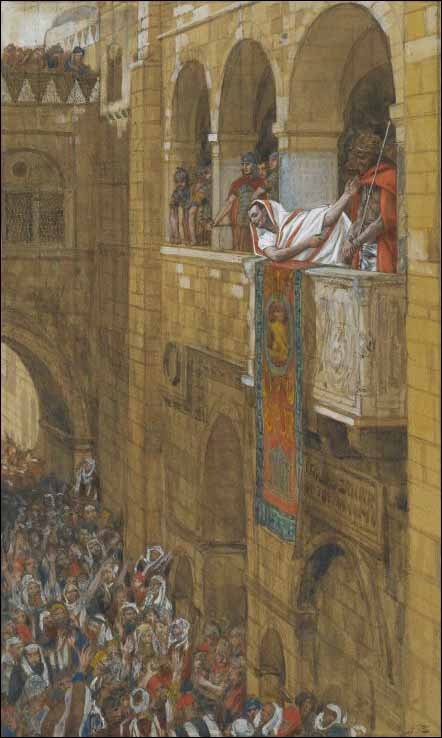
“So the crowd came and began to ask Pilate to do for them according to his custom. Then he answered them, ‘Do you want me to release for you the King of the Jews?’ For he realized that it was out of jealousy that the chief priests had handed him over. But the chief priests stirred up the crowd to have him release Barabbas for them instead. Pilate spoke to them again, ‘Then what do you wish me to do with the man you call the King of the Jews?’ They shouted back, ‘Crucify him!’” Mark 15:8-13.

I have always held that one ought not preach on the Passion Narrative. The story of Jesus’ arrest, conviction and execution, as told in the four gospels, preaches itself. But for every rule there are exceptions and this year might be one of them. This year Holy Week unfolds under the shadow of a horrific mass killing of Asian women by a single white gunman. And this is only the most recent of many lower profile acts of violence against Asian Americans in recent months. Just as medieval Europeans blamed and persecuted Jews under the pretext that their poisoning of public waters brought on the Black Death, so also a significant number of Americans are convinced that Asian people are responsible for the spread of Covid-19 in this country. Some are giving vent to their irrational pandemic related fear and anger in acts of senseless violence.

We don’t have to look far to find the source for this recent spate of lethal animus. Though the Center for Disease Control and Prevention criticized the phrase “China virus” as inaccurate and potentially harmful in promoting racist associations between the virus and  people perceived to be Chinese or related to China, that has not stopped former President Trump and the Republican Party generally from using this and similar racist slurs in attempting to cast blame on China for the spread of Covid 19 in the United States.[1] The first time President Trump used the slur, “Chinese Virus,” was March 16, 2020. The following week saw an increase in anti-Asian hashtags and a rise in hate crimes. Indeed, though overall hate crimes in 2020 decreased by seven percent, those targeting Asian people rose by nearly 150 percent.[2] Everyone should be alarmed by our government’s incitement of violence against our fellow citizens. Those of us who identify as disciples of the one whose death was orchestrated by this very means should recognize in the victims of such violence the image of the Lord we serve. “Where I am,” says Jesus, “there will my servant be.” John 12:26.

Under the right circumstances and where it is politically expedient, it doesn’t take much to whip a mob into a frenzy of hatred. A mob is bigger than any of the individuals making it up, but it draws its strength from the deep wells of fear, anger and resentment living in the gut of each one. It has no memory nor any clear understanding of its own inner turmoil. A mob comes to life whenever someone finds a way to focus its rage on some person or group that can be blamed and punished for its members’ collective unhappiness. They who control the mob have the power to instigate insurrection, rioting and murder without ever getting their hands dirty. Jesus’ political enemies understood that. So does a certain American political party that believes staying in power requires feeding scapegoats to the lowest, meanest and most bigoted segment of our population, otherwise known as the “Trump base.” What happened to Jesus on Good Friday and what happened to the Jews in medieval “Christian” Europe is happening now to Asian Americans.

I submit that there is no neutral ground here. If you took offense at Donald Trump’s remark to the effect that there were “fine people” among the KKK, Nazis and Proud Boys protesting in Charlottesville, I frankly do not understand how you can insist that there are “fine people” in a political party that, at best, tolerates the scapegoating of Asian Americans for a virus induced epidemic. In the Heidelberg Disputation, Martin Luther remarked that “A theologian of glory calls evil good and good evil. A theologian of the cross calls the thing what it actually is.” I cannot think of a better time and place to call this repulsive and murderous Republican politics what it really is. I cannot think of a better time and place to make our stand with the Crucified victim of mob violence than on the Sunday of the Passion. I hope that every preacher in every church this coming Sunday proclaims Christ with an Asian face and rips the masks off all who stoke the murderous rage of those who would see him crucified yet again. Shame on us all if we remain silent.

Here is a poem by Carl Sandberg speaking to mob dynamics and the ways its destructive potential might be re-directed toward becoming a people. If that is to happen, there must be a voice to leading away from blind fear to understanding, from historical amnesia to remembrance.

I Am the People, the Mob

I am the people—the mob—the crowd—the mass.
Do you know that all the great work of the world is done through me?
I am the workingman, the inventor, the maker of the world’s food and clothes.
I am the audience that witnesses history. The Napoleons come from me and the Lincolns. They die. And then I send forth more Napoleons and Lincolns.
I am the seed ground. I am a prairie that will stand for much plowing. Terrible storms pass over me. I forget. The best of me is sucked out and wasted. I forget. Everything but Death comes to me and makes me work and give up what I have. And I forget.
Sometimes I growl, shake myself and spatter a few red drops for history to remember. Then—I forget.
When I, the People, learn to remember, when I, the People, use the lessons of yesterday and no longer forget who robbed me last year, who played me for a fool—then there will be no speaker in all the world say the name: “The People,” with any fleck of a sneer in his voice or any far-off smile of derision.

The mob—the crowd—the mass—will arrive then.

Source: English for Students. Carl Sandburg (1878 – July 22, 1967) was a Swedish-American poet, biographer, journalist and editor. He won three Pulitzer Prizes, two for his poetry and one for a biography of Abraham Lincoln. Sandburg is widely regarded as a major figure in contemporary literature. At the age of thirteen Sandburg left school and began driving a milk wagon. Throughout his early years, he worked as a porter at the Union Hotel barbershop in Galesburg, Illinois, a bricklayer, a farm laborer in Kansas, a hotel servant in Denver, Colorado and a coal-heaver in Omaha. Sandburg began his writing career as a journalist for the Chicago Daily News. Later he wrote poetry, history, biographies, novels, children’s literature and film reviews. He also collected and edited books of ballads and folklore. He spent most of his life in Illinois, Wisconsin, and Michigan before moving to North Carolina. You can find out more about Carl Sandburg and sample more of his poetry at the Poetry Foundation Website.

[1] E.g. Republican Representative Chip Roy, who at a congressional hearing examining anti-Asian violence, defended anti-Asian slurs, blamed China for the spread of Covid-19 and added for good measure, “”We believe in justice. There are old sayings in Texas about find all the rope in Texas and get a tall oak tree,” Roy said at the hearing on Thursday. “We take justice very seriously. And we ought to do that. Round up the bad guys.” Also, Republicans on the House Foreign Affairs Committee.

[2] See Center for the Study of Hate & Extremism.

Drawing the World to See Jesus-Evangelism and Missions Revisited

FIFTH SUNDAY IN LENT

Jeremiah 31:31-34
Psalm 51:1-12
Hebrews 5:5-10
John 12:20-33

Prayer of the Day: O God, with steadfast love you draw us to yourself, and in mercy you receive our prayers. Strengthen us to bring forth the fruits of the Spirit, that through life and death we may live in your Son, Jesus Christ, our Savior and Lord, who lives and reigns with you and the Holy Spirit, one God, now and forever.

 “Sir, we wish to see Jesus.” John 12:21

“And I, when I am lifted up from the earth, will draw all people to myself.” John 12:32.

Some “Greeks” are eager to “see” Jesus. Presumably, they wanted to meet him. Scholarly consensus seems to be that they were Diaspora Jews, that is, Jews living in areas of the Roman Empire outside of Palestine whose primary language was Greek rather than the Aramaic spoken throughout Judea and Galilee. But whoever they might have been, they were outside the scope of Jesus’ ministry. Like the magi, these Greeks were drawn to Jesus and we are not told what “star” brought them to him.

Andrew, the disciple with whom they first made contact, is at a loss about what to do. So he consults with fellow disciple, Philip, and together they decide to consult Jesus. At first blush, Jesus’ response seems like a non-answer. He goes off on what appears to be a tangent, speaking in cryptic terms of his coming crucifixion, the demands of discipleship and the potential cost of following him. But Jesus is actually going somewhere with all this. “And I, when I am lifted up from the earth, will draw all people to myself,” he says. Until that time, no one can fully “see” Jesus. The disciples themselves do not yet “see” Jesus for who he is. They will finally see him, but only in retrospect. John’s gospel is replete with examples of occurrences, the significance of which the disciples only recognize after Jesus was raised from death, (i.e., the cleansing of the temple in Jerusalem John 3:22; Jesus’ final entry into Jerusalem John 12:16; Jesus washing the disciple’s feet John 13:7). In time, not only the disciples, but “all” people will finally “see” Jesus and be “drawn” to him.

“All” is a big word. That is because the news about Jesus is big. It is not only for a select few. As I tried to point out in last week’s post, salvation and eternal life are intended for the entire cosmos. Thus, the missionary impulse to spread the good news to all people. That imperative was drummed into me from an early age. The Lutheran congregation of my childhood held “mission Sundays” at least annually at which missionaries on furlough were invited to speak and a special offering was taken up to support their work. I can recall vividly attending one such event with my parents on a Sunday evening early in the fall. We were sitting on metal folding chairs in the darkened church basement watching a grainy black and white movie filmed by one of our missionary guests. My recollection is that it was shot somewhere in Asia. It was clearly staged. A young, smiling couple stood with their two children in front of their modest home as our guest narrated. “Now this,” he said, “is what happens when Jesus comes into the home of a new believer.” The family turned and went into their house, promptly began collected artifacts of traditional worship set up on shelves and little stone altars in the main living area, placed them into a bag and threw the bag in the fireplace.

That image has haunted me all my life. Even at the tender age of eight or nine there seemed to be something “not quite right” about what I was seeing. The discomfort only grew as I matured and was exposed to other religious traditions through the people I met. Most memorable was a young woman I knew during my college years. I will call her “Min.” Min was an exchange student from Taiwan and a devout Buddhist. Still, she attended our chapel services regularly and showed a keen interest in Christianity. That, of course, attracted my evangelical soul like a magnet and led to my having a number of conversations with her. Even at that point in my life, I knew better than to think I could “convert” Min to Christianity. That was the job of the Holy Spirit. Nonetheless, I felt it my duty to present Jesus in the most compelling way possible-just to give the Spirit plenty to work with.

The conversations I had with Min were sometimes enlightening, but more often frustrating and confusing. I was never quite sure we were even speaking about the same thing when we talked about “God,” “eternal life” and “heaven.” But during one of our last conversations, Min said something that always stuck with me. “You know,” she said. “There is a lot about Christianity that just doesn’t make much sense to me. But I think that knowing Jesus has helped me to become a better Buddhist.” At the time, I thought I had failed in my ministry to Min. She had not converted to Christianity, been baptized or rejected her Buddhist faith. But at the same time, I felt somehow relieved. There was something beautiful about Min’s religion, her way of being present to everyone she met and her deep compassion that I would not have wanted to destroy. Her conversion, it seemed to me, would mean snuffing out a flame “that shines forth…in unaccountable faith, in stubborn hope, in love that illumines every broken thing it finds.” Circle of Grace, A Book of Blessings for the Seasons c. 2015 by Jan Richardson pp.47-48. It has taken me some time to reconcile these conflicting feelings, but I think I am now in a better position to make sense of them. Like the disciples in John’s gospel, I look back on my friendship with Min and recognize now that she was in fact “drawn” to Jesus, came to “see” him and was even tranaformed by him-just not in the way I was taught to expect.

The history of Christian missions is a mixed bag. In spite of the assumptions of white supremacy and colonial ambition that often accompanied the missionary enterprise, many of the missionaries themselves were caring and faithful witnesses with a deep love for the people they came to serve. There is no disputing that this effort, misguided as it often was, gave rise to thousands of lively, faithful and creative indigenous churches. Notwithstanding the dubious terms in which the gospel was often presented by Northern European and American missionaries of the 19th and early 20th centuries, the resulting churches have nevertheless managed to make the gospel their own and speak it to the world in fresh and startling ways.

Racism and colonialism are not the only impediments to proclaiming the good news about Jesus in lands where it is a foreign element. We have unfortunately been schooled to think of evangelism as a zero sum game in which a soul is either won or lost. Other religions are frequently viewed as competitors. Evangelism is a contest for market share. The endgame is conversion to Christianity with a repudiation of what has gone before. Where that is the prevailing assumption, it is hard for non-Christians to see missionaries, however courteously, respectfully and tactfully they may present themselves, as anything other than invaders intent on destroying their faith, to say nothing of imposing upon them a lot of unwanted cultural baggage. But what if being “drawn” to Jesus does not necessarily imply conversion to Christianity? What if mission work includes helping Muslims be better Muslims? Buddhists better Buddhists? Conversely, an openness to other religious traditions enriches our own worship, preaching and practice. Witness the profound effect Buddhism has had for contemplative Christians like Thomas Merton and Rowen Williams. For my own part, no Christian theologian has ever helped me appreciate the full implications of the Incarnation as did Jewish author and Holocaust survivor Elie Wiesel.

By no means do I object to conversion, so long as it does not involve coercion or undue influence. Many of my friends in Christ have been “evangelized,” that is, drawn to Jesus and his church’s ministry along a path leading away from prior faith commitments or from having no faith at all. But I am not convinced that evangelism is a zero sum game with conversion to Christianity as the sole objective. I believe that Jesus has much to offer adherents of other faith traditions and that these traditions offer Christians fresh perspectives with which to understand our own faith. I don’t believe we must choose between rejecting or devaluing the faiths of others on the one hand or watering down all faiths to some trite common denominator on the other. All we need to do is “speak of what we have seen and heard,” “tell the old, old story of Jesus and his love.” Jesus can be trusted to draw all people to himself in his own good time, in his own good way and on his own good terms.

Here is the poem/blessing cited above by Jan Richardson in full. This lyric piece illustrates the good news about Jesus, light which shines in the darkness and which the darkness cannot extinguish.

Blessed Are You Who Bear the Light
 
Blessed are you
Who bear the light
In unbearable times,
Who testify
To its endurance
Amid the unendurable,
Who bear witness
To its persistence
When everything seems
In shadow and grief.

Blessed are you
In whom
The light lives,
In whom
The brightness blazes-
Your heart
A chapel,
An altar where
In the deepest night
Can be seen
The fire that
Shines forth in you
In unaccountable faith,
In stubborn hope,
In love that illuminates
Every broken thing
It finds.

Source: Circle of Grace, A Book of Blessings for the Seasons, Richardson, Jan (c. 2015 by Jan Richardson; pub. by Wanton Gospeller Press). Jan Richardson is an artist, writer, and ordained minister in the United Methodist Church. She grew up in Evinston, a small community outside of Gainesville, Florida. She is currently director of The Wellspring Studio and serves as a retreat leader and conference speaker. In addition to the above cited work, her books include The Cure for Sorrow, Night Visions, In the Sanctuary of Women, and Sparrow: A Book of Life and Death and Life. You can learn more about Jan Richardson and her work on her website.