Tag Archives: christianity

Disciples as Resident Aliens

TWELFTH SUNDAY AFTER PENTECOST

Proverbs 25:6-7

Psalm 112

Hebrews 13:1-8, 15-16

Luke 14:1, 7-14

Prayer of the Day: O God, you resist those who are proud and give grace to those who are humble. Give us the humility of your Son, that we may embody the generosity of Jesus Christ, our Savior and Lord.

“For here we have no lasting city, but we are looking for the city that is to come.” Hebrews 13:14.

As those who follow me regularly know, I practiced law in New Jersey for eighteen years of my professional life. My practice consisted primarily of civil litigation. A lawsuit is a slow, cumbersome and expensive way to resolve disputes, That is why the vast majority litigants settle their claims rather than face the uncertainty and incur the expense of a jury trial. Still, there are risks on both sides of the equation. Settlement before trial risks leaving money on the table, while trying the case can result in no recovery at all. A case might appear strong and promise a big money judgment. But good attorneys know that they don’t know what they don’t know. That is why before an attorney tries a case or recommends settlement, the attorney assesses the value of the case, the strengths and weaknesses of the evidence on both sides. To facilitate this process, the rules of court have established procedures for what is called “discovery.” Attorneys on both sides of the case are permitted, within limits, to demand documents and examine the parties and their witnesses under oath prior to trial.

This might all sound straightforward. But it is not. Take document demands, for example. Documents may contain a wealth of information, but not all of it is subject to disclosure. A document may contain relevant information that is discoverable, but also information about a party or witness that is personal, private and unrelated to the case. Or the document might contain references to communications between the parties and their attorneys. As such, they would be exempt from the requirement from disclosure by the “attorney client privilege.” Thus, when attorneys produce documents to the opposing side, they take care to redact (black out) those portions of the document they believe constitute protected information. Naturally, attorneys interpret these legal protections as broadly as possible to avoid disclosing as much information as possible, particularly if they regard that information as harmful to their case. This, in turn, results in numerous applications to the court which must review the documents to ensure that the information redacted is, in fact, legally protected. Thus, every attorney knows that when documents are produced, the juiciest pieces of information are the ones that have been blacked out.

The above passage from the Letter to the Hebrews has, for reasons known only to God and the creators of the lectionary, been redacted from our reading today. Quite predictably, it is both juicy and relevant. The author admonishes his hearers “Do not be carried away by all kinds of strange teachings…” Hebrews 13:9. Understand that the writer is addressing a catastrophic horror experienced by disciples of Jesus along with all Jews generally, namely, the sack of Jerusalem and the destruction of the Temple in 70 C.E. Central to much of First Century Judaism, the temple appears to have been highly significant to early disciples of Jesus who also identified as Jews. Luke’s gospel begins and ends in the Temple. According to the Book of Acts, the temple was one of the earliest places of worship for the disciples. The temple’s destruction, frequently thought to be a sign the end times, was deemed the harbinger God’s reign. All four gospels discourage this expectation, which leads one to believe that it must have been present among early believers.

The believers addressed in the Letter to the Hebrews appear to have come unmoored, not knowing quite where they are geographically, historically or religiously. The temple and holy city had been destroyed, but the reign of God did not come. The disciple’s connection to the larger Jewish community was fraying.[1] Persecution, though not yet at the point of requiring martyrdom, was afflicting the community. Under these circumstances, communities are vulnerable to “all kinds of strange teachings,” baseless rumors and wild conspiracy theories that promise to make sense out of their fears, give them certainty and help them find direction. The QAnon phenomenon is a good contemporary example of what can happen when people are disoriented by a world that is unsettled, uncertain and changing just too damned fast. The temptation is strong to grab at any explanation that makes sense out of a senseless world, no matter how lacking in sense that explanation is.   

The author of the anonymous letter to the Hebrews acknowledges these realities of disappointed hope, uncertainty and persecution, but goes on to point out that they are not anomalies. To the contrary, rootlessness, exile, alien status and even the life of the fugitive are the very nature of discipleship. After delivering a stirring roll call of heroes of faith from the Hebrew Scriptures who faced the very dangers the community is now experiencing, the author points out that “these died in faith without having received the promises, but from a distance they saw and greeted them. They confessed that they were strangers and foreigners on the earth, for people who speak in this way make it clear that they are seeking a homeland. If they had been thinking of the land that they had left behind, they would have had opportunity to return. But as it is, they desire a better homeland, that is, a heavenly one.”  Hebrews 11:13-16.

This message is critical for a church dwelling in a world that is increasingly nationalistic, tribalistic and divided along the fault lines of politics, religion and morality. These words from the book of Hebrews are critical and liberating for a church that, for most of the two millennia of its existence, has served as the moral and religious organ of one state or another. The extent to which the church has become symbiotically related to the state is nowhere better illustrated than in eastern Europe where Russian Orthodox Christians and Ukrainian Orthodox Christians are killing each other. The same nationalistic heresy is found in our American churches, most of which still sport the American flag in their sanctuaries and bless their nation’s wars on civic occasions. Clearly, however, in circumstances under which Christians answer the call to kill human beings made in God’s image in the name of nation, ideology, family honor or some other high cause, they are rejecting the reign of God and the City which alone is home to God’s pilgrim people and whose witness is to the one, holy, catholic and apostolic church transcending all humanly created artificial distinctions within the human family. To be a disciple of Jesus is to be first, foremost and always a citizen of the City of God. We reside elsewhere only as resident aliens.   

 The great theologian, preacher and teacher, Karl Barth addressed this ailment in 1914 at the outbreak of the First World War:

“In the political sphere the Church will always and in all circumstances be interested primarily in human beings and not in some abstract cause or other, whether it be anonymous capital or the state as such (the functioning of its departments!) or the honor of the nation or the progress of civilization or culture or the idea, however conceived, of the historical development of the human race.” Karl Barth, Community, State and Church.

Here is a Black spiritual, the authorship of which is unknown. Suffice to say that it was produced within a community that understands better than most American Christians what it means to be a resident alien in a land that his both hostile to God’s reign and to God’s people.

Poor Wayfaring Stranger

I’m just a poor wayfaring stranger,
I’m trav’ling through this world below;
There is no sickness, toil, nor danger,
In that bright world to which I go.
I’m going there to see my father,
I’m going there no more to roam;
I’m just a going over Jordan,
I’m just a going over home.

I know dark clouds will gather o’er me,
I know my pathway’s rough and steep;
But golden fields lie out before me,
Where weary eyes no more shall weep.
I’m going there to see my mother,
She said she’d meet me when I come;
I’m just a going over Jordan,
I’m just a going over home.

I want to sing salvations story,
In concert with the blood-washed band;
I want to wear a crown of glory,
When I get home to that good land.
I’m going there to see my brothers,
They passed before me one by one;
I’m just a going over Jordan,
I’m just a going over home.

I’ll soon be free from every trial,
This form will rest beneath the sod;
I’ll drop the cross of self-denial,
And enter in my home with God.
I’m going there to see my Saviour,
Who shed for me His precious blood;
I’m just a going over Jordan,
I’m just a going over home.

Source: American Religious Poems, Edited by Harold Bloom and Jesse Zuba (c. 2006 by Literary Classics of the United States). The origins of this song/poem are unclear. It may have multiple religious and cultural influences. The use of coded language common in Negro spirituals points to African American origins. The “crossing the River Jordan” may refer to crossing the Ohio River on the journey north to freedom. The “way” that is “rough and steep” could easily refer to the arduous and dangerous journey through the southern slave states and the “beauteous fields” that “lie just before” to the promise of a life of liberty in Canada or the northern states. In 1905 Black composer Samuel Coleridge-Taylor included the poem under the title “Pilgrim’s Song” in a set of piano arrangements based on melodies from African American hymnody. Over the last century it has found its way into a number of mainline hymnals but not, alas, into our Lutheran books of worship.


[1] It is perhaps a desire to remain rooted in the Jewish community that made some members of the church addressed in Hebrews overly concerned with “regulations about food.” Hebrews 13:9.

Sabbath-Pushing Back Against the Work Ethic

ELEVENTH SUNDAY AFTER PENTECOST

Isaiah 58:9b-14

Psalm 103:1-8

Hebrews 12:18-29

Luke 13:10-17

Prayer of the Day: O God, mighty and immortal, you know that as fragile creatures surrounded by great dangers, we cannot by ourselves stand upright. Give us strength of mind and body, so that even when we suffer because of human sin, we may rise victorious through your Son, Jesus Christ, our Savior and Lord.

“…the leader of the synagogue, indignant because Jesus had cured on the Sabbath, kept saying to the crowd, ‘There are six days on which work ought to be done; come on those days and be cured and not on the Sabbath day.’” Luke 13:14.

“…ought not this woman, a daughter of Abraham whom Satan bound for eighteen long years, be set free from this bondage on the Sabbath day?” Luke 13:16.

Technically speaking, the leader of the synagogue was right. Work ought not to be done on the Sabbath. The Sabbath was given to protect us from the tyranny of work. That is not to say that work is evil. To the contrary, the first human beings were tasked with caring for God’s garden in paradise. Work is a blessing. It is the means by which we care for the earth and for one another. Accordingly, when properly directed and exercised, it gives meaning, purpose and direction to life. But like all of God’s blessings, it has the potential to become a curse when the gift is elevated above the Giver or when it becomes a tool of greed and oppression rather than an instrument of service.

Our relationship to work in American capitalist society is complex to say the least. We tend to view labor as a commodity and judge the worth of individuals by the market value of their skills and the work of which they are capable. As a result, manual labor requiring few skills but demanding strenuous effort is considered cheap. The people who perform it are underpaid, overworked, often lack essential medical coverage and are seldom able to save enough to live their final days in dignity and security. These people often work in dangerous and unsanitary conditions doing jobs that upper middle class Americans would never do. Yet without this army of workers who clean our restrooms, collect our garbage, clean our offices, harvest our fruits and vegetables, slaughter and process our meat, deliver goods to the supermarkets and stack the shelves, our everyday lives would grind to a halt. Their value and the labor they contribute far exceeds their compensation.

Work is an obsession with us. The worst insult you can fling at anyone of us is to call us lazy. We take a perverse pride in letting everyone know how busy we are, how much we have to do and how little time we have for anything other than work. I internalized that compulsion early on and brought it with me into my ministerial career. Whenever asked how I was doing by a family member, a member of my church or a colleague, my reflex answer was “busy,” whether I really was or not. When serving my parish in New Jersey, one of my guilty pleasures was taking a walk to the Dairy Queen a couple of blocks from my office to enjoy a small hot fudge sundae. I say “guilty,” because there was always that voice in back of my head reminding me of everything else I could be doing. There were always hospital visits to be made, meetings to prepare for and worship planning to be done. In reality, the half hour I spent eating ice cream had no substantial effect on my ability to get these things done. No matter how many hours I worked or how much effort I put into my job, there were always loose ends, unfinished tasks and more to be done than a day would allow. But something inside me would not accept that. Because there is no end to all that needs to be done, there should be no end to my efforts. I knew, of course, that working too hard makes one less productive, less effective and less satisfied with one’s job. In spite of this knowledge, my compulsive drive to be at work usually won out. Ultimately, this obsession with work takes a toll on our physical and mental health. I had just enough will power to get enough rest to avoid that.

The Sabbath was given to protect us from the dangers of work by keeping it in its proper place. If nothing else, forcing us to spend a day doing nothing reminds us that we can put our work aside and, lo and behold, the sun still rises the next morning. The Bible tells us that God rested on the seventh day following creation. If God can put aside God’s work and rest, can we really say with a straight face that our work is so urgent and so important we cannot afford to put it aside for half a hour’s rest?

Though we in the Christian tradition have associated Sabbath with worship, it is more properly understood as a labor law. Recall that at the time the Torah was revealed to Moses, the people of Israel had been newly liberated from slavery in Egypt. Slaves of imperial Egypt were regarded in much the same way as laborers are considered in late capitalist America. They were fungible units, valued by the amount of work that could be squeezed out of them. God did not intend for Israel to become another Egypt. Accordingly, God mandated a day of rest to be observed by everyone, including slaves, animals and even the land itself. In Israel, labor was to be focused on producing food and shelter for all, including those unable to feed and shelter themselves. It was not to be exploited to enrich the few at the expense of the many or for empire building. No one should be crushed under the tyranny of uncompensated labor.

On its face, the objection of the synagogue leader seems reasonable. There are six days on which this woman could have come to be healed. Moreover, she had only to wait until sundown when the Sabbath ended. Her condition was not urgent-she had been living with it for eighteen years. So why the rush? Why not wait a few hours until after the Sabbath? The answer is precisely because this was a Sabbath day, the day of rest for all God’s people and all of creation. Take it from me, a person does not get much rest when the back is hurting. If you are permitted to water your domestic animals on the Sabbath so that they can enjoy their rest, should not the same apply to a human being deprived of rest by chronic pain and disability? What better time to lift the yoke of suffering than on God’s Sabbath? So far from violating the Sabbath, Jesus was honoring it by extending the rest it promises to the crippled woman in our gospel lesson.

Jesus is not, as some of us in the Christian tradition have maintained, abrogating the Sabbath. He does not regard it as a legalistic burden that can safely be ignored. To the contrary, Jesus takes the Sabbath far more seriously than does the leader of the synagogue. Jesus would extend the reach of Sabbath rest to all who find themselves excluded from it. So we need to ask ourselves, who are those among us excluded from Sabbath rest? Can we recognize them among low wage earners holding down two, sometimes three jobs only to live paycheck to paycheck? Can we recognize those denied Sabbath rest by medical insurers who routinely deny coverage for treatment to the most ill and vulnerable among us? Have we excluded ourselves from Sabbath rest by our manic obsession with success, wealth and recognition? How is Jesus inviting us to enter into Sabbath rest and extend that rest to our neighbors?

Here is a poem by Stanley Bradshaw expressing the longing for the kind of sustaining rest human beings need to be nourished, restored and re-inspired to live will.

Restful Ground

I have known solitudes, but none has been

Such as I seek this hour: a place so still

That the darkened grasses wake to no sound at all

Nor float their shadowy fingers in a wind.

I have known quiet in places without dark trees;

But after this clanging of hours, I seek a silence

Where the only motion is the quiet breathing

Of dark boughs gazing on the restful ground.

Source: Poetry, (March 1931). Stanley Burnshaw (1906 –2005) was an American poet. In addition to poetry, he is known for his works on social justice.  Raised by his parents who immigrated from England, Burnshaw was born and brought up in New York City. He began his secondary education at the University of Pittsburgh, transferred to Columbia University and then transferred back to the University of Pittsburgh where he earned his bachelor’s degree. After traveling throughout Europe, he returned to New York where he earned a master’s degree at New York University. Bradshaw held several positions early in his career, including assistant copywriter, advertising manager, drama critic and occasional book reviewer. He first became the editor-in-chief for the Cordon Company in New York, then president and editor-in-chief of the Dryden Press, a firm he started. Dryden merged with Holt, Rinehart and Winston in the late 1950s. Throughout his career, Burnshaw published many works of prose and poetry as well as books and editorials. He remained active in these and many other aspects of his career until his death in September 2005. You can read more about Stanley Burnshaw and sample more of his poetry at the Poetry Foundation website.

In Defense of Polarization

TENTH SUNDAY AFTER PENTECOST

Jeremiah 23:23-29

Psalm 82

Hebrews 11:29—12:2

Luke 12:49-56

Prayer of the Day: O God, judge eternal, you love justice and hate oppression, and you call us to share your zeal for truth. Give us courage to take our stand with all victims of bloodshed and greed, and, following your servants and prophets, to look to the pioneer and perfecter of our faith, your Son, Jesus Christ, our Savior and Lord.

“Do you think that I have come to bring peace to the earth? No, I tell you, but rather division!” Luke 12:51.

I recently heard a speaker at a Christian gathering say, “I am glad this country is polarized. I wish it were more polarized.” That remark sent some shock waves through the audience. I don’t doubt Jesus’ remarks had much the same effect. We usually view polarization, division and dissension as harmful and destructive. Many times, they are. I have lived through family rifts, church conflicts and political upheavals that disrupted the efforts of communities to pursue the common good, led churches to disband, ended friendships and alienated family members from one another. There is no question that polarization is destructive and contrary to God’s mission of reconciling the world to God’s self.

That said, there is something worse than polarization and conflict. Far worse than open conflict is a false peace offered by prophets, preachers and demagogues who “treat[] the wound of [God’s] people carelessly, saying, ‘peace, peace,’ when there is no peace.” Jeremiah 6:14. Far worse it is to remain silent in the face of comforting lies, cruelty and injustice, all for the sake of avoiding conflict, than to speak a hard truth rupturing the façade of a false peace that hides, shelters and perpetuates evil. Our wounded world cannot be healed with soothing words assuring it that all is well, no repentance is required and the status quo is the way things are and should always be. Such peace is no peace at all. It is poles apart from the peace God wills for our planet.

In order for the peace of God to reign, peace that follows justice, repentance and reconciliation in just that order, the false peace resting on the appeasement of evil, toleration of injustice and blindness to the suffering and persecution of our neighbors must be shattered. I suggest that the job of a disciple of Jesus in days such as these is to be a disturber of the peace. There can be no peaceful coexistence with a government that uses its military against peaceful protesters, sends masked goons to snatch honest and hardworking people from their homes, schools and places of work, divides families, propagates racist propaganda, ruthlessly persecutes transgender families and their children and denies medical care and treatment to the most vulnerable among us. These are not the ways of a righteous nation. They are the ways of an evil empire, the likes of which Jesus condemns in his parable of the last judgment and John of Patmos foretells destruction in the book of Revelation. There is no middle ground between equality and racism, rapists and their victims, truth and “alternative facts,” otherwise known as “lies.” There is no middle ground between the peace of God’s reign over a new creation and the fragile peace of despots and cowardly subjects desperately holding together the crumbling remnants of the old. Standing with Jesus sometimes means standing against your country, standing against members of your church or even standing against your own family.

I have previously related the story of Clarence Jordan and his part in founding Koinonia Farm. I think that story bears repeating here. Recall that Koinonia Farm was an intentional Christian community established in the State of Georgia back in 1942. It continues as a vital witness to the gospel to this day. Clarence Jordan intended for Koinonia to be a “demonstration plot for the Kingdom of God.”  For him, this meant a community of believers sharing life and following the example of the first Christian communities as described in the Acts of the Apostles. In order to bear witness to the church as a family in which there is no Jew or Greek, slave or free, male or female, Koinonia was constituted from its inception as a place where African Americans lived side by side with their white sisters and brothers. Not surprisingly, Koinonia Farm was a frequent target of Klan hostility and government initiated opposition in the deeply segregated south. In his book, Unleashing the Scripture, Duke University professor of religion and ethics Stanley Haueraus relates a pivotal incident in the story about Koinonia.

Shortly after Koinonia was founded, Georgia’s state attorney general made several attempts to outlaw the community, confiscate its property and evict the residents. Clarence Jordan sought the help of his brother Robert Jordan, a prominent lawyer with political aspirations. Clarence asked Robert to take on the defense of Koinonia Farm. According to a passage from a book written by James McClendon, the following exchange took place:

“Clarence, I can’t [represent you]. You know my political aspirations. Why, if I represented you, I might lose my job, my house, everything I’ve got.”

We might lose everything too, Bob,” [Clarence replied.]

“It’s different for you.”

“Why is it different? I remember, it seems to me, that you and I joined the church the same Sunday, as boys. I expect when we came forward the preacher asked me about the same question he did you. He asked me, ‘Do you accept Jesus as your Lord and Savior.’ And I said, ‘Yes.’ What did you say?”

“I follow Jesus, Clarence, up to a point.”

“Could that point by any chance be—the cross?”

“That’s right, [Clarence]. I follow him to the cross, but not on the cross. I’m not getting myself crucified.”

“Then, [Robert,] I don’t believe you’re a disciple. You’re an admirer of Jesus, but not a disciple. I think you ought to go back to the church you belong to, and tell them you’re an admirer and not a disciple.”

“Well now, [Robert replied,] if everyone who felt like I do did that, we wouldn’t have a church, would we?”

“The question is” Clarence said, ‘Do you have a church?’”

My own Lutheran tradition is big on giving government the benefit of the doubt. Citing (mis-citing) Saint Paul in his letter to the Romans, we have often drawn the wrong conclusion that whatever government exists has been established by God, serves as God’s minister of justice and should therefore receive the same degree of obedience as given to God.[1] Even unjust, ineffective or foolish laws must be obeyed-unless they forbid preaching of the gospel. Then and only then do we “obey God rather than human authority.” That is true, so long as we understand that proclaiming the gospel is not a matter of mere preaching, but of practicing the way of Jesus as he lived the precepts of the Sermon on the Mount which ultimately led to his execution under government authority. Showing mercy, granting protection and offering care to our neighbors who are transgender, undocumented or the victims of federal, state or local censorship requires breaking some humanly instituted laws. Discipleship requires no less, even if it splits churches, alienates long time members, divides families and triggers legal prosecution. A church divided over the gospel is far preferable to a church united under anything less.

These times call for preachers unafraid to unleash the sword of division on behalf of our most vulnerable neighbors in whom we cannot help but recognize the face of Jesus. Matthew 25:37-41. I have said it before and I will say it again: If you, as a preacher, are unable or unwilling to do this work, then for the sake of the church, for the sake of the world and for your own sake, step out of the pulpit and make way for someone who will.

Here is a poem by Denise Levertov that shatters the false and fragile peace of silence and complicity.

Goodbye to Tolerance

Genial poets, pink-faced

earnest wits—

you have given the world

some choice morsels,

gobbets of language presented

as one presents T-bone steak

and Cherries Jubilee.

Goodbye, goodbye,

                            I don’t care

if I never taste your fine food again,

neutral fellows, seers of every side.

Tolerance, what crimes

are committed in your name.

And you, good women, bakers of nicest bread,

blood donors. Your crumbs

choke me, I would not want

a drop of your blood in me, it is pumped

by weak hearts, perfect pulses that never

falter: irresponsive

to nightmare reality.

It is my brothers, my sisters,

whose blood spurts out and stops

forever

because you choose to believe it is not your business.

Goodbye, goodbye,

your poems

shut their little mouths,

your loaves grow moldy,

a gulf has split

                     the ground between us,

and you won’t wave, you’re looking

another way.

We shan’t meet again—

unless you leap it, leaving

behind you the cherished

worms of your dispassion,

your pallid ironies,

your jovial, murderous,

wry-humored balanced judgment,

leap over, un-

balanced? … then

how our fanatic tears

would flow and mingle

for joy …

Source: Breathing the Water (New Directions Publishing Corporation, 1987). Denise Levertov (1923–1997) never received a formal education. Nevertheless, she created a highly regarded body of poetry that earned her recognition as one of America’s most respected poets. Her father, Paul Philip Levertov, was a Russian Jew who converted to Christianity and subsequently moved to England where he became an Anglican minister.  Levertov grew up in a household surrounded by books and people talking about them in many languages. During World War II, Levertov pursued nurse’s training and spent three years as a civilian nurse at several hospitals in London. Levertov came to the United States in 1948, after marrying American writer Mitchell Goodman. During the 1960s Levertov became a staunch critic of the Vietnam war, a topic addressed in many of her poems of that era. Levertov died of lymphoma at the age of seventy-four. You can read more about Denise Levertov and sample more of her poetry at the Poetry Foundation Website.


[1] The reference is to Romans 13:1. Paul says no more than what Jeremiah and Isaiah said concerning Assyria and Babylon, namely, that they were being used by God as instruments of God’s judgment. Consequently, resistance to them would be futile. It is a long and speculative leap from there to conclude that Israel should support these nations in their military campaigns of conquest or that Christians should support the exploitive policies of the Roman Empire. Thus, while disciples of Jesus should pay their taxes, recycle their refuse and follow the rules of the road when operating an automobile, it does not follow that they should acquiesce, much less participate in governmental acts of oppression.

Living in the Future We Anticipate

NINTH SUNDAY AFTER PENTECOST

Genesis 15:1-6

Psalm 33:12-22

Hebrews 11:1-3, 8-16

Luke 12:32-40

Prayer of the Day: Almighty God, you sent your Holy Spirit to be the life and light of your church. Open our hearts to the riches of your grace, that we may be ready to receive you wherever you appear, through Jesus Christ, our Savior and Lord.

“Do not be afraid, little flock, for it is your Father’s good pleasure to give you the kingdom. Sell your possessions and give alms. Make purses for yourselves that do not wear out, an unfailing treasure in heaven, where no thief comes near and no moth destroys. For where your treasure is, there your heart will be also.” Luke 12:32-34.

The reign of God is a gift. According to the scriptural witness, there is much in the world that is hostile to God’s good and gracious will for it. Human creatures, though created in God’s image, have had their hearts and minds infected hateful ideologies, violent politics and self destructive behavior. Many unspeakable horrors take place on this planet that God does not will, does not cause and does not passively allow to take place. These forces of evil will have their say, but theirs will not be the last word. God’s reign of diversity, equity and inclusion of people of every nation, tribe and tongue is the future toward which all creation is moving. And there isn’t a damn thing anybody can do about it.

The reign of God comes in God’s way, by God’s chosen means and in God’s own time. It is not God’s will “that any should perish, but that all should reach repentance.” II Peter 3:9. God’s strength is God’s patience. Our weakness is our impatience. Waiting for all to be drawn into the orbit of God’s love and woven into the fabric of God’s new creation is nearly impossible for a people raised on fast food, fast internet, fast cars and speed dating. For an impatient, fast moving “let’s get this done” kind of people, a God who raptures to heaven those of us who are ready and leaves the rest of the world to burn might sound appealing. But ours is not a God interested in saving a few souls from a sinking ship. God is intent on saving the ship. And because God has all eternity to work with, God will take whatever time is necessary to win every heart, reconcile every enemy, heal each of creation’s many wounds. It will take as long as it takes. And there isn’t a damn thing anybody can do about it.

Because the reign of God is a gift that God gives to us on God’s own terms, we are not responsible for implementing it. That is the liberating word Jesus delivers to his disciples. No need to be afraid. The kingdom is already yours. There is nothing you need to do or can do to obtain it. No one can stop it from coming. That, however, does not mean that Jesus’ disciples are to be idle. Though the reign of God is God’s future, God’s future is God’s present and God’s presence for the disciples. They are invited to live in God’s future now because, for them, the reign of God has already begun. They are free, therefore, to sell their possessions and give them for alms-a move that appears reckless and foolish to those outside of God’s reign. But as Jesus pointed out in last Sunday’s gospel narrating the parable of the “rich fool,” the pursuit of security in wealth and the power it brings is a fool’s game. The smart money is on Jesus. The only sure way to build wealth is to invest in God’s reign by building relationships with the outcast, the poor and the persecuted who are the objects of God’s passionate concern. Mercy, compassion, justice and reconciliation are the stuff out of which the new creation is made. Everything else is consigned to the trash heap.

So Jesus warns his disciples to be dressed, lit up and ready to receive the reign of God whenever it might show up. This is essential because, however distant the consummation of God’s reign might be, there is no telling when and where beams of light from its distant dawning might break into our present. There is no telling when, where and under what conditions we might have the opportunity to offer life altering assistance to a neighbor in need. There is no predicting what we might learn if only we can bridle our tongues long enough to listen. There is no telling when we might be called upon to speak truth to power or put ourselves between our vulnerable neighbors and the jaws of an oppressive regime. Jesus assures us that he walks with us in our daily lives, eager to break into our day with opportunities to live the coming reign of God in the here and now. Do not be afraid, little flock. God will give you the kingdom. Just see to it that you are watching and ready for it!

Here is a poem by Rakiya Foreman about the interplay between the transitory nature of each day and the persistence of dawn throughout its passing and at its demise as a lingering promise of the new day beyond the horizon. This persistent whisper of dawn is perhaps not unlike the reign of God which, though ever in front of us, is nonetheless ever present with us.

Whispers of Dawn

In the cradle of dawn, where shadows fade,

Whispers of light through the branches wade,

Soft as a sigh on the morning breeze,

A songbird awakens among the trees. 

Silver dewdrops on petals gleam, 

Caught on the web of a waking dream,

The earth, a canvas, dawn its brush, 

Painting the world in a tender hush.

Hues of amber, gold, and rose, 

Embrace the sky as the new day grows, 

Mountains stretch in a languid yawn, 

Welcoming the birth of dawn. 

Rivers murmur a quiet tune, 

Reflecting the light of the crescent moon,

As it bids farewell to night, 

Making way for the sun’s first light.

In the stillness, hearts find peace, 

Moments of grace in the morning’s crease,

Nature’s chorus, a symphony, 

Echoes through the land, wild and free. 

Footsteps tread on paths anew,

As dreams of night give way to dew,

Eyes wide open to the light, 

Embracing the world in morning’s sight.

A child’s laughter, pure and clear, 

Breaks the silence, brings us near,

To the simple joys of day,

As dawn gently leads the way.

The world awakes, yet holds its breath,

In the sacred stillness of morning’s death,

As the sun climbs higher, bold and bright,

We bask in the warmth of its ancient light. 

Whispers of dawn, so soft, so true,

A promise of hope in the sky’s deep blue,

Each day a gift, each dawn a chance,

To join the world in nature’s dance. 

Through the day, we carry on,

With memories of the quiet dawn,

A reminder in the hectic day,

Of morning’s soft and gentle sway.

In the cradle of dusk, shadows blend, 

Another day comes to an end,

Yet whispers of dawn linger still,

A promise of light beyond the hill.

c. 2024 by Rakiya Foreman. Rakiya Foreman grew up in a rural area where she spent much of her time outdoors. Today she lives in the big city where she enjoys writing poetry. This poem is her attempt to capture and share the awe and hope she feels each time she witnesses dawn breaking.

A Hope Better than the American Dream

SIXTH SUNDAY AFTER PENTECOST

Genesis 18:1-10

Psalm 15

Colossians 1:15-28

Luke 10:38-42

Prayer of the Day: Eternal God, you draw near to us in Christ, and you make yourself our guest. Amid the cares of our lives, make us attentive to your presence, that we may treasure your word above all else, through Jesus Christ, our Savior and Lord.

“[Christ] himself is before all things, and in [Christ] all things hold together.” Colossians 1:17.

This claim sounds preposterous these days when it appears so much of our world is falling apart. International treaties and trade agreements that ensured a measure of peace and stability for eight decades are fast unraveling. Wildfires, hurricanes and tornados are becoming increasingly frequent and destructive as the earth’s temperature rises. Fragile ecosystems across the globe and the habitats that support them are at risk. As war ravages South Sudan, Gaza and Ukraine, millions are facing displacement, homelessness and starvation. Even to those of us who have lived our lives in the bubble of privilege cannot help but wonder whether the world order that has been so good to us is about to fall on our heads. In short, it does not appear that anyone is holding things together.

On the other hand, none of this is new to the people of God who have known enslavement, displacement, exile and the dissolution of “civilization as we know it” more than once. Our spiritual ancestors have witnessed the dissolution of the Babylonian, Assyrian, Persian, Macedonian and Roman Empires, along with the carnage following in their wake. Each empire, including the one called the United States of America, is, to quote Shakespeare, “but a walking shadow, a poor player,/ that struts and frets his hour upon the stage,/and then is heard no more.” Macbeth, Act 5, Scene 5. Nevertheless, as the Prophet Isaiah reminds us, “[t]he grass withers, the flower fades; but the word of our God will stand forever.” Isaiah 40:8. Christ, the Incarnate and eternal Word, suffers patiently and faithfully with God’s wounded creation, striving to heal its wounds, mend its fractures and bring it to its appointed end where all things are made new, all tears are wiped away, mourning and pain will end and even death will be no more. Revelation 21:1-8.

Saint Paul tells us that we are saved “in hope.” That is to say, we order our lives according to a future we do not see and almost certainly will not come to fruition in our lifetimes. To be clear, this hope is not synonymous with mere optimism, a glib belief that “everything will work out in the end.” It did not happen that way for Jesus and Jesus warns his disciples that they can expect nothing other than the cross he bore. Our hope is grounded in the conviction that God raised Jesus from death and, in so doing, delivered a decisive “yes” to the life he lived. To hope is to live in the way of Jesus, even when it does not seem practical, even when it seems not to make a difference, even when it appears to be counterproductive. To hope is to live in the way that is eternal, the way that life is lived is under God’s just and gentle reign yet to be revealed. The church is not the reign of God, but it witnesses to God’s reign by its communal life, its witness to Jesus’ obedient life, faithful death and glorious resurrection and its solidarity with those regarded as “the least” in the human community. To borrow a phrase from Professor Stanley Hauerwas, the church is the community whose life is incomprehensible apart form the belief that God raised Jesus from death.

This week I attended the annual gathering for the Ekklesia Project, the theme of which was “Hope Does Not Disappoint: Wrestling with God in a Groaning Creation.”? Together, we sought to listen carefully to voices and experiences that have too long been absent from the church’s construction of hope. To that end, we heard speakers from Latin American, Indigenous and African Christian traditions articulating the meaning of faith, hope and discipleship in their contexts. What became painfully clear to us is the fact that the Christianity imposed on these groups in the course of colonial domination has inflicted untold suffering. Miraculously, though, the good news of Jesus nevertheless broke through giving birth to new and vibrant expressions of faith grounded in the cultural wisdom and understanding of these very aggrieved communities. We were forced to consider what it might mean to receive the wisdom of these saints in confronting our difficult days of dissolution.

I was particularly struck with a remark made by Professor Michael Budde:1 “One thing I am not hoping for is a return to normal, because normal is how we got here.” Those who lament the decline in influence by the United Nations would do well to scrutinize its structure which allocates its real power to the Security Council made up of the richest and most powerful nations. The rest of the nations making up the General Assembly, by contrast, lack all power to effectuate whatever resolutions they might pass. At the lowest wrung of hell are refugees, those who have been forced to flee their homes, the people without a country and therefore without any rights other than toothless UN resolutions. The Jews learned the hard way that, when you are not a citizen of a nation state, the world will not lift a finger to prevent your extermination. It is one of history’s cruel ironies that Israel, the nation founded by a people subject to centuries of persecution culminating in the Holocaust, is carrying out what is currently the most sweeping act of war and ethnic cleansing against another nationless people. Normal, the current world order whose dissolution we lament, has not afforded justice, equality or even the ability to survive for millions of this planet’s people. It has instead maintained the systems and power arrangements that keep so much of the world in misery. Preserving and restoring that world order will only perpetuate the gross inequities that have plagued peoples all over the globe for centuries. Only those of us whose privilege has allowed us to benefit from it have reason to regret its demise.

For churches like my own that have evolved from state churches and taken root in the United States where, separation of church and state notwithstanding, the church has played a powerful role in our national politic, the demise of the United States as we know it is a bitter pill to swallow. American Christianity, whether under the guise of progressive social gospel or in the form of rightwing crusades to make America great again, has typically been focused on saving America. Right and left agree on the goal, they only differ with respect to the means and the shape of the end. Though nominally Christian, the dominant religion of America is still America. Our hope is shaped more by the American dream than the reign of God. It is because we are looking to America rather than Christ to hold all things together, we experience despair, inertia and loss of hope.

I believe that one of Jesus’ parables, soon to be our gospel lesson, can help us out. This is the difficult and, I believe, sadly misunderstood parable of the “Dishonest Steward” found in Luke 16:1-9. The title is a little deceptive. Truth be told, we don’t know whether the steward was dishonest. We only know that “charges were brought” to his boss that he was mismanaging the goods for which he was responsible. He might have been merely incompetent or the charges brought against him might have been false. His boss seems to have no interest in investigating the matter or hearing the steward’s side of the story. He summarily dismisses the steward who now finds himself without a job and few prospects of finding comparable employment. The steward learns the hard way that corporate doesn’t care. It is now clear to him that he was little more than a tool for his boss that could be disposed of when no longer useful. His colleagues, who he might have mistaken for friends, were ready to throw him under the bus to advance their own interests. The world of wealth, power and influence that once lifted him up over the people whose debts he was responsible for collecting has ruthlessly cast him away like a used tissue. There never was any loyalty, friendship or fairness in that world. The steward was a fool to think otherwise.   

But that is not the end of the story. The steward does not waste time lamenting his fall, wallowing in self pity or trying to beg and plead his way back into favor with his former employer. He recognizes that he is now among those his employer used his services to exploit. His fate is tied up with theirs. His hope lies in solidarity with them. So the steward uses the time he has left in his job to build bridges and form supportive relationships with the debtors he was commissioned to extract payment. He reduces their debt payments-possibly by foregoing the collection fee to which he was entitled, thereby easing their economic burden. This will ensure that they, in turn, will take him in and assist him with his needs. While that might sound a bit calculating, I believe we can recognize here a reorientation of hope. Hope lies in solidarity with the exploited, not the exploiter. Hope lies in aligning oneself with the lowly, the poor and the hungry rather than with the proud who are to be scattered in the imagination of their hearts or the mighty who are destined to be brought down from their thrones. See Luke 1:46-55.

The American church has seen decline and contraction for as long as I have been alive. Our power, influence and prestige in American society have decreased accordingly. It is becoming clear that America no longer needs the church and perhaps never did. What is less clear is whether the American church can free itself from its need for America. Can we recognize a better hope than the salvation of America? Can we imagine a better future than return to normalcy-whatever that might mean to us?  Can we see a future beyond the collapse of the world order we have looked to so long for safety, security and prosperity? Do we have the courage to defy our wealthy patrons, let go the vestiges of privilege remaining to us and risk whatever consequences might flow from standing with the victims if ICE violence, racial hate, homophobic persecution and sexist discrimination? Can we posture ourselves in such a way that we can pray Mary’s Magnificat with joy and conviction? Therein lies a better hope than the American dream. Therein lies the life that is eternal and holds all things together until the day when all things are made new.

Here is a poem by Pamala Sneed recognizing hope in the resilience of South African Blacks struggling against apartheid that points us toward the better hope I believe is represented in the promise of God’s gentle reign of justice and peace.

Robben Island

The only antidote I may have to Trump’s election

is in a small ferry to Robben Island

one that shuttles you to the former prison

where those who fought against apartheid were held

The only answers may be in one wool blanket

a basin

toilet

cell

and the tiny windows of  Robben Island

in the discarded artillery

the rock and the limestone yard

where many were blinded

driven mad

Now the survivors former prisoners

give tours

their faces carved like tree roots exposed

The only answers may be in the surrounding peaks of Table Mountain

its Twelve Apostles

all now standing as testament to what

through years of struggles

can be defeated

overcome

Source: Poetry (June 2025) Pamela Sneed is a New York City-based poet, performer, visual artist, and educator. She earned her BA from Eugene Lang College and MFA from Long Island University. She has taught solo performance and writing for solo performance at Sarah Lawrence College and was the 2017 visiting critic at Yale and at Columbia University. Sneed currently teaches online for the low-residency MFA program at the School of the Art Institute of Chicago and is a visiting artist in the summer MFA program. Sneed is also an adjunct assistant professor at the Columbia University School of the Arts. She won a 2023 Creative Capital award in literature as well as a 2024 NYSCA grant in poetry. Her visual work has appeared in group shows at the Ford Foundation, Company Gallery, and more. You can read more about Pamala Sneed and sample more of her poetry at the Poetry Foundation and Cornell AAP websites.

1 Michael Budde is a co-founder and first coordinator of the Ekklesia Project; he is Professor of Catholic Studies and Political Science at DePaul University in Chicago, where he also serves as a Senior Research Professor in the Center for World Catholicism and Intercultural Theology (CWCIT).

Neighbors are to be Loved, not Defined

FIFTH SUNDAY AFTER PENTECOST

Deuteronomy 30:9-14

Psalm 25:1-10

Colossians 1:1-14

Luke 10:25-37

Prayer of the Day: O Lord God, your mercy delights us, and the world longs for your loving care. Hear the cries of everyone in need, and turn our hearts to love our neighbors with the love of your Son, Jesus Christ, our Savior and Lord.

“And who is my neighbor?” Luke 10:29.

In this day and age, the parable hardly needs a sermon. If I were preaching this Sunday, I would be tempted to say following the gospel reading, “You know very well what our government has to say about who your neighbor is. It all depends on nationality, blood, soil and proper documentation. You have just heard Jesus tell you who your neighbor is. Neighborliness knows no limit. It extends to everyone in need of a neighbor. This is not rocket science. As Moses tells us in our lesson from Deuteronomy, “this commandment that I am commanding you today is not too hard for you, nor is it too far away. It is not in heaven, that you should say, ‘Who will go up to heaven for us and get it for us so that we may hear it and observe it?’ Neither is it beyond the sea, that you should say, ‘Who will cross to the other side of the sea for us and get it for us so that we may hear it and observe it?’ No, the word is very near to you; it is in your mouth and in your heart for you to observe.” Amen.

“But come on, Pastor! You know it isn’t that simple. Do you want open borders? Should anyone be allowed to come into our country? What about criminals? What about drug dealers? Sex traffickers? How many people can we take without burdening our own people? Where do you draw the line?”

This is precisely the sort of argument into which the lawyer was trying to lure Jesus. It is what lawyers do. As one who practiced law for eighteen years, I understand how lawyer’s minds work. Lawyers do not ask questions in order to learn anything. Good lawyers never ask a question unless they know (or think they know) the answer. The purpose of a lawyer’s question is to elicit an answer that pins down the one being interrogated. It is designed to box one’s opponent into a position that can be attacked and discredited. If only Jesus can be forced to concede that there is a line to be drawn between neighbor and non-neighbor, insider and outsider, then the argument boils down to a simple matter of where you draw that line. Your nation? Your home state? Your neighborhood? Your family? How far can Jesus be pushed?

Jesus, however, will not be drawn into such puerile sophistry. For the duty of neighborliness does not turn on any definition of the noun, “neighbor.” It is not as though I can determine the scope of my responsibility to love my neighbor by crafting a definition of the term conveniently excluding those I dislike. It is quite the other way around. I am called first to be a neighbor without any limits, conditions or qualifications. The scope of my duty is then defined by everyone who needs a neighbor, without exception. The proper question, therefore, is not “Who is my neighbor?” but “Am I a neighbor?” Hence, rather than engaging the lawyer on his own terms and assumptions, Jesus replies with a parable.

Unlike most of Jesus’ parables, this one includes some very specific details. We are told that the victim of the bandits was travelling on the road from Jerusalem to Jericho. Why does that matter anymore than the country of the king in Jesus’ parable of the wedding feast and the ungrateful and unresponsive invitees? One possibility is that the parable was based on an actual event about which the lawyer and the rest of those listening were aware. If so, Jesus’ story would have landed with even greater force. Had Jesus’ parable been only a parable, the lawyer might have responded, “Nice story Jesus. But that would never happen. You don’t know those Samaritans like I do. Rapists, murderers, drug dealers…” But if the parable were based on an actual event, there could be no such off handed dismissal.

Though the robbery victim, presumably a Jew, would surely have qualified definitionally as a neighbor to the priest and the Levite, he would hardly be considered such to the Samaritan. So distasteful is the very idea that the lawyer cannot even bring himself to use the word “Samaritan” in answering Jesus’ query as to who was neighbor to the man who fell among robbers. He will only reply “the one who showed him mercy.” When it came to who actually was neighbor to the man in need, the lawyer could not deny that the Samaritan alone fit the bill.

The refugees seeking asylum in our country are neighbors for no other reason than that they are in need and we have the means to assist them. Martin Luther recognized as much in his commentary on the commandment against murder in the Large Catechism:

“In the second place, this commandment is violated not only when a person actually does evil, but also when he fails to do good to his neighbor, or, though he has the opportunity, fails to prevent, protect, and save him from suffering bodily harm or injury. If you send a person away naked when you could clothe him, you have let him freeze to death. If you see anyone suffer hunger and do not feed him, you have let him starve. Likewise, if you see anyone condemned to death or in similar peril and do not save him although you know ways and means to do so, you have killed him. It will do no good to plead that you did not contribute to his death by word or deed, for you have withheld your love from him and robbed him of the service by which his life might have been saved.” The Book of Concord: The Confessions of the Evangelical Lutheran Church, Translated and edited by Theodore G. Tappert (c. 1959 by Fortress Press) pp. 390-391.

My Evangelical Lutheran Church in America and its ecumenical partners have always recognized refugees as siblings and neighbors. For over a century we have been working with, advocating for, sponsoring and resettling refugees from all over the world. We do it quite simply because it is what Jesus commands us to do. We cannot recognize the authority of any civil, religious or military power that would limit the limitless scope of our sacred duty to our neighbors.  

Here is a poem by Adreinna Rich about the boundaries we erect to divide ourselves into nations, tribes and clans, thereby diminishing our common humanity and eroding our capacity for neighborliness.

Boundary

What has happened here will do

To bite the living world in two,

Half for me and half for you.

Here at last I fix a line

Severing the world’s design

Too small to hold both yours and mine.

There’s enormity in a hair

Enough to lead men not to share

Narrow confines of a sphere

But put an ocean or a fence

Between two opposite intents.

A hair would span the difference.

Source: The Fact of a Doorframe, Adrienne Rich (c. 2002 by Adrienne Rich, pub. by W.W. Norton & Co.). Poet and essayist Adrienna Rich (1929-2012) was born in Baltimore, Maryland. Her father was a pathologist and professor at Johns Hopkins; her mother a former concert pianist. She graduated from Radcliffe University and married in 1953. She had three children with her husband, but the marriage ended with their separation in the 1960s. Rich’s prose collections are widely-acclaimed for their articulate treatment of politics, feminism, history, racism and many other topics. Her poetry likewise explores issues of identity, sexuality and politics.  Rich’s awards include the National Book Award, the Ruth Lilly Poetry Prize, the Lannan Lifetime Achievement Award, the Bollingen Prize, the Academy of American Poets Fellowship and a MacArthur “Genius” Award. You can read more about Adrienna Rich and sample more of her poetry at the Poetry Foundation website.

The Joyful and Terrifying Approach of God’s Reign

FOURTH SUNDAY AFTER PENTECOST

Isaiah 66:10-14

Psalm 66:1-9

Galatians 6:1-16

Luke 10:1-11, 16-20

Prayer of the Day: O God, the Father of our Lord Jesus, you are the city that shelters us, the mother who comforts us. With your Spirit accompany us on our life’s journey, that we may spread your peace in all the world, through your Son, Jesus Christ, our Savior and Lord.

“Whenever you enter a town and its people welcome you, eat what is set before you; cure the sick who are there, and say to them, ‘The kingdom of God has come near to you.’ But whenever you enter a town and they do not welcome you, go out into its streets and say, ‘Even the dust of your town that clings to our feet, we wipe off in protest against you. Yet know this: the kingdom of God has come near.’” Luke 10:8-11.

In Sunday’s gospel lesson Jesus sends his disciples out for just two tasks: heal the sick and announce that “the kingdom of God has come near.” Understand that the reign of God is not some Nirvana like state of mind. It is not an otherworldly realm accessed only in the “sweet by and by.” The reign of God is bound up in our human physicality. Healing of body and mind are integral to its advent and signs of its presence.

Jesus’ singular focus on healing the sick in Luke’s gospel comes a time when the United States Congress is considering the president’s “big, beautiful bill” that will likely eliminate $700 billion from Medicaid. That, in turn, will result in 10.9 million people losing their health insurance coverage over the next 10 years, according to the Congressional Budget Office.[1] Meanwhile, Health Secretary Robert F. Kennedy Jr. has gutted the existing U.S. CDC Vaccine Advisory panel, replacing existing experts with what can fairly be called anti-vaxxers and conspiracists who are already at work limiting the availability of certain vaccines based on junk science and long debunked theories. These measures, the toxic consequences of which are sure to fall upon the poorest, sickest, youngest and most vulnerable among us, amount to a hostile rejection of God’s just and gentle reign.

None of this should be surprising. Jesus warned his disciples that there would be opposition to their mission. Some towns would refuse to offer the disciples hospitality, reject their message and perhaps even run them out of town. Still, the message for these hostile villages is the same as for those who welcome, show hospitality and listen to the disciples: the reign of God has drawn near. That is the gospel, the good news that sustains us in times like these. God hears our prayers that God’s kingdom come. The reign of God is everywhere at the margins of our worst nightmares, pressing against our resistance, prying at the cracks in our unbelief, cynicism and despair. Jesus and his disciples might be driven out of town, but the reign of God they announce has drawn near and will remain.[2]

I have witnessed God’s reign breaking through. It happened for me at the Byzantine monastery Hosios Loukos in Greece where I had the opportunity to view some incredible iconic wall murals depicting scenes from the gospels. It is one thing to see these marvelous depictions in books or museum walls. It is quite another to see these century old paintings in the sanctuaries where they reside and where they still inspire and sustain worshiping communities. Particularly striking for me was a depiction of the Resurrection in which the resurrected Christ can be seen taking the hands of Adam and Eve and, by extension, the whole human race, raising them from death into life. It was as though I were looking through a portal into that awesome mystery surpassing all understanding. There were other depictions from the gospels, including Jesus’ baptism, the Transfiguration, Jesus’ washing the feet of his disciples and, of course, the cross. Each of these icons afforded a different view into that marvelous gospel narrative. The reign of God was all around me.

I have heard testimony to the reign of God from the many people I have sat beside as death approached. One fellow told me through tears that he had just been holding his wife who passed three decades before. A woman I visited in a nursing home during the last years of her life told me on each visit of the persons, now dead, with whom she had been having the most delightful conversation. My mother told us days before she died about how her mother stopped by to say that they would be together again soon. At the door of death, time is bent into eternity. Past, present and future are one in God’s eternal now. Let me be clear. I am sure there are probably scientific, medical, neurological explanations for these episodes. But that does not preclude their also being signs of God’s reign appearing at what is for all of us the final frontier. What do we mean when we confess in our creeds that Jesus “descended to the dead” other than that he meets us even there with the promise of abundant life?

Rev. John Fanestil serves communion at the US / Mexico border fence at Friendship Park in San Diego, California. Fanestils colleague Rev. Guillermo Navarrete provides communion on the Mexico side of the wall in Tijuana. Participants share fellowship through the metal mesh. (Photo by Zoeann Murphy/ The Washington Post via Getty Images)

I have heard testimony about the reign of God and the power of God’s reconciling love breaking through the walls of hatred and division we build and so stubbornly try to maintain. Nowhere are those walls more evident than at the ugly, barbed wired and highly militarized border between our country and Mexico. Yet it is precisely here that the most potent witness to God’s reign is made between believers on both sides of the border offering hospitality, life sustaining aid and advocacy. The most powerful sign of God’s reign is manifest in celebration of the Eucharist across the border. There the reconciling power of God’s love literally stretches across one of our most shameful monuments to hatred, bigotry and fear to unite people who are one in Christ. The cross of Jesus takes shape as Christ is skewered on the walls of division even as the Body and Blood of Christ transcend those walls, building up the human tidal wave that will finally bring them down. The future does not belong to cowardly little men hiding behind big money, big guns and big walls. The future belongs to the God who unites the human family. In spite of the present darkness, know this: the Kingdom of God is near.  

Here is a poem by Nikita Gill about the power of redemption in the midst of brokenness. One might see in this the way in which God’s reign breaks into the wreckage of our corporate and personal lives.

From Everything Broken

There is nothing beautiful

about the wreckage

of a human being.

There is nothing pretty

about damage, about pain,

about heartache.

Yet still, despite the ruin,

they show an ocean of courage

when they pick through the debris of their life

to build something beautiful, brand new,

against every odd

that is stacked against them.

And there is no denying

that this,

this is exquisite.

Source: Where Hope Comes From, Gill, Nikita (c. 2021 by Nikita Gill, pub. by Hatchette Books, New York, NY). Nikita Gill is an Irish-Indian poet, playwright, writer and illustrator based in southern England. She has written and curated eight volumes of poetry. Born in Belfast to Indian parents, Gill has Irish citizenship and Overseas Citizenship in India. Gill’s work was first published when she was only twelve years old. Her poems offer reflections on love and feminist re-tellings of fairy tales and Greek myths. She has been inspired and influenced by the work of Sylvia Plath, Maya Angelou and Robert Frost. You can read more about Nikita Gill and sample more of her poetry at her Instagram site.


[1] It should be noted, however, that the legislation has not been finalized and that this and other provisions of the bill might yet be amended or dropped altogether from the bill.

[2] Once again, in the interest of not offending our progressive protestant white and ever-polite enlightened sensibilities, the lectionary folks have sought to domesticate Jesus by omitting his more ill-liberal pronouncements. In verses 12-16, Jesus lets us know in no uncertain terms that there will be unpleasant consequences for resisting the reign of God. Sometimes the reign of God must be experienced as bad news before it can be understood as good. For all who are bent on preserving the status quo, the encroachment of God’s reign will be seen as a threat that must be resisted at all costs-and the costs might be substantial. That revolutionary reality is hard to hear for those of us so-called progressives who insist that change comes through slow, but steady and irreversible evolutionary steps that modify the status quo without abolishing it. But the reign of God is not about building a kinder, gentler empire. It is all about a new creation. 

Preaching Peace in Time of War

THIRD SUNDAY AFTER PENTECOST

1 Kings 19:15-16, 19-21

Psalm 16

Galatians 5:1, 13-25

Luke 9:51-62

Prayer of the Day: Sovereign God, ruler of all hearts, you call us to obey you, and you favor us with true freedom. Keep us faithful to the ways of your Son, that, leaving behind all that hinders us, we may steadfastly follow your paths, through Jesus Christ, our Savior and Lord.

 “Lord, do you want us to command fire to come down from heaven and consume them?”Luke 9:54.

As I write these lines, talking heads on the airwaves are reporting on and discussing the United States’ bombing of several sites in Iran thought to be connected with uranium enrichment for use in developing nuclear weapons. Once again, our nation has acted on its sacred creed of violence. The only way to stop a bad guy with a gun is a good guy with a gun. When push comes to shove, military force or the threat of military force is the only way to peace and security. No matter how many times this sacred creed has failed us, no matter how much blood has been spilt on wars that have not made the world one whit safer or more secure, we keep coming back to this core belief. When enemies will not be convinced, the command is given to call fire down from heaven to consume them.    

This coming Sunday every preacher in the United States will be faced with this gospel over against our government’s decision to take us into war. How do we handle it? While I think Jesus’ words here are as clear as crystal, the church’s witness to them in word and deed has been mixed to nonexistent. It is telling that the cry for divine retribution against the Samaritans comes from the lips of Jesus’ disciples-who ought to know better. Sadly, generations of Christians for centuries to follow continued in this tradition, executing heretics, persecuting the Jews and sanctifying wars of the nations in which they resided. Nowhere is the confusion between faithfulness to Jesus and loyalty to country greater than in the United States, where in most sanctuaries the American flag stands in the sacristy along with its evil twin, the red, white and blue so called “Christian Flag.”

Witnessing to peace is never easy, but it is particularly challenging during times of war. I was serving my first parish when, in 1986 under orders from President Ronald Reagan, the United States carried out air strikes against Libya. Forty Libyans were killed. I prayed for peace, reconciliation and for the families of the Libyans who died in the attack. Following the service I was accosted by an angry parishioner who fairly shouted, “How dare you! How dare you pray for our national enemies who are shooting at our service people! How dare you disrespect these heroes.” Though I pointed out that the families of those killed were not our enemies and that, in any case, Jesus commands us to pray for our enemies, she was insistent that “those verses don’t apply when we are at war!”

Fast forward to the Sunday after September 11, 2001. On the way to church I noticed a van parked next to my favorite bagel shop. On one side was spray painted, “God bless America.” But as I drove by I could see in my rear view mirror another message on the opposite side of the van: “God damn Afghanistan! You are all going to die.” In my sermon that Sunday I related what I had seen and pointed out that the biggest threat to our country was not terrorism. The greatest threat we faced was being drawn into the vortex of retribution and becoming the mirror image of all we claim to hate. As I had done fifteen years before, I prayed for peace and reconciliation.  I was taken aside by two of the elders and charged with being soft on terrorism and denigrating our service people. “For God’s sake pastor! Over a thousand innocent people killed and hundreds of our young soldiers soon to face combat, but you are worried about the terrorists that killed them? I wonder if you would feel that way if members of your own family had been in the twin towers.” I got similar feedback preaching peace during both Gulf wars. Preaching peace in time of war puts us at odds with our country’s belief that our wars are holy, that those who fight them are always only on the side of justice and that the blood shed in these conflicts somehow brings about our national salvation. When you preach peace, you are attacking deeply held beliefs that are part of our national DNA.

I want to be clear that, as the son of a World War II veteran and a colleague of people who have served in conflicts from Korea to Afghanistan, I understand the sacrifices soldiers make and the trauma they suffer. I know only too well the pain of family members who have lost sons and daughters fighting America’s wars. I understand how hurtful it can be to hear that the war in which your loved one perished was not holy. I fully understand how painful it can be to hear that the war in which you lost your mobility or mental health was not the noble and glorious conflict you thought it was. While I am unequivocally opposed to war, I love and respect the soldiers who fought in them seeking the same justice and peace for which I long. It concerns me that preaching peace might offend and alienate them. But I am far more concerned about the people in my grandchildren’s generation who will be called upon to fight the next war, which is sure to come unless we finally begin to understand war as the ugly, murderous abomination it truly is and not as the glorious struggle our national mythology tries to make it.

In Sunday’s gospel, Jesus rebukes his disciples for wanting to nuke the Samaritan villagers who would not receive him. That should serve as a warning to all subsequent disciples of Jesus against violent retaliation. All four gospels testify to Jesus’ refusal to allow his disciples to employ the sword to prevent his arrest and execution. That leads invariably to the question: if we are not permitted to take up the sword in defense of the Incarnate Son of God against death by torture, when is taking up the sword ever justified? When are we human beings ever justified in determining which lives are worth preserving and which are expendable? What political, religious or military objective outweighs the infinite value of a person created in God’s image? As I cannot answer any of these questions, I am left with the conviction that, as a disciple of Jesus, violent and coercive force cannot be an arrow in my quiver.

“But what about…”  Yes, I know that preaching peace triggers a whole slew of objections to the effect that “doing nothing” is as blameworthy as taking less than ethically pure action. That is why I emphasize that pacifism is not passivism. Non-violence is not inaction. Jesus was hardly passive when confronting injustice and oppression. Like those who have perished in combat, Jesus gave up his own life for those of his people. His weapons, however, consisted in his proclamation of good news to the poor, his examples of empathy and compassion and his acts of justice and mercy. Jesus’ strength consists in his power to resist evil without being seduced by it. He confronted violent oppression without being drawn into the vortex of retributive violence. Jesus would not allow his enemies’ hatred and cruelty to replicate themselves in his own soul. That is the very same struggle to which he calls us in these days of increasing violence. It is very literally a struggle between life and death.

These days, I am not doing much preaching, so I write to encourage those of you who are. Across the street and across the world violent rhetoric, violent threats and violent acts are spiraling and drawing the world into the dark night of endless retribution. Bunker busting bombs might destroy weapons of mass destruction, but they cannot extinguish the hatred inspiring people to build them. Only mercy, empathy and compassion can do that. Peace, it must be understood, is not a distant or abstract ideal. It is the only alternative to our mutual destruction. If now is not the time to preach peace, when? If not us, then who?

Here is a poem by Siegfried Sassoon whose verse ruthlessly strips away all of the patriotic jingoism glorifying war and reveals the cruel, dehumanizing and brutal nature of combat.

Counter Attack

We’d gained our first objective hours before

While dawn broke like a face with blinking eyes,

Pallid, unshaven and thirsty, blind with smoke.

Things seemed all right at first. We held their line,

With bombers posted, Lewis guns well placed,

And clink of shovels deepening the shallow trench.

The place was rotten with dead; green clumsy legs

High-booted, sprawled and grovelled along the saps

And trunks, face downward, in the sucking mud,

Wallowed like trodden sand-bags loosely filled;

And naked sodden buttocks, mats of hair,

Bulged, clotted heads slept in the plastering slime.

And then the rain began,—the jolly old rain!

A yawning soldier knelt against the bank,

Staring across the morning blear with fog;

He wondered when the Allemands would get busy;

And then, of course, they started with five-nines

Traversing, sure as fate, and never a dud.

Mute in the clamour of shells he watched them burst

Spouting dark earth and wire with gusts from hell,

While posturing giants dissolved in drifts of smoke.

He crouched and flinched, dizzy with galloping fear,

Sick for escape,—loathing the strangled horror

And butchered, frantic gestures of the dead.

An officer came blundering down the trench:

“Stand-to and man the fire step!” On he went …

Gasping and bawling, “Fire-step … counter-attack!”

Then the haze lifted. Bombing on the right

Down the old sap: machine-guns on the left;

And stumbling figures looming out in front.

“O Christ, they’re coming at us!” Bullets spat,

And he remembered his rifle … rapid fire …

And started blazing wildly … then a bang

Crumpled and spun him sideways, knocked him out

To grunt and wriggle: none heeded him; he choked

And fought the flapping veils of smothering gloom,

Lost in a blurred confusion of yells and groans …

Down, and down, and down, he sank and drowned,

Bleeding to death. The counter-attack had failed.

Source: This poem is in the public domain. Siegfried Sassoon (1886 –1967) was an English poet and novelist. He became widely known as a result of a protest made against the First World War in 1917. As a young man, Sassoon’s greatest ambition was to be a millionaire and a poet. He joined the army at the outbreak of the First World War, rose to the rank of lieutenant and fought with the infantry in France. Sassoon was shocked by his experiences fighting on the western front where he developed a deep hatred for war in general and the world war in particular. Though awarded the Military Cross for outstanding bravery, he did not see this as a great honor. When he was sent home for treatment of a wound and recovery, he decided not to return to his regiment. He wrote a letter to his commanding officer, explaining that he was not coming back because he wanted to protest about the war. He explained that he believed politicians were prolonging the war instead of using chances to make peace with Germany.

Though a soldier would ordinarily earn a court martial under these circumstances, given Sassoon’s impressive combat record, he was given the opportunity to renounce his views and rejoin his regiment. Sassoon refused, but his friend, fellow poet Robert Graves, was able to convince his senior officers that Sassoon was depressed and too ill to fight. He was thereafter sent to a hospital in Edinburgh, that specialized in treating soldiers suffering from what was then called “shell shock.” Sassoon eventually returned to active service, but was again wounded, this time so seriously that he could not be returned to duty. During the war, Sassoon’s poetry had become very successful. He went on to write several very successful novels as well. You can read more about Siegfried Sassoon and sample more of his poetry at the Poetry Foundation website.

The Creeds As Poetry

HOLY TRINITY SUNDAY

Proverbs 8:1-4, 22-31

Psalm 8

Romans 5:1-5

John 16:12-15

Prayer of the Day: Almighty Creator and ever-living God: we worship your glory, eternal Three-in-One, and we praise your power, majestic One-in-Three. Keep us steadfast in this faith, defend us in all adversity, and bring us at last into your presence, where you live in endless joy and love, Father, Son, and Holy Spirit, one God, now and forever.
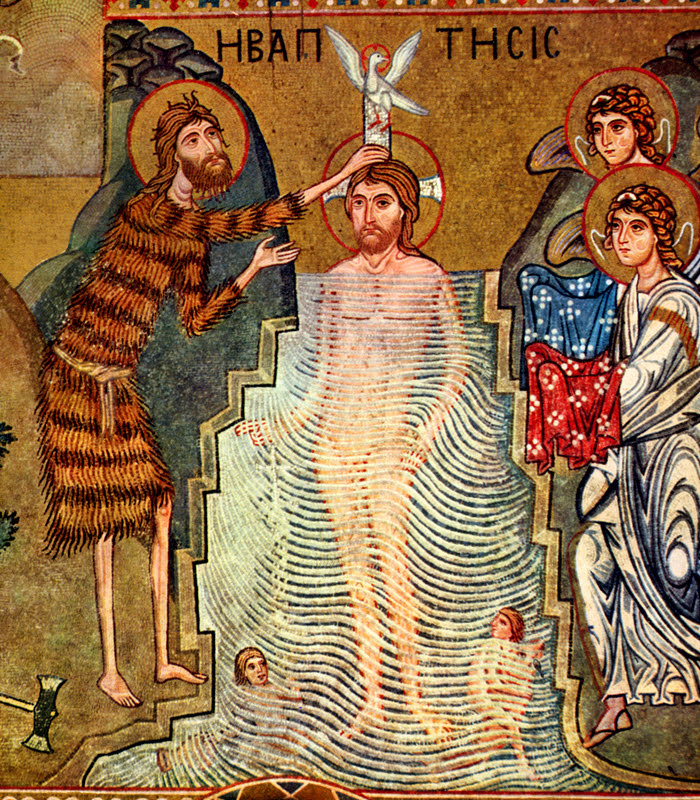
“I still have many things to say to you, but you cannot bear them now. When the Spirit of truth comes, he will guide you into all the truth, for he will not speak on his own but will speak whatever he hears, and he will declare to you the things that are to come. He will glorify me because he will take what is mine and declare it to you. All that the Father has is mine. For this reason I said that he will take what is mine and declare it to you.” John 16:12-15

The scriptures do not contain the terms “trinity” or “triune.” The ecumenical creeds are the church’s best effort to articulate what, in the final analysis, is beyond the capability of human language to express. No better illustration of this point can be found than in the creeds themselves. For example, the assertion that the Son is “eternally begotten of the Father” defies everything we know about conception and parenthood. To beget is a temporal act that results in the birth of a person, another temporal event. Moreover, begetting is an act involving sexual intercourse between two persons. The idea of the Father timelessly begetting the Son without a consort shatters our notions of time, sexuality and gender. That is because time, sexuality, gender are all aspects of human existence. They have no place within the Godhead. Nevertheless, human language, as inadequate as it may be, is the only tool we have with which to speak about God and our only frame of reference for doing so is our human experience. Thus, we end up speaking the unspeakable in words too small for such an undertaking. Bottom line, God is God and we humans are not God.

But then comes the second article of the creeds-Jesus. Jesus is a human person born in a certain time and place. Though he is God’s “eternally begotten” Son, he is also the son of Mary. His conception by operation of the Holy Spirit is, though shrouded in mystery and related to us by the evangelists through the mediation of angelic visits and dreams, nonetheless a fully human occurrence anchored in time. According to the second article, God is “incarnate.” God, at a certain point in human history, became human and remains so. The Miracle of the Incarnation was not a clever disguise. Neither was it a temporary state of affairs. God became flesh. God remains flesh. God will forever abide in human flesh, so much so that when Philip pleads with Jesus to “show us the Father,” Jesus replies that, in seeing him, Philip has seen the Father. To say, as we do, that Jesus is at the right hand of the Father is to say that Jesus is how God remains fully present to creation. Jesus is all the God there is.

And then there is the Holy Spirit, the one who takes the fullness of God revealed in Jesus and declares it to Jesus’ disciples. Jesus has much to teach us-too much for any one human lifetime. That is why Jesus continues to guide, teach and inspire his church through the presence of the Spirit in its midst. That is why Saint Paul can declare to the church in Corinth that it is the Body of Christ. This is no mere metaphor for Paul. The church is Christ Jesus inviting the world to be reconciled to its Creator and to the divided factions within itself.

God is not through speaking. We dare not place periods where God intends only a comma. The creeds do not represent the last word on everything to be said about God. They represent rather the limit of the church’s efforts to gaze into a mystery that is finally beyond human ability to comprehend in full. Better, it is the precipice on which one stands to get the best view possible of what exceeds every human field of vision. The creeds take us as far as human language can go into the mystery of God’s self. Indeed, as we have seen, they take us to the point where human language begins to falter. Nevertheless, paradoxically, the Spirit calls us to go further, to keep gazing into the mystery, to seek Jesus in the here and now, to push against the boundaries of our understanding.

As much as I appreciate my theological education, I must say that too much of what I learned was mediated through prose and framed in logical argument with little in the way of the lyrical playfulness expressed in the words of the prophets, in the psalms and in Jesus’ parables. As those who follow me regularly know, I am an Augustinian Christian. That is not to say that I agree with everything the Bishop of Hippo ever wrote or concur in all the conclusions he reached in his many writings. What I do mean is that Augustine has given me many powerful conceptual tools for reflecting on the scriptures and the creeds. His writings have informed my thinking and shaped my preaching, teaching and pastoral ministry. More than anything else for which I appreciate this great teacher is his approach to theology. Augustine’s writing is interspersed with prayer and a profound sense of God’s presence. Theology, teaching and preaching are all for Augustine a form of prayer. It is as though he is questioning, probing and praising God as much as he is speaking to his hearers. His sermons, commentaries and treatises represent a process of thought rather than an orderly summarization of completed ideas.

Our gospel lesson for this Trinity Sunday was pivotal for Augustine’s reflections on the Trinity, wherein he speaks of God’s Triune self as love. Of course, love always seeks an object beyond itself. If it did not, it would not be love. Thus, God’s essence is the mutual love between the Father and the Son mediated by the Holy Spirit. Following directly from this understanding is the doctrine of Creatio ex nihilo, namely, that God created the universe out of nothing. The assertion is not a metaphysical claim about the universe’s origin, more properly the inquiry of astronomy and astrophysics. It is really a statement about the perfection of God’s being and God’s total freedom. God has no need to create and did not create the universe out of boredom or loneliness. God has eternally known love and the joys of communion within the Godhead. Creation adds nothing to God.

Yet, in another sense, creation was necessary. Love is always expanding, always seeking new objects, always transcending every limit. Thus, as one of our finest hymns asserts, “The universe of space and time did not arise by chance, but as the Three, in love and hope, made room within their dance.”[1] When God said “Let there be,” God was making space for another, for something or someone not God. That is what love always does. It makes room in the heart for another. It generously gives another space to be who and what they are without compulsion, coercion or threats. So perhaps, rather than asserting that God made the universe out of nothing, we should say that God made the universe out of love.

These days, I tend to recite the creeds more lyrically and poetically than assertively. To be sure, the creeds make some definite assertions about who God is-and thereby negate some other assertions that might be made about God. Nevertheless, the creeds do not give us the kind of airtight metaphysical definition that a lot of believers crave. God will not be boxed, not within the scriptures, the creeds or any system of doctrine. Yet these testimonies, assertions and explanations of belief can stimulate our hearts and minds to seek deeper understandings of what is finally beyond human understanding, at least on this side of the grave. The creeds are better read, I believe, as the lyrical narration of God’s story. The story of the One who created us out of love, redeemed us out of love and out of love forms us into the kind of people capable of living joyfully, thankfully and obediently under God’s just and gentle reign.        

Here is a rendering of the well known Prayer of St. Patrick that I have previously shared in connection with Trinity Sunday. I do so again without apologies because I believe it reflects the kind of poetic, lyrical and worshipful expression of Trinitarian Faith expressed in our gospel lesson and in the creeds.

The Prayer of St. Patrick

I arise today

Through a mighty strength, the invocation of the Trinity,

Through belief in the Threeness,

Through confession of the Oneness

of the Creator of creation.

I arise today

Through the strength of Christ’s birth with His baptism,

Through the strength of His crucifixion with His burial,

Through the strength of His resurrection with His ascension,

Through the strength of His descent for the judgment of doom.

I arise today

Through the strength of the love of cherubim,

In the obedience of angels,

In the service of archangels,

In the hope of resurrection to meet with reward,

In the prayers of patriarchs,

In the predictions of prophets,

In the preaching of apostles,

In the faith of confessors,

In the innocence of holy virgins,

In the deeds of righteous men.

I arise today, through

The strength of heaven,

The light of the sun,

The radiance of the moon,

The splendor of fire,

The speed of lightning,

The swiftness of wind,

The depth of the sea,

The stability of the earth,

The firmness of rock.

I arise today, through

God’s strength to pilot me,

God’s might to uphold me,

God’s wisdom to guide me,

God’s eye to look before me,

God’s ear to hear me,

God’s word to speak for me,

God’s hand to guard me,

God’s shield to protect me,

God’s host to save me

From snares of devils,

From the temptation of vices,

From everyone who shall wish me ill,

afar and near.

I summon today

All these powers between me and those evils,

Against every cruel and merciless power

that may oppose my body and soul,

Against incantations of false prophets,

Against black laws of pagandom,

Against false laws of heretics,

Against craft of idolatry,

Against spells of witches and smiths and wizards,

Against every knowledge that corrupts man’s body and soul;

Christ to shield me today

Against poison, against burning,

Against drowning, against wounding,

So that there may come to me an abundance of reward.

Christ with me,

Christ before me,

Christ behind me,

Christ in me,

Christ beneath me,

Christ above me,

Christ on my right,

Christ on my left,

Christ when I lie down,

Christ when I sit down,

Christ when I arise,

Christ in the heart of every man who thinks of me,

Christ in the mouth of everyone who speaks of me,

Christ in every eye that sees me,

Christ in every ear that hears me.

I arise today

Through a mighty strength, the invocation of the Trinity,

Through belief in the Threeness,

Through confession of the Oneness

of the Creator of creation.

Source: Though attributed to the legendary Irish Saint Patrick, no one knows the precise origin of this beautiful expression of faith which appears in many abbreviated forms and has inspired numerous hymns, including “I Bind unto Myself Today,” by Cecil Frances Alexander in Evangelical Lutheran Worship, (c. 2006 by Evangelical Lutheran Church in America; pub. by Augsburg Fortress Press) Hymn # 450.  


[1] “Come Join the Dance of Trinity,” by Richard Leach, Evangelical Lutheran Worship, # 412.

God’s Reign of Diversity, Equity and Inclusion

SEVENTH SUNDAY OF EASTER

Acts 16:16-34

Psalm 97

Revelation 22:12-14, 16-17, 20-21

John 17:20-26

Prayer of the Day: O God, form the minds of your faithful people into your one will. Make us love what you command and desire what you promise, that, amid all the changes of this world, our hearts may be fixed where true joy is found, your Son, Jesus Christ our Lord, who lives and reigns with you and the Holy Spirit, one God, now and forever.

“I ask not only on behalf of these but also on behalf of those who believe in me through their word, that they may all be one. As you, Father, are in me and I am in you, may they also be in us, so that the world may believe that you have sent me.” John 17:20-21.

Unity is not the highest virtue. If it were, criminal gangs, lynch mobs and authoritarian regimes would be the most virtuous of communities. As the great preacher and theologian Augustine of Hippo teaches us, communities, like individuals, are shaped by what they love. Our humanity is rightly shaped and formed when we “love what [God] command[s] and desire what [God] promise[s].” Disciples of Jesus love the reign of God which Jesus lived under obediently, died for faithfully and was raised to vindicate. For them, the Sermon on the Mount is not an unattainable ideal to be admired, but the pattern of God’s reign Jesus actually lived in the midst of a world hostile to it. Contrary to what the prosperity gospel and the positive thinking philosophy permeating our culture teaches us, the trajectory of faith in Jesus and love for God’s reign leads invariably to the cross. Just as Jesus was sent by the Father into the world to reveal a radically new way of being human, so the church formed and shaped by its relationship to Jesus is to be a sign, symbol and a witness to this new humanity God is forming in the midst and for the sake of that world.

We are what we love. We are shaped by your loyalties. We become what we admire. We are driven by that for which we hope. I have often been asked by members of the congregations I have served how I relate to people of faiths other than Christianity, how I minister to agnostics and how I respond to people who express hostility to all religion. I tend to avoid discussions about whose religion is superior, whether God exists and why religion deserves respect. Such arguments seldom go anywhere useful. Instead, I ask questions I would ask of anyone else. What do you believe to be true? What do you find beautiful? What is your understanding of what is good? Dialogue along these lines often produces some unexpected results. I discover allies among those who would seem to adversaries. Sadly, I also find within the very Body of Christ people who despise the reign of God Christ proclaims. I find friends who worship the God I worship under different names and people who worship Christ with their lips yet believe in an angry, spiteful and vengeful God I do not recognize. I find atheists who pursue I what I recognize as God’s reign and Christians who resist it. As Jesus tells us, he has many sheep that are not within his fold. John 10:16. Conversely, there are people within the very inner circle of the church who are deeply hostile to Jesus and God’s reign. John 6:70-71.

It should be clear that Jesus’ prayer for oneness is not simply a matter of healing schisms within the church, as important as that task surely is. Oneness for the Body of Christ is not an end in itself. The oneness manifested in the church is to be a witness to the world of the oneness God desires for the whole human family. Diversity, equity and inclusion are unwelcome in the United States today. They were unwelcome in Nazi Germany, fascist Italy and many other historically authoritarian regimes as well. Nonetheless DEI is the hallmark of God’s future reign. For all who feel that their political ox has just been gored, too bad. Find yourself another politics or another savior. Oneness is God’s ultimate goal for creation, but that does not mean God’s reign embraces everything including the kitchen sink. As John of Patmos reminds us in our lesson for this Sunday, “nothing accursed” will be allowed to remain under God’s just and gentle reign. Revelation 22:3. “Outside are the dogs and sorcerers and sexually immoral and murderers and idolaters and everyone who loves and practices falsehood.”[1]  We do well to contemplate what in our corporate and individual lives must be excised in order for God’s will to be done on earth as in heaven. There is clearly no room for the exclusionary ideologies and practices of nationalism, white supremacy and sexism.  

To be sure, the shape of God’s future reign beyond even death and the grave is a mystery. Jesus spoke about it only in parables. The Apostle John could say of our redeemed selves in the age to come only that “it does not yet appear what we shall be,” but that “we shall be like [Christ] for we shall see him as he is.” I John 3:2. Throughout the Easter season, the lectionary texts from Revelation have been presenting us with visions of God’s reign that outlasts, overcomes and swallows up forever the beastly nations and kingdoms that are the “destroyers of the earth.” Revelation 17:17-18. Throughout this visionary saga, John emphasizes that the reign of God includes all nations, tribes, tongues and peoples. See, e.g., Revelation 6:9-12; Revelation 15:3-4; Revelation 22:1-2. In other words, God’s future is marked by diversity, equity and inclusion.[2] Unity based on anything less is demonic.

Where is the good news in this? John of Patmos would tell us the good news is that the powers of segregation, inequality and exclusion are destined to fall. The segregationists, the wall builders, the border sealers, the America first enthusiasts, the English only proponents are all on the wrong side of history. Their ideologies, politics and programs have no place in God’s future. That obviously is not good news for those caught up in these “principalities,” “powers” and “the world rulers of this present darkness.” Ephesians 6:12. But sometimes the good news needs to be heard as bad news before it can be received as good. Understanding that the persons caught up in the darkness of racism, sexism and xenophobia are not our enemies but victims in need of liberation, the kindest thing we can do for them is to shine the light of truth into their darkness. They need to know that the god they worship is not God. The nationalistic and racist causes in which they are caught up are not holy. The things they love are not true, beautiful or good. The future they long for will never come.

That, however, is the easier part. The more difficult task is proclaiming the better hope of God’s reign in Jesus Christ. That requires more than preaching. As John the Evangelist points out, the world will know God’s love for it and commitment to it by the example of the community of his disciples whose love is to showcase the new way of being human. “By this everyone will know that you are my disciples,” says Jesus. “If you have love for one another.” John 13:35. Jesus calls for communities that love the reign of God as deeply as he does. He calls for communities that harbor the same limitless love for the world as the Father who sent him. Jesus would have his disciples insist upon a future that embraces all people. Any future that excludes, rejects and ignores anyone is too small for them. For the world to receive this good news, it must see it in action. That is the twofold command of Jesus to his church: 1) to be a community governed by mutual love; and 2) to be a community that carries that love into the world for which he was sent. But the fulfilment of that command is not an achievement. It is a gift. That gift is received through participating in a community formed by hearing the gospels read and preached. It is learned by example from persons who practice the art of caring for the sick, feeding the hungry, sheltering the homeless and standing up to speak truth to power on behalf of the oppressed. In such communities, the reign of God takes shape, however imperfectly. It is, in the words of poet Wendell Berry, the “shaped knowledge” in the minds of those who love each other which teaches us to yearn for the kingdom’s coming in all its fullness.      

The Handing Down

I. The conversation

Speaker and hearer, words

making a passage between them,

begin a community.

Two minds

in succession, grandfather

and grandson, they sit and talk

on the enclosed porch,

looking out at the town, which

takes its origin in their talk

and is carried forward.

Their conversation has

no pattern of its own,

but alludes casually

to a shaped knowledge

in the minds of the two men

who love each other.

The quietness of knowing in common

is half of it. Silences come into it

easily, and break it

while the old man thinks

or concentrates on his pipe

and the strong smoke

climbs over the brim of his hat.

He has lived a long time.

He has seen changes of times

and grown used to the world

again. Having been wakeful so long,

the loser of so many years,

his mind moves back and forth,

sorting and counting,

among all he knows.

His memory has become huge,

and surrounds him,

and fills his silences.

He lifts his head

and speaks of an old day

that amuses him or grieves him

or both…

Under the windows opposite them

there’s a long table, loaded

with potted plants, the foliage

staining and shadowing the daylight

as it comes in. 

Source: Poetry (April-May, 1965). Wendell Berry (b. 1934) is a poet, novelist, farmer and environmental activist. He is an elected member of the Fellowship of Southern Writers, a recipient of The National Humanities Medal and the Jefferson Lecturer for 2012. He is also a 2013 Fellow of The American Academy of Arts and Sciences. Berry was named the recipient of the 2013 Richard C. Holbrooke Distinguished Achievement Award. On January 28, 2015, he became the first living writer to be inducted into the Kentucky Writers Hall of Fame. You can read more about Wendell Berry and sample more of his works at the Poetry Foundation website.


[1] This verse has been edited out of the lectionary reading. As most of you who follow me already know, I do not favor redacting biblical texts except in some very limited circumstances. Doing so insults the intelligence of the listening assembly and often distorts the hard realities addressed by the biblical writers. In this particular case, I can understand why the lectionary makers would censor this passage. The last thing we would want to do is suggest that there is a red line between the “saved” and the irredeemably “lost.” Yet the fact remains that there is much in our lives that is inconsistent with God’s reign. My inbred racial prejudices, the grudges I hold, my resentments and petty jealousies to which I cling make it impossible for me to live joyfully, peacefully and obediently under God’s reign. Judgement consists in my having to come to grips with the days of my life I have wasted on destructive thoughts, actions and striving for what, in the end, does not matter. Nevertheless, grace abounds in the assurance that God has claimed me as God’s own and will save, redeem and make new everything that can be rescued and woven into the fabric of the new creation.   

[2] I suspect that I may be accused of “weaponizing” the texts by employing such politically charged language as “DEI.” My answer is that diversity, equity and inclusion are words that have been employed for decades by civil rights organizations and churches to counter our society’s systemic racism, inequity and exclusion. As the Lutheran World Federation stated long before DEI became a Republican battle cry, “Dignity and justice, respect for diversity, as well as inclusion and participation are core values of The Lutheran World Federation. The global Lutheran communion, together with ecumenical, interreligious and civil society partners, actively engages in reflection and action to overcome manifold forms of injustice and exclusion.”  Resisting Exclusion: Global Theological Responses to Populism, (pub. by Evangelische Verlangsanstalt GmbH, Leipzig, Germany, under the auspices of The Lutheran World Federation). The words “diversity,” “equity” and “inclusion” have been pivotal in our theological discourse for decades and they accurately convey the reign of God announced by Jesus and proclaimed throughout the New Testament. I will not abandon them merely because a government playing on the racist paranoia of an angry and ignorant mob decided to turn them into their phony political straw boggy man. Nor am I concerned about who they offend. In the words of the dear leader’s favorite song, “I won’t back down.”