Tag Archives: faith

A pro-life manifesto; a poem by Medora C. Addison; and the lessons for Sunday, December 24, 2017

See the source imageFOURTH SUNDAY OF ADVENT

2 Samuel 7:1-11, 16
Psalm 89:1-4, 19-26
Romans 16:25-27
Luke 1:26-38

PRAYER OF THE DAY: Stir up your power, Lord Christ, and come. With your abundant grace and might, free us from the sin that would obstruct your mercy, that willingly we may bear your redeeming love to all the world, for you live and reign with the Father and the Holy Spirit, one God, now and forever.

The miracle of the Incarnation is the very core of our Christian understanding of God. We believe that God was born of a homeless woman in a shed. We confess that God is weak, vulnerable and in need of care and protection. The vulnerability of God in the womb of Mary compels the belief that human life is sacred from the time of conception and deserving of our most lavish protection. For that reason, I am and always have been adamantly and unequivocally pro-life. I am convinced that terminating a pregnancy brings to an end the life of a unique human being. For that reason, every effort should be made to preserve, support and encourage the carrying of every pregnancy to full term. Here is what that means to me.

The most effective way to prevent the termination of a pregnancy is to prevent unwanted pregnancies. That requires sex education at the elementary school level. It also requires making gynecological care and access to birth control available to all people of childbearing age, including teens. The argument that availability of birth control and sex education will encourage more teens to become sexually active has not proven to be the case. In reality, neither sex education nor the availability of birth control increases the degree of teen sexual activity, but they do significantly reduce the instances of teen pregnancy. Over all, where women are given access to good gynecological care, including reproductive care and counseling, we find far fewer unintended and unwanted pregnancies; hence, fewer abortions. Support for family planning and sex education is a pro-life position.

Furthermore, the best way to protect the lives of the unborn is to care for their mothers. Food, nutrition counseling, and access to health services are provided to low-income women, infants, and children under the Special Supplemental Nutrition Program for Women, Infants, and Children, popularly known as WIC. This program is designed to ensure that women are able to obtain the nutrition necessary to remain healthy throughout their pregnancies and feed their children when they are born. Knowing that there are resources available for women to raise and care for their children creates a strong incentive to continue a pregnancy. Supporting the WIC program and other nutritional support programs for low income persons is therefore a pro-life position.

Health care is a critical factor in preserving the lives of the unborn. Having a child is an expensive proposition when, for whatever reason, one does not have health insurance coverage. This is particularly so for high risk pregnancies, complicated deliveries and post-natal problems. Too often, abortion appears to be the only alternative to bankruptcy or homelessness. Universal health insurance coverage ensures that no baby will ever be “too expensive.” Support for universal health care coverage is therefore a pro-life position.

Finally, there some circumstances under which a pregnancy should be ended. If you believe that a girl below the age of consent, a victim of rape or incest, a woman to whom pregnancy and childbirth pose serious psychiatric or medical risks should be compelled by law to carry a pregnancy to term, then your moral compass is oriented to the north pole of a different planet than the earth I inhabit. I doubt we have enough moral common ground to continue this discussion further. But if, like me, you agree that there are circumstances were abortion is a responsible, if tragic, necessity; then there is just one question left: Who decides when a pregnancy should be terminated?

Deciding whether to end a pregnancy is difficult and fraught with conflicting interests and priorities. The medical, social and financial issues bearing on that decision are never clear and require wisdom, discernment and an intimate knowledge of the persons affected. I am firmly convinced that no one is in a better position to make such a decision than the persons closest to it and most directly affected by it. Women, not the state, not the courts or the medical establishment, are in the best position to determine what, under all of the circumstances, is best for their own physical and emotional well-being and that of their children. Consequently, enabling women to make these difficult decisions by providing access to affordable, medically safe surgical procedures, including abortion, is a pro-life position.

Yes, it is possible that some women will make poor choices-as do governments, courts and medical professionals. But, on the whole, mothers tend to make the best choices for themselves and their families-especially when given every conceivable opportunity to choose life, including early sex education, access to birth control, nutritional support, gynecological care and adequate health insurance coverage. That is why God entrusted the life of his Only Begotten Son to the care of a woman. Entrusting the welfare and protection of the unborn to the care of their mothers is, therefore, a biblical pro-life position.

Here is a poem by Medora C. Addison  about a mother’s desperate, fierce and sheltering love that would probably have resonated with Mary, the mother of our Lord.

Motherhood

Playing alone by the ocean’s edge,
Eager and unafraid,
You are the child I used to be,
Playing the games I played.

Now I have only a coward’s heart,     
Finding you all too dear,
Learning at last that love shall teach
The fearless how to fear.

You are so little against the sky,
Laughing and undismayed       
Oh, little son by the ocean’s edge,
I am afraid, afraid!

Source:  Poetry, Vol. 29, No. 5 (February 1922). Little is known about the life of Medora C. Addison. It appears that she was born in December 1891 in Massachusetts and attended Yale University where she was chosen for the Yale Series of Younger Poetry in 1922.

2 Samuel 7:1-11, 16

Israel was ever ambivalent about the institution of monarchy. The Hebrew Scriptures at times extol the monarchy as God’s instrument of justice and peace. As God’s representative, the king “delivers the needy when he calls, the poor and him who has no helper. He has pity on the weak and the needy, and saves the lives of the needy.” Psalm 72:12-13. The prophets took a more critical view of kingship in Israel. Ezekiel criticize the kings of Israel and Judah for looking after their own interests and allowing the “sheep” to be scattered and lost. Ezekiel 34:1-10. So, too, Jeremiah railed against these “shepherds” of Israel whose self-serving ways brought about the destruction of the flock. Jeremiah 23:1-4.

These two divergent views of the monarchy in Israel are woven together throughout the narratives of I & II Samuel. The pro-monarchy view comes to us from an early source probably compiled during the reign of Solomon, David’s son. This writer regards the establishment of kingship in Israel as divinely ordained for Israel’s salvation. Anyone who lived to see the rise of the Israelite empire from a loose confederacy of divided tribes oppressed by the militarily superior Philistines could not fail to be impressed by David, the architect of this great achievement. For the first time ever Israel lived within secure borders. Trade and commerce flourished under the protection of the new central government. Israel was beginning to be recognized as a power to be reckoned with among the other nations. Under these circumstances, it is not surprising that the monarchy was seen as an instrument of God’s blessing and salvation.

The later source was likely composed during the latter days of the Judean monarchy between 750 B.C.E. and 650 B.C.E. This author views Samuel as the true and greatest ruler of Israel. S/He views the monarchy as a sinful rejection of God’s rule over Israel. By this time, Israel had experienced civil war and the succession of ten of its twelve tribes from the house of David. Injustice, corruption and idolatry turned out to be the price of commercial success and military power under monarchy. The prophets gave voice to God’s displeasure with Israel’s kings and to the cries of those crushed under their oppressive yolk. Samuel’s warnings against the consequences of monarchy had come true with a vengeance. I Samuel 8:10-18. Nevertheless, this subsequent writer still views David in a positive light in spite of his having been elected to a disfavored institution.

Most scholars agree that II Samuel 7:1-29 is a late theological commentary inserted into the early source intended to explain why David was not chosen to build the temple in Jerusalem. That purpose is not readily discernable from our reading because verses 12-15 have been omitted. These verses make clear that God has chosen David’s heir to build the temple. I believe that this section also serves to clarify the nature of the Davidic covenant as subordinate to God’s covenant with all Israel at Sinai. Though God’s promise to preserve faithfully the line of David is repeated here, the prophet Nathan warns that iniquity on the part of David’s descendants will meet with punishment. Vss. 14-15.

The key to this interchange between the word of the Lord, delivered through Nathan, and David is found in the various meanings of the Hebrew word for “house.” Initially, David intends to build a “house” for the Ark of the Covenant. So used, the term means “shrine” or “temple.” God responds by promising to build David a “house,” clearly meaning a dynasty. If you were to read on to verses 18-20, you would discover that the same term is used again to describe family status, i.e., “Who am I, Lord God, and what is my house that thou hast brought me thus far?” Vs. 18. This is clearly a reference to the former insignificance of the family of Jesse and David’s status as the youngest of Jesse’s sons. The different shades of meaning for this one word serve to illuminate the depth and complexity of the Davidic covenant and the significance of the temple. Both are subordinate to the Sinai covenant and flow from the faithfulness of God to Israel expressed in that covenant. The temple is not to be a shrine to the Ark, but the place where God’s name dwells. Vs. 13. Though established “forever,” the dynasty of David is answerable to Torah and subject to God’s punishment for violating it. Vss 13-14.

This scripture invites us to contemplate our response to expectations that fail to materialize. It is evident that the line of David did in fact come to an end following the Babylonian conquest of 587 B.C.E. Either God’s promise failed or its fulfilment lies beyond the scope of the Judean monarchy. Second Isaiah deals with this problem by suggesting that God’s “steadfast, sure love for David” now embraces all Israel rather than any one individual descendent of David. Isaiah 55:3-5. Later Judaism saw in the Davidic covenant the promise of a messianic deliverer. This hope, in all of its many permutations, was very much alive in Jesus’ day. Jesus himself appears to have invited his hearers to consider in what sense the promised messiah could be considered “the son of David.” See Mark 12:35-40Matthew 22:41-46Luke 20:41-44. So also, both Judaism as a whole and the early church struggled with the meaning of the temple’s destruction by Rome in 70 C.E. As I have often said before, I believe the Letter to the Hebrews is in large part a response to this crisis.

Promise/fulfilment is a common theme throughout the Advent season. Now as throughout history, the people of God are called upon to discern how the ancient promises are working themselves out in our midst. For Christians, the challenge is to discover the layers of meaning and the richness given to the gospel narratives by the Hebrew Scriptures out of which they grew. Care must be taken, however, to respect the witness to these scriptures given by the Jewish people in all ages. There is no place for a theology of supersessionism in which Christianity is seen to “replace” or “supersede” Judaism. As Paul points out in the latter half of his Letter to the Romans, both Israel and the church play a critical role in God’s redemptive purpose for the world.

Psalm 89:1-4, 19-26

Although it focuses on the rise of the Davidic monarchy as God’s saving act, the psalm begins with an acknowledgement that the true sovereign of all the earth is God. Vss. 1-2. God makes a “covenant” with David. Vs. 3. A covenant is more than a mere contract. In the ancient near east, covenants were usually made between kings-and generally not between equals. It was common for a dominant king to enter into a covenant with the king of a subservient nation. Under the terms of the covenant, the stronger king would promise to provide military protection from common enemies (and a promise that he himself would not attack!). In return, the weaker king would pay tribute and promise undivided allegiance to the stronger king. The weaker king would often give his daughters in marriage to the stronger. (The fact that one’s daughter is at the mercy of a foreign king would naturally make one think twice about commencing hostilities!).

In the covenant with David, God is the dominant partner. Yet, oddly enough, God promises both protection andeternal faithfulness. God’s love for and support of David is not contingent on David’s past accomplishments or on his promise to be loyal to the Lord. It is a one way covenant in which all of the promises flow from God to David and his line.

Although the image of parenthood is used (vs. 26), David is every inch a human being and there is no suggestion that his being anointed king confers divinity on him. This is one feature setting the Israelite concept of kingship apart from Canaanite ideas. There is no suggestion in this psalm that David is chosen on the basis of merit. Nothing is said about David’s character or his good deeds that might have led God to select him as a covenant partner and king over Israel. We hear plenty, though, about the character of God and God’s determination to stand by the promises made to David. Vss. 20-24. Once again, being king does not set one above the commandments of God. If anything, the king has a greater responsibility to observe justice and righteousness. He stands in God’s place as the representative of God. As such, his failures are not merely his own. They have an impact on the nation for which he is responsible. As Jesus was wont to say, “To whom much is given, much is expected.” Luke 12:48.

If you were to read the Psalm 89 in its entirety (which I always recommend) you would discover that the psalm’s tone changes abruptly from a mood of praise to bitter lament at verse 38. Obviously, the situation in which the king now finds himself does not evidence the protection and success promised to the line of David in the “vision” discussed in the earlier part. Vss. 19-26. We do not know the precise historical setting of this psalm. Because the prayer is by or for a king currently (though tenuously) on the throne, it is safe to assume that it was written before the Davidic dynasty came to an end in 587 B.C.E. with the second Babylonian invasion. The prayer might reflect the desperate situation in which David found himself during the rebellion of his son, Absalom. Or it might reflect the invasion by Egypt during the reign of Solomon’s son, Rehoboam. It could have been composed after the tragic death of the young King Josiah at the hands of Pharaoh Neco or the siege of Jerusalem under Zedekiah. Whatever the historical setting, it must have been a very traumatic and faith shaking experience for Israel to see the Lord’s anointed, the heir of David, God’s covenant partner so thoroughly defeated. What could this mean? Had God abandoned the covenant? Had the Lord forgotten all the promises made to David? Where was God’s salvation in this time of need?

The mood of the disciples must have been very similar when they saw their Lord nailed to the tree and crying out, “My God, My God, why have you forsaken me?” Yet just when it seemed that God could not be further away from them, God had drawn near in the most profound way possible. Jesus’ death and resurrection bring to crescendo Israel’s stubborn belief that, however dark the hour, God is at work in history. It is often when we find ourselves with the sea in front of us and a hostile army at our heels-or at the tomb where our last, best hope seems dead and buried-that God works salvation.

Romans 16:25-27

This is the conclusion to Paul’s Letter to the Romans in which he has gone to great lengths explaining in some detail how “the revelation of the mystery which was kept secret for long ages but is now disclosed and through the prophetic writings is made known to all nations, according to the command of the eternal God, to bring about the obedience of faith…” vss. 25-26. This snippet plays nicely into the prophecy/fulfillment theme of Advent, but I cannot imagine how one could preach on it without reaching back into the body of Romans and reconstructing Paul’s argument. Such a project is far too big for any one sermon and best saved for periods in the church year where consecutive readings from the Letter to the Romans are featured in the lectionary. This last summer would have been a good time for that.

Luke 1:26-38

Luke’s telling of the nativity narrative is strikingly different from that of Matthew in several respects. Whereas in Matthew Joseph is the recipient of angelic revelation, in Luke he is altogether absent from the scene until the trip to Bethlehem. In Matthew’s gospel, the angel’s messages come through dreams. Luke has the angel Gabriel addressing Zachariah and Mary directly. Derived from the Hebrew words “Gavar” meaning “strong man” and “el,” a word for God, the name Gabriel is best translated “God has shown himself mighty.” Brueggemann, Walter, “Gabriel,” The Interpreter’s Dictionary of the Bible, Vol. 2 (c. 1962 by Abington Press) p. 332. Gabriel first appears in Daniel explaining to the prophet a vision of the end that he has just seen. Daniel 8:15-17. See also Daniel 9:21. Though not otherwise mentioned in the canonical Hebrew Scriptures, Gabriel is frequently portrayed as God’s agent of revelation, punishment and salvation throughout later Jewish writings such as the Books of Enoch. It is important to understand that in Hebraic thought, God is fully present in the person of God’s messenger. Ibid, p. 333.

The impact of Gabriel’s message is very much muted by the later church’s fixation on the “immaculate conception” and our 19th Century prejudice against that which does not fit our empirical world view. Few people in the 1st Century B.C.E. doubted that God (or a god) could bring about a pregnancy miraculously. The remarkable thing here is that Gabriel, God’s chief messenger, should be sent 1) to a woman; 2) to an insignificant town in Galilee; 3) to announce that God’s messiah and David’s heir was to be born to this woman of no particular standing. Luke goes out of his way to let us know that he is well aware of contemporary events and the way in which history appears to be unfolding through the likes of Herod the Great and Caesar Augustus. Yet he would have us know that the true history, the history that matters, the history God is making will unfold not in Jerusalem or Rome, but in the small hamlet of Nazareth. The hope of Israel and the whole world will be born to a homeless couple in a drafty animal shelter. That is the miracle at which Luke would have us marvel.

What, then, shall we say of the “virgin birth”? Though not as pronounced as in Matthew’s gospel, one point seems to be that Jesus’ conception and birth is at the initiation of God and independent from requirements of lineage, status and blood. Something new and different is taking place with the birth of Jesus. How does God initiate that birth? Luke tells Mary, “The Holy Spirit will come upon you, and the power of the Most High will overshadow you; therefore the child to be born will be called holy, the Son of God.” Vs. 35. Perhaps the church would have been wise simply to leave it there. Who can explain the workings of the Holy Spirit? We know that the Spirit can work through events that appear to unfold naturally and in accord with what we understand about the processes of nature. Yet the Spirit also introduces novelty that strains our credibility, exceeds our expectations and challenges our imaginative abilities. Who can say how the Spirit worked in this instance? Does it really matter?

It may not have mattered to the first readers of Luke’s gospel, but it became an important question for the church in later years as she struggled to make the gospel intelligible to Mediterranean culture while remaining faithful to her biblical roots. Without rehashing the first six centuries of the church’s history, it is fair to say that the confession of Jesus as the Son of God born of the virgin Mary was part and parcel of the church’s insistence that Jesus was no less human than he was divine; that God as creator took naturally to human flesh created in God’s image; that the Incarnate Word has plumbed the depths of all that it is to be human. At the end of the day, the Incarnation is a mystery that can be contemplated, worshiped and believed, but never fully understood. We cannot insist on any particular metaphysical understanding of virginal conception because this says more than the biblical witness tells us. Neither can we dogmatically maintain that the birth of Jesus must have occurred under purely “natural” circumstances as we think we understand them. Assertion of either position says both too much and too little.

Gabriel’s assurance that “with God nothing will be impossible” and Mary’s response, “let it be to me according to your word” fitly summarize the import of this lesson. To be fully open to God requires belief in God’s willingness and ability to do all things-even the seemingly impossible. Advent beckons us to just such radical openness. It challenges us to suspend our judgments about who we think God is, who our neighbor really is and what are the possibilities for the future, both ours and the world’s. During this holy season we are challenged to expect the impossible!


“Thoughts and prayers” don’t cut it; a poem by Ellery Akers; and the lessons for Sunday, December 17, 2017

See the source imageTHIRD SUNDAY OF ADVENT

Isaiah 61:1-4, 8-11
Psalm 126
1 Thessalonians 5:16-24
John 1:6-8, 19-28

PRAYER OF THE DAY: Stir up the wills of your faithful people, Lord God, and open our ears to the words of your prophets, that, anointed by your Spirit, we may testify to your light; through Jesus Christ, our Savior and Lord, who lives and reigns with you and the Holy Spirit, one God, now and forever.

“Beloved, pray for us.” I Thessalonians 5:25.

In tweets responding to “thoughts and prayers” directed to the victims of the recent church shooting in Southerland Springs, Texas by the likes of President Donald Trump, House Speaker Paul Ryan and many other political leaders, Washington Post correspondent Karen Tumulty remarked, “thoughts and prayers for people who were mowed down in a church sounds especially hollow.” Singer and song writer Rosanne Cash noted that “[the shooting victims] were in a church that was full of prayers. They need a government who will enact common sense gun laws.” Actor Michael McKean observed that “They were in church. They had the prayers shot right out of them. Maybe try something else.” I fully understand these sentiments. So does the Apostle James:

“If a brother or sister is naked and lacks daily food, and one of you says to them, “Go in peace; keep warm and eat your fill,” and yet you do not supply their bodily needs, what is the good of that?” James 2:16.

Just as this mock benediction from the Epistle of James rings hollow to persons who are homeless and hungry, so also “thoughts and prayers” from government officials entrusted with protecting their citizens from violence come across as empty, hypocritical and impotent to citizens whose loved ones have died as a result of their willful neglect. If the Republican controlled congress loved their citizens half as much as they crave the endorsement of the gun lobby and its lavish gifts of cash to their campaigns, there would be no need for them to console the Southerland victims with empty platitudes. For more on that, see my post of October 4, 2017.

The prayers Saint Paul asks of the church in Thessalonica, are of an entirely different order. His plea for prayer comes not from some far of executive seated in a distant corner office issuing Hallmark platitudes on company stationery, but from a pastor who has labored among and prayed fervently for the people whose prayers he now seeks. This is a church immersed in “the work of faith and labor of love and steadfastness.” I Thessalonians 1:3. Paul’s prayers for this faithful church and the prayers he seeks from them grow out of their shared baptismal commitment to the reign of God. They are not a pious substitute for meaningful action, but a plea for God’s inspiration, support and strength for the work in which they are already engaged. Furthermore, Paul is not looking for prayers addressing his own personal needs. He is urging the Thessalonians to pray for his mission to the world, his ministry among his many congregations and the spread of the good news of Jesus’ life, death and resurrection. For Paul, prayer is part and parcel of the church’s struggle to live faithfully under the reign of God in a world fiercely resistant to that gentle reign. Divorced from this sacred context, prayer becomes little more than a bland expression of good intent or a laundry list of personal favors. “Thoughts and prayers” is religious short hand for “good luck.”

Of course, I don’t fault politicians or anyone else for expressing sympathy to the Southerland victims’ families. Nor do I fault them for the seeming soullessness of their well wishes. Who of us can ever find words that bring true comfort in the face of such horrendous tragedy? Sympathy, however, is not enough. Words unaccompanied by action are worse than silence. Mass shootings should not be happening (and in most other industrialized nations do not happen) with regularity. It is the job of government to protect its people from systemic violence of this kind. Expressions of sympathy from governmental leaders for victims of gun violence who have not and do not intend to take any steps to eliminate it might well be sincere, but they should not be confused with genuine prayer. Moreover, such sentiments are clearly not enough. Just as “faith without works is dead,” so prayer for an outcome you are not prepared to live for, sacrifice for and, if need be, die for is just sanctimonious hot air.

Here’s a poem by Ellery Akers speaking to that fragile word that is prayer and suggesting how the answer to prayer might be closer than what we think.

The Word That Is a Prayer

One thing you know when you say it:
all over the earth people are saying it with you:
a child blurting it out as the seizures take her,
a woman reciting it on a cot in a hospital.
What if you take a cab through the Tenderloin:
at a street light, a man in a wool cap,
yarn unraveling across his face, knocks at the window;
he says, Please.
By the time you hear what he’s saying,
the light changes, the cab pulls away,
and you don’t go back, though you know
someone just prayed to you the way you pray.
Please: a word so short
it could get lost in the air
as it floats up to God like the feather it is,
knocking and knocking, and finally
falling back to earth as rain,
as pellets of ice, soaking a black branch,
collecting in drains, leaching into the ground,
and you walk in that weather every day.

Source: The Place That Inhabits Us, Sixteen Rivers Press, c. 2010 (Poem originally copyrighted by Ellery Akers, 1997). Ellery Akers is a poet, children’s writer and naturalist living in Marin County, California. She earned a BA at Harvard University and studied at San Francisco State University where she got her masters. She is the author of two poetry collections. She has been honored with the Poetry International Prize, the John Masefield Award, the Paumanok Award and Sierra magazine’s Nature Writing Award. You can learn more about Ellery Akers and sample more of her poetry at the Poetry Foundation website.

Isaiah 61:1-4, 8-11

As I have noted previously, the fifty sixth chapter of the Book of Isaiah opens into what scholars agree is a third collection of prophetic oracles separate from the prophet Isaiah of the 8th Century B.C.E. (Isaiah 1-39) and Second Isaiah (Isaiah 40-55) who prophesied toward the end of the Babylonian Exile. These prophesies, comprising what is commonly called “Third Isaiah” (Isaiah 56-66), come from a period beginning shortly after the return of the exiled Jews from Babylon in 539 B.C.E., but before the rebuilding of the temple in about 515 B.C.E.

Our lesson has affinities with the “servant songs” of Second Isaiah, particularly Isaiah 50:4-11. (For more info on the “servant songs,” see my post of April 9, 2017.) These words constitute the opening declaration of a section Professor Claus Westermaan calls “the nucleus” of chapters 56-66, the third part of the Book of the Prophet Isaiah. Westermann, Claus, Isaiah 40-66, The Old Testament Library (c. 1969 by SCM Press Ltd.) p. 352. The prophet announces that s/he has been anointed to “bring good tidings to the afflicted.” Vs. 1. The term afflicted might also be translated “poor.” However one chooses to translate the term, it obviously applies to the Jews who took up Second Isaiah’s challenge to return to their homeland and rebuild the ruined city of Jerusalem. If these pilgrims were expecting this task to be an easy one, they were sorely disappointed. Upon their homecoming, they faced grinding poverty, hostility from their Samaritan and Arab neighbors and political opposition from within the Persian Empire that now dominated the Middle East. Enthusiasm for rebuilding Jerusalem and the temple waned. For some time after the arrival of the first returning exiles it appeared as though the whole project would be abandoned.

The prophet we commonly identify as “Third Isaiah” understood his calling as a continuation of his predecessor’s mission. Whereas Second Isaiah’s preaching inspired the Jews to return to their homeland, Third Isaiah encouraged them to complete the task of rebuilding it. To that end, the prophet is endowed with the Spirit of God. Vs. 1. Throughout the Hebrew Scriptures, the Spirit of the Lord is recognized as that power of God enabling human beings to do extraordinary things. See, e.g. Judges 3:10Judges 11:29; and II Chronicles 20:14. So also, the word of God proclaimed by the prophet is more than just verbiage. The Word is the agency by which God acts and in some sense God’s self. See, e.g., Isaiah 55:10-11. By the enabling power of God’s Spirit, the prophet is sent forth to unleash the freeing power of the word that heals, liberates and releases. Vs. 1.

“The day of vengeance of our God.” Vs. 2. Though not literally incorrect, the use of the word “vengeance” is not the best choice for the Hebrew meaning. The word might better be rendered “rescue” or “restore” as the notes to the New Oxford Annotated Bible point out. The prophet maintains that it is God’s intent to erase the hierarchical power structures under which God’s people are “afflicted” and “poor.” This restorative intent is evident from the following declarations of “comfort” to all who mourn, “gladness instead of mourning,” “praise instead of a faint spirit,” rebuilding for the “ancient ruins” and repair for “devastations of many generations.” Vss. 2-5.

The makers of the lectionary have omitted verses 5-7, no doubt out of squeamishness. Here are the offensive words:

Strangers shall stand and feed your flocks,
foreigners shall till your land and dress your vines;
6 but you shall be called priests of the Lord,
you shall be named ministers of our God; you shall enjoy the wealth of the nations,
and in their riches you shall glory.
7 Because their* shame was double,
and dishonor was proclaimed as their lot,
therefore they shall possess a double portion;
everlasting joy shall be theirs.

Isaiah 61:5-7.

Only God and the lectionary people themselves know what was in their peevish little minds when they took their scalpels to this text. I suspect that this lacuna was created out of respect for the sensitivities of their mainline protestant, progressive, slightly left of center, ever white and ever polite constituency. Nothing spoils the progressive mood like making foreigners into laborers in the vineyards of the chosen people. That hardly squares with our Enlightenment egalitarian ethics. But then, our Enlightenment egalitarian ethics don’t square with the Scriptures either. The Scriptures speak not of equality, but justice. As Jesus frequently noted, “the last shall be first and the first shall be last.” Matthew 19:30Matthew 20:16Mark 10:31. He was speaking, of course, of life under the reign of God. Even those who are last in the kingdom are still within the kingdom. That should be enough. If being the last in the kingdom is a problem for you, it’s a sure indication that you don’t yet understand the kingdom and are not yet ready for it. Why should we balk at being servants to the people of God? Why should we object to taking our place among the “least”? Isn’t that the way to true greatness in kingdom terms?

Another problem in our reading of these verses arises from our cultural disdain for labor generally and manual labor in particular. Only recently an article in the Wall Street Journal warned workers in the fast food industry that, if they continued lobby for a living wage, they would be replaced by machines. Late stage capitalism’s undervaluation of such work and its contempt for those who perform it is alien to biblical thought. Caring for livestock, plowing and planting are all essential to human well-being and proper care for the land. It is precisely the sort of work for which human beings were created. That the nations should share their wealth and contribute their labor to the restoration of Israel does not amount to exploitation anymore than did support of the Levitical priesthood by means of the tithe in ancient Israel. Just as God blessed Israel through the ministry of the Levites, so God now blesses the nations of the world through a restored Israel.

Finally, Israel’s restoration does not come about through conquest and subjugation of the nations. Rather, God’s restoration of Israel draws all the nations to the worship of God. “And all nations shall come to your light, and kings to the brightness of your rising.” Isaiah 60:3. Within the larger canonical context, Israel herself is seen as a “suffering servant” whose faithfulness unto death is a light to the nations. It is through her witness that the nations will learn how service to the God who is God, rather than striving for nationalistic dominance, leads to blessing and peace. Thus, the nations’ service to Israel does not come about through conquest and is not carried out in a hierarchical context. It is instead the faithful response of a world that finally recognizes its Creator. The intent is summed up in verse 11: “For as the earth brings forth its shoots, and as a garden causes what is sown in it to spring up, so the Lord God will cause righteousness and praise to spring forth before all the nations.” (I owe this last insight to Rev. Roy Riley, Pastor and former Bishop of the New Jersey Synod-ELCA).

Verse 10 marks a transition. Whereas the speaker in the first nine verses is the God of Israel, the prophet himself/herself begins speaking in verse 10. These last two verses of the chapter constitute a brief psalm of praise in which the prophet rejoices in the privilege of his/her calling and expresses confidence in God’s willingness and ability to bring about his redemptive purpose for all humanity. All in all, this passage delivers a powerful declaration of hope altogether fitting for the season of Advent.

Psalm 126

This psalm is labeled a “Song of Ascents.” It shares this title with a larger group of fourteen other psalms. (Psalms 120-134). The meaning of the title has not been established beyond doubt. It is thought by a number of scholars to mean that this group of songs was composed for use in the procession of pilgrims coming to Jerusalem for high festivals. Other scholars cast doubt on this hypothesis, pointing out that most of these psalms appear to have been composed for cultic purposes unrelated to the Zion tradition.

“When the Lord restored the fortunes of Zion…” Vs. 1. The reference may be to a revival experienced by Judah under the long and prosperous reign of King Uzziah (783 B.C.E. to 742 B.C.E.). It might also refer to the reign of King Josiah (640 B.C.E. to 609 B.C.E.) who, during a power vacuum resulting from the decline of the Assyrian Empire, was able to re-conquer all of the lands and territories belonging not only to Judah, but also to the former Kingdom of Israel to the north. The Psalmist may also be alluding to the decree of Cyrus the Great in 538 B.C.E. allowing the Jews exiled in Babylon to return to their homeland and rebuild the temple. In any event, the psalmist is reflecting on a significant act of God’s salvation experienced at some point in Israel’s history. Obviously, this saving event is in the past. Verses 4-6 make it clear that Israel’s present situation is bleak and in need of restoration.

“…we were like those who dream. Then our mouth was filled with laughter, and our tongue with shouts of joy…” Vss. 1-2. Extremely good news does seem to have a dream like quality about it. So also one can become light headed from laughter. Perhaps that is what the psalmist had in mind. Of course, dreams frequently have a prophetic dimension the in the scriptures, i.e. Joseph (both the patriarch of Genesis and the husband of Mary in Matthew’s gospel). The Hebrew word pronounced “goyim” is used for “the nations” in verse 2. Though the nations were considered outside of God’s covenant with Israel, what God accomplished for Israel was intended not merely for Israel’s own benefit, but as a testimony to the nations of God’s goodness and power.

“Negeb,” in verse 4 means literally “a dry land.” The reference is to a triangle of 12,500 square kilometers in the southern area of Palestine. It has numerous riverbeds that are dry for most of the year but rush with water during the seasonal rains. During these brief periods, the beds become lush with vegetation. The psalm concludes with a prayer that the life-giving streams of God’s Spirit will revive Israel again just as the seasonal rains revive the Negeb. God’s saving acts in the past strengthen Israel’s resolve to look toward the future in hope, even as she toils now in what seems to be fruitless labor.

This Psalm inspired the popular American Spiritual, Bringing in the Sheaves, lyrics and music of which is in the public domain:

Sowing in the morning, sowing seeds of kindness,
Sowing in the noontide and the dewy eve;
Waiting for the harvest, and the time of reaping,
We shall come rejoicing, bringing in the sheaves.

Refrain:
Bringing in the sheaves, bringing in the sheaves,
We shall come rejoicing, bringing in the sheaves,
Bringing in the sheaves, bringing in the sheaves,
We shall come rejoicing, bringing in the sheaves.

Sowing in the sunshine, sowing in the shadows,
Fearing neither clouds nor winter’s chilling breeze;
By and by the harvest, and the labor ended,
We shall come rejoicing, bringing in the sheaves.
Refrain

Going forth with weeping, sowing for the Master,
Though the loss sustained our spirit often grieves;
When our weeping’s over, He will bid us welcome,
We shall come rejoicing, bringing in the sheaves.
Refrain

1 Thessalonians 5:16-24

“Rejoice always, pray constantly, give thanks in all circumstances; for this is the will of God in Christ Jesus for you.” Vs. 16-18. This condensed word of exhortation is worth its weight in gold. It sounds hopelessly trite to say that we would all be a good deal happier if we rejoiced instead of crabbing; prayed instead of worrying and gave thanks instead of complaining. Like most biblical exhortations, it is trite apart from faith in Jesus Christ. Placed into the context of the entire first letter to the Thessalonians however, these words are rich with meaning. Because Jesus conquered death, we can rejoice even when death encroaches upon our lives. Because Jesus is always present in our midst, all times are right for prayer. Because we know that the most precious possession we have, the kingdom of heaven, can never be taken from us, we always have much for which to be thankful. It is God’s will that we be joyful, prayerful and thankful. God enables us so to live by giving us good reason for joy, prayer and thankfulness.

Paul warns the Thessalonian church not to “quench the Spirit” or “despise prophecy.” Vss. 19-20. To fully appreciate what Paul is saying here we need to look beyond this letter to his first letter to the Corinthian church. There Paul speaks of the Spirit as the One that calls each individual member into a single Body. Members of the Body never act on their own behalf to further their own selfish interests. They exercise their unique gifts to build up and strengthen the Body. See I Corinthians 12. Prophesy is one such gift to be exercised to that end.

Why would anyone despise prophesy? You only need to read a little of it from the Hebrew Scriptures to understand why prophesy is sometimes met with hostility. Part of a prophet’s job is to tell the community things it does not want to hear. Churches don’t like to be told that they are unwelcoming, member oriented and harbor attitudes of racial prejudice. Churches don’t like being told they need to change. Churches sometimes wish that the prophets among them would just shut up already. But the health of a church depends on vigorous prophetic critique to keep it honest and focused on what matters.

Of course, prophesy is designed to build up the Body of Christ. Even when it seems to anger, tear down and divide, its ultimate goal is the health of the Body. Thus, prophesy is more than simply an angry rant. Sadly, too much of what passes for prophetic preaching these days amounts to little more than “Bad Dog Sermons.” That is a phrase coined by M. Craig Barnes in a recent article in the Christian Century. He writes: “Most of the people who come to church these days already have a pretty clear sense of their ethical and moral responsibilities. We’re well trained and know what we ought to do. There is little gospel in telling us we’re not doing enough. But that’s the message the church keeps giving.” I must confess that I am not quite as convinced as Barnes that people who come to church always have a clear sense of ethics or morals. Very often it is our very morality that messes us up. Still, simply beating people over the head with their shortcomings does little to motivate and transform. For that we need the good news of Jesus Christ.

Paul is a model of prophetic preaching. He could be painfully blunt in pointing out the failures of his churches. Yet he could also say of his most troublesome and dysfunctional congregation, “Now you are the Body of Christ.” I Corinthians 12:27. He does not say, “You should be the Body of Christ,” or “if you ever get your act together, someday you might be the Body of Christ.” Paul assures his churches that they are in fact Christ’s Body, the church for which Jesus died and the church through which he now lives. Then he goes on to encourage his churches to become what they already are!

John 1:6-8, 19-28

“The material about John [the Baptist] in each Gospel is best understood as each evangelist’s attempt to make clear to his readers this important distinction between the Baptist and Jesus Christ.” Marsh, John, Saint John, The Pelican New Testament Commentaries (c. 1968 John Marsh pub. by Penguin Books, Ltd.) p. 116. At least that is the take of one commentator. While it probably is the case that John’s disciples continued as a community after his execution by Herod Antipas and that this community’s existence made it necessary for the church to address John’s role in the drama of Israel’s redemption, I doubt that this was the only or even the primary purpose for including his ministry in the gospel narrative. In all of the gospels, and most explicitly in John’s gospel, the Baptist serves a critical literary and theological purpose. John the Baptist grounds the ministry of Jesus in the Hebrew scriptural narrative while at the same time showcasing its radical uniqueness. What the story of the transfiguration accomplishes for the synoptic gospels, John’s narrative concerning the Baptist’s ministry does for his own gospel. It testifies to the continuity of Jesus’ mission and ministry with the law and the prophets while distinguishing his person from both Moses and the prophets.

As noted by commentator Raymond Brown, the Sadducean rulers in Jerusalem would not likely have sent Pharisees to represent them. Their appearance here reflects the time of this gospel’s composition following the destruction of the temple in Jerusalem and the reconstitution of Judaism thereafter. Brown, Raymond E., The Gospel According to John I-XII, The Anchor Bible, vol. 29 (c. 1966 by Doubleday) p. 44. By this point, the Pharisaic tradition had come to define Judaism as a whole and was the chief antagonist for John’s church. Ibid.Not surprisingly, then, the role of the Pharisees all but eclipses that of the chief priests who were likely the principle authors of Jesus’ arrest and conviction.

That said, it would not have been unusual for the religious authorities in Jerusalem to investigate the activity of John the Baptist. Vs. 24. Anyone capable of drawing a crowd of admirers within the restive provinces of Judah and Galilee would naturally be of concern to the ruling elites eager to maintain the status quo. It would also be natural to inquire whether John was claiming to be a messianic figure or even a lesser apocalyptic figure such as the returning Elijah foretold in Malachi 4:5-6 or the prophet promised by Moses in Deuteronomy 18:15. Vss. 20-21. But John’s gospel has a specific theological point to make here. As the representative of the law and the prophets, the Baptist must disclaim every redemptive role to be fulfilled by Jesus. Thus, he testifies “I am not” the Messiah. “I am not” Elijah. “I am not” the prophet. These disclaimers must be viewed against the multiple instances in which Jesus will declare “I am.” See e.g., “I who speak to you am he [messiah].” John 4:26 (To the woman at the well); “I am the bread of life” John 6:35; “I am the living bread which came down from heaven” John 8:12; “Truly I say to you, before Abraham was, I am” John 8:58; “I am the door of the sheep” John 10:9; “I am the good shepherd” John 10:14; “I am the resurrection and the life” John 11:25; “You call me teacher and lord; and you are right, for so I am” John 13:13; “I am the way, the truth and the life; no one comes to the Father, but by me” John 14:6; “I am the true vine, and my Father is the vinedresser” John 15:1; “I am he.” John 18:5 (To the temple police at his arrest).

When it comes to who John the Baptist is, John will only say that he is “a voice.” “Essentially, John does nothing [in the gospel] but testify to Jesus.” Collins, Raymond F., “From John to the Beloved Disciple,” Interpretation Vol. 49, no. 4 October 1995, p.362. “[I]n effect, his is the voice not only of God but also of the implied author.” Ibid. John cannot speak positively until Jesus arrives on the scene. Only then does John have something to which he can point and say, “Behold!” John 1:29.

Karl Barth once said that the church is only the impact crater left by Jesus. I think that says too little. The Apostle Paul is emphatic in his insistence that the church is the Body of Christ, and for him that is no mere metaphor. It is nevertheless true that the church is called to be fully transparent so that the world sees Jesus in it. We faithfully discharge our witness solely to the extent that we have been shaped by the impact Jesus has made upon us. To the degree that we call attention to ourselves, our works and our projects we get in our own way. So Barth is correct in one sense. Without Jesus, we are just an empty hole in the ground. Our existence derives from our testimony to the One who is to come.


Good news that isn’t newsworthy; a poem about the ordinary; and the lessons for Sunday, December 10, 2017

See the source imageSECOND SUNDAY OF ADVENT

Isaiah 40:1-11
Psalm 85:1-2, 8-13
2 Peter 3:8-15a
Mark 1:1-8

PRAYER OF THE DAY: Stir up our hearts, Lord God, to prepare the way of your only Son. By his coming strengthen us to serve you with purified lives; through Jesus Christ, our Savior and Lord, who lives and reigns with you and the Holy Spirit, one God, now and forever.

John the Baptist appears in the wilderness seemingly out of nowhere in Mark’s gospel. Luke tells us that John the Baptist did his growing up in the wilderness. I am not sure exactly what that means. Did he spend his childhood and young adulthood in some small settlement on the outskirts of the civilized world? Or did he literally make his home in the wilds like one of the desert fathers? Whatever else it might mean, it is obvious that John was far removed from the doings of history’s movers and shakers, some of whom we meet in the early chapters of Luke’s gospel. It is doubtful that John was following the stormy conflicts between the Roman Emperor, Tiberius and the Roman Senate. He was probably unaware of the intrigue and power struggles between the likes of Philip, Lysanias and Herod. If he was aware that Caiaphas held the office of high priest under the imposing shadow of his much more powerful father-in-law, Annas, we have no indication that this was of any interest to him. When you live in the wilderness, you find yourself in much closer proximity to forces of nature that are far more determinative for human well-being than the antics of kings and emperors. It is much harder to entertain grandiose delusions about your power, prestige and importance when you are surrounded by animals superior in strength, speed and wilderness survival skills. Standing alone under the cloudless canopy of the heavens has a way of putting you in your place and reminding you that you are, after all, only a small, fleeting piece of a universe that existed countless eons before you and will go on long after  even your headstone has forgotten your name.

The wilderness seems to have taught John that the way of the Lord does not come forth from the decree of emperors nor is it prepared by the campaigns of armies. God speaks from the wilderness, that is, from the margins of human society. The news Luke’s gospel brings is not being made in Jerusalem, Rome or any other metropolitan hub. It is happening in the back waters of the backwaters of the empire: in the hills of Judea; in unknown hamlets like Nazareth; and in the darkness of a stable where a homeless couple gives birth to a child. If CNN, Fox News or any of the other big networks had been around in the First Century, I doubt they would have bothered covering John or the events he proclaims. Then, as now, they would be covering what we deem newsworthy. That surely does not include an unknown preacher from the hinterlands.

The trouble with us is that we don’t know what the real news is. We think the news is made in New York, Washington D.C., Brussels or some other metropolitan center that is the hub of political and commercial activity. We think that history is made by great men wielding great power. We imagine that the lines on the map demarcating the borders of nation states are real. We think the important things are what the headlines say they are and that what matters is whatever happens to be trending. It never occurs to us that the birth of a baby in Zimbabwe or the graduation of a young girl from high school in Appalachia might turn the course of human events far more significantly than any act of Congress. It doesn’t cross our mind that the graduate student working late in the lab might move the world more profoundly than any election, war or revolution ever could. Life in the wilderness reminds us that we are at the mercy of powers far greater than ourselves, that we no more drive the currents of history than a boat drives the currents that carry it across the sea, that truly world shattering events are hidden within the small, the ordinary and routine. That is where “all flesh shall see the salvation of God.” Luke 3:6.

Here’s a poem that captures the holiness and significance of the ordinary, obscure and hidden.

In Search of Prime Residential Real Estate

I’d like to live in a place
Where you can get a cup of coffee
Without having to specify,
Large, very large, jumbo,
Mocha, Columbian or Java.
Let me make my home
In a place so far from
The nearest metropolis
That you can’t get reception
For network stations
Without a computer
And that with difficulty
As there’s no broadband access.
Let history’s great moments
Make their way to me
Through the lens of local news
And humbly take their place
Beneath those truths
That are timeless,
Real and unchanging.
I want to live on open land
Where nothing obstructs my view
Except the sky.
And let that sky be so wide
And so chuck full of stars at night
That nobody looking up into the heavens
Will ever be able to imagine
That he’s any more important
Than a Spring tulip that’s long gone
Before the end of May.
I want to live among simple folk
Who, like that tulip,
Grow strong and beautiful in their season,
Toil at honest labor till it ends,
Fade with grace when it passes,
And expect nothing in return.

Anonymous

Isaiah 40:1-11

Chapter forty of Isaiah marks the beginning of a section of that book commonly referred to as “The Book of Consolations” or “Second Isaiah.” Whereas the prophet Isaiah of the first thirty-nine chapters preached to Judah in the 8th Century as the nation lived uneasily in the shadow of the Assyrian Empire, the historical context of this unnamed prophet we refer to as “Second Isaiah” is Babylon’s defeat by Cyrus the Great in or around 538 B.C.E. Babylon’s policy was to carry into exile the leading citizenship of the nations it conquered. This reduced the potential for revolution in these captive provinces while bringing into Babylonian society thousands of skilled and gifted leaders. Cyrus’ policy was to permit peoples, such as the Jews, living in exile within the Babylonian territories he conquered to return to their homelands. Though often hailed as an enlightened and compassionate act, Cyrus’ policy was calculated to destabilize Babylon. When the captive populations learned that Cyrus intended to set them free, they were quick to rally to his side against their Babylonian rulers. The prophet of the Book of Consolations recognized in this new historical development the hand of God creating an opportunity for the people of Judah to return to their homeland-and much, much more.

Nachmu, Nachmu, ami omar elohachem or “Comfort, Comfort my people,” says your God. This heading inspired the title, “Book of Consolations” for Isaiah 40-55. As noted above, most of this section of the book was composed sometime in the 500s-two hundred years after the time of the prophet whose oracles are found in Isaiah 1-39. Having been destroyed by Nebuchadnezzar’s army in 587 B.C.E., Jerusalem was now little more than a heap of ruins. The prophet’s commission to cry out words of comfort and consolation to this broken and uninhabited city is reminiscent of God’s command to Ezekiel in chapter 37 of that book to prophesy to the valley filled with dead bones. In both cases, speaking would appear to be a futile exercise. Yet because the prophet speaks the life giving word of God, even the dead cannot remain unmoved. John’s Gospel builds on this understanding by characterizing Jesus as “the Word made flesh.” God is not merely “as good as his word.” God is God’s word. John 1:1.

Speak tenderly to Jerusalem,
and cry to her that she has served her term,
that her penalty is paid, that she has received from the Lord’s hand
double for all her sins.” Vs. 2.

It is not the case that sin can be quantified and erased by a proportionate punishment. Rather, the point is that the Babylonian conquest and subsequent Exile has done what God intended for it to do. Israel is now in the same position she was while in Egypt and God now promises a new act of salvation similar to the Exodus.

‘In the wilderness prepare the way of the Lord,
make straight in the desert a highway for our God.

Between the City of Jerusalem and the area between the Tigris and Euphrates Rivers where the exiles were living stands a vast desert of rocky hills where the temperatures soar into the triple digits and virtually no water is to be found. Yet just as God once prepared a way through the sea for the Israelites to escape from the armies of Pharaoh, so now God is preparing a way through this forbidding desert for the exiles to return to Jerusalem.

A voice says, ‘Cry out!’ vs. 6. It is important to keep in mind that there were no quotation marks in the Hebrew text. Those appearing in the English translation represent the judgment of the interpreter. Many scholars feel that the translators have misplaced the quotation marks in this chapter. Rather than placing the end of the quote after “what shall I cry?”, many scholars believe that the quotes should close at the end of verse 7. In that case, the key verses read as follows:

A voice says, ‘Cry out!’
And I said, ‘What shall I cry? All people are grass,
their constancy is like the flower of the field.
The grass withers, the flower fades,
when the breath of the Lord blows upon it;
surely the people are grass.’
[The voice responds, ‘Yes, it is true]
The grass withers, the flower fades;
but the word of our God will stand for ever.
[Therefore,] Get you up to a high mountain,
O Zion, herald of good tidings;
lift up your voice with strength,
O Jerusalem, herald of good tidings,
lift it up, do not fear; say to the cities of Judah,
‘Here is your God!’

In my view, this placement yields a more coherent reading.

“Surely the people are grass.” Vs. 7. Many Hebrew Scripture scholars believe this fragment to be the gloss of a later editor. Be that as it may, it fits perfectly the historical and canonical contexts. The remnant of Israel is indeed as frail as grass. The exiles have been living for a generation in a foreign land. They are losing their language. Their young people, who have no memory of Jerusalem’s glorious past, are neglecting worship and perhaps even deserting to the gods of Babylon. Israel is a dying culture of graying heads. Nevertheless, it is not the strength and vigor of the people, but the word of the Lord that will accomplish the miraculous second exodus from Babylon to Judah. Unlike the legacy of nations, tribes and civilizations that flower and fade, the word of the Lord remains forever.

“herald of good tidings” In stark contrast to the prophet Isaiah whose ministry took place during the Assyrian period under Kings Jotham, Ahaz and Hezekiah, this prophet brings no word of warning or judgment. His or her word is strictly one of good news and glad tidings.

“Say to the cities of Judah, ‘Here is your God!’” vs. 10. Throughout his ministry, the prophet Isaiah of the 8thCentury (Isaiah 1-39) hoped for a descendent of David that would live up to the high calling of Israel’s king. He was repeatedly disappointed. It is noteworthy that there is only one fleeting reference to David in the Book of Consolations (Isaiah 55:3) and no thought of restoring the line of kingship in Israel. Although some biblical sources portray the Davidic line as a gift from God to Israel, Israel itself was always deeply ambivalent about the office of the king. The prophet Samuel saw Israel’s move toward monarchy as a blatant rejection of God as Israel’s one and only king. See I Samuel 8 & I Samuel 12. The prophet of the Book of Consolations appears to be of the same mind. The only king to which s/he ever refers is God. See Isaiah 44:6.

Clearly, these words of comfort strike a joyous chord for a people that has heard too little comfort. Indeed, I find too often that, rather than being the joyous message of good news, my preaching only unloads additional burdens. “You are not compassionate enough toward the poor; you are not culturally sensitive enough; you are not a welcoming community; you do not give enough;” etc. While all of that might be true, it does little to motivate and much to discourage. The good news is that God bears the burden of bringing about a radically new state of affairs. That burden does not lie upon our shoulders. We are invited (not compelled, or “guilted”) to participate in God’s redemptive purpose for all creation. That puts everything in a new light!

Psalm 85:1-2, 8-13

This is a psalm of lament or, as Professor Walter Bruegemann would call it, “a psalm of disorientation.” According to Bruegemann, the psalms address human life in all of its varied seasons. There are seasons of wellbeing in which the faithful heart recognizes the blessedness of a life well lived, the rewards of righteous conduct and the well-oriented structure of human existence as it is lived out in the context of the created world, family and community. There are also seasons of anguish, brokenness and chaos when life does not make sense. Injustice, violence and cruelty seem to abound unchecked. Persons are so traumatized that recovery and healing seems impossible. God seems absent and life is disoriented. Then, too, there are seasons of re-orientation. After severe shock and trauma, life never returns to normal if “normal” means the way things used to be. You never get over losing a child. But you might discover in your grief ever deeper levels of family love, friendship and support that allow you to heal and grow. People who have been through periods of disorientation can never again sing the old songs from the season of well-being in quite the same way. They have learned how much life can hurt. But that is not all they have learned. They have come to recognize that God was indeed present even when God seemed most absent. Re-oriented people no longer expect to be spared from all suffering and disorientation, but they are firmly convinced that, come what may, God will always be with them. See, Bruegemann, Walter, The Message of the Psalms, (c. 1984 Augsburg Publishing House) p. 19.

This psalm begins with an affirmation of God’s faithfulness to Israel in the past. It is critical to understanding what is going on here. Though it is hard to discern the specifics, it is obvious that this prayer was composed during a turbulent time in Israel’s history. Times are hard and the psalmist acknowledges that this is due in no small part to God’s displeasure with Israel. Yet the psalmist can pray confidently because he or she has a recollection of occasions in the past where God has turned from anger to compassion. (see vss. 1-3). The psalm concludes with a confident affirmation of the psalmist’s belief that God will intervene to save once again as God has always done in the past.

Most remarkable is the certainty on the part of the psalmist that steadfast love, faithfulness, peace, righteousness and goodness constitute the future of God’s people. As the earlier verses of the psalm make clear, these words are spoken from a context of despair. The psalmist has lived through a long period of darkness and there is no light at the end of the tunnel. His or her hope arises from memory. The psalmist remembers the faithfulness of God to Israel in dark times past. These memories sustain him or her in the present darkness and open a porthole into a brighter hope.

Memory is important. I have heard stories all my life of deathbed conversions, but I have never seen one and rather doubt that they happen with much frequency. I say that because I believe faith is a habit of the heart. Trust develops in the context of relationships spanning years. Only a history of faithfulness and loyalty proves that the one you trust is in fact trustworthy. If the Lord has been your shepherd leading you through the traumas of adolescence, the challenges of establishing yourself in the world of work, the anguish of family life and the uncertainties that accompany growing older, then it is not such a stretch to believe that the Lord who has taken you so far will accompany you also over the last frontier. Faith like this cannot be learned in a crash course. So let us build these sustaining memories now by attending to worship, prayer, giving, service and daily meditation on the scriptures.

As always, I encourage you to read Psalm 85 in its entirety.

2 Peter 3:8-15a

The Second Letter of Peter is probably the last of the New Testament writings. It was probably composed well into the 2nd Century. The letter appears to be dependent in part on the brief Letter of Jude (cf. II Peter 2:1-8 and Jude 4-16).  The author speaks of the letters of the Apostle Paul in such a way as to suggest that these letters had been collected into a body of writings and were beginning to be treated as authoritative scriptures. II Peter 3:15-16. Thus, the II Peter would have to have been written well after the death of the Apostle Paul which could not have been much earlier than 65 C.E., and might have been considerably later according to some scholars. In either case, it is all but certain that the letter is not the work of Simon Peter, spokesperson for the Twelve Apostles in the gospels. It is likely the work of a second generation disciple influenced by the teachings of Peter and who therefore published his work under Peter’s name. As I have noted before, this was a common literary practice in antiquity that was not considered dishonest or deceptive. Rather, it was the way in which a disciple honored the master by whom he considered his work to have been inspired.

The twofold purpose of the letter seems to be 1) to address the disappointed hopes of those who had expected the immediate return of Jesus in glory; and 2) to warn the church against false teachers. There is not much said about these false teachers other than that they are evidently within the church, yet bring in false teaching “even denying the Master who bought them.” II Peter 2:1. Whatever their teachings, the author of the letter has nothing but contempt for them, heaping upon them no less than twelve verses of non-stop abuse. II Peter 2:10-22.

Sunday’s lesson dove tails very nicely with the gospel in which Jesus encourages his disciples to stay awake and “watch.” As I have said as recently as last week, I do not believe in the “crisis” experienced in the early church due to the alleged “delay of the parousia” (coming of Jesus in glory). I do believe nonetheless that, in the apostle’s day as now, we grow weary of not knowing what time it is. The church tends to veer between the extremes of apocalyptic certainty that the end is just around the corner or even on an ascertainable date on the one hand, and a demythologized confidence in the purely metaphorical meaning of these passages that renders them harmless and irrelevant. Whether one prefers to believe in a date certain for the end, or whether one prefers a humanistic confidence in the inevitable march of human progress, it amounts to the same thing. It locates our place along a continuum thereby answering that vexing question, “are we there yet?”

The apostle does not give us any such satisfaction here. On the one hand, like Jesus, he insists that the universe as we know it is destined to pass away. Until that process is complete, we wait. Vs. 12. Our waiting is not passive, however. Knowing what we do about the end, we need to be asking ourselves “what sort of persons ought we to be in lives of holiness and godliness.” Vs. 11. If you know the future of creation is Jesus, then your life should conform to Jesus in the present age-even if such a life takes the shape of the cross. Disciples of Jesus are called to live in God’s future now.

Mark 1:1-8

This new church year takes us back into the Gospel of Mark. Because Matthew and Luke both relied upon Mark in composing their own gospels, it is possible to examine how each of them made use of Mark’s material and so get a glimpse into their own theological outlooks and purposes. There is no such baseline for Mark, however. Or, to put it another way, Mark is the baseline as far as gospels are concerned. There were no gospels before him as far as we know and scholarly opinions about his source material are, in my humble opinion, speculative at best. So we must take Mark’s gospel as we find it.

One striking thing about Mark’s gospel is its brevity in comparison with Matthew, Luke and even John. Matthew and Luke each have a nativity story. John’s gospel opens with an eloquent poem about the Incarnation. Mark tells us nothing about Jesus’ birth, lineage or place of origin. We hear simply that Jesus came up from Nazareth in Galilee to be baptized by John. Vs. 9. Significantly, when Jesus comes up from the river Jordan after his baptism, he sees the heavens rent apart and the Spirit descending upon him like a dove. Vs. 10. Granted, the “he” could refer either to John or to Jesus. But since John has no reaction to this remarkable event and says nothing about it thereafter, it is more likely that Jesus is the only witness to the descent of the Holy Spirit and the voice proclaiming him God’s Son. Of course, we readers already know this because we have been told in verse 1 that Jesus is both Messiah and Son of God. This information is hidden from most other observers at this point and will remain so throughout the gospel narrative.

A passage from our Hebrew Scripture reading in Isaiah is cited to explain the role of John the Baptist. Like the prophet to the exiles, John is a voice proclaiming liberation and an Eden-like path homeward. Repentance, as used in common parlance, is too much associated with remorse, regret and guilt. While these feelings might very well be associated with repentance, they are minor players. Literally translated, “repentance” means “to turn around.” It is an opportunity to abandon the path of self-destructive sinfulness and pursue a different, life-giving way. You don’t have to repent. You get to repent.

One might wonder why the “Son of God” should need repentance. Again, the problem is that we typically think of repentance only in a negative sense. But as noted previously, to repent means simply to “turn around.” For us, this necessarily means turning away from sin, but that is not the whole story. More importantly, repentance is turning toward an invitation to new life from a gracious and compassionate God. As we will discover throughout Mark’s Gospel, Jesus’ life was one of turning always toward the will of his heavenly Father against all efforts by the devil, his enemies and even his own disciples to turn him in other directions. Consequently, it is possible to say that Jesus’ life was one of constant repentance.

The mood, then, for this gospel is one of joy, hope and anticipation. John has identified for us the “highway of salvation” proclaimed by the prophet in the Book of Isaiah. Mark’s gospel invites us to keep our eyes on him and watch him closely. For salvation will turn out to be nothing like what we think it is!

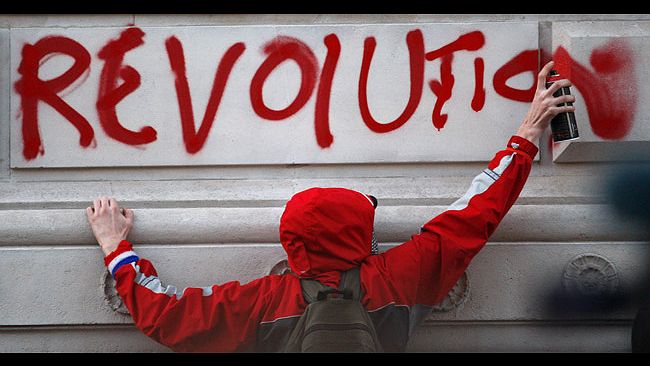
Revolution, not evolution; a poem by Jones Very; and the lessons for Sunday, December 3, 2017

FIRST SUNDAY OF ADVENT

Isaiah 64:1-9
Psalm 80:1-7, 17-19
1 Corinthians 1:3-9
Mark 13:24-37

PRAYER OF THE DAY: Stir up your power, Lord Christ, and come. By your merciful protection awaken us to the threatening dangers of our sins, and keep us blameless until the coming of your new day, for you live and reign with the Father and the Holy Spirit, one God, now and forever.

Apocalyptic literature, such as we find in Sunday’s gospel, is hard for us mainline protestants to digest. We are progressive in our outlook. We expect the kingdom of heaven to come incrementally. Shaped as we are by 19th Century rationalism, we view our present state of civilization as the vanguard of a slow but steady march from barbarism to liberal democracy and beyond. We can point to enough instances of progress to make this view of reality somewhat plausible. We have outlawed the overt practice of slavery. We have created an international network of alliances, agreements and institutions which, though they cannot altogether prevent war from breaking out, limit the scale of warfare and provide mechanisms for resolving military conflicts that might otherwise drag on indefinitely. Freedom, equality and prosperity are reachable for more people today than at any other time in recorded history. All of this suggests that we are progressing toward a better day.

The gospel, however, challenges our faith in progress. The evangelist reminds us of truths we would prefer to ignore, namely, that the increased prosperity of some has come at the expense of many more who remain mired in poverty; that slavery has been abolished in name only and is very much alive for victims of human trafficking and millions laboring in harsh conditions for wages that cannot sustain them. The treaties and institutions that have maintained peace and stability in many parts of the world are experienced as oppressive and unjust to many who had no voice in their creation nor any role in governing them. Moreover, these institutions are beginning to collapse under the weight of a new nationalism spreading across the globe. Racist ideologies and patriotism grounded in “blood and soil,” once thought relegated to the dust bin of history, are on the rise. The hard-fought gains for people of color, sexual minorities and women in this country that we hoped were permanent are in danger of being lost. Our faith in progress is being shaken-and that might be a good thing because faith in anything less than Jesus is idolatry.

The evangelist warns us against the notion that we can obtain intelligence into the when and how of God’s coming reign. S/he assures us that the day of the Lord will come, but that the timing and method of its coming are beyond our comprehension. The evangelist is clear on one thing, however. The kingdom will not come through gradual, incremental, peaceful evolution. It will come through revolution, violence and bloodshed. The institutions to which we look for peace, stability and progress must be dismantled in the birthing of the new creation. To those of us who have traditionally looked to the institutions of the old order for security, peace and progress, that is a frightening word. Yet for the many who find these very structures oppressive, violent and unjust, the apocalyptic message of Mark is remarkably good news.

During the Advent season we are reminded that we can only wait for new creation. That is a bitter pill to swallow for those of us who would like simply to patch up the old creation. It is hard to be told that a “kinder, gentler empire” will not do. The evangelist is telling us that the new world cannot dawn without the death of the old. This means that a lot of what we hoped was permanent, a lot of what we believed was good, a lot of what we worked so hard to achieve will be dissolved before we arrive at God’s gentle reign of peace.

That isn’t to say that what we do in the meantime doesn’t matter. Precisely because we know the world ends in God’s reign of justice and peace, it matters all the more how we spend whatever time we have left. We must practice justice and peace now so that the world may know its destiny is God’s kingdom and so that we might be formed into the kind of people capable of living faithfully in that kingdom when it finally is revealed. Making the world a better place is not a vain effort. To the contrary, that is why human beings were created. It is critical, however, to recognize that nothing we accomplish, however good and important, is eternal. No gain that we make is irreversible. Neither our lives nor our accomplishments are immune from the “change and decay in all around I see.” We can hope, pray and even expect that our works of justice, compassion and mercy witness to the kind of world God is making. But we dare not confuse our efforts with God’s own redemptive work. By all means strive to make progress; but trust only in God.

Here’s a poem by Jones Very on that very point.

The New World

THE NIGHT that has no star lit up by God,
The day that round men shines who still are blind,
The earth their grave-turned feet for ages trod,
And sea swept over by His mighty wind,
All these have passed away, the melting dream
That flitted o’er the sleeper’s half-shut eye,
When touched by morning’s golden-darting beam;
And he beholds around the earth and sky
That ever real stands, the rolling shores
And heaving billows of the boundless main,
That show, though time is past, no trace of years.
And earth restored he sees as his again,
The earth that fades not and the heavens that stand,
Their strong foundations laid by God’s right hand.

Source: American Religious Poems, Harold Bloom and Jesse Zuba, editors; pub. by Library of America, Inc. p.  96. This poem is in the public domain. Jones Very (1813–1880) Though a minor figure in the American poetic pantheon, Very’s work was highly regarded by such prominent figures as Ralph Waldo Emerson and Bronson Alcott. He studied at Harvard Divinity School until he succumbed to religious delusions that lead to his expulsion. His style bears the mark of his devotion to William Shakespeare whose sonnets he often emulated. You can find out more about Jones Very and sample more of his poetry at the Poetry Foundation website.

Isaiah 64:1-9

The fifty sixth chapter of the Book of Isaiah opens into what scholars agree is a third collection of prophetic oracles separate from the prophet Isaiah of the 8th Century B.C.E. (Isaiah 1-39) and Second Isaiah (Isaiah 40-55) who prophesied toward the end of the Babylonian Exile. These prophesies, comprising what is commonly called “Third Isaiah” (Isaiah 56-66), come from a period beginning shortly after the return of the exiled Jews from Babylon in 539 B.C.E., but before the rebuilding of the temple in about 515 B.C.E. The band of exiles, inspired by the poetic promises of Second Isaiah to brave the dangerous journey across the Iraqi desert from Babylon to Palestine, arrived home to find Jerusalem in ruins and the land inhabited by hostile tribes. The Eden like path through the desert promised by Second Isaiah did not materialize. Life in Palestine proved to be difficult, dangerous and unpromising. The people were understandably disappointed and demoralized. This was the tough audience to which Third Isaiah was called to appeal. A people led to such a desperate plight by their belief in a prophet’s promises were probably not in any mood to listen to yet another prophet! Third Isaiah opens with the words, “Maintain justice and do what is right, for soon my salvation will come.” Vs. 1. You can almost hear the people groaning in the background, “Oh no! Here we go again!”

The prayer of lament that constitutes our lesson is, according to Professor Claus Westermann, one of “the most powerful psalms of communal lamentation in the Bible.” Westermann, Claus, Isaiah 40-66, The Old Testament Library (c 1969 SCM Press Ltd.) p. 392. The prophet does not take lightly the disillusionment of his/her people. Speaking in the voice of the community, s/he cries out, “O that thou wouldst rend the heavens and come down…” vs. 1. Like the rest of the people, the prophet longs for God’s intervention. The prophet reminds God (as though God needed reminding!) that there was a time when God did act decisively on Israel’s behalf. The prophet alludes to the saving acts of God in the past. Though lacking in specificity, the prophet’s references to “terrible things that we looked not for” might well include the Exodus, the Conquest of Canaan, the triumphs of Samuel and David. Vss. 3-4. God acted then, so why not now?

Of course, the prophet knows and the people no doubt suspect that the reason for God’s silence is tied to their own lack of covenant faithfulness. Yet the people cannot help but feel that God’s anger is out of proportion to their offenses. In verse 5, the prophet cries out, “Behold, thou wast angry, and we sinned…” The order here is most curious. It almost seems as though the people attribute their sin to God’s anger. How can one believe in and trust a God whose wrath is so unsparing? No wonder that “no one calls upon [God’s] name, that bestirs himself to take hold of [God].” Vs. 7. It is God “who has delivered [Israel] into the hands of [her] iniquities.” Vs. 7.

Our reading ends with a plea for God not to be so exceedingly angry. Vs. 9 “Thou art our Father,” the prophet declares. “We are the clay, and thou our potter; we are the work of thy hand.” Vs. 8. In verses 11-12 (not in our reading) the prophet calls God’s attention to the holy city of Jerusalem and the once great temple of Solomon, now in ruins. The poem concludes with a haunting question: “Wilt thou restrain thyself at these things, O Lord? Wilt thou keep silent, and afflict us sorely?” vs. 12.

This prayer strikes a resonant note for an age that seems far removed from miracles and unequivocal words and acts of God. For a good many modern folk, the stories of the Exodus and the Resurrection are just that, stories. At best, they are metaphors for experiences that fit neatly within the narrow confines of our secular frame of reference. For the most part, though, they are archaic myths that we have long outgrown. Those of us who still believe long for the God of the Bible to “rend the heavens and come down” so that we might be assured that the line to mystery, revelation and renewal has not gone dead. Are we shouting frantically into a broken connection? Is there no longer any listening ear on the other end?

I would encourage you to read chapter 65 of Isaiah in addition to our lesson. There you will find God’s response. God, it seems, is equally frustrated by the lack of communication. “I was ready to be sought by those who did not ask for me,” God replies. “I said, ‘Here am I, here am I,’ to a nation that did not call on my name.” Isaiah 65:1. Though God might not be responding with the fireworks Israel is seeking, God is responding nonetheless. So perhaps the problem is not with God’s silence, but with our lack of perception. Perhaps we cannot hear the word of the Lord because we have bought into the limited and limiting vision of empiricism. Perhaps the silence of God can be attributed to our lack of capacity to imagine, contemplate and be open to mystery. Maybe God is even now rending the heavens and coming down and we have only to open our eyes and look up to see the Advent of our God.

Psalm 80:1-7, 17-19

This is a psalm of lament. Mention of the tribes of Ephraim, Benjamin and Manasseh suggest that this was originally a psalm of the Northern Kingdom of Israel. Dating is difficult. The portrait of the land of Israel as an abandoned vineyard with its defenses torn down and its fruit at the mercy of any passing beast certainly fits what must have been the case following the Assyrian conquest in 722 B.C.E. Nonetheless, we must keep in mind that the Northern Kingdom was considerably less stable politically than Judah under the line of David. It was also beset by its hostile neighbor, Syria, which frequently expanded its holdings into Israelite territory. Thus, it is entirely possible that this psalm dates from as early as the 9th Century. After the fall of the Northern Kingdom to Assyria, it is probable that this psalm and other literary traditions from the north were brought to the Southern Kingdom of Judah and incorporated into what ultimately became the Jewish scriptures. Anderson, Bernhard W., Out of the Depths-The Psalms Speak for us Today (c. 1983 by Bernhard E. Anderson, pub. by Westminster Press) p. 171.

As we saw in last week’s lesson from Ezekiel, the term “shepherd” is commonly associated with kings and rulers. “Enthroned upon the cherubim” (vs. 1) is an allusion to the presence of God symbolized by the Ark of the Covenant which had images of two of these heavenly beings on its cover. Exodus 25:17-22. Though the Ark had likely been captured or destroyed by this time and, in any event, would not have been in the possession of the Northern Kingdom, this term for God’s majesty lived on.

Like the psalm from Isaiah, this psalm also implores God to act and asks “how long wilt thou be angry with thy people’s prayers?” vs. 4. This is a common refrain throughout the psalms of lament. See, e.g., Psalm 13:1-2Psalm 74:10; and Psalm 79:5. It seems as though God has abandoned his people to suffering and to the mockery of their enemies. As we see time and time again, Israel had no qualms about letting God know when she felt God was not holding up his end of the covenant. Yet as angry, disappointed and disillusioned as Israel sometimes was with her God, she never ceased speaking to God. As hard as it was for Israel to believe in God’s promises, it was harder simply to dismiss them. Israel knew that her ancestors lived for four hundred years as slaves in Egypt crying out for salvation before God sent Moses to deliver them. Israel knew that nearly all of those ancestors died on the long trek through the wilderness without seeing the Promised Land. Israel knew that in the past her ancestors had had to wait for God’s salvation. Why should things be any different now? With this knowledge and experience in her memory Israel cries out in the refrain found throughout this psalm, “Restore us, O God, let they face shine, that we may be saved!” vss. 3; 7 and 19.

In a culture that rewards speed, efficiency and instant satisfaction, the virtues of patience and persistence have little place. Praying to a God who acts in his own good time and for whom a thousand years is but a day has little appeal in the world of Burger King where you can have it your way right now. The Psalms remind us, however, that there is value in waiting. It is not just wasted time. Waiting gives us time to consider and contemplate that for which we pray. Those who practice prayer patiently and consistently know that one’s desires are transformed in the process. In the discipline of persistent and constant prayer, longings and desires are purified. We often discover in the process that what we thought we wanted, longed for and desired is not what we truly needed. By the time we recognize God’s answer to our prayer, our prayer has changed-and so have we. Waiting is perhaps the most important dimension of prayer.

As always, I urge you to read Psalm 80 in its entirety.

1 Corinthians 1:3-9

You might want to refresh your recollection concerning Paul’s First Letter to the Corinthians. To that end, I refer you to the Summary Article by Mary Hinkle Shore, Associate Professor of New Testament at Luther Seminary, St. Paul, M.N. on enterthebible.org.

Our reading for Sunday is a snippet from Paul’s greeting to the church in Corinth. Paul alludes herein to the matters to be dealt with in the body of his letter, namely, “knowledge,” “eloquence,” “spiritual gifts,” and “the revealing of our Lord Jesus Christ” at the “Day of our Lord Jesus Christ.” Of particular importance for the dawning of this Advent season is the promise of Christ to “sustain” us to the end. Vs. 8. Endurance is and always has been a key New Testament virtue. As I have said before, I do not believe there ever was a “crisis” in the early church prompted by the “delay of the second coming” (sometimes called “the Parousia”). I am convinced that the church understood from the witness of Jesus himself that the kingdom of God had come with power and glory in the cross and resurrection-but that in a sinful world the kingdom necessarily takes the shape of the cross. Though longed for, the consummation of the kingdom was not expected momentarily and the fact that it did not so occur did not occasion any “crisis of faith.” The God and Father of Jesus Christ was the God who sojourned with the patriarchs through their many years as foreigners in the Promised Land; the God who waited four hundred years before answering the cries of his enslaved people in Israel; the God who sat for seventy years in exile with his people and who sent his Son in the fullness of time. Patient longing has been part of the discipleship package from the start. It was not invented by the church to save its disillusioned members from their dashed hopes.

That means, of course, that disciples of Jesus must reconcile themselves to not knowing what time it is. The end (in the sense of Jesus becoming all in all) might come tomorrow. Yet again, it might not come for several more millennia. For all we know, tomorrow’s seminaries might include courses in space travel for pastoral leaders called to churches established at human colonies in far off star systems. Like the children of Israel in the wilderness, we do not know how long it will take for us to arrive at our destination, what the road ahead will look like or how we will know when we have arrived. Only patient, hopeful and confident trust in our Shepherd, the Lord Jesus Christ, can sustain us on this journey.

Mark 13:24-37

The language employed by Jesus in our reading is similar to prophetic judgment and apocalyptic speech employed in the Hebrew Scriptures. As such, it is “more than metaphorical, less than literal.” Hooker, Morna D., The Gospel According to Saint Mark, Black’s New Testament Commentaries, Vol. 2 (c. 1991 by Morna D. Hooker, pub. by A&C Black, Limited) p. 319. The imagery suggests cosmic dissolution. The coming of the Son of Man in glory means the end of the world as we know it.

That said, I believe Mark is doing something unique with this section of his gospel. Jesus has said before that “this generation will not pass away before these things take place.” Vs. 30. See also Mark 9:1. So the question is, what “things” is Jesus talking about? Note well that Jesus tells his disciples no less than three times to “watch.” Vss. 33-37. As we will see, they famously fail to stay awake and watch three times. Mark 14:32-42. At Jesus’ crucifixion, “there was darkness over the whole land until the 9th hour.” Mark 15:33. Jesus is acknowledged (albeit mockingly) as Messiah while hanging on the cross and confessed as Son of God at his death. Mark 15:21-39. Jesus, identified in the first chapter of Mark as “Messiah” and “Son of God” (Mark 1:1), is so glorified in his crucifixion-a strange sort of glory. Do these words of Jesus from our gospel lesson pertain to some cosmic event in the distant future? Or do they refer to Jesus’ impending crucifixion? Is the cross for Mark the end of the world?

I suspect that this is a matter of both/and rather than strictly either/or. What happened with Jesus did indeed initiate the dissolution of the cosmos. Evidence of dissolution is everywhere. Nonetheless, if the sky is falling it can only mean that God is replacing it with a new heaven and a new earth. The end of the world is therefore the revealing of God’s kingdom, which now is hidden under the form of the cross. The end of the world is plainly visible for all who are watching for it. I concur therefore with Professor Cranfield who has this to say:

“If we realize that the Incarnation-Crucifixion-Resurrection-and Ascension, on the one hand, and the Parousia, on the other, belong essentially together and are in a real sense one Event, one divine Act, being held apart only by the mercy of God who desires to give men opportunity for faith and repentance, then we can see that in a very real sense the latter is always imminent now that the former has happened. It was, and still is, true to say that the Parousia is at hand-and indeed this, so far from being an embarrassing mistake on the part either of Jesus or of the early Church, is an essential part of the Church’s faith. Ever since the Incarnation men have been living in the last days.” Cranfield, C.E.B., The Gospel According to Mark, The Cambridge Greek Testament Commentary (c. 1959 Cambridge University Press) p. 408.

Though Cranfield employs concepts that are far outside the theological outlook of Mark’s gospel, I believe that his conclusion is nonetheless sound. For Mark, the new age was inaugurated by Jesus in the midst of the old. The cosmic events surrounding the crucifixion are of one piece with the final convulsion in which the old age withers before the advent of the new.

This is a timely word for all who experience dissolution, whether it be the dissolution of the America they once knew, the dissolution of a marriage, the dissolution of a mind into dementia or the dissolution of a church. Jesus does not soft peddle the reality of death in all its aspects. The creation is subject to death and the convulsions of its death throes are everywhere. But these same convulsions, for those who are attentive, are birth pangs of something new. That is the good news in this lesson.


When doing good doesn’t do any good; a poem by Julia Spicher Kasdorf; and the lessons for Sunday, November 26, 2017

CHRIST THE KING

Ezekiel 34:11–16, 20–24
Psalm 95:1–7a
Ephesians 1:15–23
Matthew 25:31–46

PRAYER OF THE DAY: O God of power and might, your Son shows us the way of service, and in him we inherit the riches of your grace. Give us the wisdom to know what is right and the strength to serve the world you have made, through Jesus Christ, our Savior and Lord, who lives and reigns with you and the Holy Spirit, one God, now and forever.

One of my favorite hymns begins with a question: “O Christ, what can it mean for us to claim you as our king?” See Lutheran Worship, (C. 2006 by Evangelical Lutheran Church in America, pub. By Augsburg Fortress Publishers) Hymn # 431. The question is difficult on a number of different levels. As an American, I chafe at the very idea of having a king. After all, didn’t we fight the revolutionary war to rid ourselves of a king? I don’t fancy being governed by a leader whose authority cannot be questioned, who cannot be voted out or impeached and who calls me to lay down my life for the kingdom. Our attitude toward kingly authority is perhaps best expressed by the sentiment I have recently seen expressed on so many toddler tee shirts: “You’re not the boss of me.” Nothing stimulates the testosterone quite like having somebody else try to tell us what to do with our lives. Yet that is precisely what Jesus does. Our lives, he tells us, are not our own. They belong to our heavenly Father and they can never be lived well until reconciled to his will. We prefer Burger King telling us that we can “have it our way,” to Christ the King who tells that our way leads to self-destruction.

More difficult than getting past the very idea of a king is coming to grips with the kind of king Jesus is. His life and ministry was anything but kingly. Kings get things done. That’s one advantage of being ruled by a king. King’s don’t have to bother with congress or worry about courts striking down their orders. Because they don’t stand for election, they don’t have to take the temperature of public opinion before they act. They can build bridges, drain swamps, fight wars and make the trains run on time in whatever way they see fit. Of course, there is a price to be paid for autocracy. As the lesson from Ezekiel demonstrates, kings frequently put their own interests above those of the people. They abuse their power. They can be cruel, ruthless and unjust. But what if you could find a king that really does love his people, who puts the common good above his own interests and who rules with justice and equity? What if you found a person with integrity so deep seated that s/he could not be moved by any bribe, threat or self-serving interest? If such a person were to exist, wouldn’t you gladly accept them as king?

In many respects, Jesus seems to fit the bill. Yet when offered the opportunity to reign as king, not merely over Israel but over the whole world, Jesus rejected it. Putting to one side the fact that the offer was made by the devil, wouldn’t it have been better for all of us if Jesus had accepted it? Think of how much good could be accomplished with Jesus controlling the levers of power rather than the likes of Emperor Caligula or Donald Trump! Jesus, however, will not take up the sword of empire, not even for the sake of his Father’s kingdom. The only weapons Jesus employs are words of liberation, healing, compassion and forgiveness. His only military strategy is victory through reconciliation. His only plan for achieving peace is peace itself. These methods usually are not politically effective. In fact, they might undermine our political efforts to affect needed social change. Politics is, after all, the art of the possible. Truth is often the first casualty in the political process. The language of diplomacy requires “incidental falsehoods.” For example, it may well be essential to American strategic alliances and to such noble objectives as achieving peace in the middle east to avoid official recognition of the Armenian Genocide of a century ago. Don’t the lives and wellbeing of people today trump recognition of people who have been dead 100 years? Can’t we find a way to honor the Armenian victims “under the table” while ignoring them-for strategic and humanitarian purposes-in the room where the sausage is made? Perhaps the day will come when the whole truth can be told-but not today.

Jesus will not settle for a peace that buries the truth. He won’t tolerate false narratives and he will not give way to the Nieburian siren song promising that the ends will justify the means-a rationalization we are all too prone to adopt. We can mock the Trumpian evangelicals all we want for supporting a pedophile like Roy Moore and a molester like Donald Trump because, after all, they support their moral agenda (which evidently does not include protection of women and girls from predatory males). But their rank hypocrisy only illustrates the end stage of the same path we so called progressives take when we turn a blind eye to the antisemitism of our allies in the struggle against Israeli aggression in the occupied territories. The desire to accomplish a great good and to see it done within one’s lifetime is hard to resist. That is why pastors and congregational leaders turn to coercive techniques when they are desperate to get programs off the ground or projects completed. It is also why Christians who seek to shape law and policy for the better frequently find themselves morally compromised. We can’t resist the temptation to grab the levers of power and use them to make history come out right. Like Peter in the Garden of Gethsemane, we cannot bear to watch evil prevail and do nothing. Yes, turn the other cheek, but not now! Not under these extreme circumstances! The greater good of preventing such a travesty of justice as Jesus’ arrest excuses the limited use of the sword.

I don’t think this means necessarily that disciples of Jesus cannot engage in politics. I do think, however, that we might find we are not very good at it. It seems to me that a believing politician has to be willing to lose an election that, with the backing of a little money in exchange for an inconsequential vote or two, s/he might otherwise win. A Christian legislator may have to let a proposal for hunger relief, protections for civil rights or some other very worthy cause go down in defeat-if the cost of success means voting once again to bury the Armenian Genocide. A disciple of Jesus must never forget that no end, however noble, can justify unjust means for achieving it, but that the means always shape the ends in ways we cannot foresee. Following Jesus in the realm of politics is a daunting task requiring much integrity, honesty and humility. No wonder Martin Luther once remarked that a good prince is a rare bird.

Discipleship, in any area of life, means accepting the cruel fact that doing good might not do much good-but we do it anyway because it is what Jesus would have us do and it readies us for life under God’s reign of peace-whenever in God’s own good time it comes. Disciples of Jesus understand that while they must witness to and live under God’s gentle reign, none but God can bring it about. God does that very thing through patient, suffering love that will not allow for any shortcuts. That is the only weapon King Jesus wields and the only one with which we are armed. Following Jesus, then, most often means doing small, seemingly inconsequential acts of mercy, justice and peace on a day to day basis without stopping to consider whether it is accomplishing anything. It means taking up the cross and leaving the resurrection to God. Here is a poem by Julia Kasdorf that speaks of faithful discipleship, its challenges, costs and rewards.

Mennonites

We keep our quilts in closets and do not dance.
We hoe thistles along fence rows for fear
we may not be perfect as our Heavenly Father.
We clean up his disasters. No one has to
call; we just show up in the wake of tornadoes
with hammers, after floods with buckets.
Like Jesus, the servant, we wash each other’s feet
twice a year and eat the Lord’s Supper,
afraid of sins hidden so deep in our organs
they could damn us unawares,
swallowing this bread, his body, this juice.
Growing up, we love the engravings in Martyrs Mirror:
men drowned like cats in burlap sacks,
the Catholic inquisitors,
the woman who handed a pear to her son,
her tongue screwed to the roof of her mouth
to keep her from singing hymns while she burned.
We love Catherine the Great and the rich tracts
she gave us in the Ukraine, bright green winter wheat,
the Cossacks who torched it, and Stalin,
who starved our cousins while wheat rotted
in granaries. We must love our enemies.
We must forgive as our sins are forgiven,
our great-uncle tells us, showing the chain
and ball in a cage whittled from one block of wood
while he was in prison for refusing to shoulder
a gun. He shows the clipping from 1916:
Mennonites are German milksops, too yellow to fight.
We love those Nazi soldiers who, like Moses,
led the last cattle cars rocking out of the Ukraine,
crammed with our parents–children then–
learning the names of Kansas, Saskatchewan, Paraguay.
This is why we cannot leave the beliefs
or what else would we be? why we eat
‘til we’re drunk on shoofly and moon pies and borscht.
We do not drink; we sing. Unaccompanied on Sundays,
those hymns in four parts, our voices lift with such force
that we lift, as chaff lifts toward God.

Source: Sleeping Preacher (c. Julia Kasdorf 1992, pub. by University of Pittsburgh Press) Julia Kasdorf (b. 1962) is a Poet, essayist, and editor. She was born in Lewistown, Pennsylvania and received her BA from Goshen College. She earned an MA in creative writing and a PhD from New York University. She is the editor for the journal, Christianity and Literature and author of several books of poetry. You can find out more about Julia Kasdorf and read more of her poetry at the Poetry Foundation website.

Ezekiel 34:11–16, 20–24

Though a prophet and critic of Judah’s cultic and religious practices, Ezekiel appears to have been of priestly lineage being intimately connected to the temple in Jerusalem and its worship. Ezekiel’s eccentric behavior, lurid visions and obscene imagery have discomforted both his Jewish and Christian interpreters. According to some Jewish traditions, the study of Ezekiel’s prophecies was restricted to men over the age of thirty. Ezekiel was a contemporary of Jeremiah. But whereas Jeremiah’s ministry took place in Jerusalem during and immediately after its final conquest and destruction by the Babylonians in 587 B.C.E., Ezekiel preached among the exiles deported to Babylon ten years earlier in 597 B.C.E. Like Jeremiah, Ezekiel viewed Jerusalem’s destruction as God’s judgment for her unfaithfulness. Judgment, however, is not Ezekiel’s final word. The book of his oracles ends with a glorious vision of a restored Jerusalem and a new temple from which rivers of healing water transform the land of Israel into an Eden-like paradise. The parallels between this vision (Ezekiel 40-48) and that of John of Patmos in Revelation 21-22 suggest inspiration of the latter by the former. For further general information on the Book of Ezekiel, see Summary Article by Dr. Alan Padgett, Professor of Systematic Theology at Luther Seminary in St. Paul, MN on enterthebible.org.

Sunday’s passage is part of a larger section constituting all of Chapter 34. In verses 1-2, Ezekiel launches into a diatribe against “the shepherds of Israel.” The reference is to the Kings of Judah and Israel whose oppressive, self-centered and short-sighted policies lead to their nations’ demise. These kings/shepherds have put their own interests ahead of the flock, feeding their appetites as the sheep starve, wander away and become scattered. The prophet would have the exiles know that, as far as God is concerned, “enough is enough.” “I, I myself will search for my sheep and will seek them out.” Vs. 11. God will bring the people of Israel back from all the places to which they have been exiled. God himself will feed them and give them security from their enemies. Vss. 12-16. If you want a job done right, you have to do it yourself!

The kings are not solely responsible for Israel’s plight, however. In the absence of proper leadership and oversight, covenant life within the Lord’s flock has given way to the law of the jungle. The oppression of the monarchy is reflected in the oppression of the weak by the strong. Thus, God addresses the flock as well. “Behold, I, I myself will judge between the fat sheep and the lean sheep. Because you push with the side and shoulder, and thrust at all the weak with your horns, till you have scattered them abroad, I will save my flock, they shall no longer be a prey; and I will judge between sheep and sheep.” Vss. 20-22. For reasons known only to the inner circle of the lectionary makers, Verses 17-19 have been omitted from our reading. They expand further on this same theme.

In verses 23-24 God announces that he will set up over the people “my servant David, and he shall feed them; he shall feed them and be their shepherd.” Vs. 20. This is a little confusing. God has only just announced that God himself would be Israel’s shepherd, whereas now God announces that David (presumably a descendent) will have the job. These two notions are not necessarily contradictory, however, “for in the theology of Jerusalem the Davidic kings were an extension of Yahweh’s kingship.” Lemke, Werner E., “Life in the Present and Hope for the Future,” Interpretation, (Vol. 38, 2, 1984) p. 174. In addition to the term “shepherd” Ezekiel refers to the new David as a “prince” (Hebrew=nisi). The literal translation of this word is “exalted one,” a term that originated in the ancient Israelite tribal league existing prior to the rise of the monarchy. Ibid. Perhaps Ezekiel is deliberately avoiding the use of the Hebrew word for “king” (melech) because he wishes to make clear that this new David is not to be thought of as just a continuation of the dismal performance of his predecessors.

Ezekiel strikes a resonant chord. The blind embrace and elevation to leadership of known sexual predators to the highest offices in the land speaks both to the sickness of our governmental institutions and the perversity of the angry, white mob that is working hard to dismantle them. Somehow, we ended up with a president that is so mentally unstable that his generals are actually discussing how to handle the eventuality that he might fire off a nuke in a fit of pique as casually as he does his ill-considered tweets. The inability of our current leadership to govern, to unite the country or enact a coherent policy agenda comports with Ezekiel’s image of Israel’s self-serving “shepherds” whose inept leadership has impoverished and scattered the sheep.

Nonetheless, we cannot lay the blame of all our woes on our leadership. Unlike the unfortunate people of North Korea who inherited their bellicose, narcissistic, man-baby, we elected ours. The low approval ratings of our president, congress and judiciary are symptomatic of a general loss of faith in leadership. When we continue to vilify the establishment, characterize career politicians as crooked and dishonest, should it come as any surprise that fewer and fewer honorable people are seeking public office? When honorable people are so repelled by public service that they avoid or resign from it, who is left? Exhibit A can be found in Washington, D.C.-when he is not in Mara Lago. We must accept the fact that Donald Trump is in large part the product of our own selfishness and cynicism.

There are two observations I would make in this connection. The first has to do with the limits of human capacity for wise leadership. Few can bear the weight of the crown without being corrupted by it. Even fewer have the maturity, insight and moral courage to envision a good larger than their own parochial interests. That is why, I believe, Israel’s hope for salvation eventually turned away from reliance upon human leaders. The crown belongs to God alone. The Christian faith confesses that God became human in the person of Jesus Christ and received that crown to which every knee must finally bend. Yet this king will not have us bend in terror or under duress. He seeks obedience from the heart-something that must be won not through force of arms, but through faithful, suffering, enduring love that outlasts our distrustful resistance.

That leads me to the second observation. We are not yet a people capable of being led. The image of ourselves as sheep under the care of a shepherd does not play well in a culture of individualism like our own. We value our right to be our own person, make our own decisions and believe what we choose. While I have no problem with the state affording us these prerogatives, I am not convinced that we can hang onto them as we enter into the Body of Christ. It seems to me that the language of rights is foreign to and inadequate for defining life under our baptismal covenant with Jesus in the church. I believe one of the major flaws in American Protestantism is our penchant for organizing ourselves, whether nationally or as congregations, by means of constitutions that speak the language of rights rather than the language of covenant. We are, after all, a people who follow a king who reigns through laying down his kingly prerogatives and refusing to exercise his rights to self-defense, retribution and self-determination.

Psalm 95:1–7a

This is one of about twenty psalms thought to be associated with an enthronement festival for Israel’s God held in the fall, during which time worshipers made a pilgrimage to Jerusalem celebrating God’s triumph over all powers hostile to his rule. Anderson, Bernard W., Out of the Depths-The Psalms Speak for Us Today, (c. 1983, Bernard W. Anderson, pub. The Westminster Press) p. 175. The festival may have been patterned after rites common among Israel’s neighbors, such as the feast of akitu where the Babylonian creation myth, Enuma elish, was recited and re-enacted. Ibid. 176. However that might be, there is a critical difference between typical near eastern mythology on the one hand which tended to reflect and legitimate the imperial infrastructure, and Israel’s salvation narrative on the other hand acclaiming Yahweh as Lord. The difference is borne out by the fact that Israel’s worship outlasted her dynastic existence whereas the Babylonian and Canaanite religions died along with their empires.

Whatever its origins, Psalm 95 in its present state is obviously composed for use in public worship. It opens with an invitation for all Israel to worship God, not merely as creator, but as the God who is its “rock of salvation.” Vss. 1-2. Verses 3-5 declare that the whole of creation belongs to the Lord who is “a great king above all gods.” This might well be an ancient worship formula from a period of time when Israel acknowledged the existence of other deities, though always subject to Yahweh, her Lord. Nevertheless, its use in later Judaism functioned as a denial of even the existence of such gods. Vss 7b to 11 (not in our lesson) refer back to the narrative from our Exodus lesson as a warning to Israel. The worshipers must learn from the faithless conduct of their ancestors and its dire consequences not to be rebellious, disobedient and unbelieving.

The psalm is an illustration of just how important the narratives of God’s salvation history with Israel were for her worship and piety. The ancient stories of the wilderness wanderings were not dead history for Israel. They were and continue to be paradigms of covenant life in which Israel is challenged each and every day with God’s invitation to trust his promises and with the temptation to unbelief and rebellion. So, too, as the church year draws to a close, we prepare to begin anew the narrative of Jesus’ incarnation, ministry, death and resurrection through the eyes of Mark’s gospel. This story, as it is enhanced and enriched through the prism of our weekly readings, illuminates and informs the real life choices that are ever before us. We see ourselves in the tentative response of the disciples as they follow Jesus and finally betray, deny and abandon him. More significantly, we recognize our own new beginning in the resurrected Christ who seeks out his failed disciples and calls them to a new beginning.

Ephesians 1:15–23

For a brief introduction to the Letter to the Ephesians, see Summary Article by Mary Hinkle Shore, Associate Professor of New Testament at Luther Seminary, St. Paul, MN at enterthebible.org.

This remarkable passage consists of one single sentence in the original Greek. The Old Revised Standard Version retains the sentence structure making it impossible to read this lesson from the lectern without hyperventilating. Thankfully, the New Revised Standard Version used for our readings has broken this passage down into bite size pieces. A preacher could generate more than a dozen sermons trying to unpack this profound expression of the mystery of faith.

I believe that this passage from Ephesians is a wonderful (if tightly packed, layered and condensed) statement of what Jesus’ ascension to the right hand of the Father means. It is therefore appropriate for the celebration of the reign of Christ. The right hand of the Father is everywhere there is and, consequently, so is Jesus. The church is described as “the fullness of him who fills all in all.” Vs. 23. That is a bold statement. It says a great deal more than that Jesus is a revelation of God or God’s will. It says more than that Jesus is an exemplar, an expression of God’s image which might be found in any exemplary person who is, after all, created in God’s image. Jesus lives not merely as an idea, but as the glue that holds the universe together and the means by which God is bringing all things into submission to God’s will. The telos (Greek word for “end” or “purpose”) of the world is Jesus. To follow Jesus is to go with the grain of the universe. To go against him is to cut against that grain, to be on the wrong side of nature and history.

In a recent article published by the New York Times, James Carroll wrote: “Yet Jesus Christ is the point of all the smells, bells, rules and dogma; the point, finally, of being Catholic. Ironically, the failures of the church make that point with power, for it is when one dares imagine the deliberate act of lapsing that the image of Jesus Christ snaps into foreground focus. Here, perhaps, is the key to Pope Francis’s astounding arrival, for beyond all matters of style, doctrine and behavior, he is offering a sure glimpse of a fleeting truth about the faith: The man on his knees washing the feet of the tired poor is the Son of God.

“Francis is pointing more to that figure than to himself, or even to the church, which is why institution-protecting conservatives are right to view him with alarm. For this pope, the church exists for one reason only — to carry the story of Jesus forward in history, and by doing that to make his presence real. Everything else is rubrics.” James Carroll, “Jesus and the Modern Man,” New York Times, November 7, 2014.

What Carroll has said here about the Roman Catholic Church is every inch as true for American Protestant denominations. We are nothing if not “institution-protecting.” The precipitous decline in membership and support we have experienced in the last two decades (and before if we had been paying attention) has only exacerbated and raised to panic level this self-defeating behavior. In some respects, this takes us back to the whole question of leadership raised by our lesson from Ezekiel. The leader we desperately need is one that can point us beyond our angst over institutional decline to the figure of Jesus. Jesus alone can give us the courage to die and, paradoxically, the promise of life.

Matthew 25:31–46

Professor Nolland suggests that the reading for Sunday was originally a parable by Jesus about a king who entered into judgment with his people, but has been progressively allegorized by the early church to the point where it has become an account of the final judgment rather than a parable. Nolland, John, The Gospel of Matthew, The New International Greek Testament Commentary (c. 2008 by Wm. B. Eerdmans Publishing Co.) p. 1024. I trust there is no need for me to repeat my skepticism about scholarship seeking the so-called “Historical Jesus” behind the gospel witness as we have it. I nevertheless agree with Nolland’s literary judgment that this story is not a parable. It is, as he points out, the climactic conclusion to the parables of the Ten Maidensand The TalentsIbid. at 1022. Whereas the preceding parables stressed preparedness and faithfulness, the story of the final judgment paints in stark relief that for which the disciples must prepare and the shape their faithfulness must take.

The image of the Son of man separating the people of the nations as a shepherd separates sheep from goats faintly echoes our lesson from Ezekiel. As the reign of the new David in Ezekiel was to be an extension of God’s just and merciful reign, so also the Son of Man is an extension of God’s presence in judgment and salvation. A shepherd might separate the sheep from the goats in his flock for any number of reasons, one being that goats need protection from cold at night not required for sheep. Ibid. at 1026. It would be a mistake, however, to read more into the shepherd’s reasoning than is required to make sense of the story. It is enough to know that such separation was common and so a useful image for the separation to be made finally of those recognized by the Son of Man from those not so recognized.

The point of the story turns on the failure of both the sheep and the goats to recognize the significance of their actions/inactions. The story is both a judgment on the nations of the world for whom divinity is wrapped up in imperial might and worship given to the symbols of Roman power as well as encouragement to the church whose acts of compassion toward “the least” is in fact the highest possible service to the one true God. The way of patronage that advances one upward through the hierarchical strata of Roman society turns out to have been tragically misguided. When the true “king” arrives, the contacts required to win his favor will turn out to have been the very folks we go out of our way to avoid: the homeless, hungry, sick, naked, imprisoned and abandoned.

My Lutheran associates often get hung up on this text because it appears to advocate salvation by works rather than by God’s grace. Caring for the poor and hungry becomes the basis for salvation rather than faith in Jesus. Nothing could be further from the case. If works had been the basis of their salvation, the sheep would not have been so clueless about their acts of kindness to the Son of Man. Because they have been shaped by their friendship with Jesus in the baptismal community called church, their works are not their own. They simply flow from their living relationship to Jesus as naturally as breathing. Their left hand knows not what their right hand is doing. See Matthew 6:3.

Nonetheless, I have often wondered whether this story is not as much a rebuke to the sheep as to the goats. In his book, Toxic Charity, Robert D. Lupton shows how good-intentioned Christians are actually harming the people they are trying to help. Too many efforts to help the poor actually make the poor feel judged, looked down upon, only worthy of charity and handouts. The tendency is to see these people as “social problems” that need our help rather than valued persons deserving honor, respect and friendship. Lupton, Robert D., Toxic Charity, (c. 2011 by Robert D. Lupton, pub. by HarperCollins Publishers).

Perhaps the sheep could use some help recognizing their King in the faces of those for whom they are caring. Acts of charity can be and are done by Christians and non-Christians alike. Anyone can feed the hungry, but only the church can invite them to the messianic banquet. Anyone can show genuine compassion to someone in need. But only a disciple of Jesus can recognize in such a person the presence of Jesus. It is just this recognition that “the least” are not “social problems” needing a solution, but rather “the treasure of the church,” as St. Lawrence would say, that distinguishes friendship with the marginalized from toxic charity. The “least” are, in fact, priceless invitations to deeper intimacy with Jesus.

On this Sunday of Christ the King, we are asked what it means for us to be subjects of a King whose nearest associates are the hungry, the poor, the naked and the imprisoned. Taken seriously, discipleship as Matthew envisions it turns our social/economic/political world on its head.


Blessedness of dying broke; a poem along the same lines; and the lessons for Sunday, November 19, 2017

See the source imageTWENTY-FOURTH SUNDAY AFTER PENTECOST

Zephaniah 1:7, 12–18
Psalm 90:1–12
1 Thessalonians 5:1–11
Matthew 25:14–30

PRAYER OF THE DAY: Righteous God, our merciful master, you own the earth and all its peoples, and you give us all that we have. Inspire us to serve you with justice and wisdom, and prepare us for the joy of the day of your coming, through Jesus Christ, our Savior and Lord.

“I was afraid.” Matthew 25:25

At first blush, the parable of the talents in today’s gospel strikes us as rather severe. Three servants each receive a sum of money to be held in trust. Two of them invest and double their master’s wealth and are richly rewarded. The third keeps it safe and returns it to the master with neither profit nor loss-and is severely punished. But how much of this is really the third servant’s fault? No one can predict a bull market. That is why investments that promise a high return are considered risky. What if this parable had taken place in the fall of 2008? What if the first two servants had come back with only a tenth of their original trust? Would the master then have said to the third servant, “Well done good and faithful servant! You dealt with my money carefully and prudently”? Would he have punished the first two servants for taking imprudent risks? Doesn’t the parable place upon the servants responsibility for matters well beyond their control?

No. To read the parable in this fashion is to miss the point. The first two servants were not rewarded for their investment successes and the third servant was not punished for fiscal incompetence. The first two servants are commended for being “faithful.” Nothing more is required of them. Success is God’s concern. The servants don’t have to worry about that. They need only use the resources given to them faithfully and God will accomplish whatever it is God intends to accomplish through them. Whether the result looks like success or failure to them in the end is immaterial. Freed from the crippling fear of failure, the servants can go about their work with hopefulness, joy and expectation. That is what faith looks like.

The opposite of faith is fear. “I knew that you were a hard man,” says the third servant, “and I was afraid.” But was that really the case or was it merely the servant’s perception? If the servant believed his master to be a “results oriented” boss with an eye only for the bottom line, then his decision to “play it safe” makes sense. Investments that require innovation, risk taking and novelty often do not pay off until years later-if at all. They are not an attractive option when your annual review is coming up in six months. That is why a management plan rewarding short term success and punishing failure has been shown again and again to be a failed business model. Fear and innovation don’t mix.

Fear is the author of many a poor decision. This week fans of ex-Fox commentator Sean Hannity began smashing their Keurig coffee makers because Keurig withdrew its advertising from Hannity’s show. That doesn’t make a great deal of sense. The only one you hurt by such a demonstration of disapproval is yourself. It’s rather like protesting a movie you don’t like by buying a ticket and not going in to see it. But people do stupid things when they are afraid and anger is, after all, just fear that doesn’t know what to do with itself. Fear inspires people to support political measures that are sure to hurt them economically, i.e., a southern border wall, trade wars and health care legislation limiting insurance coverage for people with pre-existing conditions. Fear seduces otherwise intelligent people to believe all kinds of nonsense, i.e., Barak Obama is a Kenyon born Muslim bent on implementing Sharia law; the killings at Sandy Hook elementary school never happened and are just an elaborate hoax perpetrated by the liberal media; Hillary Clinton murdered Vincent Foster and opened up a child porn service out of a pizza parlor; the U.S. Air Force is concealing the bodies of extra-terrestrial aliens, etc. We (I at least) might be inclined to mock such incredulity. But none of us are our best selves when we are afraid. As nutty as some of these beliefs appear, they help make sense out of life for people whose world is coming apart and who cannot understand why. When you are convinced you are going under, you grasp at any flimsy straw within reach.

Too much of what our church does, both on the denominational and parish levels, is inspired by fear. And let’s face it, declining membership, dwindling financial resources and a culture that is becoming increasingly indifferent to organized religion are all scary things. In a time when our existence seems to be threatened, we are less likely than ever to take risks, be innovative and embrace the cross. Our first impulse is to grasp, hang onto and depend on the things we know. We know how to run capital fund drives; we know how to erect sanctuaries; we know how to develop liturgies and plan worship; we know how to advertise. These are the things to which we turn as we try to save ourselves and preserve what we have. None of that is necessarily bad, but our reliance upon it for our salvation is misplaced.

If I am reading this parable correctly, saving ourselves and preserving what we have is the last thing we should be trying to do. What ought to concern us is not the possibility that we will lose all that we have. Rather, we should be concerned that the last day will catch us with money still in the bank. We should be worried Jesus will return to discover that we have not spent all that we are and have in the service of our neighbors and in witnessing to the gentle reign of God. This century may well see the death of the church as we know it. But that should not concern worshipers of the God who raises the dead. Better to have died in confident faith than to survive until the end with nothing to show for it other than unspent potential, wasted opportunities and unfulfilled intentions. Jesus challenges us to a life of faithfulness in which loss, failure and death are not determining factors. He calls us to live thankfully, faithfully and generously, knowing that in him all things are ours to be spent in his service-and after that, to arrive at the grave broke.

Here is a playful little poem that gives us an inkling of what joy there may be in squandering all for the sake of the kingdom and the reward that comes with it.

Net Worth

I own the golden sunlight
breaking over the pines.
I own my neighbor’s pansies
growing neatly in spaced lines.
I own the orange harvest moon
that hangs above the hills.
I own the sparrows that come to feed
at the seed troughs on my sills.
I own the pathway through the woods
that leads down to the river.
I own the song the waters sing,
the pebbles they deliver
as on their journey to the sea
they run their endless course.
They haven’t time for worry,
nor the patience for remorse.
I own the nighttime sky
and every star on its dark vale.
I own the mighty ocean
where the ocean liners sail.
Someday I will be through
with checkbooks, funds and property.
I’m sure that once I’m broke
the world will have no use for me.
Creditors will seize my goods,
the tax man take my home.
And once they have these trifles,
then they’ll leave me on my own.
With all distractions gone
and not one penny in my plate,
at last I’ll have the leisure
to enjoy my vast estate!

Source: Anonymous

Zephaniah 1:7, 12–18

Zephaniah is one of the twelve “minor” prophets, so called not because they constitute a minor prophetic league, but because their books are far smaller than those of the “major” prophets (Isaiah, Jeremiah, Ezekiel and Daniel). According to the first verse of his collected writings, Zephaniah prophesied during the reign of King Josiah of Judah. This king, who ruled from 640 B.C.E. to 609 B.C.E., was credited in the book of II Kings for instituting in the latter part of his reign sweeping religious reforms and ridding the kingdom of idolatry. II Kings 23:1-25. The prophet’s sustained criticism of Judah’s religious infidelity suggests that he ministered in the earlier part of Josiah’s reign before the passage of his reforms. Zephaniah’s lineage is traced back to one called “Hezekiah,” but it is not known whether this Hezekiah is the Judean King by that name who ruled between 715 B.C.E. and 687 B.C.E. during the ministries of the prophets Isaiah and Micah. Zephaniah’s oracles begin with the prophet’s warning of a catastrophic judgment of cosmic proportions that will sweep away not only Judah, but all of humankind. For more general information on the Book of Zephaniah, see Summary Article by Richard W. Nysse, Professor of Old Testament at Luther Seminary, St. Paul, M.N.

In this Sunday’s reading, Zephaniah delivers a scorching rebuke to his nation. Like Amos in last week’s reading, Zephaniah warns that the “Day of the Lord,” a common term for God’s hoped for salvation, would be nothing of the sort for the sinful nation of Judah. Significantly, in the omitted verses 8-11, the prophet directs withering criticism toward “the king’s sons” and “those who fill their master’s house with violence and fraud,” but not the king himself. Josiah was only eight years old when he assumed the throne of Judah. II Kings 22:1. It is unlikely that he would have exercised any true political authority at this point (much less had any sons!). Thus, it is reasonable to suppose that the “sons” of whom Zephaniah speaks are Josiah’s brothers, the sons of the former king, Amon. Like his father, Manasseh, Amon practiced idolatry and it seems that his sons continued in that vein. Zephaniah’s reluctance to criticize the king directly might well have been due to his reasonable fear of the consequences. It might also have stemmed from his hope that the boy king Josiah might yet prove himself made of better stuff than his father when he finally grew into the crown. The practice of “leaping over the threshold” mentioned in verse 9 appears to have been a pagan ritual upon entering a shrine. See I Samuel 5:5.

The agent of God’s judgment upon Judah will come from the north, entering by way of the Fish Gate at the northeastern wall. Vs. 10. It must be born in mind that this period of time was marked by geopolitical instability. The Assyrian Empire was fast disintegrating, leaving a power vacuum that King Josiah would later exploit to Judah’s temporary advantage. At this early point, however, the political future of the region was unclear. Restive nations now released from the yolk of Assyria were beginning to assert themselves. Like the disintegration of Yugoslavia into warring factions in the 1990s following the decline of Soviet rule, the near east was spinning into chaos as Assyria’s power faded. The feared invader from the north could therefore have been any number of potential foes. According to most scholars, the most likely suspects are the Scythian tribes. In any event, the immediate threat against which the prophet warned seems not to have materialized.

Neither military might nor wealth will be able to deliver Judah from the coming judgment. Vss. 17-18. Israel’s trust in these things is vain as their power is illusory. Yet there appear to be people in Judah whose trust is so anchored. They are, to use a contemporary term, “practical atheists.” “The Lord will not do good, nor will he do ill.” Vs. 12. The belief underlying this remark is that God does not get involved with human affairs. Other than worship, prayer or other religious activities, human conduct is of no concern to God. God is compartmentalized into the realm of the “spiritual” and has no place in the “real world.” Yet a God thoroughly removed from the economic, political and social realities in which human beings live might as well not exist. Belief in such a god is practically indistinguishable from belief in no god at all.

This reading does not portray our God as a kindly old over-indulgent grandfather. This is an angry God. In our modern 19th Century, rational, refined, ever white and ever polite protestant piety, a God of wrath and judgment is viewed as inconsistent with the God of love revealed in Jesus Christ. Lately, though, we are learning that the real world is a good deal messier than our quaint Enlightenment rationalism once led us to suppose. Anger and love are not as far apart as we imagine. Most acts of violence are domestic. The bloodiest conflicts often take place between religious, cultural and racial groups that are closely related. The people we love most are those with the greatest capacity to hurt us. A God incapable of anger would be a god that didn’t care. A god that that never gets in the way of what we want would not be a God of love, but one of benign indifference. It is precisely because God loves us so passionately that God is so deeply grieved and so thoroughly outraged by our self-centered and self-destructive behavior. God’s judgment, severe though it may be, is another manifestation of God’s love seeking to save us from ourselves. Even the bad news is really good news.

Psalm 90:1–12

This gloomy psalm is attributed to “Moses, the man of God.” Vs. 1. The attribution was probably added late in the life of the Psalter. Wieser, Artur, The Psalms, The Old Testament Library (c. 1962 by S.C.M. Press, Ltd.) p. 595. That, however, is no reason to discard the possibility that the psalm’s origin was in some fashion connected to Moses. While we know that the alphabet and thus the written Hebrew language did not exist during the time of Moses, we also know that poetry originating during the time of the Judges, also pre-alphabet, was passed on in oral form and written down only centuries later. (i.e., The Song of Deborah at Judges 5:1-31). It is not so much of a stretch to suggest that the same might be true of songs sung by the people of Israel before their migration into Canaan.

However scholars might resolve the question of authorship, it is obvious from a canonical standpoint that the worshiping community of Israel associated this psalm with Moses. This is the prayer of a people that has seen years of suffering, hardship and sorrow. As God’s mediator, it is not inconceivable that Moses might have uttered such a prayer. Adding to the peoples’ misery is the knowledge that their own sins and folly are at least partly responsible for the predicament in which they find themselves. They recognize in their sorrow the just wrath of God upon the evil they have done and the just consequences of the bad choices they have made. Beyond all of this, the psalm seems to recognize a universal sorrow that goes with being human. No matter how good life may have been to us, it inevitably slips away. Our children grow up and begin living lives separate from our own. The house, once boisterous and chaotic, is now quiet and a little empty. We retire and someone else takes our place. We lose our ability to drive. We might have to move out of the home we have lived in for most of our lives. Time seems to take life away from us piece by piece. As it all comes to an end we are left with unfinished tasks, unrealized dreams, regrets about those things of which we are now ashamed, but can no longer change.

Moses might have prayed this prayer on behalf of his people as they struggled through the wilderness toward a promise he knew that he would never see fulfilled. It always seemed a tad unfair to me that God denied Moses the opportunity to enter into the land of Canaan with the people he had led for so long all on account of what seems a trivial offense. (See Numbers 20:2-13). Yet that is the way of mortal existence for all of us. We bring life to the next generation, but will never know that generation’s final destiny. Our strength leaves us before we have been able to complete the many tasks we have set for ourselves. We often die without knowing which, if any, of our efforts to achieve lasting results will bear fruit. We can only pray with the psalmist that God will establish the work of our hands and complete what we could only manage to begin.

Formally speaking, the psalm is in a class by itself, defying the categories of scholarly classification. Though it begins by praising God’s creative and eternal power, it is hardly a song of praise. Like a lament, this poem is decidedly dark, but the psalmist is not crying out for salvation from any threat of extraordinary danger or the prospect of a premature death. The psalmist is simply reflecting on the limitations of being a mortal creature in a perishable world. From dust we are made, to dust we return. Vss. 3-4. We are like the grass, flourishing in the morning and perishing before sunset. Vss. 5-6. But in one crucial respect we are not like the grass or any other non-human creature that is content to live its span and return to nourish the earth from which it came. We want more. Unlike Jesus and very much like Adam, we view godhood as “a thing to be grasped.” Philippians 2:5-6. Yet every time we reach out for the prize of god-like immortality, we run into our mortal limits. Each passing day reminds us that our bodies and minds are in decline.

The psalmist understands and accepts (as our own culture frequently does not!) that such is life as God’s creature. There is no escape from mortality. So the psalmist prays that s/he might live wisely and well within his/her creaturely limits. How very contrary that prayer is to our fixation on youthfulness, our preoccupation with covering up the evidence of aging, our promethean dreams of indefinitely extending the length of human life through medical and technological advances! Yet it should not seem at all radical or unusual to disciples of a man who was misunderstood all his life, died violently in his youth and was abandoned by his closest friends and supporters in the end. Life need not be eternal to be eternally significant. Nor does life need to be long in order to be full and complete. If you follow Jesus, you know that the criteria by which our world measures the value of a human life are false and distorted. Not surprisingly, they lead us to despair.

As dark as this psalm is, it does not despair of human existence. Rather, it seeks wisdom to live faithfully within our human creaturely limits. In the final verse of the psalm (not included in our reading), the psalmist prays that God would “establish the work of our hands.” Vs. 17. It is, after all, only God who can endow our lives with true value and significance. It is only by commending our works into God’s hands that we can hope they will find any degree of permanence beyond the measure of our days. That we have the work of this psalmist’s hands enshrined in our scriptures testifies to the truth of his/her words.

As always, I encourage you to read Psalm 90 in its entirety.

1 Thessalonians 5:1–11

For my comments generally on Paul’s First Letter to the Thessalonians, see my post for October 22, 2017,  See also Summary Article by Matt Skinner, Associate Professor of New Testament at Luther Seminary in St. Paul, M.N.

Sunday’s reading is another one with a focus on “the day of the Lord.” As pointed out in my introductory remarks, this is a broad term that can be applied to any watershed time of salvation such as the Exodus from Egypt. But it is also used to denote the final triumph of God’s justice throughout creation. This latter sense is the one St. Paul intends in our lesson. One thing to keep in mind about the “Day of the Lord” is that it is about judgment as much as it is about salvation. You cannot have salvation of the righteous without judgment of the wicked. Finally, it must be said that we are never on shakier ground than when we presume we are wholly on one side of that divide and someone else is on the other. The line between good and evil runs right through the middle of every heart. Paul warns his church that the final judgment is already making itself felt in the present moment. Even now believers must shake themselves out of sleep (Vs. 6) and put on the armor of faith, love and hope. Vs. 8.

Though Paul reiterates what has been said in the gospels, that the Day of the Lord will come “like a thief in the night” (Vs. 2), that should not be a cause for alarm. In contrast to the rest of the world, which assumes that the cosmos is on solid ground and will continue indefinitely along the lines established in the past, disciples of Jesus understand that the night will not go on indefinitely. The daylight is coming. Now is the time to begin practicing how to live and move in the light so that the Day of the Lord will come as a welcome and anticipated moment rather than as a blinding flash of light to eyes accustomed only to the darkness.

The Day of the Lord appears as a disruptive and disturbing event to a world alienated from its Maker. It is not the apex of gradual social evolution toward a better society. Neither is it the endpoint of a predetermined historical clock whose workings are buried in the apocalyptic literature of the Bible. The church is no more knowledgeable concerning God’s timing than is anyone else. But Jesus has delivered to his disciples God’s coming kingdom now. Church under the cross is the shape that kingdom takes in a world that is not yet ready for it.

Once again, the bottom line is comfort. Apocalyptic imagery used here by Paul and throughout the scriptures is not intended to scare the socks off people. “For God has not destined us for wrath, but to obtain salvation through our Lord Jesus Christ.” Vs. 9. Paul urges us “to encourage one another and build one another up” in this hope. Vs. 11.

Matthew 25:14–30

This parable of the talents is also told in the Gospel of Luke, though with a few additional twists. Luke 19:12-27. As Professor Nolland observes, the master’s entrusting his slaves with money in this parable is unusual by 1stCentury Palestinian standards. One would normally make investment arrangements over a long period of absence in other ways. The slaves are thus being treated with unusual distinction. Nolland, John, The Gospel of Matthew, The New International Greek Testament Commentary (c. 2005 by William B. Eerdmans Publishing Co.) pp. 1013-1014. Though some commentators suggest that the talents represent a “business loan” of some sort, nothing in the parable supports such an interpretation. The money is not given to be used for the benefit of the slaves. Nor is there any suggestion that they are to share in the profits. The money is given to the slaves to be invested solely for the benefit of the master and his estate. That, of course, fits with the biblical understanding that “the earth is the Lord’s” and its human inhabitants but stewards. Psalm 24:1.

The term “talent” originally referred to a measure of weight on a scale. It then came to mean anything weighed and later to a specific weight of about thirty kilograms. Over time, it came to be used of money indicating the value of that weight of gold, silver, copper or whatever other precious commodity might be involved. It is the general scholarly consensus that silver talents are intended by Matthew. Ibid, p. 756. One talent, then, would amount to about six thousand denarii (Ibid), one of which constitutes a day’s wage for an agricultural laborer. Matthew 20:1-16. Thus, even one single talent amounted to a considerable chunk of change.

Upon his return, the master settles accounts with his three slaves. The first two mange to double their investment and are given the promise that their faithfulness with the “little” placed in their hands will be rewarded with responsibility over “much.” Vss. 20-24. The third slave took a different approach. Rather than investing the one talent he had been given, he buried it in the ground in a napkin to ensure its safety. This action was not commercially unreasonable. It was apparently an accepted means of keeping valuables safe. See, e.g., Matthew 13:44. But preservation is clearly not what the master was looking for. Instead of a glowing commendation, this third slave received a withering rebuke. Apparently, it was not enough for him to show that he had not pilfered or squandered the master’s goods. He needed to show that he had put them to productive use.

At a gathering of fellow clergy some years ago, I remember somebody remarking how he wished that Jesus had told this parable differently. He wished that at least one of the two successful slaves had both failed to earn interest and lost his principle. The master would nevertheless commend the unsuccessful but gutsy slave on his entrepreneurial spirit. So my friend would have had the parable end. But that proposed telling misses the point in a most obvious way. The two slaves are not rewarded on the basis of their success or their risk tolerance, but on the basis of their faithfulness. The operative words are: “well done good and faithful slave.” Where one is faithful to Jesus, his/her work will bear fruit. When one does the work of the kingdom, one cannot but succeed. Of course, success on God’s terms and for God’s purposes might not meet with our expectations of what success should look like, but that is a discussion for another day.

The problem, then, with the third slave was his lack of faith. He did not really believe in the mission with which his master had entrusted him. He thought it wiser to conserve than to invest. As far as he could see, there was no future in venturing all that had been given into his care. He could not comprehend Jesus’ warning that all who seek to save their lives ultimately lose them or his promise that those who lose their lives for the sake of the gospel will save them. The third slave was too fearful of losing his master’s money to make any good use of it. He thought that the only way to keep himself out of trouble was to preserve until the end what had been given to him. But God seeks missionaries, not custodians. That is a timely message for churches obsessed with maintaining their buildings, preserving their endowments and hanging on to ways of being church that no longer answer the call to make disciples of all nations.

Caught unprepared; a poem by Lizzette Woodworth Reese; and the lessons for Sunday, November 12, 2017

TWENTY-THIRD SUNDAY AFTER PENTECOST

Amos 5:18–24
Psalm 70
1 Thessalonians 4:13–18
Matthew 25:1–13

PRAYER OF THE DAY: O God of justice and love, you illumine our way through life with the words of your Son. Give us the light we need, and awaken us to the needs of others, through Jesus Christ, our Savior and Lord.

The same reoccurring dream has haunted my sleep since college days. The end of the semester is drawing near. Exams will be held in a couple of weeks. But there is one class I have neglected. Somehow, I managed not to show up for class more than a few times. I have not kept up with assignments. I just never took the course very seriously. Now, just days away from the final exam, I realize that I am in deep trouble. There is virtually no chance that I can absorb sufficient knowledge and understanding to score high enough on the final to offset a semester of inattention and neglect. How could I have let this happen? What can I possibly do to remedy the situation? Of course, these are rhetorical questions. I know that I will simply have to face the final exam woefully unprepared. It is usually at this point that I wake up in a state of agitation.

I suspect that the bridesmaids in Jesus’ parable felt much the same way when they discovered that their lamps had burned dry. How foolish of us! We should have seen this coming. What wedding doesn’t suffer a few snafus? When does the groom ever arrive at the church on time? It would have been so easy to prevent all of this simply by bringing a little extra oil. Now it seems there are no good options. We can’t expect our companions to put their preparedness in jeopardy to bail us out. They will tell us, and rightfully so, that a lack of planning on our end does not constitute an emergency on theirs. Running into town to purchase more oil is not likely to get us into the wedding procession on time, but it’s the only alternative left. Unlike me, the bridesmaids do not wake up in a cold sweat and discover, much to their relief, that the whole drama was just a bad dream. Instead, they arrive at the wedding hall to find the door locked.

Maybe it is because I have always been anal about getting things done on time, keeping my calendar up to date and planning for every conceivable contingency that few things frighten me more than finding myself unprepared at a critical time. And that fear persists because I know in my heart of hearts that there is no way to ensure that I will never find myself unprepared for whatever is to come. Through disciplined saving, sound financial advice and plain dumb luck, Sesle and I find ourselves now at that nirvana known as “financial security.” That is to say, we can retire comfortably without having to worry about finding ourselves destitute in our old age-assuming the world-wide financial system does not collapse, ecological catastrophe does not render much of the earth uninhabitable, someone does not decide to walk into our church and gun us down, my next visit to the doctor does not reveal an acute terminal condition, I do not become the victim of an accident on Route 208 during my daily drive from Midland Park to Bogota-you get the picture. There really is no such thing as security. There is no failsafe means of preparing for tomorrow. That is what my dreams are telling me.

Perhaps that, too, is the point of our lessons this week. The prophet Amos must warn the people of Israel that they are not prepared for “the day of the Lord” for which they hope. It has never occurred to them that their wealth might not be a blessing from God, but rather the foul fruit of unjust exploitation of the poor. They never dreamed that the “god we trust” stamped on their coins and who is worshiped as the patron god of the nation is, in fact, no god at all but the projection of their nationalistic fantasies. The people never dreamed that there was any conflict between being a loyal, patriotic citizen and a follower of the God of the covenant. And because they could not distinguish between the god of their imaginings and the God who liberates slaves from the house of bondage, champions the orphan and the widow and defends the poor, the “day of the Lord” turns out to be not a day of glory and salvation, but a day of judgment and calamity.

In our lesson from I Thessalonians, Paul writes to encourage a congregation that has all but given up on the day of the Lord. They have waited long enough and are beginning to wonder whether the way things are is as good as things ever will be. What is the point in preparing when the end for which you are told to prepare has been indefinitely, if not permanently, postponed? Truth is, we are not ready to meet the Lord, nor do we have what it takes to go the distance until Jesus is revealed in glory.

Of course, the good news is that, although we are not ready to “meet the Lord in the air” as St. Paul puts it, the Lord is ready to meet us. The lessons for this week, like my nightmares, are reminders that we will never be properly prepared. We will never manage to tie up all the loose ends in our professional lives, our relationships and our own hearts, even if we live past one hundred. In the end, we must leave to God the task of redeeming the world, bringing to birth a new heaven and a new earth and somehow weaving the frayed fabric of our lives into God’s glorious future. That very thing, Paul promises, God intends to do. So we can bring our unfinished business, the mess we have made of our lives and the incurable wounds we have inflicted on others and on ourselves to God in confession certain that all will be forgiven. Oddly enough, we find ourselves best prepared to meet the Lord once we recognize that we are unprepared and cannot possibly get ourselves prepared by way of our own stratagems. Only then does true preparation begin.

And there is still more good news. The end is not yet. As we look forward to the season of Advent, we are reminded that God gives us time for preparation, time for anticipation, time to turn away from what doesn’t matter to the things that do. There is still time to do important work for God’s kingdom. There is still time to work for justice, there is still time to make peace, there is still time for reconciliation and forgiveness, still time to witness to God’s love for the world in Jesus Christ. Each day we are given is holy and it matters greatly what we do with it. The works of compassion, mercy, peace and justice are eternal and will outlast the works of violence that seem to nullify them. In the end, our life and work fall into the hands of a God who, Paul tells us, promises to bring to completion what we can hardly begin.

Here is a poem by Lizzette Woodworth Reese. She speaks of faithful existence in much the same way as does Jesus in the Sermon on the Mount, illustrating a preparedness that calls for no preparation.

Trust

I am thy grass, O Lord!
I grow up sweet and tall
But for a day; beneath Thy sword
To lie at evenfall.

Yet have I not enough
In that brief day of mine?
The wind, the bees, the wholesome stuff
The sun pours out like wine.

Behold, this is my crown;
Love will not let me be;
Love holds me here; Love cuts me down;
And it is well with me.

Lord, Love, keep it but so;
Thy purpose is full plain;
I die that after I may grow
As tall, as sweet again.

Source: She Wields a Pen: American Women Poets of the Nineteenth Century (University of Iowa Press, 1997). Lizzette Woodworth Reese (1856–1935) was born in Waverly, Maryland. Her father was a confederate soldier and her mother a German immigrant. She taught English in the Baltimore school system for almost fifty years. Reese published nine volumes of poetry, two memoirs and one autobiographical novel. She was named poet laureate of Maryland in 1931 and co-founded the Women’s Literary Club of Baltimore, serving as its poetry chair until her death. You learn more about Lizzetta Woodworth Reese and sample more of her poetry at the Poetry Foundation Website.

Amos 5:18–24

The prophet Amos had two strikes against him. First off, he was not properly ordained according to ecclesiastical guidelines. Second, he was a foreigner and we all know how people feel about them. Now to be perfectly clear, Amos was not altogether foreign to the Northern Kingdom of Israel to which he preached. He was a native of the Southern Kingdom of Judah. Recall that Israel and Judah were both descendants of the twelve tribes of Israel that came up out of Egypt. They had once been a single nation under the reign of David and then Solomon. After the death of Solomon, the kingdom split. Thus, the north and the south, despite their political differences, shared a common ancestry, language and faith in Israel’s God. For more general information on the Book of the Prophet Amos, see Summary Article by Rolf Jacobson, professor at Luther Seminary in St. Paul, M.N.

In our lesson for Sunday Amos delivers a scathing condemnation of Israel’s religious aspirations and practices. In verses 18-20 he mocks the peoples’ desire for the coming of the “Day of the Lord.” This term is common throughout both the Hebrew Scriptures and the New Testament. From ancient times, it referred generally to a time of judgment in which Israel would be vindicated against her enemies. As such, the Day of the Lord was understood as a day of salvation. But the prophets, beginning with Amos, gave the term a whole new twist. To be sure, the Day of the Lord is to be a day for God to triumph over his foes. These foes, however, are not the enemies of Israel but Israel herself! To be sure, the Day of the Lord brings the establishment of justice-but that is hardly good news for an unjust people. Consequently, the peoples’ yearning for the Day of the Lord as deliverance from their enemies is misplaced. The Day of the Lord will not be what Israel hopes for and expects. It is, says Amos, “as if a man fled from a lion, and a bear met him.” Vs. 19. For an oppressive and unjust nation, the Day of the Lord is “darkness and not light,” “gloom with no brightness in it.” Vs. 20.

In verses 21-24 Amos, speaking in the voice of the Lord, takes the people to task for the emptiness of their worship. Israel was undergoing something of a religious revival at the time of Amos. The worship of Israel’s God, once driven underground and nearly eradicated under the reign of Ahab and his queen, Jezebel, was restored under the leadership of Jehu. II Kings 10:1-31. Under the prosperous reign of Jehu’s descendent, Jeroboam II, Israel’s fortunes took a turn for the better both commercially and militarily. While the people understood their newfound peace and prosperity as signs of God’s favor, Amos took a very different view. The peace was maintained by means of militaristic adventures and prosperity was unevenly spread. The royal and aristocratic classes accumulated wealth through unjust and oppressive economic measures that kept many if not most of the common people in desperate poverty. Thus, Amos chided the leading citizens with these words:

For three transgressions of Israel,
and for four, I will not revoke the punishment;
because they sell the righteous for silver,
and the needy for a pair of sandals—
they who trample the head of the poor into the dust of the earth,
and push the afflicted out of the way;
father and son go in to the same girl,
so that my holy name is profaned;
they lay themselves down beside every altar
on garments taken in pledge;
and in the house of their God they drink
wine bought with fines they imposed.

Amos 2:6-8

Naturally, God is offended when these folks, who have enslaved their own people, come into the sanctuary singing hymns to the God of the Exodus, the God that liberated his enslaved people from Egypt. Such empty and hypocritical worship makes God sick to God’s divine stomach! Let the justice about which you sing find expression in your life as a people, says the prophet. Vs. 24.

As we approach the Thanksgiving Day holiday on which it is customary to give thanks for “all our many blessings,” we might do well listening to Amos rather than to the mythology of the Pilgrims, manifest destiny and the heresy of American particularism. What we characterize as “blessings” are more accurately described as “privileges” maintained at a terrible cost to the rest of the planet and its people. Does God really want credit for the horrifying geopolitical arrangements that keep one third of this world’s peoples in poverty in order to preserve “our way of life”? Does God’s divine stomach not turn when we invoke God’s name to mislabel our plundered booty as God’s blessings? Is not such thanksgiving a farce?

To further complicate matters, the line between the God and Father of Jesus Christ and the generic god referenced on our money and in the pledge of allegiance becomes even more blurred on Thanksgiving than it usually is. Similarly, the distinction between God’s chosen people Israel and God’s church on the one hand, and the myth of America as somehow divinely established and favored on the other all but disappears. What arises out of this queer pagan nationalist mythology seasoned with a dash of Judeo-Christian imagery is rank idolatry. I cannot imagine that Amos (much less Jesus!) would sanction his peoples’ celebration of such a holiday. I am all for giving thanks to God for God’s many blessings. But I want to be sure that I am thanking the God and Father of Jesus Christ for the blessings promised in the Beatitudes we discussed in last week’s post. I am quite sure that our national holiday of Thanksgiving has little to do with either.

Psalm 70

This psalm is practically identical to Psalm 40:13-17 discussed in my post from Sunday, January 15, 2017. This is one of those psalms that I find to hard pray-at least from a solely individual standpoint. I don’t have any enemies to speak of. There are probably a few people who don’t care for my company. I know there are a lot of people that might disagree with me on one thing or another. But I am not aware of anyone plotting to destroy me or who wishes me ill fortune. My life has been pretty much enemy free since middle school.

Not everyone is so fortunate, however, and I do not pray the psalms individually. I pray the Psalter along with the entire people of God. I pray along with the Christians in Iraq and Syria who are being murdered and dispossessed. I pray with women and children suffering sexual abuse. I pray with the hungry, the impoverished, the addicted, the homeless and the marginalized. These folks do have enemies and, to that extent the church includes these victims and the church is one Body, their enemies are mine also. I have a direct interest in their vindication in the sight of their enemies and, according to the Psalmist, so does God. The oppression of the righteous calls into question God’s faithfulness to the covenant. So the question is, can I pray this psalm consistent with Jesus’ command to love the enemy?

It is obvious that enemies inflict pain, sometimes permanent bodily and psychic injury. The resulting hurt, outrage and desperation must be given expression. Prayer that is less than honest about these very human realities is not genuine prayer. The psalms teach us to express our whole selves to God-the good, the bad and the ugly. Some of what we feel is rather ugly, mean spirited and unworthy of a disciple of Jesus. Yet leaving all of this stuff unexpressed, denying it and pretending that it does not exist only makes it more dangerous to us and to others. Better express anger, hatred and vengeful thoughts honestly to God in prayer than let them leak out through passive/aggressive behavior or explode into actual violence. When exposed to the light, our wounds can be healed.

But again, where does that leave us when it comes to loving our enemies? Perhaps we need to think more carefully about what we mean by “love.” If love is nothing more than an emotion-and “a second hand” one at that as Tina Turner would put it-one could not realistically expect a rape victim to love his/her tormentor. But I believe Jesus has in mind something a lot more substantial than emotion. For Jesus, love is grounded in the conviction that human beings are created in God’s image and for that reason their lives are sacred. To love God is to love what is made in God’s image. To destroy or injure what is made in God’s image is to blaspheme. Vengeance, as St. Paul points out, belongs solely to God. Romans 12:19. God alone can be trusted to work out the intricacies of retributive justice-which is nearly impossible for those of us whose judgment is skewed by our often exaggerated sense of injury, righteousness and moral certainty. One can express to God anger and the desire for vengeance or retribution, but that is where it ends. If and when retribution is called for, God will deal with it. Instead, Paul counsels us to care for our enemy through concrete acts of mercy, regardless of how we might feel about him/her. Romans 12:20.

1 Thessalonians 4:13–18

Paul is dealing with a pressing pastoral concern here. As I have noted previously, the biblical authors know nothing of an “immortal soul.” The Christian hope is grounded in God’s gracious promise to raise the dead sealed in Jesus’ own resurrection. In Hebrew thought, resurrection was never an individual event. It was the culmination of God’s saving acts at the close of the age inaugurating a new heaven and a new earth. Jesus’ resurrection was seen in just that way as demonstrated in Matthew’s gospel reciting the resurrection of the saints who appeared after Jesus’ crucifixion. See Matthew 27:51-54. That being the case, how is it that believers are still dying and what is their fate, seeing that they have died before the appearing of Jesus in glory?

Paul does not retreat from the Jewish understanding of resurrection. The new age has indeed been inaugurated by Jesus’ death and resurrection. “For since we believe that Jesus died and rose again, even so, through Jesus, God will bring with him those who have fallen asleep.” Vs. 14. Jesus is the first fruits of a general resurrection that will be complete when “the Lord himself will descend from heaven.” Vs. 16. Then “the dead in Christ will rise first.” Vs. 16. Those living at that moment “shall be caught up together with them in the clouds to meet the Lord in the air…” This is one of the proof texts for the so-called “rapture.” Note, however, that there is no mention here of any “great tribulation,” “antichrist” or “thousand year reign.” In order to fill out the rest of the Left Behind scenario you need to pull a slew of scripture fragments out of their context from other places and cobble them together. Note well that Paul urges the church in Thessalonica to “comfort one another with these words,” not scare the socks off of each other.

The pastoral intent and tone of this section is further underlined by Paul’s concern that the members of his church not “grieve as others do who have no hope.” Vs. 13. Paul does not suggest that disciples of Jesus should not grieve over the loss of a loved one, but only that their grief should not end in despair. I have discovered that it is much easier and a good deal more edifying to preside at funerals taking place in the church surrounded by the symbols of font and altar where the descendant was a person of faith. There is, to be sure, plenty of weeping and sorrow at such funerals. But the tone is altogether different where the mourners are made up of believers and it is understood that we are going to the graveyard to plant a seed, not simply to dispose of a body. It makes all the difference in the world when the climax of the funeral service is the Eucharist celebrated with the angels, archangels and all the company of heaven. There is grief here also, but it is grief in a major key.

Matthew 25:1–13

This chapter contains three parables dealing in some way with readiness for the close of the age. This Sunday’s parable of the foolish and wise maidens and the third parable about the judgment of the nations (Matthew 25:31-46) are recorded only in Matthew’s gospel. The second parable about the servants and the talents (Matthew 25:14-30) is found also in Luke, but with an additional twist. Luke 19:12-27. The parable of the maidens is difficult to interpret largely because “we have little knowledge of the specifics of wedding customs among first-century Jews, and we do not know how fixed various patterns were.” Nolland, John, The Gospel of Matthew, The New International Greek Testament Commentary (c. 2005 William B. Eerdmans Publishing Co.) p. 1004. We know even less about the lanterns that Matthew might have had in mind in his telling of this story. Ibid. It appears most likely that the maidens were emissaries of the bride whose responsibility it was to meet the bridegroom and accompany him to the place where he would claim his bride. There the celebration would begin with all going in together to partake of the festivities.

Once again, the wedding feast is a common and powerful biblical metaphor for the kingdom of heaven. The focus is on the maidens with whom the disciples of Jesus are called to identify. The delay of the bridegroom in this story has frequently led some scholars to conclude that the parable is a product of Matthew’s church rather than the so-called “historical Jesus.” The rationale for this conclusion is that the church must have been struggling with the crisis of the delay in Christ’s second coming. E.g, Schweizer, Eduard, The Good News According to Matthew, (c. 1975 John Knox Press) p. 465. Since I believe neither that such a crisis ever occurred in the early church nor that there exists a “historical Jesus” lurking behind the New Testament witness, I take little interest in this sterile speculation. The parable calls the disciple to live simultaneously as though the Kingdom of Heaven might dawn at any instant or as though it might be centuries in coming. The temptation is to gravitate toward one pole to the neglect of the other.

The parable is a reminder that we really don’t know what time it is. End time speculation has demonstrated time and again our inability to discern any divine time table for cosmic history. Except within the last vestiges of American Protestant progressivism, our confident belief in the social evolution of the species toward a democratic world governed by reason has been dashed. It isn’t clear anymore where history is going, if anywhere. We truly know neither the day nor the hour when the kingdom of heaven will come and we can only be confident that it will come because Jesus has promised it. Our only alternative is to stay close to Jesus, being ever transformed within the community that is his Body so that when the kingdom comes, we will be the sort of people capable of embracing it with joy, people who will be recognized by God because God’s image is being restored in us.

What, then, is the fault of the foolish maidens? Only that they were misled by the clock. They wrongly assumed that they knew what time it was. It was not simply that they miscalculated. Their problem was that they thought they could calculate. They imagined that everything would go “as scheduled,” but the schedule turned out to be an illusion. The same error is made whenever the church thinks it has found its niche in society, or discovered God’s direction for history in some social/political/economic movement or ideology. This is not to say that God is not at work in the world outside of the church. To the contrary, God is very much at work. But apart from the church, I don’t have a clue what God is doing and I don’t have much faith in people who claim they do.

Choosing the right kind of heroes; a poem by Denise Levertov; and the lessons for Sunday, November 5, 2017

Image result for fearless girl statute ALL SAINTS SUNDAY

Revelation 7:9–17
Psalm 34:1–10, 22
1 John 3:1–3
Matthew 5:1–12

PRAYER OF THE DAY: Almighty God, you have knit your people together in one communion in the mystical body of your Son, Jesus Christ our Lord. Grant us grace to follow your blessed saints in lives of faith and commitment, and to know the inexpressible joys you have prepared for those who love you, through Jesus Christ, our Savior and Lord, who lives and reigns with you and the Holy Spirit, one God, now and forever.

I was a junior in High School when I first read Slaughterhouse-Five, a satirical novel by Kurt Vonnegut that chronicles the World War II experiences of his fictional character, Billy Pilgrim, from his time as an American soldier into the postwar years. The story is told in a surreal, unchronological fashion such that Pilgrim’s post-traumatic stress induced delusions mesh with his life experiences making it impossible for the reader to disentangle them. At one point, Pilgrim comes into contact with the work of Kilgore Trout, a failed novelist and author of a cheesy book entitled The Gospel from Outer Space. Trout’s novel narrates the journey of a visitor from outer space who studies Christianity to determine “why Christians found it so easy to be cruel.” The problem with the Christian religion, as the alien visitor sees it, is that its Christ is so clearly linked to God. He had connections. Who would dare to kill him? Who could expect to escape divine retribution for so do doing? Who could pardon anyone for rejecting the teachings of one so obviously close to God? The takeaway: Don’t kill people with connections.

The alien thus attempts to revise the gospel story by making Jesus not the exalted Son of God, but an ordinary, unappealing and bothersome bum nobody likes or cares about. Only after this alternative Christ is abused, neglected and left to die is he revealed as God’s son. Thus, the takeaway message from the alien’s revised gospel is this: “From this moment on, [God] will punish horribly anybody who torments a bum who has no connections!”

Vonnegut’s alien is actually not so very far from the truth of the gospel. Anyone who reads the gospels with any degree of discernment will soon discover that Jesus was, in fact, crucified as a “nobody.” Moreover, he warned that abuse toward the “least” of humanity is a blow against him and his heavenly Father. The kind of Christianity the alien encounters on his visit to earth is in reality a horrible distortion of the discipleship toward which Jesus calls us. Nonetheless, it accurately parodies a lot of American religion seeking to pass for Christian that sees in Jesus a moral avenger rather than a friend of sinners. The ghastliest distortion comes to us from the pre-millennial sects that have Jesus returning to a world reduced to misery by a divinely inflicted “tribulation” in order to defeat the armies of the nations with overwhelming violence and to cast into hell anyone who hasn’t the sense to believe in him after witnessing such fireworks. Such a Christ, though hardly the one proclaimed by the gospels, nevertheless fits the profile of a nation that looks to guns for security, deifies warriors and accepts school shootings as a normal and unavoidable (if regrettable) part of day to day life.

Just as we Americans are tempted to embrace the wrong Christ, we are similarly drawn to the wrong kinds of heroes. Whether it be old-fashioned westerns, comic superhero movies or police dramas, the plot is always the same. Innocent victims are beset by irredeemably evil predators. The innocent are finally rescued by a powerful male[1] protagonist who employs violence to destroy or subdue the enemy. Everyone lives happily ever after-until next week. The characters are so hopelessly two dimensional and the plot so simplistic that we are unable to wonder what drives the evil antagonist, whether s/he is best by mental illness, scarred by an abusive upbringing or motivated by some noble, if misguided belief system. There is no room for sympathy toward the antagonist, for doubts concerning the innocence of the victims or the purity of the protagonist’s motives. Nothing must be allowed to contaminate our pure moral outrage, cool our sympathy for the victim or muddy the clear distinction between good and evil. That would only spoil the cathartic release we all expect when the protagonist justly guns down, beats up or otherwise annihilates the antagonist. The message is clear: Good and evil are delineated by clear and unambiguous moral boundaries. There is no room for compromise and no possibility of reconciliation. There is no alternative beyond life and death conflict. Good conquers evil through brute violence. As so famously articulated by the NRA, “the only way to stop a bad guy with a gun is a good guy with a gun.”

Given this singular morality play repeated in so many different genres to audiences of all ages on the stage of moralistic simplicity, it should come as no surprise that we are becoming increasingly polarized and unable to view our political opponents as anything less than enemies. It is no mystery why we have managed to elect a president whose sole means of governance is confrontation. Violence from gang warfare to suburban road rage is readily understandable when we realize that such conduct flows from our emulation of the heroes from whom we learned from childhood about courage, manhood, good and evil. Violence is the only tool left in our box. No wonder we treat everyone whose ideas are different, whose race is other than our own and whose language is unfamiliar as an enemy. We lack the imagination to do otherwise.

All Saint’s Day is the church’s opportunity to offer our culture an alternative set of heroes. We are called to remember women and men who stood up alone and unarmed to speak truth to power. We memorialize the believers who faced bravely the raging bull of oppression with only the word of truth. We lift up those who renounced the ways of violence, coercion and materialism in favor of poverty, hunger for justice, mercy, peacemaking, meekness and purity. We celebrate the memories of people who gave their own lives for justice and peace rather than trying to achieve these ends by taking the lives of others. We honor those who have chosen to suffer violence rather than inflict it. Our heroes are people like Stephen, who prayed for the very people who were lynching him. We honor people like Irena Sendler, a Polish Catholic nurse who risked certain death at the hands of the Nazis when she smuggled approximately 2,500 Jewish children out of the Warsaw Ghetto before its destruction. We teach our children to emulate Kyla Mueller who dedicated her life to serving vulnerable populations in impoverished and war-torn areas of the world, and who ultimately was murdered by ISIS fighters while she was assisting a hospital caring for Syrian refugees from Aleppo. We do not rejoice in the death of evil people through retributive justice. We rejoice in the death of saints whose lives bear witness to the greater restorative justice of bread and dignity for all, reconciliation and peace.

All Saint’s Day is the Veteran’s Day of the Church. It is our opportunity to honor and be inspired by those persons whose faithful discipleship mirrors the love of Jesus for the world. Our heroes are not “super.” To the contrary, they recognize perhaps better than the rest of us that the line between good and evil passes through the midst of every human heart, including their own. Just as the same potential for selfishness, meanness and cruelty driving the most depraved criminal dwells in some measure within the heart of the most dedicated saint, so also the image of God in Christ can never be entirely erased from the worst among us. For that reason, the saint understands that violence can never cleanse and redeem us. Only love can save us from ourselves; only reconciliation can give us genuine peace; only forgiveness can break the cycle of vengeance keeping us at each other’s throats from one generation to the next.

To be a saint is to embrace suffering, not because suffering is good in itself, but because the cross is the shape love always takes in a sinful world. A saint understands that the future belongs to the God who raised from death the man who gave his life to love and invites his disciples to do the same. For this reason, Jesus tells us, the life of the poor, hungry, meek, peaceful and persecuted saint is blessed.

Here is a poem by Denise Levertov about the strange blessedness of saintliness.

The Wealth of the Destitute

How gray and hard the brown feet of the wretched of the earth.
How confidently the crippled from birth
push themselves through the streets, deep in their lives.
How seamed with lines of fate the hands
of women who sit at streetcorners
offering seeds and flowers.
How lively their conversation together.
How much of death they know.
I am tired of ‘the fine art of unhappiness.’

Source: Poems 1972-1982 (c. 1975 by Denise Levertov, pub. By New Directions Publishing Corporation, 2002) Denise Levertov (1923–1997) never received a formal education. Nevertheless, she created a highly regarded body of poetry that earned her recognition as one of America’s most respected poets. Her father, Paul Philip Levertov, was a Russian Jew who converted to Christianity and subsequently moved to England where he became an Anglican minister.  Levertov grew up in a household surrounded by books and people talking about them in many languages. During World War II, Levertov pursued nurse’s training and spent three years as a civilian nurse at several hospitals in London. Levertov came to the United States in 1948, after marrying American writer Mitchell Goodman. During the 1960s Levertov became a staunch critic of the Vietnam war, a topic addressed in many of her poems of that era. Levertov died of lymphoma at the age of seventy-four. You can read more about Denise Levertov and sample more of her poetry at the Poetry Foundation Website.

Revelation 7:9–17

My experience with The Book Revelation has always been bitter-sweet. Whenever I announce that I will be holding a Bible Study on Revelation, the initial response is enthusiastic. I find, however, that interest soon wanes when it becomes clear that I will not be announcing the end date for civilization as we know it, the identity of the antichrist or who can expect to be raptured as opposed to being “left behind.” The disappointing truth for many folks is that Revelation does not hold the key to predicting the future. It does nevertheless hold many other fascinating and edifying treasures often missed by those intent on using it as a crystal ball. For a good general overview of Revelation, see the Summary Article by Craig R. Koester, Professor of New Testament at Luther Seminary, St. Paul, Minnesota.

Our lesson for Sunday is one of several self-contained liturgical interludes between the visions given to John of Patmos from chapters 4 through 22. See also, Revelation 4:9-11Revelation 5:6-10Revelation 11:16-18Revelation 15:2-4Revelation 16:4-7Revelation 19:1-8. This hymn of praise, along with the surrounding narrative, was the inspiration for the old Norwegian hymn, “Behold, A Host Arrayed in White.” See Evangelical Lutheran Worship # 425. John of Patmos is given a vision of a “great multitude” too numerous to count. Vs. 9. These words echo the calling of Abram in Genesis 12:1-3 in which the patriarch is assured that God will make of him a “great nation.” See Kelly, Balmer H., Revelation 7:9-17, published in 40 Interpretation (July 1986) p. 290. That nation is precisely what John is looking at. It is a nation made up of every country, tribe and people yet its allegiance is to “God who sits upon the throne, and the Lamb.” Vs. 10. The political import of this vision is clear. The people called into existence by God and the Lamb, not the Roman Empire, will reign. God, not Caesar, sits upon the highest throne. All rule and authority belongs not to emperor, but to Jesus Christ, “the Lamb.”

We were first introduced to the Lamb in Revelation 5:1-5. He is the one being in all heaven and earth worthy to open up the scroll through which John must enter into the visions soon to be revealed. Though announced in the court of heaven as “the Lion of the tribe of Judah, the Root of David” (Revelation 5:5), this being appears as a lamb that was slain. Revelation 5:6. This strange juxtaposition, the slain Lamb as the “conqueror” over the vicious predatory beasts to be revealed, is the key to understanding the Book of Revelation. Just as it is the crucified Jesus through whom God’s suffering love overcomes the violent reign of Caesar, so also through the suffering endurance of the seven churches addressed in Revelation 1-3 God’s gracious will for the world is both revealed and actualized. Contrary to appearances, the enduring reality is the life of the fragile, persecuted and demoralized churches-not the Roman Empire.

The great multitude robed in white represents the struggling churches as they truly are: loyal subjects of the triumphant Lamb. They have “washed their robes in the blood of the Lamb.” Vs. 14. This is not to be understood as substitutionary atonement. This “washing” in blood refers to the churches’ sharing in Jesus’ suffering under the cross of Rome. They have come out of the “great tribulation,” that is, persecution under the reign of Caesar. Vs. 14. The image of white robes might very well be an allusion to baptism as well. The use of white garb for the newly baptized is evidenced very early in the life of the church and might well date from the New Testament era. The thrust of this vision is clear. Things are not as they seem. Presently, it appears as though Rome rules supreme and the churches are powerless victims. Caesar’s violence appears to have the upper hand. In reality, however, the patient, suffering love of God revealed in the slain Lamb is destined to outlast the empire. It is precisely through such suffering love that Caesar meets his defeat.

The song making up verses 15-17 evokes numerous images from the Hebrew Scriptures. Service in the temple of the Lord was seen as the highest possible privilege and delight. See, e.g., Psalm 84. Though reserved for the Levitical priesthood in ancient Israel, this privilege is now given to all the baptized. Language strikingly similar to Psalm 23 and Psalm 121 can be found in verses 16-17, i.e., “the sun shall not strike them,” “For the Lamb on the throne will be their shepherd,” and “he will guide them to springs of living water.” As in so many instances throughout the New Testament, John of Patmos draws from numerous familiar images in the Hebrew Scriptures and weaves them into his poetic portrayal of God’s sojourn with his church under the scourge of imperial oppression and violence.

In sum, “Revelation 7:9-17 is, therefore, unalloyed ‘gospel,’ a seeing and hearing of the final justification of the Christian hope. If it is to be part of the church’s proclamation, then, especially in Eastertide, it ought to be proclaimed without ‘if’ and ‘perhaps.’ Similarly, it will not do merely to hold out before persons tempted to despair only a future prospect, coupled with the advice to live out the times in between in chronological waiting. The strength of biblical hope is that it focuses on what is real rather than simply on what will be. Triumph will be because it is the fundamental truth of human life corresponding to the truth of God. Although apocalyptic enthusiasts have frequently reduced the images of Revelation to a time-conditioned calendar, the author surely meant to give the church a vision of God’s victorious vindication always ready to break upon the human scene, so that in the Apocalypse, perhaps more strongly than anywhere else, it is a case of the future determining and creating the present.” Balmer, supra at 294.

Psalm 34:1–10, 22

This is a song of thanksgiving for deliverance from unspecified distress. It is one of the “acrostic” psalms, the others being Psalm 119Psalm 9Psalm 10Psalm 25Psalm 37Psalm 111Psalm 112; and Psalm 145. Its form suggests that the psalm is more likely a mature reflection upon events in the past than a spontaneous expression of praise for something that just occurred. It is quite possible, though, that I take this view because most of the saving acts of God I have experienced appear only in the rear view mirror. That is to say, looking back on my life I can recognize the work of the Holy Spirit in bringing me to the place where I stand today. But I am not one of those persons who experience the guidance of the Spirit in the present tense. I have seldom made choices in my life that I felt certain were inspired, willed or directed by God. Instead, I have stumbled blindly along through the darkness only to discover much later that Jesus has been with me in the darkness and has somehow gotten me to where I needed to be. And this despite my having taken the wrong course, made the wrong decisions and pursued the wrong dreams.

The psalmist invites us to “taste and see that the Lord is good.” Vs. 8. This offer to “taste” makes clear that faith is neither an intellectual exercise nor an emotional attachment. Faith takes the shape of “eating” and sustaining oneself on the promises of the Lord. “[T]hose who seek the Lord lack no good thing.” Vs. 10. It is life lived out of a relationship of trust and confidence in the Lord to provide all things necessary.

From verse 10 the lectionary takes a flying leap to verse 22 which reads: “The Lord redeems the life of his servants; none of those who take refuge in him will be condemned.” This is not to be taken as immunization against condemnation by any human court. We know well enough that the innocent frequently are condemned by unjust and oppressive structures. Even in relatively just societies justice sometimes miscarries. But the judgments of all human authorities are relative and subject to reversal in God’s court of appeal. The resurrection of Jesus Christ is the ultimate reversal of human judgment. It is precisely because God raised Jesus, who lived according to the humanly impractical directives of the Sermon on the Mount, that believers can so live, endure the world’s rejection, ridicule and persecution but anticipate vindication on the Day of Jesus Christ.

1 John 3:1–3

Professor Stanley Hauerwas is fond of saying that the life of discipleship is unintelligible apart from the conviction that God raised Jesus of Nazareth from death. That is why the world, which does not know or believe in what God did through Jesus, finds disciples of Jesus so utterly incomprehensible-or at least it should. This is what separates Christian ethical conduct from every other ethical point of reference. It is precisely because disciples of Jesus are convinced that the Sermon on the Mount embodies the kingdom destined to come as it must exist in a sinful world that they conform their lives to it even when doing so seems ineffective, impractical and counter-productive. The Sermon is not an unachievable ideal. It was, in fact, achieved and lived out by Jesus of Nazareth. Jesus’ faithfulness to the Sermon he preached resulted in his crucifixion. That, standing alone, would validate what every “realist” tells us. The Sermon is impractical. If Jesus had remained in the tomb, we would have to concede that the cross proves the realist’s point. But God raised Jesus and that changes everything. To every objection of impracticality one might raise against following Jesus’ call to love our enemies, renounce the use of coercive force and lend without expecting repayment, the only proper response is, “but God raised Jesus from death.”

“Beloved, we are God’s children now; it does not yet appear what we shall be, but we know that when he appears we shall be like him…” vs. 2. This is perhaps one of the most important words on the resurrection and eternal life. Far too common is the belief that eternal life is nothing more than a continuation of our present existence-only without sickness, poverty, warfare, Barry Manilow and whatever else makes life miserable. A friend of mine once told me that “death is not real,” that it is no more than “passing through a door.” But if I am the same person on the other side of that door as I am today, nothing has changed. If I carry with me into eternity the same prejudices, the same grudges, the same scars and the same selfish ambitions that characterize my present existence, eternal life will be nothing more than a continuation of all the animosity and strife we now experience-except that there will be no end to it. That sounds very much like Jean Paul Sartre’s portrayal of hell in No Exit.

Death is not only real, but necessary. That is precisely why Paul speaks of baptism as being joined in Jesus’ death. Romans 6:1-4. We need to become the sort of people who can live faithfully, joyfully and obediently under the gentle reign of God in Jesus Christ. That requires repentance which is a sort of death. Repentance, it must be emphasized, is not an individual act. It is rather a way of living in community shaped by the faithful practices of preaching and hearing, Eucharist, prayer, sharing of resources, almsgiving and witness.

Matthew 5:1–12

The problem with the Beatitudes is the same as the problem we have with the well known lullaby, “Rock a by Baby.” The words are so familiar that their shock value no longer registers. Seriously, does anyone really think it’s a good idea to sing an infant to sleep with a song ending in the fall of a baby from the top of a tree? So, too, is there anything inherently blessed about poverty, mourning and persecution? Yet unlike “Rock a by Baby,” which in my view has no redeeming value, the Beatitudes make sense, but only when read against the backdrop of Jesus’ obedient life, faithful death and glorious resurrection.

Moreover, when properly understood as the preamble to the Sermon on the Mount, it becomes obvious that the conditions of beatitude are not metaphorical. Poverty, real poverty, is what can be expected when you lend without expecting return, refuse to re-take what has been stolen from you and forego coercive measures to enforce your “rights.” I therefore agree whole heartedly with Dietrich Bonhoeffer in rejecting the all too common belief that Matthew’s beatitudes represent a watering down of Luke’s briefer version in the Sermon on the Plain. “There is no justification whatever for setting Luke’s version of the beatitudes over against Matthew’s. Matthew is not spiritualizing the beatitudes, and Luke giving them in their original form, nor is Luke giving a political twist to an original form of the beatitude which applied only to a poverty of disposition. Privation is not the ground of the beatitude in Luke nor renunciation in Matthew. On the contrary, both gospels recognize that neither privation nor renunciation, spiritual or political, is justified, except by the call and promise of Jesus, who alone makes blessed those whom he calls, and who is in his person the sole ground of their beatitude.” Bonhoeffer, Dietrich, The Cost of Discipleship, (c. 1959 SCM Press Ltd.) p. 119.

It is important to recall that it is not suffering in general, but the suffering consequential to faithful discipleship that Jesus calls blessed. As pointed out in a frequently quoted passage from the works of John Howard Yoder, “The cross of Calvary was not a difficult family situation, not a frustration of visions of personal fulfillment, a crushing debt or a nagging in-law; it was the political, legally to be expected result of a moral clash with the powers ruling [Jesus’] society.” Yoder, John Howard, The Politics of Jesus, (c. 1972 by Wm. B. Eerdmans Publishing Co.) p. 129. Faithfulness to Jesus divides families, invites hostility from the surrounding culture and often requires the sacrifice of life itself. Though they do not frequently make the cut for what the mainstream media considers “news,” there are plenty of instances throughout the world of Christians experiencing poverty, mourning and persecution for their obedience to Jesus. That we do not typically experience these things in the United States is perhaps more an indicator of the church’s lack of discipleship in these parts than the “religious freedom” in which we take such pride.

So what is the “All Saints Day” spin on this text? For some reason, that question calls to mind a novel I read in my twenties entitled Morte d’UrbanIt was written by J.F. Powers. The main character is Father Urban, a priest and member of the fictitious Clementine monastic order. Urban is personable, a skilled organizer and a charismatic speaker. His leadership skills are much needed to shore up his failing Clementine order, but the order is run by unskilled, incompetent and less forward looking men who consistently assign Father Urban to positions where his gifts are wasted. Yet wherever he goes, Father Urban uses every opportunity to further the interests and growth of the Clementines.

Over time, however, Urban begins harkening to a different voice calling him to integrity, self-awareness and compassion. The more Father Urban grows into this new self, the less successful he becomes in his role as a promoter of the Clementines. He eventually alienates the powerful and wealthy benefactors he spent so much time and effort cultivating. Ironically, it is at the point of his lowest level of competence (and the height of his spiritual development) that he is appointed leader of the failing Clementine order. His leadership proves to be as ineffective as that of his predecessors-but effectiveness is perhaps overrated.

Is Morte d’Urban a cautionary tale, a parable for a failing protestant establishment desperate to save its institutional life? When survival is at stake, both institutions and individuals are sorely tempted to put spiritual priorities to one side. The bottom line becomes the only line anyone looks at. When new money comes in the door, one tends not to look very carefully at where it came from or how it was made. If somebody within the institution is successful at bringing in membership, building up support and attracting wealthy donors, one does not scrutinize the methodology. As long as nothing blatantly illegal is going on, let the golden goose keep laying! What the heck, it works. None of us likes to think we are that mercenary. But when an institution feeds you, clothes you and provides your medical coverage, it is hard to resist grasping at anything that will extend its life.

What does saintliness look like in our context? What are the qualities we seek in our leaders? Are we valuing effectiveness over faithfulness? Or is this a false dichotomy? Do we need to ask “effective in doing what?” What is a faithful church supposed to look like in 21st Century North America? Are poverty, mourning and persecution marks of such a church? How are we measuring the success of our bishops, pastors and leaders? Is “success” even an appropriate category for such measurement? I don’t know the answer to these questions, but it troubles me that so few in our church are asking them.

[1] I understand that women are breaking into acting roles in the superhero and police genre. I suppose that’s a good thing-if equality and diversity are genuinely advanced by our acknowledgment that women are as competent as men when it comes to killing people and breaking things.

Calling a thing what it actually is; a poem by Anne Waldman; and the lessons for Sunday, October 29th

Image result for martin luther nailing 95 thesesREFORMATION SUNDAY

Jeremiah 31:31-34
Psalm 46
Romans 3:19-28
John 8:31-36

Prayer of the Day: Almighty God, gracious Lord, we thank you that your Holy Spirit renews the church in every age. Pour out your Holy Spirit on your faithful people. Keep them steadfast in your word, protect and comfort them in times of trial, defend them against all enemies of the gospel, and bestow on the church your saving peace, through Jesus Christ, our Savior and Lord, who lives and reigns with you and the Holy Spirit, one God, now and forever.

“A theology of the cross calls the thing what it actually is.” Martin Luther, Heidelberg Disputation, Art. 21.

This week we saw a decorated four-star general with a distinguished record of service to his country disgrace himself and his uniform by trying to explain away the mad ramblings of an emotionally unstable president with rank lies about an elected member of the house of representatives. In response to queries about that by an incredulous press, we heard the president’s press secretary tell reporters that military leaders are not to be questioned. Meanwhile, a state university in Florida hosted a white supremacist whose demagoguery incited the same kind of violence against protesters that occurred at his appearance in Charlottesville last summer, thankfully without the same tragic results. Am I the only one who finds it passing strange that white supremacist Richard Spencer is given a platform to preach his racist idiocy at an expense to the taxpayers of over half a million dollars while reporters asking questions about the public statement of a military leader are told to shut up? Are we still in the United States of America?

More disturbing than the current administration’s shredding of the constitution, a university’s dignifying racist yammering and the absolute disregard for truth that has washed like tsunami over our nation is the religious underpinning for all this so generously provided by the evangelical wing of American religion. The president’s equivocation (to put it charitably) on the violence in Charlottesville resulted in so many resignations from his Strategic and Policy Forum and Manufacturing Jobs Initiative councils that he was forced to disband both. But labeling neo Nazis and clansmen “fine people” was not enough to tickle the gag reflexes of Mr. Trump’s religious advisory council. Unlike the captains of industry, these religious figures didn’t feel that a little racism (to say nothing of sexual predatory conduct) is anything over which to become upset. If God has placed the Donald in the White House (and yes, that’s what these folks are saying), then opposing the Donald is opposing God.

All of this might be laughable-except that God’s presidential appointee is in the process of deporting children to countries where they have never lived, don’t speak the language and have no cultural or even family ties. We might just shake our heads, sigh and go on with our business-except that this president is bringing us closer every day to an unwinnable military conflict that could well bring ours and everyone else’s business to an abrupt end. We might shrug our shoulders and take the attitude that life goes on-except it might not and surely will not for the growing number of victims of hate crimes incited by Trumpist dog whistling. We might dismiss idiots like Richard Spencer as harmless clowns dancing around outside the margins of respectable society, spewing their venom but harming no one. But Mr. Spencer is not muttering his malarkey into a beer mug at a dark pub in the hearing only of some unfortunate bartender, where ten years ago we would have expected to find such sorry specimens of humanity. Instead, he is speaking at publicly funded universities and even landing interviews with NPR. Overt racism, once unthinkable in polite society, is becoming as American as apple pie-again.

“The truth will make you free” Jesus declares in this Sunday’s Reformation gospel. The sad corollary is that lies imprison us. We are currently enslaved by a congress that has been lying to itself and to us about the obvious fact that we have managed to elect a deeply paranoid, narcissistic and delusional man to the highest office in the land and armed him with the deadliest arsenal on the planet. We are being lied to by well-meaning leaders who suggest that, if we just learn to talk nice to each other, we can come together and solve the country’s problems-except that inviting people of color to discuss commonalities with those who want to lynch them is a mighty big ask. Moreover, anyone who thinks that welcoming Spencer and his hoards into the political mainstream will domesticate them would do well to remember the Weimar Republic’s last prime minister, Paul von Hindenburg, who named Adolf Hitler chancellor of the republic in hopes that the responsibilities of governing would curb his fanaticism. We are being lied to by the church and not only that heretical fragment ensconced in the Trump White House. We are also being lied to by a mainline church that, in my view, has failed to recognize and name the evil we face for what it is-a nationalistic, militaristic and racist revival of xenophobic populism that is taking root not only in the United States but in democracies everywhere. Let us be clear: this has nothing to do with disputes over politics, economics and social policies about which reasonable persons of good will might well disagree. Toning down the rhetoric alone will not bring us back to civility and peace. The election of 2016 has ignited a tidal wave of racist, misogynist, xenophobic and homophobic hate that respects neither law nor policy. This irrational madness has placed the mad man in the White House. That is the hard truth that needs to be spoken.

Five hundred years ago Martin Luther posted ninety-five theses on the door of the church in Wittenberg for discussion and debate with this preface: “Out of love for the truth.” His was a challenge to the church of his day to engage in frank and fearless discussion about what he saw to be the blinding lies holding captive the people of God. If we want to be faithful to the reformation tradition, I believe we need to hear that call today. I think Martin is calling us to name truthfully the evil confronting us for what it is. Moreover, we (especially those of us in the white, straight, male category) need to take a careful inventory of the ways in which we have contributed to the making of the Trump presidency by failing to recognize and confront the systemic oppression that has always existed at all levels of government, education and the work place. Donald Trump did not invent racism, sexism or homophobia. He only exploited it and made us painfully aware of a truth we have been reluctant to see. That might well be the one positive accomplishment of his presidency. As important as getting the mad man out of the White House surely is, getting the madness of entrenched bigotry out of our institutions and our hearts is by far the more daunting task. We desperately need bishops, theologians and pastoral leaders with courage to speak difficult truths to us and lead us on the hard journey of repentance and faith. However painful that path might be, it is the way to which Jesus calls us and the only way to freedom.

Here is a poem by Anne Waldman about the inbreaking of truth.

To the Censorious Ones

(Jesse Helms & others…)

I’m coming up out of the tomb, Men of War
Just when you thought you had me down, in place, hidden
I’m coming up now
Can you feel the ground rumble under your feet?
It’s breaking apart, it’s turning over, it’s pushing up
It’s thrusting into your point of view, your private property
O Men of War, Censorious Ones!
get ready big boys get ready
I’m coming up now
I’m coming up with all that was hidden
Get ready, Big Boys, get ready
I’m coming up with all you wanted buried,
All the hermetic texts with stories in them of hot & dangerous women
Women with lascivious tongues, sharp eyes & claws
I’ve been working out, my muscles are strong
I’m pushing up the earth with all you try to censor
All the iconoclasm & bravado you scorn
All the taunts against your banner & salute
I’m coming up from Hell with all you ever suppressed
All the dark fantasies, all the dregs are coming back
I’m leading them back up now
They’re going to bark & scoff & rage & bite
I’m opening the box
boo!

Source: In the Room of Never Grieve: New and Selected Poems, 1985-2003, (c.  2003 by Anne Waldman,  pub. by Coffee House Press). Anne Waldman was born 1945 in Millville, New Jersey, but grew up in Manhattan. She was heavily influenced by Beat poets such as Allen Ginsberg and Gertrude Stein. She was educated at Bennington College in Vermont. Waldman has received honorary grants from the Foundation for Contemporary Performance Arts, the Poetry Foundation, and the National Endowment for the Arts. She co-founded the Poetry Is News collective poet Ammiel Alcalay in 2002. You can find out more about Anne Waldman and sample more of her poetry at the Poetry Foundation website.

Jeremiah 31:31-34

For a brief but excellent summary of the Book of Jeremiah see the article by Terence E. Fretheim, Elva B. Lovell Professor of Old Testament at enterthebible.org.

Recall that Jeremiah prophesied immediately before and for some time after the destruction of Jerusalem and the temple by the Babylonians in 587 B.C.E. The new covenant of which Jeremiah speaks does not differ formally from the old. The “law” or “Torah” which God promises to write upon the hearts of God’s people is the law delivered to Israel at Sinai. The problem is not with the law but with the people who failed to internalize it and therefore observed it only in the breech. For example, during the reign of Judah’s last king, Zedekiah, the Babylonian armies advanced and captured all but two of Judah’s fortified cities. Jeremiah 34:7. Hoping to placate God and induce the Lord to save Judah from conquest, Zedekiah persuaded the people to do away with a longstanding practice of enslaving their impoverished fellow Hebrews beyond the six year limit on servitude established under Torah (Exodus 21:2-6). See Jeremiah 34:6-10. Shortly thereafter, Hophra, Pharaoh of Egypt, marched north to attack the Babylonian forces in Palestine. Babylon was forced to raise the siege against Jerusalem and draw its troops down to repel the Egyptian forces. When it seemed as though the Babylonian threat had receded, Zedekiah revoked the decree freeing the slaves and reinstated the lawless practice of indefinite servitude. Jeremiah 34:11. Jeremiah warned Zedekiah that this blatant act of hypocrisy would not go unpunished, that the Babylonian army would return and that there would be no escape from destruction. Jeremiah 34:17-22.

This particular oracle in Sunday’s lesson is regarded by most scholars as coming from Jeremiah’s post 587 prophesies. Jerusalem was in ruins and a substantial part of the population had been deported to Babylon (modern day Iraq). There seemed to be no future for Judah. Yet here Jeremiah, the very prophet who refused to offer Judah’s leaders even a sliver of hope for deliverance from Babylon, now speaks to the sorry remnant of the people about a new beginning. Such words could not be heard by Judah before the destruction of Jerusalem because her leaders were too intent on preserving the old covenant that had been irretrievably broken. Judah was hoping that salvation would come in the form of a Babylonian defeat, that somehow the line of David would be preserved, that the Holy City and the temple of Solomon would be spared from destruction. But that would not have been salvation. For a nation that had so thoroughly strayed from her covenant with her God, salvation for her institutions would only have enabled her to stray further. A miraculous deliverance from Babylon would have saved Judah’s national independence, her architectural treasures and her royal lineage. But it would have damned her soul. Salvation lay not in preserving Judah and her institutions, but in the new heart God would form in his people after all these things had been taken away. Judah would never again be the glorious nation she was; but through the new covenant Jeremiah promises, Judah would become precisely the nation God needed.

Jeremiah has been dubbed the prophet of doom. Yet the more I read him, the more convinced I am that he has gotten a bum rap. Jeremiah does have good news for his people. The problem, though, is that the people are not ready to hear it. They cannot see the glorious future God is offering them because they are fixated on preserving the past. As far as they are concerned, there can be no future other than a return to the past. A future without the throne of David, the temple in Jerusalem and the land of Israel is no future at all. Loss of these three pillars of Judah’s identity constituted only the end. The people of Judah had neither the language nor the conceptual tools to imagine life beyond that end. Their minds could not process the vision of a radically new existence as God’s people under a radically new covenant.

I am convinced that our protestant churches in the United States suffer from the same malady that affected the people of Judah in Jeremiah’s time. God has moved beyond the past. Our church is still hopelessly stuck in it. I have encountered Jeremiah’s dilemma over and over again when trying to speak with church leaders about the promise of God’s future for the church in America. I always preface my remarks with what has become for me a mantra: “These are exciting days in which to be the church.” Yet I find that when I share that excitement, the response often ranges from sadness, to fear, to outright rage. The good news is heard as bad. Very often I find that when congregations say they want to grow, thrive and do new ministries, what they are really seeking is some way to rebuild the glories of the past. They want the pews filled again, a robust Sunday school and a church basement filled with teenagers playing twister. When I try to tell them that the church they are seeking is dead and never coming back-they are far too fearful/sad/angry to hear the good news, namely, that God has something better in mind. What is true of congregations individually is just as true of my denomination as a whole. Our leaders’ response to several years of decline and loss of support? A capital fund drive. If successful this effort, along with the assets collected from more and more closing congregations, will keep the denominational machinery going long after our congregations are nearly depopulated!

To be fair, this is not altogether about self-preservation. My congregation does some fine ministry in our community that would be missed should the church fold. So also, my denomination’s institutions do many important things for the whole of society. They feed the hungry; shelter the homeless; care for refugees; provide disaster relief; educate and advocate for justice and peace. The world will be decidedly poorer in the event my church’s corporate ministries cease to exist. Yet I must emphasize that one very important reason for their present peril is our failure to make our congregations communities capable of forming saints with hearts for the hungry, poor, oppressed and homeless. Instead of welcoming the stranger into our midst, we have created professional agencies to “address their needs.” We have cultivated a “check book charity” that allows congregations to buy off their “social consciences” without ever having to get their hands dirty. I think that John Tetzel would have approved the logic at work here. Indulgences financing social programs rather than building projects might be more palatable to our progressive tastes. But at the end of the day, the result is the same. Sanctification for sale. Genuine gospel mission cannot long maintain itself on such a flimsy foundation.

As Jeremiah saw it, the kingdom of David was beyond redemption. The faithlessness of the people could not be addressed by changing or reforming Judah’s existing institutions. Change must come at the very deepest level: within the heart. Salvation is still possible for Judah, but it lies on the far side of judgment. The good news has to be heard as bad news before it can be received as good. So, too, I often wonder whether Jesus’ promise that whoever loses life for the sake of the gospel will find it sounds like unmitigated bad news because we can’t quite get over the “loss” piece. We lack the capacity to imagine church without our individual congregations and their sanctuaries, seminaries, professional clergy and the recognition we have known in society at large. It is for that reason I continue to hold up Church of the SojournersReba Place Fellowship and Koinonia Farm as alternatives to what we have come to understand as church. I don’t suggest that these communities can be emulated by all our congregations or that they provide us with any sort of blueprint for tomorrow’s church. They do, however, challenge our assumptions about what it means to be church in the 21st Century and what is required to be faithful disciples of Jesus and, perhaps just as importantly, what is not. Like Jesus’ parables, these communities stimulate our imaginations and give us concrete images with which to envision God’s future.

The promise “I will be their God and they shall be my people” encapsulates at the deepest level God’s final (eschatological) intent for humanity. Vs. 33. The same refrain echoes throughout the book of the prophet Ezekiel (Ezekiel 11:20Ezekiel 14:11Ezekiel 36:28) and appears again in the concluding chapters of Revelation. Revelation 21:1-4. Under this new covenant, it will no longer be necessary to instruct people in Torah because Torah, the very shape of obedience to God, will be wholly internalized. If you ask me what such a community looks like, I cite once again the powerful example of the Amish community following the Nickel Mine tragedy. In extending forgiveness to the murderer of their children and offering support to his family, the Amish demonstrated to a sick, violent and gun wielding culture what the kingdom of Christ looks like. This response speaks louder than all the preachy-screechy moralistic social statements ever issued by all the rest of us more mainline, official and established churches. Here, for a brief instant, it was possible to see at work hearts upon which God’s words have been inscribed.

Psalm 46

This psalm is associated with the protestant Reformation generally and Martin Luther’s hymn, “A Mighty Fortress is our God” in particular. Structurally, the hymn is made up of three sections punctuated twice by the refrain: “The Lord of hosts is with us; the God of Jacob is our refuge/fortress.” Vss 7 & 11. Each section is followed with the term “selah.” This word is found throughout the Psalms and also in the book of Habakkuk (Habakkuk 3:3Habakkuk 3:9Habakkuk 3:13). It is most likely an instruction to musicians or worship leaders for use in liturgical performances. The exact meaning has been debated among rabbinic scholars since the Hebrew Scriptures were translated into Greek around 270 B.C.E. This suggests that whatever function the term served had ceased even then.

In the first section the psalmist declares confidence in God’s protection in the midst of an unstable world. Earthquakes, storms and floods were terrifying events often attributed to angry deities. The psalmist does not speculate on causation here, but confidently asserts that the God of Jacob can be trusted to provide security and protection even in the midst of these frightening natural phenomena.

The psalmist turns his/her attention in the second section to the city of Jerusalem which, though not mentioned by name, can hardly be any other than the “city of God,” “the holy habitation of the Most High.” Vs. 4. The “river” that makes glad the city of God might be the Gihon Spring, the main source of water for ancient Jerusalem. It was this water source that made human settlement there possible. The Gihon was used not only for drinking water, but also for irrigation of gardens in the adjacent Kidron Valley which, in turn, was a source of food for the city. Of course, the prophet Ezekiel relates a vision in which a miraculous river flows out of the restored temple in Jerusalem to give life to desert areas in Palestine. Ezekiel 47:1-14.  Similarly, John of Patmos describes “a river of the water of life, bright as crystal, flowing from the throne of God and of the Lamb through the middle of the street of the city; also, on either side of the river, the tree of life with its twelve kinds of fruit, yielding its fruit each month; and the leaves of the tree were for the healing of the nations.” Revelation 22: 1-2. God’s presence in the midst of the city recalls the promise of Jeremiah that “I will be their God and they will be my people.” Jeremiah 31:33.

As a relatively small nation existing in a violent and dangerous geopolitical neighborhood, Israel was no stranger to “raging” nations and unstable kingdoms. Vs. 6. But the psalmist will not be rattled by these dangers. S/he knows that the Holy City is under the protection of the Holy One of Israel. It is not the nations or their rulers who determine the course of history. The God of Jacob is the one whose voice “melts” the earth. So Isaiah would try in vain to convince King Ahaz to be still and wait for God’s salvation from his enemies rather than allying himself with the empire of Assyria-which would be his nation’s undoing. Isaiah 7:1-8:8.

In the third section, the focus is upon the violent geopolitical scene. The God of Israel is no friend of war. To the contrary, “he makes wars to cease to the end of the earth.” Vs.  9. Moreover, he destroys the weapons of war. He does not call upon Israel to deal violently with the nations of the earth. The psalmist assures us that God can handle that job without us. God says instead, “Be still and know that I am God.” Vs. 10. When confronted with violent enemies (as Israel frequently was), the people are called upon to put their trust in the God of Jacob who is the one and only reliable refuge. In a culture indoctrinated with the belief that “the only way to stop a bad guy with a gun is a good guy with a gun,” the contrary witness of this ancient psalm is critical.

Romans 3:19-28

Paul’s letter to the Romans is the only one in which he makes a sustained theological argument from start to finish. For that reason alone, it is impossible to interpret any single passage in isolation from the whole work. As I have said in prior posts, I believe that Paul’s primary concern is expressed in Romans 9-11. In that section, Paul discusses the destiny of Israel in God’s saving work through Jesus Christ. It is not Paul’s intent to discredit his people or their faith. Rather, he is making the argument that through Jesus the covenant promises formerly extended exclusively to Israel are now offered to the gentiles as well. Though some in Israel (most as it ultimately turned out) do not accept Jesus as messiah, it does not follow that God has rejected Israel. “For the gifts and the call of God are irrevocable.” Romans 11:29. Paul points out that Israel’s rejection of Jesus as Messiah has occasioned the inclusion of the gentiles into the covenant promises. “A hardening,” says Paul, “has come over part of Israel until the full number of the gentiles come in.” Romans 11:25. I must confess that I don’t quite understand how Israel’s rejection of Jesus as messiah makes it any easier for the gentiles to believe. Nevertheless, Paul sees some connection here and, in any event, Israel’s salvation (which is assured) is inextricably bound up with the salvation of the gentiles. According to Paul, Israel and the church are both essential players in God’s redemptive purpose for creation.

With all of this in mind, let’s turn to our lesson for Sunday. Paul points out that “the law” speaks to those under the law so that every mouth will be stopped and the whole world held accountable to God. Vs. 19. Here it is essential to distinguish between “Torah” and “law” as Paul uses it. Torah was always understood and accepted by Israel as a gift. The commandments, even those governing the smallest details of dietary and hygienic practice, were not intended to be oppressive and controlling. They were designed to make every aspect of living, however humble and mundane, a reminder of the covenant through which Israel was privileged to be joined with her God. As such, observance of Torah was a joy, not a burden.

Nevertheless, when observance of Torah is misconstrued and understood not as a gift, but rather a means or method of pleasing God or winning God’s favor, it becomes a burden. The focus is no longer on God’s grace in giving the Torah, but upon my success in keeping it. When that happens, the gift of Torah becomes the curse of “law.” Law always accuses. Think about it: no matter how well you do on the exam, isn’t it usually the case that you come away feeling that you could have done just a little better? Try as we do to be good parents, I have never met one that didn’t feel he or she failed his or her children in some respect. How can you ever be sure that you have done enough? The fear of people in Luther’s day was that God would not be satisfied with their repentance, their confession of sin and their efforts to amend their lives. In a secular culture such as ours, we might not fear eternal damnation quite so much. But we find ourselves enslaved nonetheless to our fears of social rejection and anxiety over failure to meet societal standards of beauty and success. That is why we have young girls starving themselves to death because they cannot measure up to what teen magazines tell them is beautiful. It is also why men become depressed, violent and prone to addiction during prolonged periods of unemployment-a real man earns his own living and pays his own way. We may be a good deal less religious than we were in Luther’s day, but we are no less in bondage to “law.”

Verse 21 contains one of the most critical “buts” in the Bible. “But now,” Paul says, “the righteousness of God has been manifested apart from the law…” So just as all are judged guilty under the law, so all are justified by God through Jesus Christ as a gift. Henceforth, being right with God is no longer a goal to be achieved through obedience to rules of one kind or another. It is a gift promised by God. Our obedience is no longer an onerous effort to win God’s favor but a thankful response to the favor God freely gives us. That is as true for Jews as it is for Gentiles as Paul will go on to point out in Romans 4. Abraham, after all, was called and responded in faith while he was still essentially a gentile, being uncircumcised and without the Law of Moses. Jews are therefore children of promise who owe their status as God’s people to God’s free election. They did not earn their covenant status through obedience to the law and therefore have no grounds to exclude the gentiles from God’s call to them through Jesus into that same covenant relationship. Importantly, Paul makes the converse argument in Romans 9-11, namely, that gentiles are in no position to judge or exclude the Jews from covenant grace, not even those who do not believe in Jesus. Their status as covenant people does not rest on their obedience or disobedience, but on God’s irrevocable call.

John 8:31-36

Our reading is part of a much larger exchange beginning at John 7:1 where Jesus declines his brothers’ invitation to accompany them to the Feast of Tabernacles in Jerusalem, but later comes on his own slipping into Jerusalem unnoticed. John 7:1-13.  In the midst of the feast, Jesus goes up to the Temple and begins teaching the people. At first, the people do not seem to recognize Jesus. They can see that he is a common person of the type usually untrained in the finer points of Torah. But there is no question that Jesus is, in fact, learned in the law and they marvel at his teaching. When it becomes clear that this strange man is none other than Jesus of Nazareth, the chief priests send officers to arrest him. But instead of bringing Jesus in and booking him, they return amazed and overawed by what they have heard. Exasperated, the chief priests ask the officers why they have not arrested Jesus as ordered. They can only reply, “No one ever spoke like this man!” John 7:46. The chief priests then vilify the officers and the crowds, cursing them for their ignorance of the law. But Nicodemus, a member of the council, cautions the chief priests against pre-judging Jesus’ case before hearing him-only to be rebuffed. (We meet Nicodemus early on in John’s gospel at chapter 3 when he comes to see Jesus under cover of darkness. John 3:1-21. We will meet Nicodemus again following Jesus’ crucifixion as he comes with Joseph of Arimathea to bury the body of Jesus. John 19:38-42).

The narrative is interrupted by the story of the woman caught in adultery, a story that probably was not originally part of John’s gospel. John 8:1-11. Then Jesus’ discourse begun at the last day of the feast picks up where it left off in John 7:37 ff. Though the opposition continues, Jesus is gaining some support. We read that as he spoke, many believed in him. John 8:30.  But success is short lived. Our reading picks up just where Jesus turns his focus upon these new believing supporters and tells them, “If you continue in my word, you are truly my disciples, and you will know the truth, and the truth will make you free.” Vss. 31-33. Clearly, this remark rubbed them the wrong way. “Just what do you mean by that? We are Abraham’s descendants and we have never been in bondage to anyone. How can you promise to set us free?” Vs. 33. Clearly, Jesus’ newfound supporters are experiencing a “senior moment.” Have they really forgotten the four hundred years their ancestors spent as slaves in Egypt? Have the forgotten the Babylonian Exile? Israel has in fact known bondage under the whip of foreign masters and beneath the tyranny of many of her own leaders. But the greatest tyrant is not Egypt or Babylonia or Rome. The greatest bondage is slavery to sin.

John speaks of sin almost exclusively in connection with each person’s response to Jesus. It is not that people are sinless before they encounter Jesus. Rather, their encounter with Jesus reveals their sin and confronts them with the choice of remaining in sin or being set free from sin. It is precisely because Jesus’ opponents both see and claim to understand him that their guilt is established. John 9:39-41.  To know and be set free by the truth is to know Jesus. This knowledge does not consist of propositions about Jesus. To know the truth about Jesus is to know Jesus-just as you know a loved one. That sort of knowledge requires the cultivation of a relationship that grows over time and, as all of us who experience friendship know, is never fully complete. We are always learning more about the people we love and think we know so well. How much more so with Jesus, whose life is the eternal life of the Father?

I believe much of the membership loss among American mainline protestant churches may be a direct result of our misunderstanding of what it means to know and to teach the truth. We have modeled our Christian education programs along the lines of public schools. Sunday school involved teaching kids stories and rudimentary doctrines about Jesus. That, however, is not how Jesus taught his disciples. Rather than inviting them to come to his seminars, Jesus called people to become fishers for people. He taught them by involving them in his ministry, sharing his meals with them and taking them with him on the road. By contrast, we confirm kids in the spring time (when graduation commencements occur) and very often figure that we have done our job. These kids have been taught the truth and when they are old enough, we can include them in the church’s ministry. Trouble is, when that time finally comes, they are already long gone. And why not? They got whatever truth they needed to get in the system. The rest is just a refresher course and who needs one of those every single week?

In sum, we have not done a very good job of teaching people who have come through our congregations that discipleship, not membership is the end point; that growing intimacy with Jesus, not just a boat load of facts about him is what constitutes true discipleship. Perhaps the next reformation can address this shortcoming.

Six churches I have loved and what they taught me; A poem by Connie T. Braun; and the lessons for Sunday, October 22, 2017

Image result for small churchesTWENTIETH SUNDAY AFTER PENTECOST

Isaiah 45:1-7
Psalm 96:1-13
1 Thessalonians 1:1-10
Matthew 22:15-22

PRAYER OF THE DAY: Sovereign God, raise your throne in our hearts. Created by you, let us live in your image; created for you, let us act for your glory; redeemed by you, let us give you what is yours, through Jesus Christ, our Savior and Lord.

It is easy to breeze over the second lesson from Paul’s first letter to the church in Thessalonica. Paul commends the Thessalonian believers for their endurance under difficult circumstances and praises their faith. He encourages them with a recitation of the gospel. Then he tells them how very thankful he is for their church and its witness. It’s the sort of thing you would expect a pastor to write to a former congregation. But is there anything in here meriting reflection? Is there a sermon lurking under these pleasantries?

I believe there is, but it has taken me years to recognize it. Perhaps it is a function of my age, but I have become acutely aware in recent years of just how deeply I have been formed by the congregations of which I have been a part. I was baptized in Memorial Lutheran Church, a Missouri Synod Lutheran congregation in Bremerton, Washington. There I was first exposed to the hymns of the church, the etiquette of liturgical worship and the rhythms of the church year. I learned the Christmas story by participating in the Christmas Eve pageant-first as a back-up to the angel choir, then as an angel proper and finally as a shepherd. That is as far as my acting career went. I never managed to land a speaking part or a coveted role in the holy family.

I learned the Passion story at Memorial’s Wednesday night Lenten services. In lieu of a sermon, we watched film strips accompanied by a vinyl record upon which the phonograph needle had to be strategically placed by the quivering hand of an usher so as to line up with the night’s particular episode. These films, I must confess, left a lot to be desired on many different levels. But they managed to tell the story and, moreover, their coming to an end at the beginning of Holy Week gave us one more reason to rejoice on Easter Sunday. I learned from Memorial Lutheran Church that there is an alternative calendar, a parallel universe of time grounded in the Biblical story of salvation that is nonetheless woven into the fabric of ordinary time making each year holy.

When I was about eleven years old my family, along with several other families and individuals, left Memorial Lutheran Church. This departure was not the result of any falling out or dispute. It was in response to the challenge of our district leadership to begin a mission congregation at the other side of town where new residential communities were popping up like dandelions in springtime. Before we had enough money to purchase land or determine whether the ministry upon which we were embarking was even viable, we named our new venture “Peace Lutheran Church,” called a young pastor fresh out of seminary to lead us and began worshiping in the VFW Hall next to the high school. Over time, we selected a lot overlooking what would become a large shopping mall and community center. Every step of the way presented a new challenge, but somehow, the Lord provided. Our excitement was evidently contagious, because our numbers increased as we continued to worship, dream and build.

It was not always easy going. With no store of past tradition and experience to lead us, it sometimes seemed as though we were learning all over again what it meant to be a church. I like to think that I shared my own adolescence with this young church and that we kind of grew up together. It was during my sojourn at Peace Lutheran Church that I first heard the call of Jesus to the ministry of Word and Sacrament. I learned from Peace that the church is not a static institution, but an organic, mission oriented fellowship that is forever extending its tendrils out into new territory.

During my first year at Seminary, I was assigned to Trinity Lutheran Church in Minneapolis, Minnesota for my mandatory semester of field work. Trinity was a traditional, well established Lutheran congregation-until construction of a new freeway resulted in the condemnation of its sanctuary by eminent domain. Left physically homeless, the congregation soon discovered that it lacked the resources to rebuild in any area where it made sense to build a church. Nonetheless, a core of committed members remained convinced that there was important work to be done on behalf of God’s kingdom in their neighborhood. So the congregation elected to begin renting space in the sanctuary of an old Belgian Catholic parish. Freed from the time, expense and aggravation of maintaining a building, the little congregation was free to focus its energies entirely on mission. Forging relationships with student organizations at nearby University of Minnesota, partnering with tenant rights groups and working ecumenically with neighboring churches, Trinity built a thriving ministry to people of all backgrounds, ages and ethnicities. I grew to love that church so much that I became a member and worshiped there throughout my three years of seminary. I learned from Trinity in Minneapolis that the church is a people, not a building and that congregational life is always more vibrant when mission comes first.

As part of my seminary training, I was required to do a year of internship ministry at a parish under the direction of an ordained minister. Once again, the church I served was called “Trinity,” though this time the sanctuary was located in the Bay Ridge area of Brooklyn, New York. The parish began as an ethnic Norwegian congregation in the pietist tradition. Its first crisis occurred in the 1950s when the English speaking sector of younger congregants eclipsed those who grew up worshiping in Norwegian. After an emotional meeting that left many members in tears, the decision was made to move the Norwegian worship service to a chapel in the church’s basement and yield the sanctuary to the younger English speaking worshipers.

Of course, this was all in the distant past when I arrived. By the time I came on the scene, the new generation of English speaking Lutherans had aged into the old guard. The growing sector of the church came out of what began as a “mission” to the changing neighborhood that worshiped in Spanish. Once again, the complexion of the church was changing and the people of God were struggling to respond faithfully. Enthusiasm for the new thing God was doing burned alongside a deepening sense of loss for what had been. From Trinity in Brooklyn I learned that the Church belongs to Jesus Christ, that it is always being molded for mission and that we can never foresee or control the shape our church will take in the future. Nonetheless, whatever shape the church takes, whatever language its members speak, whatever style of worship they adopt, the church will be exactly the church Jesus needs to do the work of the kingdom at hand.

I have had the privilege of serving three churches as pastor since my ordination in 1982, these being Our Saviour’s Lutheran in Teaneck, Church of the Savior in Paramus and Trinity Lutheran in Bogota (all New Jersey). I think it is more than fair to say that they have taught me a great deal more than I could ever have hoped to teach them. I have learned from my three congregations that the way we go about getting things done is infinitely more important than actually getting things done. I have learned that being the church is far more important than anything the church does. I have learned that getting together on a Sunday morning to hear God’s word and to receive the body and blood of Christ is a really big deal. I have learned that planting seeds in the minds of my members and letting their imaginations run wild is a far more effective leadership model than trying to sell them on the agenda I have concocted-even when I believe in my heart that my agenda is the right one. I have learned that success and failure don’t matter, but that faithfulness is critical.

Occasionally, I have been stabbed in the back by people I trusted to have my back. That goes with the territory.  Always, in every crisis I have ever faced, someone in the church has been there to squeeze my hand, give me a hug or a word of encouragement that was just enough to lift my spirits and see me through. That is grace. Time and again, people I had long dismissed as self-absorbed, petty and cruel suddenly performed courageous and selfless acts of compassion that knocked my socks off and forced me to see them in a whole new light. That is a miracle of the Holy Spirit. I have learned through the churches I have served that in every church every individual is there because Jesus has called them. Everyone in every church is there because Jesus has something to teach us that we cannot learn without them. I only hope that I have been able to reflect in my own ministry to these churches some small measure of all they taught me. I can join St. Paul in giving “thanks to God always” for all the congregations that have been so very formative for me.

Poems about congregational life and the role of the church in one’s formation are rare-at least in the American lexicon. The “spiritual but not religious” brand of “me and God” or “me and the great spirit, life force, higher power, etc.” kind of religion is not a new phenomenon. To the contrary, it is deeply ingrained in our individualistic character as a people. There is something deeply and offensively “un-American” about subscribing to a creed or being subject to the teaching authority of any church. Independent people think for themselves. Only weaklings let a church “cram religion down their throats.” Of course, the Bible is authoritative as “God’s word,” but only as long as I get to decide by myself what it means for me. Nevertheless, there has always been a faithful witness within our borders to a way of life in which the individual is not king, in which the common good takes precedence over personal whims and the authority of the Bible is too important to be subjected to the fancy of anyone who takes it upon him/herself to interpret it. That witness, in my own humble opinion, has been most faithfully maintained among our Roman Catholic, Orthodox and Anabaptist communities. These believers understand better than the rest of us that we are not self-made, that we are the product of the families and communities in which we live and that we cannot tell our stories fully and honestly apart from them. Here is a poem by Connie T. Braun expressing that reality.

My Life Cannot be Grasped

“My life cannot be grasped as a singular totality.”
–Paul Ricouer

A life cannot be grasped
as a singular totality. The story

of my death can only be told
by others; my beginning, only

by others. My birth belongs
to the history of my parents.

It is the story in the middle
that I will tell. Let me

share it with you, then ask you
if you will tell my ending

after I’m gone, if you will
be the one to tell the story of love.

Source: Unspoken: An Inheritance of Words (Fern Hill Publications, 2016) also published in the Center for Mennonite Writing Journal, Vol. 9, 2017.  Connie T. Braun is an author and instructor of Creative Writing. She lives in Vancouver, British Columbia and is an associate member of the League of Canadian Poets, a member of the Canadian Author’s Association and a board member on the literary publications, Prism International and Image Journal.

Isaiah 45:1-7

This reading is taken from the second section of the Book of Isaiah (Isaiah 40-55) authored in the main by an anonymous prophet speaking a message of salvation to the Jewish exiles living in Babylon during the 6thCentury B.C.E. His was the task of alerting his fellow exiles to the new opportunity created for them to return home to Palestine opened up by Persia’s conquest of Babylon. On the one hand, the prophet makes a joyous declaration of salvation for Israel and announces the potential for a new start. On the other hand, the prophet makes clear that God is doing with Israel something entirely new. This will not be a return to “the good old days” when Israel was a powerful and independent people under the descendants of David. That, according to the prophet, “is too light a thing” for the people of God. Israel and the servant prophet are to be given “as a light to the nations, that my salvation may reach to the end of the earth.” Isaiah 49:6. For more specifics on the Book of Isaiah generally, See Summary Article by Fred Gaiser, Professor of Old Testament, Luther Seminary, St. Paul, MN.

In this chapter, the prophet makes the startling announcement that Cyrus, emperor of Persia, is his anointed, his “messiah.” The Hebrew word, משיח    (Meshiach)  “anointed one” or “messiah,” is usually denotes one raised up from within Israel to lead the nation to victory against and enemy. The exiles might be incensed that their God did not raise up a child of Israel to fill the role of savior. But the prophet responds that God’s way of doing things is not to be questioned. The ancient prophecies will be fulfilled in God’s way. God is the master of God’s words, not the servant. Moreover, the Lord’s salvation is not for Israel only. It is for the ends of the earth and all nations which, when they see the miraculous success of Cyrus over them, will come to know that the Lord of Israel is God and that “there is no other.” Vs. 6.

Verses 2-3 give us a fairly accurate description of the success Cyrus has experienced thus far. His armies have advanced with little opposition into territories formerly ruled by Babylon. The prophet indicates that this startling success and lack of opposition Cyrus meets in his conquests is proof positive that the Lord is going before him. According to the prophet, Cyrus will one day recognize the God of Israel as the author of his success, but there is no evidence that he ever did. As has been seen before, God’s calling a person by name establishes a relationship of special ownership. Nevertheless, as much as God is doing for Cyrus, it is not Cyrus and his empire, but Israel who is to be the chief beneficiary of Persia’s campaign.

The prophet reminds his audience that the driving force behind history is neither Cyrus nor their Babylonian captors. Though the empires of the world pursue their own ambitions, agendas and policies, they are the unwitting instruments of Israel’s God who bends their self-serving actions to his own redemptive purpose for Israel and for the nations of the world. As illustrated elsewhere throughout the Book of the Prophet Isaiah, the nations “are like a drop from a bucket, and are accounted as the dust on scales.” Isaiah 40:15.  This is a sobering word for a nation that has always fancied itself “the leader of the free world,” “a shining city on a hill,” and has taken on numerous other semi-messianic titles. “Crowns and thrones shall perish, kingdoms wax and wane,” the old hymn tells us. Despite the insistence of Christian nationalists to the contrary (See my post from Sunday, July 26, 2017), the United States is not God’s chosen nation and Americans are not the chosen people. We are just another drop in the bucket.

A good deal of preaching, teaching and programming in the church (liberal, conservative and in between) seems directed at “saving America.” We tend easily to direct the prophets’ invective against social injustice against the U.S. Congress-as though it were answerable to God’s covenant with Israel. Though progressives are loath to suggest that American should be a “Christian” nation, they often point to Jesus in defense or in opposition to certain legislation that has large humanitarian implications. To be sure, Jesus and the prophets tell us that all nations will be judged on the basis of how they have treated their most vulnerable members. The nations of the world are therefore answerable to God for their moral conduct, but that is far different from asserting that the nation as a whole is a covenant partner with standing to claim the promises God offers Israel and the church.

This is important for several reasons, not the least of which is that we are not in a position to know the intent or will of God for the United States or any other nation state. Rev. Franklin Graham insists that God placed Donald Trump in the White House and he might be right about that. It may be that God has determined it is high time this “drop in the bucket” evaporated. It is possible that the United States has become an impediment to whatever God has in mind for the earth’s future. If that’s the case, what better way to bring it to its knees than to put at its head a narcissistic man baby who has never read a book in his life (including his own ghost written autobiography), never held public office and cannot put together a coherent declarative sentence to save his soul. Of course, I don’t know this to be God’s intent and I rather hope it isn’t. But we need, at the very least, to be open to the possibility that the future we desire for our country might have no place in the future God desires for the cosmos. If that is the case, all our efforts to “save America,” whatever that might mean from our respective theological perspectives, are at best vain and at worst obstructionist.

Psalm 96:1-13

This psalm is included as part of a hymn commissioned by David to celebrate the entry of the Ark of the Covenant into Jerusalem, his newly established capital. Weiser, Artur, The Psalms, A Commentary, (c. 1962 by S.C.M. Press, Ltd) p. 628; See I Chronicles 16:23-33. Scholars do not agree on whether this psalm was composed originally for this occasion. Rogerson, J.W., and McKay, J.W., Psalms 51-100, The Cambridge Bible Commentary (c. 1977 Cambridge University Press) p. 220. The psalm bears some resemblance to enthronement liturgies used to celebrate the crowning of a new Judean king (see, e.g., Psalm 2). These coronation psalms were later adapted and transformed into hymns celebrating the Lord as king of all the earth. As I Chronicles was composed rather late in Israel’s history (after the Exile), it is likely that its author appropriated this psalm into his/her work. Of course, it is also possible that the psalm did in fact have its origin in the annual commemoration of the Ark’s arrival in Jerusalem so that the author of I Chronicles was simply placing the psalm back into its historical context. In either case, the psalm calls upon the nations to acknowledge Israel’s God as God over all the earth.

The psalm calls for a “new song,” (vs. 1) reminding us that Israel’s God is forever doing a “new thing” requiring a fresh expression of praise. It is for this reason that worship must never become mired in the past. Old familiar hymns are fine. But if that is all you ever sing, then you need to ask yourself whether you are properly giving thanks to God for all that is happening in your life today and whether your heart is properly hopeful for the future God promises.

“The gods of the nations are idols.” Vs. 5. If God is God, everything else is not God. An idol is therefore anything that claims to be God or which demands worship, praise and obedience that can only rightfully be demanded by God. The reference in the psalm is obviously to the national gods of rival nations, but idolatry can as well attach to nationalist pride, wealth, political power, human leaders or anything else to which people pay godlike homage.

“Ascribe to the Lord, O families of the peoples…” vs. 7. The psalmist calls upon all nations to worship Israel’s God whose justice and mercy belong to them also. In this hymn Israel is putting into practice her calling to be a light to the nations of the world by calling them to join with all creation in praise of the one true God. This is the way of blessing for all of creation.

1 Thessalonians 1:1-10

According to the Book of Acts, Paul came to Thessalonica on his second missionary journey, somewhere between 40-45 C.E., after having been driven out of Philippi. As was his practice, he visited a synagogue and engaged the congregation in discussions about Jesus as the Messiah for about three weeks. Acts 17:1-3. Some of the Jews and “god-fearing” Greeks were persuaded by Paul’s message. Acts 17:4. The congregational leaders, however, rejected Paul’s preaching and publically accused him of sedition against Rome. These accusations incited a riot against Paul and his new converts. Acts 17:5-9. The new believers escorted Paul out of town for his protection. Acts 17:10-12. I leave to people who care about such things the inconsequential issue of whether the Book of Acts can be relied upon as a historically accurate source. Since our 19th Century notion of “historical accuracy” was not wired into the brains of the New Testament writers and is of limited utility in our 21st Century, I find the question uninteresting. One might as well contemplate how history would have turned out if the Aztecs had developed the atomic bomb. It is clear from the letter itself that there were at least three weighty concerns for the Thessalonican congregation. 1) Paul was forced to leave the congregation early in its development and is concerned that it lacks maturity and solid leadership; 2) Paul’s character, motives and integrity have been challenged by some unknown critics; and 3) church members have theological/pastoral concerns about death and dying.

Our reading consists of the opening chapter of I Thessalonians which begins with Paul’s customary greeting in the name of “God the Father and the Lord Jesus Christ.” Vs. 1. The letter is actually addressed from Silvanus and Timothy as well as Paul, but there can be little doubt that Paul is the principal author. Timothy, we know, was a close companion of Paul whose ministry is mentioned in I & II Corinthians as well as in this letter. “Silvanus” might be an alternate form of the name “Silas,” Paul’s chosen companion for his second missionary journey according to the Book of Acts. Acts 15:36-41.

Paul praises the church for its courageous faithfulness in the face of affliction. The church’s suffering is a mirror image of Paul’s own experience of opposition in bringing the good news of Jesus to Thessalonica. Vss. 5-6. Just as the Thessalonian church amplifies the ministry begun by Paul, so also does it amplify the good news throughout the Mediterranean world. Vss. 7-8. The nature of the church’s faithful confession and the source of its suffering is clear from Paul’s remark about how well known it is that the Thessalonian believers “turned to God from idols, to serve a living and true God.” Vs. 9. The worship of idols did not consist principally in the exercise of sincere religious faith. By this time in history, most of Rome’s subjects no longer believed in the gods of antiquity. These gods had become symbols of Roman power, Roman supremacy and Roman values. Worshiping them was more an act of patriotism than religious devotion. Nevertheless, in the view of the early church, worship of the state and worship of false deities amounted to the same thing. One cannot confess that Jesus is Lord and simultaneously declare that Caesar is Lord. The political nature of this declaration that “Jesus is Lord” is spelled out in the witness of the Book of Acts to Paul’s missionary work in Thessalonica:

But the Jews became jealous, and with the help of some ruffians in the market-places they formed a mob and set the city in an uproar. While they were searching for Paul and Silas to bring them out to the assembly, they attacked Jason’s house. When they could not find them, they dragged Jason and some believers before the city authorities, shouting, ‘These people who have been turning the world upside down have come here also, and Jason has entertained them as guests. They are all acting contrary to the decrees of the emperor, saying that there is another king named Jesus. The people and the city officials were disturbed when they heard this, and after they had taken bail from Jason and the others, they let them go.” Acts 17:5-9.

We American protestants, hung over as we are from our fifteen and one half century Constantinian drinking binge, are still trying to disentangle ourselves from the religious patronage we have become accustomed to providing the state. Though the United States has never had a state church as such, it has leaned heavily on mainline protestant churches to uphold its middle class values, give religious content to its ideologies, bless its wars and sanctify its policies. More than half our churches still have American flags in them and I suspect that removing them would raise a greater outcry than removing the cross. We have a difficult time separating our identities as American citizens from our baptismal identity as subjects of Christ’s kingdom. That is largely because it has never occurred to most of us that there could be any such separation. Now the separation is upon us. America has now learned that it can go on its way very nicely without the church. The church, however, is still reeling from the break up, wondering what it said that was wrong, refusing to acknowledge that the divorce is final and wondering whether there is any way to patch things up.

It will come as no surprise to anyone following this blog that I think it is high time to accept the divorce as final (with thanksgiving!). I find here one more instance of support for the thesis that the most radical thing the church can do is simply be the church and stop worrying about whether that is relevant to anything else on anyone’s agenda.

Matthew 22:15-22

There are two very important lessons here, each deserving separate treatment, which the common lectionary, in its infinite wisdom, has seen fit to cram into one reading. The first is the controversy over tribute to Caesar which happens to be one of the most commonly misinterpreted texts in the New Testament. Typically, preachers have treated this lesson as a discussion about the role of government. The issue pressed by the Pharisees and Herodians sets up a false dichotomy, or so the argument goes. It is not a matter of God vs. Caesar, but what is owed to each. Because the kingdom Jesus proclaimed was a “heavenly” kingdom practiced through personal morality, it does not displace Caesar’s role as emperor. Faith does not require disloyalty to Caesar, but rather complements his civil authority with heartfelt obedience to a deeper personal morality. Thus, Caesar is simply “the left hand of God” at work in the world maintaining a semblance of order so that the higher morality of faith can thrive.

Nothing could be further from Jesus’ message here. Note first of all that the Herodians, with whom the Pharisees were here allied, were collaborators with Rome. They had no sincere wish to engage Jesus in a discussion about how a conscientious Jew lives faithfully under pagan domination. Nor was the issue of loyalty to Caesar one that required extensive discussion. The First Commandment is clear. “You shall have no gods beside God.” Exodus 20:3Deuteronomy 5: 7. Moreover, you are not to make or worship any image as divine. Exodus 20:4-6Deuteronomy 5:8-10. (Actually, that is the Second Commandment for most non-Lutheran folks). So when Jesus is confronted with the question about paying taxes to Caesar, he asks his opponents for the coin with which they intend to pay the tax. It is noteworthy that Jesus must ask them for this coin. He obviously does not have such a coin in his possession. The fact that his opponents do speaks volumes. The minute they produce the coin and hand it to Jesus, the argument is finished. Jesus has already made his point. Now it’s just a matter of having a little fun with his opponents.

With a little imagination, we can readily see how this confrontation plays out. “Oh, my!” Says Jesus. “This coin has an image on it!” His opponents are now beginning to squirm. Just as Jesus turned the question of authority back on the heads of these opponents a couple of Sunday’s ago by bringing up their compromised position on John the Baptist, so now he confronts them in the presence of the people with a clear violation of the First Commandment. “Sorry.” Says Jesus. “I didn’t quite catch that. Could you speak a tad louder, please? Whose image did you say was on this coin?”

“Caesar’s,” they mutter in a barely audible reply. The crowd has got to be loving this.

“Well, then,” says Jesus handing back the coin, “Let’s just give back to Caesar what clearly belongs to him and give God alone what belongs to God.” Jesus’ opponents shuffle away with their idolatrous coin while Jesus himself is as free of idolatrous images as he was to begin with. Point made. The state is not God. It has no right to demand that a disciple take up the sword to fight its wars when the disciple’s Lord has commanded him to put up the sword. The state has no right to demand ultimate allegiance from a disciple that can be given only to the disciple’s Lord. Modern nationalism and its call for ultimate allegiance and blood sacrifice, no less than First Century imperialism, is rank idolatry. This is not a matter of both/and. It is a matter of either/or.

Next we move to the question about the resurrection of the dead. The Sadducees’ hypothetical is not as outlandish as it might seem. A woman incapable of bearing children might be divorced for that reason by any number of husbands. Perhaps that was the fate of the woman at the well in John’s gospel who had had five husbands. John 4:16-19. If that were the case here, the woman would not have belonged to any of the seven brothers because they would all have divorced her. In order for the hypothetical to work, the brothers must all have died while legally married to the woman in question. The logic employed by the Sadducees is absolutely air tight. If God had intended to raise the dead, God would never have instituted a requirement for remarriage, as such a practice would obviously create insoluble problems in the next life.

There is a serious concern behind this hypothetical for all of us who have been married even just once. Will those relationships that have formed us and become a part of our identity survive into the post-resurrection world? If not, then how can there be any meaningful resurrection? Who am I if not the product of those whom I love and those who have loved me? Jesus responds by informing his opponents that “in the resurrection they neither marry nor are given in marriage, but are like angels in heaven.” Vs. 30. Given how little the Bible actually tells us about what angels are like, this isn’t much of an answer. Perhaps it is Jesus’ way of saying that the question cannot be answered this side of eternity. Paul deals with substantially the same question in his first letter to the Corinthian church, which asks him what sort of body believers will receive in the resurrection. Paul is less diplomatic than Jesus. He says that the question is stupid. I Corinthians 15:35-36. Nevertheless, he goes on to answer it-after a fashion. He uses the growth of a plant from a seed as an analogy. Clearly there is continuity between the seed and the plant. They are one in the same. Yet the plant is so radically different, more complex and beautiful than the seed from which it came that one would never believe the two to be related if this miracle of growth were not taking place all around us every day. As difficult as it would be for one looking only at the seed of a plant s/he had never seen full grown to figure out what the full grown plant will look like, so difficult is it for us to imagine our bodily existence in the world of the resurrection. I Corinthians 15:35-50. Perhaps John says it best of all: “Beloved, we are God’s children now; it does not yet appear what we shall be, but we know that when he appears we shall be like him.” I John 3:2. That is really all we need to know.

Next, Jesus turns to what is the real issue, namely, the power of God. The Sadducees are not lacking in knowledge or understanding. Indeed, from a formal scriptural point of view, they have the stronger argument. Ancient Judaism had no conception of life after death beyond a vague notion of “sheol,” a shadowy underworld where there was little if any conscious existence. Though in no way similar to later notions of hell and eternal punishment, sheol was the dead end to which all life eventually came. The psalms seeking salvation from sheol are best understood not as a plea for eternal life, but a request not to be taken to sheol prematurely. Resurrection is spoken of specifically only in the Book of Daniel, one of the latest books in the Hebrew Scriptural cannon. Daniel 12:1-4.

Nevertheless, the Sadducees’ scriptural arguments fail and not for lack of interpretive skill, but due to a lack of faith and imagination. God is the master of his words, not the servant. Law, whether it consists of moral precepts or principles of natural science, is part and parcel of the universe God created. As such, it cannot bind its maker. God hardly needs scriptural sanction to raise the dead and so the only question is whether God is willing and able to do so. Jesus says “yes” to both. If God, the great “I Am,” introduces himself to Moses as “the God of Abraham, the God of Isaac and the God of Jacob,” does one dare to say that this God is a deity of the dead? No, says Jesus, all who are loved and remembered by God are alive in God. They are loved back to life by God.

This lesson offers a great opportunity for talking about resurrection, eternal life, what it is, what it is not and what can and cannot be said about it. Though we mainliners are reluctant to speak of resurrection other than as a metaphor of some great project or agenda, we need to shake off our 19th Century prejudices and recognize that we are living in the 21st Century. Death and resurrection are of great concern to a lot of folks who lack the conceptual tools and biblical images for contemplating the mystery of eternal life. If we remain silent, we cede this ground to the Left Behind crowd whose message is more about fear than hope.