
Tag Archives: gospel

Good news that isn’t newsworthy; a poem about the ordinary; and the lessons for Sunday, December 10, 2017

See the source imageSECOND SUNDAY OF ADVENT

Isaiah 40:1-11
Psalm 85:1-2, 8-13
2 Peter 3:8-15a
Mark 1:1-8

PRAYER OF THE DAY: Stir up our hearts, Lord God, to prepare the way of your only Son. By his coming strengthen us to serve you with purified lives; through Jesus Christ, our Savior and Lord, who lives and reigns with you and the Holy Spirit, one God, now and forever.

John the Baptist appears in the wilderness seemingly out of nowhere in Mark’s gospel. Luke tells us that John the Baptist did his growing up in the wilderness. I am not sure exactly what that means. Did he spend his childhood and young adulthood in some small settlement on the outskirts of the civilized world? Or did he literally make his home in the wilds like one of the desert fathers? Whatever else it might mean, it is obvious that John was far removed from the doings of history’s movers and shakers, some of whom we meet in the early chapters of Luke’s gospel. It is doubtful that John was following the stormy conflicts between the Roman Emperor, Tiberius and the Roman Senate. He was probably unaware of the intrigue and power struggles between the likes of Philip, Lysanias and Herod. If he was aware that Caiaphas held the office of high priest under the imposing shadow of his much more powerful father-in-law, Annas, we have no indication that this was of any interest to him. When you live in the wilderness, you find yourself in much closer proximity to forces of nature that are far more determinative for human well-being than the antics of kings and emperors. It is much harder to entertain grandiose delusions about your power, prestige and importance when you are surrounded by animals superior in strength, speed and wilderness survival skills. Standing alone under the cloudless canopy of the heavens has a way of putting you in your place and reminding you that you are, after all, only a small, fleeting piece of a universe that existed countless eons before you and will go on long after  even your headstone has forgotten your name.

The wilderness seems to have taught John that the way of the Lord does not come forth from the decree of emperors nor is it prepared by the campaigns of armies. God speaks from the wilderness, that is, from the margins of human society. The news Luke’s gospel brings is not being made in Jerusalem, Rome or any other metropolitan hub. It is happening in the back waters of the backwaters of the empire: in the hills of Judea; in unknown hamlets like Nazareth; and in the darkness of a stable where a homeless couple gives birth to a child. If CNN, Fox News or any of the other big networks had been around in the First Century, I doubt they would have bothered covering John or the events he proclaims. Then, as now, they would be covering what we deem newsworthy. That surely does not include an unknown preacher from the hinterlands.

The trouble with us is that we don’t know what the real news is. We think the news is made in New York, Washington D.C., Brussels or some other metropolitan center that is the hub of political and commercial activity. We think that history is made by great men wielding great power. We imagine that the lines on the map demarcating the borders of nation states are real. We think the important things are what the headlines say they are and that what matters is whatever happens to be trending. It never occurs to us that the birth of a baby in Zimbabwe or the graduation of a young girl from high school in Appalachia might turn the course of human events far more significantly than any act of Congress. It doesn’t cross our mind that the graduate student working late in the lab might move the world more profoundly than any election, war or revolution ever could. Life in the wilderness reminds us that we are at the mercy of powers far greater than ourselves, that we no more drive the currents of history than a boat drives the currents that carry it across the sea, that truly world shattering events are hidden within the small, the ordinary and routine. That is where “all flesh shall see the salvation of God.” Luke 3:6.

Here’s a poem that captures the holiness and significance of the ordinary, obscure and hidden.

In Search of Prime Residential Real Estate

I’d like to live in a place
Where you can get a cup of coffee
Without having to specify,
Large, very large, jumbo,
Mocha, Columbian or Java.
Let me make my home
In a place so far from
The nearest metropolis
That you can’t get reception
For network stations
Without a computer
And that with difficulty
As there’s no broadband access.
Let history’s great moments
Make their way to me
Through the lens of local news
And humbly take their place
Beneath those truths
That are timeless,
Real and unchanging.
I want to live on open land
Where nothing obstructs my view
Except the sky.
And let that sky be so wide
And so chuck full of stars at night
That nobody looking up into the heavens
Will ever be able to imagine
That he’s any more important
Than a Spring tulip that’s long gone
Before the end of May.
I want to live among simple folk
Who, like that tulip,
Grow strong and beautiful in their season,
Toil at honest labor till it ends,
Fade with grace when it passes,
And expect nothing in return.

Anonymous

Isaiah 40:1-11

Chapter forty of Isaiah marks the beginning of a section of that book commonly referred to as “The Book of Consolations” or “Second Isaiah.” Whereas the prophet Isaiah of the first thirty-nine chapters preached to Judah in the 8th Century as the nation lived uneasily in the shadow of the Assyrian Empire, the historical context of this unnamed prophet we refer to as “Second Isaiah” is Babylon’s defeat by Cyrus the Great in or around 538 B.C.E. Babylon’s policy was to carry into exile the leading citizenship of the nations it conquered. This reduced the potential for revolution in these captive provinces while bringing into Babylonian society thousands of skilled and gifted leaders. Cyrus’ policy was to permit peoples, such as the Jews, living in exile within the Babylonian territories he conquered to return to their homelands. Though often hailed as an enlightened and compassionate act, Cyrus’ policy was calculated to destabilize Babylon. When the captive populations learned that Cyrus intended to set them free, they were quick to rally to his side against their Babylonian rulers. The prophet of the Book of Consolations recognized in this new historical development the hand of God creating an opportunity for the people of Judah to return to their homeland-and much, much more.

Nachmu, Nachmu, ami omar elohachem or “Comfort, Comfort my people,” says your God. This heading inspired the title, “Book of Consolations” for Isaiah 40-55. As noted above, most of this section of the book was composed sometime in the 500s-two hundred years after the time of the prophet whose oracles are found in Isaiah 1-39. Having been destroyed by Nebuchadnezzar’s army in 587 B.C.E., Jerusalem was now little more than a heap of ruins. The prophet’s commission to cry out words of comfort and consolation to this broken and uninhabited city is reminiscent of God’s command to Ezekiel in chapter 37 of that book to prophesy to the valley filled with dead bones. In both cases, speaking would appear to be a futile exercise. Yet because the prophet speaks the life giving word of God, even the dead cannot remain unmoved. John’s Gospel builds on this understanding by characterizing Jesus as “the Word made flesh.” God is not merely “as good as his word.” God is God’s word. John 1:1.

Speak tenderly to Jerusalem,
and cry to her that she has served her term,
that her penalty is paid, that she has received from the Lord’s hand
double for all her sins.” Vs. 2.

It is not the case that sin can be quantified and erased by a proportionate punishment. Rather, the point is that the Babylonian conquest and subsequent Exile has done what God intended for it to do. Israel is now in the same position she was while in Egypt and God now promises a new act of salvation similar to the Exodus.

‘In the wilderness prepare the way of the Lord,
make straight in the desert a highway for our God.

Between the City of Jerusalem and the area between the Tigris and Euphrates Rivers where the exiles were living stands a vast desert of rocky hills where the temperatures soar into the triple digits and virtually no water is to be found. Yet just as God once prepared a way through the sea for the Israelites to escape from the armies of Pharaoh, so now God is preparing a way through this forbidding desert for the exiles to return to Jerusalem.

A voice says, ‘Cry out!’ vs. 6. It is important to keep in mind that there were no quotation marks in the Hebrew text. Those appearing in the English translation represent the judgment of the interpreter. Many scholars feel that the translators have misplaced the quotation marks in this chapter. Rather than placing the end of the quote after “what shall I cry?”, many scholars believe that the quotes should close at the end of verse 7. In that case, the key verses read as follows:

A voice says, ‘Cry out!’
And I said, ‘What shall I cry? All people are grass,
their constancy is like the flower of the field.
The grass withers, the flower fades,
when the breath of the Lord blows upon it;
surely the people are grass.’
[The voice responds, ‘Yes, it is true]
The grass withers, the flower fades;
but the word of our God will stand for ever.
[Therefore,] Get you up to a high mountain,
O Zion, herald of good tidings;
lift up your voice with strength,
O Jerusalem, herald of good tidings,
lift it up, do not fear; say to the cities of Judah,
‘Here is your God!’

In my view, this placement yields a more coherent reading.

“Surely the people are grass.” Vs. 7. Many Hebrew Scripture scholars believe this fragment to be the gloss of a later editor. Be that as it may, it fits perfectly the historical and canonical contexts. The remnant of Israel is indeed as frail as grass. The exiles have been living for a generation in a foreign land. They are losing their language. Their young people, who have no memory of Jerusalem’s glorious past, are neglecting worship and perhaps even deserting to the gods of Babylon. Israel is a dying culture of graying heads. Nevertheless, it is not the strength and vigor of the people, but the word of the Lord that will accomplish the miraculous second exodus from Babylon to Judah. Unlike the legacy of nations, tribes and civilizations that flower and fade, the word of the Lord remains forever.

“herald of good tidings” In stark contrast to the prophet Isaiah whose ministry took place during the Assyrian period under Kings Jotham, Ahaz and Hezekiah, this prophet brings no word of warning or judgment. His or her word is strictly one of good news and glad tidings.

“Say to the cities of Judah, ‘Here is your God!’” vs. 10. Throughout his ministry, the prophet Isaiah of the 8thCentury (Isaiah 1-39) hoped for a descendent of David that would live up to the high calling of Israel’s king. He was repeatedly disappointed. It is noteworthy that there is only one fleeting reference to David in the Book of Consolations (Isaiah 55:3) and no thought of restoring the line of kingship in Israel. Although some biblical sources portray the Davidic line as a gift from God to Israel, Israel itself was always deeply ambivalent about the office of the king. The prophet Samuel saw Israel’s move toward monarchy as a blatant rejection of God as Israel’s one and only king. See I Samuel 8 & I Samuel 12. The prophet of the Book of Consolations appears to be of the same mind. The only king to which s/he ever refers is God. See Isaiah 44:6.

Clearly, these words of comfort strike a joyous chord for a people that has heard too little comfort. Indeed, I find too often that, rather than being the joyous message of good news, my preaching only unloads additional burdens. “You are not compassionate enough toward the poor; you are not culturally sensitive enough; you are not a welcoming community; you do not give enough;” etc. While all of that might be true, it does little to motivate and much to discourage. The good news is that God bears the burden of bringing about a radically new state of affairs. That burden does not lie upon our shoulders. We are invited (not compelled, or “guilted”) to participate in God’s redemptive purpose for all creation. That puts everything in a new light!

Psalm 85:1-2, 8-13

This is a psalm of lament or, as Professor Walter Bruegemann would call it, “a psalm of disorientation.” According to Bruegemann, the psalms address human life in all of its varied seasons. There are seasons of wellbeing in which the faithful heart recognizes the blessedness of a life well lived, the rewards of righteous conduct and the well-oriented structure of human existence as it is lived out in the context of the created world, family and community. There are also seasons of anguish, brokenness and chaos when life does not make sense. Injustice, violence and cruelty seem to abound unchecked. Persons are so traumatized that recovery and healing seems impossible. God seems absent and life is disoriented. Then, too, there are seasons of re-orientation. After severe shock and trauma, life never returns to normal if “normal” means the way things used to be. You never get over losing a child. But you might discover in your grief ever deeper levels of family love, friendship and support that allow you to heal and grow. People who have been through periods of disorientation can never again sing the old songs from the season of well-being in quite the same way. They have learned how much life can hurt. But that is not all they have learned. They have come to recognize that God was indeed present even when God seemed most absent. Re-oriented people no longer expect to be spared from all suffering and disorientation, but they are firmly convinced that, come what may, God will always be with them. See, Bruegemann, Walter, The Message of the Psalms, (c. 1984 Augsburg Publishing House) p. 19.

This psalm begins with an affirmation of God’s faithfulness to Israel in the past. It is critical to understanding what is going on here. Though it is hard to discern the specifics, it is obvious that this prayer was composed during a turbulent time in Israel’s history. Times are hard and the psalmist acknowledges that this is due in no small part to God’s displeasure with Israel. Yet the psalmist can pray confidently because he or she has a recollection of occasions in the past where God has turned from anger to compassion. (see vss. 1-3). The psalm concludes with a confident affirmation of the psalmist’s belief that God will intervene to save once again as God has always done in the past.

Most remarkable is the certainty on the part of the psalmist that steadfast love, faithfulness, peace, righteousness and goodness constitute the future of God’s people. As the earlier verses of the psalm make clear, these words are spoken from a context of despair. The psalmist has lived through a long period of darkness and there is no light at the end of the tunnel. His or her hope arises from memory. The psalmist remembers the faithfulness of God to Israel in dark times past. These memories sustain him or her in the present darkness and open a porthole into a brighter hope.

Memory is important. I have heard stories all my life of deathbed conversions, but I have never seen one and rather doubt that they happen with much frequency. I say that because I believe faith is a habit of the heart. Trust develops in the context of relationships spanning years. Only a history of faithfulness and loyalty proves that the one you trust is in fact trustworthy. If the Lord has been your shepherd leading you through the traumas of adolescence, the challenges of establishing yourself in the world of work, the anguish of family life and the uncertainties that accompany growing older, then it is not such a stretch to believe that the Lord who has taken you so far will accompany you also over the last frontier. Faith like this cannot be learned in a crash course. So let us build these sustaining memories now by attending to worship, prayer, giving, service and daily meditation on the scriptures.

As always, I encourage you to read Psalm 85 in its entirety.

2 Peter 3:8-15a

The Second Letter of Peter is probably the last of the New Testament writings. It was probably composed well into the 2nd Century. The letter appears to be dependent in part on the brief Letter of Jude (cf. II Peter 2:1-8 and Jude 4-16).  The author speaks of the letters of the Apostle Paul in such a way as to suggest that these letters had been collected into a body of writings and were beginning to be treated as authoritative scriptures. II Peter 3:15-16. Thus, the II Peter would have to have been written well after the death of the Apostle Paul which could not have been much earlier than 65 C.E., and might have been considerably later according to some scholars. In either case, it is all but certain that the letter is not the work of Simon Peter, spokesperson for the Twelve Apostles in the gospels. It is likely the work of a second generation disciple influenced by the teachings of Peter and who therefore published his work under Peter’s name. As I have noted before, this was a common literary practice in antiquity that was not considered dishonest or deceptive. Rather, it was the way in which a disciple honored the master by whom he considered his work to have been inspired.

The twofold purpose of the letter seems to be 1) to address the disappointed hopes of those who had expected the immediate return of Jesus in glory; and 2) to warn the church against false teachers. There is not much said about these false teachers other than that they are evidently within the church, yet bring in false teaching “even denying the Master who bought them.” II Peter 2:1. Whatever their teachings, the author of the letter has nothing but contempt for them, heaping upon them no less than twelve verses of non-stop abuse. II Peter 2:10-22.

Sunday’s lesson dove tails very nicely with the gospel in which Jesus encourages his disciples to stay awake and “watch.” As I have said as recently as last week, I do not believe in the “crisis” experienced in the early church due to the alleged “delay of the parousia” (coming of Jesus in glory). I do believe nonetheless that, in the apostle’s day as now, we grow weary of not knowing what time it is. The church tends to veer between the extremes of apocalyptic certainty that the end is just around the corner or even on an ascertainable date on the one hand, and a demythologized confidence in the purely metaphorical meaning of these passages that renders them harmless and irrelevant. Whether one prefers to believe in a date certain for the end, or whether one prefers a humanistic confidence in the inevitable march of human progress, it amounts to the same thing. It locates our place along a continuum thereby answering that vexing question, “are we there yet?”

The apostle does not give us any such satisfaction here. On the one hand, like Jesus, he insists that the universe as we know it is destined to pass away. Until that process is complete, we wait. Vs. 12. Our waiting is not passive, however. Knowing what we do about the end, we need to be asking ourselves “what sort of persons ought we to be in lives of holiness and godliness.” Vs. 11. If you know the future of creation is Jesus, then your life should conform to Jesus in the present age-even if such a life takes the shape of the cross. Disciples of Jesus are called to live in God’s future now.

Mark 1:1-8

This new church year takes us back into the Gospel of Mark. Because Matthew and Luke both relied upon Mark in composing their own gospels, it is possible to examine how each of them made use of Mark’s material and so get a glimpse into their own theological outlooks and purposes. There is no such baseline for Mark, however. Or, to put it another way, Mark is the baseline as far as gospels are concerned. There were no gospels before him as far as we know and scholarly opinions about his source material are, in my humble opinion, speculative at best. So we must take Mark’s gospel as we find it.

One striking thing about Mark’s gospel is its brevity in comparison with Matthew, Luke and even John. Matthew and Luke each have a nativity story. John’s gospel opens with an eloquent poem about the Incarnation. Mark tells us nothing about Jesus’ birth, lineage or place of origin. We hear simply that Jesus came up from Nazareth in Galilee to be baptized by John. Vs. 9. Significantly, when Jesus comes up from the river Jordan after his baptism, he sees the heavens rent apart and the Spirit descending upon him like a dove. Vs. 10. Granted, the “he” could refer either to John or to Jesus. But since John has no reaction to this remarkable event and says nothing about it thereafter, it is more likely that Jesus is the only witness to the descent of the Holy Spirit and the voice proclaiming him God’s Son. Of course, we readers already know this because we have been told in verse 1 that Jesus is both Messiah and Son of God. This information is hidden from most other observers at this point and will remain so throughout the gospel narrative.

A passage from our Hebrew Scripture reading in Isaiah is cited to explain the role of John the Baptist. Like the prophet to the exiles, John is a voice proclaiming liberation and an Eden-like path homeward. Repentance, as used in common parlance, is too much associated with remorse, regret and guilt. While these feelings might very well be associated with repentance, they are minor players. Literally translated, “repentance” means “to turn around.” It is an opportunity to abandon the path of self-destructive sinfulness and pursue a different, life-giving way. You don’t have to repent. You get to repent.

One might wonder why the “Son of God” should need repentance. Again, the problem is that we typically think of repentance only in a negative sense. But as noted previously, to repent means simply to “turn around.” For us, this necessarily means turning away from sin, but that is not the whole story. More importantly, repentance is turning toward an invitation to new life from a gracious and compassionate God. As we will discover throughout Mark’s Gospel, Jesus’ life was one of turning always toward the will of his heavenly Father against all efforts by the devil, his enemies and even his own disciples to turn him in other directions. Consequently, it is possible to say that Jesus’ life was one of constant repentance.

The mood, then, for this gospel is one of joy, hope and anticipation. John has identified for us the “highway of salvation” proclaimed by the prophet in the Book of Isaiah. Mark’s gospel invites us to keep our eyes on him and watch him closely. For salvation will turn out to be nothing like what we think it is!
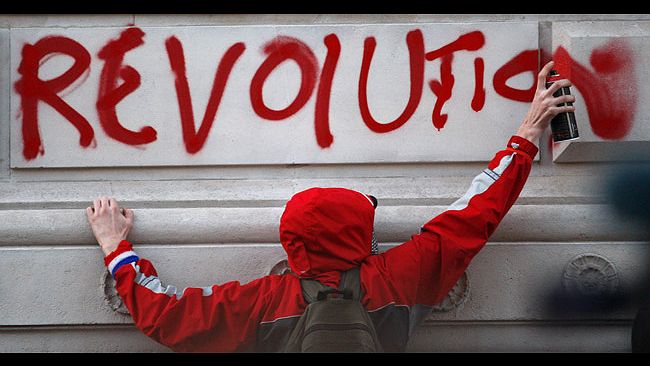
Revolution, not evolution; a poem by Jones Very; and the lessons for Sunday, December 3, 2017

FIRST SUNDAY OF ADVENT

Isaiah 64:1-9
Psalm 80:1-7, 17-19
1 Corinthians 1:3-9
Mark 13:24-37

PRAYER OF THE DAY: Stir up your power, Lord Christ, and come. By your merciful protection awaken us to the threatening dangers of our sins, and keep us blameless until the coming of your new day, for you live and reign with the Father and the Holy Spirit, one God, now and forever.

Apocalyptic literature, such as we find in Sunday’s gospel, is hard for us mainline protestants to digest. We are progressive in our outlook. We expect the kingdom of heaven to come incrementally. Shaped as we are by 19th Century rationalism, we view our present state of civilization as the vanguard of a slow but steady march from barbarism to liberal democracy and beyond. We can point to enough instances of progress to make this view of reality somewhat plausible. We have outlawed the overt practice of slavery. We have created an international network of alliances, agreements and institutions which, though they cannot altogether prevent war from breaking out, limit the scale of warfare and provide mechanisms for resolving military conflicts that might otherwise drag on indefinitely. Freedom, equality and prosperity are reachable for more people today than at any other time in recorded history. All of this suggests that we are progressing toward a better day.

The gospel, however, challenges our faith in progress. The evangelist reminds us of truths we would prefer to ignore, namely, that the increased prosperity of some has come at the expense of many more who remain mired in poverty; that slavery has been abolished in name only and is very much alive for victims of human trafficking and millions laboring in harsh conditions for wages that cannot sustain them. The treaties and institutions that have maintained peace and stability in many parts of the world are experienced as oppressive and unjust to many who had no voice in their creation nor any role in governing them. Moreover, these institutions are beginning to collapse under the weight of a new nationalism spreading across the globe. Racist ideologies and patriotism grounded in “blood and soil,” once thought relegated to the dust bin of history, are on the rise. The hard-fought gains for people of color, sexual minorities and women in this country that we hoped were permanent are in danger of being lost. Our faith in progress is being shaken-and that might be a good thing because faith in anything less than Jesus is idolatry.

The evangelist warns us against the notion that we can obtain intelligence into the when and how of God’s coming reign. S/he assures us that the day of the Lord will come, but that the timing and method of its coming are beyond our comprehension. The evangelist is clear on one thing, however. The kingdom will not come through gradual, incremental, peaceful evolution. It will come through revolution, violence and bloodshed. The institutions to which we look for peace, stability and progress must be dismantled in the birthing of the new creation. To those of us who have traditionally looked to the institutions of the old order for security, peace and progress, that is a frightening word. Yet for the many who find these very structures oppressive, violent and unjust, the apocalyptic message of Mark is remarkably good news.

During the Advent season we are reminded that we can only wait for new creation. That is a bitter pill to swallow for those of us who would like simply to patch up the old creation. It is hard to be told that a “kinder, gentler empire” will not do. The evangelist is telling us that the new world cannot dawn without the death of the old. This means that a lot of what we hoped was permanent, a lot of what we believed was good, a lot of what we worked so hard to achieve will be dissolved before we arrive at God’s gentle reign of peace.

That isn’t to say that what we do in the meantime doesn’t matter. Precisely because we know the world ends in God’s reign of justice and peace, it matters all the more how we spend whatever time we have left. We must practice justice and peace now so that the world may know its destiny is God’s kingdom and so that we might be formed into the kind of people capable of living faithfully in that kingdom when it finally is revealed. Making the world a better place is not a vain effort. To the contrary, that is why human beings were created. It is critical, however, to recognize that nothing we accomplish, however good and important, is eternal. No gain that we make is irreversible. Neither our lives nor our accomplishments are immune from the “change and decay in all around I see.” We can hope, pray and even expect that our works of justice, compassion and mercy witness to the kind of world God is making. But we dare not confuse our efforts with God’s own redemptive work. By all means strive to make progress; but trust only in God.

Here’s a poem by Jones Very on that very point.

The New World

THE NIGHT that has no star lit up by God,
The day that round men shines who still are blind,
The earth their grave-turned feet for ages trod,
And sea swept over by His mighty wind,
All these have passed away, the melting dream
That flitted o’er the sleeper’s half-shut eye,
When touched by morning’s golden-darting beam;
And he beholds around the earth and sky
That ever real stands, the rolling shores
And heaving billows of the boundless main,
That show, though time is past, no trace of years.
And earth restored he sees as his again,
The earth that fades not and the heavens that stand,
Their strong foundations laid by God’s right hand.

Source: American Religious Poems, Harold Bloom and Jesse Zuba, editors; pub. by Library of America, Inc. p.  96. This poem is in the public domain. Jones Very (1813–1880) Though a minor figure in the American poetic pantheon, Very’s work was highly regarded by such prominent figures as Ralph Waldo Emerson and Bronson Alcott. He studied at Harvard Divinity School until he succumbed to religious delusions that lead to his expulsion. His style bears the mark of his devotion to William Shakespeare whose sonnets he often emulated. You can find out more about Jones Very and sample more of his poetry at the Poetry Foundation website.

Isaiah 64:1-9

The fifty sixth chapter of the Book of Isaiah opens into what scholars agree is a third collection of prophetic oracles separate from the prophet Isaiah of the 8th Century B.C.E. (Isaiah 1-39) and Second Isaiah (Isaiah 40-55) who prophesied toward the end of the Babylonian Exile. These prophesies, comprising what is commonly called “Third Isaiah” (Isaiah 56-66), come from a period beginning shortly after the return of the exiled Jews from Babylon in 539 B.C.E., but before the rebuilding of the temple in about 515 B.C.E. The band of exiles, inspired by the poetic promises of Second Isaiah to brave the dangerous journey across the Iraqi desert from Babylon to Palestine, arrived home to find Jerusalem in ruins and the land inhabited by hostile tribes. The Eden like path through the desert promised by Second Isaiah did not materialize. Life in Palestine proved to be difficult, dangerous and unpromising. The people were understandably disappointed and demoralized. This was the tough audience to which Third Isaiah was called to appeal. A people led to such a desperate plight by their belief in a prophet’s promises were probably not in any mood to listen to yet another prophet! Third Isaiah opens with the words, “Maintain justice and do what is right, for soon my salvation will come.” Vs. 1. You can almost hear the people groaning in the background, “Oh no! Here we go again!”

The prayer of lament that constitutes our lesson is, according to Professor Claus Westermann, one of “the most powerful psalms of communal lamentation in the Bible.” Westermann, Claus, Isaiah 40-66, The Old Testament Library (c 1969 SCM Press Ltd.) p. 392. The prophet does not take lightly the disillusionment of his/her people. Speaking in the voice of the community, s/he cries out, “O that thou wouldst rend the heavens and come down…” vs. 1. Like the rest of the people, the prophet longs for God’s intervention. The prophet reminds God (as though God needed reminding!) that there was a time when God did act decisively on Israel’s behalf. The prophet alludes to the saving acts of God in the past. Though lacking in specificity, the prophet’s references to “terrible things that we looked not for” might well include the Exodus, the Conquest of Canaan, the triumphs of Samuel and David. Vss. 3-4. God acted then, so why not now?

Of course, the prophet knows and the people no doubt suspect that the reason for God’s silence is tied to their own lack of covenant faithfulness. Yet the people cannot help but feel that God’s anger is out of proportion to their offenses. In verse 5, the prophet cries out, “Behold, thou wast angry, and we sinned…” The order here is most curious. It almost seems as though the people attribute their sin to God’s anger. How can one believe in and trust a God whose wrath is so unsparing? No wonder that “no one calls upon [God’s] name, that bestirs himself to take hold of [God].” Vs. 7. It is God “who has delivered [Israel] into the hands of [her] iniquities.” Vs. 7.

Our reading ends with a plea for God not to be so exceedingly angry. Vs. 9 “Thou art our Father,” the prophet declares. “We are the clay, and thou our potter; we are the work of thy hand.” Vs. 8. In verses 11-12 (not in our reading) the prophet calls God’s attention to the holy city of Jerusalem and the once great temple of Solomon, now in ruins. The poem concludes with a haunting question: “Wilt thou restrain thyself at these things, O Lord? Wilt thou keep silent, and afflict us sorely?” vs. 12.

This prayer strikes a resonant note for an age that seems far removed from miracles and unequivocal words and acts of God. For a good many modern folk, the stories of the Exodus and the Resurrection are just that, stories. At best, they are metaphors for experiences that fit neatly within the narrow confines of our secular frame of reference. For the most part, though, they are archaic myths that we have long outgrown. Those of us who still believe long for the God of the Bible to “rend the heavens and come down” so that we might be assured that the line to mystery, revelation and renewal has not gone dead. Are we shouting frantically into a broken connection? Is there no longer any listening ear on the other end?

I would encourage you to read chapter 65 of Isaiah in addition to our lesson. There you will find God’s response. God, it seems, is equally frustrated by the lack of communication. “I was ready to be sought by those who did not ask for me,” God replies. “I said, ‘Here am I, here am I,’ to a nation that did not call on my name.” Isaiah 65:1. Though God might not be responding with the fireworks Israel is seeking, God is responding nonetheless. So perhaps the problem is not with God’s silence, but with our lack of perception. Perhaps we cannot hear the word of the Lord because we have bought into the limited and limiting vision of empiricism. Perhaps the silence of God can be attributed to our lack of capacity to imagine, contemplate and be open to mystery. Maybe God is even now rending the heavens and coming down and we have only to open our eyes and look up to see the Advent of our God.

Psalm 80:1-7, 17-19

This is a psalm of lament. Mention of the tribes of Ephraim, Benjamin and Manasseh suggest that this was originally a psalm of the Northern Kingdom of Israel. Dating is difficult. The portrait of the land of Israel as an abandoned vineyard with its defenses torn down and its fruit at the mercy of any passing beast certainly fits what must have been the case following the Assyrian conquest in 722 B.C.E. Nonetheless, we must keep in mind that the Northern Kingdom was considerably less stable politically than Judah under the line of David. It was also beset by its hostile neighbor, Syria, which frequently expanded its holdings into Israelite territory. Thus, it is entirely possible that this psalm dates from as early as the 9th Century. After the fall of the Northern Kingdom to Assyria, it is probable that this psalm and other literary traditions from the north were brought to the Southern Kingdom of Judah and incorporated into what ultimately became the Jewish scriptures. Anderson, Bernhard W., Out of the Depths-The Psalms Speak for us Today (c. 1983 by Bernhard E. Anderson, pub. by Westminster Press) p. 171.

As we saw in last week’s lesson from Ezekiel, the term “shepherd” is commonly associated with kings and rulers. “Enthroned upon the cherubim” (vs. 1) is an allusion to the presence of God symbolized by the Ark of the Covenant which had images of two of these heavenly beings on its cover. Exodus 25:17-22. Though the Ark had likely been captured or destroyed by this time and, in any event, would not have been in the possession of the Northern Kingdom, this term for God’s majesty lived on.

Like the psalm from Isaiah, this psalm also implores God to act and asks “how long wilt thou be angry with thy people’s prayers?” vs. 4. This is a common refrain throughout the psalms of lament. See, e.g., Psalm 13:1-2Psalm 74:10; and Psalm 79:5. It seems as though God has abandoned his people to suffering and to the mockery of their enemies. As we see time and time again, Israel had no qualms about letting God know when she felt God was not holding up his end of the covenant. Yet as angry, disappointed and disillusioned as Israel sometimes was with her God, she never ceased speaking to God. As hard as it was for Israel to believe in God’s promises, it was harder simply to dismiss them. Israel knew that her ancestors lived for four hundred years as slaves in Egypt crying out for salvation before God sent Moses to deliver them. Israel knew that nearly all of those ancestors died on the long trek through the wilderness without seeing the Promised Land. Israel knew that in the past her ancestors had had to wait for God’s salvation. Why should things be any different now? With this knowledge and experience in her memory Israel cries out in the refrain found throughout this psalm, “Restore us, O God, let they face shine, that we may be saved!” vss. 3; 7 and 19.

In a culture that rewards speed, efficiency and instant satisfaction, the virtues of patience and persistence have little place. Praying to a God who acts in his own good time and for whom a thousand years is but a day has little appeal in the world of Burger King where you can have it your way right now. The Psalms remind us, however, that there is value in waiting. It is not just wasted time. Waiting gives us time to consider and contemplate that for which we pray. Those who practice prayer patiently and consistently know that one’s desires are transformed in the process. In the discipline of persistent and constant prayer, longings and desires are purified. We often discover in the process that what we thought we wanted, longed for and desired is not what we truly needed. By the time we recognize God’s answer to our prayer, our prayer has changed-and so have we. Waiting is perhaps the most important dimension of prayer.

As always, I urge you to read Psalm 80 in its entirety.

1 Corinthians 1:3-9

You might want to refresh your recollection concerning Paul’s First Letter to the Corinthians. To that end, I refer you to the Summary Article by Mary Hinkle Shore, Associate Professor of New Testament at Luther Seminary, St. Paul, M.N. on enterthebible.org.

Our reading for Sunday is a snippet from Paul’s greeting to the church in Corinth. Paul alludes herein to the matters to be dealt with in the body of his letter, namely, “knowledge,” “eloquence,” “spiritual gifts,” and “the revealing of our Lord Jesus Christ” at the “Day of our Lord Jesus Christ.” Of particular importance for the dawning of this Advent season is the promise of Christ to “sustain” us to the end. Vs. 8. Endurance is and always has been a key New Testament virtue. As I have said before, I do not believe there ever was a “crisis” in the early church prompted by the “delay of the second coming” (sometimes called “the Parousia”). I am convinced that the church understood from the witness of Jesus himself that the kingdom of God had come with power and glory in the cross and resurrection-but that in a sinful world the kingdom necessarily takes the shape of the cross. Though longed for, the consummation of the kingdom was not expected momentarily and the fact that it did not so occur did not occasion any “crisis of faith.” The God and Father of Jesus Christ was the God who sojourned with the patriarchs through their many years as foreigners in the Promised Land; the God who waited four hundred years before answering the cries of his enslaved people in Israel; the God who sat for seventy years in exile with his people and who sent his Son in the fullness of time. Patient longing has been part of the discipleship package from the start. It was not invented by the church to save its disillusioned members from their dashed hopes.

That means, of course, that disciples of Jesus must reconcile themselves to not knowing what time it is. The end (in the sense of Jesus becoming all in all) might come tomorrow. Yet again, it might not come for several more millennia. For all we know, tomorrow’s seminaries might include courses in space travel for pastoral leaders called to churches established at human colonies in far off star systems. Like the children of Israel in the wilderness, we do not know how long it will take for us to arrive at our destination, what the road ahead will look like or how we will know when we have arrived. Only patient, hopeful and confident trust in our Shepherd, the Lord Jesus Christ, can sustain us on this journey.

Mark 13:24-37

The language employed by Jesus in our reading is similar to prophetic judgment and apocalyptic speech employed in the Hebrew Scriptures. As such, it is “more than metaphorical, less than literal.” Hooker, Morna D., The Gospel According to Saint Mark, Black’s New Testament Commentaries, Vol. 2 (c. 1991 by Morna D. Hooker, pub. by A&C Black, Limited) p. 319. The imagery suggests cosmic dissolution. The coming of the Son of Man in glory means the end of the world as we know it.

That said, I believe Mark is doing something unique with this section of his gospel. Jesus has said before that “this generation will not pass away before these things take place.” Vs. 30. See also Mark 9:1. So the question is, what “things” is Jesus talking about? Note well that Jesus tells his disciples no less than three times to “watch.” Vss. 33-37. As we will see, they famously fail to stay awake and watch three times. Mark 14:32-42. At Jesus’ crucifixion, “there was darkness over the whole land until the 9th hour.” Mark 15:33. Jesus is acknowledged (albeit mockingly) as Messiah while hanging on the cross and confessed as Son of God at his death. Mark 15:21-39. Jesus, identified in the first chapter of Mark as “Messiah” and “Son of God” (Mark 1:1), is so glorified in his crucifixion-a strange sort of glory. Do these words of Jesus from our gospel lesson pertain to some cosmic event in the distant future? Or do they refer to Jesus’ impending crucifixion? Is the cross for Mark the end of the world?

I suspect that this is a matter of both/and rather than strictly either/or. What happened with Jesus did indeed initiate the dissolution of the cosmos. Evidence of dissolution is everywhere. Nonetheless, if the sky is falling it can only mean that God is replacing it with a new heaven and a new earth. The end of the world is therefore the revealing of God’s kingdom, which now is hidden under the form of the cross. The end of the world is plainly visible for all who are watching for it. I concur therefore with Professor Cranfield who has this to say:

“If we realize that the Incarnation-Crucifixion-Resurrection-and Ascension, on the one hand, and the Parousia, on the other, belong essentially together and are in a real sense one Event, one divine Act, being held apart only by the mercy of God who desires to give men opportunity for faith and repentance, then we can see that in a very real sense the latter is always imminent now that the former has happened. It was, and still is, true to say that the Parousia is at hand-and indeed this, so far from being an embarrassing mistake on the part either of Jesus or of the early Church, is an essential part of the Church’s faith. Ever since the Incarnation men have been living in the last days.” Cranfield, C.E.B., The Gospel According to Mark, The Cambridge Greek Testament Commentary (c. 1959 Cambridge University Press) p. 408.

Though Cranfield employs concepts that are far outside the theological outlook of Mark’s gospel, I believe that his conclusion is nonetheless sound. For Mark, the new age was inaugurated by Jesus in the midst of the old. The cosmic events surrounding the crucifixion are of one piece with the final convulsion in which the old age withers before the advent of the new.

This is a timely word for all who experience dissolution, whether it be the dissolution of the America they once knew, the dissolution of a marriage, the dissolution of a mind into dementia or the dissolution of a church. Jesus does not soft peddle the reality of death in all its aspects. The creation is subject to death and the convulsions of its death throes are everywhere. But these same convulsions, for those who are attentive, are birth pangs of something new. That is the good news in this lesson.


Blessedness of dying broke; a poem along the same lines; and the lessons for Sunday, November 19, 2017

See the source imageTWENTY-FOURTH SUNDAY AFTER PENTECOST

Zephaniah 1:7, 12–18
Psalm 90:1–12
1 Thessalonians 5:1–11
Matthew 25:14–30

PRAYER OF THE DAY: Righteous God, our merciful master, you own the earth and all its peoples, and you give us all that we have. Inspire us to serve you with justice and wisdom, and prepare us for the joy of the day of your coming, through Jesus Christ, our Savior and Lord.

“I was afraid.” Matthew 25:25

At first blush, the parable of the talents in today’s gospel strikes us as rather severe. Three servants each receive a sum of money to be held in trust. Two of them invest and double their master’s wealth and are richly rewarded. The third keeps it safe and returns it to the master with neither profit nor loss-and is severely punished. But how much of this is really the third servant’s fault? No one can predict a bull market. That is why investments that promise a high return are considered risky. What if this parable had taken place in the fall of 2008? What if the first two servants had come back with only a tenth of their original trust? Would the master then have said to the third servant, “Well done good and faithful servant! You dealt with my money carefully and prudently”? Would he have punished the first two servants for taking imprudent risks? Doesn’t the parable place upon the servants responsibility for matters well beyond their control?

No. To read the parable in this fashion is to miss the point. The first two servants were not rewarded for their investment successes and the third servant was not punished for fiscal incompetence. The first two servants are commended for being “faithful.” Nothing more is required of them. Success is God’s concern. The servants don’t have to worry about that. They need only use the resources given to them faithfully and God will accomplish whatever it is God intends to accomplish through them. Whether the result looks like success or failure to them in the end is immaterial. Freed from the crippling fear of failure, the servants can go about their work with hopefulness, joy and expectation. That is what faith looks like.

The opposite of faith is fear. “I knew that you were a hard man,” says the third servant, “and I was afraid.” But was that really the case or was it merely the servant’s perception? If the servant believed his master to be a “results oriented” boss with an eye only for the bottom line, then his decision to “play it safe” makes sense. Investments that require innovation, risk taking and novelty often do not pay off until years later-if at all. They are not an attractive option when your annual review is coming up in six months. That is why a management plan rewarding short term success and punishing failure has been shown again and again to be a failed business model. Fear and innovation don’t mix.

Fear is the author of many a poor decision. This week fans of ex-Fox commentator Sean Hannity began smashing their Keurig coffee makers because Keurig withdrew its advertising from Hannity’s show. That doesn’t make a great deal of sense. The only one you hurt by such a demonstration of disapproval is yourself. It’s rather like protesting a movie you don’t like by buying a ticket and not going in to see it. But people do stupid things when they are afraid and anger is, after all, just fear that doesn’t know what to do with itself. Fear inspires people to support political measures that are sure to hurt them economically, i.e., a southern border wall, trade wars and health care legislation limiting insurance coverage for people with pre-existing conditions. Fear seduces otherwise intelligent people to believe all kinds of nonsense, i.e., Barak Obama is a Kenyon born Muslim bent on implementing Sharia law; the killings at Sandy Hook elementary school never happened and are just an elaborate hoax perpetrated by the liberal media; Hillary Clinton murdered Vincent Foster and opened up a child porn service out of a pizza parlor; the U.S. Air Force is concealing the bodies of extra-terrestrial aliens, etc. We (I at least) might be inclined to mock such incredulity. But none of us are our best selves when we are afraid. As nutty as some of these beliefs appear, they help make sense out of life for people whose world is coming apart and who cannot understand why. When you are convinced you are going under, you grasp at any flimsy straw within reach.

Too much of what our church does, both on the denominational and parish levels, is inspired by fear. And let’s face it, declining membership, dwindling financial resources and a culture that is becoming increasingly indifferent to organized religion are all scary things. In a time when our existence seems to be threatened, we are less likely than ever to take risks, be innovative and embrace the cross. Our first impulse is to grasp, hang onto and depend on the things we know. We know how to run capital fund drives; we know how to erect sanctuaries; we know how to develop liturgies and plan worship; we know how to advertise. These are the things to which we turn as we try to save ourselves and preserve what we have. None of that is necessarily bad, but our reliance upon it for our salvation is misplaced.

If I am reading this parable correctly, saving ourselves and preserving what we have is the last thing we should be trying to do. What ought to concern us is not the possibility that we will lose all that we have. Rather, we should be concerned that the last day will catch us with money still in the bank. We should be worried Jesus will return to discover that we have not spent all that we are and have in the service of our neighbors and in witnessing to the gentle reign of God. This century may well see the death of the church as we know it. But that should not concern worshipers of the God who raises the dead. Better to have died in confident faith than to survive until the end with nothing to show for it other than unspent potential, wasted opportunities and unfulfilled intentions. Jesus challenges us to a life of faithfulness in which loss, failure and death are not determining factors. He calls us to live thankfully, faithfully and generously, knowing that in him all things are ours to be spent in his service-and after that, to arrive at the grave broke.

Here is a playful little poem that gives us an inkling of what joy there may be in squandering all for the sake of the kingdom and the reward that comes with it.

Net Worth

I own the golden sunlight
breaking over the pines.
I own my neighbor’s pansies
growing neatly in spaced lines.
I own the orange harvest moon
that hangs above the hills.
I own the sparrows that come to feed
at the seed troughs on my sills.
I own the pathway through the woods
that leads down to the river.
I own the song the waters sing,
the pebbles they deliver
as on their journey to the sea
they run their endless course.
They haven’t time for worry,
nor the patience for remorse.
I own the nighttime sky
and every star on its dark vale.
I own the mighty ocean
where the ocean liners sail.
Someday I will be through
with checkbooks, funds and property.
I’m sure that once I’m broke
the world will have no use for me.
Creditors will seize my goods,
the tax man take my home.
And once they have these trifles,
then they’ll leave me on my own.
With all distractions gone
and not one penny in my plate,
at last I’ll have the leisure
to enjoy my vast estate!

Source: Anonymous

Zephaniah 1:7, 12–18

Zephaniah is one of the twelve “minor” prophets, so called not because they constitute a minor prophetic league, but because their books are far smaller than those of the “major” prophets (Isaiah, Jeremiah, Ezekiel and Daniel). According to the first verse of his collected writings, Zephaniah prophesied during the reign of King Josiah of Judah. This king, who ruled from 640 B.C.E. to 609 B.C.E., was credited in the book of II Kings for instituting in the latter part of his reign sweeping religious reforms and ridding the kingdom of idolatry. II Kings 23:1-25. The prophet’s sustained criticism of Judah’s religious infidelity suggests that he ministered in the earlier part of Josiah’s reign before the passage of his reforms. Zephaniah’s lineage is traced back to one called “Hezekiah,” but it is not known whether this Hezekiah is the Judean King by that name who ruled between 715 B.C.E. and 687 B.C.E. during the ministries of the prophets Isaiah and Micah. Zephaniah’s oracles begin with the prophet’s warning of a catastrophic judgment of cosmic proportions that will sweep away not only Judah, but all of humankind. For more general information on the Book of Zephaniah, see Summary Article by Richard W. Nysse, Professor of Old Testament at Luther Seminary, St. Paul, M.N.

In this Sunday’s reading, Zephaniah delivers a scorching rebuke to his nation. Like Amos in last week’s reading, Zephaniah warns that the “Day of the Lord,” a common term for God’s hoped for salvation, would be nothing of the sort for the sinful nation of Judah. Significantly, in the omitted verses 8-11, the prophet directs withering criticism toward “the king’s sons” and “those who fill their master’s house with violence and fraud,” but not the king himself. Josiah was only eight years old when he assumed the throne of Judah. II Kings 22:1. It is unlikely that he would have exercised any true political authority at this point (much less had any sons!). Thus, it is reasonable to suppose that the “sons” of whom Zephaniah speaks are Josiah’s brothers, the sons of the former king, Amon. Like his father, Manasseh, Amon practiced idolatry and it seems that his sons continued in that vein. Zephaniah’s reluctance to criticize the king directly might well have been due to his reasonable fear of the consequences. It might also have stemmed from his hope that the boy king Josiah might yet prove himself made of better stuff than his father when he finally grew into the crown. The practice of “leaping over the threshold” mentioned in verse 9 appears to have been a pagan ritual upon entering a shrine. See I Samuel 5:5.

The agent of God’s judgment upon Judah will come from the north, entering by way of the Fish Gate at the northeastern wall. Vs. 10. It must be born in mind that this period of time was marked by geopolitical instability. The Assyrian Empire was fast disintegrating, leaving a power vacuum that King Josiah would later exploit to Judah’s temporary advantage. At this early point, however, the political future of the region was unclear. Restive nations now released from the yolk of Assyria were beginning to assert themselves. Like the disintegration of Yugoslavia into warring factions in the 1990s following the decline of Soviet rule, the near east was spinning into chaos as Assyria’s power faded. The feared invader from the north could therefore have been any number of potential foes. According to most scholars, the most likely suspects are the Scythian tribes. In any event, the immediate threat against which the prophet warned seems not to have materialized.

Neither military might nor wealth will be able to deliver Judah from the coming judgment. Vss. 17-18. Israel’s trust in these things is vain as their power is illusory. Yet there appear to be people in Judah whose trust is so anchored. They are, to use a contemporary term, “practical atheists.” “The Lord will not do good, nor will he do ill.” Vs. 12. The belief underlying this remark is that God does not get involved with human affairs. Other than worship, prayer or other religious activities, human conduct is of no concern to God. God is compartmentalized into the realm of the “spiritual” and has no place in the “real world.” Yet a God thoroughly removed from the economic, political and social realities in which human beings live might as well not exist. Belief in such a god is practically indistinguishable from belief in no god at all.

This reading does not portray our God as a kindly old over-indulgent grandfather. This is an angry God. In our modern 19th Century, rational, refined, ever white and ever polite protestant piety, a God of wrath and judgment is viewed as inconsistent with the God of love revealed in Jesus Christ. Lately, though, we are learning that the real world is a good deal messier than our quaint Enlightenment rationalism once led us to suppose. Anger and love are not as far apart as we imagine. Most acts of violence are domestic. The bloodiest conflicts often take place between religious, cultural and racial groups that are closely related. The people we love most are those with the greatest capacity to hurt us. A God incapable of anger would be a god that didn’t care. A god that that never gets in the way of what we want would not be a God of love, but one of benign indifference. It is precisely because God loves us so passionately that God is so deeply grieved and so thoroughly outraged by our self-centered and self-destructive behavior. God’s judgment, severe though it may be, is another manifestation of God’s love seeking to save us from ourselves. Even the bad news is really good news.

Psalm 90:1–12

This gloomy psalm is attributed to “Moses, the man of God.” Vs. 1. The attribution was probably added late in the life of the Psalter. Wieser, Artur, The Psalms, The Old Testament Library (c. 1962 by S.C.M. Press, Ltd.) p. 595. That, however, is no reason to discard the possibility that the psalm’s origin was in some fashion connected to Moses. While we know that the alphabet and thus the written Hebrew language did not exist during the time of Moses, we also know that poetry originating during the time of the Judges, also pre-alphabet, was passed on in oral form and written down only centuries later. (i.e., The Song of Deborah at Judges 5:1-31). It is not so much of a stretch to suggest that the same might be true of songs sung by the people of Israel before their migration into Canaan.

However scholars might resolve the question of authorship, it is obvious from a canonical standpoint that the worshiping community of Israel associated this psalm with Moses. This is the prayer of a people that has seen years of suffering, hardship and sorrow. As God’s mediator, it is not inconceivable that Moses might have uttered such a prayer. Adding to the peoples’ misery is the knowledge that their own sins and folly are at least partly responsible for the predicament in which they find themselves. They recognize in their sorrow the just wrath of God upon the evil they have done and the just consequences of the bad choices they have made. Beyond all of this, the psalm seems to recognize a universal sorrow that goes with being human. No matter how good life may have been to us, it inevitably slips away. Our children grow up and begin living lives separate from our own. The house, once boisterous and chaotic, is now quiet and a little empty. We retire and someone else takes our place. We lose our ability to drive. We might have to move out of the home we have lived in for most of our lives. Time seems to take life away from us piece by piece. As it all comes to an end we are left with unfinished tasks, unrealized dreams, regrets about those things of which we are now ashamed, but can no longer change.

Moses might have prayed this prayer on behalf of his people as they struggled through the wilderness toward a promise he knew that he would never see fulfilled. It always seemed a tad unfair to me that God denied Moses the opportunity to enter into the land of Canaan with the people he had led for so long all on account of what seems a trivial offense. (See Numbers 20:2-13). Yet that is the way of mortal existence for all of us. We bring life to the next generation, but will never know that generation’s final destiny. Our strength leaves us before we have been able to complete the many tasks we have set for ourselves. We often die without knowing which, if any, of our efforts to achieve lasting results will bear fruit. We can only pray with the psalmist that God will establish the work of our hands and complete what we could only manage to begin.

Formally speaking, the psalm is in a class by itself, defying the categories of scholarly classification. Though it begins by praising God’s creative and eternal power, it is hardly a song of praise. Like a lament, this poem is decidedly dark, but the psalmist is not crying out for salvation from any threat of extraordinary danger or the prospect of a premature death. The psalmist is simply reflecting on the limitations of being a mortal creature in a perishable world. From dust we are made, to dust we return. Vss. 3-4. We are like the grass, flourishing in the morning and perishing before sunset. Vss. 5-6. But in one crucial respect we are not like the grass or any other non-human creature that is content to live its span and return to nourish the earth from which it came. We want more. Unlike Jesus and very much like Adam, we view godhood as “a thing to be grasped.” Philippians 2:5-6. Yet every time we reach out for the prize of god-like immortality, we run into our mortal limits. Each passing day reminds us that our bodies and minds are in decline.

The psalmist understands and accepts (as our own culture frequently does not!) that such is life as God’s creature. There is no escape from mortality. So the psalmist prays that s/he might live wisely and well within his/her creaturely limits. How very contrary that prayer is to our fixation on youthfulness, our preoccupation with covering up the evidence of aging, our promethean dreams of indefinitely extending the length of human life through medical and technological advances! Yet it should not seem at all radical or unusual to disciples of a man who was misunderstood all his life, died violently in his youth and was abandoned by his closest friends and supporters in the end. Life need not be eternal to be eternally significant. Nor does life need to be long in order to be full and complete. If you follow Jesus, you know that the criteria by which our world measures the value of a human life are false and distorted. Not surprisingly, they lead us to despair.

As dark as this psalm is, it does not despair of human existence. Rather, it seeks wisdom to live faithfully within our human creaturely limits. In the final verse of the psalm (not included in our reading), the psalmist prays that God would “establish the work of our hands.” Vs. 17. It is, after all, only God who can endow our lives with true value and significance. It is only by commending our works into God’s hands that we can hope they will find any degree of permanence beyond the measure of our days. That we have the work of this psalmist’s hands enshrined in our scriptures testifies to the truth of his/her words.

As always, I encourage you to read Psalm 90 in its entirety.

1 Thessalonians 5:1–11

For my comments generally on Paul’s First Letter to the Thessalonians, see my post for October 22, 2017,  See also Summary Article by Matt Skinner, Associate Professor of New Testament at Luther Seminary in St. Paul, M.N.

Sunday’s reading is another one with a focus on “the day of the Lord.” As pointed out in my introductory remarks, this is a broad term that can be applied to any watershed time of salvation such as the Exodus from Egypt. But it is also used to denote the final triumph of God’s justice throughout creation. This latter sense is the one St. Paul intends in our lesson. One thing to keep in mind about the “Day of the Lord” is that it is about judgment as much as it is about salvation. You cannot have salvation of the righteous without judgment of the wicked. Finally, it must be said that we are never on shakier ground than when we presume we are wholly on one side of that divide and someone else is on the other. The line between good and evil runs right through the middle of every heart. Paul warns his church that the final judgment is already making itself felt in the present moment. Even now believers must shake themselves out of sleep (Vs. 6) and put on the armor of faith, love and hope. Vs. 8.

Though Paul reiterates what has been said in the gospels, that the Day of the Lord will come “like a thief in the night” (Vs. 2), that should not be a cause for alarm. In contrast to the rest of the world, which assumes that the cosmos is on solid ground and will continue indefinitely along the lines established in the past, disciples of Jesus understand that the night will not go on indefinitely. The daylight is coming. Now is the time to begin practicing how to live and move in the light so that the Day of the Lord will come as a welcome and anticipated moment rather than as a blinding flash of light to eyes accustomed only to the darkness.

The Day of the Lord appears as a disruptive and disturbing event to a world alienated from its Maker. It is not the apex of gradual social evolution toward a better society. Neither is it the endpoint of a predetermined historical clock whose workings are buried in the apocalyptic literature of the Bible. The church is no more knowledgeable concerning God’s timing than is anyone else. But Jesus has delivered to his disciples God’s coming kingdom now. Church under the cross is the shape that kingdom takes in a world that is not yet ready for it.

Once again, the bottom line is comfort. Apocalyptic imagery used here by Paul and throughout the scriptures is not intended to scare the socks off people. “For God has not destined us for wrath, but to obtain salvation through our Lord Jesus Christ.” Vs. 9. Paul urges us “to encourage one another and build one another up” in this hope. Vs. 11.

Matthew 25:14–30

This parable of the talents is also told in the Gospel of Luke, though with a few additional twists. Luke 19:12-27. As Professor Nolland observes, the master’s entrusting his slaves with money in this parable is unusual by 1stCentury Palestinian standards. One would normally make investment arrangements over a long period of absence in other ways. The slaves are thus being treated with unusual distinction. Nolland, John, The Gospel of Matthew, The New International Greek Testament Commentary (c. 2005 by William B. Eerdmans Publishing Co.) pp. 1013-1014. Though some commentators suggest that the talents represent a “business loan” of some sort, nothing in the parable supports such an interpretation. The money is not given to be used for the benefit of the slaves. Nor is there any suggestion that they are to share in the profits. The money is given to the slaves to be invested solely for the benefit of the master and his estate. That, of course, fits with the biblical understanding that “the earth is the Lord’s” and its human inhabitants but stewards. Psalm 24:1.

The term “talent” originally referred to a measure of weight on a scale. It then came to mean anything weighed and later to a specific weight of about thirty kilograms. Over time, it came to be used of money indicating the value of that weight of gold, silver, copper or whatever other precious commodity might be involved. It is the general scholarly consensus that silver talents are intended by Matthew. Ibid, p. 756. One talent, then, would amount to about six thousand denarii (Ibid), one of which constitutes a day’s wage for an agricultural laborer. Matthew 20:1-16. Thus, even one single talent amounted to a considerable chunk of change.

Upon his return, the master settles accounts with his three slaves. The first two mange to double their investment and are given the promise that their faithfulness with the “little” placed in their hands will be rewarded with responsibility over “much.” Vss. 20-24. The third slave took a different approach. Rather than investing the one talent he had been given, he buried it in the ground in a napkin to ensure its safety. This action was not commercially unreasonable. It was apparently an accepted means of keeping valuables safe. See, e.g., Matthew 13:44. But preservation is clearly not what the master was looking for. Instead of a glowing commendation, this third slave received a withering rebuke. Apparently, it was not enough for him to show that he had not pilfered or squandered the master’s goods. He needed to show that he had put them to productive use.

At a gathering of fellow clergy some years ago, I remember somebody remarking how he wished that Jesus had told this parable differently. He wished that at least one of the two successful slaves had both failed to earn interest and lost his principle. The master would nevertheless commend the unsuccessful but gutsy slave on his entrepreneurial spirit. So my friend would have had the parable end. But that proposed telling misses the point in a most obvious way. The two slaves are not rewarded on the basis of their success or their risk tolerance, but on the basis of their faithfulness. The operative words are: “well done good and faithful slave.” Where one is faithful to Jesus, his/her work will bear fruit. When one does the work of the kingdom, one cannot but succeed. Of course, success on God’s terms and for God’s purposes might not meet with our expectations of what success should look like, but that is a discussion for another day.

The problem, then, with the third slave was his lack of faith. He did not really believe in the mission with which his master had entrusted him. He thought it wiser to conserve than to invest. As far as he could see, there was no future in venturing all that had been given into his care. He could not comprehend Jesus’ warning that all who seek to save their lives ultimately lose them or his promise that those who lose their lives for the sake of the gospel will save them. The third slave was too fearful of losing his master’s money to make any good use of it. He thought that the only way to keep himself out of trouble was to preserve until the end what had been given to him. But God seeks missionaries, not custodians. That is a timely message for churches obsessed with maintaining their buildings, preserving their endowments and hanging on to ways of being church that no longer answer the call to make disciples of all nations.

Caught unprepared; a poem by Lizzette Woodworth Reese; and the lessons for Sunday, November 12, 2017

TWENTY-THIRD SUNDAY AFTER PENTECOST

Amos 5:18–24
Psalm 70
1 Thessalonians 4:13–18
Matthew 25:1–13

PRAYER OF THE DAY: O God of justice and love, you illumine our way through life with the words of your Son. Give us the light we need, and awaken us to the needs of others, through Jesus Christ, our Savior and Lord.

The same reoccurring dream has haunted my sleep since college days. The end of the semester is drawing near. Exams will be held in a couple of weeks. But there is one class I have neglected. Somehow, I managed not to show up for class more than a few times. I have not kept up with assignments. I just never took the course very seriously. Now, just days away from the final exam, I realize that I am in deep trouble. There is virtually no chance that I can absorb sufficient knowledge and understanding to score high enough on the final to offset a semester of inattention and neglect. How could I have let this happen? What can I possibly do to remedy the situation? Of course, these are rhetorical questions. I know that I will simply have to face the final exam woefully unprepared. It is usually at this point that I wake up in a state of agitation.

I suspect that the bridesmaids in Jesus’ parable felt much the same way when they discovered that their lamps had burned dry. How foolish of us! We should have seen this coming. What wedding doesn’t suffer a few snafus? When does the groom ever arrive at the church on time? It would have been so easy to prevent all of this simply by bringing a little extra oil. Now it seems there are no good options. We can’t expect our companions to put their preparedness in jeopardy to bail us out. They will tell us, and rightfully so, that a lack of planning on our end does not constitute an emergency on theirs. Running into town to purchase more oil is not likely to get us into the wedding procession on time, but it’s the only alternative left. Unlike me, the bridesmaids do not wake up in a cold sweat and discover, much to their relief, that the whole drama was just a bad dream. Instead, they arrive at the wedding hall to find the door locked.

Maybe it is because I have always been anal about getting things done on time, keeping my calendar up to date and planning for every conceivable contingency that few things frighten me more than finding myself unprepared at a critical time. And that fear persists because I know in my heart of hearts that there is no way to ensure that I will never find myself unprepared for whatever is to come. Through disciplined saving, sound financial advice and plain dumb luck, Sesle and I find ourselves now at that nirvana known as “financial security.” That is to say, we can retire comfortably without having to worry about finding ourselves destitute in our old age-assuming the world-wide financial system does not collapse, ecological catastrophe does not render much of the earth uninhabitable, someone does not decide to walk into our church and gun us down, my next visit to the doctor does not reveal an acute terminal condition, I do not become the victim of an accident on Route 208 during my daily drive from Midland Park to Bogota-you get the picture. There really is no such thing as security. There is no failsafe means of preparing for tomorrow. That is what my dreams are telling me.

Perhaps that, too, is the point of our lessons this week. The prophet Amos must warn the people of Israel that they are not prepared for “the day of the Lord” for which they hope. It has never occurred to them that their wealth might not be a blessing from God, but rather the foul fruit of unjust exploitation of the poor. They never dreamed that the “god we trust” stamped on their coins and who is worshiped as the patron god of the nation is, in fact, no god at all but the projection of their nationalistic fantasies. The people never dreamed that there was any conflict between being a loyal, patriotic citizen and a follower of the God of the covenant. And because they could not distinguish between the god of their imaginings and the God who liberates slaves from the house of bondage, champions the orphan and the widow and defends the poor, the “day of the Lord” turns out to be not a day of glory and salvation, but a day of judgment and calamity.

In our lesson from I Thessalonians, Paul writes to encourage a congregation that has all but given up on the day of the Lord. They have waited long enough and are beginning to wonder whether the way things are is as good as things ever will be. What is the point in preparing when the end for which you are told to prepare has been indefinitely, if not permanently, postponed? Truth is, we are not ready to meet the Lord, nor do we have what it takes to go the distance until Jesus is revealed in glory.

Of course, the good news is that, although we are not ready to “meet the Lord in the air” as St. Paul puts it, the Lord is ready to meet us. The lessons for this week, like my nightmares, are reminders that we will never be properly prepared. We will never manage to tie up all the loose ends in our professional lives, our relationships and our own hearts, even if we live past one hundred. In the end, we must leave to God the task of redeeming the world, bringing to birth a new heaven and a new earth and somehow weaving the frayed fabric of our lives into God’s glorious future. That very thing, Paul promises, God intends to do. So we can bring our unfinished business, the mess we have made of our lives and the incurable wounds we have inflicted on others and on ourselves to God in confession certain that all will be forgiven. Oddly enough, we find ourselves best prepared to meet the Lord once we recognize that we are unprepared and cannot possibly get ourselves prepared by way of our own stratagems. Only then does true preparation begin.

And there is still more good news. The end is not yet. As we look forward to the season of Advent, we are reminded that God gives us time for preparation, time for anticipation, time to turn away from what doesn’t matter to the things that do. There is still time to do important work for God’s kingdom. There is still time to work for justice, there is still time to make peace, there is still time for reconciliation and forgiveness, still time to witness to God’s love for the world in Jesus Christ. Each day we are given is holy and it matters greatly what we do with it. The works of compassion, mercy, peace and justice are eternal and will outlast the works of violence that seem to nullify them. In the end, our life and work fall into the hands of a God who, Paul tells us, promises to bring to completion what we can hardly begin.

Here is a poem by Lizzette Woodworth Reese. She speaks of faithful existence in much the same way as does Jesus in the Sermon on the Mount, illustrating a preparedness that calls for no preparation.

Trust

I am thy grass, O Lord!
I grow up sweet and tall
But for a day; beneath Thy sword
To lie at evenfall.

Yet have I not enough
In that brief day of mine?
The wind, the bees, the wholesome stuff
The sun pours out like wine.

Behold, this is my crown;
Love will not let me be;
Love holds me here; Love cuts me down;
And it is well with me.

Lord, Love, keep it but so;
Thy purpose is full plain;
I die that after I may grow
As tall, as sweet again.

Source: She Wields a Pen: American Women Poets of the Nineteenth Century (University of Iowa Press, 1997). Lizzette Woodworth Reese (1856–1935) was born in Waverly, Maryland. Her father was a confederate soldier and her mother a German immigrant. She taught English in the Baltimore school system for almost fifty years. Reese published nine volumes of poetry, two memoirs and one autobiographical novel. She was named poet laureate of Maryland in 1931 and co-founded the Women’s Literary Club of Baltimore, serving as its poetry chair until her death. You learn more about Lizzetta Woodworth Reese and sample more of her poetry at the Poetry Foundation Website.

Amos 5:18–24

The prophet Amos had two strikes against him. First off, he was not properly ordained according to ecclesiastical guidelines. Second, he was a foreigner and we all know how people feel about them. Now to be perfectly clear, Amos was not altogether foreign to the Northern Kingdom of Israel to which he preached. He was a native of the Southern Kingdom of Judah. Recall that Israel and Judah were both descendants of the twelve tribes of Israel that came up out of Egypt. They had once been a single nation under the reign of David and then Solomon. After the death of Solomon, the kingdom split. Thus, the north and the south, despite their political differences, shared a common ancestry, language and faith in Israel’s God. For more general information on the Book of the Prophet Amos, see Summary Article by Rolf Jacobson, professor at Luther Seminary in St. Paul, M.N.

In our lesson for Sunday Amos delivers a scathing condemnation of Israel’s religious aspirations and practices. In verses 18-20 he mocks the peoples’ desire for the coming of the “Day of the Lord.” This term is common throughout both the Hebrew Scriptures and the New Testament. From ancient times, it referred generally to a time of judgment in which Israel would be vindicated against her enemies. As such, the Day of the Lord was understood as a day of salvation. But the prophets, beginning with Amos, gave the term a whole new twist. To be sure, the Day of the Lord is to be a day for God to triumph over his foes. These foes, however, are not the enemies of Israel but Israel herself! To be sure, the Day of the Lord brings the establishment of justice-but that is hardly good news for an unjust people. Consequently, the peoples’ yearning for the Day of the Lord as deliverance from their enemies is misplaced. The Day of the Lord will not be what Israel hopes for and expects. It is, says Amos, “as if a man fled from a lion, and a bear met him.” Vs. 19. For an oppressive and unjust nation, the Day of the Lord is “darkness and not light,” “gloom with no brightness in it.” Vs. 20.

In verses 21-24 Amos, speaking in the voice of the Lord, takes the people to task for the emptiness of their worship. Israel was undergoing something of a religious revival at the time of Amos. The worship of Israel’s God, once driven underground and nearly eradicated under the reign of Ahab and his queen, Jezebel, was restored under the leadership of Jehu. II Kings 10:1-31. Under the prosperous reign of Jehu’s descendent, Jeroboam II, Israel’s fortunes took a turn for the better both commercially and militarily. While the people understood their newfound peace and prosperity as signs of God’s favor, Amos took a very different view. The peace was maintained by means of militaristic adventures and prosperity was unevenly spread. The royal and aristocratic classes accumulated wealth through unjust and oppressive economic measures that kept many if not most of the common people in desperate poverty. Thus, Amos chided the leading citizens with these words:

For three transgressions of Israel,
and for four, I will not revoke the punishment;
because they sell the righteous for silver,
and the needy for a pair of sandals—
they who trample the head of the poor into the dust of the earth,
and push the afflicted out of the way;
father and son go in to the same girl,
so that my holy name is profaned;
they lay themselves down beside every altar
on garments taken in pledge;
and in the house of their God they drink
wine bought with fines they imposed.

Amos 2:6-8

Naturally, God is offended when these folks, who have enslaved their own people, come into the sanctuary singing hymns to the God of the Exodus, the God that liberated his enslaved people from Egypt. Such empty and hypocritical worship makes God sick to God’s divine stomach! Let the justice about which you sing find expression in your life as a people, says the prophet. Vs. 24.

As we approach the Thanksgiving Day holiday on which it is customary to give thanks for “all our many blessings,” we might do well listening to Amos rather than to the mythology of the Pilgrims, manifest destiny and the heresy of American particularism. What we characterize as “blessings” are more accurately described as “privileges” maintained at a terrible cost to the rest of the planet and its people. Does God really want credit for the horrifying geopolitical arrangements that keep one third of this world’s peoples in poverty in order to preserve “our way of life”? Does God’s divine stomach not turn when we invoke God’s name to mislabel our plundered booty as God’s blessings? Is not such thanksgiving a farce?

To further complicate matters, the line between the God and Father of Jesus Christ and the generic god referenced on our money and in the pledge of allegiance becomes even more blurred on Thanksgiving than it usually is. Similarly, the distinction between God’s chosen people Israel and God’s church on the one hand, and the myth of America as somehow divinely established and favored on the other all but disappears. What arises out of this queer pagan nationalist mythology seasoned with a dash of Judeo-Christian imagery is rank idolatry. I cannot imagine that Amos (much less Jesus!) would sanction his peoples’ celebration of such a holiday. I am all for giving thanks to God for God’s many blessings. But I want to be sure that I am thanking the God and Father of Jesus Christ for the blessings promised in the Beatitudes we discussed in last week’s post. I am quite sure that our national holiday of Thanksgiving has little to do with either.

Psalm 70

This psalm is practically identical to Psalm 40:13-17 discussed in my post from Sunday, January 15, 2017. This is one of those psalms that I find to hard pray-at least from a solely individual standpoint. I don’t have any enemies to speak of. There are probably a few people who don’t care for my company. I know there are a lot of people that might disagree with me on one thing or another. But I am not aware of anyone plotting to destroy me or who wishes me ill fortune. My life has been pretty much enemy free since middle school.

Not everyone is so fortunate, however, and I do not pray the psalms individually. I pray the Psalter along with the entire people of God. I pray along with the Christians in Iraq and Syria who are being murdered and dispossessed. I pray with women and children suffering sexual abuse. I pray with the hungry, the impoverished, the addicted, the homeless and the marginalized. These folks do have enemies and, to that extent the church includes these victims and the church is one Body, their enemies are mine also. I have a direct interest in their vindication in the sight of their enemies and, according to the Psalmist, so does God. The oppression of the righteous calls into question God’s faithfulness to the covenant. So the question is, can I pray this psalm consistent with Jesus’ command to love the enemy?

It is obvious that enemies inflict pain, sometimes permanent bodily and psychic injury. The resulting hurt, outrage and desperation must be given expression. Prayer that is less than honest about these very human realities is not genuine prayer. The psalms teach us to express our whole selves to God-the good, the bad and the ugly. Some of what we feel is rather ugly, mean spirited and unworthy of a disciple of Jesus. Yet leaving all of this stuff unexpressed, denying it and pretending that it does not exist only makes it more dangerous to us and to others. Better express anger, hatred and vengeful thoughts honestly to God in prayer than let them leak out through passive/aggressive behavior or explode into actual violence. When exposed to the light, our wounds can be healed.

But again, where does that leave us when it comes to loving our enemies? Perhaps we need to think more carefully about what we mean by “love.” If love is nothing more than an emotion-and “a second hand” one at that as Tina Turner would put it-one could not realistically expect a rape victim to love his/her tormentor. But I believe Jesus has in mind something a lot more substantial than emotion. For Jesus, love is grounded in the conviction that human beings are created in God’s image and for that reason their lives are sacred. To love God is to love what is made in God’s image. To destroy or injure what is made in God’s image is to blaspheme. Vengeance, as St. Paul points out, belongs solely to God. Romans 12:19. God alone can be trusted to work out the intricacies of retributive justice-which is nearly impossible for those of us whose judgment is skewed by our often exaggerated sense of injury, righteousness and moral certainty. One can express to God anger and the desire for vengeance or retribution, but that is where it ends. If and when retribution is called for, God will deal with it. Instead, Paul counsels us to care for our enemy through concrete acts of mercy, regardless of how we might feel about him/her. Romans 12:20.

1 Thessalonians 4:13–18

Paul is dealing with a pressing pastoral concern here. As I have noted previously, the biblical authors know nothing of an “immortal soul.” The Christian hope is grounded in God’s gracious promise to raise the dead sealed in Jesus’ own resurrection. In Hebrew thought, resurrection was never an individual event. It was the culmination of God’s saving acts at the close of the age inaugurating a new heaven and a new earth. Jesus’ resurrection was seen in just that way as demonstrated in Matthew’s gospel reciting the resurrection of the saints who appeared after Jesus’ crucifixion. See Matthew 27:51-54. That being the case, how is it that believers are still dying and what is their fate, seeing that they have died before the appearing of Jesus in glory?

Paul does not retreat from the Jewish understanding of resurrection. The new age has indeed been inaugurated by Jesus’ death and resurrection. “For since we believe that Jesus died and rose again, even so, through Jesus, God will bring with him those who have fallen asleep.” Vs. 14. Jesus is the first fruits of a general resurrection that will be complete when “the Lord himself will descend from heaven.” Vs. 16. Then “the dead in Christ will rise first.” Vs. 16. Those living at that moment “shall be caught up together with them in the clouds to meet the Lord in the air…” This is one of the proof texts for the so-called “rapture.” Note, however, that there is no mention here of any “great tribulation,” “antichrist” or “thousand year reign.” In order to fill out the rest of the Left Behind scenario you need to pull a slew of scripture fragments out of their context from other places and cobble them together. Note well that Paul urges the church in Thessalonica to “comfort one another with these words,” not scare the socks off of each other.

The pastoral intent and tone of this section is further underlined by Paul’s concern that the members of his church not “grieve as others do who have no hope.” Vs. 13. Paul does not suggest that disciples of Jesus should not grieve over the loss of a loved one, but only that their grief should not end in despair. I have discovered that it is much easier and a good deal more edifying to preside at funerals taking place in the church surrounded by the symbols of font and altar where the descendant was a person of faith. There is, to be sure, plenty of weeping and sorrow at such funerals. But the tone is altogether different where the mourners are made up of believers and it is understood that we are going to the graveyard to plant a seed, not simply to dispose of a body. It makes all the difference in the world when the climax of the funeral service is the Eucharist celebrated with the angels, archangels and all the company of heaven. There is grief here also, but it is grief in a major key.

Matthew 25:1–13

This chapter contains three parables dealing in some way with readiness for the close of the age. This Sunday’s parable of the foolish and wise maidens and the third parable about the judgment of the nations (Matthew 25:31-46) are recorded only in Matthew’s gospel. The second parable about the servants and the talents (Matthew 25:14-30) is found also in Luke, but with an additional twist. Luke 19:12-27. The parable of the maidens is difficult to interpret largely because “we have little knowledge of the specifics of wedding customs among first-century Jews, and we do not know how fixed various patterns were.” Nolland, John, The Gospel of Matthew, The New International Greek Testament Commentary (c. 2005 William B. Eerdmans Publishing Co.) p. 1004. We know even less about the lanterns that Matthew might have had in mind in his telling of this story. Ibid. It appears most likely that the maidens were emissaries of the bride whose responsibility it was to meet the bridegroom and accompany him to the place where he would claim his bride. There the celebration would begin with all going in together to partake of the festivities.

Once again, the wedding feast is a common and powerful biblical metaphor for the kingdom of heaven. The focus is on the maidens with whom the disciples of Jesus are called to identify. The delay of the bridegroom in this story has frequently led some scholars to conclude that the parable is a product of Matthew’s church rather than the so-called “historical Jesus.” The rationale for this conclusion is that the church must have been struggling with the crisis of the delay in Christ’s second coming. E.g, Schweizer, Eduard, The Good News According to Matthew, (c. 1975 John Knox Press) p. 465. Since I believe neither that such a crisis ever occurred in the early church nor that there exists a “historical Jesus” lurking behind the New Testament witness, I take little interest in this sterile speculation. The parable calls the disciple to live simultaneously as though the Kingdom of Heaven might dawn at any instant or as though it might be centuries in coming. The temptation is to gravitate toward one pole to the neglect of the other.

The parable is a reminder that we really don’t know what time it is. End time speculation has demonstrated time and again our inability to discern any divine time table for cosmic history. Except within the last vestiges of American Protestant progressivism, our confident belief in the social evolution of the species toward a democratic world governed by reason has been dashed. It isn’t clear anymore where history is going, if anywhere. We truly know neither the day nor the hour when the kingdom of heaven will come and we can only be confident that it will come because Jesus has promised it. Our only alternative is to stay close to Jesus, being ever transformed within the community that is his Body so that when the kingdom comes, we will be the sort of people capable of embracing it with joy, people who will be recognized by God because God’s image is being restored in us.

What, then, is the fault of the foolish maidens? Only that they were misled by the clock. They wrongly assumed that they knew what time it was. It was not simply that they miscalculated. Their problem was that they thought they could calculate. They imagined that everything would go “as scheduled,” but the schedule turned out to be an illusion. The same error is made whenever the church thinks it has found its niche in society, or discovered God’s direction for history in some social/political/economic movement or ideology. This is not to say that God is not at work in the world outside of the church. To the contrary, God is very much at work. But apart from the church, I don’t have a clue what God is doing and I don’t have much faith in people who claim they do.

Choosing the right kind of heroes; a poem by Denise Levertov; and the lessons for Sunday, November 5, 2017

Image result for fearless girl statute ALL SAINTS SUNDAY

Revelation 7:9–17
Psalm 34:1–10, 22
1 John 3:1–3
Matthew 5:1–12

PRAYER OF THE DAY: Almighty God, you have knit your people together in one communion in the mystical body of your Son, Jesus Christ our Lord. Grant us grace to follow your blessed saints in lives of faith and commitment, and to know the inexpressible joys you have prepared for those who love you, through Jesus Christ, our Savior and Lord, who lives and reigns with you and the Holy Spirit, one God, now and forever.

I was a junior in High School when I first read Slaughterhouse-Five, a satirical novel by Kurt Vonnegut that chronicles the World War II experiences of his fictional character, Billy Pilgrim, from his time as an American soldier into the postwar years. The story is told in a surreal, unchronological fashion such that Pilgrim’s post-traumatic stress induced delusions mesh with his life experiences making it impossible for the reader to disentangle them. At one point, Pilgrim comes into contact with the work of Kilgore Trout, a failed novelist and author of a cheesy book entitled The Gospel from Outer Space. Trout’s novel narrates the journey of a visitor from outer space who studies Christianity to determine “why Christians found it so easy to be cruel.” The problem with the Christian religion, as the alien visitor sees it, is that its Christ is so clearly linked to God. He had connections. Who would dare to kill him? Who could expect to escape divine retribution for so do doing? Who could pardon anyone for rejecting the teachings of one so obviously close to God? The takeaway: Don’t kill people with connections.

The alien thus attempts to revise the gospel story by making Jesus not the exalted Son of God, but an ordinary, unappealing and bothersome bum nobody likes or cares about. Only after this alternative Christ is abused, neglected and left to die is he revealed as God’s son. Thus, the takeaway message from the alien’s revised gospel is this: “From this moment on, [God] will punish horribly anybody who torments a bum who has no connections!”

Vonnegut’s alien is actually not so very far from the truth of the gospel. Anyone who reads the gospels with any degree of discernment will soon discover that Jesus was, in fact, crucified as a “nobody.” Moreover, he warned that abuse toward the “least” of humanity is a blow against him and his heavenly Father. The kind of Christianity the alien encounters on his visit to earth is in reality a horrible distortion of the discipleship toward which Jesus calls us. Nonetheless, it accurately parodies a lot of American religion seeking to pass for Christian that sees in Jesus a moral avenger rather than a friend of sinners. The ghastliest distortion comes to us from the pre-millennial sects that have Jesus returning to a world reduced to misery by a divinely inflicted “tribulation” in order to defeat the armies of the nations with overwhelming violence and to cast into hell anyone who hasn’t the sense to believe in him after witnessing such fireworks. Such a Christ, though hardly the one proclaimed by the gospels, nevertheless fits the profile of a nation that looks to guns for security, deifies warriors and accepts school shootings as a normal and unavoidable (if regrettable) part of day to day life.

Just as we Americans are tempted to embrace the wrong Christ, we are similarly drawn to the wrong kinds of heroes. Whether it be old-fashioned westerns, comic superhero movies or police dramas, the plot is always the same. Innocent victims are beset by irredeemably evil predators. The innocent are finally rescued by a powerful male[1] protagonist who employs violence to destroy or subdue the enemy. Everyone lives happily ever after-until next week. The characters are so hopelessly two dimensional and the plot so simplistic that we are unable to wonder what drives the evil antagonist, whether s/he is best by mental illness, scarred by an abusive upbringing or motivated by some noble, if misguided belief system. There is no room for sympathy toward the antagonist, for doubts concerning the innocence of the victims or the purity of the protagonist’s motives. Nothing must be allowed to contaminate our pure moral outrage, cool our sympathy for the victim or muddy the clear distinction between good and evil. That would only spoil the cathartic release we all expect when the protagonist justly guns down, beats up or otherwise annihilates the antagonist. The message is clear: Good and evil are delineated by clear and unambiguous moral boundaries. There is no room for compromise and no possibility of reconciliation. There is no alternative beyond life and death conflict. Good conquers evil through brute violence. As so famously articulated by the NRA, “the only way to stop a bad guy with a gun is a good guy with a gun.”

Given this singular morality play repeated in so many different genres to audiences of all ages on the stage of moralistic simplicity, it should come as no surprise that we are becoming increasingly polarized and unable to view our political opponents as anything less than enemies. It is no mystery why we have managed to elect a president whose sole means of governance is confrontation. Violence from gang warfare to suburban road rage is readily understandable when we realize that such conduct flows from our emulation of the heroes from whom we learned from childhood about courage, manhood, good and evil. Violence is the only tool left in our box. No wonder we treat everyone whose ideas are different, whose race is other than our own and whose language is unfamiliar as an enemy. We lack the imagination to do otherwise.

All Saint’s Day is the church’s opportunity to offer our culture an alternative set of heroes. We are called to remember women and men who stood up alone and unarmed to speak truth to power. We memorialize the believers who faced bravely the raging bull of oppression with only the word of truth. We lift up those who renounced the ways of violence, coercion and materialism in favor of poverty, hunger for justice, mercy, peacemaking, meekness and purity. We celebrate the memories of people who gave their own lives for justice and peace rather than trying to achieve these ends by taking the lives of others. We honor those who have chosen to suffer violence rather than inflict it. Our heroes are people like Stephen, who prayed for the very people who were lynching him. We honor people like Irena Sendler, a Polish Catholic nurse who risked certain death at the hands of the Nazis when she smuggled approximately 2,500 Jewish children out of the Warsaw Ghetto before its destruction. We teach our children to emulate Kyla Mueller who dedicated her life to serving vulnerable populations in impoverished and war-torn areas of the world, and who ultimately was murdered by ISIS fighters while she was assisting a hospital caring for Syrian refugees from Aleppo. We do not rejoice in the death of evil people through retributive justice. We rejoice in the death of saints whose lives bear witness to the greater restorative justice of bread and dignity for all, reconciliation and peace.

All Saint’s Day is the Veteran’s Day of the Church. It is our opportunity to honor and be inspired by those persons whose faithful discipleship mirrors the love of Jesus for the world. Our heroes are not “super.” To the contrary, they recognize perhaps better than the rest of us that the line between good and evil passes through the midst of every human heart, including their own. Just as the same potential for selfishness, meanness and cruelty driving the most depraved criminal dwells in some measure within the heart of the most dedicated saint, so also the image of God in Christ can never be entirely erased from the worst among us. For that reason, the saint understands that violence can never cleanse and redeem us. Only love can save us from ourselves; only reconciliation can give us genuine peace; only forgiveness can break the cycle of vengeance keeping us at each other’s throats from one generation to the next.

To be a saint is to embrace suffering, not because suffering is good in itself, but because the cross is the shape love always takes in a sinful world. A saint understands that the future belongs to the God who raised from death the man who gave his life to love and invites his disciples to do the same. For this reason, Jesus tells us, the life of the poor, hungry, meek, peaceful and persecuted saint is blessed.

Here is a poem by Denise Levertov about the strange blessedness of saintliness.

The Wealth of the Destitute

How gray and hard the brown feet of the wretched of the earth.
How confidently the crippled from birth
push themselves through the streets, deep in their lives.
How seamed with lines of fate the hands
of women who sit at streetcorners
offering seeds and flowers.
How lively their conversation together.
How much of death they know.
I am tired of ‘the fine art of unhappiness.’

Source: Poems 1972-1982 (c. 1975 by Denise Levertov, pub. By New Directions Publishing Corporation, 2002) Denise Levertov (1923–1997) never received a formal education. Nevertheless, she created a highly regarded body of poetry that earned her recognition as one of America’s most respected poets. Her father, Paul Philip Levertov, was a Russian Jew who converted to Christianity and subsequently moved to England where he became an Anglican minister.  Levertov grew up in a household surrounded by books and people talking about them in many languages. During World War II, Levertov pursued nurse’s training and spent three years as a civilian nurse at several hospitals in London. Levertov came to the United States in 1948, after marrying American writer Mitchell Goodman. During the 1960s Levertov became a staunch critic of the Vietnam war, a topic addressed in many of her poems of that era. Levertov died of lymphoma at the age of seventy-four. You can read more about Denise Levertov and sample more of her poetry at the Poetry Foundation Website.

Revelation 7:9–17

My experience with The Book Revelation has always been bitter-sweet. Whenever I announce that I will be holding a Bible Study on Revelation, the initial response is enthusiastic. I find, however, that interest soon wanes when it becomes clear that I will not be announcing the end date for civilization as we know it, the identity of the antichrist or who can expect to be raptured as opposed to being “left behind.” The disappointing truth for many folks is that Revelation does not hold the key to predicting the future. It does nevertheless hold many other fascinating and edifying treasures often missed by those intent on using it as a crystal ball. For a good general overview of Revelation, see the Summary Article by Craig R. Koester, Professor of New Testament at Luther Seminary, St. Paul, Minnesota.

Our lesson for Sunday is one of several self-contained liturgical interludes between the visions given to John of Patmos from chapters 4 through 22. See also, Revelation 4:9-11Revelation 5:6-10Revelation 11:16-18Revelation 15:2-4Revelation 16:4-7Revelation 19:1-8. This hymn of praise, along with the surrounding narrative, was the inspiration for the old Norwegian hymn, “Behold, A Host Arrayed in White.” See Evangelical Lutheran Worship # 425. John of Patmos is given a vision of a “great multitude” too numerous to count. Vs. 9. These words echo the calling of Abram in Genesis 12:1-3 in which the patriarch is assured that God will make of him a “great nation.” See Kelly, Balmer H., Revelation 7:9-17, published in 40 Interpretation (July 1986) p. 290. That nation is precisely what John is looking at. It is a nation made up of every country, tribe and people yet its allegiance is to “God who sits upon the throne, and the Lamb.” Vs. 10. The political import of this vision is clear. The people called into existence by God and the Lamb, not the Roman Empire, will reign. God, not Caesar, sits upon the highest throne. All rule and authority belongs not to emperor, but to Jesus Christ, “the Lamb.”

We were first introduced to the Lamb in Revelation 5:1-5. He is the one being in all heaven and earth worthy to open up the scroll through which John must enter into the visions soon to be revealed. Though announced in the court of heaven as “the Lion of the tribe of Judah, the Root of David” (Revelation 5:5), this being appears as a lamb that was slain. Revelation 5:6. This strange juxtaposition, the slain Lamb as the “conqueror” over the vicious predatory beasts to be revealed, is the key to understanding the Book of Revelation. Just as it is the crucified Jesus through whom God’s suffering love overcomes the violent reign of Caesar, so also through the suffering endurance of the seven churches addressed in Revelation 1-3 God’s gracious will for the world is both revealed and actualized. Contrary to appearances, the enduring reality is the life of the fragile, persecuted and demoralized churches-not the Roman Empire.

The great multitude robed in white represents the struggling churches as they truly are: loyal subjects of the triumphant Lamb. They have “washed their robes in the blood of the Lamb.” Vs. 14. This is not to be understood as substitutionary atonement. This “washing” in blood refers to the churches’ sharing in Jesus’ suffering under the cross of Rome. They have come out of the “great tribulation,” that is, persecution under the reign of Caesar. Vs. 14. The image of white robes might very well be an allusion to baptism as well. The use of white garb for the newly baptized is evidenced very early in the life of the church and might well date from the New Testament era. The thrust of this vision is clear. Things are not as they seem. Presently, it appears as though Rome rules supreme and the churches are powerless victims. Caesar’s violence appears to have the upper hand. In reality, however, the patient, suffering love of God revealed in the slain Lamb is destined to outlast the empire. It is precisely through such suffering love that Caesar meets his defeat.

The song making up verses 15-17 evokes numerous images from the Hebrew Scriptures. Service in the temple of the Lord was seen as the highest possible privilege and delight. See, e.g., Psalm 84. Though reserved for the Levitical priesthood in ancient Israel, this privilege is now given to all the baptized. Language strikingly similar to Psalm 23 and Psalm 121 can be found in verses 16-17, i.e., “the sun shall not strike them,” “For the Lamb on the throne will be their shepherd,” and “he will guide them to springs of living water.” As in so many instances throughout the New Testament, John of Patmos draws from numerous familiar images in the Hebrew Scriptures and weaves them into his poetic portrayal of God’s sojourn with his church under the scourge of imperial oppression and violence.

In sum, “Revelation 7:9-17 is, therefore, unalloyed ‘gospel,’ a seeing and hearing of the final justification of the Christian hope. If it is to be part of the church’s proclamation, then, especially in Eastertide, it ought to be proclaimed without ‘if’ and ‘perhaps.’ Similarly, it will not do merely to hold out before persons tempted to despair only a future prospect, coupled with the advice to live out the times in between in chronological waiting. The strength of biblical hope is that it focuses on what is real rather than simply on what will be. Triumph will be because it is the fundamental truth of human life corresponding to the truth of God. Although apocalyptic enthusiasts have frequently reduced the images of Revelation to a time-conditioned calendar, the author surely meant to give the church a vision of God’s victorious vindication always ready to break upon the human scene, so that in the Apocalypse, perhaps more strongly than anywhere else, it is a case of the future determining and creating the present.” Balmer, supra at 294.

Psalm 34:1–10, 22

This is a song of thanksgiving for deliverance from unspecified distress. It is one of the “acrostic” psalms, the others being Psalm 119Psalm 9Psalm 10Psalm 25Psalm 37Psalm 111Psalm 112; and Psalm 145. Its form suggests that the psalm is more likely a mature reflection upon events in the past than a spontaneous expression of praise for something that just occurred. It is quite possible, though, that I take this view because most of the saving acts of God I have experienced appear only in the rear view mirror. That is to say, looking back on my life I can recognize the work of the Holy Spirit in bringing me to the place where I stand today. But I am not one of those persons who experience the guidance of the Spirit in the present tense. I have seldom made choices in my life that I felt certain were inspired, willed or directed by God. Instead, I have stumbled blindly along through the darkness only to discover much later that Jesus has been with me in the darkness and has somehow gotten me to where I needed to be. And this despite my having taken the wrong course, made the wrong decisions and pursued the wrong dreams.

The psalmist invites us to “taste and see that the Lord is good.” Vs. 8. This offer to “taste” makes clear that faith is neither an intellectual exercise nor an emotional attachment. Faith takes the shape of “eating” and sustaining oneself on the promises of the Lord. “[T]hose who seek the Lord lack no good thing.” Vs. 10. It is life lived out of a relationship of trust and confidence in the Lord to provide all things necessary.

From verse 10 the lectionary takes a flying leap to verse 22 which reads: “The Lord redeems the life of his servants; none of those who take refuge in him will be condemned.” This is not to be taken as immunization against condemnation by any human court. We know well enough that the innocent frequently are condemned by unjust and oppressive structures. Even in relatively just societies justice sometimes miscarries. But the judgments of all human authorities are relative and subject to reversal in God’s court of appeal. The resurrection of Jesus Christ is the ultimate reversal of human judgment. It is precisely because God raised Jesus, who lived according to the humanly impractical directives of the Sermon on the Mount, that believers can so live, endure the world’s rejection, ridicule and persecution but anticipate vindication on the Day of Jesus Christ.

1 John 3:1–3

Professor Stanley Hauerwas is fond of saying that the life of discipleship is unintelligible apart from the conviction that God raised Jesus of Nazareth from death. That is why the world, which does not know or believe in what God did through Jesus, finds disciples of Jesus so utterly incomprehensible-or at least it should. This is what separates Christian ethical conduct from every other ethical point of reference. It is precisely because disciples of Jesus are convinced that the Sermon on the Mount embodies the kingdom destined to come as it must exist in a sinful world that they conform their lives to it even when doing so seems ineffective, impractical and counter-productive. The Sermon is not an unachievable ideal. It was, in fact, achieved and lived out by Jesus of Nazareth. Jesus’ faithfulness to the Sermon he preached resulted in his crucifixion. That, standing alone, would validate what every “realist” tells us. The Sermon is impractical. If Jesus had remained in the tomb, we would have to concede that the cross proves the realist’s point. But God raised Jesus and that changes everything. To every objection of impracticality one might raise against following Jesus’ call to love our enemies, renounce the use of coercive force and lend without expecting repayment, the only proper response is, “but God raised Jesus from death.”

“Beloved, we are God’s children now; it does not yet appear what we shall be, but we know that when he appears we shall be like him…” vs. 2. This is perhaps one of the most important words on the resurrection and eternal life. Far too common is the belief that eternal life is nothing more than a continuation of our present existence-only without sickness, poverty, warfare, Barry Manilow and whatever else makes life miserable. A friend of mine once told me that “death is not real,” that it is no more than “passing through a door.” But if I am the same person on the other side of that door as I am today, nothing has changed. If I carry with me into eternity the same prejudices, the same grudges, the same scars and the same selfish ambitions that characterize my present existence, eternal life will be nothing more than a continuation of all the animosity and strife we now experience-except that there will be no end to it. That sounds very much like Jean Paul Sartre’s portrayal of hell in No Exit.

Death is not only real, but necessary. That is precisely why Paul speaks of baptism as being joined in Jesus’ death. Romans 6:1-4. We need to become the sort of people who can live faithfully, joyfully and obediently under the gentle reign of God in Jesus Christ. That requires repentance which is a sort of death. Repentance, it must be emphasized, is not an individual act. It is rather a way of living in community shaped by the faithful practices of preaching and hearing, Eucharist, prayer, sharing of resources, almsgiving and witness.

Matthew 5:1–12

The problem with the Beatitudes is the same as the problem we have with the well known lullaby, “Rock a by Baby.” The words are so familiar that their shock value no longer registers. Seriously, does anyone really think it’s a good idea to sing an infant to sleep with a song ending in the fall of a baby from the top of a tree? So, too, is there anything inherently blessed about poverty, mourning and persecution? Yet unlike “Rock a by Baby,” which in my view has no redeeming value, the Beatitudes make sense, but only when read against the backdrop of Jesus’ obedient life, faithful death and glorious resurrection.

Moreover, when properly understood as the preamble to the Sermon on the Mount, it becomes obvious that the conditions of beatitude are not metaphorical. Poverty, real poverty, is what can be expected when you lend without expecting return, refuse to re-take what has been stolen from you and forego coercive measures to enforce your “rights.” I therefore agree whole heartedly with Dietrich Bonhoeffer in rejecting the all too common belief that Matthew’s beatitudes represent a watering down of Luke’s briefer version in the Sermon on the Plain. “There is no justification whatever for setting Luke’s version of the beatitudes over against Matthew’s. Matthew is not spiritualizing the beatitudes, and Luke giving them in their original form, nor is Luke giving a political twist to an original form of the beatitude which applied only to a poverty of disposition. Privation is not the ground of the beatitude in Luke nor renunciation in Matthew. On the contrary, both gospels recognize that neither privation nor renunciation, spiritual or political, is justified, except by the call and promise of Jesus, who alone makes blessed those whom he calls, and who is in his person the sole ground of their beatitude.” Bonhoeffer, Dietrich, The Cost of Discipleship, (c. 1959 SCM Press Ltd.) p. 119.

It is important to recall that it is not suffering in general, but the suffering consequential to faithful discipleship that Jesus calls blessed. As pointed out in a frequently quoted passage from the works of John Howard Yoder, “The cross of Calvary was not a difficult family situation, not a frustration of visions of personal fulfillment, a crushing debt or a nagging in-law; it was the political, legally to be expected result of a moral clash with the powers ruling [Jesus’] society.” Yoder, John Howard, The Politics of Jesus, (c. 1972 by Wm. B. Eerdmans Publishing Co.) p. 129. Faithfulness to Jesus divides families, invites hostility from the surrounding culture and often requires the sacrifice of life itself. Though they do not frequently make the cut for what the mainstream media considers “news,” there are plenty of instances throughout the world of Christians experiencing poverty, mourning and persecution for their obedience to Jesus. That we do not typically experience these things in the United States is perhaps more an indicator of the church’s lack of discipleship in these parts than the “religious freedom” in which we take such pride.

So what is the “All Saints Day” spin on this text? For some reason, that question calls to mind a novel I read in my twenties entitled Morte d’UrbanIt was written by J.F. Powers. The main character is Father Urban, a priest and member of the fictitious Clementine monastic order. Urban is personable, a skilled organizer and a charismatic speaker. His leadership skills are much needed to shore up his failing Clementine order, but the order is run by unskilled, incompetent and less forward looking men who consistently assign Father Urban to positions where his gifts are wasted. Yet wherever he goes, Father Urban uses every opportunity to further the interests and growth of the Clementines.

Over time, however, Urban begins harkening to a different voice calling him to integrity, self-awareness and compassion. The more Father Urban grows into this new self, the less successful he becomes in his role as a promoter of the Clementines. He eventually alienates the powerful and wealthy benefactors he spent so much time and effort cultivating. Ironically, it is at the point of his lowest level of competence (and the height of his spiritual development) that he is appointed leader of the failing Clementine order. His leadership proves to be as ineffective as that of his predecessors-but effectiveness is perhaps overrated.

Is Morte d’Urban a cautionary tale, a parable for a failing protestant establishment desperate to save its institutional life? When survival is at stake, both institutions and individuals are sorely tempted to put spiritual priorities to one side. The bottom line becomes the only line anyone looks at. When new money comes in the door, one tends not to look very carefully at where it came from or how it was made. If somebody within the institution is successful at bringing in membership, building up support and attracting wealthy donors, one does not scrutinize the methodology. As long as nothing blatantly illegal is going on, let the golden goose keep laying! What the heck, it works. None of us likes to think we are that mercenary. But when an institution feeds you, clothes you and provides your medical coverage, it is hard to resist grasping at anything that will extend its life.

What does saintliness look like in our context? What are the qualities we seek in our leaders? Are we valuing effectiveness over faithfulness? Or is this a false dichotomy? Do we need to ask “effective in doing what?” What is a faithful church supposed to look like in 21st Century North America? Are poverty, mourning and persecution marks of such a church? How are we measuring the success of our bishops, pastors and leaders? Is “success” even an appropriate category for such measurement? I don’t know the answer to these questions, but it troubles me that so few in our church are asking them.

[1] I understand that women are breaking into acting roles in the superhero and police genre. I suppose that’s a good thing-if equality and diversity are genuinely advanced by our acknowledgment that women are as competent as men when it comes to killing people and breaking things.

Six churches I have loved and what they taught me; A poem by Connie T. Braun; and the lessons for Sunday, October 22, 2017

Image result for small churchesTWENTIETH SUNDAY AFTER PENTECOST

Isaiah 45:1-7
Psalm 96:1-13
1 Thessalonians 1:1-10
Matthew 22:15-22

PRAYER OF THE DAY: Sovereign God, raise your throne in our hearts. Created by you, let us live in your image; created for you, let us act for your glory; redeemed by you, let us give you what is yours, through Jesus Christ, our Savior and Lord.

It is easy to breeze over the second lesson from Paul’s first letter to the church in Thessalonica. Paul commends the Thessalonian believers for their endurance under difficult circumstances and praises their faith. He encourages them with a recitation of the gospel. Then he tells them how very thankful he is for their church and its witness. It’s the sort of thing you would expect a pastor to write to a former congregation. But is there anything in here meriting reflection? Is there a sermon lurking under these pleasantries?

I believe there is, but it has taken me years to recognize it. Perhaps it is a function of my age, but I have become acutely aware in recent years of just how deeply I have been formed by the congregations of which I have been a part. I was baptized in Memorial Lutheran Church, a Missouri Synod Lutheran congregation in Bremerton, Washington. There I was first exposed to the hymns of the church, the etiquette of liturgical worship and the rhythms of the church year. I learned the Christmas story by participating in the Christmas Eve pageant-first as a back-up to the angel choir, then as an angel proper and finally as a shepherd. That is as far as my acting career went. I never managed to land a speaking part or a coveted role in the holy family.

I learned the Passion story at Memorial’s Wednesday night Lenten services. In lieu of a sermon, we watched film strips accompanied by a vinyl record upon which the phonograph needle had to be strategically placed by the quivering hand of an usher so as to line up with the night’s particular episode. These films, I must confess, left a lot to be desired on many different levels. But they managed to tell the story and, moreover, their coming to an end at the beginning of Holy Week gave us one more reason to rejoice on Easter Sunday. I learned from Memorial Lutheran Church that there is an alternative calendar, a parallel universe of time grounded in the Biblical story of salvation that is nonetheless woven into the fabric of ordinary time making each year holy.

When I was about eleven years old my family, along with several other families and individuals, left Memorial Lutheran Church. This departure was not the result of any falling out or dispute. It was in response to the challenge of our district leadership to begin a mission congregation at the other side of town where new residential communities were popping up like dandelions in springtime. Before we had enough money to purchase land or determine whether the ministry upon which we were embarking was even viable, we named our new venture “Peace Lutheran Church,” called a young pastor fresh out of seminary to lead us and began worshiping in the VFW Hall next to the high school. Over time, we selected a lot overlooking what would become a large shopping mall and community center. Every step of the way presented a new challenge, but somehow, the Lord provided. Our excitement was evidently contagious, because our numbers increased as we continued to worship, dream and build.

It was not always easy going. With no store of past tradition and experience to lead us, it sometimes seemed as though we were learning all over again what it meant to be a church. I like to think that I shared my own adolescence with this young church and that we kind of grew up together. It was during my sojourn at Peace Lutheran Church that I first heard the call of Jesus to the ministry of Word and Sacrament. I learned from Peace that the church is not a static institution, but an organic, mission oriented fellowship that is forever extending its tendrils out into new territory.

During my first year at Seminary, I was assigned to Trinity Lutheran Church in Minneapolis, Minnesota for my mandatory semester of field work. Trinity was a traditional, well established Lutheran congregation-until construction of a new freeway resulted in the condemnation of its sanctuary by eminent domain. Left physically homeless, the congregation soon discovered that it lacked the resources to rebuild in any area where it made sense to build a church. Nonetheless, a core of committed members remained convinced that there was important work to be done on behalf of God’s kingdom in their neighborhood. So the congregation elected to begin renting space in the sanctuary of an old Belgian Catholic parish. Freed from the time, expense and aggravation of maintaining a building, the little congregation was free to focus its energies entirely on mission. Forging relationships with student organizations at nearby University of Minnesota, partnering with tenant rights groups and working ecumenically with neighboring churches, Trinity built a thriving ministry to people of all backgrounds, ages and ethnicities. I grew to love that church so much that I became a member and worshiped there throughout my three years of seminary. I learned from Trinity in Minneapolis that the church is a people, not a building and that congregational life is always more vibrant when mission comes first.

As part of my seminary training, I was required to do a year of internship ministry at a parish under the direction of an ordained minister. Once again, the church I served was called “Trinity,” though this time the sanctuary was located in the Bay Ridge area of Brooklyn, New York. The parish began as an ethnic Norwegian congregation in the pietist tradition. Its first crisis occurred in the 1950s when the English speaking sector of younger congregants eclipsed those who grew up worshiping in Norwegian. After an emotional meeting that left many members in tears, the decision was made to move the Norwegian worship service to a chapel in the church’s basement and yield the sanctuary to the younger English speaking worshipers.

Of course, this was all in the distant past when I arrived. By the time I came on the scene, the new generation of English speaking Lutherans had aged into the old guard. The growing sector of the church came out of what began as a “mission” to the changing neighborhood that worshiped in Spanish. Once again, the complexion of the church was changing and the people of God were struggling to respond faithfully. Enthusiasm for the new thing God was doing burned alongside a deepening sense of loss for what had been. From Trinity in Brooklyn I learned that the Church belongs to Jesus Christ, that it is always being molded for mission and that we can never foresee or control the shape our church will take in the future. Nonetheless, whatever shape the church takes, whatever language its members speak, whatever style of worship they adopt, the church will be exactly the church Jesus needs to do the work of the kingdom at hand.

I have had the privilege of serving three churches as pastor since my ordination in 1982, these being Our Saviour’s Lutheran in Teaneck, Church of the Savior in Paramus and Trinity Lutheran in Bogota (all New Jersey). I think it is more than fair to say that they have taught me a great deal more than I could ever have hoped to teach them. I have learned from my three congregations that the way we go about getting things done is infinitely more important than actually getting things done. I have learned that being the church is far more important than anything the church does. I have learned that getting together on a Sunday morning to hear God’s word and to receive the body and blood of Christ is a really big deal. I have learned that planting seeds in the minds of my members and letting their imaginations run wild is a far more effective leadership model than trying to sell them on the agenda I have concocted-even when I believe in my heart that my agenda is the right one. I have learned that success and failure don’t matter, but that faithfulness is critical.

Occasionally, I have been stabbed in the back by people I trusted to have my back. That goes with the territory.  Always, in every crisis I have ever faced, someone in the church has been there to squeeze my hand, give me a hug or a word of encouragement that was just enough to lift my spirits and see me through. That is grace. Time and again, people I had long dismissed as self-absorbed, petty and cruel suddenly performed courageous and selfless acts of compassion that knocked my socks off and forced me to see them in a whole new light. That is a miracle of the Holy Spirit. I have learned through the churches I have served that in every church every individual is there because Jesus has called them. Everyone in every church is there because Jesus has something to teach us that we cannot learn without them. I only hope that I have been able to reflect in my own ministry to these churches some small measure of all they taught me. I can join St. Paul in giving “thanks to God always” for all the congregations that have been so very formative for me.

Poems about congregational life and the role of the church in one’s formation are rare-at least in the American lexicon. The “spiritual but not religious” brand of “me and God” or “me and the great spirit, life force, higher power, etc.” kind of religion is not a new phenomenon. To the contrary, it is deeply ingrained in our individualistic character as a people. There is something deeply and offensively “un-American” about subscribing to a creed or being subject to the teaching authority of any church. Independent people think for themselves. Only weaklings let a church “cram religion down their throats.” Of course, the Bible is authoritative as “God’s word,” but only as long as I get to decide by myself what it means for me. Nevertheless, there has always been a faithful witness within our borders to a way of life in which the individual is not king, in which the common good takes precedence over personal whims and the authority of the Bible is too important to be subjected to the fancy of anyone who takes it upon him/herself to interpret it. That witness, in my own humble opinion, has been most faithfully maintained among our Roman Catholic, Orthodox and Anabaptist communities. These believers understand better than the rest of us that we are not self-made, that we are the product of the families and communities in which we live and that we cannot tell our stories fully and honestly apart from them. Here is a poem by Connie T. Braun expressing that reality.

My Life Cannot be Grasped

“My life cannot be grasped as a singular totality.”
–Paul Ricouer

A life cannot be grasped
as a singular totality. The story

of my death can only be told
by others; my beginning, only

by others. My birth belongs
to the history of my parents.

It is the story in the middle
that I will tell. Let me

share it with you, then ask you
if you will tell my ending

after I’m gone, if you will
be the one to tell the story of love.

Source: Unspoken: An Inheritance of Words (Fern Hill Publications, 2016) also published in the Center for Mennonite Writing Journal, Vol. 9, 2017.  Connie T. Braun is an author and instructor of Creative Writing. She lives in Vancouver, British Columbia and is an associate member of the League of Canadian Poets, a member of the Canadian Author’s Association and a board member on the literary publications, Prism International and Image Journal.

Isaiah 45:1-7

This reading is taken from the second section of the Book of Isaiah (Isaiah 40-55) authored in the main by an anonymous prophet speaking a message of salvation to the Jewish exiles living in Babylon during the 6thCentury B.C.E. His was the task of alerting his fellow exiles to the new opportunity created for them to return home to Palestine opened up by Persia’s conquest of Babylon. On the one hand, the prophet makes a joyous declaration of salvation for Israel and announces the potential for a new start. On the other hand, the prophet makes clear that God is doing with Israel something entirely new. This will not be a return to “the good old days” when Israel was a powerful and independent people under the descendants of David. That, according to the prophet, “is too light a thing” for the people of God. Israel and the servant prophet are to be given “as a light to the nations, that my salvation may reach to the end of the earth.” Isaiah 49:6. For more specifics on the Book of Isaiah generally, See Summary Article by Fred Gaiser, Professor of Old Testament, Luther Seminary, St. Paul, MN.

In this chapter, the prophet makes the startling announcement that Cyrus, emperor of Persia, is his anointed, his “messiah.” The Hebrew word, משיח    (Meshiach)  “anointed one” or “messiah,” is usually denotes one raised up from within Israel to lead the nation to victory against and enemy. The exiles might be incensed that their God did not raise up a child of Israel to fill the role of savior. But the prophet responds that God’s way of doing things is not to be questioned. The ancient prophecies will be fulfilled in God’s way. God is the master of God’s words, not the servant. Moreover, the Lord’s salvation is not for Israel only. It is for the ends of the earth and all nations which, when they see the miraculous success of Cyrus over them, will come to know that the Lord of Israel is God and that “there is no other.” Vs. 6.

Verses 2-3 give us a fairly accurate description of the success Cyrus has experienced thus far. His armies have advanced with little opposition into territories formerly ruled by Babylon. The prophet indicates that this startling success and lack of opposition Cyrus meets in his conquests is proof positive that the Lord is going before him. According to the prophet, Cyrus will one day recognize the God of Israel as the author of his success, but there is no evidence that he ever did. As has been seen before, God’s calling a person by name establishes a relationship of special ownership. Nevertheless, as much as God is doing for Cyrus, it is not Cyrus and his empire, but Israel who is to be the chief beneficiary of Persia’s campaign.

The prophet reminds his audience that the driving force behind history is neither Cyrus nor their Babylonian captors. Though the empires of the world pursue their own ambitions, agendas and policies, they are the unwitting instruments of Israel’s God who bends their self-serving actions to his own redemptive purpose for Israel and for the nations of the world. As illustrated elsewhere throughout the Book of the Prophet Isaiah, the nations “are like a drop from a bucket, and are accounted as the dust on scales.” Isaiah 40:15.  This is a sobering word for a nation that has always fancied itself “the leader of the free world,” “a shining city on a hill,” and has taken on numerous other semi-messianic titles. “Crowns and thrones shall perish, kingdoms wax and wane,” the old hymn tells us. Despite the insistence of Christian nationalists to the contrary (See my post from Sunday, July 26, 2017), the United States is not God’s chosen nation and Americans are not the chosen people. We are just another drop in the bucket.

A good deal of preaching, teaching and programming in the church (liberal, conservative and in between) seems directed at “saving America.” We tend easily to direct the prophets’ invective against social injustice against the U.S. Congress-as though it were answerable to God’s covenant with Israel. Though progressives are loath to suggest that American should be a “Christian” nation, they often point to Jesus in defense or in opposition to certain legislation that has large humanitarian implications. To be sure, Jesus and the prophets tell us that all nations will be judged on the basis of how they have treated their most vulnerable members. The nations of the world are therefore answerable to God for their moral conduct, but that is far different from asserting that the nation as a whole is a covenant partner with standing to claim the promises God offers Israel and the church.

This is important for several reasons, not the least of which is that we are not in a position to know the intent or will of God for the United States or any other nation state. Rev. Franklin Graham insists that God placed Donald Trump in the White House and he might be right about that. It may be that God has determined it is high time this “drop in the bucket” evaporated. It is possible that the United States has become an impediment to whatever God has in mind for the earth’s future. If that’s the case, what better way to bring it to its knees than to put at its head a narcissistic man baby who has never read a book in his life (including his own ghost written autobiography), never held public office and cannot put together a coherent declarative sentence to save his soul. Of course, I don’t know this to be God’s intent and I rather hope it isn’t. But we need, at the very least, to be open to the possibility that the future we desire for our country might have no place in the future God desires for the cosmos. If that is the case, all our efforts to “save America,” whatever that might mean from our respective theological perspectives, are at best vain and at worst obstructionist.

Psalm 96:1-13

This psalm is included as part of a hymn commissioned by David to celebrate the entry of the Ark of the Covenant into Jerusalem, his newly established capital. Weiser, Artur, The Psalms, A Commentary, (c. 1962 by S.C.M. Press, Ltd) p. 628; See I Chronicles 16:23-33. Scholars do not agree on whether this psalm was composed originally for this occasion. Rogerson, J.W., and McKay, J.W., Psalms 51-100, The Cambridge Bible Commentary (c. 1977 Cambridge University Press) p. 220. The psalm bears some resemblance to enthronement liturgies used to celebrate the crowning of a new Judean king (see, e.g., Psalm 2). These coronation psalms were later adapted and transformed into hymns celebrating the Lord as king of all the earth. As I Chronicles was composed rather late in Israel’s history (after the Exile), it is likely that its author appropriated this psalm into his/her work. Of course, it is also possible that the psalm did in fact have its origin in the annual commemoration of the Ark’s arrival in Jerusalem so that the author of I Chronicles was simply placing the psalm back into its historical context. In either case, the psalm calls upon the nations to acknowledge Israel’s God as God over all the earth.

The psalm calls for a “new song,” (vs. 1) reminding us that Israel’s God is forever doing a “new thing” requiring a fresh expression of praise. It is for this reason that worship must never become mired in the past. Old familiar hymns are fine. But if that is all you ever sing, then you need to ask yourself whether you are properly giving thanks to God for all that is happening in your life today and whether your heart is properly hopeful for the future God promises.

“The gods of the nations are idols.” Vs. 5. If God is God, everything else is not God. An idol is therefore anything that claims to be God or which demands worship, praise and obedience that can only rightfully be demanded by God. The reference in the psalm is obviously to the national gods of rival nations, but idolatry can as well attach to nationalist pride, wealth, political power, human leaders or anything else to which people pay godlike homage.

“Ascribe to the Lord, O families of the peoples…” vs. 7. The psalmist calls upon all nations to worship Israel’s God whose justice and mercy belong to them also. In this hymn Israel is putting into practice her calling to be a light to the nations of the world by calling them to join with all creation in praise of the one true God. This is the way of blessing for all of creation.

1 Thessalonians 1:1-10

According to the Book of Acts, Paul came to Thessalonica on his second missionary journey, somewhere between 40-45 C.E., after having been driven out of Philippi. As was his practice, he visited a synagogue and engaged the congregation in discussions about Jesus as the Messiah for about three weeks. Acts 17:1-3. Some of the Jews and “god-fearing” Greeks were persuaded by Paul’s message. Acts 17:4. The congregational leaders, however, rejected Paul’s preaching and publically accused him of sedition against Rome. These accusations incited a riot against Paul and his new converts. Acts 17:5-9. The new believers escorted Paul out of town for his protection. Acts 17:10-12. I leave to people who care about such things the inconsequential issue of whether the Book of Acts can be relied upon as a historically accurate source. Since our 19th Century notion of “historical accuracy” was not wired into the brains of the New Testament writers and is of limited utility in our 21st Century, I find the question uninteresting. One might as well contemplate how history would have turned out if the Aztecs had developed the atomic bomb. It is clear from the letter itself that there were at least three weighty concerns for the Thessalonican congregation. 1) Paul was forced to leave the congregation early in its development and is concerned that it lacks maturity and solid leadership; 2) Paul’s character, motives and integrity have been challenged by some unknown critics; and 3) church members have theological/pastoral concerns about death and dying.

Our reading consists of the opening chapter of I Thessalonians which begins with Paul’s customary greeting in the name of “God the Father and the Lord Jesus Christ.” Vs. 1. The letter is actually addressed from Silvanus and Timothy as well as Paul, but there can be little doubt that Paul is the principal author. Timothy, we know, was a close companion of Paul whose ministry is mentioned in I & II Corinthians as well as in this letter. “Silvanus” might be an alternate form of the name “Silas,” Paul’s chosen companion for his second missionary journey according to the Book of Acts. Acts 15:36-41.

Paul praises the church for its courageous faithfulness in the face of affliction. The church’s suffering is a mirror image of Paul’s own experience of opposition in bringing the good news of Jesus to Thessalonica. Vss. 5-6. Just as the Thessalonian church amplifies the ministry begun by Paul, so also does it amplify the good news throughout the Mediterranean world. Vss. 7-8. The nature of the church’s faithful confession and the source of its suffering is clear from Paul’s remark about how well known it is that the Thessalonian believers “turned to God from idols, to serve a living and true God.” Vs. 9. The worship of idols did not consist principally in the exercise of sincere religious faith. By this time in history, most of Rome’s subjects no longer believed in the gods of antiquity. These gods had become symbols of Roman power, Roman supremacy and Roman values. Worshiping them was more an act of patriotism than religious devotion. Nevertheless, in the view of the early church, worship of the state and worship of false deities amounted to the same thing. One cannot confess that Jesus is Lord and simultaneously declare that Caesar is Lord. The political nature of this declaration that “Jesus is Lord” is spelled out in the witness of the Book of Acts to Paul’s missionary work in Thessalonica:

But the Jews became jealous, and with the help of some ruffians in the market-places they formed a mob and set the city in an uproar. While they were searching for Paul and Silas to bring them out to the assembly, they attacked Jason’s house. When they could not find them, they dragged Jason and some believers before the city authorities, shouting, ‘These people who have been turning the world upside down have come here also, and Jason has entertained them as guests. They are all acting contrary to the decrees of the emperor, saying that there is another king named Jesus. The people and the city officials were disturbed when they heard this, and after they had taken bail from Jason and the others, they let them go.” Acts 17:5-9.

We American protestants, hung over as we are from our fifteen and one half century Constantinian drinking binge, are still trying to disentangle ourselves from the religious patronage we have become accustomed to providing the state. Though the United States has never had a state church as such, it has leaned heavily on mainline protestant churches to uphold its middle class values, give religious content to its ideologies, bless its wars and sanctify its policies. More than half our churches still have American flags in them and I suspect that removing them would raise a greater outcry than removing the cross. We have a difficult time separating our identities as American citizens from our baptismal identity as subjects of Christ’s kingdom. That is largely because it has never occurred to most of us that there could be any such separation. Now the separation is upon us. America has now learned that it can go on its way very nicely without the church. The church, however, is still reeling from the break up, wondering what it said that was wrong, refusing to acknowledge that the divorce is final and wondering whether there is any way to patch things up.

It will come as no surprise to anyone following this blog that I think it is high time to accept the divorce as final (with thanksgiving!). I find here one more instance of support for the thesis that the most radical thing the church can do is simply be the church and stop worrying about whether that is relevant to anything else on anyone’s agenda.

Matthew 22:15-22

There are two very important lessons here, each deserving separate treatment, which the common lectionary, in its infinite wisdom, has seen fit to cram into one reading. The first is the controversy over tribute to Caesar which happens to be one of the most commonly misinterpreted texts in the New Testament. Typically, preachers have treated this lesson as a discussion about the role of government. The issue pressed by the Pharisees and Herodians sets up a false dichotomy, or so the argument goes. It is not a matter of God vs. Caesar, but what is owed to each. Because the kingdom Jesus proclaimed was a “heavenly” kingdom practiced through personal morality, it does not displace Caesar’s role as emperor. Faith does not require disloyalty to Caesar, but rather complements his civil authority with heartfelt obedience to a deeper personal morality. Thus, Caesar is simply “the left hand of God” at work in the world maintaining a semblance of order so that the higher morality of faith can thrive.

Nothing could be further from Jesus’ message here. Note first of all that the Herodians, with whom the Pharisees were here allied, were collaborators with Rome. They had no sincere wish to engage Jesus in a discussion about how a conscientious Jew lives faithfully under pagan domination. Nor was the issue of loyalty to Caesar one that required extensive discussion. The First Commandment is clear. “You shall have no gods beside God.” Exodus 20:3Deuteronomy 5: 7. Moreover, you are not to make or worship any image as divine. Exodus 20:4-6Deuteronomy 5:8-10. (Actually, that is the Second Commandment for most non-Lutheran folks). So when Jesus is confronted with the question about paying taxes to Caesar, he asks his opponents for the coin with which they intend to pay the tax. It is noteworthy that Jesus must ask them for this coin. He obviously does not have such a coin in his possession. The fact that his opponents do speaks volumes. The minute they produce the coin and hand it to Jesus, the argument is finished. Jesus has already made his point. Now it’s just a matter of having a little fun with his opponents.

With a little imagination, we can readily see how this confrontation plays out. “Oh, my!” Says Jesus. “This coin has an image on it!” His opponents are now beginning to squirm. Just as Jesus turned the question of authority back on the heads of these opponents a couple of Sunday’s ago by bringing up their compromised position on John the Baptist, so now he confronts them in the presence of the people with a clear violation of the First Commandment. “Sorry.” Says Jesus. “I didn’t quite catch that. Could you speak a tad louder, please? Whose image did you say was on this coin?”

“Caesar’s,” they mutter in a barely audible reply. The crowd has got to be loving this.

“Well, then,” says Jesus handing back the coin, “Let’s just give back to Caesar what clearly belongs to him and give God alone what belongs to God.” Jesus’ opponents shuffle away with their idolatrous coin while Jesus himself is as free of idolatrous images as he was to begin with. Point made. The state is not God. It has no right to demand that a disciple take up the sword to fight its wars when the disciple’s Lord has commanded him to put up the sword. The state has no right to demand ultimate allegiance from a disciple that can be given only to the disciple’s Lord. Modern nationalism and its call for ultimate allegiance and blood sacrifice, no less than First Century imperialism, is rank idolatry. This is not a matter of both/and. It is a matter of either/or.

Next we move to the question about the resurrection of the dead. The Sadducees’ hypothetical is not as outlandish as it might seem. A woman incapable of bearing children might be divorced for that reason by any number of husbands. Perhaps that was the fate of the woman at the well in John’s gospel who had had five husbands. John 4:16-19. If that were the case here, the woman would not have belonged to any of the seven brothers because they would all have divorced her. In order for the hypothetical to work, the brothers must all have died while legally married to the woman in question. The logic employed by the Sadducees is absolutely air tight. If God had intended to raise the dead, God would never have instituted a requirement for remarriage, as such a practice would obviously create insoluble problems in the next life.

There is a serious concern behind this hypothetical for all of us who have been married even just once. Will those relationships that have formed us and become a part of our identity survive into the post-resurrection world? If not, then how can there be any meaningful resurrection? Who am I if not the product of those whom I love and those who have loved me? Jesus responds by informing his opponents that “in the resurrection they neither marry nor are given in marriage, but are like angels in heaven.” Vs. 30. Given how little the Bible actually tells us about what angels are like, this isn’t much of an answer. Perhaps it is Jesus’ way of saying that the question cannot be answered this side of eternity. Paul deals with substantially the same question in his first letter to the Corinthian church, which asks him what sort of body believers will receive in the resurrection. Paul is less diplomatic than Jesus. He says that the question is stupid. I Corinthians 15:35-36. Nevertheless, he goes on to answer it-after a fashion. He uses the growth of a plant from a seed as an analogy. Clearly there is continuity between the seed and the plant. They are one in the same. Yet the plant is so radically different, more complex and beautiful than the seed from which it came that one would never believe the two to be related if this miracle of growth were not taking place all around us every day. As difficult as it would be for one looking only at the seed of a plant s/he had never seen full grown to figure out what the full grown plant will look like, so difficult is it for us to imagine our bodily existence in the world of the resurrection. I Corinthians 15:35-50. Perhaps John says it best of all: “Beloved, we are God’s children now; it does not yet appear what we shall be, but we know that when he appears we shall be like him.” I John 3:2. That is really all we need to know.

Next, Jesus turns to what is the real issue, namely, the power of God. The Sadducees are not lacking in knowledge or understanding. Indeed, from a formal scriptural point of view, they have the stronger argument. Ancient Judaism had no conception of life after death beyond a vague notion of “sheol,” a shadowy underworld where there was little if any conscious existence. Though in no way similar to later notions of hell and eternal punishment, sheol was the dead end to which all life eventually came. The psalms seeking salvation from sheol are best understood not as a plea for eternal life, but a request not to be taken to sheol prematurely. Resurrection is spoken of specifically only in the Book of Daniel, one of the latest books in the Hebrew Scriptural cannon. Daniel 12:1-4.

Nevertheless, the Sadducees’ scriptural arguments fail and not for lack of interpretive skill, but due to a lack of faith and imagination. God is the master of his words, not the servant. Law, whether it consists of moral precepts or principles of natural science, is part and parcel of the universe God created. As such, it cannot bind its maker. God hardly needs scriptural sanction to raise the dead and so the only question is whether God is willing and able to do so. Jesus says “yes” to both. If God, the great “I Am,” introduces himself to Moses as “the God of Abraham, the God of Isaac and the God of Jacob,” does one dare to say that this God is a deity of the dead? No, says Jesus, all who are loved and remembered by God are alive in God. They are loved back to life by God.

This lesson offers a great opportunity for talking about resurrection, eternal life, what it is, what it is not and what can and cannot be said about it. Though we mainliners are reluctant to speak of resurrection other than as a metaphor of some great project or agenda, we need to shake off our 19th Century prejudices and recognize that we are living in the 21st Century. Death and resurrection are of great concern to a lot of folks who lack the conceptual tools and biblical images for contemplating the mystery of eternal life. If we remain silent, we cede this ground to the Left Behind crowd whose message is more about fear than hope.

My politically correct mother; a poem by Gerald Stern; and the lessons for Sunday, October 8, 2017

Image result for politically correctEIGHTEENTH SUNDAY AFTER PENTECOST

Isaiah 5:1–7
Psalm 80:7–15
Philippians 3:4b–14
Matthew 21:33–46

PRAYER OF THE DAY: Beloved God, from you come all things that are good. Lead us by the inspiration of your Spirit to know those things that are right, and by your merciful guidance, help us to do them, through Jesus Christ, our Savior and Lord.

My mom was one of the most politically correct people I have ever known. She would not have agreed with the dubious proposition that a person should speak whatever is on his or her mind. “If you can’t speak kindly of someone else,” she used to say, “keep your mouth shut.” That rule applied even when my unkind remarks were true. For example, there was no denying that old Mr. Salter who lived a block away was an ornery old cuss that hated children. Once when I accidentally kicked my soccer ball into his front lawn, he promptly stepped out the door, picked up the ball and took it into his house. I had a few choice words for him that day.

When I got home, I told Mom all about it. She informed me that she would take care of getting my ball back and I was to apologize to Mr. Salter. “Why?” I demanded. “It was an accident and it didn’t do any harm. The ball landed on the grass! Nothing got broke and I wouldn’t even have had to step on his lawn if he’d just let me pick it up!” “Not the point,” Mom replied. “Mr. Salter feels that you have disrespected him. He needs to know that he has our respect. It doesn’t matter who was right or wrong here. What matters is that we be good neighbors to each other.”

Mom was particularly intolerant of jokes and derisive comments directed to people with disabilities. I once called one of my friends a “retard” for reasons I no longer remember. I meant it as a joke and my friend took it that way, but Mom called me on it and delivered a stern rebuke. “But it was just a joke!” I explained. “It was between him and me. There were no other people around to hear it and be hurt.” “I heard it,” said Mom, “and it hurt me. Think about it. If you or somebody you cared about had a mental disability, would you want to hear an ugly word like that? Put yourself in somebody else’s shoes for once.”

For the same reason, too, racial epitaphs were forbidden in our home and that rule applied whether there were persons of color within ear shot or not. “The way you talk about people shows how you feel about them and whether you respect them,” she said. Mom taught us to practice respect whenever we opened our mouths so that we would grow up to be respectful.

Mom always believed that you “can’t judge a book by its cover.” So I doubt she would understand why so many people in our country feel that a Muslim cannot be a good citizen or why a judge of some particular ethnic background other than her own could not be fair and impartial or why you would automatically be fearful of someone simply because of where they come from, what language they speak or how they look. I also doubt she would find the rude, crude and insulting language that has been oozing out from the internet, talk radio and political leaders these days much to her liking. It isn’t that Mom couldn’t be forceful and assertive. She could be plenty assertive when she had to be. But she never lost sight of the humanity of the people she confronted. However much she might have disagreed with what someone else had said or done, she never failed to respect them or treat them as anything less than a human being loved by God and created in God’s image. No doubt about it, Mom was politically correct-only we didn’t call it politically correct back then. We just called it good manners.

I think St. Paul would have seen eye to eye with Mom on that score. In the fourth chapter of his letter to the Philippians (which is not, but should be included in our reading for Sunday), he says “whatever is true, whatever is honorable, whatever is just, whatever is pure, whatever is lovely, whatever is gracious, if there is any excellence, if there is anything worthy of praise, think about these things.” Philippians 4:8. As Mom always said, your thoughts shape your words, your words shape your actions and your actions shape your destiny. We don’t need to allow our thoughts, words and actions be shaped by the shallow and mean spirited discourse we find all around us. We can instead be inspired by what is true, what is beautiful and what is good.

Here’s a poem by Gerald Stern celebrating a small, simple act of beauty and generosity that is worth thinking on.

In Beauty Bright

In beauty-bright and such it was like Blake’s
lily and though an angel he looked absurd
dragging a lily out of a beauty-bright store
wrapped in tissue with a petal drooping,
nor was it useless—you who know it know
how useful it is—and how he would be dead
in a minute if he were to lose it though
how do you lose a lily? His lily was white
and he had a foolish smile there holding it up like
a candelabrum in his right hand facing the
mirror in the hall nor had the endless
centuries started yet nor was there one thorn
between his small house and the beauty-bright store.

Source: Poetry Magazine (March 2010) c. by Gerald Stern. Gerald Stern (b. 1925) is one of America’s most celebrated poets.  Born in Pittsburgh, Pennsylvania, in 1925 to immigrant parents of eastern European Jewish descent, he has held positions at Temple University, New England College and Drew University. He also taught for many years at the Iowa Writers’ Workshop. You can find out more about Gerald Stern and sample more of his poetry at the Poetry Foundation website.

Isaiah 5:1–7

This Sunday’s lesson is an oracle from the prophet Isaiah who lived and ministered in the Southern Kingdom of Judah and Jerusalem. His writings are found in Isaiah 1-39 along with much other material from various sources. For some more general background on the prophet Isaiah, see Summary Article at enterthebible.org by Professor Fred Gaiser of Luther Seminary, St. Paul, MN.

The comparison of Israel to a vineyard or to grape vines is a common one. It is found, for example, in our psalm for this Sunday. See also Hosea 10:1-2Jeremiah 2:21Ezekiel 19:10-14. The vineyard is also a common metaphor for a bride. Kaiser, Otto, Isaiah 1-12, The Old Testament Library (c. 1972 SCM Press Ltd) p. 60. Thus, the hearers are put on notice that this song is about more than a disappointing harvest. It is about betrayal at the deepest, most intimate level. The word for “choice vines” planted in the vineyard is a translation of the Hebrew word “soreq,” which means either red grapes or grapes native to the valley of Sorek west of Jerusalem. Because Isaiah’s poem bears many similarities to songs composed for the celebration of the Feast of Tabernacles, it is likely that the oracle was proclaimed to the people at this time, perhaps when they were gathered in the temple. Ibid. 59. Utilizing the language of praise and thanksgiving, the prophet composes a damning indictment against his people whose lives are as far from covenant faithfulness as wild grapes are from cultivated fruit.

After shocking his audience with this disturbing poem at a time when all are in the mood for celebration, the prophet asks the people to judge between the grower and his vineyard. What more could the grower have done? And more importantly, what must now be done with the vineyard? We are not privy to any response from Isaiah’s audience. If they have been following the prophet’s allegory, they already have an inkling of what will be revealed in verse 7, “For the vineyard of the Lord of hosts is the house of Israel, and the people of Judah are his pleasant planting; he expected justice, but saw bloodshed; righteousness, but heard a cry!” The prophet declares the grower’s intention for the vineyard, which should come as no surprise. Land that is unproductive needs to lie fallow for a year or two. Rather than sheltering the land, clearing the soil of rocks and weeds, it must be left exposed to the elements.

Although Professor Kaiser dates this oracle early in the career of Isaiah predating the Syro-Ephraimite conflict of 734 B.C.E., it seems to me that this oracle fits well with conditions under the reign of King Hezekiah following the destruction of the Northern Kingdom by Assyria in 722 B.C.E. Isaiah’s audience could hardly miss the dire threat of invasion, destruction and exile implied by the abandonment of the vineyard. They had, after all, witnessed that very fate visited upon the Northern Kingdom. Whatever the case may be, the clear implication is that Judah has failed to produce the fruits of righteousness and justice that her God had a right to expect in view of his kindness and faithfulness to her. For that she can anticipate the consequences all too graphically demonstrated in the fate of Israel to the North.

As dire as is the threat of judgment, there is some grace here as well. After all, the ultimate objective of abandoning the land to lie fallow is its regeneration. However convinced Isaiah may have been that Judah’s justly deserved conquest and exile were near, the book as a whole testifies to God’s determination to stand with Israel throughout the time of her punishment and bring her through judgment to redemption.

Psalm 80:7–15

Using the same striking imagery of the vineyard employed by Isaiah in passing judgment upon the Southern Kingdom of Judah, the psalmist frames his/her prayer for salvation as a plea for God to come and attend once again his “vineyard” which has been inexplicably abandoned. Unlike the prophet, the psalmist does not make the connection between Israel’s unfaithfulness and her national calamity. S/he sees the pitiable condition of his/her nation as the consequence of God’s failure to honor the covenant promises made to Israel. Prayers such as this offend our Christian sense of piety and one commentator suggests that such sentiments as are expressed in this psalm constitute “an unworthy notion about the nature of God.” Rogerson, J.W. and McKay, J.W., Psalms 51-100, The Cambridge Bible Commentary (c. 1977 Cambridge University Press) p. 157. But prayer has less to do with our theologies about Good and more to do with our relationship with God. As all people of mature faith know, the feeling of desertion and abandonment by God is very real. Genuine faith gives expression to what is real-not to what pious convention dictates. Look no further than Jesus’ cry of dereliction from the cross for confirmation of that point! Mark 15:34Matthew 27:46.

Though the psalmist assumes that God’s displeasure with Israel is at the root of the nation’s troubles, the very fact that s/he brings his/her complaint to God demonstrates the conviction that God has not rejected Israel for all time and is still open to her prayers. The psalmist is convinced that the God of the Exodus will finally turn and show compassion for his troubled people. This psalm demonstrates how Israel’s conviction that the loss of her land, temple and royal line represented God’s judgment on her covenant faithlessness did not come in a flash. It developed over a long period of reflection upon her covenant traditions, the preaching of the prophets and her experiences in exile. There was for Israel a long journey from the raw pain of conquest and exile to a mature understanding of both God’s judgment upon her past and God’s promise of a new beginning.

Mention of the tribes of Ephraim, Benjamin and Manasseh suggest that this was originally a psalm of the Northern Kingdom of Israel. Dating is difficult. The portrait of the land of Israel as an abandoned vineyard with its defenses torn down and its fruit at the mercy of any passing beast certainly fits what must have been the case following the Assyrian conquest in 722. Nonetheless, we must keep in mind that the Northern Kingdom was considerably less stable politically than Judah under the line of David. It was also beset by its hostile neighbor, Syria, which frequently expanded its holdings into Israelite territory. Thus, it is entirely possible that this psalm dates from as early as the 9th Century. After the fall of the Northern Kingdom to Assyria, it is probable that this psalm and other literary traditions from the north were brought to the Southern Kingdom of Judah and incorporated into what ultimately became the Jewish scriptures. Anderson, Bernhard W., Out of the Depths-The Psalms Speak for us Today (c. 1983 by Bernhard E. Anderson, pub. by Westminster Press) p. 171.

Philippians 3:4b–14

Once again, Paul’s Letter to the Philippians is not one letter but three.

Phil A = Phil 4:10-20 (a short “Note of Thanksgiving” for monetary gifts Paul received from the Philippians)

Phil B = Phil 1:1 – 3:1; 4:4-7; (a “Letter of Friendship” written from prison, probably in Ephesus)

Phil C = Phil 3:2 – 4:3; 4:8-9; 4:21-23 (a stern warning against the rival missionaries who require the circumcision of Gentiles)

Whereas the lessons for the last two weeks came from Paul’s “Letter of Friendship,” this week’s reading comes from his third letter of warning against rival missionaries urging gentile believers to receive circumcision. While Paul’s opponents in his letter to the Galatians were partisans of Jewish believers from the church in Palestine, his rivals in Philippi appear to be more distantly connected to Judaism. They might even be gentiles who have enthusiastically embraced diaspora Judaism and seek to draw Paul’s churches into their orbit. This would explain Paul’s appeal to his Jewish credentials. “You want Jewish?” says Paul. “I’ll show you Jewish!” Paul then launches into his family heritage; his upbringing; and his education. He crowns all of these fine credentials by pointing out that, “as to righteousness under the law” he was “blameless” even though his zeal led him to persecute the church. Vs. 6.

Clearly, Paul has made the case that his Jewish roots are genuine unlike those of his opponents. But then Paul goes on to say that his flawless pedigree does not amount to a hill of beans. “I count everything as loss because of the surpassing worth of knowing Christ Jesus my Lord.” Vs. 7. Paul does not disown his Jewishness. He remains proudly Jewish. Nevertheless, it is not his solid Jewish heritage that makes him righteous. Righteousness for Paul is not first and foremost a matter of heritage, practices and tradition. Righteousness is relational. One is made righteous, not by following the right practices or believing the right doctrine, but by trusting the right person. “I have suffered the loss of all things, and count them as refuse, in order that I may gain Christ and be found in him, not having a righteousness of my own, based on law, but that which is through faith in Christ, the righteousness from God that depends on faith.” Vss. 8-9.

Paul then expresses the hope that he might know Jesus and the power of his resurrection and share in his sufferings to become like Jesus in his death. His hope is that in so doing he may share in Jesus’ resurrection. That all comes across as circular. Yet it makes sense. God’s resurrection of Jesus is God’s “yes” to Jesus’ obedient life and faithful death. To know the resurrected Jesus is to know the depth of God’s love, the immeasurable value of God’s promises and God’s determination to keep those promises. To become like Jesus in his death is to share the confidence of Jesus in the promises of his heavenly Father in the face of death. It is to live without fear of death.

Paul states quite honestly that he has not achieved such perfect confidence yet. He is plagued by a past that includes the persecution of Christ and his church. He struggles with personal impediments to his ministry. II Corinthians 12:7-10. Yet Paul refuses to let his present life be dictated by his past. Instead, he is motivated by God’s promised future that is made present to him in Jesus’ resurrection. “Forgetting what lies behind and straining forward to what lies ahead, I press on toward the goal for the prize of the upward call of God in Jesus Christ.” Vs. 14. As hopelessly corny as it may sound, today really is the first day of the rest of the disciple’s life. But this is not based on mere optimism. It is grounded in the resurrection of Jesus which is our own through faith in his promises.

The gospel re-orientates our lives. Rather than living out of the past, being shaped by our scares and having our relationships with others determined by the age old conflicts into which we were born, we are called to live now in God’s future achieved through the reconciling power of Jesus’ obedient life, faithful death and glorious resurrection. That changes everything!

Matthew 21:33–46

The gospel, like our lesson from Isaiah and our psalm, employ the image of the vineyard. But that is where the similarity ends. For Isaiah, the vineyard was the rebellious nation that forgot the kindness and mercy of her God, neglected the covenant and produced the fruit of violence and injustice rather than faithfulness and peace. For the psalmist, the vineyard is a broken people struggling to understand why it has been forsaken by its God. Jesus’ focus in the gospel parable is not so much on the vineyard as it is on the tenants responsible for its care and for giving to the landlord his share of its produce. The parable is thus directed against the leaders of the people who, as we have seen, rejected the baptism of John just as their ancestors rejected the witness of the prophets. Matthew 21:31-32Matthew 23:29-39. Now God is sending to them his Son. How will the leaders react? Will they finally respect the Son and acknowledge God’s rightful reign over Israel? Of course, we know the answer to that question-or do we? As a religious leader myself, this parable gives me profound discomfort. I am forced to ask myself whether I have faithfully tended the vineyard and offered the first fruits of my labor to the Lord, or whether I have treated my calling as a profession, put in my time and been content to take my pay and go home. Is my section of the vineyard struggling because the tenant in charge of it has been lazy, complacent and self-centered? The questions raised in my introductory remarks hang like a cloud over this story.

The parable presents us with a couple of imponderables. Why would the owner of the vineyard send his son into a situation so dangerous and hostile that it already cost him the lives of some of his servants? On what basis did the tenants determine that murdering the owner’s son would result in their getting title to the vineyard? Some scholars have speculated that the tenants erroneously assumed that the owner had died and that title had passed to his son. Assuming that the son was the owner’s only son and assuming further that the son had no heirs of his own, there would be no one to lay claim to the vineyard in the son’s absence. The problem, of course, is that this explanation relies on quite a number of assumptions outside the scope of the text.

Professor William R. Herzog, II has an interesting take on this parable (as he does on a number of Jesus’ parables). According to Herzog, the parable is about the conversion of farm land supporting subsistence farmers into cash crops, i.e., grapes for wine. Herzog, II, William R., Parables as Subversive Speech, (c. 1994 by William R. Herzog II, pub. by Westminster/John Knox Press) p. 108. It is likely, Herzog contends, that the vineyard was taken from distressed farmers who now operate the vineyard as tenants and sustain themselves by growing vegetables along the edges of what once was their own land. Ibid. The tenants, having been “forced beyond the narrow parameters required for their survival…had no choice but to rebel.” Ibid. The sending of the owner’s son is explained in terms of class expectations. “The father’s reasoning…reflects his social location and class attitude. He speaks as a confident elite who is certain that peasant tenants, even rebellious ones, will respect his son. Seen within the framework of ruling-class attitudes and assumptions, the father’s reasoning makes sense.” Ibid. at 110.

This interpretation requires us to lift the parable out of its context in the gospel and insert it into a speculative reconstruction of the setz un leben or “historical context.” In order for this reading to work, we need to reimagine a so called “historical Jesus” apart from the ideological distortions of the early church’s witness. This age old quest for the so called “historical Jesus” and his true message is, in my humble opinion, a wasted effort. Nevertheless, if you would like to embark on that journey, Herzog’s book is a great place to start. He is thoughtful, thorough and articulate. Please give my regards to Slender Man and the Tooth Fairy should you encounter them along the way-a prospect about as likely as finding the “historical Jesus.”

According to the parable as we have it in Matthew, there appears to be no ground for animosity on the part of the tenants against their landlord. The text is silent as to how the land was acquired. It appears, however, as though the landlord has made a significant investment in the land and understandably expects a return. That the actions of the tenants appear inexplicable goes to the parable’s point, namely, that Israel’s leaders have ruled her people in their own self-interested way rejecting the warnings of the prophets and of John the Baptist. Sending one’s son into the violent and volatile setting of a rebel occupied vineyard might not make sense from the standpoint of an absentee landlord who is just trying to get a handle on his investment property. But the landowner is God and the vineyard is God’s chosen people. To his own beloved people, God makes God’s self vulnerable in order to achieve reconciliation and peace.

“The stone that the builders rejected has become the cornerstone; this was the Lord’s doing, and it is marvelous in our eyes.” Vs. 42. This is a quotation from Psalm 118:22-23. The “chief corner stone” is probably the main stone supporting an arch, without which the structure collapses. Rogerson, J.W. and McKay, J.W., Psalms 101-150, The Cambridge Bible Commentary (c. 1977 Cambridge University Press) p. 88. The meaning of this ancient proverb is open to interpretation. It could well refer back to the confessional acknowledgement required of Israel that she was descended from “a wandering Aramean” and delivered from slavery in Egypt by the God who alone is responsible for her existence as his people. Deuteronomy 26:5-11. This seemingly insignificant people is in fact God’s people of blessing to all the earth. Naturally, the proverb provided assurance and hope during the period of Babylonian Exile when it seemed that Israel had been “rejected” by the builders of history. Not surprisingly, then, the Apostles recognized a parallel between the enslaved and exiled people of God exalted by God’s saving acts and the crucified messiah exalted through his resurrection.

The stone has a dual function in the gospel. It is the cornerstone of faith, but for unbelief it is a stumbling block. “The one who falls upon this stone will be broken to pieces; and it will crush anyone on whom it falls.” Vs. 44. This is possibly an allusion to Isaiah 8:14. “He will become a sanctuary, a stone one strikes against; for both houses of Israel he will become a rock one stumbles over—a trap and a snare for the inhabitants of Jerusalem.” It might also stem from a popular Jewish midrash: “If a stone falls on a pot, woe to the pot! If the pot falls on the stone, woe to the pot! Either way, woe to the pot!” cited at Nolland, John, The Gospel of Matthew, The New International Greek Testament Commentary (c. 2005 by Wm. B. Eerdmans Publishing Co.) p. 880. Either way, the immovability and permanence of the stone stand in stark contrast to the seeming vulnerability of the landlord’s son. The “stone” sayings might be said to reveal the true state of things that the tenants in the parable misunderstand to their own undoing.


Reconciling irreconcilable differences; a poem by Daniel Webster Davis; and the lessons for Sunday, October 15, 2017

NINETEENTH SUNDAY AFTER PENTECOST

Isaiah 25:1–9
Psalm 23
Philippians 4:1–9
Matthew 22:1–14

PRAYER OF THE DAY: Lord of the feast, you have prepared a table before all peoples and poured out your life with abundance. Call us again to your banquet. Strengthen us by what is honorable, just, and pure, and transform us into a people of righteousness and peace, through Jesus Christ, our Savior and Lord.

I urge Euodia and I urge Syntyche to be of the same mind in the Lord.” Philippians 4:2.

This intriguing snippet from Paul’s letter to the Philippians in Sunday’s second lesson is one of many highly personal, particular and cryptic references in the epistles that makes me long to know more. Who were Eudia and Syntyche? In what respect were they not “of the same mind in the Lord?” What little we know is that Eudia and Synctyche were women who worked “side by side” with Paul to proclaim the gospel and that Paul views them both as “fellow workers” whose names are written “in the book of life.” In short, they were both dear friends and valued colleagues of the apostle who is clearly pained by their apparent discord.

Though we can only speculate over what their points of disagreement might have been, it seems obvious to me that the dispute or disputes between these two women were not of the trivial sort, i.e., what color to paint the church restrooms, where to situate the choir during worship or which sauce to use at the annual pasta dinner. These women were, after all, leaders and co-workers with St. Paul in his gospel ministry. As such, we can safely assume that they were mature in their faith, deeply committed to the mission of the church and zealous for the kingdom of heaven. For this very reason, we can also assume that each of these women’s respective positions stemmed from a significant concern that the mission of the church be carried out faithfully and well. Both women had the best interests of the church and the kingdom to which it witnesses at heart.

Paul was no stranger to such disputes. We read in the Book of Acts that he separated from his long-time partner, Barnabas, over a disagreement involving staffing for an important missionary journey. Acts 15:36-41. Paul found himself at odds with many of his fellow Pharisees at the Jerusalem council where he presented the case for his ministry to the gentiles. Acts 15:1-29. He also had a sharp confrontation with the Apostle Peter in Antioch over Peter’s practice of “dividing the table” between Jewish and gentile believers. Galatians 2:11-14. Paul understood that principles are important, particularly as they pertain to preaching and practicing the gospel of Jesus Christ. But he also understood that principles are meant to serve the Body of Christ, not the other way around. Paul knew that amputation is not the treatment of choice when curing an ailing body part. So he does not take sides as between Eudia and Syntyche. He does not scold or reprimand them. Nor does he recommend that they part company. Instead, he urges them to work at becoming reconciled, to be at one in the Lord.

Reconciliation is hard work. It does not happen overnight and sometimes those of us who find ourselves at odds need help getting there. That is why Paul appeals to the entire Philippian congregation to “help these women.” They need help in extricating themselves from a dispute that has become bigger and stronger than both of them. At its best, that is what the church does. It creates a supportive, but honest forum where its members are loved and accepted while their respective viewpoints are rigorously evaluated and judged. Living in such a community calls for maturity, humility and a very thick skin.

During my first year of seminary back in the late 70s, I did my fieldwork training at a small congregation in downtown Minneapolis. That is where I met a youth minister I will call Tony. Tony told me that he was ordained, but “flying a little under the radar” at the time. When I asked him what he meant by that, he told me that he had come out as gay in his first congregation in the northern half of the state and had been asked to leave his pastorate. His bishop was in the process of removing him from the clergy roster. I asked him something along the lines of why he remained in a church that didn’t want him. Tony smiled and said, “Well, it’s like this. I know the church doesn’t want me. Believe me, there are plenty of days when I don’t want the church either. But Jesus wants me and the church sort of comes with him. So, me and the church are kind of stuck with each other whether we like it or not.”

I have thought about that a lot over the years. I’m not sure that I would have been as determined as was Tony to stick with the church if I had been in his shoes. I tend not to hang out very long where I get the sense that I’m not wanted. But Tony understood what Paul also understood, namely, that the church is Christ’s Body and we don’t heal its wounds by hacking off its wounded members, that Jesus sometimes calls people who are total jerks to follow him, that we don’t all arrive at a knowledge of the truth at the same time, that there are those of us who think we have arrived but still have a long way to go, that we all need each other if we are going to arrive at the end of the journey, that the mind of Christ is formed in communities of people that don’t always get along and sometimes don’t even like each other very much. That’s church. It’s not for the faint of heart.

The gritty determination of people like Tony and St. Paul strikes a dissonant chord in a culture where religion is just one more consumer good that can be had at any corner church. There is little incentive to remain in a congregation where, for whatever reason, you don’t feel at home. Why not find a more congenial church or, failing that, start your own? That’s the American way, isn’t it? Perhaps, but it is not the way of Jesus and his church. We are called to be a community of people who do not give up on one another. Discipleship requires living with irreconcilable differences until in God’s good time we are led to a place of reconciliation. The church is God’s ambassador for reconciliation. The church exists to demonstrate for all the world that there is a better way to be human, that our divisions can be healed and that the future need not be a replay of our contentious past. Reconciliation is not just a utopian pipe dream. It is the only practical way forward for a world in danger of social collapse, thermonuclear war and catastrophic climate change. The alternative to reconciliation is too terrible to contemplate.

Here’s a delightful little poem about reconciling differences among the people of God by Daniel Webster Davis.

De Linin’ ub De Hymns

Dare a mighty row in Zion an’ de debbil’s gittin’ high,
An’ de saints done beat de sinners, a-cussin’ on de sly;
What for it am? you reckon, well, I’ll tell you how it ’gin
Twuz ’bout a mighty leetle thing, de linin’ ub de hymns.

De young folks say taint stylish to lin’ out no mo’,
Dat dey’s got edikashun, an’ dey wants us all to know
Dat dey likes to hab dar singin’ books a-holin’ fore dar eyes,
An sing de hymns right straight along to mansion in de skies.

Dat it am awful fogy to gin um out by lin’,
An’ ef de ole folks will kumplain ’cause dey is ole an’ blin
An’ slabry’s chain don kep dem back from larnin how to read,
Dat dey mus’ take a corner seat, and let de young folks lead.

We bin peatin’ hine de pastor when he sez dat lubly pray’r
Cause some un us don kno’ it an’ kin not say it squar,
But dey sez we mus’ peat wid him, an’ ef we kan keep time,
De gospel train will drap us off from follin’ long behin’.

Well p’haps dez’s right, I kin not say, my lims is growin’ ole,
But I likes to sing dem dear ole hymns ’tis music to my soul
An’ ’pears to me twon’t do much harm to gin um out by lin’,
So we ole folk dat kin not read kin foller long behin’.

But few ub us am lef here now dat bore de slabry’s chain,
We don edekate our boys an’ gals we’d do de sam’ agin
An Zion’s all dat’s lef us now to cheer us wid its song,
Dey mought ’low us to sing wid dem, it kin not be fur long.

De sarmons high-falutin’ an’ de chuch am mighty fin’,
We trus’ dat God still understans ez he did in olden times;
When we do ign’ant po an’ mean still worshiped wid de soul
Do oft akross our peac’ful breas’ de wabes ub trouble rolled.

De old time groans an’ shouts an’ moans am passin’ out ub sight,
Edikashun changed all dat, and we believe it right:
We should serb God wid ’telligence but fur dis thing I plead,
Jes lebe a leetle place in chuch fur dem as kin not read.

Source: Poetry Foundation Magazine. This poem is in the public domain. Daniel Webster Davis (1862-1913) was a teacher, minister and poet. Born a son of slaves in rural Virginia, he moved to Richmond following the end of the Civil War. He began teaching in 1880 and was ordained a Baptist minister in 1896. Shortly thereafter, he became pastor of Richmond’s Second Baptist Church, a position he held for the rest of his life. Both in his writing and preaching, Davis engaged issues of racial justice, a task that required uncommon courage in an era marked by the violence of overt white supremacy. His true love, however, was the life of the church and its roots in the values of faith, family and friendship. You can read more about Daniel Webster Davis on the Poetry Foundation website.

Isaiah 25:1–9

This is a psalm of praise for God’s anticipated salvation. The Hebrew text is riddled with difficulties rendering the English translations doubtful at best. For example, the statement in verse 2 “Thou hast made a (or the) city a heap” is a questionable reading. Mauchline, John, Isaiah 1-39, Torch Bible Paperbacks (c. 1962 SCM Press Ltd.) p. 189. Commentators disagree over which specific city, if any, is intended. Most tend to favor Babylon. Ibid. It is also possible that the poem is dated as late as the Greek period under the SeleucidsIbid. If either of these theories holds, then this song clearly could not have been composed by the Isaiah of the Eight Century B.C.E. as was the bulk of the material in Isaiah 1-39. The phrase in the same verse, “A palace of strangers to be no city” is also doubtful. Ibid. Whatever their dating and precise translation, the gist of verses 1-5 is clear. God will humble and bring to nothing the ruthless and arrogant nations oppressing the poor and helpless. The latter will be exalted and the former reduced to fear and awe before God’s justice.

Verses 6-9 contain the prophecy of a new age to be initiated by God’s saving activity. As is so often the case throughout the Bible, the coming of the messianic banquet is compared to a great feast, often a wedding feast. God is the host of this great feast which will be for “all peoples.” Vs. 6. Moreover, the people are to be fed with “fat things full of marrow.” Vs. 6. The “fat” of animals was reserved for the Lord according to Israelite cultic practice. See, e.g., Leviticus 1:8, 12. Here, however, this choice part is given by God to the people.

The “covering” and the “veil” over the nations to be destroyed by the power of God may refer to the former ignorance or the mourning of the “strong peoples” and the “ruthless nations” that have been chastened by God’s judgment. Vs. 7. The lavish hospitality of God poured out upon all peoples seeking his favor at Mt. Zion is capable of overcoming both types of blindness. The declaration in verse 8 that God will “swallow up death forever,” and “wipe away tears from all faces” is echoed by John of Patmos in Revelation 21:3-4. Death, like poverty and want, has no place in the new age. It does not necessarily follow, however, that immortality is intended here. Death, in Hebrew thought, was the natural end to life. It was seen as evil only to the extent that it was untimely or violently imposed. Thus, some commentators attribute this promise to the work of a redactor much later than either Second Isaiah or Third Isaiah. Kaiser, Otto, Isaiah 13-39, The Old Testament Library (c. 1974 by SCM Press Ltd.) p. 201. While this may well be, the defeat of death can be interpreted in a way consistent with Hebrew thinking on the subject. Though death itself might remain in the messianic age, the evil of death might be said to have been vanquished in a world where all people live in peace and security to a ripe old age. Where death is restrained and prevented from disrupting the peace of the community or ending life prematurely, its destructive power is ended.

It is generally agreed by most commentators that Verse 9 begins a new and separate song of praise. Some scholars limit it to this one verse, while others suggest that it continues to verse 12. Ibid. 202. Nonetheless, verse 9 stands in the canonical text as a fitting conclusion to the preceding hymn of praise for God’s salvation. Israel’s patient waiting for the fulfilment of God’s ancient promises is to be vindicated on a day of the Lord’s choosing. Israel and all the world will then know that God’s people have not suffered, lived faithfully or died in vain. As noted above, it is impossible to date this passage with certainty, but the message is clear and applicable to many different times and places.

Psalm 23

Professor Walter Brueggeman has said that commenting on the 23rd Psalm is almost pretentious. That has not stopped me from trying. Given the frequency with which this psalm appears in the lectionary, I am fairly sure that I have said about everything else I have to say at my posts for Sunday, July 19, 2016Sunday, April 26, 2015Sunday, October 12, 2014Sunday, May 11, 2014Sunday, March 30, 2014Sunday, April 21, 2013 andSunday, July 22, 2012. I will only add that the NRSV’s translation of the last verse differs from the old RSV which reads: “I shall dwell in the house of the Lord forever.” The NRSV renders the passage: “I shall dwell in the house of the Lord all the days of my life.” That has proved unsettling for a lot of folks who saw in that verse the assurance of everlasting life. While the newer translation is probably more faithful to the intended meaning of the Hebrew, I don’t believe that we are using this psalm unfaithfully at funerals. Life, after all, is God’s gift. It is precisely because life was grounded in God that Israel insisted immortality is not a property of the human person. There is nothing in us that survives death. Nonetheless, there is nothing inconsistent with God’s continuing to give us the gift of life even after death. Though life everlasting might have been more than was contemplated by the psalmist, in the light of Jesus’ resurrection it is nonetheless a proper extension of his/her confident assurance of God’s saving presence throughout his/her existence.

Philippians 4:1–9

Once again, Paul’s Letter to the Philippians is not one letter but three.

Phil A = Phil 4:10-20 (a short “Note of Thanksgiving” for monetary gifts Paul received from the Philippians)

Phil B = Phil 1:1 – 3:1; 4:4-7; (a “Letter of Friendship” written from prison, probably in Ephesus)

Phil C = Phil 3:2 – 4:3; 4:8-9; 4:21-23 (a stern warning against the rival missionaries who require the circumcision of Gentiles)

As you can see, this Sunday’s reading contains elements of the Letter of Friendship and the letter of warning. Verse 1 concludes the main theme of the letter of warning by urging the Philippian congregation to “stand firm” in the truth of the gospel against the onslaught of false teaching. Verse 2 turns to what appears to have been an internal problem for the congregation. It seems that two leading women of the congregation are at odds with one another, namely, Euodia and Syntyche. We know nothing of the dispute, but it is clear that Paul values both of these individuals as fellow disciples who have “labored side by side” with him. Vs. 3. This brief, cryptic note is a reminder that the church has been plagued by divisive forces from its inception. Unity in the Spirit must ever be carefully guarded and nourished with constant conversation, consolation, loving confrontation and forgiveness.

“Rejoice in the Lord always.” Vs. 4. Whatever faults the Apostle Paul had, he was ever thankful. He was thankful for his fellow workers in his missionary endeavors; he was thankful for his struggling little churches; he was thankful for his many experiences of God’s guidance and protection. But most of all, Paul was thankful for the grace of God through which even a persecutor of the church with blood on his hands could find forgiveness, peace and newness of life.

The admonition to “have no anxiety” is the corollary of trusting God’s promises in Jesus Christ. Anxiety is the consequence of assuming responsibility God never intended for us to have. It is the fruit of thinking that equality with God is a thing to be grasped. Philippians 2:6. We are not in a position to direct our destinies or plan our lives. Neither are we given the task of passing judgment on the value, success or importance of our lives. That job belongs to God. All we need to know is that God has made us his children through baptism, God has his own purpose for our lives and God will complete what he began in our baptisms. Nothing we do or fail to do will change that.

Verses 8-9 encourage the church to think about whatever is true, honorable, just, pure, gracious, excellent and worthy of praise. That is a refreshing word in a culture that thrives on scandal, gossip and maliciousness. It is a sad commentary on our national character that candidates simply cannot win elections without “going negative.” At least that is what professional consultants tell us. Are we really so bankrupt of ideas, imagination and the will to improve our lives that we cannot raise ourselves up without pulling someone else down? However that might be in the surrounding culture, Paul makes clear that this is not how life in the church should look. Instead, members of the Body of Christ seek reasons to praise one another, honor one another and bear with one another. For a body cannot be healthy unless all of its parts complement one another. When the politics of the church begins to resemble the politics of the world, the health of Christ’s Body is endangered. Church councils and Synod Assemblies take note!

Matthew 22:1–14

This story of the feast and the thankless guests is told also in the Gospel of Luke with a different twist. See Luke 14:16-24. Unlike Luke, Matthew tells us that the host is a king and the occasion for the feast is the wedding of his son. The Hebrew Scriptures and the New Testament frequently use feasting in general and wedding feasts in particular as metaphors for the kingdom of heaven. This rich imagery could not have been lost on Jesus’ hearers.

The story itself seems hardly credible. In a culture where the opportunity to dine on meat of any sort was a rare luxury, who would turn down the chance to eat one’s fill of prime rib? Who would miss the opportunity to dine in a palace and who would think it wise to abuse and kill the messengers of a king bearing such an invitation? Are these folks out of their minds? What sort of king would have to go out into the streets and beg for guests to attend such a splendid affair as the marriage of his son? And what sort of ingrate, having been undeservedly granted admission to such a grand occasion as the royal wedding, would show up in gardening cloths?

Yet I think the story’s very implausibility illustrates the point Jesus is making. The kingdom of heaven is the greatest gift God has to offer, yet human beings reject that gift and go so far as to kill the messengers announcing its coming. It is a parabolic way of saying what John tells us in his gospel: “And this is the judgment, that the light has come into the world, and men loved darkness rather than light because their deeds were evil.” John 3:19. Our attitudes of indifference and hostility toward the kingdom of heaven are no less inexplicable than the behavior of the invited guests toward the king’s wedding invitation.

Some commentators have concluded that vss. 11-14 (the guest without a wedding garment) was originally a separate parable. Indeed, Eduard Schweizer is convinced that these verses could not have been added by Matthew because they do not fit the thrust of the parable, namely, that the “first called” who rejected the invitation will be passed over in favor of the “chosen” gathered from “good and bad alike.” Vss. 8-10. Schweizer, Eduard, The Good News According to Matthew, (c. 1975 by John Knox Press) p. 416. There is, however, no strong textual evidence in support of deleting verses 11-14. Moreover, I believe that the episode further illustrates Matthew’s point. Just as egregious as the outright rejection of the wedding invitation is the absence of thankfulness and respect shown by the guest’s lack of proper attire.

It would seem unfair to fault the ill clad guest if, as in Luke’s gospel, he had been drawn from “the poor and maimed and blind and lame.” Luke 14:21. But that is not the case in Matthew’s telling of the story. There is no indication in this parable that the guests were unable to meet the formal requirements of this gala wedding. Moreover, the guest does not plead this excuse or any excuse at all. We read only that he was “speechless.” Vs. 12. He had no excuse. The harshness of his treatment makes more sense when we recall that this is a parable of the kingdom of heaven, the rejection of which is its own punishment.

The sting of this parable becomes clear when set alongside Sunday’s reading from Isaiah. That lesson recites with vivid imagery the marvelous, generous, abundant feast of good things God prepares for his people. Yet so far from flocking from the far corners of the earth to partake of this great dinner, we ignore the invitation, go about our business and even mistreat the prophets bearing God’s invitation. I learned recently that the average active Lutheran Christian attends worship roughly twelve times per year. Note well that these are the “active” members, though by what reasoning one could call such spotty participation “active” escapes me. I suppose that these members are off each to his own business of tending the house down at the shore, racing to children’s athletic events or catching up on sleep-all of which takes precedence over the wedding feast of the Lamb.

I wonder what would happen if we offered $100,000 dollars to everyone who could get a certified statement from his/her pastor verifying that s/he had attended church for all fifty-two Sundays out of a given year. Somehow, I cannot imagine anyone giving up money like that for a kid’s soccer game. Nor do I think very many people would mind losing an hour or two of sleep on the weekend for a payoff like that. In short, I believe that such an offer would pack our churches to the rafters-for a year anyway. Makes you wonder who really is God in our lives. Once again, I think Stan Hauerwas says it best:

“This is an extraordinary parable that makes for uneasy reading for those who want Jesus to underwrite a general critique of elites in the name of creating a community of acceptance. To be sure, just as the previous parables had been, this parable is meant to make those in power and the well-off uncomfortable. Most of us, particularly in the commercial republics of modernity, refuse to recognize that we are ruled by tyrants or, worse, that we have become tyrants of our own lives. We believe that we are our own lords, doing what we desire, but our desires make us unable to recognize those who rule us. We have no time for banquets prepared by the Father to celebrate Jesus’s making the church his bride. We have no time for the celebration of the great thanksgiving feast in which we are “living members” of the King, the “Son our Savior Jesus Christ” (Book of Common Prayer 1979, 365). Such a people are right to be challenged by God’s hospitality to those who must live in the streets.

“Yet this parable also makes clear that those who come to the banquet from the streets are expected to be clothed by the virtues bestowed on them through their baptism. If the church is to be a people capable of hospitality, it will also have to be a community of holiness. Jesus expects those called to his kingdom to bear fruit (Matt. 21:34). He has made clear in the Beatitudes how those called to his kingdom will appear. To be poor and outcast may well put one in a good position to respond to Jesus’s proclamation of the kingdom, but Jesus expects the poor and downcast to live lives worthy of the Lamb who will be slain. Only people so formed will be able to resist the emperors, who always claim to rule us as our benefactors.” Hauerwas, Stanley, Matthew, Brazos Theological Commentary on the Bible (c. 2006 by Stanley Hauerwas, pub by Brazos Press) p. 189.

Marriage, Morality, and Righteousness; a poem by Dana Gioia; and the lessons for Sunday, October 1, 2017

Image result for old married coupleSEVENTEENTH SUNDAY AFTER PENTECOST

Ezekiel 18:1–4, 25–32
Psalm 25:1–9
Philippians 2:1–13
Matthew 21:23–32

PRAYER OF THE DAY: God of love, giver of life, you know our frailties and failings. Give us your grace to overcome them, keep us from those things that harm us, and guide us in the way of salvation, through Jesus Christ, our Savior and Lord.

There were two couples. The first couple never married, but remained faithful to each other throughout their lives. During the course of their shared life, they adopted several special needs children, provided for them a stable home and supported them as they sought to live independently in a society not particularly accepting of people labeled “disabled.” The second couple was legally married in a church ceremony. Over the course of their lives they had numerous extramarital affairs, fought continually, neglected and abused the children born to them and ultimately ended the marriage. Which of the two couples did the will of their heavenly Father?

I suspect that some of you might object that the question is not fair. You might argue that neither couple did what God requires, but they each disobeyed in different ways. On the surface, that appears to be a legitimate point. But Jesus’ parable in Sunday’s gospel about the two sons challenges us to look deeper into the matter. At the end of the day, neither the first son’s refusal to work nor the second son’s insincere promise to work amounts to anything. What matters is what each son finally did. The first son did his father’s bidding. The second did not. By the same token, the first couple in my above example did not enter into a binding legal covenant requiring faithfulness to one another until death as did the first couple. Nonetheless, the first couple was, in fact, faithful. They were in fact good and compassionate parents to their children. They did everything the first couple promised to do in the presence of God and God’s people-but did not.

I am no more attempting to undermine the institution of marriage here than Jesus was promoting tax fraud and prostitution when he pointed out that the harlots and tax gatherers responded faithfully to John the Baptist’s message, whereas his opponents, the religious authorities, did not. The point is that righteousness is not measured by the cannons of respectability, whether they be the religious standards of first century Palestine or the cultural expectations of twenty-first century white middle class America. Righteousness is not achieved by keeping all the rules. Righteousness is measured by one’s response to the gracious call of Jesus and takes the shape of love for God and for one’s neighbor in concrete action. Such love does not necessarily negate religious, social and legal norms, but it surely transcends them.

Much of the debate these days over the “institution of marriage” centers around arguments over its definition. My evangelical friends often insist that marriage is by biblical definition the life-long monogamous union between one man and one woman. But that, quite frankly, is not the exclusive biblical model. Polygamy was widely accepted in the biblical world-as was sexual slavery. In much of the Hebrew Scriptures, marriage was practiced as a commercial transaction between men rather than a courtship ritual between a man and a woman. Because women were deemed the legal property of some man, adultery was not considered an offense committed against a person’s spouse, but an offense by one man against another. The New Testament is not inclined toward a single definition of marriage either. In I Timothy we are told that a bishop must be “the husband of one wife.” I Timothy 3:2. Does that mean that the bishop must be married only once or does it mean that he must be monogamous-suggesting that there might have been bigamists accepted as members of the church, though not qualified to be bishops? Church weddings are foreign to the New Testament. Marriage, whatever shape it took, was considered a civil affair. Though believers were urged to honor it, the early church seems to have taken no interest in regulating or defining marriage.

That isn’t to say that anything goes. I believe that the Bible does inform our view of marriage, but in a far more nuanced way. For example, Paul likens it to the relationship between Christ and his church-an analogy that would seem to rule out hierarchy and polygamy/polyandry. And by the way, for those who might find this analogy patriarchal, I believe you can switch the roles such that Ephesians 5 reads: “Husbands, be subject to your wives; wives, love your husbands” rather than the other way around (as it is in the text) without changing the sense of the text one wit. That is because Christ reigns through serving and pouring out his life for the disciples who are, in turn, called to pour out their lives in service to him. The theological implications of this imagery thus undermine Paul’s patriarchal instincts. Marriage must also be seen through the lens of what Paul declares concerning unity in Christ that recognizes no gender distinctions. Galatians 3:28. The gospel frees us from strictures of cultural, political and societal expectations to become the unique and wonderful persons we truly are.

In the final analysis, the formal definition of marriage is less important than the narrative it creates for two persons finding in one another the mystery of love, the jewel of faithfulness and the sometimes joyous and often tragic beauty of a shared life. The miracle of two lives, ever unique and separate, discovering that together they are even more as they become one tells us whether, in the end, a marriage has been a reflection of the eternal dance between Christ and his Church. That miracle is as likely to be found among gay and lesbian couples as among the straight. It is no less common among those married in courthouses as among those married in churches-or never legally married at all. As in Jesus’ parable, the truth about a marriage is seldom revealed in how it starts out, but only in how it finishes.

Here’s a poem by Dana Gioia about a marriage finishing well.

Marriage of Many Years

Most of what happens happens beyond words.
The lexicon of lip and fingertip
defies translation into common speech.
I recognize the musk of your dark hair.
It always thrills me, though I can’t describe it.
My finger on your thigh does not touch skin—
it touches your skin warming to my touch.
You are a language I have learned by heart.

This intimate patois will vanish with us,
its only native speakers. Does it matter?
Our tribal chants, our dances round the fire
performed the sorcery we most required.
They bound us in a spell time could not break.
Let the young vaunt their ecstasy. We keep
our tribe of two in sovereign secrecy.
What must be lost was never lost on us.

Source: 99 Poems (c. 2016 by Dana Gioia, pub. by Graywolf Press). Dana Gioia (b. 1950) claims to be the only person in history ever to have gone to business school to become a poet. He was, in fact, a graduate of Stanford Business School and became a vice president of General Foods. He committed himself to writing full time in 1993. Gioia served as chairperson of the National Endowment for the Arts from 2003 to 2008 where he led Operation Homecoming which provides writing workshops to U.S. soldiers and their spouses. You can find out more about Dana Gioia and sample more of his poetry at the Poetry Foundation website.

Ezekiel 18:1–4, 25–32

For my general comments on Ezekiel, see the post from September 10th.

The prophet’s dialogical oracle is incited by what appears to have become a popular proverb among the Babylonian exiles: “The parents have eaten sour grapes and the children’s teeth are set on edge.” Vs. 2. By this saying, the exiles are placing the blame for their predicament upon the sins of their ancestors. They are not altogether mistaken about that. There is no question that the economic exploitation, nationalistic policies and foolish decisions of Judah and her leaders put the nation on the trajectory of her disastrous clash with Babylon. Much of this pre-dated the births of people living in the present community. In the same way, exploitation of the African continent, the slave trade and legislatively imposed segregation pre-dates the lifetimes of most people now living in the United States. Nevertheless, the sad legacy of that history still haunts us and racism continues to infect the very structures of our society. We are all born into a world we did not make.

But that is not the end of it. The problem with the exiles’ proverb is that it purports to place full blame for their predicament on the shoulders of their ancestors, thus making the exiles themselves innocent victims. That, according to Ezekiel, amounts to self-deception. It allows the exiles the luxury of despair and inaction. The prophet would have his people know that they are still in the game. Though they may have been dealt a bad hand, they are not excused from playing it. That is where the proverb breaks down. While we cannot change the historical realities that made American cities like Charlottesvile, South Carolina flash points of racial violence, we can, if we have the courage and determination, shape what that history will mean for us today and how that understanding will, in turn, shape the future. We can refuse to be shackled by the chains of our past and open ourselves up to God’s future. In biblical terms, we can repent.

Ezekiel’s message is an important one for an increasingly cynical culture obsessed with movies of apocalyptic doom and dystopian scenarios for the future. This prophet is no shallow optimist. I have no doubt he would agree that global warming, militarization and nationalism are genuine threats placing our planet in dire peril. A lot of damage has been done that our best efforts will not be able to repair anytime soon. Nevertheless, the God of Israel is the one who breathes life into dead bones. Ezekiel 37:1-14. For that reason, despair, inertia and inaction are not options. God has not given up on the world, but is still very much at work redeeming it. Neither has God given up on his people. Though acts of mercy, compassion and healing so often seem ineffective in a world so torn by violence, cruelty and death, God assures us that the future is God’s new heaven and new earth. God’s people are privileged to take part in its birthing.

Psalm 25:1–9

This is another of the “acrostic” psalms. The others are Psalm 119Psalm 9Psalm 10Psalm 34Psalm 37Psalm 111Psalm 112; and Psalm 145. The first word of the first verse begins with the first letter in the Hebrew alphabet. The first word of the second verse begins with the second letter and so on through the alphabet. In addition to assisting a new reader in learning her ABCs, this style of composition assists in memorization of the psalm. Memorization is critical in a culture where the vast majority lack reading skills and books are readily available only to priests. Stylistic similarities between this psalm and Psalm 34 suggest that they might have been composed by the same author, though I would exercise caution in making such a judgment. The stylistic conventions used by the psalmists were very likely shared widely so that their appearance in multiple psalms by different authors would not be unexpected.

The psalm is a prayer for salvation and protection from enemies-something you would not learn unless you read the entire psalm. Verses 1-9, which make up this Sunday’s reading, constitute an affirmation of trust in God’s promises. This trust in God’s faithfulness is the basis for the psalmist’s plea for help. The psalmist knows that God is the protector of the helpless and of those who trust in God’s promises. The psalmist is well aware of God’s long history of faithfulness to Israel and so feels confident in calling upon God for assistance in his or her own particular situation.

Particularly striking to me is the plea, “Do not remember the sins of my youth or my transgressions; according to your steadfast love remember me, for your goodness’ sake, O Lord!” vs. 7. This is a prayer that God’s remembrance of the psalmist will be shaped not by recollection of his or her sins, but by God’s loving kindness. The psalmist’s sins cannot be erased. They have left scars on the psalmist’s life and still threaten to compromise his or her relationship with God. But memory is more than just a filing drawer filled with all things past. Healthy memory is shaped as much by the present and future as by the past. A heartfelt apology opens the way to forgiveness and reconciliation. Where there is reconciliation, memories of hurt, betrayal and insult lose their sting. If they are remembered at all, they will be recalled as the prelude to a renewed and strengthened relationship. They will be understood as something that has not been allowed to define the relationship going forward. By virtue of our baptism into Jesus, we are not remembered merely as sinners, but as sinners redeemed by the death and resurrection of Jesus.

It strikes me that the psalmist’s understanding of forgiveness is in some respects complementary to Ezekiel’s message. Both the prophet and the psalmist insist that sin and punishment are not the last words spoken. Even when one stands amidst the ashes of a ruined past, one nevertheless stands. Because the future is God’s future, it has power to redeem the past.

Philippians 2:1–13

Once again, to reprise what I said last week, Paul’s Letter to the Philippians is not one letter but three.

Phil A = Phil 4:10-20 (a short “Note of Thanksgiving” for monetary gifts Paul received from the Philippians)

Phil B = Phil 1:1 – 3:1; 4:4-7; (a “Letter of Friendship” written from prison, probably in Ephesus)

Phil C = Phil 3:2 – 4:3; 4:8-9; 4:21-23 (a stern warning against the rival missionaries who require the circumcision of Gentiles)

As was the case last week, Sunday’s lesson is from Paul’s Letter of Friendship. Paul encourages the Philippian church to be “of the same mind, having the same love, being in full accord and of one mind.” Vs. 2. There is something repugnant about a group of people having “the same mind” or “one mind.” Our culture treasures the right of every individual to his or her own opinion. But the church is not made up of individuals endowed with a bundle of rights. It is the living Body of the Resurrected Christ of which all disciples of Jesus are members. Clearly, a body cannot function where each member has its own self-interested mind and will. As I have often said, the language of rights is not one that can articulate well the polity of the church.

It seems to me that in spite of our fierce dedication to preserving our individual rights, our preference for personal “spirituality” (whatever that is) over “organized religion,” and the value we place on making up our own mind, we are a good deal less independent than we think we are when it comes to thinking. “Movements” often tend to break out without any prior organization or structure. Groups of people are seized by images on the internet to take action of one kind or another. Crowds are whipped into a frenzy by news of some injustice, real or imagined. Celebs, political leaders and talk radio hosts collect followings of people who are infatuated with them or their views. Perhaps Paul understood better than we do the inevitability of some mind greater than our own dominating or at least influencing us powerfully. That being the case, says Paul, let it be the mind of Christ. Let your outlook, your words and your actions be shaped by your relationship to Jesus.

There is near scholarly consensus that Paul is citing in this passage an ancient Christian hymn of Palestinian origins possibly alluding to the “servant” figure form Second Isaiah. See, e.g., Isaiah 53. It fits perfectly Paul’s articulation of his theology of the cross in I Corinthians 1:18-4:20 and his discussion of the church as the Body of Christ in I Corinthians 12:1-14:40. As the “Body of Christ,” the church must have the “mind of Christ.” Vs. 5. So far from aspiring to godhood (the sin of Adam and Eve), Jesus willingly took the form of a servant, living joyfully, trustingly and obediently within the limits of his humanity. Vss. 6-9. The Greek word for “servant” (doulos) is literally translated “slave.” It is the word Jesus used when he told his disciples that the greatest among them must be the servant/slave of all. Mark 10:44.

In a sinful world, a life so lived draws hostility and hatred. Jesus’ death on the cross was therefore the expected outcome of his obedient life. It is in precisely this sense that Jesus’ death was necessary. To put it in the most cynical way, “that’s what happens to nice guys.” But such cynicism is silenced by God’s resurrection of Jesus from death. Vs. 9. The upside down kingdom for which Jesus lived and died is real. The powers that put him to death are transitory and doomed to pass away. It is to Jesus, not to Caesar or any other nation or flag that all the universe will one day kneel. Vss 10-11. Disciples are called to live in the certain knowledge of that reality now.

“Work out your own salvation with fear and trembling.” Vs. 12. That phrase taken alone is troubling-as well it should be. Salvation, to be sure, is God’s free gift. Yet, like the gift of a fine musical instrument, much time, hard work and dedication are required to make proper use of it. If the recipient simply thanks the giver and packs the gift away on a closet shelf, it loses its transformative power. It becomes, as Dietrich Bonhoeffer would say, “cheap grace.” Nonetheless, lest anyone should conclude that salvation is less than sheer gift, Paul goes on to remind us that “God is at work in you, both to will and to work for his good pleasure.” Vs. 13. Salvation is God’s work from start to finish.

Matthew 21:23–32

By this point in Matthew’s narrative, Jesus has entered Jerusalem in triumph (Matthew 21:1-11) and cleansed the temple (Matthew 21:12-13). He has now re-entered the temple on this, the following day, to take up teaching the people. It would seem quite natural for the chief priests and elders of the people to question Jesus about his credentials. What is your authorization to do these things, Jesus, and where did you get it? Vs. 23. At first blush, it would seem a little unfair for Jesus to demand from his opponents an answer to a subsequent question of his own without first answering theirs. But in reality, Jesus’ question is his answer. The source of Jesus’ authority is also the source of John’s authority. It is obvious, though, that the chief priests and the elders have been dodging the issue of John’s authority. As John was put to death by Herod Antipas, the ruler of Galilee, these leaders whose seat of authority was in the jurisdiction of Judah might well have managed publically to dissociate themselves from John’s execution. But in Matthew’s gospel, the ministry of John is intimately linked to that of the Messiah. John is the figure of Elijah who heralds the coming of the Lord. Matthew 11:7-15 cf. Malachi 4:5-6. The leaders are thus caught in a double bind. They cannot acknowledge John without acknowledging Jesus. Neither will they denounce John in the presence of the people. By confronting the chief priests and the elders with the ministry of John, Jesus has answered their question, though not in the way they had hoped. Rather than gaining an admission they could have used to prosecute Jesus before Pilate, the religious leaders receive a question they cannot answer but which leaves little doubt as to the source Jesus’ claims for his authority.

By this time, the chief priests and the elders are no doubt beating a hasty retreat. But Jesus will not let them off the hook. “What do you think?” He calls to them as they seek to disappear into the crowd. “A man had two sons; and he went to the first and said, ‘Son, go and work in the vineyard today,’ And he answered, ‘I will not;’ but afterward he repented and went. And he went to the second and said the same; and he answered ‘I go sir,’ but did not go. Which of these two did the will of his father?” Vss. 28-31. It is significant here that Jesus asks specifically which of the two children did what the father asked rather than which of the two was properly obedient or respectful. There could be only one response and that is the one the leaders were compelled to give, namely, that the first child who showed profound disrespect and disobedience to his father was nevertheless the one who did as he was commanded. Jesus then returns to the uncomfortable issue of John the Baptist. The tax collectors and prostitutes, people clearly outside any definition of righteousness, nevertheless did what righteousness required by heeding John’s call to repentance. By contrast, the chief priests and the elders, with all of their righteous credentials, refused to recognize the one who came to them in the way of righteousness. Vs. 32. Now the religious authorities are clearly on the defensive, where they will remain until the end of chapter 23.

Once again, Matthew redefines righteousness for us. Righteousness is not, as the chief priests and elders maintain, adherence to any written code, even the Torah. Right conduct grows out of a faithful response to Jesus’ call to discipleship. It is neither definitional nor behavioral, but relational. As observed by Professor Stanley Hauerwas,

“The chief priests’ and elders’ question has been repeated through the centuries of Christian history. Attempts to answer the question as posed inevitably result in diverse forms of Christian heresy, for the attempt to establish grounds more determinative than Jesus’ life, death, and resurrection for why we should believe in him results in idolatry. If one needs a standard of truth to insure that Jesus is the Messiah, then one ought to worship that standard of truth, not Jesus. There is no place one might go to know with certainty that Jesus is who he says he is. To know that Jesus is the Son of God requires that we take up his cross and follow him. Having taken up the cross, Christians discover they have no fear of the truth, no matter from where it might come.” Hauerwas, Stanely, Matthew, Brazos Theological Commentary on the Bible (c. 2006 by Stanley Hauerwas, pub. by Brazos Press) p. 185.


Jonah, Jesus and white male privilege; a poem by Emma Lazarus; and the Lessons for Sunday, September 24th

Image result for not fairSIXTEENTH SUNDAY AFTER PENTECOST

Jonah 3:10—4:11
Psalm 145:1–8
Philippians 1:21–30
Matthew 20:1–16

PRAYER OF THE DAYAlmighty and eternal God, you show perpetual loving kindness to us your servants. Because we cannot rely on our own abilities, grant us your merciful judgment, and train us to embody the generosity of your Son, Jesus Christ, our Savior and Lord.

The concept of fairness seems to be built into our human DNA. Small children are acutely sensitive to what’s fair and what isn’t. They notice when there happens to be a tad more orange juice in a sibling’s glass than their own. Everyone knows that when you visit a three child household, you bring three gifts or none at all. Kids have a low tolerance for disparate treatment. So do adults. Everyone knows it is not wise to share the amount of your bonus with co-workers. Unless you are the sort of person who likes to flaunt your wealth or bemoan your poverty, you don’t disclose your financial affairs or inquire into those of other people. Envy and resentment are likely to rear their ugly heads when it comes to who makes how much. For that reason, financial matters, like politics and religion, are routinely avoided in polite company.

Nothing riles us more than to see people get more than we think they deserve. Though I have never run the numbers, I have a sneaking suspicion that the government would save a ton of money if it just provided food assistance to everyone who seeks it without qualifications and without financing an elaborate system of verification and enforcement to prevent fraud and abuse. Again, I don’t know whether that is actually the case. Even if it were, however, I doubt the public would ever approve such a measure-no matter how much money it might save us. The idea that somebody else might get an undeserved share of our tax dollars is just too hard on our moral sensibilities. We all had to work for what we have. So should everyone else-or at least those who can.

The same kind of righteous outrage seems to be at work in the hearts of the prophet Jonah and the day laborers in Jesus’ parable. Jonah cannot fathom why God should pardon Assyria, a nation so brutal and heartless it makes ISIS look like a church choir by comparison. This is especially galling when one considers that Israel’s transgressions were punished with national defeat and exile. The first hired laborers in Sunday’s gospel are fit to be tied when they discover that the slackers who showed up an hour before sundown take home the same full day’s pay they received for actually doing a full day’s work. What gives here? Is there no fairness at all?

Actually, no. Life isn’t fair and most of us wouldn’t want it to be if we took the time to think it through. I know I wouldn’t want absolute fairness. I have been the recipient of too many undeserved advantages. First off, I had the good fortune to be born in the 1950s when the economy was a good deal kinder to working class men without college degrees like my Dad. Because Dad was able to find a job that paid a living wage, provided health benefits and gave him an adequate pension, he was able to give a stable home to his kids and provide us with the college education he never had. Second, I was born “white.” That means I had little to fear from the police beyond the annoyance of a traffic ticket. I never had to worry about how my ethnicity, skin color or accent was affecting my job interview or whether a client of my firm might have “demographic concerns” about my representing their company. Third, I was born male, which means that there were many more educational and vocational opportunities open to me with no “glass ceilings” to worry about. I never had to worry either about bosses, prestigious clients or white celebrity males touching my breasts, grabbing me by the genitals or propositioning me for sex as a condition for keeping my job. Finally, quite apart from any effort, initiative or skill on my part, I managed to avoid all of the genetic factors that predispose some people to childhood diseases, cancers and chronic conditions that render them incapable of self-care. I did absolutely nothing to earn or deserve any of those advantages. Did I work hard for everything I now have? You bet. But I know that, absent the head start with which I was born, I would have been working a lot harder for a lot less.

Saint Paul states the matter quite plainly with his usual bluntness. “What have you that you did not receive?” he asks rhetorically, “If then you received it, why do you boast as if it were not a gift?” I Corinthians 4:7. We are not self-made people. We didn’t all start at the same place in this race we call life. Those of us who got a head start must recognize that we were, in many respects, just lucky. In many respects, we benefited from the effects of systemic racism and entrenched patriarchy in education, politics and the work place. None of that makes us bad people, but it certainly ought to put a damper on our boasting and kill our obsession with “fairness,” especially as it pertains to ourselves. We should not resent efforts to enable those who have been historically disadvantaged to catch up-though for those of us who have grown accustomed to having a head start in life that might feel as though we are losing ground. It is hard to be told, no, you didn’t hit a triple. In fact, you were born on third base.

I believe it is precisely this irrational resentment and misplaced self-pity that is feeding the resurgence of white supremacy groups throughout the country. When we hear “black lives matter,” we jump to the conclusion that ours don’t. When we see the increasing presence and influence of African Americans in politics, entertainment, sports and professions that formerly were overwhelmingly white, we feel that something of ours is being taken away from us. When languages that are unfamiliar appear on our ballots, signs and official documents, we feel as though we are being pushed aside by strangers. As more and more Americans look less and less like us, it seems as though we are losing the country we thought we knew. Consequently, when someone comes along who vilifies these folks who are destroying our America, assures us that our feelings are justified and promises “to make America great (read, “white”) again,” his voice resonates. “He says what we feel,” one Trump supporter recently told me. So too, the extreme expressions of white supremacy legitimize the blind rage felt by those of us who resent the loss of our privilege, privilege we have mistaken for a natural right.

The lessons for this Sunday speak a salutary word to those of us fuming over the loss of privilege and feeling unjustly deprived. The Book of Jonah reminds us that God loves us too much to treat us fairly. God treats us-all of us-mercifully. Jesus’ parable of the workers in the vineyard lets us know in no uncertain terms that God’s good gifts to us are just that: gifts. We are no more worthy of them if we have been toiling throughout the heat of the day and no less entitled to them if we arrive only at the eleventh hour. In fact, “the earth is the Lord’s and the fullness thereof.” Psalm 24:1. Only when we are ready to release our own claim of ownership on the piece we think is “ours” can we hope to receive it as gift. The following poem by Emma Lazarus expresses gratitude for this land we call home by those for whom it is not yet home. It is the song of immigrants newly discovering America with gratitude and generosity we established Americans too often lack.

In Exile

 “Since that day till now our life is one unbroken paradise. We live a true brotherly life. Every evening after supper we take a seat under the mighty oak and sing our songs.”—Extract from a letter of a Russian refugee in Texas.

Twilight is here, soft breezes bow the grass,
Day’s sounds of various toil break slowly off.
The yoke-freed oxen low, the patient ass
Dips his dry nostril in the cool, deep trough.
Up from the prairie the tanned herdsmen pass
With frothy pails, guiding with voices rough
Their udder-lightened kine. Fresh smells of earth,
The rich, black furrows of the glebe send forth.

After the Southern day of heavy toil,
How good to lie, with limbs relaxed, brows bare
To evening’s fan, and watch the smoke-wreaths coil
Up from one’s pipe-stem through the rayless air.
So deem these unused tillers of the soil,
Who stretched beneath the shadowing oak tree, stare
Peacefully on the star-unfolding skies,
And name their life unbroken paradise.

The hounded stag that has escaped the pack,
And pants at ease within a thick-leaved dell;
The unimprisoned bird that finds the track
Through sun-bathed space, to where his fellows dwell;
The martyr, granted respite from the rack,
The death-doomed victim pardoned from his cell,—
Such only know the joy these exiles gain,—
Life’s sharpest rapture is surcease of pain.

Strange faces theirs, wherethrough the Orient sun
Gleams from the eyes and glows athwart the skin.
Grave lines of studious thought and purpose run
From curl-crowned forehead to dark-bearded chin.
And over all the seal is stamped thereon
Of anguish branded by a world of sin,
In fire and blood through ages on their name,
Their seal of glory and the Gentiles’ shame.

Freedom to love the law that Moses brought,
To sing the songs of David, and to think
The thoughts Gabirol to Spinoza taught,
Freedom to dig the common earth, to drink
The universal air—for this they sought
Refuge o’er wave and continent, to link
Egypt with Texas in their mystic chain,
And truth’s perpetual lamp forbid to wane.

Hark! through the quiet evening air, their song
Floats forth with wild sweet rhythm and glad refrain.
They sing the conquest of the spirit strong,
The soul that wrests the victory from pain;
The noble joys of manhood that belong
To comrades and to brothers. In their strain
Rustle of palms and Eastern streams one hears,
And the broad prairie melts in mist of tears.

Source: Emma Lazarus: Selected Poems and Other Writings (2002). Emma Lazarus (1849-1887) is most famous for the words inscribed on the Statute of Liberty from her poem, The New Colossus:

“Give me your tired, your poor,
Your huddled masses yearning to breathe free,
The wretched refuse of your teeming shore.
Send these, the homeless, tempest-tost to me,
I lift my lamp beside the golden door!”

Lazarus was one of the first successful and publically recognized Jewish American authors. She was born in New York City to a wealthy family. She began writing and translating poetry as a teenager and was publishing translations of German poems by the 1860s. Lazarus was moved by the fierce persecution of her people in Russia, a frequent topic of her writings, as well as their struggles to assimilate into American culture. You can sample more of Emma Lazarus’ poetry and read more about her at the Poetry Foundation website.

Jonah 3:10—4:11

The book of Jonah differs from all the other prophetic books. Rather than containing the oracles of a prophet, this book tells the story of a prophet. It reads very much like a short story. It is also different in that the prophetic focus is not upon Israel, but upon Nineveh, the capital of Israel’s archenemy, Assyria. That is where the problem lies as far as the prophet is concerned. Jonah would far rather be declaring gleefully Assyria’s doom to his fellow Israelites than bringing a warning to the doomed nation. Assyria, after all, was responsible for the downfall and destruction of the Northern Kingdom of Israel. The Southern Kingdom of Judah only narrowly escaped the same fate. Jonah, like the rest of Israel, wanted nothing more than to see God’s judgment fall with full force on this cruel empire. So Jonah does everything in his power to ensure the failure of his mission to the Assyrian capital of Nineveh.

First, Jonah tries to run away from his commission. Rather than traveling to Nineveh, he gets on a boat heading in the opposite direction. God catches up with Jonah, however and sends a storm that threatens to swamp the ship. Everyone on the boat begins praying frantically to his god, except Jonah who is fast asleep in the hold. Jonah is not on speaking terms with his God. The sailors wake Jonah and implore him to pray to his God for rescue, but instead Jonah suggests that they throw him overboard. He would rather drown than prophesy to Nineveh. But Jonah’s attempt at suicide fails. God is not letting him off the hook that easily. God sends a great fish to swallow Jonah and there he remains, in the belly of the fish, for three days. After giving Jonah adequate time to reflect, the fish vomits Jonah up on shore. God repeats the original command: Go at once to Nineveh.

Knowing that he can never escape from God, Jonah goes reluctantly to Nineveh and preaches the shortest and most uninformative sermon ever given by a prophet. The message? “Forty days more and Nineveh will be overthrown.” Jonah 3:4. That’s it. Jonah does not tell the people of Nineveh why they are being overthrown, who is going to overthrow them or whether there is anything they can do to prevent the overthrow. Yet this half-hearted and incomplete sermon brings about a remarkable effect. “And the people of Nineveh believed God; they proclaimed a fast, and everyone great and small put on sackcloth.” Jonah 3:5. Not only that, but “when the news reached the king of Nineveh, he rose from his throne, removed his robe, covered himself with sackcloth, and sat in ashes.” Jonah 3:6. Even the animals repented with fasting! Jonah 3:7-8. “Who knows?” remarked the king. “God may relent and change his mind; he may turn from his fierce anger, so that we do not perish.” Jonah 3:9. God does indeed hear the penitent cries from the people of Nineveh and God changes his mind. God spares the city from destruction.

This is just what Jonah had feared and what he had done everything possible to prevent. “I knew it!” cries the exasperated prophet. “Is this not what I said while I was still in my own country? That is why I fled to Tarshish at the beginning: for I knew that you were a gracious God and merciful, slow to anger, and abounding in steadfast love, and ready to relent from punishing.” Jonah 4:2. Jonah knows his Torah well. This confession of God as merciful, slow to anger and abounding in steadfast love is found throughout the Hebrew Scriptures. See, e.g, Exodus 34:6Numbers 14:18Nehemiah 9:17Psalm 145:8 and Psalm 103:8. Indeed, it is with these very words that God reveals to Moses his innermost being. Exodus 34:6-7. But Jonah does not seem to want a God who is merciful and slow to anger. He wants a God that is fair. Assyria is guilty of unspeakable acts of war, oppression and cruelty. It is only fair that God visit upon Assyria what the empire has inflicted on Israel. An eleventh hour show of repentance should not be enough to win Nineveh a reprieve from justice.

God proves to be as patient and forgiving toward his stubborn prophet as he is toward the wicked city of Nineveh. God employs an object lesson. He causes a plant to grow up giving the sulking prophet shade. Then, a day later, God sends a worm causing the plant to wither and die. Now Jonah is livid. Bad enough that God should make a fool of him by calling off the judgment he had predicted. Now it appears that God means to give him sunstroke as well. Then God makes his point: “You are concerned about the bush, for which you did not labor and which you did not grow; it came into being in a night and perished in a night. And should I not be concerned about Nineveh, that great city, in which there are more than a hundred twenty thousand persons who do not know their right hand from their left, and also many animals?” Jonah 4:11. That is how the book ends-with God’s question. We never hear Jonah’s answer and perhaps that is intentional. The question is really directed at us. What sort of God do we worship? Is God chiefly concerned with abstract notions of justice, with punishing sin and rewarding good behavior? Or is God more concerned with the well-being of people? Does God hate sin because it offends against his precious laws? Or does God hate sin because it harms his creatures?

For numerous reasons, most scholars date this book in the post exilic period following 539 B.C.E. While the destruction of the Northern Kingdom of Israel by Assyria was a more distant memory, Judah’s destruction at the hands of the Babylonians was a fresh and painful recollection. To be sure, Jeremiah and Ezekiel had explained these catastrophes as consequences of Israel’s breach of covenant faithfulness to God. But even so, Israel’s less than perfect obedience was surely light years closer to righteousness than the brutal and oppressive ways of Assyria and Babylonia. If Israel was justly punished for her sin, is it too much to expect that these empires also should face judgment?

The Book of Jonah shifts the focus of this discussion from fairness to mercy. God does not inflict judgment merely settle scores or maintain some sort of moral balance. God punishes in order to heal. Thus, whether God punishes sin or decides to refrain from punishment has nothing to do with fairness. It is finally a question of what will bring about a change of heart, healing and ways that are life giving. If repentance can be achieved without punishment, God abstains from exercising the rod-even if that seems unfair. Likewise, God will inflict whatever hardships are necessary to bring his people to the point of recognizing their self-destructive ways and their need for him-whether the punishment is commensurate with the crime or not. But God’s concern is always for the well-being of his people both within and outside of his covenant with Israel.

“All of this points in the direction of the fact that God’s will for his world is salvation and not destruction. He will do all within his power to see that salvation comes rather than destruction. God’s love and mercy always have priority over his anger (see Psalm 30:3). He wishes life for his creatures rather than death (see Ezekiel 18:23, 32). Fretheim, Terence E., The Message of Jonah, (c. 1977 Augsburg Publishing House) p. 130.

Psalm 145:1–8

This psalm is a hymn in acrostic form. Every verse begins with a successive letter of the Hebrew alphabet. Acrostic poems usually do not develop ideas but consist rather of loosely connected statements. The technique aids in memorization, but also conveys the message that the whole of the topic is being addressed “from A-Z.” Other psalms in the acrostic family are Psalm 119Psalm 9Psalm 10Psalm 25Psalm 34Psalm 37Psalm 111; and Psalm 112. As always, I encourage you to read Psalm 145 in its entirety.

Formally, this is a psalm of praise, probably from the period after the Babylonian Exile. God alone is acknowledged as “king” rather than any ruler of the Davidic line. Vs. 1. Professor Walter Brueggemann classifies this psalm as a “song of creation,” a subcategory of his “psalms of orientation,” namely, psalms that “express a confident, serene settlement of faith issues.” Brueggemann, Walter, The Message of the Psalms, (c. 1984 Augsburg Publishing House) p. 25. Psalm 145 expresses Israel’s “joyous and grateful confidence in the Creator.” Id. at 28. There is no thematic development in this psalm. It is, as Brueggeman points out, “static in form, articulating what is enduringly true of the world.” Id. at 28-29. The range of praise stretches from the first person to the intergenerational “we” of the worshiping community.

“The Lord is gracious and merciful; slow to anger and abounding in steadfast love.” Vs. 8.This refrain is found throughout the Hebrew Scriptures as pointed out in my observations concerning our first lesson, where we encounter it in the context of irony. Jonah 4:2 It is because God is so gracious and merciful that Israel felt free to address God in prayer, even-indeed, especially-when she knew that she had fallen short of her covenant obligations. Placed as it is in contrast to Jonah’s citation of this ancient confession, the psalm invites us to ponder what it means to have a God whose principle attributes are graciousness, mercy, and steadfast love. Such a divine disposition is comforting when applied to ourselves but, as the lesson from Jonah illustrates, not quite so palatable when applied to our enemies. Are we prepared to accept God’s graciousness and mercy extended toward Al Qaeda or to ISIS? Or does the very idea throw us into a Jonah snit?

Philippians 1:21–30

To repeat briefly what I have said about Paul’s Letter to the Philippians in the past, this is not one letter but three.

Phil A = Phil 4:10-20 (a short “Note of Thanksgiving” for monetary gifts Paul received from the Philippians)

Phil B = Phil 1:1 – 3:1; 4:4-7; (a “Letter of Friendship” written from prison, probably in Ephesus)

Phil C = Phil 3:2 – 4:3; 4:8-9; 4:21-23 (a stern warning against the rival missionaries who require the circumcision of Gentiles)

This Sunday’s reading comes from the Letter of Friendship Paul wrote while imprisoned. Paul is mindful that his imprisonment might well end with his being sentenced to death. Though hopeful that he will finally be released and allowed to continue his ministry, Paul does not fear death. For whether through his future ministry or through his faithful acceptance of death for the sake of the gospel, whether short or long, Paul’s life will bear witness to the gospel of Jesus Christ. Philippians 1:19-20. Paul prefers deliverance from prison to martyrdom, but this is not because he fears death. Indeed, he views death in Christ as “gain.” Vs. 21. Paul wishes to live that he may continue his ministry to the church in Philippi and to his other congregations. Vs. 25-26.

Paul urges the Philippian believers to let their manner of life “be worthy of the gospel of Christ.” Vs. 27. To give content to this admonition, we need to read further both in Philippians and in the other letters of Paul. The church, as the Body of Christ, is to live a counter-cultural existence in which “there is neither Jew nor Greek, there is neither slave nor free, there is neither male nor female.” Galatians 3:28. In the midst of the hierarchical and stratified culture of Rome, such a community constituted a subversive challenge. The church was, as Paul aptly pointed out, an “omen to them of their destruction.” Vs. 28. The church can therefore expect opposition. Faith in Jesus naturally entails “suffering” for his sake and participation with Paul in his own conflict with the empire. Vss. 29-30.

Paul’s sentiments and the struggles of his Philippian congregation are hard to grasp in a culture where the church fits neatly into the Americana landscape. Even as Christianity fades from popular culture and the church’s influence recedes, we do not face anything like persecution. Yes, I know about Fox’s reporting on the so-called “war on Christianity.” But if you really think that barring a crèche from the town square during the holiday season amounts to persecution, you need to talk to Christians in Egypt, Pakistan and Iraq. They will tell you what real persecution looks like. What we actually are experiencing is the beginning of marginalization. Given our substantial loss of membership, participation and support, we mainliners no longer represent a significant demographic group. We are fast becoming a minority. But then again, perhaps we always were a minority. Maybe the cultural support churches received in the past and the social expectation for church membership and participation characteristic of earlier times falsely inflated our numbers. It could be that, despite the loss of members, the church has more disciples today than ever before. I have no idea whether that is so or how one would go about finding out one way or the other. But I digress.

I believe that a careful reading of Paul’s letters in our present context compels a change of subject. Rather than trying to reverse membership loss to save our institutions, we need to be talking about becoming and making disciples. Rather than wracking our brains trying to figure out how to get people to go to church, we need to start talking about how we can better be the church. It’s high time that we become an “omen” once again.

Matthew 20:1–16

The parable reflects the gritty realities of life in Palestine and, sadly, many places in our own country. Labor is cheap and it’s a buyer’s market. Men and women stand in groups at the market place in Galilean towns or in front of the Shoprite in Union City hoping to get work for the day. The work day in Palestine lasted from sunrise to sunset. The daily wage, a denarius, was set by rabbinic custom and tradition. Schweizer, Eduard, The Good News According to Matthew, (c. 1975 John Knox Press) P. 392. The requirement that payment be made at the end of the day is rooted in Torah. Deuteronomy 24:15. “Vineyard” is a frequent metaphor for Israel throughout the Hebrew Scriptures. See, e.g., Isaiah 5:1-7Psalm 80:8-9.

It is important to understand that this parable follows Jesus’ teaching concerning lifelong fidelity in marriage (Matthew 19:1-9); the call of some to forego marriage for the sake of the kingdom of heaven (Matthew 19:10-12); Jesus’ declaration that children, who the disciples found to be a distraction, are the proper heirs of the kingdom (Matthew 19:13-15); the story about the man whose riches prevented him from following Jesus in the way of the kingdom (Matthew 19:16-22); and Jesus’ words on the cost and rewards of the kingdom of heaven (Matthew 19:23-30). Matthew’s use of the vineyard here suggests that he is giving us a snapshot of what life in the kingdom looks like-if only we have eyes to see it.

The hiring of the first laborers at dawn for a day’s wage is hardly unusual. It would not be unusual either to hire additional laborers later in the day if, for example, the rainy season were drawing near with its potential for cooler weather and even frost. Hiring workers an hour before sunset simply is not credible. Yet that appears to be the point. The owner of the vineyard is not looking at this venture from a purely business like, self-interested perspective. He is looking to the needs of the laborers. At an hour from quitting time, he discovers that there are still laborers standing idle in the marketplace. It seems odd that the owner of the vineyard would ask these unemployed laborers why they are idle. Isn’t that like asking an unemployed factory worker why he isn’t at work? The answer seems obvious, yet the owner seeks an answer from these unfortunate individuals just the same. When the would-be laborers tell him that they are idle because they have not been hired, the owner promptly hires them and sends them out.

While it might seem strange that the owner of the vineyard should pay the last workers before the first, this order of events is critical to the parable. Had the first hired been the first paid, they would each have taken their denarius and gone home contented. As the owner later points out, they received the benefit of their bargain. They are taking home a living wage for a day’s work. Their wages seem disagreeable to them only because they have witnessed payment of the same amount made to those hired last. For this reason only their wages look small and miserly. In reality, the first hired are offended not so much by their own pay as by the owner’s generous treatment of those workers that, in their view, had not earned it. This is the “Jonah” complaint in an economic context.

The owner’s strange management of labor in his vineyard is in fact how the kingdom of heaven operates. Fruitful labor for a living wage is available for all who seek it. To put it into the language of the Lord’s Prayer, daily bread is provided for all. The problem is that people want more than daily bread. That is why it is so hard for the rich to enter into the kingdom of heaven. Matthew 19:23-26. They want and expect more than daily bread. For the rich, a heavenly kingdom where all have enough to see them through each day-and no more-would be a hellish existence. So who is included among these “rich”? Who are the laborers who feel cheated? All of us, I suppose, who have more than what we need to live on today and remain unsatisfied. I believe one reason that the specter of socialism is bandied about to such great effect by political leaders has to do with our deep sense of entitlement to the fruits of our labor. I am entitled to the value of my labor (which always seems undervalued by my employer!) and nobody is entitled to anything that has not been earned. Though public assistance is hardly a significant piece of our tax burden, we still seem hell bent on cutting it because there is something deep inside us that cannot abide a person getting what they have not “earned.”

We are also uncomfortable with this parable because it challenges the gospel of wealth that permeates our culture. America is the land of opportunity, we believe, where anyone with enough determination and grit can get rich. In fact, the gap between rich and poor is growing in our land as it is globally. Those folks who are working two or three minimum wage jobs just to make ends meet would find it hard to believe that they are not working hard enough. But the problem is not merely that the American dream isn’t working. The larger problem is that, even if it did work, our lives would still be running amuck. Pursuit of wealth is a stubborn refusal to acknowledge that we do not live by bread alone, but by every word that proceeds from the mouth of God. It selfishly demands more than God promises and winds up settling for much less. It rests on the false assumption that the world is a shrinking pie and my well-being depends on grabbing the biggest piece and guarding it jealously.

The parable of the vineyard, in addition to exposing our selfish, thankless and proud imaginings, also points to an alternative economics. It testifies to the possibility of an economy that maximizes human well-being rather than financial gain; gives priority to the needs of all rather than the luxuries of the few; harvests the fruits of the earth rather than exploiting and poisoning them.

Before leaving this parable, I want to share an additional take on it from Professor Stanley Hauerwas: “It is particularly important for Gentile Christians to remember that as heirs of the promise to Israel we are the last hired. The decisive commentary on Jesus’ parable of the vineyard is Paul’s understanding of God’s faithfulness to Israel developed in Romans 9-11. Paul writes to the Gentile Christians to insist that God’s promise to Israel remains in effect. Israel has stumbled on the stumbling block that is Jesus, but it has done so that salvation may come to the Gentiles (11:11-12). Accordingly, no account of the church, of those last hired, can ever be intelligible without the story of Israel, and those who are the inheritors of that story, the Jews.” Hauerwas, Stanley, Matthew, Brazos Theological Commentary on the Bible (c. 2006 by Stanley Hauerwas, pub. by Brozos Press) p. 176.