Tag Archives: prayer

The Hazards of Prayer

NINETEENTH SUNDAY AFTER PENTECOST

Genesis 32:22-31

Psalm 121

2 Timothy 3:14-4:5

Luke 18:1-8

Prayer of the Day: O Lord God, tireless guardian of your people, you are always ready to hear our cries. Teach us to rely day and night on your care. Inspire us to seek your enduring justice for all this suffering world, through Jesus Christ, our Savior and Lord.

“Jacob was left alone, and a man wrestled with him until daybreak.” Genesis 32:24.

Few biblical stories are as mystifying as that of Jacob’s wrestling match at the Jabbok. There is a back story here. Jacob is on the run, as he has been for all of his life. After cheating brother Esau out of his rightful birthright and blessing as the eldest son, Jacob had to flee his brother’s lethal wrath. He found sanctuary, welcome and wives, four to be precise, with the family of his uncle Laban. But Jacob’s relationship with is uncle turned sour, forcing Jacob to flee once again. Now he is headed back home. This time he is not a lone fugitive, but a man with a family, flocks of animals and a degree of wealth. What he lacks is the shelter of community which make such blessings secure. Jacob is vulnerable, a sitting duck in the wilderness with an angry uncle behind him and a brother before him who has every reason to feel deep hostility toward him. That brother, Jacob learns, is coming to meet him in the company of four hundred men. Jacob the con man, the trickster, the guy who always has an angle knows as he settles down for the night that he has finally painted himself into a corner. It is at this point that Jacob encounters….what exactly? The bible refers to Jacob’s wrestling opponent as a man. Only when the sun is rising and the match is over does Jacob recognize that he has been wrestling with the God of his ancestors.     

A nocturnal being unable to overcome Jacob’s superior strength is hard to reconcile with the God of Israel whose almighty power is set over all other forces of nature by the prophets and throughout the psalms. Resorting to “source criticism,” commentators point out that this passage comes to us from the “Yahwist,” the oldest of the four literary sources constituting the first five books of the Bible known as the “Pentateuch.” They further suggest that elements of this story are drawn from even more ancient Canaanite myths about human encounters with spirits inhabiting rivers and lakes. These spirits, though powerful and dangerous at night, are driven back into their watery abode by the light of day. That would explain Jacob’s victory over his supernatural opponent as well as the opponent’s request that Jacob release him as dawn drew near.

I am not sure what to do with all of these helpful little noetic perjinkerties. I suppose we could use them to dismiss this text as an unhelpful throwback to Israel’s more primitive and unenlightened past and turn our attention instead to the clear expressions of monotheism found in other parts of the Pentateuch. That would surely comport with our 19th Century progressivist prejudices. But our prejudices are just that. Unless one accepts uncritically the doubtful proposition that “later” equates with “more advanced” and that each successive generation is necessarily wiser than the last, there is no basis for supposing that an older and more “primitive” expression of faith is any less true, profound or insightful than later expressions. Indeed, judged from the standpoint of John’s gospel in which the “Word became flesh and dwelt among us,” this gripping tale of an intense, sweaty, bone crunching wrestling match between Jacob and his God comes closer than anything else in the Hebrew Scriptures to the miracle of Incarnation lying at the heart of our faith.

The physicality of God has always been the scandal of Judeo-Christian faith. Greek and Mesopotamian religion generally viewed spirit and matter as binary opposites. The notion that a god could have a body was an alien concept. For this reason, some early Christian preachers seeking to make the good news of Jesus intelligible to the greco-roman world were tempted either to deny Jesus’ humanity or argue that the human Jesus was merely a disguise for the God who is pure spirit. The miracle of the Incarnation is equally problematic for post enlightenment folk like us who are skeptical of miracles in general. A great deal of liberal theology of the 19th and early 20th centuries was geared toward “demythologizing” the scriptures and accommodating Christian faith to a largely secular worldview. The result has been a kind of neo gnostic view of Jesus as a man with an unusually well developed “God consciousness.” This theological construct allowed for faith in Jesus while keeping God safely ensconced in the realm of spirit and thus beyond the reach of modern skepticism.

The liberal approach has been justified as a means for enabling rational moderns unable to believe in the virgin birth, the miracles of Jesus and his Resurrection to connect with and believe in Jesus. But I have a feeling this demythologized approach to interpreting Jesus has far more to do with avoiding the radical implications of the Incarnation than with the need for intellectual honesty. The Incarnation itself demythologizes our notions of a Supreme Being ensconced “way beyond the blue,” beyond the reach of human sight, hearing, touch, scent and taste. When asked by his disciple, Philip, to “show us the Father,” Jesus replies that in seeing and knowing him, they have already encountered the Father. John 14:8-11. The God who reigns over the universe from afar, pulling the levers and pushing the buttons that make things happen does not exist. The only God that exists is the one who is made of human flesh, the one who suffers. The only God that is real resides in refugee camps, sleeps on city streets, languishes in detention centers and starves to death in war zones. This God who hangs on the cross is the only One there is. To worship and serve this God is to care for these most vulnerable among us. To despise those regarded as “least” among us is to blaspheme the only God who truly is. All others are, as pastor and teacher Karl Barth once observed, “man talking in a loud voice.”

Praying to such a God is not a matter of submitting requests for favors. Prayer is entering into the redemptive struggle of the God whose “skin is in the game” of human existence. It is to align one’s heart, mind and life with the promised reign of God over a diverse, equitable and inclusive new creation. There is no better example of what such prayer looks like than the Psalms. These raw expressions of ecstasy, horror, thankfulness, praise, angry cries for vengeance are the stuff of Israel’s struggle to live faithfully under its covenants with the God of its matriarchs, patriarchs, prophets, judges and kings. The Psalms are prayers that formed the faith of Jesus and shaped his understanding of his messianic vocation. As Dietrich Bonhoeffer observed, from the Psalms “we learn…the word which God wants to hear from us.”[1]

“I cannot relate to the Psalms,” said a participant in a Bible Study I once led. “All this anger and hatred of enemies just doesn’t square with Jesus’ command to love and forgive our enemies.” Though I can understand this person’s sentiments, I think the comment reflects a high degree of privilege. If you have never seen your wife and daughters raped in front of you, if you have never seen your homeland bombed into rubble, if you have never suffered sexual assault and been dismissed, if you have never been beaten by the police that are supposed to protect you or imprisoned for no good reason, then you have no business piously dismissing the anguished prayers of those who have. Prayer is not a private, individual matter. To pray is to join with the whole people of God praying first and foremost that God’s kingdom will come and that God’s will be done on earth as in heaven. To that end, our prayers must be united with those of our siblings for whom the reign of God seems altogether absent. We must learn to cry out with their sorrow, longing and rage against the engines of their oppression and the violence they experience, all of which oppose God’s just and gentle reign.

None of this negates Jesus’ command to love our enemies and pray for our persecutors. But the love of which Jesus speaks is not personal sentiment. It is a desire for the wellbeing of those who harm us, regardless how we may feel about them and without tolerating or enabling their abusive behavior. The kindest thing we can do for the enemies who oppresses us is to work tirelessly for the liberation of the oppressed, thereby freeing our enemies from their pathological addiction to wealth, their deep seated insecurity leading to ever greater abuse of their power and their misguided and unsustainable belief in their entitlements. The rich must be “sent away empty” because only empty hands are capable of receiving the gifts of God. Luke 1:53. There is no thought of taking vengeance on our enemies. Although the psalmists call out for vengeance and sometimes tell God precisely what shape they believe vengeance should take, they always leave the business of executing retribution in God’s hands. As the prophet Jonah had to learn, God’s view of who deserves punishment for which sins, when it is administered and the shape it should take frequently differs from our own myopic views of what constitutes justice.

Praying the psalms gives us language to express ourselves. Often, they teach us prayers we do not seem to need just now, but will become a refuge and source of heartfelt expression as life unfolds. The psalms put us in touch with our siblings who experience oppression and opens our eyes to the price they must pay for the privileges so many of us claim as entitlements. Most importantly, praying the psalms engages us in the redemptive work of God for all of creation. This is prayer fused with action, a call to wrestle with God for a blessed future. But be warned, there is risk involved with praying so deeply. Jacob came away lame and broken after his night of wrestling with God. Serious prayer draws us into a confrontation with the truth about ourselves and our world. It breaks down our rationalizations, justifications and excuses for our self destructive and hurtful behavior. Jacob’s night of intense prayer broke more than his hip, even as it won him a blessing. Yet the new day into which Jacob limps holds for him reconciliation, peace and the promise of a new beginning.

Here is a poem by Emily Dickinson inspired by our Hebrew Scripture lesson from Genesis.

A Little East of Jordan

A little East of Jordan,

Evangelists record,

A Gymnast and an Angel

Did wrestle long and hard

Till morning touching mountain

And Jacob, waxing strong,

The Angel begged permission

To Breakfast to return

Not so, said cunning Jacob!

I will not let thee go

Except thou bless me Stranger!

The which acceded to

Light swung the silver fleeces

 Peniel Hills beyond,

And the bewildered Gymnast

Found he had worsted God!

Source: The Poems of Emily Dickinson: Reading Edition, (c. 1999 by the President and Fellows of Harvard College; edited by Ralph W. Franklin, ed., Cambridge, Mass.) Emily Dickinson (1830-1866) is indisputably one of America’s greatest and most original poets. Born in Amherst, Massachusetts, she attended a one-room primary school in that town and went on to Amherst Academy, the school out of which Amherst College grew. In the fall of 1847 Dickinson entered Mount Holyoke Female Seminary where students were divided into three categories: those who were “established Christians,” those who “expressed hope,” and those who were “without hope.” Emily, along with thirty other classmates, found herself in the latter category. Though often characterized a “recluse,” Dickinson kept up with numerous correspondents, family members and teachers throughout her lifetime. You can find out more about Emily Dickinson and sample more of her poetry at the Poetry Foundation website.


[1] Bonhoeffer, Dietrich, Life Together and Prayerbook of the Bible, ed. Gerhard Ludwig Müller, Albrecht Schönherr, and Geffrey B. Kelly, trans. Daniel W. Bloesch and James H. Burtness, vol. 5, Dietrich Bonhoeffer Works (Minneapolis, MN: Fortress Press, 1996), pp. 155–177.

Praying Away Privilege

SEVENTH SUNDAY AFTER PENTECOST

Genesis 18:20-32

Psalm 138

Colossians 2:6-19

Luke 11:1-13

Prayer of the Day: Almighty and ever-living God, you are always more ready to hear than we are to pray, and you gladly give more than we either desire or deserve. Pour upon us your abundant mercy. Forgive us those things that weigh on our conscience, and give us those good things that come only through your Son, Jesus Christ, our Savior and Lord.

“Lord, teach us to pray, as John taught his disciples.” Luke 11:1.

Prayer does not come naturally. It is a practice that is learned through participation in a faith community. I learned to pray the way my mother learned to pray. One of my earliest memories is of my mother sitting with me beside my bed and praying, “Come dearest Jesus, take my heart and let me never from thee depart.” That is also the first prayer my own children learned to pray.  Of course, my prayer life (and that of my children) has deepened through regularly singing the liturgy, reciting the creeds and praying the psalms as they apply to ever new contexts within growing life experience. These practices have given me a rich prayer language with which to express what Saint Paul calls, groanings too deep for words.” Romans 8:26. I am still learning to pray and expect I will continue learning until the day I die. Prayer is a never ending discipline.  So it is not surprising that Jesus’ disciples should ask him to teach them this sacred discipline of prayer.

Prayer, according to Jesus, is less about us, our needs, our concerns and our aspirations as it is about the reign of God and the working out of God’s will on our planet. God’s reign is never defined in terms of political, social or economic theory. Instead, it finds expression in prophetic preaching and apocalyptic visions. What we know of God’s reign is that it comes when the powers that be are cast down from their thrones and the lowly exalted. Luke 1:52. Under that reign all have enough to live and thrive without fear of violence. “…they shall all sit under their own vines and under their own fig trees, and no one shall make them afraid.” Micah 4:4. The reign of God erases all artificial barriers based on race, class, gender and dissolves all distinctions of nation, ethnicity, blood and soil. “…there was a great multitude that no one could count, from every nation, from all tribes and peoples and languages, standing before the throne and before the Lamb, robed in white, with palm branches in their hands.” Revelation 7:9.  Many who are now deemed first in the hierarchy of greatness will be last under the reign of God and those deemed “the least” will be first. Matthew 19:30.

While, as I said, the reign of God is not the deification or implementation of any particular political agenda, it cannot help but have profound political ramifications. All nations, of whatever age, ethnic makeup, political organization, social order or economic system will be judged by one and only one criterion, namely, by how well or poorly they treated the least and most vulnerable among them. Matthew 25:31-46. To be a disciple of Jesus, therefore, is to live today under the promised reign of God, the fulfilment of which lies in God’s future. It is to identify with “the least” and advocate, suffer, sacrifice and pray for their wellbeing. It is to speak the truth of God’s will for this planet to all who would exploit it, oppress its peoples and practice violence against its ecosystems.

Jesus instructs his disciples to pray for daily bread. It is the only physical item sought in his prayer. Enough for today and no more. Those of us who make up a fraction of the fraction of the world’s population, who have known only privilege and plenty, find it hard to relate to this request. Though I have lived through times when my financial resources were stretched, I have never been poor. I cannot say that I have ever been hungry. To be sure, I have had a ferocious appetite that I have wrongly described as “hunger,” even to the point of the all too common hyperbolic assertion, “Man, I’m starved.” That, of course, is an insulting trivialization of the suffering experienced by millions on our planet who truly are starving to death. So far from seeking daily bread, we strive, with the help of our financial advisors, to achieve that nirvana known as “financial security.” We celebrate our wealth as “blessings,” while remaining blind to the costs our financial security and the lifestyle it allows us to enjoy inflict upon the world’s poor, its non-human creatures and the ecosystems sustaining us all. “Give us this day or daily bread” has become little more than a pious nod to the deity we credit with bestowing so many blessings of wealth and abundance upon us and our country.

Mary the mother of our Lord sings of the day when the hungry are filled with good things while the rich are sent away empty. Luke 1:53. I do not believe this means the rich are condemned to starvation. I do believe that the rich (privileged folks like us) might find it hard to accept a world where we receive only what we need so that all might finally have what they need. What is just and merciful to the vast majority of the world’s people might at first leave us feeling a bit empty. Those of us who have confused privileges with rights will no doubt feel that we are being deprived. If there is an eternal hell, it might consist of those of us who cannot get over our feeling of resentment at the loss of privilege to which we have become accustomed. Hell might be our inability to adjust to a world in which our great accomplishments, the letters after our names and the honorary titles of which we are so proud no longer matter. Hell might be our inability to let go of our empty symbols of wealth, power and status in order that we might take hold of the truly abundant life offered to us under God’s reign. Until we learn to love the reign of God, heaven is going to be one hell of a place!

Jesus tells his disciples to pray for forgiveness. But there is an interesting twist here. Unlike Matthew’s gospel where Jesus appears to make God’s forgiveness contingent upon our forgiveness of others, in Luke’s account, Jesus takes forgiveness of others as a foregone conclusion. Forgiveness is humanly possible and the fact that it takes place among us, however incompletely, witnesses to the far greater capacity of God to forgive even the murder of the beloved Son. Forgiveness, it should be understood, is not contingent upon the wrongdoer’s repentance. Neither is it passivity in the face of abuse. To forgive is an act of resistance to evil. Forgiveness deprives the enemy of the power to occupy our minds. It robs our enemy’s barbs of their power to infect us with the venom of resentment and bitterness. Forgiveness is the refusal to be drawn into the vortex of retributive violence that transforms us into the image of what we hate. As such, it sets the community of disciples apart from a world consumed by blood feuds.

Jesus ends the prayer on a sobering note: “Do not bring us to the time of trial.” I believe this is a recognition that there are limits to human capacity for persevering in good against the power of evil. Recall the disciples’ broken vow to stand by Jesus to the end. Throughout most of my lifetime, protests, acts of civil disobedience and principled resistance to unjust laws have been treated with deference by the authorities in this country, given our time honored respect for the freedom of expression. To be sure, there have been instances of brutality and governmental violence, the Kent State shootings being one notable example. Yet, for the most part, arrests have been made using restraint and the defendants treated with a degree of respect. That is not the case anymore. No one, especially those of us who have lived in a culture where the church has always been an honored fixture, can predict how we will respond in the face of real persecution. In view of recent events in our nation’s body politic, we might soon be in a position to find out.

I would like to believe that I will faithfully proclaim Jesus and the reign of God for which he lived, died and continues to live-even when that proclamation puts me in the way of masked thugs seizing people off the street, MAGA gangs assaulting LGBTQ+ folks or whatever other consequences there might be. However, as I watch footage of civil rights leaders on Edmund Pettus Bridge facing the brutality of armed police, I must confess that I am not sure I am made of such stern stuff. Moreover, I have family members who depend on me and for whom I am responsible. How will they manage if I am jailed or otherwise out of the picture? Even if I could muster up the courage to put my own life at risk, could I justify risking their wellbeing? As I cannot answer these questions, I pray God to spare me from the time of trial or sustain me in it.

Most believers pray the Lord’s Prayer with some regularity. But, I wonder, do we really know what we are asking for when we pray that God’s kingdom will come? Do we really want a world where the privilege, wealth and comfort we enjoy must be surrendered so that all might have enough, and no more, to thrive? Are we prepared to let go of our loyalty to nation, race, blood and soil to live under an order where none of these distinctions matter? What are we willing to let go of in order to take hold of the just and gentle reign of God Jesus offers us? Do we possess in sufficient measure the love of God’s reign and the courage to live under it? Do we really want what we are praying for?

Here is a poem by Marjorie Allen Seiffert offering the kind of reflections we ought to be entertaining as we pray the Lord’s Prayer, which is an invitation to “accept the challenge” of love and brave all the consequences it may bring.  

All the Bright Courage

Not naked on the mountain were you reared

By wolf and weather, bramble-scratched and lean;

Privation has not made your senses keen

Since hunger is a thing you have always feared.

With fire, food and shelter you have cheered

A pampered body. What does courage mean

To one untried by danger? You have been

Safe and adventureless till love appeared.

Love is a ruthless bandit-may he shatter

The wall that bricks you sungly in content!

And though he would rob you, what shall it matter?

Accept his challenge. Who can circumvent

Death, collecting in person somewhat later

All the bright courage that you never spent!

Source: Poetry, Marjorie Allen Seiffert (1885 –1970) was an American poet and winner of the 1919 Levinson Prize for Poetry. Seiffert used several pseudonyms over the course of her career, including Angela Cypher and Elijah Hay. Seiffert began writing verse around 1915. Over the course of her career, she published dozens of poems in many publications, including The New Yorker, Others: A Magazine of the New Verse and Poetry. By the early 1930s, she began to have trouble getting her work published. It was around this time, she created the pseudonym, ‘Angela Cypher’, under which she wrote a form of light verse. These “Cypher poems” were a hit with the editors of The New Yorker, which published around a dozen of them in the 1930s. You can read more about Marjorie Allen Sieffert and sample more of her  poetry at the Poetry Foundation website.

Hope in the shadow of the bomb; a poem by Thomas Centolella; and the lessons for Sunday, June 10, 2018

THIRD SUNDAY AFTER PENTECOST

Genesis 3:8-15
Psalm 130
2 Corinthians 4:13—5:1
Mark 3:20-35

PRAYER OF THE DAY: All-powerful God, in Jesus Christ you turned death into life and defeat into victory. Increase our faith and trust in him, that we may triumph over all evil in the strength of the same Jesus Christ, our Savior and Lord.

“I wait for the Lord, my soul waits,
and in his word I hope;
my soul waits for the Lord
more than those who watch for the morning,
more than those who watch for the morning.” Psalm 130:5-6

I am just old enough to remember the “duck and cover” drills to which kids were subjected in elementary school during the height of the cold war. The sirens would go off and we would be instructed to crawl under our desks and crouch face down covering our heads with our hands. Our teachers would rush about drawing the heavy curtains across the windows, closing the doors and turning off the lights. All this took place throughout my first and second grade years. I recall hearing adults talking in hushed tones about “the bomb” and that the Russians had it and might use it against us at any time. Of course, I understood very little about who the Russians were, what the bomb was or why the Russians would want to use it against us. But I knew enough to realize that “the bomb” and Russians represented dangers sufficient to frighten the adults in my life. That alone made it very terrifying to me. If the grownups are afraid, where can a kid turn for comfort and security?

The psalmist responds to that very expression of existential terror with a call to wait for the Lord in hope. What else can you do when the grownups entrusted with custody of the bomb are calling each other names, drawing lines in the sand like playground rivals and threatening each other with “fire and fury?”  What concerns me most is not the bellicose rhetoric of our leaders. I’ve seen that before. What disturbs me is the seeming lack of concern expressed by the public, the discussion in high places of a “military option” for dealing with North Korea-as though a nuclear war were actually winnable-and the naïve assumption that, at any rate, it will all play out “over there.” I worry that, to a generation that has never known selective service, has no living memory of the bombing of Hiroshima and Nagasaki, and experiences war as something that is handled by someone else’s children on the other side of the world, the very real dangers posed by the current situation might appear distant and abstract. So to all you millennials out there who might be thinking this does not affect your lives and futures, be warned: Our leaders are playing Russian roulette with your lives.

I pray for and am hopeful for the success of the upcoming summit between President Donald Trump and North Korean leader Kim Jong Un. Yes, I am well aware of the odds against any substantially positive outcome for this event. I am aware of all the dangers involved. My hope for this summit might reasonably be characterized as foolish. But my hope is not finally in these leaders, their diplomatic teams or their good intentions. My hope, like that of the psalmist, is in the Lord.

Sometimes witnesses and workers for peace have names like Dietrich Bonhoeffer, Martin Luther King, Jr. and Oscar Romero. But often the instruments of peace turn out to have names like Mao, Nixon and, yes, Un and Trump. As for the latter grouping, I do not suggest that there is anything to be admired in their characters or that their crimes should be overlooked. I am only pointing out that, what human beings in their smallness of heart intend for evil, God somehow engineers for good. See Genesis 50:20. God is the hidden and often overlooked ingredient in the mix of political, social and religious forces that seem to be driving history. For that reason, the future continues to elude our most erudite predictions and frequently produces outcomes that surpass our expectations and prove our fears to have been baseless. For that reason, too, when I’ve done all I think I can and the world seems still to be careening toward the abyss, I find it possible to “wait for the morning” in hope.

Here is a poem about hope by Thomas Centolella.

The Hope I know

doesn’t come with feathers.
It lives in flip-flops and, in cold weather,
a hooded sweatshirt, like a heavyweight
in training, or a monk who has taken
a half-hearted vow of perseverance.
It only has half a heart, the hope I know.
The other half it flings to every stalking hurt.
It wears a poker face, quietly reciting
the laws of probability, and gladly
takes a back seat to faith and love,
it’s that many times removed
from when it had youth on its side
and beauty. Half the world wishes
to stay as it is, half to become
whatever it can dream,
while the hope I know struggles
to keep its eyes open and its mind
from combing an unpeopled beach.
Congregations sway and croon,
constituents vote across their party line,
rescue parties wait for a break
in the weather. And who goes to sleep
with a prayer on the lips or half a smile
knows some kind of hope.
Though not the hope I know,
which slinks from dream to dream
without ID or ally, traveling best at night,
keeping to the back roads and the shadows,
approaching the radiant city
without ever quite arriving.

Source: Almost Human, Centolella, Thomas (c. Thomas Centolella, 2017, pub. by Tupelo Press, 2017). Thomas Centolella is an American poet and author of four books of poetry.  He is a recipient of the Lannan Literary Award, the American Book Award, the California Book Award and the Northern California Book Award. He is also Wallace Stegner Fellow in poetry at Stanford University and lives in the San Francisco Bay area. You can read more about Thomas Centolella and sample more of his poetry at the Poetry Foundation website.

Genesis 3:8-15

To get the full impact of this encounter between God and God’s human creatures, we need to go back a chapter to where God, determining that it is “not good” for the “Adam” (“earth creature”) to be alone, draws from Adam a partner. Here for the first time Adam is referred to as “man” or “ish” in contrast to the “isha” or woman. Significantly, they are at this time both naked and unashamed of their nakedness. Genesis 2:25. We are told that the serpent was more cunning than all the other creatures God had made. Genesis 3:1. There is a clever play on words here that gets lost in translation. The Hebrew words for “naked” and “cunning” are “arumim” and “arum” respectively. Thus, the knowledge offered through the cunning (arum) of the serpent manifests itself first by revealing to Adam and Eve that they are naked (arumim). Genesis 3:7.

Our understanding of this text is clouded by our cultural association of nudity with sexual immorality. The eye opening shock experienced by Adam and Eve had less to do with sex and more to do with the sheer terror of exposure, a terror that could not exist if all indeed were clearly exposed. But I suspect that Adam is even now concocting his plan to throw Eve under the bus when confronted by God over the matter of the forbidden tree. Eve, too, is formulating her defense and would prefer to keep that strategy to herself. This new “knowledge” Adam and Eve have obtained discloses in a poignant way how little they can know of each other, which is truly terrifying given their growing lack of trust.

What we see in this story is a reflection of relationships in general as well as of marriages in particular. “There are no secrets between us,” I often here couples say. But of course that is never the case. I doubt most couples share between them all of their fantasies and daydreams. Most of us have experiences in our past we prefer to keep secret. We tell small, inconsequential lies to one another in order to bring comfort or avoid hurt. So too with less intimate relationships. We weigh how much to share with any given friend, keeping back those things we think might cause him/her to think less of us. In social settings we steer conversation away from topics that we think might give rise to argument, awkwardness or embarrassment. We develop “filters” to prevent us from speaking all that is on our mind because we know how destructive that can be to our relationships.

The portrayal of God in this story is quite remarkable. God comes not as the unbearable presence atop the fiery mountain in Sinai, nor as the overwhelming presence enthroned in the heavens we met in last week’s lesson from Isaiah. God comes strolling onto the scene enjoying the evening breeze just as any one of us might do in the cool of the evening. Adam and Eve are nowhere to be seen. Vs. 8. God must call them out of hiding. Vs. 9. God interrogates his creatures on their odd behavior. “Why ever would you hide from me?” Vs. 10. Of course, God knows what is wrong. God’s creatures now have secrets from God (or so they think). They don’t want to be naked in front of God anymore than they want to be naked before each other. There can be but one explanation for their unusual conduct: “Have you eaten from the tree of which I commanded you not to eat?” vs. 11.

Now it is clear that the humans cannot hide their nakedness any longer-at least not from God. Rather than giving God a straightforward “yes” to the inquiry about the tree, Adam moves immediately to his defense. “The woman whom you gave to be with me, she gave me fruit from the tree, and I ate.” Vs. 12. The woman explains, “The serpent [whom you made and put in the garden] tricked me, and I ate.” Vs. 13. If the serpent had an excuse, we don’t get a chance to hear it. God evidently feels he has taken enough evidence to enter judgment on this case.

Judgment is first pronounced upon the serpent. Henceforth, the serpent will be cursed even within the animal world, doomed to crawl on its belly eating dust for the rest of its days. Vs. 14. Furthermore, there will be enmity between the serpent and humanity that will continue throughout the generations to come. Vs. 15. In my opinion, we read too much into this text when we construe the “crushing” of the serpent’s head in this verse as the victory of Christ over Satan. The serpent is not a demonic figure in this narrative. It is one of God’s good creations. Though “cunning,” it is not inherently evil. Yet its presence in the garden and the role it plays in this story tells us that there is an element of randomness in God’s good creation. God made a world loaded with potential for good, but the potential for tragic and unintended consequences exists as well.

Perhaps the greatest difficulty I have found in preaching this text is the baggage it has accumulated over the last century in the still active campaign of “creationists” to defend their interpretation of this text as an historical, geological, astronomical and biological account of origins in the face of all we have learned from the sciences. Even our own theological language characterizing this story as “the Fall” mischaracterizes the narrative truth. This is not the story of a pristine beginning spoiled by a stolen apple. When the text is read in that way, we are left with a host of imponderables. Who is the serpent? Where did he come from? Why did God put him in the garden to begin with? It does not help to identify the serpent with the devil. That only kicks the metaphysical can further out into the cosmos. For now we must ask where the devil came from.

This creation story is best understood as descriptive of what now is rather than an explanation for why it is. To the extent that there is a “why” lurking in the narrative, it consists only in acknowledging that God creates a world filled with creatures loaded with potential. Human inquisitiveness, cunning essential to survival, knowledge that is both promising and dangerous are all woven into the fabric of creation. The creation of the “earth creature” or what we might call the emergence of self-consciousness and differentiation from the animal world is a good development, enabling the human to serve as God’s steward and gardener for the earth. Yet this same development brings with it the temptation to exploit, dominate and control. In a sense, each generation is Adam and Eve. We are born into a world with certain givens. There is inherent randomness. We inherit a history of violence, injustice and cruelty that continues to make itself felt. It is in this sense that we can speak of what is often (and inaptly) called “original sin.” Yet there are endless opportunities also for enacting compassion, justice and peace.

If you were to read further in the chapter, you would discover that judgment is not the last word in this story. Though the consequences of their transgression are not reversible, God nevertheless sends Adam and Eve from the garden with clothing made by God’s own hand, covering the nakedness that so terrifies them. Genesis 3:21. God has not given up on the human creatures. There is more to this story which is only beginning to unfold.

Psalm 130

This psalm is one of seven “penitential psalms” (the others being Psalm 6Psalm 32Psalm 38Psalm 51Psalm 102; and Psalm 143) so named by Flavius Magnus Aurelius Cassiodorus Senator, a statesman, writer and scholar of the sixth century. It is characterized by Hebrew Scripture scholars as a “lament” containing all of the essential elements of its type:

  1. Initial Appeal to Yahweh, vss. 1-2.
  2. Portrayal of inward distress, vss. 3-4
  3. Expression of confidence, vss. 5-6
  4. Witness of praise to the community, vss. 7-8.

See Anderson, Bernard W., Out of the Depths, The Psalms Speak for us Today, (c. 1983 by Bernard W. Anderson, pub. by The Westminster Press) p. 97. The Hebrew word “mimmaamkym” “From out of the depths” is a term that is equated with “sheol” or the abode of the dead. For the Israelite there was no “after life.” The concept of resurrection from death came only much later in Israel’s thinking. Consequently, death was the end of any meaningful life. To be in sheol was to be separated from the realm of life and therefore from the Lord of Life. There is no praise of Israel’s God in sheol. Consequently, the psalmist must have been in very deep distress, though we cannot tell what his or her specific complaints were.

According to Anderson, supra, the “word ‘depths’ [mimmaamkym] reverberates with mythical overtones of the abyss of watery chaos, the realm of the powers of confusion, darkness and death that are arrayed against the sovereign power of God.” Ibid. Perhaps, but the point seems to be that the psalmist feels as utterly distant from God who is “enthroned upon the cherubim” (Psalm 99:1) as any creature can be. This distance is due, in part at least, to the psalmist’s sin. Though clearly in some sort of deep trouble, the psalmist knows that s/he is in no position to claim God’s help and salvation. Nevertheless, the psalmist is able to “hope in the Lord” and encourages all Israel to do the same because, “there is forgiveness with thee, that thou mayest be feared.” Vs. 4. It is worth repeating here that the New Testament did not invent forgiveness. God has always been and always will be forgiving toward his people Israel and toward his people engrafted into the covenant with Israel through baptism into Jesus Christ. If that were not the case, if God did in fact “mark iniquities” (vs. 3), there would be no point in prayers such as this.

The psalmist is resolved to “wait for the Lord.” Vs. 5. S/he knows that answers to prayer are not instantaneous. Prayer requires a willingness to wait and watch for the answer. Jesus also told his disciples “Ask, and you will receive; seek and you will find; knock and the door will be opened to you.” Matthew 7:7-8. Thus, asking is only the beginning. One must then seek the answer and be willing to knock on what appears to be a closed door.

“My soul waits for the Lord more than the watchmen for the morning.” Vs. 6. This is a striking image. In Jerusalem, watchmen took their post after sunset to keep a look out for approaching enemies. They were the ancient world’s equivalent of early warning systems. It was a tedious job on a long winter’s night and one can well imagine the watchman, who had no clock or wrist watch, scrutinizing the horizon for signs of the sunrise signaling that his lonely vigil was finally coming to an end.

In verses 7-8 the focus changes from the psalmist’s personal prayer to an admonition directed to all Israel to hope in the Lord. As we saw in Psalm 51, Israel frequently took ancient prayers of individuals and adapted them for use in public worship as prayers for the whole people. In this case, an Israelite who lived after the Babylonian destruction of Jerusalem may well have found in this individual’s plea for personal help a reflection of Israel’s post exilic distress. Having lost the line of David, the Temple, and her land, Israel was likewise “crying out from the depths.” Like the individual, Israel turned to the Word of the Lord and God’s promises for comfort and hope, knowing that with her God was forgiveness. Vs. 4.

2 Corinthians 4:13—5:1

For a brief but thorough introduction to Paul’s Second Letter to the Church in Corinth, see the Summary Articleby Mary Hinkle Shore, Associate Professor of New Testament at Luther Seminary, St. Paul, MN. In short, Paul’s relationship with the church at Corinth deteriorated significantly between the writing of I Corinthians and II Corinthians. It appears that there were some individuals or groups within the church at Corinth that were challenging Paul’s apostolic authority, undermining his leadership and questioning his fitness as a preacher. Following his first letter, Paul made what he describes as a “painful visit” to the church. II Corinthians 2:1. This visit did not accomplish whatever it was he had intended. Not wanting to make another such visit, Paul wrote a “severe letter” to the church in Corinth out of “much affliction and anguish of heart.” II Corinthians 2:4. Though we cannot be certain, many commentators believe that at least part of this “severe” letter is contained in II Corinthians 10-13. E.g., Godspeed, Edgar J., An Introduction to the New Testament, (c. 1937 by University of Chicago Press) pp. 61-62. Whatever the case may be, it is evident that Paul was concerned about the effect his letter would have upon the church and so sent his associate, Titus, to Corinth in order to deal with the fallout. (It is also possible that Paul sent the letter along with Titus). Paul became so preoccupied with the problems at Corinth and the potential impact of his letter that he cut short a preaching tour in Troas and traveled to Macedonia in search of Titus. There Paul finally caught up with his associate who brought him a very favorable report from Corinth. II Corinthians 7:5-13.

Paul’s severe letter had evidently done its work. The congregation gave its full support to Paul. Paul’s opponents were disciplined by the congregation so severely that Paul had to write and urge the church to reach out to them with forgiveness and “reaffirm” their love for these errant members. II Corinthians 2:5-11. It is this third letter from Paul to Corinth from which our lesson comes.

Our reading begins with Paul’s lose citation to Psalm 116:10: “I kept faith, even when I said, ‘I am greatly afflicted.’” To make sense of this, you need to go back and read II Corinthians 4:7-12 where Paul speaks about the afflictions he has endured as a missionary of the gospel of Jesus Christ. These include being “persecuted” and “struck down.” Notwithstanding these afflictions, the Spirit continues to give Paul the courage to “speak out.” Vs. 13. Paul is convinced that, though he is always “carrying in the body the death of Jesus” (II Corinthians 4:10), the God who “raised the Lord Jesus will raise us also with Jesus and bring us with you into his presence.” Vs. 14.

For this reason, says Paul, “we do not lose heart.” Vs. 16. Even though our “outer nature” is wasting away, “our inner nature is being renewed every day.” Vs. 16. The former is evident. We experience the aging process that diminishes our bodily health and strength. We see our achievements fade into insignificance. Our friends move away, die or become estranged through time and circumstance. The universe, we are told, is expanding and doomed to run out of steam. The latter is not evident. Based solely on the empirical evidence, no one can assert that we are being renewed even as we are in the process of dying or that this expanding universe is being transformed into a new heaven and earth. This reality is only illuminated by the resurrection of Jesus from death. It is for that reason we dare to believe God is at work bending each subatomic particle of the universe and turning all of its energies toward redemption. In the words of Rick Barger, president of Trinity Lutheran Seminary, “If the tomb had not been empty on Easter Sunday, we’d have nothing to talk about.”

This passage is incredibly good news for social workers who spend their energies helping people crawl out of horrible situations only to fall back in again. It is good news for teachers struggling to provide a quality education to underprivileged children in underfunded, poorly run and neglected schools. It is good news for pastors of churches that continue to struggle notwithstanding their enormous efforts to build them up. We do not look only to what is seen in the light of the status quo. We view everything in the light of Jesus’ resurrection which demonstrates that the universe is bent toward the kingdom of God and that life in conformity with that kingdom is eternal.

Mark 3:20-35

What would you do if you learned that your adult son was acting erratically, not eating properly and getting himself into trouble with the authorities? Upon hearing these very reports about Jesus, his mother and brothers did what I believe any loving family would do. They organized an intervention. It was their intent to “seize” Jesus and take him home by force if necessary. They might have succeeded but for the crowd around Jesus they could not penetrate. Failing to reach Jesus, they send word that they desire to speak with him. His response must have been a blow to their hearts, particularly to his mother. “Who are my mother and brothers?” Vs. 33. “Whoever does the will of God is my brother, and sister, and mother.” Vs. 35.

As I have noted in previous posts, there is no shortage of organizations under the Christian franchise devoted to preserving the “traditional family.” One such organization is Focus on the Family whose self described mission is “to cooperate with the Holy Spirit in sharing the Gospel of Jesus Christ with as many people as possible by nurturing and defending the God-ordained institution of the family and promoting biblical truths worldwide.” Of course I think sharing the Gospel is critical and know well that success on that score requires cooperation with the Holy Spirit. I am not necessarily opposed to promoting biblical truths either, though I suspect I might not agree with Focus on what those truths are. The real sticking point, though, is the “God-ordained institution of the family.” According to Focus, the ideal family is “one man and one woman committed to each other for life, raising their children in a loving, supportive home.” That, however, is not what Jesus just told us. Marriage is not the foundation of family and blood lineage does not define its boundaries. Baptism is the foundation of family and trumps all other relationships, including marriage. See Luke 18:29-30. For disciples of Jesus, water is thicker than blood. Church is the only “God ordained” family there is. Focus on the Family is therefore focusing on the wrong family.

That is not to say that families and households are not important. To the contrary, they are. I agree with Focus that “our culture increasingly disparages family life,” though I believe poverty, inadequate wages, increasing demands for employee productivity, requirements for worker mobility, lack of job security, lack of access to adequate health care and erosion of quality educational opportunities have a lot more to do with that than marriage equality-the culprit blamed by Focus. Does anyone really believe that marriage of the gay couple across the street poses a greater threat to his/her family’s well-being than losing a job or health care coverage? If Focus is truly committed to the welfare of families, I would recommend to its board of directors a campaign against late stage capitalism. Somehow, I don’t think that would fly.

Sandwiched in between the two ends of this episode with Jesus’ family is the allegation of the scribes that Jesus is possessed by Beelzebul who enables him to cast out demons. Jesus responds by pointing out the faulty reasoning of the scribes. Vs. 22. Why would Satan give Jesus power over his own legions? If in fact “Satan is cast[ing] out Satan,” his kingdom is imploding. That can only mean the Kingdom of God is at hand-just as Jesus has been saying. Vss. 23-25. Jesus goes on to say that no one can plunder a strong man’s house unless he first binds the strong man. Thus, Jesus can only do what he is doing because he has, in fact, bound Satan. Vs. 28.

Finally, we have that ever troublesome verse about blasphemy against the Holy Spirit for which one “never has forgiveness, but is guilty of an eternal sin.” Vs. 28-29. That verse has been a torment to many people over the centuries, not the least of whom was the father of Soren Kierkegaard who confided to his son that he once cursed God for the dreariness of his life while living as an impoverished serf. What does it mean to blaspheme the Holy Spirit? In the first place, it is important to note that this admonition is not addressed to the public but to the specific scribes who equated Jesus’ exorcism of demons with the work of demons. Unable to deny that Jesus has truly freed people from the power of Satan and unwilling to ascribe any good to Jesus whatever the evidence might show, they resort to nonsensical arguments in order to discredit Jesus. These particular scribes are hardened in their opposition to Jesus. They are not doubters, skeptics or even indifferent to Jesus. They have made up their minds and formed their opinions about Jesus. They refuse to allow the facts to confuse the issue.

To the few folks I have met over the years (and there have been a few) concerned about whether they might have committed the unforgivable sin of blaspheming the Holy Spirit, I have simply told them that their concern in that regard is a pretty clear indication that they have not. I am fairly convinced that the persons (if any) who are actually guilty of this sin don’t much care and never lose a night’s sleep over it. In sum, if you are worried about having committed this unforgivable sin, you haven’t. If you have committed blasphemy against the Holy Spirit, you are not the least bit worried about it and you are probably not reading this blog anyway.

Seeing the Parent in the child; a poem by Juan Felipe Herrera; and the lessons for Sunday, May 6, 2018

See the source imageSIXTH SUNDAY OF EASTER

Acts 10:44-48
Psalm 98
1 John 5:1-6
John 15:9-17

PRAYER OF THE DAY: O God, you have prepared for those who love you joys beyond understanding. Pour into our hearts such love for you that, loving you above all things, we may obtain your promises, which exceed all we can desire; through Jesus Christ, your Son and our Lord, who lives and reigns with you and the Holy Spirit, one God, now and forever.

“Everyone who believes that Jesus is the Christ has been born of God, and everyone who loves the parent loves the child.” I John 5:1.

One of the many memories that haunts and accuses me took place in the middle school lunch room on a cold, dreary spring day like this one. I was sitting alone at the opposite end of a long table from Candice. Candice was a short, shy, withdrawn girl who was more than just a little chubby. We had gone through elementary school together so I knew her well enough at least to say hello when I passed her and she would sometimes smile faintly and wave. On this particular day, a group of 8th Grade girls stopped by to inform Candice that she was ugly, fat, would never have a boyfriend and unloaded lots of other mean girl stuff besides. Candice was used to this sort of thing. She went on with her lunch as though her tormentors were not even present, though I am sure she was crying inside. Failing to get a response out of Candice, the girls lost interest and moved on. I remember watching all this through my twelve year old eyes, my stomach in knots, knowing I should be doing something to help, but not quite sure what. I felt much the same way watching comedian Michelle Wolf making fun of Sarah Huckabee Sander’s appearance at the White House correspondents’ dinner as Ms Sanders sat in full view of the audience just a few feet away.

Yes, I understand that there is a distinction to be made between Candice, who wanted only to be left alone to eat her lunch in peace, and Sarah Huckabee Sanders, an intelligent, articulate and attractive women who voluntarily thrust herself into the public eye. Nobody put a gun to Sanders’ head and compelled her to become the public face of Donald Trump. Understand that I don’t pity her for being criticized, mocked and lampooned for bobbing, weaving and feinting before the press. I have little sympathy for the loss of credibility she has suffered from defending the most indefensible statements and conduct of her boss. She knew very well what she was getting herself into when she signed on with the Donald. But it seems to me that mocking her personal appearance goes well beyond legitimate criticism and even political satire. That’s personal. It is designed to insult, hurt and humiliate. These remarks made about Sarah Huckabee Sanders in Ms. Wolf’s performance should be beneath us all. That Ms. Sanders has defended far more egregious and offensive remarks made by her boss and his cronies does not mitigate my view one wit. The high road is still the high road no matter how deep into the cesspool the low road might take you.

We have seen plenty of lows since the 2016 presidential campaign. We have seen the election of a man who mocks people with disabilities, makes openly racist remarks, brags about fondling women without their consent and lies with impunity. It is maddening to see day after day scandals that would have felled any president before him make not a single dent in the presidency of Donald Trump. I sometimes want to scream at the top of my lungs: “Are you people all just bloody stupid!” But in fact, as annoying as is Sarah Huckabee Sander’s dogged defense of her boss-who is beyond merely annoying-she is one of God’s children, a sheep for whom Jesus died. “To love the parent is to love the child,” Saint John tells us. This holds true even when the child has a name like Sarah Huckabee Sanders or Donald Trump.

I am not suggesting for one moment that the love of which Saint John speaks requires us to overlook or acquiesce in the evil works a person does. People who practice injustice, violence and cruelty need to be confronted and called to account. How much more those who propagate “lies of tongue and pen,” and “all the easy speeches that comfort cruel men.” “O God of Earth and Altar,” by Gilbert K. Chesterton, Lutheran Book of Worship (c. 1978 by Lutheran Church in America, American Lutheran Church, the Evangelical Lutheran Church of Canada and the Lutheran Church-Missouri Synod) # 428. Nonetheless, those of us who follow Jesus must know that we cannot afford to lose sight of the humanity of the people whose works we oppose. When we can no longer recognize ourselves and the image of Christ in a person, that person ceases to matter. When we no longer matter to each other, nothing matters, nothing is off limits, nothing is sacred. There is no longer any limit to the cruelty we can inflict on one another or to the lengths to which we can go to achieve a “win.”  We are in danger of being consumed by this new ruthlessness that has infected our politics, our entertainment and, sadly, our religion. We are in danger of becoming the mirror image of what we most hate in one another.

The church is called to be a community recognizing the holiness of persons. Disciples of Jesus know that the only God there is stares at us through the eyes of everyone encounter. Recognizing and serving the neighbor is the only way to honor God. To injure the soul of another human being-any human being-is to blaspheme God. Here is a poem by Juan Felipe Herrera calling upon us to recognize in the midst of these most brutal and unsettled times the humanity of all involved, victim and perpetrator alike.

@ the Crossroads-A Sudden American Poem 

       RIP Philando Castile, Alton Sterling, Dallas police
officers Lorne Ahrens, Michael Krol, Michael J. Smith,
Brent Thompson, and Patrick Zamarripa—and all
their families. And to all those injured.

Let us celebrate the lives of all

As we reflect & pray & meditate on their brutal deaths

Let us celebrate those who marched at night who spoke of peace

& chanted Black Lives Matter

Let us celebrate the officers dressed in Blues ready to protect

Let us know the departed as we did not know them before—their faces,

Bodies, names—what they loved, their words, the stories they often spoke

Before we return to the usual business of our days, let us know their lives intimately

Let us take this moment & impossible as this may sound—let us find

The beauty in their lives in the midst of their sudden & never imagined vanishing

Let us consider the Dallas shooter—what made him

what happened in Afghanistan

what
flames burned inside

(Who was that man in Baton Rouge with a red shirt selling CDs in the parking lot

Who was that man in Minnesota toppled on the car seat with a perforated arm

& a continent-shaped flood of blood on his white T who was

That man prone & gone by the night pillar of El Centro College in Dallas)

This could be the first step

in the new evaluation of our society    This could be

the first step of all of our lives

Originally published in Poem-a-Day on July 10, 2016, by the Academy of American Poets. (c. 2016 by Juan Felipe Herrera.)  Juan Felipe Herrera (b. 1948) was born in Fowler, California. His parents were migrant farmers who lived in trailers or tents along the roads of the San Joaquin Valley as they followed farm work throughout Southern California. Herrera graduated from high school in 1967, and attended UCLA on an Educational Opportunity Program (EOP) scholarship. There received a BA in Social Anthropology. He received a master’s degree in Social Anthropology from Stanford in 1980, and went on to earn an MFA from the University of Iowa Writers’ Workshop in 1990. Herrera is the author of many collections of poetry as well as books of prose for children.He has received fellowships and grants from the Breadloaf Writers’ Conference, the California Arts Council, the National Endowment for the Arts, the Stanford Chicano Fellows Program, and the University of California at Berkeley. In 2015, he received the L.A. Times Book Prize’s Robert Kirsch Award for lifetime achievement. You can find out more about Juan Felipe Herrera and sample more of his poetry at the Poetry Foundation website.

Acts 10:44-48

This passage is part and parcel of a larger narrative beginning with Peter’s vision in which the Lord speaks to him and commands him to slaughter and eat a host of animals deemed ritually unclean in the Hebrew Scriptures. See Acts 10:1-16. The meaning of this strange vision is not revealed to Peter until he finds himself in the midst of a gentile family, that of the Roman Centurion, Cornelius. There he witnesses the Spirit of God filling them all with faith and inspiring them to confess Jesus as Lord.

The story as a whole reflects the inner struggle of a deeply Jewish church with the positive response of gentiles to the good news about Jesus. Most Jewish disciples, like Peter, harbored serious reservations about receiving gentiles into the church. How could these outsiders possibly have an informed and sincere faith in the Jewish messiah when they knew next to nothing about the Jewish scriptures and practices? What would be the consequences of an influx of these new comers? What conditions, if any, should be placed upon admission of a gentile believer? Must he be circumcised? Should he be required to learn the Hebrew Scriptures? Peter was on solid scriptural grounds with his scruples about eating ritually unclean food and sharing meal fellowship with non-Jews. Jewish believers under the Greek tyrant, Antiochus Epiphanes chose to endure torture and to die horrible deaths rather than eat food deemed unclean as demanded of them. I Maccabees 1:62-64. How could Peter go into the home of a Roman oppressor of Israel and eat unclean food at his unclean table? Would this not dishonor the memory of the brave martyrs under Antiochus?

Peter’s scruples are resolved by an act of God filling his gentile hosts with the Holy Spirit enabling them speak in tongues. Vss. 44-46. His seemingly rhetorical question echoes that of the Ethiopian eunuch in or lesson from last Sunday: “Can anyone withhold the water for baptizing these people who have received the Holy Spirit just as we have?” Vs. 47; cf. Acts 8:36. A couple of things are noteworthy here. In the first place, the filling of the Holy Spirit precedes rather than follows baptism. Our theology of baptism has it quite the other way around-and rightly so. Baptism is given as God’s pledge that God’s Spirit dwells within us-even when there are no outward manifestations or inward feelings to substantiate it. As such, it is a great source of comfort. Nevertheless, God does not need baptism to impart God’s Spirit. We need baptism to remind us that God’s Holy Spirit dwells within us. Thus, baptism was quite properly administered to these newly Spirit filled believers to serve as God’s witness and vow that the Spirit they had just received would never leave them.

Second, this outpouring of God’s Spirit upon outsiders follows the trajectory established in the first chapter of Acts where the ascending Jesus commissioned the disciples to be his witnesses “in all Judea and Samaria, and to the ends of the earth.” Acts 1:8. The church, however, seems reluctant to take the good news of Jesus so far so fast. I am sure that the leaders back at synod headquarters would have preferred to conduct a lengthy study into the theological basis for mission to the gentiles followed by a mission viability survey and vote at some subsequent synod assembly. But the Spirit will have none of that. The Spirit continues to push, prod and needle the church into action. Throughout the Book of Acts it seems the church is forever racing frantically to catch up with the Holy Spirit. Then as now, disciples of Jesus are frequently dragged kicking and screaming into God’s future. We are not in charge of the church’s mission-and a good thing that is!

Psalm 98

This is a psalm of praise celebrating a great victory won for Israel by God’s might. This victory might refer to the Exodus, the Return from Babylon or some other great act of salvation experienced in Israel’s history. Rogerson and McKay are probably right in saying that we cannot determine with certainty which of these events is intended, if any of them. Rogerson, J.W. and McKay, J.W., Psalms 51-100, The Cambridge Bible Commentary (c. 1977 Cambridge University Press) p. 226. Saint Augustine says of this opening verse to the psalm: “When the whole earth is enjoined to sing a new song, it is meant, that peace singeth a new song.” Augustine, Expositions on the Book of Psalms, A Select Library of the Nicene and Post-Nicene Fathers of the Christian Church, Vol.3 (reprinted 1979, edited by Philip Schaff, D.D., LL.D., pub. by WM. B. Eerdmans Publishing Co.) p. 480.

“Newness” (as in “Sing a new song” vs. 1) is a recurring theme in the prophets, particularly in Second Isaiah (Isaiah 40-55): “Remember not the former things; behold, I do a new thing…” Isaiah 43:18. So also in the New Testament: “If anyone is in Christ, he is a new creation.” II Corinthians 5:17; “Behold, I make all things new.” Revelation 21:5. Notice also the refrain of “victory” or “yeshuath” throughout the psalm. Vss. 1-3. The word is actually from the root “yeshua” or “salvation,” root also of Joshua and, of course, Jesus. God’s victory or salvation is for the ends of the earth, not only for Israel. Vss. 4 and 9. Yet Israel is instrumental in proclaiming and making known that victory.

“His right hand and his holy arm have gotten him victory.” Vs. 2. This is a figurative reference to divine power which alone is responsible for Israel’s victories. Ibid. It is worth remembering that when we confess that Jesus ascended to the right hand of God, we are asserting that Jesus is that power through which God exercises God’s reign. The power of God is God’s patient suffering, refusal to resort to retaliation and determination to love us in the face or our stark rejection.

“[God] will judge the world with righteousness and the peoples with equity.” Vs. 9. As Professor Anderson points out, “[t]he verb ‘judge’ means much more than the English word suggests. It refers to the power to obtain and maintain justice and proper order-power which human rulers should have (“Give us a king to judge us,” I Sam. 8:6) but which, in the biblical view, is vested supremely and ultimately in God.” Anderson, Bernhard, W., Out of the Depths-The Psalms Speak for Us Today, (c.1983 by Bernhard W. Anderson, pub. by The Westminster Press) p. 179.

1 John 5:1-6

Saint John’s argument is maddeningly circular. First he tells us, “No one has ever seen God; if we love one another, God lives in us, and his love is perfected in us.” I John 4:12. This week he tells us, “By this we know that we love the children of God, when we love God and obey his commandments.” Vs. 2. It seems we cannot know and obey God without loving one another and we cannot love one another without loving and obeying God. It is similar to the impossible conundrum faced by so many college graduates: You need experience to get the job; but you also need the job to get experience. This is a lot like trying to shimmy up a greased pole!

Upon further reflection, though, I don’t believe it is a question of the starting point. We don’t necessarily find God in love for one another. A lot of what goes under the name of love is really lust, desire for control, need for self-affirmation and codependency. Most violent crimes occur within the context of domestic abuse. Much of what goes under the rubric of loving our children has more to do with living vicariously through them. Love of one’s own family, tribe or nation often has as its flip side distrust or outright hatred of outsiders. Love, as John points out, is not an abstract principle or mere sentiment. It is concretely exercised by God toward us in the sending of God’s Son. I John 4:10. Jesus is the shape love toward our sisters and brothers in Christ must take. Moreover, this community of love is sent into the word for which Jesus died, just as Jesus himself was sent. John 20:21-22. Thus, the relationship between believing in Jesus and loving your sisters and brothers is dialogical. Love becomes concrete or “incarnate” within the community of disciples, but is refined by the abiding presence of Jesus through whom repentance and forgiveness is freely offered.

The difficulty in preaching this text and that of the gospel which follows lies in the word “love,” a vacuous word in our language. How much meaning can any word have when I can use it interchangeably to describe both my feelings for my wife as well as my fondness for rum raison ice cream? Saint John, as I have said, anchors love in God’s sending of the Son and the Son’s sending of his disciples. This countercultural love transcends and supersedes all other social, familial and nationalist loyalties grounding itself in the One who was sent for the life of the world. In so doing, it undermines all systems of domination, whether tribal, patriarchal or nationalistic. Faith in Jesus thereby “overcomes the world.” Vss. 4-5.

John 15:9-17

The gospel reading builds on the lesson from the First Letter of John. “As the Father has loved me, so I have loved you; abide in my love.” Vs. 9. Love is grounded in the Trinity. The love binding the community of faith together is not based on common interests, family ties or cultural heritage. It is the love that is the unity of the Trinity. God’s love for the Son is bound up with the sending of the Son, the beloved. So deeply did God love the world. John 3:16. The disciples are now invited to abide in that same Trinitarian love.

It is the nature of Trinitarian love that it “goes out” from itself. As the hymn has it, “The universe of space and time did not arise by chance, but as the Three, in love and hope, made room within their dance.” “Come Join the Dance of Trinity,” Lutheran Worship,(c. 2006 by the Evangelical Lutheran Church in America, pub. by Augsburg Fortress) Hymn # 412. Just as love made room for the universe of space and time, so the sending of the Son makes space within the universe for that same pulsating Triune love. Love is not merely a human emotion or a humanly discerned philosophical/moral concept. It is the defining characteristic of the Holy Trinity pre-existing time itself. The same cannot be said of hatred, prejudice, jealousy, greed or any other vice. In fact, it cannot really be said of any other virtue either.

Trinitarian love is not hierarchical. Though I am hardly a student of doctrinal history, it seems to me that most, if not all, the heretical understandings of the Trinity rejected by the church have at least one thing in common: they created a hierarchy within the Trinity. It is surprising to me that a church that had become so rigidly hierarchical and so thoroughly patriarchal nevertheless rejected so many doctrinal models of the Triune God that subordinated the Son and/or Spirit to the Father in some way. Given the influence of the Empire over the Trinitarian disputes, this outcome is all the more remarkable. Perhaps we must simply attribute the church’s insistence on the unity and coequality within the Trinity to the working of the Holy Spirit in spite of rather than because of the church! Jesus makes clear that his relationship to his church is not a master/slave arrangement. It is through friendship that Jesus exercises his lordship over his disciples and will one day exercise it over all creation. To use Paul’s language, we are God’s ambassadors of reconciliation extending friendship with God to the world. II Corinthians 5:20. This is the “fruit that will last” about which John speaks. Vs. 16.

“…so that the Father will give you whatever you ask him in my name.” vs. 16. Taken out of context, this promise is problematic. God does not give us everything for which we ask-nor should he. Half the time we don’t have any idea about what we really want. Seldom do we have the sense or courage to ask for what we need. If God were to start writing blank checks in response to prayer, I suspect we would very soon find ourselves living in a post-apocalyptic landscape. Nothing is more dangerous to us than our desires. It is therefore critical to read this promise in light of Jesus’ commission to “bear fruit that lasts.” Jesus assures his disciples that God will give them all they need to bear faithful witness to the reconciling love of God in their midst and for the world.

Finally, Jesus’ admonition in verse 17 is worth raising up. “I am giving you these commands so that you may love one another.” Much of the time the church has gotten that directive backwards. Rather than putting the commandments in the service of love, we have made our love and acceptance of people contingent on compliance with the rules. While the commandments are to be observed and obeyed, obedience to any single commandment is shaped by the greatest commandment to love one another.

Taking the Bible back from the masses; a poem by Jacqueline Woodson; and the lessons for Sunday, March 25, 2018

See the source imageSUNDAY OF THE PASSION / PALM SUNDAY

Mark 11:1-11
Isaiah 50:4-9a
Psalm 31:9-16
Philippians 2:5-11
Mark 14:1—15:47

PRAYER OF THE DAYEverlasting God, in your endless love for the human race you sent our Lord Jesus Christ to take on our nature and to suffer death on the cross. In your mercy enable us to share in his obedience to your will and in the glorious victory of his resurrection, who lives and reigns with you and the Holy Spirit, one God, now and forever.

Palm Sunday marks the beginning of Holy Week, the journey from Jesus’ triumphant entry into Jerusalem, through his betrayal, suffering and death and into the sunrise of the Resurrection. Holy Week, like the church year generally, was designed for a people familiar with and formed by the larger biblical narrative. The parallels between Jesus’ entry into Jerusalem, the messianic prophecies of Zechariah and the triumphal entry of David with the ark of the covenant into Jerusalem should not be lost on such a people. Nor should the strong overtones of the Exodus and Passover at the Last Supper escape their notice. The refrains of the suffering servant songs and the tortured cries of the lamenting psalmists should frame the context for the cross, and the Resurrection should be grounded in the liberation of Israel at the Red Sea and informed by all of the ancient promises made to Israel from Genesis to Malachi. The problem, however, is that practicing Christians are increasingly deaf to these interrelated themes. They are like beginning piano students who, at best, can manage to pick out only the melody line of a complex musical score.

I think this problem goes far beyond mere biblical illiteracy. It is rooted in our protestant insistence that the Bible is a book for general consumption and that any fair-minded person can pick it up, read it and readily arrive at its meaning and significance. Witness the tireless work of the Gideons in assuring that every motel, hotel and resort suite throughout the United States is stocked with a King James Bible. It is as though evangelism were only a matter of getting the book into the hands of the unbeliever. In truth, however, the Bible is a complex, layered and nuanced collection of writings speaking in many voices. It is as much the testimony of Israel and the church as it is the testament of God. Its open-ended narrative is rich in frolics and detours. There are numerous rabbit holes down which one might venture, texts that confuse, terrify and serve as springboards for some of the most abhorrent forms of religious expression ever to appear on the world stage. I sometimes wonder whether placing the Bible into the hands of the common people was not one of Martin Luther’s biggest blunders.

This is not to say that the Bible belongs solely to the educated elite. I am convinced that many scholars armed with the tools of historical criticism are as inept as unlearned literalists when it comes to interpreting the Bible. As Professor Stanley Hauerwas has observed, “literalist fundamentalism and the critical approaches to the Bible are but two sides of the same coin, insofar as each assumes that the text should be accessible to anyone without mediation by the church.” Hauerwas, Stanley, Unleashing the Scriptures: Freeing the Bible from Captivity to America, (c. 1993 by Abingdon Press) p. 17. That is to say, the Bible cannot rightly be interpreted apart from the communities that gave birth to it and have been formed by it. Without Israel and the church, the Bible would have no more significance than the Egyptian Book of the Dead. It would be a fascinating literary relic, of interest perhaps to students of ancient religion, archaeology and art-but of no relevance to most 21st Century people. The Bible continues to speak to the world today only because it speaks directly to these two communities, Israel and the church, telling them who they are, why they are and how they are to live.

Unlike our sisters and brothers in the Roman Catholic and Orthodox traditions, we protestants have nothing like a “teaching magisterium” to guide us in our interpretation of the Scriptures. Indeed, given our fiercely individualistic impulses, the very thought of such an institution makes us see red. We bristle at the notion that anyone should have the right to “tell us what to think.” Yet I believe the fragmented protestant experience has taught us that reliance upon the faculties of reason possessed by the common person (or the highly educated one for that matter) to arrive at the objectively correct reading of a biblical text is misplaced. We need the guidance of the Holy Spirit which comes when we read the Bible together as a community of disciples following Jesus. Even when one reads the Bible alone, s/he does not read it in isolation, but in the company of St. Augustine, St. Aquinas, Martin Luther, Soren Kierkegaard, Karl Barth, Paul Tillich, Reinhold Niebuhr, Dietrich Bonhoeffer, Martin Luther King, Jr., contemporary theologians, pastors, teachers, friends and mentors. Interpreting the Bible is a job far too important to be left in the hands of any one individual. It requires the shared wisdom of a community of disciples in communion with the whole church and grounded in that church’s rich and diverse historical traditions.

Holy Week should be a shared exercise in Biblical interpretation integrated with the disciplines of Lent and careful listening to the passion and resurrection narrative. Just as we cannot hope to follow Jesus apart from the communion of saints, so too, we cannot expect to understand the Scriptures apart from participation in that holy communion wherein the mind of Christ is formed.

Here is a poem by Jacqueline Woodson with a fleeting picture of what formation looks like within a community of faith.

Church

On Sundays, the preacher gives everyone a chance
to repent their sins. Miss Edna makes me go

to church. She wears a bright hat
I wear my suit. Babies dress in lace.

Girls my age, some pretty, some not so
pretty. Old ladies and men nodding.

Miss Edna every now and then throwing her hand
in the air. Saying Yes, Lord and Preach!

I sneak a pen from my back pocket,
bend down low like I dropped something.

The chorus marches up behind the preacher
clapping and humming and getting ready to sing.

I write the word HOPE on my hand.

Source: Jacqueline Woodson, “Church” from Locomotion, (c. 2003 by Jacqueline Woodson, pub. by Puffin Books). Jacqueline Woodson was born in Columbus, Ohio, but grew up in Greenville, South Carolina and Brooklyn, New York. She is the author of over thirty books for children and young adults. Her honors include the Jane Addams Children’s Book Award, the Coretta Scott King Award, the Los Angeles Times Book Prize and the Newbery Honor. She received the Margaret A. Edwards Award for lifetime achievement, the St. Katharine Drexel Award and the Anne V. Zarrow Award for Young Readers’ Literature. You can find out more about Jacqueline Woodson and sample more of her poetry at the Poetry Foundation website.

Mark 11:1-11

Mark’s account of Jesus’ triumphal entry into Jerusalem is a good deal more subdued than the accounts of Matthew, Luke and John. It is not clear whether those accompanying Jesus with palms and praise included anyone other than his disciples. Moreover, when Jesus arrives at Jerusalem, he is not swept into the temple on a tsunami of praise to cleanse it. Instead, he merely inspects it and retires to Bethany with his disciples. The parade ends with a whimper instead of a bang.

Unlike the other gospels, Mark does not cite Zechariah 9:9 in his telling of the story. Nevertheless, he is most probably influenced by the whole of Chapter 9 from the Book of the Prophet Zechariah. Taylor, Vincent, The Gospel According to St. Mark, Second Ed., Thornapple Commentaries (c. 1966 by Vincent Taylor, pub. by Baker Book House Co.) p. 353-354; Cranfield, C.E.B., The Gospel According to St. Mark, The Cambridge Greek Testament Commentary (c. 1959 Cambridge University Press) p. 352. For a more dubious view, see Hooker, Morna D., The Gospel According to St. Mark, Black’s New Testament Commentary (c. 1991 by Morna D. Hooker, pub. by Henderson Publishers, Inc.) p. 257. The oracle of Zechariah 9:1-8 foretells the destruction of Israel’s enemies at the dawn of the messianic age. Zechariah 9:9 announces that Israel’s messiah is coming, not as a military conqueror on a war horse, but “humble and riding on an ass.” The chariot and the warhorse shall be “cut off” and the new king will “command peace to the nations,” not armed attacks. There may also be echoes in this account of the entry of Simon Maccabeus into Jerusalem “with praise and palm branches…and with hymns and songs.” I Maccabees 13:51. Taylor, supra at 546. This triumphal entry also was associated with a cleansing of the temple. Maccabees 13:50. I find the association doubtful, however.

The term “Hosanna” is a Greek transliteration of the Hebrew imperative, “Save now” found in Psalm 118:25. Vs. 9. This is a cry for salvation similar to other such cries found throughout the Psalms of lament, though used here in a Psalm of thanksgiving. It is also used in other parts of the Hebrew Scriptures to address kings with petitions for relief. II Samuel 14:4II Kings 6:26Psalm 118:25 is perhaps antiphonally juxtaposed to Psalm 118:26 cited by Mark immediately thereafter: “Blessed is he who enters in the name of the Lord.” Vs.10. This was possibly a blessing pronounced by the priest to pilgrims coming to worship at the temple on high holy days and would certainly fit the occasion of Passover in Jerusalem. Mark, of course, expands this exclamation to cover Jesus’ coming to Jerusalem as messiah/king. The words “blessed is the kingdom of our father David that is coming!” stop short of “full throated Messianic homage.” Vs. 10. Taylor, supra at 452. Clearly, however, Mark himself fully intended for the reader to draw this conclusion. Cranfield, supra at 352.

The meaning both of Jesus’ entry into Jerusalem and of Zechariah’s prophecy are sharpened by the occurrence of another parade that would have taken place a week earlier when through a gate at the opposite end of the city Pontius Pilate entered Jerusalem at the head of a column of imperial cavalry and soldiers to keep the peace during the potentially turbulent time of Passover. See Borg, Marcus and Crossan, John Dominic, The Last Week: A Day-by-Day Account of Jesus Final Week in Jerusalem (c. 2006 Harper) pp. 2-5. Pilate represented another kind of peace: the Pax Romana. To an extent never before seen in history, the Roman Empire was able to enforce its reign over the Mediterranean basin establishing law and order. While Rome’s governance kept a lid on local hostilities and allowed the expansion of trade and commerce, these benefits came at a terrible human cost. The cross was the ultimate instrument of terror by which Rome kept the peace.

I cannot help repeating what I have said many times before, namely, that while pacifism has been at the fringes of Christian theology since the beginning of the 4th Century, it is at the heart of the New Testament witness to Jesus. Palm Sunday is as strong a repudiation of the Armed Forces parade as any you will ever find. Pilate at one end of the city with his armed columns, their sabers rattling and their boots tramping over the stones with military precision inspiring terror. At the other end, the humble king riding unarmed and peacefully into town on his donkey greeted with joy and hope. The “Just War Tradition,” “The Two Kingdom Doctrine” and “Christian Realism” amount to little more than Christendom’s lame effort to march in both parades at once.

Isaiah 50:4-9a

This reading is taken from the second section of the Book of Isaiah (Isaiah 40-55) authored in the main by an anonymous prophet speaking a message of salvation to the Jewish exiles living in Babylon during the 6thCentury B.C.E. His was the task of alerting his fellow exiles to the new opportunity created for them to return home to Palestine opened up by Persia’s conquest of Babylon. On the one hand, the prophet makes a joyous declaration of salvation for Israel and announces the potential for a new start. On the other hand, the prophet makes clear that God is doing with Israel something entirely new. This will not be a return to “the good old days” when Israel was a powerful and independent people under the descendants of David. That, according to the prophet, “is too light a thing” for the people of God. Israel and the servant prophet are to be given “as a light to the nations, that my salvation may reach to the end of the earth.” Isaiah 49:6. For more specifics on the Book of Isaiah generally, See Summary Article by Fred Gaiser, Professor of Old Testament, Luther Seminary, St. Paul, MN.

Sunday’s reading is a passage from the third of Isaiah’s four “servant songs.” The other three are found at Isaiah 42:1–9Isaiah 49:1-6 and Isaiah 52:13-53:12. According to biblical commentator Claus Westermann, these songs represent a special strand within section two of Isaiah. Westermann, Claus, Isaiah 40-66, The Old Testament Library (c. SCM Press, Ltd. 1969) p.  92. Scholars hold differing views on the identity of the “servant” in these songs. Some view the servant as an individual, perhaps the prophet him/herself. Others maintain that the servant is the people of Israel whose covenant life in the restored Jerusalem will enlighten the nations. Christians from very early on have seen reflected in these verses the ministry of Jesus. It seems to me that all of these interpretations are valid in some measure. Clearly, the prophet himself/herself understood that s/he was announcing an act of God that would be revelatory for all peoples. So too Israel always had an awareness that her existence was in part a demonstration of God’s glory to the world though, like the church, she tended to forget that aspect of her calling at times. The church likewise confessed from the outset that Jesus’ lordship was defined in terms of the hopes and expectations set forth in the Hebrew Scriptures. Just as the faithful service of the prophet was a model for Israel’s servant role among the nations, so the church is a continuation of Jesus’ faithful ministry. In sum, these differing interpretations enrich rather than contradict one another.

Though tidings of a new beginning might at first blush sound like good news, it is likely that many of the exiles did not hear it that way. Life in cosmopolitan Babylon may not have seemed much like captivity to the second generation of Jews who had purchased land, begun businesses or secured important posts in the Babylonian government. Giving up the security of a settled existence for a dangerous trip back to a ruined land must have seemed like madness to them. No doubt they resented and perhaps feared this prophet whose preaching enticed members of the community away from their homes and families to embark on such a misguided adventure. Not surprisingly, the prophet met with resistance that included violence (smiting, spitting and pulling out the beard). Vs. 6. The prophet is undismayed by this abuse, confident that his commission is from the God of Israel. Vss. 7-9.

Westermann notes that “[t]he special characteristic of the prophetic office is the very fact that the prophet wakens his ear ‘morning by morning,’ and must continually allow it to be opened by God, in order to have ‘an answer to give to the weary.’” Ibid. p. 229. Perhaps this is what John the evangelist had in mind when he quotes Jesus as saying: “My teaching is not mine, but his who sent me.” John 7:16. The incarnation, then, fuses the prophet and the Word as one. Not surprisingly, then, the rejection of that Word by a sinful world, as occurred most definitively in the passion narrative, takes the form of lethal violence.

Westermann believes these passages from Isaiah to be “truly revolutionary in their importance” because they express the servant’s acceptance of his/her persecution as an affliction intended by God as the fulfillment of his/her prophetic mission. Ibid. p. 231. Though the psalmists and the prophets, most notably Jeremiah, struggle with seemingly unmerited persecution which they hope to see redressed through retribution of some kind, the servant seeks not retribution but vindication. Israel’s final salvation, not her just punishment, will demonstrate that the servant’s suffering is not evidence of God’s rejection, but of the prophet’s faithfulness.

I agree with Westermann’s reading of this text, though I am not convinced that it is quite as revolutionary as he supposes. While the prophets could be caustic in their prayers for retribution against their enemies and unsparing in their proclamations of judgment, they never lost sight of their solidarity with Israel. Even the socially ostracized Jeremiah could weep bitterly over the fate of his people-however justly deserved it might be. Jeremiah 9:1. Isaiah recognizes that he is “a man of unclean lips, and dwells in the midst of a people of unclean lips.” Isaiah 6:5. As withering as Amos’ judgments against Israel were, he prayed fervently that the people might be spared the worst of God’s wrath. Amos 7:1-6. In sum, the prophets always understood God’s judgment as an instrument of healing and salvation. Similarly, they must have understood at some level that their persecutions were part and parcel of their callings.

These observations tie naturally into the passion narrative that will occupy center stage this coming Sunday. The persecuted and rejected prophetic word, now become flesh, is vindicated and triumphs not through an act of counter-violence, but through God’s patient determination to keep on speaking the gracious invitation to forgiveness, reconciliation and peace in the face of that rejection. God’s power is God’s patience.

Psalm 31:9-16

This is a psalm of lament, one of the most common types found in the Psalter. As noted in last week’s post, the essential elements of its type are:

  1. Initial Appeal to Yahweh, vss. 1-2.
  2. Portrayal of inward distress, vss. 3-4
  3. Expression of confidence, vss. 5-6
  4. Witness of praise to the community, vss. 7-8.

See Anderson, Bernard W., Out of the Depths, The Psalms Speak for us Today, (c. 1983 by Bernard W. Anderson, pub. by The Westminster Press) p. 97. If some elements are missing in this week’s reading, it is because the lectionary has truncated the psalm, probably in the interest of fitting the readings onto the commercially prescribed bulletin inserts. Moreover, the psalms are prayers formed in the furnace of human experience. As such, they do not always fit neatly into the scholarly categories of literary forms floating about like Platonic prototypes in the scholastic ether. In any event, it is puzzling to me that the lectionary did not begin the reading early enough at least to incorporate verse 5, “Into thy hand I commit my spirit.” Psalm 31:5. That would have been a good tie in to the passion narrative, albeit John’s rather than Mark’s.

Verses 9-13 are particularly striking. The psalmist complains that he is surrounded by enemies, people who whisper behind his back and seek his destruction. We might wonder about the mental health of someone who makes such complaints. Folks who imagine that the world is conspiring against them generally overrate their importance and exaggerate the hostility of those around them. I was recently asked by a traveling companion who noticed my Ezee Pass, “Doesn’t it bother you that the government knows where you are going and when?” I don’t remember what my precise response was, but the truth is I would be flattered to learn that the government or anyone else deemed my little life important enough to merit observation.

That being said, we all tend to be a little paranoid when we are feeling sick, weak and vulnerable. The aged and infirm naturally fear well-meaning relatives and friends who take it upon themselves to make important decisions for them without their input. When rumors of layoffs begin to make their way through the workplace it is natural to look for indications in the way people talk to you and act around you suggesting that you might be on the “to go” list. When something deeply hurtful, deeply personal and deeply embarrassing occurs in your life, it is not unusual to begin wondering whether the person you are speaking with knows all about it and what he or she might be thinking. Whether real or imagined, human malice is an experienced reality and one that the psalmist rightly lays before the Lord.

In addition to the affronts of his enemies, the psalmist is clearly disappointed in the friends s/he feels have deserted him or her. Vs. 12. Again, this desertion may or may not actually be real or malicious. When we are hurting, human companionship alone seldom fulfills all of our needs. We are all aware that there are some people who feel neglected and slighted no matter how often you visit or call. As important as friendship is and as valuable as it can be in difficult times, it is no substitute for faith in God’s promises. Perhaps it is because we lean too heavily on our human relationships, looking to them for the healing only God can offer, that they fail us. Marriages, friendships and family simply collapse under the weight of our unrealistic expectations. Again, the psalmist quite properly turns his or her hope toward God, the one companion whose promises never fail. When that adjustment is made, a return to healthy human companionship is again possible.

Philippians 2:5-11

There is near scholarly consensus that Paul is citing in this passage an ancient Christian hymn of Palestinian origins possibly alluding to the “servant” figure form Second Isaiah discussed under the heading of our first lesson. It fits perfectly Paul’s articulation of his theology of the cross in I Corinthians 1:18-4:20 and his discussion of the church as the Body of Christ in I Corinthians 12:1-14:40. As the “Body of Christ,” the church must have the “mind of Christ.” Vs. 5. So far from aspiring to godhood (the sin of Adam and Eve), Jesus willingly took the form of a servant, living joyfully, trustingly and obediently within the limits of his humanity. Vss. 6-9. The Greek word for “servant” (doulos) is literally translated “slave.” It is the word Jesus used when he told his disciples that the greatest among them must be the servant/slave of all. Mark 10:44.

In a sinful world, a life so lived draws hostility and hatred. Jesus’ death on the cross was therefore the expected outcome of his obedient life. It is in precisely this sense that Jesus’ death was necessary. To put it in the most cynical way, “that’s what happens to nice guys.” But such cynicism is silenced by God’s resurrection of Jesus from death. Vs. 9. The upside down kingdom for which Jesus lived and died is real. The powers that put him to death are transitory and doomed to pass away. It is to Jesus, not to Caesar or any other nation or flag that all the universe will one day kneel. Vss 10-11. Disciples are called to live in the certain knowledge of that reality now.

Mark 14:1—15:47

I don’t preach on the Passion. The Passion text preaches itself. Whatever I might add can only detract. Yet, if you are foolhardy enough to try and improve on the gospel narrative, there are several points of interest. First, the story begins with Jesus in the home of Simon the leper. Mark 14:3. This individual was likely well known to Mark’s audience as nothing more is said to identify him. Nineham, D.E., Saint Mark, The Pelican New Testament Commentaries (c. 1963 by D.E. Nineham, pub. by Penguin Books) p. 371. It is worth noting that, up to the very end, Jesus maintains table fellowship with those deemed unclean.

Second, the story of the woman who anoints Jesus with the alabaster flask of ointment is worth telling. Mark 14:3-9. It is ironic that this story has been saved, according to Jesus, to preserve the woman’s memory though we do not even know her name! We might use this opportunity to memorialize all the unknown, nameless persons whose acts of extravagant generosity go unrecognized. It strikes me that this would be a good opportunity for recognizing social workers, school teachers and other members of the helping professions seldom mentioned without a condescending sneer on the lips of politicians from a certain political party of the American two-party system which is not Democratic and will otherwise remain appropriately anonymous. These folks work long hours, are disgracefully underpaid and typically handle oversize classes and/or caseloads with decreased funding. On top of all that, they must endure the constant refrain that their sacrifices are pointless and a waste of taxpayer money.

Third, I have always found interesting that, at the close of chapter 13, Jesus admonishes his disciples three times to “watch.” Mark 13:32-37. In the Garden of Gethsemane they must be jarred out of sleep exactly three times and reminded to watch. Mark 14:32-42. Recall that the disciples are preoccupied with the timing of the temple’s destruction and the signs accompanying the close of the age. Evidently, they do not know what to watch for. The darkening of the sun (Mark 15:33), the acclimation of Jesus as “King” (Mark 15:26) and the confession of Jesus as God’s son by the gentiles (Mark 15:39) all occur within the Passion narrative. Jesus came in his glory, but the disciples missed it because they failed to keep watch! Makes you wonder what signs should we look for? How does Jesus rule? What is glory anyway? Nothing of what we expect.

Then, of course, there is my favorite: the streaker in the garden. Mark 14:51-52. This little aside about the young man wearing a linen cloth has always fascinated me. Where did he come from? Why was he naked except for the linen? Why, out of all the disciples, did the temple authorities grab him? Whatever happened to him? Why does Mark (and only Mark) bother to relate such a seemingly inconsequential detail of such an important story? I can’t answer any of these questions, much less figure out how to get a sermon out of them.

In summary, I recommend not preaching the Passion. But if you must, these are just a few things you might talk about.

What would you die for? A poem by Margaret Walker; and the lessons for Sunday, February 25, 2018

SECOND SUNDAY IN LENT

Genesis 17:1-7, 15-16
Psalm 22:23-31
Romans 4:13-25
Mark 8:31-38

PRAYER OF THE DAY: O God, by the passion of your blessed Son you made an instrument of shameful death to be for us the means of life. Grant us so to glory in the cross of Christ that we may gladly suffer shame and loss for the sake of your Son, Jesus Christ, our Savior and Lord, who lives and reigns with you and the Holy Spirit, one God, now and forever.

For what are you willing to die? Answer that question honestly and your answer will tell you a lot about yourself. The operative terms are “honestly” and “you.” Political leaders compete with each other in heaping praise on fallen soldiers and the virtues of the nation for which they died. But that rings hollow coming from men who managed to shirk their military service through fabricated medical conditions or appeals to high level government connections. Patriotism comes a bit easier these days now that we have a soldier class willing to do the fighting. It was different back in the days when the duty of national defense fell upon the whole citizenry (ideally at least) and we understood that the next young man coming home from Vietnam in a flag draped coffin could very well be our brother, father or friend. Under these very different circumstances, we were compelled daily to ask ourselves whether the objectives of this war were worth the human cost.

By contrast, we are now into the fifteenth year of America’s longest war and most of the time we are only peripherally aware that it is going on. That is because the tab for the human cost is being picked up by someone else. Because a group of volunteers are sending their children to fight and die, I needn’t send my own. It is enough that I show up each year at the Veteran’s Day and Memorial Day celebrations to wave my flag and listen to an inspiring speech or two. It is much easier to pledge allegiance to the flag and the republic for which it stands without asking whether that allegiance is merited or worth the cost when I know in my heart that it will never cost me anything. Give me a free car and I will take it with thanks. But if I have to buy it, you had better believe I’ll take a much closer look under the hood and think long and hard about what I will have to give up in order to make the purchase. In all likelihood, I will decide to hang onto my money and my old clunker. How much more my life!

So what are you willing to die for? I guess we never know the answer to that question until we have to face it. Whenever there is a shooting, fire or some other disaster in a public building, there are those who run in blind terror for the door and a few who confront the danger, risking their own lives to save others. I don’t know that any psychiatric/sociological studies have been done to determine what makes these people we call “heroes” different from the rest of us. But I suspect this difference is rooted in a deeply imbedded commitment to something bigger than oneself that compels one to sacrifice everything-even life itself-in the service of that something. One does not become a hero in the heat of the moment. A hero is often indistinguishable from the rest of us until the crisis arrives that reveals him/her for who s/he is.

I think our admiration for heroes is more than a tribute to their individual courage. I believe we are secretly envious of what they have and what we often lack, namely, something so beautiful, true and good that it is worth dying for. As Dr. Martin Luther King once said, “A man who has nothing he’ll die for has nothing to live for.” Or, as Jesus puts it in today’s gospel, “those who want to save their life will lose it, and those who lose their life for my sake, and for the sake of the gospel, will save it.” Mark 8:35. Disciples of Jesus believe that the kingdom of God is worth living for. Reconciliation among nations and people, peace with God, peace within the human community and peace between ourselves and our planet are visions worth living for, sacrificing for and even dying for.

Like many of you, I have been watching the Winter Olympics. I can only imagine how many countless hours of practice, how many sprained muscles and bruised limbs, how many disappointments and setbacks the young athletes standing on the podium must have experienced on the long road to receiving their medals. Yet I doubt that any of them regrets a single minute of that difficult journey. At that moment, they are not thinking about the hours of sleep lost, the parties they did not attend or desserts they had to forego along the way. All of these sacrifices pale in comparison with the satisfaction of finally achieving the dream that inspired them. Surely life under the gentle reign of God into which Jesus invites us is worth at least the same level of dedication, loyalty and sacrifice-and promises us so much more!

Those of us, like myself, who have grown up relatively privileged and know nothing of discrimination, poverty, persecution and alienation often find it difficult to relate to Jesus’ call to take up the cross. We often trivialize this call, equating the cross with some hardship we experience in the midst of an otherwise untroubled life. We say of a difficult relative, a sore back or an unsatisfying job, “this is my cross to bear.” No. The cross is the shape God’s reign takes in a world that is hostile to it. It is the inevitable friction that comes with living the values of the Kingdom in a culture that rejects them. I think that few people understand the fullness of that kingdom and the cost of loving it better than Black Americans whose lives have so often been the very antithesis of God’s reign, yet who desire it, seek it and struggle for it so insistently. It is to the poetry and spirituality of Back poets that I think we can turn to recapture the meaning of the cross and the hope of the resurrection. It is for that reason that I feature the excellent poem of Margaret Walker in this week’s post.

For My People

For my people everywhere singing their slave songs
repeatedly: their dirges and their ditties and their blues
and jubilees, praying their prayers nightly to an
unknown god, bending their knees humbly to an
unseen power;

For my people lending their strength to the years, to the
gone years and the now years and the maybe years,
washing ironing cooking scrubbing sewing mending
hoeing plowing digging planting pruning patching
dragging along never gaining never reaping never
knowing and never understanding;

For my playmates in the clay and dust and sand of Alabama
backyards playing baptizing and preaching and doctor
and jail and soldier and school and mama and cooking
and playhouse and concert and store and hair and
Miss Choomby and company;

For the cramped bewildered years we went to school to learn
to know the reasons why and the answers to and the
people who and the places where and the days when, in
memory of the bitter hours when we discovered we
were black and poor and small and different and nobody
cared and nobody wondered and nobody understood;

For the boys and girls who grew in spite of these things to
be man and woman, to laugh and dance and sing and
play and drink their wine and religion and success, to
marry their playmates and bear children and then die
of consumption and anemia and lynching;

For my people thronging 47th Street in Chicago and Lenox
Avenue in New York and Rampart Street in New
Orleans, lost disinherited dispossessed and happy
people filling the cabarets and taverns and other
people’s pockets and needing bread and shoes and milk and
land and money and something—something all our own;

For my people walking blindly spreading joy, losing time
being lazy, sleeping when hungry, shouting when
burdened, drinking when hopeless, tied, and shackled
and tangled among ourselves by the unseen creatures
who tower over us omnisciently and laugh;

For my people blundering and groping and floundering in
the dark of churches and schools and clubs
and societies, associations and councils and committees and
conventions, distressed and disturbed and deceived and
devoured by money-hungry glory-craving leeches,
preyed on by facile force of state and fad and novelty, by
false prophet and holy believer;

For my people standing staring trying to fashion a better way
from confusion, from hypocrisy and misunderstanding,
trying to fashion a world that will hold all the people,
all the faces, all the adams and eves and their countless generations;

Let a new earth rise. Let another world be born. Let a
bloody peace be written in the sky. Let a second
generation full of courage issue forth; let a people
loving freedom come to growth. Let a beauty full of
healing and a strength of final clenching be the pulsing
in our spirits and our blood. Let the martial songs
be written, let the dirges disappear. Let a race of men now
rise and take control.

Source: This is My Century: New and Collected Poems (c. 1989 University of Georgia Press, 1989) Margaret Walker (1915 –1998) was an American poet and writer. She was part of the African-American literary movement in Chicago, known as the Chicago Black Renaissance. Her works include the award-winning poem For My People (1942) and the novel Jubilee (1966). She was born in Texas, Alabama to a minister who, along with her mother, taught their daughter philosophy and poetry as a child. The family moved to New Orleans when Walker was a young girl. She attended school there, including several years of college, before she left home and moved north to Chicago.

Walker received her Bachelor of Arts Degree from Northwestern University. In 1936 she began work with the Federal Writers’ Project under the Works Progress Administration created under the Roosevelt administration. During that time, she was a member of the South Side Writers Group, a circle of influential African-American writers and poets formed in the 1930s in Chicago. In 1942 she received her master’s degree in creative writing from the University of Iowa. In 1965 she returned to that school to earn her Ph.D. Walker married Firnist Alexander in 1943 and moved to Mississippi to be with him. They had four children together.

You can read more about Margaret Walker and sample more of her poetry at the Poetry Foundation website. You may also want to explore the profound work of other Harlem/Chicago Renaissance poets featured on the website in recognition of Black History Month.

Genesis 17:1-7, 15-16

As observed last week, “Genesis is a rich composite of many different oral traditions, written sources, and editorial hands…The authors incorporated everything from the myths of ancient Near Eastern high culture to the local legends of Palestinian Bedouins. We can identify scores of different literary genres deriving from as many sociological settings.” Mann, Thomas W., “All the Families of the Earth: The Theological Unity of Genesis,” Interpretation, Vol. 45, No. 4, October 1991, p. 350. For more specifics as to written sources, see the online article Documentary Hypothesis; for a discussion of literary genres found throughout the Hebrew Scriptures see Coats, George W., Genesis: With an Introduction to Narrative Literature, The Forms of the Old Testament Literature, Vol. I (c. 1983 Wm. B. Eerdmans Publishing Co.). Yet as diverse as its literary and written components are, we must focus on “the theological integrity of biblical narratives in their present canonical shape, rather than as dismembered pieces…” Mann, supra, at 343.That is to say, as fascinating as the process of biblical formation may be, it is the finished product that commands our primary attention.

As noted last week, Genesis 1-11 forms the backdrop for Israel’s story. It paints the picture of a Creator deeply in love with his creation, though deeply grieved by the evil and brokenness that have infected it. Chiefly is this Creator God grieved by the violence of human beings made in God’s own image. Because of humanity’s crimes, the earth lies under a curse. Humanity is at odds with its Creator, at odds with the earth from which it was taken and at odds with itself, being divided into nations, tribes and clans separated by language and culture. In Genesis 12:1-3 God begins to undo the curse by calling Abram to follow God’s leading into a land where God will make of him “a great nation” so as to “be a blessing.” It is by Abram, Sarai and their descendants that God will bring blessing to a world lying under the curse of sin. It is therefore not too far a stretch to call the Book of Genesis “a book about dysfunctional families and the ways in which God seeks to use those families as agents of divine grace to ‘all the families of the earth,’” as one commentator has done. Mann, supra, at 341.

This Sunday’s lesson takes us deeper into God’s covenant with Abram. It is part of a larger narrative comprising all of Genesis 17 in which circumcision is introduced as a definitive mark of the covenant people, so much so that “any uncircumcised male who is not circumcised in the flesh of his foreskin shall be cut off from his people; he has broken my covenant.” Genesis 17:14. The people of God are to be distinguished from all other nations and tribes by an irreversible physical sign. Precisely because it is irreversible, circumcision makes it impossible to deny affiliation with Israel. Moreover, this is a sign normally imposed shortly after birth and so is hardly a matter of choice.

If the whole of this chapter were included in the reading, it might be worth pondering how indoctrination into faith squares with our modern emphasis on individual rights and freedoms. The famed scientist and atheist activist Richard Dawkins recently remarked, “What a child should never be taught is that you are a Catholic or Muslim child, therefore that is what you believe. That’s child abuse.” Daily Mail, April 22, 2013. In a culture where protestant Christianity is so thoroughly integrated into our notions of respectable citizenship, Dr. Dawkins’ assertion comes across as rather preposterous. Yet I think he puts his finger on something important. Our laws are shaped by public consensus on what constitutes responsible behavior. As recently as when I was a child (alright, maybe that isn’t recent!), spanking was an accepted form of discipline. While my parents limited the practice to an occasional front hand swat on the rump, it was not uncommon for fathers to “take the belt” to their children. No one would have considered reporting that to the police and I doubt the police would have intervened if they had. Discipline of children, within reasonable limits, was the prerogative of parents.

Of course, our understandings of “reasonable limits” change and evolve with time. We now understand (or at least we should) that physical punishment is at best ineffective and, at worst, damaging to child development. Accordingly, our laws governing child protection now deem abusive many practices that were common place in my childhood. That, in my view, is a welcome development. But in what direction might our laws evolve should societal consensus conclude that religious indoctrination is harmful? If one assumes that faith, morals and values are matters purely of individual choice, that children should be raised in environments of intellectual neutrality toward competing religious claims so that their choices in that realm are free and uncoerced, where does that leave circumcision?  Infant baptism? Catechetical instruction? Is it perhaps time to consider whether our fierce loyalty to individual freedom is not misplaced? Is freedom to be equated with individual autonomy? Is critical thinking necessarily incompatible with being raised as a member of a faith community? Is not raising a child in an environment of strict religious neutrality also a kind of indoctrination? Some of these questions are addressed in a fine article by Michael Brendon Dougherty published in The Week.

But I digress. My point is to draw out the tension in this entire chapter between the promise to Abram and Sarai that they will be parents of “many nations” and the mark of circumcision that singles out the particular nation of blessing. While the Book of Genesis makes much of the line of blessing traced through Abram (and not Lot), Isaac (not Ishmael) and Jacob (not Esau), we see repeated instances where this special people becomes an agent of blessing to those outside of the covenant. Abram pleads with God to spare the righteous in Sodom resulting in the rescue of Lot and his family. Genesis 18:22-33. Jacob’s service to his uncle Laban brings about a substantial increase in Laban’s flocks. Genesis 30:29-30. Through Joseph, God spares Egypt from the ravages of a seven year famine. Genesis 45:4-15Genesis 50:19-21. This tension between the uniqueness of Israel among the nations and its mission to the nations finds expression throughout the Hebrew Scriptures. If the books of Ezra and Nehemiah represent the extreme in guarding Israel’s unique identity among the nations, perhaps the prophetic oracles of Isaiah 40-55 best articulate Israel’s mission of blessing to the nations.

This tension is perhaps helpful for the church in rethinking her own mission to the world. To a very large degree we have accepted uncritically the premise that the Christian mission to the world is to make everyone a Christian. We have assumed that the command to “make disciples of all nations” means to make all people of every nation into disciples. The job of a witness, however, is not that of the prosecutor or the public defender. Witnesses do not persuade. They witness to what they have seen and heard. The witness will be made passionately, forcefully and convincingly. But the work of persuasion is left to the Holy Spirit to call into the church those whom Jesus has chosen.

It is important to keep in mind that this “election” is not “selection.” The call to discipleship, like the call to Abram, is one of service to the world for the sake of the world. God is not snatching a few select souls from a sinking ship. God is commissioning a people to bear witness to God’s stubborn determination to save the entire ship! To be chosen is to be elected for the purpose of reconciling the world to the gentle reign of God.

There is a seemingly bitter irony in the change of name from Abram, meaning “Exalted Father,” to Abraham, meaning “Father of a multitude.” The man is ninety-nine years old and childless at this point. Equally implausible is the change of Sarai’s name to Sarah, meaning “princess.” That this barren Bedouin couple should be declared progenitors of a people who one day will possess and rule the land where they now live essentially as illegal aliens seems like a cruel joke. No wonder that the promise invoked bitter laughter from Sarah in the very next chapter! Genesis 18:9-15. The stage is set for the God of Israel to do exactly what God does best: “He raises the poor from the dust, and lifts the needy from the ash heap, to make them sit with princes, with the princes of his people. He gives the barren woman a home, making her the joyous mother of children.” Psalm 113:7-9.

“[I]t is obvious that the book of Genesis does not stand on its own but looks beyond its own content to unresolved issues.” Mann, Supra, at 350. Just as the first eleven chapters of Genesis set the stage for the call of Abram and the stories of his extended family, so the Book of Genesis itself sets the stage for the liberation of Israel from bondage in Egypt that will occupy the narrative in the Book of Exodus. The state of slavery under Egypt will find its liberating contrast in the life of freedom embodied in Torah.

Psalm 22:23-31

This is a psalm of lament that begins with the words familiar to us from Jesus’ cry of dereliction on the cross: “My God, my God, why hast thou forsaken me?” vs. 1; cf. Mark 15:34Matthew 27:46. You would never guess that from our reading, however, which begins at vs. 23. Verse 22 marks a transition point in the psalm. Up to this point, the psalmist has been pouring out his or her complaint to God, describing the torment and ridicule s/he experiences at the hands of his or her enemies and crying out for deliverance. Though no such deliverance has yet occurred, the psalmist is confident that God will soon intervene to rescue him or her. So sure is the psalmist of God’s impending salvation that s/he is even now declaring thankfulness, praise and testimony to these saving acts. The psalmist takes delight in knowing that God’s intervention on his or her behalf will bring glory and praise to God from future generations who will learn from his or her experience that God is indeed faithful.

I should add that some commentators have argued that vss. 1-21 and vss. 22-31 constitute two separate psalms, the first being a lament and the second a hymn of thanksgiving. Perhaps that was on the minds of the lectionary makers when they divided the psalm as they did (assuming, of course, that they have minds-something I often question). I am not at all convinced by their arguments, however, which seem to hinge on the dissimilarities of lament versus thanksgiving between the two sections. Psalms of lament frequently contain a component of praise or promise of thanksgiving for anticipated salvation. See, e.g.Psalm 5Psalm 7Psalm 13. Artur Weiser, while maintaining the unity of the psalm, asserts that the psalm was, in whole or in part, composed after the psalmist’s prayer has been answered. Weiser, Artur The Psalms, a Commentary, The Old Testament Library, (c. 1962 SCM Press), p. 219. That interpretation does not fit the language of the psalm which speaks of salvation in the future tense. This salvation, though real, is nevertheless an anticipated act of God.

It has been suggested by some commentators that Jesus’ cry from the cross might not have been a cry of dereliction at all, but that the gospel writers meant to say that Jesus was praying this psalm from the cross. Clearly, the body of the psalm reflects at many points precisely what Jesus was experiencing at the hands of his enemies, so much so that New Testament scholars argue over the extent to which the psalm might have influenced the telling of the passion story. However these questions might be resolved, there is obviously a parallel between the psalmist praising God for deliverance s/he cannot yet see and Jesus’ faithful obedience to his heavenly Father even to death on the cross. In both cases, faith looks to salvation in God’s future even when there appears to be no future.

Romans 4:13-25

In this snippet from Paul’s Letter to the church at Rome, Paul lifts up Abraham as an example of saving faith. It is important to emphasize that Paul understands “faith” not as subscription to creedal or doctrinal formulae, but as trust in God’s promises. In Abraham’s case, the promise was to give him an heir and to give his descendants the land of Canaan. As we have seen, the promise was problematic due both to the Abraham and Sarah’s advanced age and their infertility. The biological clock had ceased ticking for both of them ages ago. But for Abraham, age and infertility did not enter into the equation. God had made a promise and would keep the promise. It was up to God, not Abraham, to figure out how to make it all work.

Of course, we know that Abraham was sometimes less than trusting. He even tried to “help God out” by resorting to what amounts to surrogate parenting. He took Sarah’s slave girl, Hagar, as a concubine and managed to father Ishmael with her. But God did not need Abraham’s help and insisted that the covenant promises would be kept through a child of Sarah. This takes nothing away from Paul’s point. However shaky and imperfect Abraham’s trust in God may have been, God’s faithfulness never wavered. That is why Abraham “grew strong in his faith.” Vs. 20. The implication is that his faith was not so strong to begin with. God’s faithfulness precedes our faith and makes that faith possible. It is because God raised Jesus from death that we dare to trust that the reign of God Jesus proclaimed is a present reality despite all evidence to the contrary in the world around us. Because God faithfully returned to Jesus the life Jesus trustingly commended into God’s hands, we can entrust our lives to God knowing that we will receive them back again restored, sanctified and made new.

Paul also makes the point that children of Abraham are those who share the faith of Abraham-not necessarily those who share his genes. Again, Paul appeals to the missional aspect of Israel’s existence expressed throughout the Hebrew Scriptures. I cannot emphasize strongly enough that Paul is not suggesting that the church displaces Israel as God’s people. Recall that Paul is writing at a time when the Jesus movement was understood and understood itself as existing within the larger tradition of Judaism. Paul’s argument is that Abraham is the father not merely of Israel but of many nations and of all who share his faith in Israel’s God through baptism into Jesus Christ.

Mark 8:31-38

This is the first instance in Mark’s gospel where Jesus speaks specifically to his disciples about his coming suffering, death and resurrection. This speech comes immediately following Peter’s declaration of faith in Jesus as Israel’s messiah. Peter is understandably confused and upset. The messiah is supposed to liberate Israel. How can his rejection, suffering and death accomplish anything along the lines of salvation? We might expect Peter to wonder a bit about Jesus’ resurrection and what that might mean, but it seems he cannot get past Jesus’ suffering and death. So Peter does what any good friend would do for a buddy who talks about being rejected, persecuted and dying. He gives him a pep talk! “Come off it Jesus! Don’t be such a Debbie Downer. They’ll love you in Jerusalem just like they do everywhere else!”

This pep talk earns Peter a rebuke-a harsh rebuke. To be sure, Peter was missing the whole point of Jesus’ mission and ministry. But was it really necessary to call him the devil? That seems a little over the top. Yet as we saw last week, Jesus was driven into the presence of Satan immediately following his baptism. There God declared Jesus to be God’s Son. Jesus, and by extension his church, is never in greater danger of Satanic influence than when Jesus’ identity and mission are misconstrued. While we cannot know what Peter had in mind when he declared Jesus to be God’s messiah, a couple of things are obvious. First, the cross had no place in Peter’s understanding of Jesus’ mission. Whatever Peter’s understanding of God’s Kingdom may have been, he was convinced it could be ushered in without the cross-the very argument advanced by Satan according to Matthew and Luke and implicitly in Mark as well.

Second, as will become clear from the story of the Transfiguration to follow, Jesus is more than Israel’s messiah. He is more than even Moses and Elijah. Jesus is God’s beloved Son. Peter should listen to him rather than insisting on advising him. At this point, Peter’s understanding is moribund, limited to what is humanly achievable. Whatever his notion of salvation may have been, it was too small. Satan knows too well that he cannot deter Jesus by tempting him with what is evil. So he tempts Jesus with something that is merely less than the highest good. Listen to Peter. Don’t do anything rash. Stay out of harm’s way. Dead men cannot preach, heal and cast out demons. Peter’s is the voice of reason, but as Martin Luther once said, reason can easily become the devil’s whore.

Ultimately, Peter is seeking to make an end run around the cross. That is why Jesus must make it clear that all who wish to follow him must embrace the cross. This is not an abstract metaphor. The cross was Rome’s ultimate instrument of terror. Execution by crucifixion conformed to a morbid ritual in which the condemned person was required to carry his/her own cross bar to the place of execution, which was always a public area. The condemned was then stripped naked and fastened to the cross by nails through the hands or wrists and through the feet or above the heels. Held immobile for every passersby to see, the crucified was unable to cope with heat, cold, insects or care for his bodily needs. Perker, Pierson, “Crucifixion,” The Interpreters Dictionary of the Bible, Vol. 1 (c. 1962 by Abingdon Press) p. 747. Crucifixions were common events throughout Galilee and so Jesus’ hearers knew he was not referring to an aching back, a nagging in-law or any of the other annoyances bandied about in common parlance as “my cross to bear.” As pointed out in a frequently quoted passage from the works of John Howard Yoder, “The cross of Calvary was … the political, legally to be expected result of a moral clash with the powers ruling [Jesus’] society.” Yoder, John Howard, The Politics of Jesus, (c. 1972 by Wm. B. Eerdmans Publishing Co.) p. 129.

In sum, God’s reign has come. It is present, not future tense. Nevertheless, the reign of God is being asserted in a world where other powers claim supremacy. Cultural norms, societal expectations and civil obligations make demands upon us that are contrary to the claim of Jesus, the shape of which is spelled out in the Sermon on the Mount and elsewhere. It is for this reason that loyalty to Jesus brings us into conflict with the world around us. In such a world, God’s reign necessarily takes the shape of the cross.
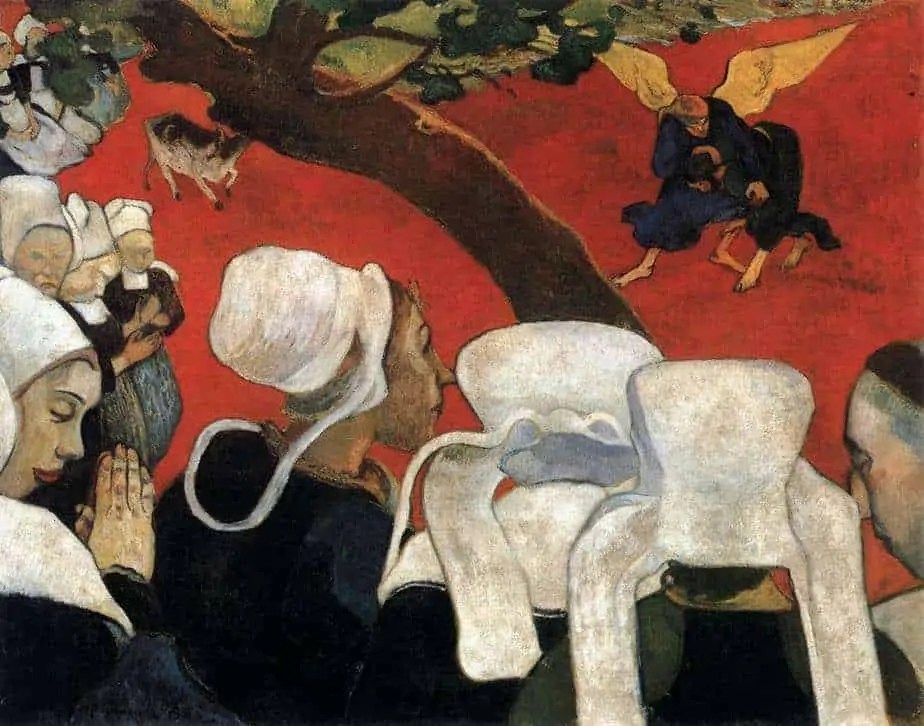
Transfigured to purgatory; A poem about Transfiguration; and the lessons for Sunday, February 11, 2018

See the source imageTRANSFIGURATION OF OUR LORD

2 Kings 2:1-12
Psalm 50:1-6
2 Corinthians 4:3-6
Mark 9:2-9

PRAYER OF THE DAY Almighty God, the resplendent light of your truth shines from the mountaintop into our hearts. Transfigure us by your beloved Son, and illumine the world with your image, through Jesus Christ, our Savior and Lord, who lives and reigns with you and the Holy Spirit, one God, now and forever.

As noted below in my remarks on the gospel for this Sunday, Rudolf Bultmann is convinced that the transfiguration story is an ancient resurrection account that Mark the Evangelist has worked into the center of his narrative. This placement was then followed by Matthew and Luke whose gospels rely upon Mark. So why would anyone other than Bible scholars care about any of this? What significance does this have for the faithful reader of the gospels? I believe that this is one of those rare instances where redaction analysis really matters. The Evangelist is not simply being sloppy here. S/he is deliberately introducing the only resurrection account we have in Mark’s gospel into the very midst of the story. In the Transfiguration, death is undone. The relentless march of time is ended. The line of demarcation between past and future evaporates into the midst and we stand in God’s eternal now. The figures of Moses and Elijah, separated by centuries, converse together with Jesus on the mountain top. Can you blame the three disciples for believing that the reign of God had arrived? That the resurrection had occurred? That nothing remained but to bask in the glory of God’s new creation?

But here’s the thing. The reign of God has not come in full. The will of God is not done on earth as in heaven. The resurrection of the dead has not occurred. That is why the disciples are told not to speak of what transpired until after Jesus’ suffering, death and resurrection-a reality about which they remain in a state of willful denial. Therein lies the problem. Neither the world nor the disciples are ready for the resurrection. They are not yet the kind of persons capable of living joyfully, faithfully and obediently under God’s gentle reign of peace. Resurrection is not good news if it means only that our present existence with all of its conflicts, prejudices, blood feuds, animosities and unresolved conflicts is projected into eternity. That sounds much more like a definition of hell!  If we ourselves are not fundamentally transformed, we can hardly expect to live in a world transfigured by God’s glory.

Though not Biblical in the strict sense, there is a certain logic behind the medieval doctrine of purgatory. The term is derived from the Latin verb, purgo, meaning literally “to cleanse.” I doubt that few of us would deny that a single lifetime is far too short to become a creature capable of living under God’s reign. If you have any doubts about that, ask yourself whether there is anyone you would not want to meet in the hereafter. If you can answer that inquiry with a confident “no,” you are either a bonafide saint or seriously deluded. If it is God’s will that none perish and that all come to repentance, then the “all” includes those with whom we are at enmity. We might rather have God cleanse the universe of people we hate; but God would purge us of hatred so that we can live peaceably with those we now count as enemies-however long that might take. This “purging,” however, is not to be found in some intermediate state between heaven and hell. It takes place here and now through the daily practice of confession and forgiveness. We are purged in that fiery furnace known as the church, where we must live together with people we wouldn’t necessary choose as our friends, people who rub us the wrong way, people we might not want in our midst-but people whom Jesus has called, and that because they can help us purge ourselves in ways we could never manage to do on our own.

Significantly, the voice from heaven directs the disciples away from the vision of resurrection and back to Jesus. “This,” says the voice, “is my beloved Son. Listen to him.” There is no short cut to the resurrection and eternal life. There is no bypassing the fiery ordeal of repentance; no alternate route avoiding the valley of the shadow of death. There is no way around purgatory, only through it. That is where Jesus led his disciples in the gospel and that is where he leads his church during the season of Lent. We summoned on Ash Wednesday to acknowledge what our death denying culture so adamantly refuses to accept: that we are dust and to dust we return. We are invited to journey with Jesus into Jerusalem to shouts of “Hosanna” that soon will turn to cries of “Crucify him!” We are asked to dine with Jesus at his last meal with his disciples-which will continue in a way too marvelous for us to comprehend. On Easter Sunday we will be drawn to the tomb as were the women-only to discover that our Lord is not there! This is our purging. This is our preparation for the reign of God: Listening to him revealed to us as God’s beloved Son.

Here’s a poem about the Transfiguration.

Transfiguration

The sky was dark and overcast the day
we began our ascent to the top of that mountain.
Cold mist soaked our garments from without
as did the sweat of our weary bodies from within.
Up and up we followed in His footsteps,
each of us wondering how He knew the way
and how He could see the path through the
impenetrable fog all around us on every side.
Our hearts pumped frantically, our lungs gasped at the thinning air,
our aching limbs longed to fall motionless to the ground.
And so they did at long last when finally we reached the summit.
Broken with fatigue we lay down on the grass,
heedless of the cold and wet, leaving Him to His meditations.

Of what we saw-or thought we saw-when we awoke
I still cannot find words enough to tell the half of it.
His face shown like the sun as he conversed with the ancient ones.
The cloud enveloped us and brought us to our knees
with the power of a mighty ocean wave.
But most terrible of all was that voice driving
like a nail into our very souls these words:
“This is my Son, my Beloved. Listen to him.”
Small wonder we fell to the earth and hid our faces.
When at last we found enough courage to open our eyes
the cloud was once again cold drizzle and fog,
the voice silent, the ancients gone
and only He remained to lead us back to the plane.

Anonymous

2 Kings 2:1-12

The life and ministry of Elijah and his successor, Elisha, must be understood against the backdrop of the times. Elijah’s ministry began during the reign of Ahab, a king over the Northern Kingdom of Israel. Ahab inherited the kingdom from his father, Omri, who seized the throne following a bloody civil war. Omri led Israel to national greatness, strengthening the nation through military and commercial treaties with the surrounding Phoenician kingdoms. He is also credited with establishing as his capital the city of Samaria. Like his father, Ahab was an ambitious monarch eager to expand the military and commercial strength of his kingdom at all costs. To that end, he continued the policies of his father, renewing Israel’s Phoenician treaties and solidifying them through marriage to Jezebel, daughter of Tyre’s King Ethbaal. Ahab appears to have been personally loyal to the God of Israel. The names of his three children, Ahaziah, Jehoram and Athaliah all derive from the root of the divine name, YAHWEH. Nevertheless, Ahab did not interfere with his wife’s vigorous implementation of Baal worship throughout Israel. It seems that Baal worship was becoming so pervasive that it was threatening to displace the worship of Israel’s God.

The prophet Elijah appears as if out of nowhere to challenge Ahab’s unfaithfulness. At first a solitary figure, it becomes evident toward the end of the narratives about him in the Book of II Kings that Elijah is to some degree associated with a guild of prophets known as “the sons of the prophets.” Vss. 3, 5 and 7. Little is known about this group, but it appears that they shared some sort of common life apart from the rest of Israelite society. Though colorful and dramatic, Elijah’s life comes to an end with his mission largely unfulfilled. At the time of his departure, the house of Omri still reigns through Ahab’s son Jehoram, Jezebel still wields considerable influence and the worship of Baal is in full swing. To Elisha, Elijah’s successor, will fall the task of completing what Elijah could only begin.

Our lesson begins with Elijah and Elisha following a path taking them to points pregnant with meaning. Bethel is the site of Jacob’s dream about the heavenly ladder and God’s conferring upon him the covenant promises given to his father Isaac and grandfather Abraham. Genesis 28:10-22. Jericho was the first city conquered by Joshua in the land of Canaan. Joshua 6:1-21. The crossing of the Jordan River (vs. 8) echoes both Israel’s crossing of the Red Sea under the leadership of Moses and her own crossing of the Jordan into the promised land with Joshua centuries before. Exodus 14Joshua 3:14-17. After the crossing of the Jordan, Elisha asks that he inherit a “double share” of Elijah’s spirit. Elisha is not seeking more spiritual power than Elijah. Rather, he is seeking the double portion of inheritance due a first-born son under Mosaic Law. See Deuteronomy 21:15-17. Elisha thus stands in the position of a first-born son among “the sons of the prophets.” He will inherit the position of prominence belonging to Elijah.

It is unclear whether Elisha held a specific office or title among the sons of the prophets. Obviously, he held an important leadership role, caring for a prophet’s widow (II Kings 4:1-7 ), directing the building of a common dwelling (II Kings 6:1-7) and presiding at a common meal II Kings 4:38-44. It is conceivable that the sons of the prophets came into royal favor with the overthrow of Omri’s line by Jehu, the man anointed by command of Elisha. II Kings 9. With such royal favor frequently comes royal cooption and corruption. Under the new regime, it is quite possible that the prophetic guild of Elijah and Elisha became the religious mouthpiece of the state. That would make Amos’ declaration that he is neither a prophet nor the son of a prophet altogether intelligible. Amos 7:14. Amos, who was highly critical of the monarchy in Northern Israel, was making it clear that he was not in any way associated with the official state prophets. Though certainly plausible, this conclusion is thin on evidence from the biblical texts and altogether lacking from any other literary or archeological source.

Perhaps the most profound words spoken in this reading come from the lips of Elisha as his master is being taken away from him. “My father, my father, the chariots of Israel and its horsemen!” vs. 12. The true might of Israel is not on the throne in Samaria or in its military might. The voice of prophecy is Israel’s chariots and horsemen. The Word of the Lord is its power. Once again, militarism is soundly rejected by the Hebrew Scriptural witness.

Psalm 50:1-6

This psalm summons us to the divine court where God is bringing a legal proceeding against his covenant people. Our lesson consists of the opening scene in which God calls the whole world as his witness. Vss. 1-6. Walter Brueggemann describes this section as “a stylized description of a theophany, a majestic overpowering coming of Yahweh in his royal splendor.” Bruggemann, Walter, The Message of the Psalms, Augsburg Old Testament Studies (c. 1984 Augsburg Publishing House) p. 89. In verses 5-6, we are alerted to the legal standards under which this trial is to be conducted and Israel judged. Terms such as “faithful ones,” “covenant” and “righteousness” make clear that the allegations to be asserted under the counts of God’s complaint are based on the Mosaic covenant. Ibid.

In the first count of God’s complaint (Vss. 7-15) God takes to task those who imagine that their covenant obligations are fulfilled merely by attending to the proper rituals. Sacrifices are not commanded because God needs them. It is absurd to imagine that God needs to be fed by human beings. “God is here disengaged from any necessity bound to Israel. Israel knows and relies on God’s abiding engagement with Israel. On Yahweh’s part, however, that engagement is one of free passion, not of necessity.” Ibid. 90. Sacrifices are commanded because human beings require intimacy with God and God’s people. They are to be offered with thanksgiving, not under the mistaken belief that they appease God’s anger or buy God’s favor.

In the second count (Vss. 16-21), God reproves all who learn by rote and recite God’s commandments but make not even the slightest pretext of obeying them. Such people divorce their worship from the rest of their lives. On Sunday they sing hymns to the Lord who preached the Sermon on the Mount. On Monday they report to work at a bank that practices predatory lending; bundles toxic loans into securities sold to retirement plans and practices illegal and oppressive foreclosure procedures. Such worshipers are Christian churches and organizations that publish preachy-screechy statements on social justice even as they argue in the Supreme Court that they ought to be free to discriminate against their employees by denying them health insurance. See Hosanna Tabor Evangelical Lutheran Church & School v. EEOC, 132 S. Ct. 694, 181 L. Ed. 2d 650 (2012). They “hold[] the form of religion but deny[] the power of it.” II Timothy 3:5. These false worshipers imagine that God is like themselves. Vs. 21. They assume that God regards the Mosaic covenant obligations as lightly as do they. They are mistaken. God is serious in promising deliverance for his people who invoke the covenant by calling upon him. Vs. 15. But God’s faithfulness ought to evoke faithful obedience from Israel. God takes his demand for covenant obedience on Israel’s part as seriously as God takes his own covenant promise to save.

Finally, God declares that proper worship consists in sacrifice with a spirit of thanksgiving from those whose lives, not merely their words, are ordered by God’s commandments. Vss. 22-23. Some commentators believe that this psalm may have ancient roots in Israel’s covenant renewal ceremonies. Rogerson, J.W. and McKay, J.W., Psalms 1-50, The Cambridge Bible Commentary (c. 1977 Cambridge University Press) p. 236. Others classify the psalm as an enthronement hymn celebrating God’s kingly triumph over all the powers hostile to God’s reign. Anderson, Bernhard W., Out of the Depths: The Psalms Speak for Us Today, (c. 1983 by Bernhard W. Anderson, pub. by Westminster Press) p. 175. Either suggestion is plausible.

2 Corinthians 4:3-6

We are now jumping from Paul’s First Letter to the church in Corinth to his Second Letter. Paul’s relationship with the church at Corinth deteriorated significantly between the writing of I Corinthians and II Corinthians. It appears that there were some individuals or groups within the church at Corinth that were challenging Paul’s apostolic authority, undermining his leadership and questioning his fitness as a preacher. Following his first letter, Paul made what he describes as a “painful visit” to the church. II Corinthians 2:1. This visit did not accomplish whatever it was he had intended. Not wanting to make another such visit, Paul wrote a “severe letter” to the church in Corinth out of “much affliction and anguish of heart.” II Corinthians 2:4. Though we cannot be certain, many commentators believe that at least part of this “severe” letter is contained in II Corinthians 10-13. E.g., Godspeed, Edgar J., An Introduction to the New Testament, (c. 1937 by University of Chicago Press) pp. 61-62. Whatever the case may be, it is evident that Paul was concerned about the effect his letter would have upon the church and so sent his associate, Titus, to Corinth in order to deal with the fallout. (It is also possible that Paul sent the letter along with Titus). Paul became so preoccupied with the problems at Corinth and the potential impact of his letter that he cut short a preaching tour in Troas and traveled to Macedonia in search of Titus. There Paul finally caught up with his associate who brought him a very favorable report from Corinth. II Corinthians 7:5-13. Paul’s severe letter had evidently done its work. The congregation gave its full support to Paul. Paul’s opponents were disciplined by the congregation so severely that Paul had to write and urge the church to reach out to them with forgiveness and “reaffirm” their love for these errant members. II Corinthians 2:5-11. It is this third letter from Paul to Corinth from which our lesson comes.

The term, “Let light shine out of darkness” (Vs. 6) does not appear verbatim in the Hebrew Scriptures. Paul is likely alluding to the opening lines from the first creation account in Genesis. Genesis 1:3-4. Just as light, the very first element of creation, was spoken into existence by the word of God, so also the light of the gospel of Jesus Christ is a word from the mouth of God. It is from this word that Paul derives his apostolic authority. His preaching and the faith it kindles constitute a creative act of God. Balla, Peter, “2 Corinthians,” published in Commentary on the New Testament Use of the Old Testament edited by G.K. Beale and D.A. Carson (c. 2007 by Beale & Carson, pub. by Baker Academic) p. 763. It is also possible that Paul has in mind Isaiah 9:2 in which the prophet promises the ultimate liberation of the northern tribes of Israel living under the darkness of Assyrian domination. Reading further we discover that this liberation will be inaugurated through a messianic ruler from the line of David who will usher in a new age of everlasting righteousness, justice and peace. Isaiah 9:6-7. The “zeal of the Lord” will bring this about. Isaiah 9:7. Whether Paul was thinking of Genesis, Isaiah or both, he is making the point that his authoritative preaching is not really his own, but is God’s light shining through him. In the following verses Paul will go on to say that he and his associates are but “earthen vessels” containing this glorious gospel light. II Corinthians 4:7-12.

In this brief passage Paul reminds the church that its job is to reflect Jesus to the world just as his own job is to reflect Jesus to the church. Paul is well aware that, due to his own human limitations and shortcomings, that good news might be “veiled.” Yet strangely, it is precisely because God makes use of such imperfect and flawed people that the limitless grace and mercy of God are so clearly evident. It is through the inept efforts of the disciples to keep up with Jesus in Mark’s gospel and the fractious and dysfunctional existence of the church in Corinth that the Body of Jesus continues reaching out with healing and reconciliation to the world.

Mark 9:2-9

The transfiguration story in Mark is arguably the climactic center of the gospel. I say “arguably” because some commentators, perhaps most, would place the “Intermission” for Mark’s drama directly after Peter’s confession at the end of Chapter 8. But it seems to me that Peter’s incomplete understanding of Jesus’ true identity sets the stage for the drama presented in our lesson. The term “after six days” immediately raises the question, “six days from when?” Most likely, Mark means six days following Peter’s confession. I am convinced, however, that this time period serves a literary purpose. Chronology is a concern altogether absent elsewhere in the gospel. Six days was traditionally the period of time required for self-preparation and purification before a direct encounter with God. Nineham, D.E., Saint Mark, The Pelican New Testament Commentaries (c. 1963 by D.E. Nineham, pub. by Penguin Books, Ltd.) p. 234. The six days also could be an allusion to the theophany on Mt. Sinai with Moses. Exodus 24:15-18. It is possibly an echo of the “sabbath rest” declared in Genesis 2:1-3. In either case, the six day intro strongly suggests a lead up to some definitive revelation, work or appearance of God.

We are told that Jesus’ “garments became glistening, intensely white” possibly evoking Moses’ changed countenance after conversing with the Lord on Sinai (Exodus 34:29-35) or the Son of Man referenced in Daniel 7:13-14. In either case (or both), Mark means to let the reader know that Jesus is something more than the messiah Israel was expecting.

Peter blurts out, “Let us make three booths,” one for each of the distinguished personages. Mark informs us that this remark came out as something people say when they have no idea what to say but feel compelled to say something. Under those circumstances, I have no doubt that we have all said things that don’t make a lot of sense. That, however, has not stopped generations of exegetes from looking for some meaning Mark might have missed. The Greek term “skaynh” translated as “booth” in our English Bibles can mean anything from a temporary tent-like dwelling to a tabernacle or more or less permanent dwelling. Commentator Vincent Taylor believes that Peter’s intended meaning was more in line with the temporary booths made of interlacing branches at the Feast of Tabernacles. Leviticus 23:39-44. Taylor, Vincent, The Gospel According to St. Mark, Thornapple Commentaries (c. 1966 by Vincent Taylor, pub. by Baker Book House Co.) p. 391. Yet if it was Peter’s desire to prolong indefinitely this transcendent encounter, construction of temporary dwellings is hardly an effective means to that end. It is difficult to determine from this brief utterance exactly what Peter had in mind (if indeed he had anything in his mind other than stark terror).

The cloud again evokes the Exodus theophany. It is “par excellence the vehicle of God’s Shekinah and the medium in and through which he manifested himself” in the Hebrew Scriptures. Nineham, infra, p. 235. See Exodus 16:10Exodus 19:9-16Exodus 24:15-18 and Numbers 14:10. The voice from the cloud focuses the reader’s attention (and that of the disciples as well) on Jesus. “This is my Son”-the same word spoken to Jesus at his baptism (Mark 1:11) is repeated here with an emphatic, perhaps desperate command/plea: “Listen to him.” This is the whole point of the story. It reaffirms to some extent what has already been established in the account of Peter’s confession in Chapter 8. Jesus is not to be identified with John the Baptist, Elijah, Moses or any other prophet. He is uniquely God’s Son and the disciples are to listen to him. Hooker, Morna D., The Gospel According to Saint Mark, Black’s New Testament Commentaries (c. 1991 by Morna D. Hooker, pub. by Hendrickson Publishers, Inc.) pp. 217-218.

Rudolf Bultmann is convinced that the transfiguration story is an ancient resurrection account, perhaps narrated in language closer to its original form in II Peter 1:16-18. Bultmann, Rudolf, History of the Synoptic Tradition, (c. 1963 by Basil Blackwell, pub. 1976 by Harper & Row) p. 259. If he is correct, then this is the only resurrection narrative we have in Mark (barring the post Mark 16:8 accretions). This leaves us to ponder what it means to experience the resurrection, not at the conclusion of Lent, but as we are about to descend into the darkness of the final conflict and Jesus’ crucifixion. What does it mean to celebrate Easter at sunset? It seems to me that by projecting the resurrection back into the life and ministry of Jesus, Mark blunts so much of the triumphalistic distortion afflicting our Easter proclamation. Resurrection is no longer the “happy ending,” or a bland metaphor affirming that “all’s well that ends well.” It is rather an affirmation that eternal life is found at the heart of Jesus’ life of preaching, healing and casting out demons, a life that was not extinguished by his crucifixion.


Listening for a silent God; a poem by Mary Oliver; and the lessons for Sunday, January 14, 2018

SECOND SUNDAY AFTER EPIPHANY

1 Samuel 3:1-20
Psalm 139:1-6, 13-18
1 Corinthians 6:12-20
John 1:43-51

PRAYER OF THE DAY: Thanks be to you, Lord Christ, most merciful redeemer, for the countless blessings and befits you give. May we know you more clearly, love you more dearly, and follow you more nearly, day by day praising you, with the Father and the Holy Spirit, one God, now and forever.

“And the word of the Lord was rare in those days; there was no frequent vision.” I Samuel 3:1.

The age in which young Samuel lived is similar to my own in at least this one respect. I cannot say that I have ever had anything like a vision. I don’t preach from any direct, personal experience of God’s self-revelation. I proclaim only what has been handed down by the church for the last two millennia and has been entrusted to me for proclamation. Yes, I can add that I have trusted the gospel all my life and found it to be a truthful, intelligible and reliable hermeneutic for understanding my own existence and that of humanity generally. Yes, I do my best to interpret the texts I have received faithfully to illuminate the good news about Jesus and his implications for the church and for the world. Sometimes I get that right. Other times, I don’t. Yes, I believe that Jesus lives in and through his church and I have seen, heard and experienced plenty to convince me that this belief is well founded. But at the end of the day, I am staking my faith, my hope and my very life on the testimony of the prophets and apostles. To their witness I can neither add nor subtract a thing.

For all of the reasons set forth above, I find myself identifying with Eli in our first reading for next Sunday. Like this aged priest, I have no direct experience of the Almighty. Like him, I have only the traditions handed down to me. For Eli, these consisted in the stories of how God liberated the children of Israel from Egypt, brought them through the wilderness and into the land of Canaan. Eli knew also of the many threats to her very existence Israel faced in settling her new land, not the least of which was the temptation to forget the God who formed her as a people and to pursue the more exotic deities of Canaan. Against the pull of Israel’s disintegration, Eli had only the ancient stories of salvation to be repeated through ritual, sacrifice and celebration. With these tools Eli struggled to remind the people of Israel who they were and to whom they belonged. My tools are the Word of the Gospel made present through preaching and Eucharist. I must rely upon them to make the voice of God heard in a world where God’s website often appears to have gone dark.

Of course, the story goes on to tell us that God did finally speak a new word for Israel to Samuel and that Samuel made it known. But this only goes to show that God speaks and acts in God’s own good time. God will not be rushed. Remember that Israel languished for four hundred years in slavery before God sent Moses to lead them into freedom. You might reasonably ask, “What good did the Exodus do for the thousands of people who were born into slavery, knew nothing but mindless toil all their lives and died in that very same state? What kept them alive as a people under such extreme circumstances? Though the Bible does not give us much in the way of documentary evidence, I strongly suspect that these slaves knew that they were not always a slave people. I suspect that they knew the story of their ancestors Abraham and Sarah as well as the promises made to them. I think that they probably told and retold the story of how these two bold pilgrims left behind their family, community and livelihood to pursue God’s promise of a land, a people and a blessing. These inspiring narratives and the promises woven into them were more real for Israel than the bonds holding her captive. For this reason, the people were able to hear anew those promises spoken again to them through the mouth of Moses.

So too, I think, we are a people sustained by the remarkable story of the crucified and resurrected Jesus who poured out his life witnessing to the inbreaking of God’s gentle reign of justice and peace. Christ has died. Christ has risen. Christ will come again. That is the mystery of our faith. The day will come when every knee will bow and every tongue confess that Jesus is Lord. That is the reason why disciples of Jesus spend their lives working in refugee camps where life is only becoming more difficult and hopeless each day. That is the reason why we practice forgiveness, seek reconciliation and love our enemies-even when it does not seem to be accomplishing anything worthwhile. That is why we continue to gather on the Lord’s day to hear the good news about Jesus proclaimed and meet him in the meal that is his very self-even though we are becoming older, fewer and smaller. We know that God is at work in the world and among us. The day will come when God will speak anew to us. God will renew his church in the time and manner of God’s choosing. Until then, we are nourished and sustained by the narratives and testimony of our spiritual ancestors.

I am left, however, with one haunting question: When God speaks, will we recognize God’s voice? What does the voice of God sound like? Is God speaking now and we simply do not hear? Samuel at first did not recognize God’s voice. Eli only caught onto the miracle after three false starts. How can we train our ears to listen for the divine voice? How can we be sure we will recognize that voice when we hear it? “To pay attention, this is our endless and proper work,” says poet, Mary Oliver. Here is a poem by Oliver illustrating the kind of attention paid to the ordinary that might aid us in listening for and recognizing the call of God.

First Snow

The snow
began here
this morning and all day
continued, its white
rhetoric everywhere
calling us back to why, how,
whence such beauty and what
the meaning; such
an oracular fever! flowing
past windows, an energy it seemed
would never ebb, never settle
less than lovely! and only now,
deep into night,
it has finally ended.
The silence
is immense,
and the heavens still hold
a million candles, nowhere
the familiar things:
stars, the moon,
the darkness we expect
and nightly turn from. Trees
glitter like castles
of ribbons, the broad fields
smolder with light, a passing
creekbed lies
heaped with shining hills;
and though the questions
that have assailed us all day
remain — not a single
answer has been found —
walking out now
into the silence and the light
under the trees,
and through the fields,
feels like one.

Source: New and Selected Poems, Vol. I, (c. 1992 byMary Oliver, pub. Beacon Press) p. 150. Mary Oliver was born in 1935 in Maple Heights, Ohio. She was deeply influenced by poet, Edna St. Vincent Millay. Her work received early critical attention with the 1983 publication of a collection of poems entitled American Primitive. She is a recipient of both the Pulitzer Prize for Poetry and the National Book Award. You can read more about Mary Oliver and sample some of her other poems at the Poetry Foundation Website.

1 Samuel 3:1-20

In their present form, the books of First and Second Samuel are part of a historical narrative composed by an editor/author scholars refer to as the “Deuteronomist.” This story begins at Deuteronomy and extends through the end of II Kings. The Deuteronomist was clearly influenced by the prophets’ criticisms of the monarchy and its failure to lead Israel in faithfulness to Torah. This critical assessment of the monarchy finds expression in numerous ways throughout the greater narrative.

To a lesser degree, the narrative denigrates the priesthood of Eli and the shrine at Shiloh. This resting place of the Ark of the Covenant was evidently destroyed by the Philistines. Our lesson for Sunday may be, in part, designed to explain this catastrophe. In the prior chapter we learn that Eli’s sons “were scoundrels” who “had no regard for the Lord.” I Samuel 2:12-17. That is the reason given for the judgment God is about to bring on Shiloh and the house of Eli. Vss. 13-14. Yet I believe the principal concern here is to introduce Samuel as the prophet, priest and judge who will be the transitional figure for Israel’s move from a tribal confederacy loosely joined together around the shrine at Shiloh to a united monarchy with a new priesthood based at the temple in Jerusalem.

Samuel, you may recall, was the son born to formerly childless Hannah in response to her prayer. I Samuel 1:9-23. Hannah had vowed to dedicate any son she might be granted to the Lord’s service at Shiloh. True to her word, she brought young Samuel to Eli the high priest of Shiloh when he was weaned and Samuel began assisting Eli in his priestly duties. I Samuel 1:24-28. “The word of the Lord was rare in those days.” Vs. 1. So rare and uncommon were revelations of God that it took Eli three promptings through Samuel to figure out that God was attempting to address the young man. Once Eli realizes what is happening with Samuel, he instructs him how to respond. The message young Samuel receives is bad news for Eli and his sons. Eli must know this, but he still insists firmly that Samuel disclose everything he has heard from God. Vs. 17. Eli responds, “It is the Lord; let him do what seems good to him.” Vs. 18. (Really, what else could he have said?) Verses 19-21 summarize the outcome of this interchange. God still appears at Shiloh and speaks to Israel. But his word comes not through the established priesthood of Eli, but through the prophecy of the young Samuel.

Eli’s parenting skills might well have been lacking. Perhaps that is why his sons turned out to be “scoundrels.” Still, I believe Eli deserves credit for his openness to God’s word, even when that word foretold his own demise. It takes a courageous person to accept the end of his family line, the end of his ministerial heritage and the end of his religious tradition. Few pastors, congregational leaders or denominational officials are willing even to entertain the possibility that God might have no further use for mainline Protestantism and that its end has been decreed. We have trouble reckoning with the possibility that the old wineskins of our institutions might not be capable of containing the new wine of God’s kingdom. We tend to become so fixated on preventing the disintegration of the old skins that we miss out on the sweetness of the new wine. Eli, I believe, recognizes that the word declaring his own doom is a word of life for Israel. It is that word, not the house of Eli, not Trinity congregation or the Evangelical Lutheran Church in America that lasts forever.

Psalm 139:1-6, 13-18

This psalm defies categorization. In some respects, it resembles a lament. This label does not quite fit, though, because the psalmist does not seek salvation from his/her own enemies as much as the destruction of God’s enemies. Though the psalmist struggles with God’s imminence and transcendence, reducing his/her reflections to such mere abstractions does a disservice to the psalm. This is not an individual sharing his/her speculation about God’s nature with someone else. This is a prayer in which the psalmist addresses his/her God. The psalm arises from and is imbedded in a dynamic relationship between God and the psalmist. His/her questions and assertions arise out of his/her experience of covenant life with the God of Israel.

God has “searched” and “known” the psalmist. It is comforting that God is so intimately familiar with us-or is it? There are times I would prefer not to be aware of God’s presence or to think too deeply about it. Does God have to be present when I defecate, pick my nose and do other things that everyone does, but no one admits too? Can’t I take a vacation from God’s presence when I need to vent my most vindictive feelings, feelings that I know are unworthy of me, feelings that I am ashamed of? Is it possible to experience God’s presence not as sweet comfort, but as an oppressive weight? The psalmist seems somewhat ambivalent about God’s constant nearness. S/he seems to be asking, “Is there no escape from this all-encompassing reality that seems to have me hemmed in from all sides?”

Verses 13-18 praise God for God’s intimate involvement with the psalmist’s life from womb to tomb. “In your book were written all the days that were formed for me, when none of them yet existed.” Vs. 16. Taken literally and in isolation from its larger context, this verse appears to assert a strict determinism. Each day and everything in it is predetermined right down to the red tie I decided (or think that I decided) to wear today. But the nature of the psalmist’s relationship to his/her God suggests anything but a detached deity running a soulless machine. As the psalmist looks back on his/her life, s/he marvels at God’s activity in his/her life and all that God has done to bring him/her to this place and time. God has indeed given the final shape to each of the psalmist’s days, not as an author working with a fixed plot, but as a relational partner coaxing, persuading and nudging the psalmist toward deeper covenant living.

Some years ago a colleague of mine told me of a jarring experience she had conducting a funeral for a stillborn child. Using this psalm as her text, she assured the grieving parents of God’s tender care for their little one throughout the pregnancy and of God’s deep sorrow in his death. She spoke at length about the infinite value of this little life, short though it was. Following the service she was approached by an angry woman who through clenched teeth asked, “Do you have any idea how cruel, hurtful and unfeeling your words sound to a woman who has had an abortion?” She went on to accuse my friend of using the funeral to further the pro-life agenda and then stalked away before any response could be made.

I relate that story because it illustrates how thoroughly many of our scriptures have become captive to ideological disputes in our culture. I know that the last thing my friend would ever have wanted to do is address a political hot potato in the midst of a pastoral crisis like this one. Her only “agenda” was to speak words of comfort to a couple experiencing a traumatic loss and I have no doubt that they were in fact comforted. I am also convinced that abortion was not even at the furthest horizon of the psalmist’s thought process. It was obviously at the forefront of this individual’s thought process, however. So much so that it colored everything she heard my friend saying.

I am not sure how we deal with scriptural texts that have become almost “too hot to handle.” I believe that my friend was right to point out how this text affirms the value of the life that was lost to these grieving parents, God’s sharing in their sorrow and the significance of that life despite its never having seen the light of day. I believe it is altogether improper to use this psalm as ammunition in support of legislative measures regulating or criminalizing abortion. I reject having to choose between an ideology that reduces an unborn child to disposable tissue and one that simply equates termination of pregnancy with homicide. (If you are at all interested in my take on the whole abortion debate, see my post for December 24, 2017) I recognize certain Bible passages have collected a lot of dirt from having been dragged through the culture wars. They must be spoken with care, sensitivity and compassion-but spoken nonetheless. I maintain that whether or not one has (or should have) a legal right to do a thing has no bearing on whether a disciple of Jesus should exercise that right. I reject the notion that issues, such as abortion, can only be discussed in terms of “rights,” especially within the Body of Christ. And that brings us to the next lesson.

1 Corinthians 6:12-20

As we will be hearing from Paul’s First Letter to the Corinthians for the next four weeks, you might want to refresh your recollection concerning the background of that letter. To that end, I refer you to the Summary Articleby Mary Hinkle Shore, Associate Professor of New Testament at Luther Seminary, St. Paul, M.N. on enterthebible.org.

As I have probably said too many times already, it is impossible to comprehend Paul without appreciating his understanding of the church as the Body of Christ. Again, this is not a metaphor. Paul truly believes that the church is the physical presence of the resurrected Christ animated by the Spirit of Christ. It is the objective of the Holy Spirit to form “the mind of Christ” in this body of believers. I Corinthians 2:16. That happens as believers learn to appreciate each other as indispensable members of Christ. Just as the human body instinctively protects an injured part, so the church surrounds with care and compassion the member that is hurting. Just as the action of one part of the human body affects the whole, so each member of the Body of Christ must measure his or her conduct by its effect on the Body of Christ. See I Corinthians 12:12-26.

Today’s reading tackles sexual immorality or, more specifically, the believer’s engagement of prostitutes. Before considering this particular issue, however, we need to remind ourselves that “Paul’s ethical counsels and appeals stand in letters which were addressed to particular congregations and were formulated in response to particular situations.” Furnish, Victor Paul, “A Paradigm for Ethics in First Corinthians,” Interpretation, Vol. 44, No. 2 (April 1990), p. 145. Therefore, “[o]ne must not presume that his judgments about particular issues, say, in Corinth, would be the same were he writing to Christians elsewhere. Indeed, insofar as Paul’s counsels were specifically applicable in the situations to which they were originally addressed, they cannot be specifically applicable in any other situation. Nor is it possible to extract or reconstruct from his specific counsels a set of general “ethical principles…” Ibid. 145-146 (emphasis in original). Instead, “one finds there not a “Pauline ethic,” but Paul the pastor/counselor, reflecting on how the truth of the gospel forms and reforms the lives of those who are in Christ, and urging his congregations to be conformed to that truth within the particulars of their own situations.” Ibid. 146 (emphasis in original).

Paul’s ethics therefore derive not from scriptural rules or prescriptions. That which is good builds up the Body of Christ-whether it comports with some other objective moral prescription or not. That which injures the Body of Christ or compromises its witness to Jesus is evil-even if there is scriptural precedent for it. For Paul, ethics are not about breaking or keeping rules. It comes down to each member of the church being so totally possessed by the mind of Christ that s/he instinctively does what is appropriate to protect and build up Christ’s Body.

Earlier on in chapter 6, Paul was taking the Corinthian believers to task for their litigiousness. When fellow members of the Body of Christ sue each other in pagan courts, their witness to Christ is horribly compromised. “Can it be,” asks Paul incredulously, “that there is no man among you wise enough to decide between members of the church?” I Corinthians 6:5. Indeed, the very fact that individual members have disputes that they are incapable of resolving between them is a defeat for the Body of Christ in which all members are to work in harmony for the sake of the whole Body. I Corinthians 6:7-8.

So now Paul takes the bull by the horns. “All things are lawful for me,” say Paul’s opponents. Is this really what they were saying or is Paul caricaturing their position by means of a reductio ad absurdum? Whatever the case may be, it appears that the issue of prostitution was a genuine one for believers. Bear in mind that prostitution was entirely legal in Corinth and often connected with pagan civic and religious ritual. While the practice was hardly universally condoned and often condemned by philosophers and moralists of many persuasions, prostitution was nevertheless common and altogether legal. That may well be, Paul replies. The law affords one many “rights.” You may have a right to sue. You may have the right to do all manner of things, including consortium with prostitutes. But legality is beside the point. Within the Body of Christ, it is never a matter of what is legal. It is always a matter of what is “helpful,” of what contributes to the health of the whole Body.

Though Paul could have drawn from a host of biblical passages condemning prostitution and fornication, he makes no such citation. Instead, Paul quotes the passage from Genesis following the creation of Eve from Adam’s rib stating that “the two became one flesh.” Genesis 2:24. Vs. 16. That being the case, how can one who is a member of Christ’s Body become one flesh with a prostitute? Clearly, given that most prostitutes were connected in some way with pagan ritual, such an act amounts to idolatry. Just as significantly, however, the life-giving and covenant building potential inherent in sexual intercourse is wasted on dead end casual encounters. Instead of building up “the Temple of the Holy Spirit,” the fornicator is desecrating that Temple by joining it to the temple of pagan gods. Vs. 19. “You are not your own,” says Paul. There can be no assertion of “My body, my choice.” “You were bought with a price. So glorify God in your body.” Vss. 19-20.

Obviously, Paul is addressing an issue that is non-existent for most of us. (I can’t recall the last time one of my parishioners reported being solicited by a temple prostitute). So, too, there are plenty of issues important to us that Paul’s prescription does not address directly: Cohabitation between adults not formally married; uncoerced sex between persons in a dating relationship and more. That is not to say, however, that Paul contributes nothing to our consideration of these issues. Clearly, Paul’s primary concern is how sexual conduct (any conduct for that matter) affects the church’s life and mission. Paul is also concerned about how such conduct affects other individual believers who are members of Christ’s Body. Finally, Paul would insist that we consider whether the conduct builds up the church. Sexual relationships, therefore, must be characterized by selfless love, covenant faithfulness and life-giving expression that builds up the Body of Christ. Based on these reflections, the author of the Letter to the Ephesians can state that the covenant between wife and husband ought to reflect the same covenant relationship God desires between Christ and the church. (BTW, it matters not one wit whether you characterize the husband as Christ and the wife as church or do it the other way around. There is no hierarchy in the kingdom of heaven. “Love” and “respect” are simply two sides of the same coin.)

John 1:43-51

Having already called Peter and Andrew to be his disciples the day before, Jesus decides to leave the Judean banks of the Jordan River and travel to Galilee. Jesus “found” Philip and called him to be his disciple. Philip, in turn, “found” Nathaniel and declared to him, “We have ‘found’ him of whom Moses in the law and also the prophets wrote, Jesus of Nazareth, the son of Joseph.” Vs.45. Here again John’s use of language is very deliberate. The Greek word translated “found” in our English Bibles is “eureeka,” from which we get our expression: “Eureka!” meaning “I’ve got it!” This exclamation is attributed to the ancient Greek philosopher/scientist Archimedes. According to anecdotal legend, Archimedes observed one day how the water level rose as he stepped into the bath tub. This, in turn, led to his realization that the volume of water displaced must be identical to the part of his body submerged. Upon making the connection, he gave us that immortal exclamation. So the “finding” that is going on in this story amounts to more than just a random discovery. It is disclosure of a critical piece of the puzzle that is God’s redemptive intent for the world.

Philip, though identified as one of the Twelve disciples in the synoptic gospels (Matthew, Mark and Luke), plays no active role anywhere else therein. By contrast, Philip is a major player in John’s gospel, being among the first disciples Jesus called. He is instrumental in bringing Nathaniel to Jesus. Vs.45. He is personally mentioned in the feeding of the five thousand (John 6:5-7), acts as an intermediary between Jesus and some Greeks wishing to see him (John 12:20-23) and takes an active part in one of Jesus’ major discourses (John 14:8-9). Nathaniel is not included among the twelve disciples in the synoptics. Though some strands of tradition identify him with Bartholomew, there is no solid textual or historical basis for so doing.

The fact that Philip describes Jesus to Nathaniel as the one about whom both Moses and the prophets wrote indicates that he has already concluded that Jesus is Israel’s messiah. The “law and the prophets” is frequently used shorthand for the whole of the Hebrew Scriptures in their entirety. See, e.g., Matthew 5:17Luke 16:16Acts 13:15; and Romans 3:21. It is quite understandable that Nathaniel would be skeptical about Philip’s claim. Nazareth of Galilee, unlike Bethlehem or the City of Jerusalem, is not the sort of place from which you would expect a great leader to arise, much less Israel’s messiah. Furthermore, according to John’s gospel, Jesus’ father, Joseph, is merely a local with no evident royal lineage. Philip bears a substantial burden of proof! Rather than attempting to argue Nathaniel out of his very reasonable objections, however, he simply invites him to “come and see.” Vs. 46.

“Behold, an Israelite,” Jesus declares. Vs. 47. This might well be translated, “Now here’s the real thing! A true Israelite.” While it is not exactly clear what Jesus meant by remarking that Nathaniel was without “guile,” the point is Nathaniel’s response. “How the hell do you know anything about me?” (very roughly translated). “I could be Jack-the-Ripper for all you know.” (Not actually said and a tad anachronistic but, hey, it captures the spirit of the conversation). Vs. 48. Jesus’ response is extremely important. He replies to Nathaniel, “When you were under the fig tree, I saw you.” Vs. 49. Jesus is not simply showing off his clairvoyance. He is making a messianic proclamation echoing the words of the prophet Micah: “but they shall sit every man under his vine and under his fig tree, and none shall make them afraid; for the mouth of the LORD of hosts has spoken.” Micah 4:4. In effect, Jesus is saying, “I know, Nathaniel, that you are of the New Israel, an Israelite without ‘guile’ (unlike Jacob!), because the messianic age has come.” This “word of the Lord of Hosts” is enough to convince Nathaniel. He confesses Jesus as both the King of Israel and the Son of God, both common messianic titles. Barrett, C.K., The Gospel According to John2nd Ed. (c. 1978 by Westminster Press) p. 186.

But there is more to Jesus than Nathaniel has guessed. “You will see heaven opened, and the angels of God ascending and descending upon the Son of Man.” Vs. 51. The reference here is to the story of “Jacob’s Ladder” narrated at Genesis 28:10-17. After waking from a dream in which angels ascended and descended from a heavenly ladder upon the rock where he lay, Jacob declared: “How awesome is this place! This is none other than the house of God, and this is the gate of heaven.” Genesis 28:17. Jesus, then, is “the house of God” that will replace the temple with its holy of holies. John 2:19-21. Jesus is the “gate” through which the sheep will go in and out and find pasture. John 10:9. Keep your eye peeled and focused on Jesus. You haven’t seen anything yet!


A pro-life manifesto; a poem by Medora C. Addison; and the lessons for Sunday, December 24, 2017

See the source imageFOURTH SUNDAY OF ADVENT

2 Samuel 7:1-11, 16
Psalm 89:1-4, 19-26
Romans 16:25-27
Luke 1:26-38

PRAYER OF THE DAY: Stir up your power, Lord Christ, and come. With your abundant grace and might, free us from the sin that would obstruct your mercy, that willingly we may bear your redeeming love to all the world, for you live and reign with the Father and the Holy Spirit, one God, now and forever.

The miracle of the Incarnation is the very core of our Christian understanding of God. We believe that God was born of a homeless woman in a shed. We confess that God is weak, vulnerable and in need of care and protection. The vulnerability of God in the womb of Mary compels the belief that human life is sacred from the time of conception and deserving of our most lavish protection. For that reason, I am and always have been adamantly and unequivocally pro-life. I am convinced that terminating a pregnancy brings to an end the life of a unique human being. For that reason, every effort should be made to preserve, support and encourage the carrying of every pregnancy to full term. Here is what that means to me.

The most effective way to prevent the termination of a pregnancy is to prevent unwanted pregnancies. That requires sex education at the elementary school level. It also requires making gynecological care and access to birth control available to all people of childbearing age, including teens. The argument that availability of birth control and sex education will encourage more teens to become sexually active has not proven to be the case. In reality, neither sex education nor the availability of birth control increases the degree of teen sexual activity, but they do significantly reduce the instances of teen pregnancy. Over all, where women are given access to good gynecological care, including reproductive care and counseling, we find far fewer unintended and unwanted pregnancies; hence, fewer abortions. Support for family planning and sex education is a pro-life position.

Furthermore, the best way to protect the lives of the unborn is to care for their mothers. Food, nutrition counseling, and access to health services are provided to low-income women, infants, and children under the Special Supplemental Nutrition Program for Women, Infants, and Children, popularly known as WIC. This program is designed to ensure that women are able to obtain the nutrition necessary to remain healthy throughout their pregnancies and feed their children when they are born. Knowing that there are resources available for women to raise and care for their children creates a strong incentive to continue a pregnancy. Supporting the WIC program and other nutritional support programs for low income persons is therefore a pro-life position.

Health care is a critical factor in preserving the lives of the unborn. Having a child is an expensive proposition when, for whatever reason, one does not have health insurance coverage. This is particularly so for high risk pregnancies, complicated deliveries and post-natal problems. Too often, abortion appears to be the only alternative to bankruptcy or homelessness. Universal health insurance coverage ensures that no baby will ever be “too expensive.” Support for universal health care coverage is therefore a pro-life position.

Finally, there some circumstances under which a pregnancy should be ended. If you believe that a girl below the age of consent, a victim of rape or incest, a woman to whom pregnancy and childbirth pose serious psychiatric or medical risks should be compelled by law to carry a pregnancy to term, then your moral compass is oriented to the north pole of a different planet than the earth I inhabit. I doubt we have enough moral common ground to continue this discussion further. But if, like me, you agree that there are circumstances were abortion is a responsible, if tragic, necessity; then there is just one question left: Who decides when a pregnancy should be terminated?

Deciding whether to end a pregnancy is difficult and fraught with conflicting interests and priorities. The medical, social and financial issues bearing on that decision are never clear and require wisdom, discernment and an intimate knowledge of the persons affected. I am firmly convinced that no one is in a better position to make such a decision than the persons closest to it and most directly affected by it. Women, not the state, not the courts or the medical establishment, are in the best position to determine what, under all of the circumstances, is best for their own physical and emotional well-being and that of their children. Consequently, enabling women to make these difficult decisions by providing access to affordable, medically safe surgical procedures, including abortion, is a pro-life position.

Yes, it is possible that some women will make poor choices-as do governments, courts and medical professionals. But, on the whole, mothers tend to make the best choices for themselves and their families-especially when given every conceivable opportunity to choose life, including early sex education, access to birth control, nutritional support, gynecological care and adequate health insurance coverage. That is why God entrusted the life of his Only Begotten Son to the care of a woman. Entrusting the welfare and protection of the unborn to the care of their mothers is, therefore, a biblical pro-life position.

Here is a poem by Medora C. Addison  about a mother’s desperate, fierce and sheltering love that would probably have resonated with Mary, the mother of our Lord.

Motherhood

Playing alone by the ocean’s edge,
Eager and unafraid,
You are the child I used to be,
Playing the games I played.

Now I have only a coward’s heart,     
Finding you all too dear,
Learning at last that love shall teach
The fearless how to fear.

You are so little against the sky,
Laughing and undismayed       
Oh, little son by the ocean’s edge,
I am afraid, afraid!

Source:  Poetry, Vol. 29, No. 5 (February 1922). Little is known about the life of Medora C. Addison. It appears that she was born in December 1891 in Massachusetts and attended Yale University where she was chosen for the Yale Series of Younger Poetry in 1922.

2 Samuel 7:1-11, 16

Israel was ever ambivalent about the institution of monarchy. The Hebrew Scriptures at times extol the monarchy as God’s instrument of justice and peace. As God’s representative, the king “delivers the needy when he calls, the poor and him who has no helper. He has pity on the weak and the needy, and saves the lives of the needy.” Psalm 72:12-13. The prophets took a more critical view of kingship in Israel. Ezekiel criticize the kings of Israel and Judah for looking after their own interests and allowing the “sheep” to be scattered and lost. Ezekiel 34:1-10. So, too, Jeremiah railed against these “shepherds” of Israel whose self-serving ways brought about the destruction of the flock. Jeremiah 23:1-4.

These two divergent views of the monarchy in Israel are woven together throughout the narratives of I & II Samuel. The pro-monarchy view comes to us from an early source probably compiled during the reign of Solomon, David’s son. This writer regards the establishment of kingship in Israel as divinely ordained for Israel’s salvation. Anyone who lived to see the rise of the Israelite empire from a loose confederacy of divided tribes oppressed by the militarily superior Philistines could not fail to be impressed by David, the architect of this great achievement. For the first time ever Israel lived within secure borders. Trade and commerce flourished under the protection of the new central government. Israel was beginning to be recognized as a power to be reckoned with among the other nations. Under these circumstances, it is not surprising that the monarchy was seen as an instrument of God’s blessing and salvation.

The later source was likely composed during the latter days of the Judean monarchy between 750 B.C.E. and 650 B.C.E. This author views Samuel as the true and greatest ruler of Israel. S/He views the monarchy as a sinful rejection of God’s rule over Israel. By this time, Israel had experienced civil war and the succession of ten of its twelve tribes from the house of David. Injustice, corruption and idolatry turned out to be the price of commercial success and military power under monarchy. The prophets gave voice to God’s displeasure with Israel’s kings and to the cries of those crushed under their oppressive yolk. Samuel’s warnings against the consequences of monarchy had come true with a vengeance. I Samuel 8:10-18. Nevertheless, this subsequent writer still views David in a positive light in spite of his having been elected to a disfavored institution.

Most scholars agree that II Samuel 7:1-29 is a late theological commentary inserted into the early source intended to explain why David was not chosen to build the temple in Jerusalem. That purpose is not readily discernable from our reading because verses 12-15 have been omitted. These verses make clear that God has chosen David’s heir to build the temple. I believe that this section also serves to clarify the nature of the Davidic covenant as subordinate to God’s covenant with all Israel at Sinai. Though God’s promise to preserve faithfully the line of David is repeated here, the prophet Nathan warns that iniquity on the part of David’s descendants will meet with punishment. Vss. 14-15.

The key to this interchange between the word of the Lord, delivered through Nathan, and David is found in the various meanings of the Hebrew word for “house.” Initially, David intends to build a “house” for the Ark of the Covenant. So used, the term means “shrine” or “temple.” God responds by promising to build David a “house,” clearly meaning a dynasty. If you were to read on to verses 18-20, you would discover that the same term is used again to describe family status, i.e., “Who am I, Lord God, and what is my house that thou hast brought me thus far?” Vs. 18. This is clearly a reference to the former insignificance of the family of Jesse and David’s status as the youngest of Jesse’s sons. The different shades of meaning for this one word serve to illuminate the depth and complexity of the Davidic covenant and the significance of the temple. Both are subordinate to the Sinai covenant and flow from the faithfulness of God to Israel expressed in that covenant. The temple is not to be a shrine to the Ark, but the place where God’s name dwells. Vs. 13. Though established “forever,” the dynasty of David is answerable to Torah and subject to God’s punishment for violating it. Vss 13-14.

This scripture invites us to contemplate our response to expectations that fail to materialize. It is evident that the line of David did in fact come to an end following the Babylonian conquest of 587 B.C.E. Either God’s promise failed or its fulfilment lies beyond the scope of the Judean monarchy. Second Isaiah deals with this problem by suggesting that God’s “steadfast, sure love for David” now embraces all Israel rather than any one individual descendent of David. Isaiah 55:3-5. Later Judaism saw in the Davidic covenant the promise of a messianic deliverer. This hope, in all of its many permutations, was very much alive in Jesus’ day. Jesus himself appears to have invited his hearers to consider in what sense the promised messiah could be considered “the son of David.” See Mark 12:35-40Matthew 22:41-46Luke 20:41-44. So also, both Judaism as a whole and the early church struggled with the meaning of the temple’s destruction by Rome in 70 C.E. As I have often said before, I believe the Letter to the Hebrews is in large part a response to this crisis.

Promise/fulfilment is a common theme throughout the Advent season. Now as throughout history, the people of God are called upon to discern how the ancient promises are working themselves out in our midst. For Christians, the challenge is to discover the layers of meaning and the richness given to the gospel narratives by the Hebrew Scriptures out of which they grew. Care must be taken, however, to respect the witness to these scriptures given by the Jewish people in all ages. There is no place for a theology of supersessionism in which Christianity is seen to “replace” or “supersede” Judaism. As Paul points out in the latter half of his Letter to the Romans, both Israel and the church play a critical role in God’s redemptive purpose for the world.

Psalm 89:1-4, 19-26

Although it focuses on the rise of the Davidic monarchy as God’s saving act, the psalm begins with an acknowledgement that the true sovereign of all the earth is God. Vss. 1-2. God makes a “covenant” with David. Vs. 3. A covenant is more than a mere contract. In the ancient near east, covenants were usually made between kings-and generally not between equals. It was common for a dominant king to enter into a covenant with the king of a subservient nation. Under the terms of the covenant, the stronger king would promise to provide military protection from common enemies (and a promise that he himself would not attack!). In return, the weaker king would pay tribute and promise undivided allegiance to the stronger king. The weaker king would often give his daughters in marriage to the stronger. (The fact that one’s daughter is at the mercy of a foreign king would naturally make one think twice about commencing hostilities!).

In the covenant with David, God is the dominant partner. Yet, oddly enough, God promises both protection andeternal faithfulness. God’s love for and support of David is not contingent on David’s past accomplishments or on his promise to be loyal to the Lord. It is a one way covenant in which all of the promises flow from God to David and his line.

Although the image of parenthood is used (vs. 26), David is every inch a human being and there is no suggestion that his being anointed king confers divinity on him. This is one feature setting the Israelite concept of kingship apart from Canaanite ideas. There is no suggestion in this psalm that David is chosen on the basis of merit. Nothing is said about David’s character or his good deeds that might have led God to select him as a covenant partner and king over Israel. We hear plenty, though, about the character of God and God’s determination to stand by the promises made to David. Vss. 20-24. Once again, being king does not set one above the commandments of God. If anything, the king has a greater responsibility to observe justice and righteousness. He stands in God’s place as the representative of God. As such, his failures are not merely his own. They have an impact on the nation for which he is responsible. As Jesus was wont to say, “To whom much is given, much is expected.” Luke 12:48.

If you were to read the Psalm 89 in its entirety (which I always recommend) you would discover that the psalm’s tone changes abruptly from a mood of praise to bitter lament at verse 38. Obviously, the situation in which the king now finds himself does not evidence the protection and success promised to the line of David in the “vision” discussed in the earlier part. Vss. 19-26. We do not know the precise historical setting of this psalm. Because the prayer is by or for a king currently (though tenuously) on the throne, it is safe to assume that it was written before the Davidic dynasty came to an end in 587 B.C.E. with the second Babylonian invasion. The prayer might reflect the desperate situation in which David found himself during the rebellion of his son, Absalom. Or it might reflect the invasion by Egypt during the reign of Solomon’s son, Rehoboam. It could have been composed after the tragic death of the young King Josiah at the hands of Pharaoh Neco or the siege of Jerusalem under Zedekiah. Whatever the historical setting, it must have been a very traumatic and faith shaking experience for Israel to see the Lord’s anointed, the heir of David, God’s covenant partner so thoroughly defeated. What could this mean? Had God abandoned the covenant? Had the Lord forgotten all the promises made to David? Where was God’s salvation in this time of need?

The mood of the disciples must have been very similar when they saw their Lord nailed to the tree and crying out, “My God, My God, why have you forsaken me?” Yet just when it seemed that God could not be further away from them, God had drawn near in the most profound way possible. Jesus’ death and resurrection bring to crescendo Israel’s stubborn belief that, however dark the hour, God is at work in history. It is often when we find ourselves with the sea in front of us and a hostile army at our heels-or at the tomb where our last, best hope seems dead and buried-that God works salvation.

Romans 16:25-27

This is the conclusion to Paul’s Letter to the Romans in which he has gone to great lengths explaining in some detail how “the revelation of the mystery which was kept secret for long ages but is now disclosed and through the prophetic writings is made known to all nations, according to the command of the eternal God, to bring about the obedience of faith…” vss. 25-26. This snippet plays nicely into the prophecy/fulfillment theme of Advent, but I cannot imagine how one could preach on it without reaching back into the body of Romans and reconstructing Paul’s argument. Such a project is far too big for any one sermon and best saved for periods in the church year where consecutive readings from the Letter to the Romans are featured in the lectionary. This last summer would have been a good time for that.

Luke 1:26-38

Luke’s telling of the nativity narrative is strikingly different from that of Matthew in several respects. Whereas in Matthew Joseph is the recipient of angelic revelation, in Luke he is altogether absent from the scene until the trip to Bethlehem. In Matthew’s gospel, the angel’s messages come through dreams. Luke has the angel Gabriel addressing Zachariah and Mary directly. Derived from the Hebrew words “Gavar” meaning “strong man” and “el,” a word for God, the name Gabriel is best translated “God has shown himself mighty.” Brueggemann, Walter, “Gabriel,” The Interpreter’s Dictionary of the Bible, Vol. 2 (c. 1962 by Abington Press) p. 332. Gabriel first appears in Daniel explaining to the prophet a vision of the end that he has just seen. Daniel 8:15-17. See also Daniel 9:21. Though not otherwise mentioned in the canonical Hebrew Scriptures, Gabriel is frequently portrayed as God’s agent of revelation, punishment and salvation throughout later Jewish writings such as the Books of Enoch. It is important to understand that in Hebraic thought, God is fully present in the person of God’s messenger. Ibid, p. 333.

The impact of Gabriel’s message is very much muted by the later church’s fixation on the “immaculate conception” and our 19th Century prejudice against that which does not fit our empirical world view. Few people in the 1st Century B.C.E. doubted that God (or a god) could bring about a pregnancy miraculously. The remarkable thing here is that Gabriel, God’s chief messenger, should be sent 1) to a woman; 2) to an insignificant town in Galilee; 3) to announce that God’s messiah and David’s heir was to be born to this woman of no particular standing. Luke goes out of his way to let us know that he is well aware of contemporary events and the way in which history appears to be unfolding through the likes of Herod the Great and Caesar Augustus. Yet he would have us know that the true history, the history that matters, the history God is making will unfold not in Jerusalem or Rome, but in the small hamlet of Nazareth. The hope of Israel and the whole world will be born to a homeless couple in a drafty animal shelter. That is the miracle at which Luke would have us marvel.

What, then, shall we say of the “virgin birth”? Though not as pronounced as in Matthew’s gospel, one point seems to be that Jesus’ conception and birth is at the initiation of God and independent from requirements of lineage, status and blood. Something new and different is taking place with the birth of Jesus. How does God initiate that birth? Luke tells Mary, “The Holy Spirit will come upon you, and the power of the Most High will overshadow you; therefore the child to be born will be called holy, the Son of God.” Vs. 35. Perhaps the church would have been wise simply to leave it there. Who can explain the workings of the Holy Spirit? We know that the Spirit can work through events that appear to unfold naturally and in accord with what we understand about the processes of nature. Yet the Spirit also introduces novelty that strains our credibility, exceeds our expectations and challenges our imaginative abilities. Who can say how the Spirit worked in this instance? Does it really matter?

It may not have mattered to the first readers of Luke’s gospel, but it became an important question for the church in later years as she struggled to make the gospel intelligible to Mediterranean culture while remaining faithful to her biblical roots. Without rehashing the first six centuries of the church’s history, it is fair to say that the confession of Jesus as the Son of God born of the virgin Mary was part and parcel of the church’s insistence that Jesus was no less human than he was divine; that God as creator took naturally to human flesh created in God’s image; that the Incarnate Word has plumbed the depths of all that it is to be human. At the end of the day, the Incarnation is a mystery that can be contemplated, worshiped and believed, but never fully understood. We cannot insist on any particular metaphysical understanding of virginal conception because this says more than the biblical witness tells us. Neither can we dogmatically maintain that the birth of Jesus must have occurred under purely “natural” circumstances as we think we understand them. Assertion of either position says both too much and too little.

Gabriel’s assurance that “with God nothing will be impossible” and Mary’s response, “let it be to me according to your word” fitly summarize the import of this lesson. To be fully open to God requires belief in God’s willingness and ability to do all things-even the seemingly impossible. Advent beckons us to just such radical openness. It challenges us to suspend our judgments about who we think God is, who our neighbor really is and what are the possibilities for the future, both ours and the world’s. During this holy season we are challenged to expect the impossible!


“Thoughts and prayers” don’t cut it; a poem by Ellery Akers; and the lessons for Sunday, December 17, 2017

See the source imageTHIRD SUNDAY OF ADVENT

Isaiah 61:1-4, 8-11
Psalm 126
1 Thessalonians 5:16-24
John 1:6-8, 19-28

PRAYER OF THE DAY: Stir up the wills of your faithful people, Lord God, and open our ears to the words of your prophets, that, anointed by your Spirit, we may testify to your light; through Jesus Christ, our Savior and Lord, who lives and reigns with you and the Holy Spirit, one God, now and forever.

“Beloved, pray for us.” I Thessalonians 5:25.

In tweets responding to “thoughts and prayers” directed to the victims of the recent church shooting in Southerland Springs, Texas by the likes of President Donald Trump, House Speaker Paul Ryan and many other political leaders, Washington Post correspondent Karen Tumulty remarked, “thoughts and prayers for people who were mowed down in a church sounds especially hollow.” Singer and song writer Rosanne Cash noted that “[the shooting victims] were in a church that was full of prayers. They need a government who will enact common sense gun laws.” Actor Michael McKean observed that “They were in church. They had the prayers shot right out of them. Maybe try something else.” I fully understand these sentiments. So does the Apostle James:

“If a brother or sister is naked and lacks daily food, and one of you says to them, “Go in peace; keep warm and eat your fill,” and yet you do not supply their bodily needs, what is the good of that?” James 2:16.

Just as this mock benediction from the Epistle of James rings hollow to persons who are homeless and hungry, so also “thoughts and prayers” from government officials entrusted with protecting their citizens from violence come across as empty, hypocritical and impotent to citizens whose loved ones have died as a result of their willful neglect. If the Republican controlled congress loved their citizens half as much as they crave the endorsement of the gun lobby and its lavish gifts of cash to their campaigns, there would be no need for them to console the Southerland victims with empty platitudes. For more on that, see my post of October 4, 2017.

The prayers Saint Paul asks of the church in Thessalonica, are of an entirely different order. His plea for prayer comes not from some far of executive seated in a distant corner office issuing Hallmark platitudes on company stationery, but from a pastor who has labored among and prayed fervently for the people whose prayers he now seeks. This is a church immersed in “the work of faith and labor of love and steadfastness.” I Thessalonians 1:3. Paul’s prayers for this faithful church and the prayers he seeks from them grow out of their shared baptismal commitment to the reign of God. They are not a pious substitute for meaningful action, but a plea for God’s inspiration, support and strength for the work in which they are already engaged. Furthermore, Paul is not looking for prayers addressing his own personal needs. He is urging the Thessalonians to pray for his mission to the world, his ministry among his many congregations and the spread of the good news of Jesus’ life, death and resurrection. For Paul, prayer is part and parcel of the church’s struggle to live faithfully under the reign of God in a world fiercely resistant to that gentle reign. Divorced from this sacred context, prayer becomes little more than a bland expression of good intent or a laundry list of personal favors. “Thoughts and prayers” is religious short hand for “good luck.”

Of course, I don’t fault politicians or anyone else for expressing sympathy to the Southerland victims’ families. Nor do I fault them for the seeming soullessness of their well wishes. Who of us can ever find words that bring true comfort in the face of such horrendous tragedy? Sympathy, however, is not enough. Words unaccompanied by action are worse than silence. Mass shootings should not be happening (and in most other industrialized nations do not happen) with regularity. It is the job of government to protect its people from systemic violence of this kind. Expressions of sympathy from governmental leaders for victims of gun violence who have not and do not intend to take any steps to eliminate it might well be sincere, but they should not be confused with genuine prayer. Moreover, such sentiments are clearly not enough. Just as “faith without works is dead,” so prayer for an outcome you are not prepared to live for, sacrifice for and, if need be, die for is just sanctimonious hot air.

Here’s a poem by Ellery Akers speaking to that fragile word that is prayer and suggesting how the answer to prayer might be closer than what we think.

The Word That Is a Prayer

One thing you know when you say it:
all over the earth people are saying it with you:
a child blurting it out as the seizures take her,
a woman reciting it on a cot in a hospital.
What if you take a cab through the Tenderloin:
at a street light, a man in a wool cap,
yarn unraveling across his face, knocks at the window;
he says, Please.
By the time you hear what he’s saying,
the light changes, the cab pulls away,
and you don’t go back, though you know
someone just prayed to you the way you pray.
Please: a word so short
it could get lost in the air
as it floats up to God like the feather it is,
knocking and knocking, and finally
falling back to earth as rain,
as pellets of ice, soaking a black branch,
collecting in drains, leaching into the ground,
and you walk in that weather every day.

Source: The Place That Inhabits Us, Sixteen Rivers Press, c. 2010 (Poem originally copyrighted by Ellery Akers, 1997). Ellery Akers is a poet, children’s writer and naturalist living in Marin County, California. She earned a BA at Harvard University and studied at San Francisco State University where she got her masters. She is the author of two poetry collections. She has been honored with the Poetry International Prize, the John Masefield Award, the Paumanok Award and Sierra magazine’s Nature Writing Award. You can learn more about Ellery Akers and sample more of her poetry at the Poetry Foundation website.

Isaiah 61:1-4, 8-11

As I have noted previously, the fifty sixth chapter of the Book of Isaiah opens into what scholars agree is a third collection of prophetic oracles separate from the prophet Isaiah of the 8th Century B.C.E. (Isaiah 1-39) and Second Isaiah (Isaiah 40-55) who prophesied toward the end of the Babylonian Exile. These prophesies, comprising what is commonly called “Third Isaiah” (Isaiah 56-66), come from a period beginning shortly after the return of the exiled Jews from Babylon in 539 B.C.E., but before the rebuilding of the temple in about 515 B.C.E.

Our lesson has affinities with the “servant songs” of Second Isaiah, particularly Isaiah 50:4-11. (For more info on the “servant songs,” see my post of April 9, 2017.) These words constitute the opening declaration of a section Professor Claus Westermaan calls “the nucleus” of chapters 56-66, the third part of the Book of the Prophet Isaiah. Westermann, Claus, Isaiah 40-66, The Old Testament Library (c. 1969 by SCM Press Ltd.) p. 352. The prophet announces that s/he has been anointed to “bring good tidings to the afflicted.” Vs. 1. The term afflicted might also be translated “poor.” However one chooses to translate the term, it obviously applies to the Jews who took up Second Isaiah’s challenge to return to their homeland and rebuild the ruined city of Jerusalem. If these pilgrims were expecting this task to be an easy one, they were sorely disappointed. Upon their homecoming, they faced grinding poverty, hostility from their Samaritan and Arab neighbors and political opposition from within the Persian Empire that now dominated the Middle East. Enthusiasm for rebuilding Jerusalem and the temple waned. For some time after the arrival of the first returning exiles it appeared as though the whole project would be abandoned.

The prophet we commonly identify as “Third Isaiah” understood his calling as a continuation of his predecessor’s mission. Whereas Second Isaiah’s preaching inspired the Jews to return to their homeland, Third Isaiah encouraged them to complete the task of rebuilding it. To that end, the prophet is endowed with the Spirit of God. Vs. 1. Throughout the Hebrew Scriptures, the Spirit of the Lord is recognized as that power of God enabling human beings to do extraordinary things. See, e.g. Judges 3:10Judges 11:29; and II Chronicles 20:14. So also, the word of God proclaimed by the prophet is more than just verbiage. The Word is the agency by which God acts and in some sense God’s self. See, e.g., Isaiah 55:10-11. By the enabling power of God’s Spirit, the prophet is sent forth to unleash the freeing power of the word that heals, liberates and releases. Vs. 1.

“The day of vengeance of our God.” Vs. 2. Though not literally incorrect, the use of the word “vengeance” is not the best choice for the Hebrew meaning. The word might better be rendered “rescue” or “restore” as the notes to the New Oxford Annotated Bible point out. The prophet maintains that it is God’s intent to erase the hierarchical power structures under which God’s people are “afflicted” and “poor.” This restorative intent is evident from the following declarations of “comfort” to all who mourn, “gladness instead of mourning,” “praise instead of a faint spirit,” rebuilding for the “ancient ruins” and repair for “devastations of many generations.” Vss. 2-5.

The makers of the lectionary have omitted verses 5-7, no doubt out of squeamishness. Here are the offensive words:

Strangers shall stand and feed your flocks,
foreigners shall till your land and dress your vines;
6 but you shall be called priests of the Lord,
you shall be named ministers of our God; you shall enjoy the wealth of the nations,
and in their riches you shall glory.
7 Because their* shame was double,
and dishonor was proclaimed as their lot,
therefore they shall possess a double portion;
everlasting joy shall be theirs.

Isaiah 61:5-7.

Only God and the lectionary people themselves know what was in their peevish little minds when they took their scalpels to this text. I suspect that this lacuna was created out of respect for the sensitivities of their mainline protestant, progressive, slightly left of center, ever white and ever polite constituency. Nothing spoils the progressive mood like making foreigners into laborers in the vineyards of the chosen people. That hardly squares with our Enlightenment egalitarian ethics. But then, our Enlightenment egalitarian ethics don’t square with the Scriptures either. The Scriptures speak not of equality, but justice. As Jesus frequently noted, “the last shall be first and the first shall be last.” Matthew 19:30Matthew 20:16Mark 10:31. He was speaking, of course, of life under the reign of God. Even those who are last in the kingdom are still within the kingdom. That should be enough. If being the last in the kingdom is a problem for you, it’s a sure indication that you don’t yet understand the kingdom and are not yet ready for it. Why should we balk at being servants to the people of God? Why should we object to taking our place among the “least”? Isn’t that the way to true greatness in kingdom terms?

Another problem in our reading of these verses arises from our cultural disdain for labor generally and manual labor in particular. Only recently an article in the Wall Street Journal warned workers in the fast food industry that, if they continued lobby for a living wage, they would be replaced by machines. Late stage capitalism’s undervaluation of such work and its contempt for those who perform it is alien to biblical thought. Caring for livestock, plowing and planting are all essential to human well-being and proper care for the land. It is precisely the sort of work for which human beings were created. That the nations should share their wealth and contribute their labor to the restoration of Israel does not amount to exploitation anymore than did support of the Levitical priesthood by means of the tithe in ancient Israel. Just as God blessed Israel through the ministry of the Levites, so God now blesses the nations of the world through a restored Israel.

Finally, Israel’s restoration does not come about through conquest and subjugation of the nations. Rather, God’s restoration of Israel draws all the nations to the worship of God. “And all nations shall come to your light, and kings to the brightness of your rising.” Isaiah 60:3. Within the larger canonical context, Israel herself is seen as a “suffering servant” whose faithfulness unto death is a light to the nations. It is through her witness that the nations will learn how service to the God who is God, rather than striving for nationalistic dominance, leads to blessing and peace. Thus, the nations’ service to Israel does not come about through conquest and is not carried out in a hierarchical context. It is instead the faithful response of a world that finally recognizes its Creator. The intent is summed up in verse 11: “For as the earth brings forth its shoots, and as a garden causes what is sown in it to spring up, so the Lord God will cause righteousness and praise to spring forth before all the nations.” (I owe this last insight to Rev. Roy Riley, Pastor and former Bishop of the New Jersey Synod-ELCA).

Verse 10 marks a transition. Whereas the speaker in the first nine verses is the God of Israel, the prophet himself/herself begins speaking in verse 10. These last two verses of the chapter constitute a brief psalm of praise in which the prophet rejoices in the privilege of his/her calling and expresses confidence in God’s willingness and ability to bring about his redemptive purpose for all humanity. All in all, this passage delivers a powerful declaration of hope altogether fitting for the season of Advent.

Psalm 126

This psalm is labeled a “Song of Ascents.” It shares this title with a larger group of fourteen other psalms. (Psalms 120-134). The meaning of the title has not been established beyond doubt. It is thought by a number of scholars to mean that this group of songs was composed for use in the procession of pilgrims coming to Jerusalem for high festivals. Other scholars cast doubt on this hypothesis, pointing out that most of these psalms appear to have been composed for cultic purposes unrelated to the Zion tradition.

“When the Lord restored the fortunes of Zion…” Vs. 1. The reference may be to a revival experienced by Judah under the long and prosperous reign of King Uzziah (783 B.C.E. to 742 B.C.E.). It might also refer to the reign of King Josiah (640 B.C.E. to 609 B.C.E.) who, during a power vacuum resulting from the decline of the Assyrian Empire, was able to re-conquer all of the lands and territories belonging not only to Judah, but also to the former Kingdom of Israel to the north. The Psalmist may also be alluding to the decree of Cyrus the Great in 538 B.C.E. allowing the Jews exiled in Babylon to return to their homeland and rebuild the temple. In any event, the psalmist is reflecting on a significant act of God’s salvation experienced at some point in Israel’s history. Obviously, this saving event is in the past. Verses 4-6 make it clear that Israel’s present situation is bleak and in need of restoration.

“…we were like those who dream. Then our mouth was filled with laughter, and our tongue with shouts of joy…” Vss. 1-2. Extremely good news does seem to have a dream like quality about it. So also one can become light headed from laughter. Perhaps that is what the psalmist had in mind. Of course, dreams frequently have a prophetic dimension the in the scriptures, i.e. Joseph (both the patriarch of Genesis and the husband of Mary in Matthew’s gospel). The Hebrew word pronounced “goyim” is used for “the nations” in verse 2. Though the nations were considered outside of God’s covenant with Israel, what God accomplished for Israel was intended not merely for Israel’s own benefit, but as a testimony to the nations of God’s goodness and power.

“Negeb,” in verse 4 means literally “a dry land.” The reference is to a triangle of 12,500 square kilometers in the southern area of Palestine. It has numerous riverbeds that are dry for most of the year but rush with water during the seasonal rains. During these brief periods, the beds become lush with vegetation. The psalm concludes with a prayer that the life-giving streams of God’s Spirit will revive Israel again just as the seasonal rains revive the Negeb. God’s saving acts in the past strengthen Israel’s resolve to look toward the future in hope, even as she toils now in what seems to be fruitless labor.

This Psalm inspired the popular American Spiritual, Bringing in the Sheaves, lyrics and music of which is in the public domain:

Sowing in the morning, sowing seeds of kindness,
Sowing in the noontide and the dewy eve;
Waiting for the harvest, and the time of reaping,
We shall come rejoicing, bringing in the sheaves.

Refrain:
Bringing in the sheaves, bringing in the sheaves,
We shall come rejoicing, bringing in the sheaves,
Bringing in the sheaves, bringing in the sheaves,
We shall come rejoicing, bringing in the sheaves.

Sowing in the sunshine, sowing in the shadows,
Fearing neither clouds nor winter’s chilling breeze;
By and by the harvest, and the labor ended,
We shall come rejoicing, bringing in the sheaves.
Refrain

Going forth with weeping, sowing for the Master,
Though the loss sustained our spirit often grieves;
When our weeping’s over, He will bid us welcome,
We shall come rejoicing, bringing in the sheaves.
Refrain

1 Thessalonians 5:16-24

“Rejoice always, pray constantly, give thanks in all circumstances; for this is the will of God in Christ Jesus for you.” Vs. 16-18. This condensed word of exhortation is worth its weight in gold. It sounds hopelessly trite to say that we would all be a good deal happier if we rejoiced instead of crabbing; prayed instead of worrying and gave thanks instead of complaining. Like most biblical exhortations, it is trite apart from faith in Jesus Christ. Placed into the context of the entire first letter to the Thessalonians however, these words are rich with meaning. Because Jesus conquered death, we can rejoice even when death encroaches upon our lives. Because Jesus is always present in our midst, all times are right for prayer. Because we know that the most precious possession we have, the kingdom of heaven, can never be taken from us, we always have much for which to be thankful. It is God’s will that we be joyful, prayerful and thankful. God enables us so to live by giving us good reason for joy, prayer and thankfulness.

Paul warns the Thessalonian church not to “quench the Spirit” or “despise prophecy.” Vss. 19-20. To fully appreciate what Paul is saying here we need to look beyond this letter to his first letter to the Corinthian church. There Paul speaks of the Spirit as the One that calls each individual member into a single Body. Members of the Body never act on their own behalf to further their own selfish interests. They exercise their unique gifts to build up and strengthen the Body. See I Corinthians 12. Prophesy is one such gift to be exercised to that end.

Why would anyone despise prophesy? You only need to read a little of it from the Hebrew Scriptures to understand why prophesy is sometimes met with hostility. Part of a prophet’s job is to tell the community things it does not want to hear. Churches don’t like to be told that they are unwelcoming, member oriented and harbor attitudes of racial prejudice. Churches don’t like being told they need to change. Churches sometimes wish that the prophets among them would just shut up already. But the health of a church depends on vigorous prophetic critique to keep it honest and focused on what matters.

Of course, prophesy is designed to build up the Body of Christ. Even when it seems to anger, tear down and divide, its ultimate goal is the health of the Body. Thus, prophesy is more than simply an angry rant. Sadly, too much of what passes for prophetic preaching these days amounts to little more than “Bad Dog Sermons.” That is a phrase coined by M. Craig Barnes in a recent article in the Christian Century. He writes: “Most of the people who come to church these days already have a pretty clear sense of their ethical and moral responsibilities. We’re well trained and know what we ought to do. There is little gospel in telling us we’re not doing enough. But that’s the message the church keeps giving.” I must confess that I am not quite as convinced as Barnes that people who come to church always have a clear sense of ethics or morals. Very often it is our very morality that messes us up. Still, simply beating people over the head with their shortcomings does little to motivate and transform. For that we need the good news of Jesus Christ.

Paul is a model of prophetic preaching. He could be painfully blunt in pointing out the failures of his churches. Yet he could also say of his most troublesome and dysfunctional congregation, “Now you are the Body of Christ.” I Corinthians 12:27. He does not say, “You should be the Body of Christ,” or “if you ever get your act together, someday you might be the Body of Christ.” Paul assures his churches that they are in fact Christ’s Body, the church for which Jesus died and the church through which he now lives. Then he goes on to encourage his churches to become what they already are!

John 1:6-8, 19-28

“The material about John [the Baptist] in each Gospel is best understood as each evangelist’s attempt to make clear to his readers this important distinction between the Baptist and Jesus Christ.” Marsh, John, Saint John, The Pelican New Testament Commentaries (c. 1968 John Marsh pub. by Penguin Books, Ltd.) p. 116. At least that is the take of one commentator. While it probably is the case that John’s disciples continued as a community after his execution by Herod Antipas and that this community’s existence made it necessary for the church to address John’s role in the drama of Israel’s redemption, I doubt that this was the only or even the primary purpose for including his ministry in the gospel narrative. In all of the gospels, and most explicitly in John’s gospel, the Baptist serves a critical literary and theological purpose. John the Baptist grounds the ministry of Jesus in the Hebrew scriptural narrative while at the same time showcasing its radical uniqueness. What the story of the transfiguration accomplishes for the synoptic gospels, John’s narrative concerning the Baptist’s ministry does for his own gospel. It testifies to the continuity of Jesus’ mission and ministry with the law and the prophets while distinguishing his person from both Moses and the prophets.

As noted by commentator Raymond Brown, the Sadducean rulers in Jerusalem would not likely have sent Pharisees to represent them. Their appearance here reflects the time of this gospel’s composition following the destruction of the temple in Jerusalem and the reconstitution of Judaism thereafter. Brown, Raymond E., The Gospel According to John I-XII, The Anchor Bible, vol. 29 (c. 1966 by Doubleday) p. 44. By this point, the Pharisaic tradition had come to define Judaism as a whole and was the chief antagonist for John’s church. Ibid.Not surprisingly, then, the role of the Pharisees all but eclipses that of the chief priests who were likely the principle authors of Jesus’ arrest and conviction.

That said, it would not have been unusual for the religious authorities in Jerusalem to investigate the activity of John the Baptist. Vs. 24. Anyone capable of drawing a crowd of admirers within the restive provinces of Judah and Galilee would naturally be of concern to the ruling elites eager to maintain the status quo. It would also be natural to inquire whether John was claiming to be a messianic figure or even a lesser apocalyptic figure such as the returning Elijah foretold in Malachi 4:5-6 or the prophet promised by Moses in Deuteronomy 18:15. Vss. 20-21. But John’s gospel has a specific theological point to make here. As the representative of the law and the prophets, the Baptist must disclaim every redemptive role to be fulfilled by Jesus. Thus, he testifies “I am not” the Messiah. “I am not” Elijah. “I am not” the prophet. These disclaimers must be viewed against the multiple instances in which Jesus will declare “I am.” See e.g., “I who speak to you am he [messiah].” John 4:26 (To the woman at the well); “I am the bread of life” John 6:35; “I am the living bread which came down from heaven” John 8:12; “Truly I say to you, before Abraham was, I am” John 8:58; “I am the door of the sheep” John 10:9; “I am the good shepherd” John 10:14; “I am the resurrection and the life” John 11:25; “You call me teacher and lord; and you are right, for so I am” John 13:13; “I am the way, the truth and the life; no one comes to the Father, but by me” John 14:6; “I am the true vine, and my Father is the vinedresser” John 15:1; “I am he.” John 18:5 (To the temple police at his arrest).

When it comes to who John the Baptist is, John will only say that he is “a voice.” “Essentially, John does nothing [in the gospel] but testify to Jesus.” Collins, Raymond F., “From John to the Beloved Disciple,” Interpretation Vol. 49, no. 4 October 1995, p.362. “[I]n effect, his is the voice not only of God but also of the implied author.” Ibid. John cannot speak positively until Jesus arrives on the scene. Only then does John have something to which he can point and say, “Behold!” John 1:29.

Karl Barth once said that the church is only the impact crater left by Jesus. I think that says too little. The Apostle Paul is emphatic in his insistence that the church is the Body of Christ, and for him that is no mere metaphor. It is nevertheless true that the church is called to be fully transparent so that the world sees Jesus in it. We faithfully discharge our witness solely to the extent that we have been shaped by the impact Jesus has made upon us. To the degree that we call attention to ourselves, our works and our projects we get in our own way. So Barth is correct in one sense. Without Jesus, we are just an empty hole in the ground. Our existence derives from our testimony to the One who is to come.