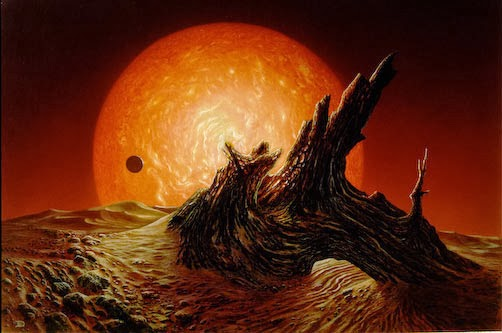
TENTH SUNDAY AFTER PENTECOST
Prayer of the Day Glorious God, your generosity waters the world with goodness, and you cover creation with abundance. Awaken in us a hunger for the food that satisfies both body and spirit, and with this food fill all the starving world; through your Son, Jesus Christ, our Savior and Lord.
“Ho, everyone who thirsts,
come to the waters;
and you that have no money,
come, buy and eat!
Come, buy wine and milk
without money and without price.” Isaiah 55:1.
A couple of weeks ago I finished reading Timothy Beal’s book, “When time is short.” (c. 2022 by Timothy Beal, pub. by Beacon Press). Beal is a professor of Religion at Case Western University and the author of several books and essays on religion and culture. Calling to our attention the warnings of climate change scientists to the effect that our degradation of the earth’s oceans, forests, atmosphere and ecosystems has reached the point at which it is impossible to reverse the consequences of global warming, Beal invites us to reflect soberly on the very real possibility that we have engineered our own extinction as a species. Given that very real possibility (which Beal at some points seems to press as a certainty), we must face honestly the evils of racism, colonialism and nationalism that brought us to this point. More importantly, we need to accept the inevitability of our collective extinction (whether immanent or not) and consider how we will spend the rest of our collective existence “doing what matters” as a species on the brink of oblivion.
I have some reservations about this book. Beal speaks eloquently about humanity’s inescapable participation in the web of life characterized as “the wild.” Eating and being eaten, birth and death, evolving as a species and passing into extinction are all inextricably bound together in this mystery we know as life. As much horror as it inspires, this is all “perfectly natural” and presumably good. I wonder, however, whether Beal has thought through the implications of what he is saying. Does he understand what human extinction would look like? Can he really imagine the horrors that would engulf the globe as vast swaths of the earth become uninhabitable for human beings and millions of square miles of previously fruitful soil can no longer produce the food on which we rely? Does he realize that the first to die will be those whose lives are already so thoroughly focused on living from one day to the next that they can scarcely afford to ruminate on our collective demise? How do we focus on “what matters” when what matters is the wellbeing of our neighbors whom we cannot help any more than we can help ourselves? Can we in any sense see human extinction for what, in reality, it will mean and call it “natural” or “good”?
I also have to take issue with Beal’s characterization of western Christianity as “death denying.” Granted, there is plenty of anthroprocentric hubris and contempt for the natural world that has infected the church of the west. But I would place that more at the feet of the Enlightenment and its enthusiasm for colonialization. You can hardly call the church of the middle ages, much less the New Testament church, death denying. During our Ash Wednesday service we impose ashes on our foreheads with the words: “Remember that you are dust and to dust you shall return.” That is about as frank a declaration of human mortality as can be made. You can argue that a lot of Christians do not take it to heart, but you cannot fault our liturgy, hymns and preaching, which are not lacking when it comes to the topic of human mortality. So, too, Christian dogma has always acknowledged the finitude of our species and our planet. We do that with a vengeance on the first Sunday of Advent where the “little apocalypse,” found in various forms in all three of the synoptic gospels, is front and center. Beal’s call to focus on what matters finds expression in the second epistle of Saint Peter:
“But the day of the Lord will come like a thief, and then the heavens will pass away with a loud noise, and the elements will be dissolved with fire, and the earth and everything that is done on it will be disclosed. Since all these things are to be dissolved in this way, what sort of people ought you to be in leading lives of holiness and godliness, waiting for and hastening the coming of the day of God, because of which the heavens will be set ablaze and dissolved, and the elements will melt with fire?” II Peter 3:10-12.
Finally, I am not convinced that climate change, however severe, will result in human extinction. I am convinced that somehow, in some fashion, our species will survive. The question is, who among us, in what form and at what cost? How will we respond to millions of climate refugees whose homelands are no longer habitable? As far as my own country is concerned, I know the answer. We will meet them with barbed wire. We will set traps across the rivers bordering our land to drown them and boot those who still manage to get through, men, women and children back into the waters to die in order to protect our turf and our way of life. How do I know this? Because that is precisely what we are doing now, when we can easily absorb the refugees coming to our shores, when we could actually use these people and the skills they bring to supplement our shrinking work force. Imagine, then, what we will do when accepting refugees will call for sacrifice, for a change in the level of comfort in which we now live.
The people of God are called to a different response, however. They are called, the prophet reminds us, to offer food, water and sanctuary without cost. That is a difficult word to speak in today’s antiimmigrant climate and will become increasingly so as the consequences of global warming become ever more severe. If you are among those who think that we cannot hope to meet the flood of climate refugees with the resources we have and that we will only end up overfilling the life boat to the point where it capsizes and we all drown, you are not alone. Jesus’ disciples felt the same way when they were confronted with a crowd of five thousand hungry people and had on hand only a few loaves and fishes. Quite understandably, they reasoned that parting with what little food they had would not satisfy the hunger of the crowd, but it would surely impoverish them. Yet remarkably, the disciples discovered that when they were able to let go of their meager resources and place them into the hands of Jesus, they accomplished more than they imagined possible. That is the answer we make to the Trumps, the DeSantises, the “America First” crowd espousing the survivalist mentality.
I think Saint Peter hits the nail on the head. In view of all that is coming upon the earth, what sort of people ought we to be? On the other side of the climate crisis, will it be said of the church that we sat wringing our hands, issuing preachy-screechy social statements and sending relief packages to those dying on the other side of our border while trying to carry on with ecclesiastical business as usual? Generations hence, will the ELCA (assuming there still is such a thing) be issuing an apology for its complicity with “the destroyers of the earth”? (See Revelation 11:18). I continue to pray that the church in this country will finally recognize that it is more than a chaplaincy service to the United States; that it will give up on its misbegotten mission to christianize America; that it will finally discover that being the one, holy, catholic and apostolic church spanning every national border is enough. I hope that we will find the spiritual maturity, the moral courage and theological depth to be the Body of Christ in the midst of a culture bent on crucifying him anew. I hope that we will not be conformed to the ways of our politics, civil religion and culture but be transformed into a people willing to “offer up our bodies as a living sacrifice” in defense of those condemned to death by the frantic violence and neglect of a nation bent on preserving itself. Romans 12:1-2.
Here is a poem by Robert Frost raising in a simple way the question of how humanity might meet its final hour.
Some say the world will end in fire,
Some say in ice.
From what I’ve tasted of desire
I hold with those who favor fire.
But if it had to perish twice,
I think I know enough of hate
To say that for destruction ice
Is also great
And would suffice.
Source: The Poetry of Robert Frost, (c. 1969 by Holt, Rinehart and Winston, Inc.) p. 33-34. Born in 1874, Robert Frost held various jobs throughout his college years. He was a worker at a Massachusetts mill, a cobbler, an editor of a small town newspaper, a schoolteacher and a farmer. By 1915, Frost’s literary acclaim was firmly established. On his seventy-fifth birthday, the U.S. Senate passed a resolution in his honor. The State of Vermont named a mountain after him and he was given the unprecedented honor of being asked to read a poem at the inauguration of John F. Kennedy in 1961. Through the lens of rural life in New England, Frost’s poetry ponders the metaphysical depths. His poems paint lyrical portraits of natural beauty, though ever haunted by shadow and decay. You can learn more about Robert Frost and sample more of his poetry at the Poetry Foundation website.
 Peter's Outer Cape Portico
Can I get your writings by email ?!
LikeLike
Yes! I signed you up. How are things going?
LikeLike