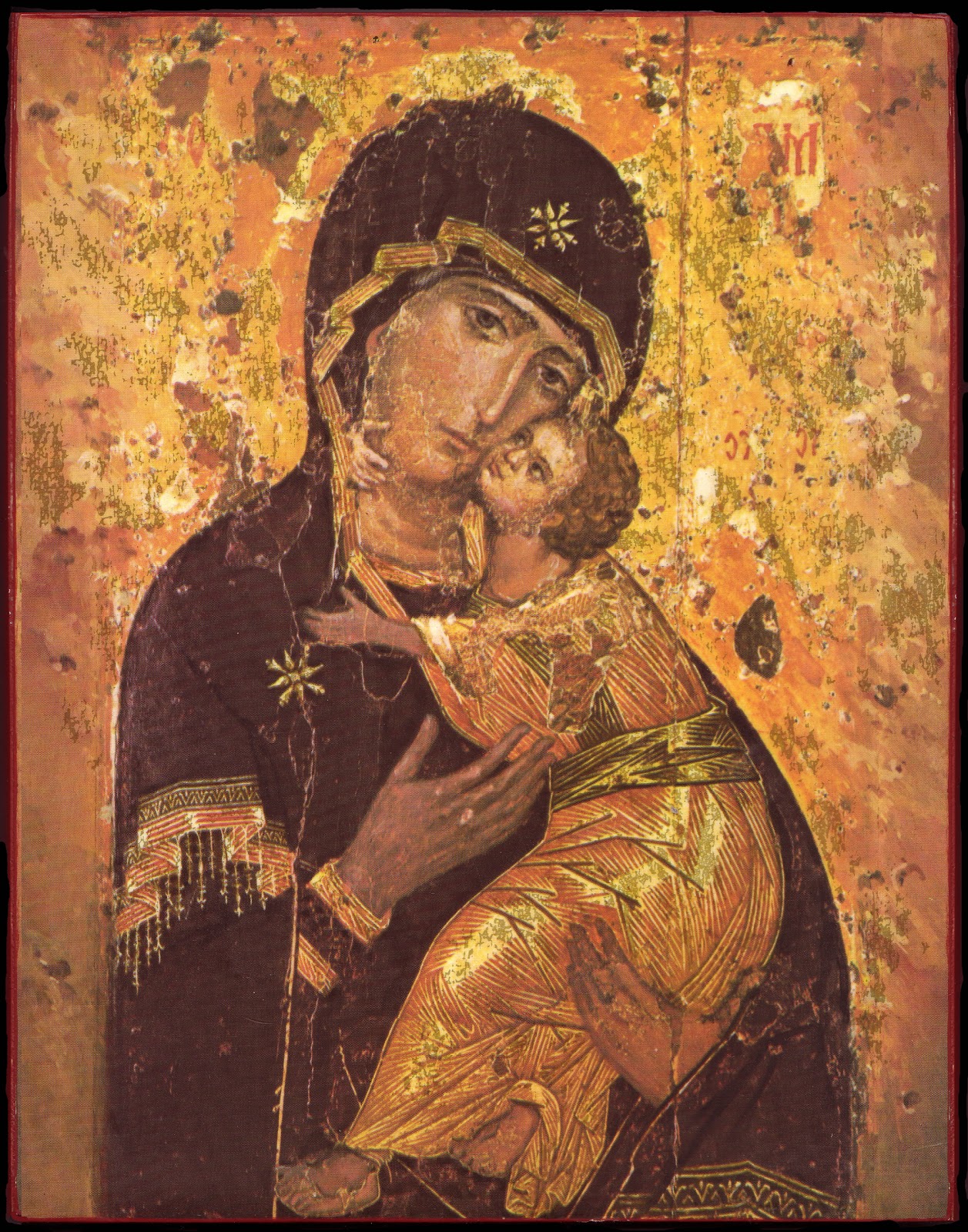
FOURTH SUNDAY OF ADVENT
Luke 1:46b-55 or Psalm 89:1-4, 19-26
Prayer of the Day: Stir up your power, Lord Christ, and come. With your abundant grace and might, free us from the sin that would obstruct your mercy, that willingly we may bear your redeeming love to all the world, for you live and reign with the Father and the Holy Spirit, one God, now and forever.
“Here am I, the servant of the Lord; let it be with me according to your word.” Luke 1:38.
A couple of years ago a heated argument exploded over social media among clerics over the merits (or lack thereof) of the then (and perhaps now) popular song, Mary Did You Know[1] The lyrics question Mary, asking if she knew the eventual significance and salvation her son would have for humankind and the miracles he would perform. Some of my colleagues maintained that the song prompts salutary reflection upon Mary and the extent of her insight into the destiny of her holy child. Others felt it amounted to condescending “mansplaining” that denigrated Mary. I happily determined this to be one of the many issues upon which it is quite unnecessary for me form an opinion. If you have not heard the song, I invite you to click the above link and decide for yourself-or not.
I believe it is quite impossible for us to “get inside the head” of Mary the mother of our Lord, or anyone else for that matter. Nonetheless, I am confident that Mary understood what every expectant mother living in Gaza right now knows, namely, that the life of a woman is expandible and a small price to pay for gaining military advantage, advancing ideological agendas and maintaining geopolitical stability. I am sure Mary would not have been surprised by a nation that rewards a rapist and confessed sexual predator with the highest office in the land. She would not have been shocked by government regulation of women’s bodies and health. Mary knew that the world is a dangerous place for women-to say nothing of the infants in their care. She understood the world into which her child would be born-and said “yes, let it be.”
Some question the genuineness of Mary’s consent to the will of God. What was left to which she could consent? She was not asked, but told by an angle of God what will happen to her. She will bear a child. How will this happen in the absence of a husband? The answer might sound more like a threat than a promise. “The Holy Spirit will come upon you, and the power of the Most High will overshadow you…” Luke 1:35. It is not hard to see how a survivor of sexual assault or abuse might find this gospel text troubling. There is no real indicia of consent here. Nonetheless, this troubling text reflects a truth too often suppressed and denied by Americans like us who like to make much of our freedom, autonomy and agency. The truth is, we do not get to choose the nation, neighborhood or family into which we are born. Events beyond our control set our destinies on trajectories we could never have foreseen. Even the decisions we think we understand sometimes take us in directions we never anticipated. Did any of us married folk know to what we were committing ourselves when we promised to join with our spouse and share with them in all that is to come? Seemingly insignificant choices, such as deciding to skip the book club so as to take in a ball game might lead to life changing encounters. Of course, there are events that are disruptive and life changing by their very nature. Such is the occurrence of pregnancy.
The coming of a child brings about profound changes in the life of couples who will soon find themselves walking a cranky baby late at night instead of sitting with friends around a pitcher of beer at the local sports bar. The advent of a birth threatens to upset the established family constellation and ignite new levels of sibling rivalry. I remember all too well how the birth of my younger sister forced me to realize sooner than I would have liked that I am not the center of the universe or even the sole object of my parents’ attention and affection. And this is under circumstances where the pregnancy is anticipated and welcome. Our gospel text deals with an unplanned, unanticipated and problematic pregnancy, which makes it exponentially more disruptive. It is an event that shatters expectations, hopes and dreams for the future. Mary’s pregnancy will shape her destiny in ways she might not even suspect. Yet, she says “yes, let it be.”
So what are we to make of Mary’s assent? Was it real? Could she have done otherwise? I believe that Mary could have rejected God’s purpose and intent. She did not have to recognize her pregnancy as the work of the Holy Spirit. She did not have to embrace the hope represented in the angel’s pronouncement concerning her child. She might have viewed her pregnancy as a curse, an embarrassment and a roadblock to the way of the life she had been anticipating. To be sure, God would have continued to work God’s will for Jesus without Mary’s consent. But the church, the world and Mary herself would have been poorer for it. As it was, Mary did give her assent and embraced wholeheartedly the promise of hope planted in her womb. She embraced her vocation as the Mother of God, whether she understood it as such or not.
American poet, biographer and journalist Carl Sandburg once said that “a baby is God’s opinion that the world should go on.” By extension, one could say that every woman’s fierce determination to care for, nurture and protect her baby, even at the cost of her own life, reflects her faith that it will. It is just this sort of faith required of us in these days when it sometimes feels as though the world is coming apart at the seams. In that respect, nothing has changed. The future looked pretty bleak for Mary and her kinsfolk, living as they did under military occupation run by a governor that did not shrink from killing innocent people worshiping peacefully simply to make a point. See Luke 13:1. Yet Mary was able to say yes to her pregnancy and the seeds of promise it held because she could see beyond the gloom to the day when God “scatter[s] the proud in the imagination of their hearts,” “[brings] down the powerful from their thrones and lift[s] up the lowly,” “fill[s] the hungry with good things” and “send[s] the rich away empty.” Luke 1:51-53. The fact that Mary’s song of praise just cited employes the Greek aorist[2] tense where I employ the future tense emphasizes that God’s future is a present reality even now breaking into our world.
A call to embrace the future is admittedly a big ask. Frankly, I am appalled seeing the political star of a presidential candidate rise higher with every ugly, racist and xenophobic remark he makes. I am horrified by state governments that are regulating women’s bodies to the grave with restrictions on lifesaving medical treatment. I am grieved at attempts by illiterate fanatics like Moms for Liberty to limit our children’s access to works of literature deemed unfit according to their narrow, bigoted and ill-informed world views. I would love just to say, “to hell with it.” I would love to cancel my subscription to the papers I read, turn off the news, grab my camera and spend the rest of my life traipsing around in the national forest taking pictures, savoring the change of seasons and watching birds. But the birth of a child, the birth of this one child convinces me that God has not given up on the world. So how can I?
Here is a poem by Wendell Berry reflecting ambivalence about bringing children into the world and the hope that will not allow for regret.
To My Children, Fearing for Them
Terrors are to come. The earth
is poisoned with narrow lives.
I think of you. What you will
live through, or perish by, eats
at my heart. What have I done? I
need better answers than there are
to the pain of coming to see
what was done in blindness,
loving what I cannot save. Nor,
your eyes turning toward me,
can I wish your lives unmade
though the pain of them is on me.
Source: The Peace of Wild Things, (c. 1964 by Wendell Berry; pub. by Penguin Random House 2018). Wendell Berry (b. 1934) is a poet, novelist, farmer and environmental activist. He is an elected member of the Fellowship of Southern Writers, a recipient of The National Humanities Medal and the Jefferson Lecturer for 2012. He is also a 2013 Fellow of The American Academy of Arts and Sciences. Berry was named the recipient of the 2013 Richard C. Holbrooke Distinguished Achievement Award. On January 28, 2015, he became the first living writer to be inducted into the Kentucky Writers Hall of Fame. You can read more about Wendell Berry and sample more of his works at the Poetry Foundation website.
[1] Lyrics written by Mark Lowry in 1984 and music written by Buddy Greene in 1991. The above link is to a recording by Carrie Underwood.
[2] In New Testament Greek the aorist tense describes completed events or conditions in past time. However, it is often idiomatic to use the aorist to refer to present time. Thus, the aorist is used as much or more to denote the quality of action as its location in time.
 Peter's Outer Cape Portico
Peter,
<
div>Thanks for this really good and timely reflecti
LikeLike
Thanks Tracey. Hope all is well with you. Greetings to Emily as well.
LikeLike