THIRD SUNDAY AFTER EPIPHANY
Prayer of the Day: Almighty God, by grace alone you call us and accept us in your service. Strengthen us by your Spirit, and make us worthy of your call, through Jesus Christ, our Savior and Lord.
“When God saw what they did, how they turned from their evil ways, God changed his mind about the calamity that he had said he would bring upon them; and he did not do it.” Jonah 3:10.
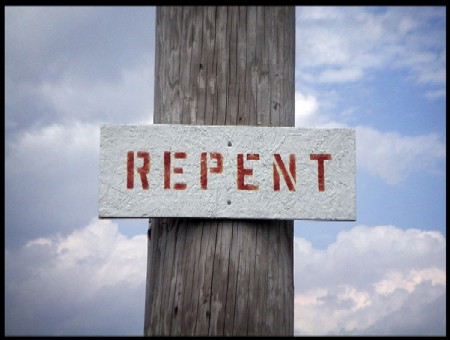
The old RSV version of the Bible translates the Hebrew verb, “Nacham” as “repent” rather than to “change one’s mind” as is the case in NRSV. Perhaps the translators were concerned that, because the common understanding of repentance is so closely identified with sorrow over one’s sins, associating it with an act of God might create confusion in the minds of readers. Whatever the merits of the NRSV’s interpretive decision, I think the old RSV got it right. God repented of God’s intent to punish Nineveh for its many sins. The biblical word “Nacham,” it should be noted, has many shades of meaning. But in this case, according to my lexicon, it means to “to be sorry, suffer grief or repent of one’s own doings.”[1]
No matter which translation you choose, however, for many believers such language is clearly problematic. Many believers have learned, as I did in Sunday School and confirmation, that God is not only perfectly infallible, but “omnipotent, omniscient and omnipresent.”[2] So if God is infallible, how can God make a decision that God later regrets and must reverse? If God is omniscient, how could God not know in advance that the Ninevites would repent at the preaching of Jonah and that its destruction would not be required-unless Jonah’s dire warning was merely an idle threat God knew would bring about the necessary response. But then God would not really be repenting or changing God’s mind as the text clearly states that God does. Furthermore, Jonah would be justified in feeling that he had been “used” by God who gave him a word that God knew would not come to pass. Theologians, including such great minds as Augustine and Aquinas, have undergone numerous metaphysical gymnastics and theoretical contortions to get around this problem-with but limited success.
One might be tempted simply to dismiss all this consternation as ivory tower sophism, except that the stakes here are real. If God changes God’s mind, how can God’s word be trusted? If God does not know and control the outcome of future events, how can the hopes passed down to us by the prophets inspire hope in our hearts? If God is not in control, who is? An impotent God is hardly a God at all. On the other hand, if God possesses each of the three “omnies,” wherein lies human freedom? If God is “all” powerful, it follows that we have no power-or at least not enough to make any real difference in our lives or in the world. So why try to end world hunger, overcome injustice or address climate control? Why attempt anything significant if history is locked into a calendar of biblically determined events leading up to the great tribulation, the rapture and the final judgment? As one individual I know was heard to say, “climate change is good news! It means Jesus is coming soon.”
Most of us would be repelled by either extreme, but the problem remains. If God is not all powerful, how powerful is God? Powerful enough to save us? Then why isn’t God saving the victims of war and starvation who are dying as I compose this article? It is all well and good to say that God respects our free will, but are there not limits to that rationale? As a parent, I tried to respect my children’s agency and freedom of choice even when they were small. But when I saw them running headlong toward a busy street, I intervened to restrain them without much regard for their will to the contrary. Is it unreasonable to expect God to intervene when genocide is being conducted?
Though I would not call myself a process theologian by any stretch, I will say that the philosophies of Alfred North Whitehead and Charles Harthshorne have given me some valuable conceptual tools for understanding the scriptures and their multifaceted witness to God’s saving acts. The following passage from Whitehead’s Process and Reality has been particularly helpful:
“The consequent nature of God is his judgement on the world. He saves the world as it passes into the immediacy of his own life. It is the judgement of tenderness which loses nothing that can be saved. It is also the judgement of a wisdom which uses what in the temporal world is mere wreckage.
“Another image which is also required to understand [God’s] consequent nature is that of his infinite patience. The universe includes a threefold creative act composed of (i) the infinite conceptual realization, (ii) the multiple solidarity of free physical realizations in the temporal world, (iii) the ultimate unity of the multiplicity of actual fact. If we conceive the first term and the last term in their unity over against the intermediate multiple freedom of physical realizations in the temporal world, we conceive of the patience of God, tenderly saving the turmoil of the intermediate world by the completion of his own nature. The sheer force of things lies in the intermediate physical process: this is the energy of production. God’s role is not the combat of productive force with productive force, of destructive force with destructive force; it lies in the patient operation of the overpowering rationality of his conceptual harmonization. He does not create the world, he saves it; or, more accurately, he is the poet of the world, with tender patience leading it by his vision of truth, beauty, and goodness.”[3]
I cannot begin to unpack fully this dense and nuanced passage which can only be fully appreciated after first reading the prior chapters of Whitehead’s work. But I believe enough comes through to illustrate the point, namely, that God’s interrelationship with the world is persuasive rather than coercive. God’s power is God’s patient determination to bring to fruition what St. Augustine calls the City of God in and through participation in the universe’s processes, inviting it, prodding it, cajoling it to become more than what it is. One need not (and I do not) buy into Whitehead’s metaphysics hook line and sinker to recognize in it echoes of St. Paul’s insistence that this “weakness of God” is actually the power of God revealed in the cross of Christ.[4] The cross and Jesus’ subsequent resurrection demonstrate that our most depraved act of rebellion is not powerful enough to evoke a retributive response from God or deter God from bringing to fruition through God’s continued dance with creation the new heaven and earth to which John of Patmos testifies in the Book of Revelation.
Such an understanding of God’s interaction with the universe leaves room for human agency and responsibility. The decisions we make and the actions we take make a real difference. We cannot, by our own reason or strength usher in the reign of God. But our actions in conformity with God’s reign contribute to its growth and its richness. Similarly, our acts of violence, indifference and greed result in the destruction of opportunities for God’s reign to grow, prosper and flower. We cannot stop the kingdom from coming, but we can frustrate its progress, delay its coming and rob it of some of the richness it might have had, if only we had acted differently.
Because the creation has a degree of free agency, God’s actions are, of necessity, contingent upon those of its creatures. When creation throws God a curve ball, acts in a manner novel and unanticipated or presents God with a new opportunity for or a new threat to God’s purpose, God must change course, “repent” of God’s plan and respond in a new way. God’s acts are not, however, capricious. God always acts in furtherance of the end God has in mind for the universe-that God may finally be all in all. I Corinthians 15:28. To that extent, we can say that the end is predestined. God will complete what God has in store for creation through patient, compassionate persuasion, working for as long as it takes.
In sum, God changes God’s mind, but never God’s heart. God changes God’s approach but never God’s goal of bringing all things to completion in God’s self. God changes course, but never God’s redemptive purpose. Because God repents, we have the opportunity and freedom to do the same.
Here is a poem by Jane Kenyon suggesting how God’s gentle, persuasive love might be at work under our noses.
Briefly It Enters, and Briefly Speaks
I am the blossom pressed in a book,
found again after two hundred years. . . .
I am the maker, the lover, and the keeper….
When the young girl who starves
sits down to a table
she will sit beside me. . . .
I am food on the prisoner’s plate. . . .
I am water rushing to the wellhead,
filling the pitcher until it spills. . . .
I am the patient gardener
of the dry and weedy garden. . . .
I am the stone step,
the latch, and the working hinge. . . .
I am the heart contracted by joy. . . .
the longest hair, white
before the rest. . . .
I am there in the basket of fruit
presented to the widow. . . .
I am the musk rose opening
unattended, the fern on the boggy summit. . . .
I am the one whose love
overcomes you, already with you
when you think to call my name. . . .
Source: Otherwise: New and Selected Poems, (c. 2005 by Estate of Jane Kenyon; pub. by Graywolf Press). Jane Kenyon (1947-1995) was born in Ann Arbor, Michigan. She attended the University of Michigan in her hometown and completed her master’s degree there in 1972. It was there also that she met her husband, the poet Donald Hall, who taught there. Kenyon moved with Hall to Eagle Pond Farm, in New Hampshire where she lived until her untimely death in 1995 at age 47. You can read more of Jane Kenyon’s poetry and find out more about her at the Poetry Foundation Website.
[1] A Hebrew and English Lexicon of the Old Testament, (Edited, Francis Brown; pub. by Oxford University Press, c.1907 reprinted 1953 and most recently edited in 1978).
[2] It should be noted that none of these three words are biblical.
[3] Process and Reality: An Essay in Cosmology, Whitehead, Alfred North, (c. 1978 by The Free Press) p. 346.
[4] Some of the theologians who have made creative use of process thought are John Cobb (A Christian Natural Theology c. 1975 by W.L. Jenkins, pub. Westminster Press; God and the World c. 1969 by Westminster Press) and David Ray Griffin (God, Power, and Evil, c. 1976 by Westminster Press). See also a fine collection of essays in Handbook of Process Theology (edited and c. 2006 by Jay McDaniel and Donna Bowman, pub. by Chalice Press).


The story of repentance by the people of Ninevah in the book of Jonah is also, very crucially, the story of Jonah’s unwillingness to see that repentance as worthy of God’s mercy. Even though God allowed Jonah to see His mercy in action, Jonah was angry about being part of the story of God’s grace. “Righteous revenge” is the story of the US today – we think we can game God’s Kingdom (“not of this world”) in order to achieve our petty satisfaction in the punishment which we expect Him to administer to those “others”.
LikeLike
True! Thanks so much for your comments.
LikeLike