TENTH SUNDAY AFTER PENTECOST
Prayer of the Day: Gracious God, you have placed within the hearts of all your children a longing for your word and a hunger for your truth. Grant that we may know your Son to be the true bread of heaven and share this bread with all the world, through Jesus Christ, our Savior and Lord.
“I pray that you may have the power to comprehend, with all the saints, what is the breadth and length and height and depth, and to know the love of Christ that surpasses knowledge, so that you may be filled with all the fullness of God.” Ephesians 3:18-19.
“The Lord is just in all his ways,
and kind in all his doings.
The Lord is near to all who call on him,
to all who call on him in truth.” Psalm 145:17-18.
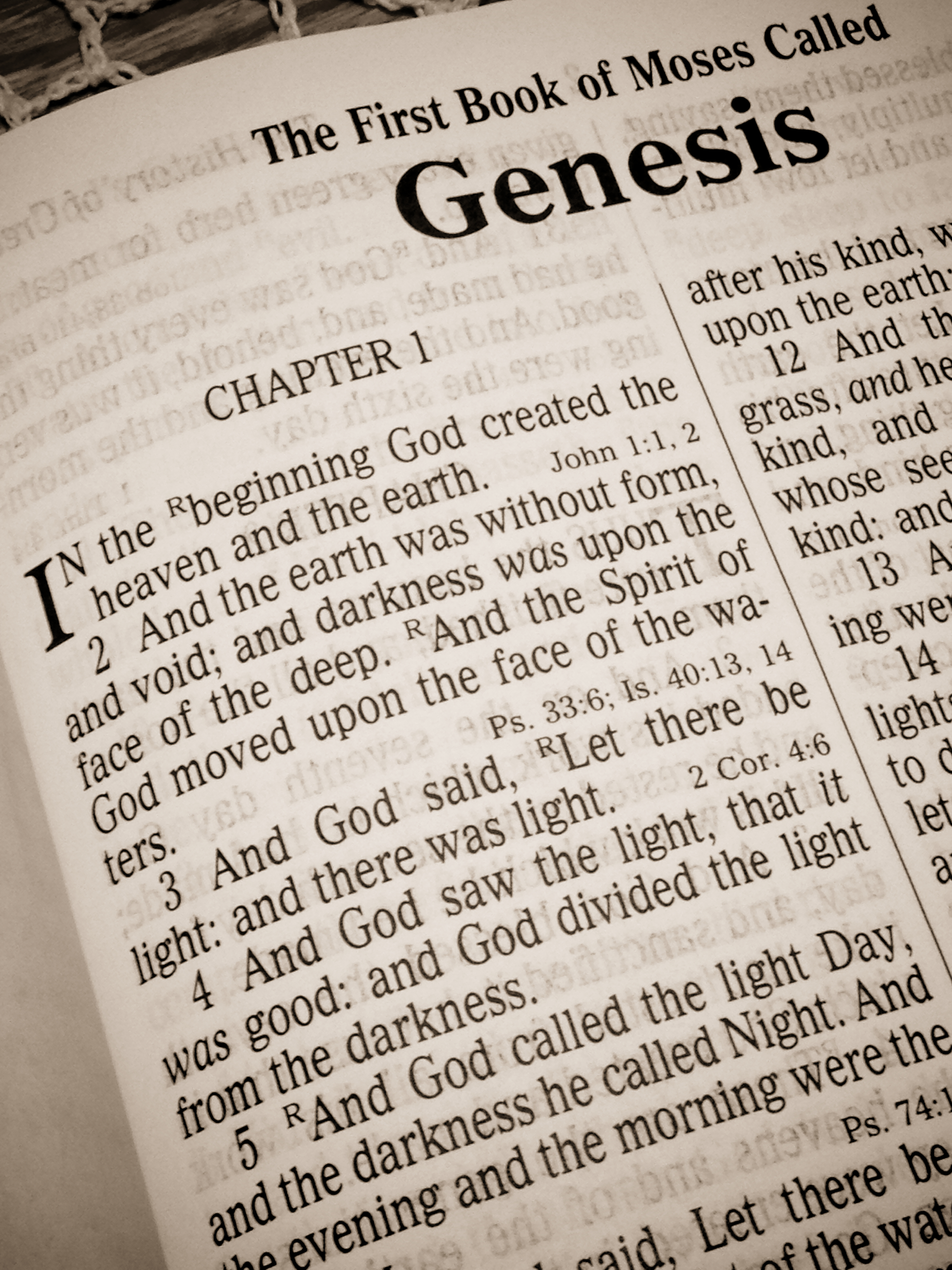
I have spent the last week reading Reading Genesis” by author, Marilynne Robinson with my daughter, Rev. Emily Olsen-Brandt visiting us while on sabbatical. It is a refreshing read. Unlike so many commentaries that dissect isolated pericopes with the tools of historical critical research, treating them as independent units, Ms. Robinson treats the whole book of Genesis as the complete, coherent and compelling work of literature it is. Though mindful of the complex and diverse history of the many different sources, traditions and their transmission over time, she never loses sight of the overarching theme that is God’s faithfulness.
Genesis begins with God creating the cosmos, not from the body of a defeated foe as much near eastern mythology would have it, but by God’s own creative word. There is no back story to creation. As a Rabbi and teacher of mine once explained it, there is a reason the Holy Scriptures begin with the Hebrew letter “B” instead of the letter “A” as one might expect. The letter b appears in Hebrew as “ב.” As the Hebrew language is written from right to left, “everything proceeds out of the mouth of b,” or “beth” as it is pronounced in Hebrew. [———ב] Everything knowable originates from God’s speaking the creative word. There is nothing above the word, before the word or beneath the word. There is no asking about what came before creation. To make such inquiries of the text is rather like asking a physicist what was going on before the big bang or into what is the universe expanding. Such questions betray a fundamental misunderstanding of astrophysics just as surely as inquires into what preceded creation indicate a failure of comprehension in reading Genesis.
God created human beings “very good.” As the second creation account in Genesis 2 illustrates, they were not made to serve God’s own needs, as though God had any! Rather than commanding humans to build God a temple, or offer sacrifices to God or worship God, God commands the first human to till and keep the garden God made. Though God’s human creatures prove faithless in their charge, God does not do as they expect, namely, condemn them to death. God continues to care for them and to be present for them in their altered existence brought about by their unfaithfulness. Remarkably, this God who created the universe displays a keen interest in and concern for some particular individuals who are not kings or emperors, but mere nomads living a precarious existence in the shadow of powerful nations and city states.
Again and again, God deals graciously and generously with the world. Just as God did not kill or abandon Adam and Eve for eating from the forbidden tree, so God does not condemn the first murderer, Cain, to death or even life without parole. In fact, God puts a mark on Cain to ensure that no one will seek revenge against him. The matriarchs and patriarchs sometimes behave in ways that are unjust, cruel and immoral by whatever historical or cultural standard one may wish to apply. But God seems uninterested in punishing or correcting them. God is, however, merciful and just where human actors prove unjust. God seeks out the outcast concubine Hagar, not merely saving her and her child from starvation, but making with her a covenant similar to that made with Abraham and Sarah. God does not punish Jacob for deceiving his blind old father Isaac and stealing his brother Esau’s birth right and blessing. But God makes of Esau a nation and gives him a heritage. God is generous in terms of mercy and acts with extreme restraint when it comes to retributive justice.
To be sure, there are instances when God inflicts judgment that takes the form of violence. God behaves in ways that cause us progressive, white and ever polite American protestant types to cringe. Robinson does not, as too many preachers are prone to do, apologize for the text or dismiss its discomforting portrayals of God and God’s acts as primitive and barbaric notions that we enlightened modernists are free to ignore. God is God and requires no defense, explanation or justification.
The great flood comes to mind as an example of God’s judgment, as does the fate of Sodom and Gomorrah. Yet even in these instances, God is more inclined toward mercy. The violence of the flood is intended to check human violence spiraling out of control. The flood saga ends with God taking the nuclear option forever off the table, promising never again to undo the good work of creation however wicked its human inhabitants may become. God is prepared to forbear destroying the two wicked cities of Sodom and Gomorrah if but ten righteous people can be found there. God’s default posture is always that of mercy and compassion.
God is all but absent from the story of Joseph. Unlike the matriarchs and patriarchs of prior generations, Joseph never experiences a theophany. His is a story of sibling rivalry born of his father Jacob’s favoritism. Aside from his dreams, which prove to have been prescient only in retrospect, Joseph’s adventures are all too human. Sold into slavery by his jealous brothers, Joseph must negotiate life first as a slave and then as a prisoner. His rise to prominence comes about through his having made a valuable connection with the royal household of Pharoh while in prison. Once elevated to a place of power and prestige in Egypt, Joseph does what every good immigrant does. He took an Egyptian name and forgot the affliction of his father’s house. He married a prominent Egyptian and gave his children Egyptian names.
As Pharoh’s number two, Joseph prepares Egypt for a devastating famine by storing up grain in the fruitful years before it occurs. He then leverages these stores to obtain for Pharoh first the lands and property of his Egyptian subjects and finally the Egyptians themselves. Ironically, Joseph transforms Egypt into a slave state, a circumstance that will have a devastating impact on his descendants. For all intents and purposes, Joseph has integrated himself into Egyptian society and culture.
But when Joseph’s brothers appear seeking relief from the famine, Joseph’s past and his family identity comes crashing back. Joseph finds himself in a position to save his family from starvation-or wreak vengeance upon his brothers for their treachery. Joseph’s toying with his brothers for what most have been several months suggests that he must have been conflicted. On the one hand, ten of his brothers were clearly deserving of whatever misery he might inflict upon them. On the other hand, there was his aged father and his full brother Benjamin for whom his heart yearned. In the end, neither his love for the two nor his just anger at the ten guide his decision. Joseph’s decision to show mercy and forgiveness hinge on his recognition that there was a greater meaning and purpose for his life than even his dreams could have revealed. Though Joseph’s brothers acted against him with evil intent, God put the consequences of their evil actions to a redemptive purpose, namely, “that many people should be kept alive, as they are today.” Genesis 50:20.
Joseph’s theophany, such that it is, occurs entirely in the rear view mirror. Only at the end of his story does he recognize the guiding hand of the God who appeared so graphically to his father, grandparents and great grandparents. Yet it is through Joseph’s insight that we are to view all the past chapters of Genesis. We are to understand that however evil, misguided, dense and unfaithful human beings might be, God remains faithful working God’s gracious intent and purpose in, with and under, through and sometimes in spite of the actions of God’s people. The message of Genesis is that it is finally God’s providential purpose that prevails. This is not to say that everything is preordained. Human agency is real. People act of their own volition and human actions have consequences. Abraham might not have left Ur. Easau might have killed Jacob for his treachery instead of welcoming him home and embracing him. Joseph might have imprisoned or killed his brothers, leaving his father Jacob to starve in Canaan. Still, God’s intent and purpose would continue to work itself out because God is faithful to the world God made. The truly remarkable thing is that God graciously invites ordinary humans leading ordinary bread and butter lives to participate in God’s struggle to bring humanity and all creation into blessing.
Just as the Jospeh story is the lens through which the rest of Genesis is to be viewed, so the book of Genesis sets the trajectory for the scriptural narrative to follow culminating, as Christians confess, in the obedient life, faithful death and glorious resurrection of Jesus. There, too, human agency at its worst crucified the best gift God had to give. But God raised and continues to raise that gift up and offer it to us again and again for as many times as it takes until God’s providential purpose for creation is fulfilled. This, to use Paul’s words, “is the breadth and length and height and depth, and to know the love of Christ that surpasses knowledge…”
To recap, I owe many of the insights expressed herein to Marilynne Robinson and her remarkable book, Reading Genesis (c. 2024 by Marilynne Robinson; pub. by Farrar, Straus and Giroux) and daughter Rev. Emily Olsen-Brandt
Here is a poem by William Cowper reflecting confidence in God’s mercy and providential purposes so well illustrated in the book of Genesis.
1
God moves in a mysterious way,
His wonders to perform;
He plants his footsteps in the sea,
And rides upon the storm.
2
Deep in unfathomable mines
Of never-failing skill,
He treasures up his bright designs,
And works his sov’reign will.
3
Ye fearful saints, fresh courage take,
The clouds ye so much dread
Are big with mercy, and shall break
In blessings on your head.
4
Judge not the Lord by feeble sense,
But trust him for his grace;
Behind a frowning providence
He hides a smiling face.
5
His purposes will ripen fast,
Unfolding ev’ry hour;
The bud may have a bitter taste,
But sweet will be the flow’r.
6
Blind unbelief is sure to err,
And scan his work in vain;
God is his own interpreter,
And he will make it plain.
Source: This poem is in the public domain. William Cowper (1731 –1800) was an English poet and Anglican hymnist. He was one of the most popular poets of his time, writing poetry about everyday life and scenes of the English countryside. A fervent evangelical, he struggled with doubt about his salvation and at one point became convinced that he was eternally damned. Cowper was tormented with mental illness and placed for a time in what was then called an insane asylum. He gradually recovered from his illness and gained some stability in his faith life. Cowper gave expression to his newfound confidence in God’s grace and forgiveness in the many hymns and poems he wrote thereafter. He also wrote a number of anti-slavery poems. His friendship with John Newton, an avid anti-slavery campaigner, resulted in Cowper’s being asked to write in support of the Abolitionist campaign. He wrote a poem called “The Negro’s Complaint” in1788 which rapidly became very famous. It was often quoted by Martin Luther King Jr. You can read more about William Cowper and sample more of his poetry at the Poetry Foundation website.
 Peter's Outer Cape Portico
I’m digging Genesis afresh in recent years. Thanx for the tip on this book. I reckon I will need to obtain a copy. Genesis is so full of mystery and wonder, and I am inclined to read it more holistically than my heritage led me to read it. (We tended to mine it for arguments with Darwin and to explain why the Spanish speak Spanish, the French speak French, and the Americans speak English – stuff like that.)
LikeLike
JESUS IN JOSEPH / JEALOUS BROTHERS AND ME
Posted onApril 20 by Agent X
A Sunday Sermon for Last Church
Today we come to the table of the Lord to eat his body and drink his blood. This is the most sacred part of our worship, the most intimate moment we have with Jesus as a church. Eating his body and drinking his blood, as he describes in John 6, is a repulsive idea. When I was a kid, it made me think of Count Dracula.
.
Funny, maybe. Funny to a kid. But to seriously contemplate eating someone’s flesh is a terrible thing. In 1972, the Uraguayan rugby team survived a plane crash in the Andes by means of such morbid contemplation. For them, and for those of us who find ourselves mortified by their story, it was no laughing matter; it was a somber thing if ever there was one, something to be ashamed of instead. The report of their cannibalism caused a backlash until the survivors revealed they had rationalized it based on their faith and practice of Eucharist.
.
The rugby team represents an extreme outlier case of Christian experience. By far, most of us never had that experience and never will. Over the course of my life worship in our tradition attempted to be just as somber but nowhere near as morbid. I never heard a minister officiate the table and remark on the cannibalistic aspect of our worship. On the contrary, I heard many lessons about “discerning the body” and “eating in an unworthy manner.”
This is a concept the church learns in the letter of First Corinthians. We want to take care not to eat judgment on ourselves, and this normally (in my experience) was treated as a matter of proper introspection. I grew up in a church tradition where the observance of communion was a silent practice. The whole church would sit in almost complete silence passing trays of cracker and grape juice back and forth and eating a tiny pinch and sipping a tiny drip. This was reverence, as I understood it.
.
In that moment of silence, it is presumed each member partaking would quietly and reverently humble themselves and contemplate the cross of Christ. If your mind wondered away a moment, I suppose that would mean you were eating in an unworthy manner. Heaven help you not get distracted by a buzzing fly! You didn’t want to eat judgment!
.
To be frank, I think when I was young, I observed communion more in fear of eternal damnation than in either reverence or joy. It all seemed so important, but I didn’t really know why.
.
I would try to visualize Jesus hanging on a Roman cross forgiving my sin. But I’m not sure I always maintained this inner reverence. I thank God it passed quickly, because as an American teenager with a Walkman and MTV, my attention to such formal introspection had a short shelf life. I wasn’t distracted by a fly nearly so much as a pretty girl.
Once I was grown and studied Bible in the academy, I came to a different view of that most holy moment. “Discerning the body” is not some effort at navel gazing, not really. Rather, and this idea totally upends all the silence and the tiny portions, St. Paul would have us discerning the body depicting a meal we share with others, one in which we wait to eat until even the poor and lowly are seated with us.
.
St. Paul has such a potent idea that the church be unified! Discerning the body so as not to eat and drink judgment means we take care to share this moment with lowly people among us, that we come together as ONE. Sadly, that is an aspect we were totally corrupting unwittingly all along as a congregation. It was not the distraction of a fly or a girl for one individual to worry about, but a concern we all share as ONE.
.
That’s an important concept we don’t generally talk about even to this day. Perhaps it is one we should literally discuss as we sit around a real table and break real bread as we shatter the silence in conversation and song.
.
The Heart of Jesus and the Table of Apocalypse
But today I want to take you into Jesus’s heart as you eat this meal at this table. I want to reveal Jesus to you in the bread and wine. This is yet another aspect of communion observance. There is a meditation involved, but it’s not so much your navel in focus as it is Jesus’s heart. Yes, as a group, an assembly daring to become ONE in prayer at table, we can have a heart-to-heart meeting with Jesus. I want you to see him afresh and to hear him anew. I want you to feel what he feels when you come to this table, and that is a notion I never heard anyone preach before.
.
How can we know the mind of God? How can we know the heart of Christ?
We can listen to him tell his story.
.
We are not the first to get this meal all messed up. What exactly are the proper table manners at THIS TABLE? In order to ask such a question, we must get a proper perspective, and a proper perspective comes into view when first we talk about Adam and Eve at the tree of the knowledge of good and evil. That sends us all the way back to the beginning of creation, to the Garden of Eden.
.
Go there with me now.
.
In the garden, God loves his creation. He loves his creatures and places the man and the woman within a good creation. We know this because as Genesis 1 describes it, God creates a little more each day for six days, rests on the seventh, and hold’s Judgment Day court at the end of each day finding the creation to be good. This goodness continues reverberating and coursing through creation as a harmonious peace we call shalom.
.
God’s creative love is immense! The proper loving response to this love is simple. It’s not hard to understand at all. Any gullible, naked farmer can do it, and so can we.
.
There is one single rule this man and woman simply must obey, and it is truly an easy rule. They can eat from any tree in the garden, including the tree of life, but the one tree in the middle of the garden, the one God designates as the tree of the knowledge of good and evil, that tree they are prohibited from eating. If they eat of that tree, they will die, and shalom is no longer pulsating through creation.
.
Ain’t that something?
You can literally count the rules on one finger! The consequences, though, well… you can’t count them in a lifetime.
.
For our purpose today, we note mainly how the world is ordered (or disordered) with a meal! The man and the woman go around the garden cultivating and ruling over all creation with a dominion given by God and everything is good. The world is at peace. They are like high priests in a ceremonial worship where their tending of flowers, even their nakedness, and in fact even their mere breath, bring glory to God! And at the center of all that worship and honor is a meal with one simple rule.
.
The breaking of this one simple rule has had dire consequences ever since. We can sum up those consequences in the word “death.” Every muder, every unwanted pregnancy, every war, cancer, heart attack, and wrinkled up, old age that kills us and every thorn, thistle, weed, or pain, sweat of the brow, fear and curse ever known to mankind sprouted from the moment this meal was not eaten in a worthy manner. Adam and Eve ate judgment on themselves and all their children.
.
That is the story at the start of all stories in creation. It is the way the Bible as a whole, it is the way the book of Genesis begins.
.
Today, Christians treat Genesis as some sort of theological mine from which to dig up refutations against Charles Darwin and to explain away dinosaur bones. Let us not reduce such an important story to these ancillary matters. Let us find world order and redemption instead.
.
In the beginning was a meal. A meal and a tree of life. We find this tree of life returning again at the end of Revelation, the end of our Christian Bible. I would argue, we find it again all through scripture, actually, but that would be an argument for another day. At the moment, I ask you to consider the other end of Genesis, the epic story of Joseph, son of Jacob, a sweeping epic that consumes the last thirteen chapters of the book.
.
I ask you to notice how along the way to Joe’s story, things in creation have grown worse, not better. Adam and Eve are no sooner expelled from the garden and their two sons have a jealous dispute about how to worship God, and Cain kills his brother Abel! Within just six generations of sons, Lamech arises, pronouncing curses and claiming he will order the world by killing people who wound him. The shalom seems to be slipping further and further out of reach as death comes to rule over the humans.
.
But also notice that our loving God comes to restore and repair his broken relationship with creation. He gives Adam and Eve yet another son, and through his generations raises up Noah, a man through whom he judges the world, mankind, and starts it all over again. This love of God remains even though at turn after turn, his redemption is thwarted.
.
After destroying creation and starting again, God promises not to use that method of redemption ever again. Eventually, he calls Abram (soon to be called Abraham) and his wife to bear his promises of redemption. God will be with these people and rehabilitate them and through them bring his redemptive shalom back into the world.
.
As we find our bearings in this story of the world, there are two things we need to say to help us make sense of it (actually many, but two for our purpose today): 1) The Bible tells the story first and foremost of God. God is the hero. So even when we read about Abraham or Jacob or Joseph or David or St. Paul, the real hero is not the little boy who kills the giant, but God who guides his stone. And 2) All the problems of our world began with improper eating arrangements. Theologically, at root, our problem is table manners. We got into our mess with a meal – our forebears ate judgment on us – and we get out of this mess as we learn proper table manners.
.
We have already noted how the whole Bible is bookended (framed) with the meal at the tree of life, and now we notice how all of Genesis is framed in a salvation meal too.
.
The drama of God calling and loving Abraham and his children goes through numerous twists and turns. God makes everlasting covenant-promises to Abe, promises of salvation, of land, and descendants. And God stretches Abe’s faith to the breaking point along the way. Abe and his wife stumble, and he makes a baby with the servant girl, a scandal if ever there was one! But God insists, even this will not thwart his purposes with Abe. When Abe finally gets his promised son, God calls him to sacrifice this gift on the altar, and Abe obeys, which puts this covenant trust in great jeopardy. But God stays Abe’s hand at the last moment.
.
But then that boy grows up and has two sons, and like Cain and Abel before them, these two descendants descend into murderous strife. Jacob, whose name means “Liar/Deceiver” manages to appease his brother and avoid murder eventually, but the threat is there and is very real. But along the way, we find God’s promises and love must contend with very deceitful and manipulative people.
.
But as the saga unfolds, we are drawn deeper and deeper into the hearts and minds of this family, and as readers we can identify and even share their experience. We see ourselves in them as we find God in them too. Their story becomes our story. And the story follows Jacob and his sons specifically.
.
We see Jacob fall in love with Rachel, and like any good love song on the radio, we find ourselves sympathizing. We tap our toe and feel the rhythm of this love song as it twists through the manipulations of Uncle Laban who wants to marry off his older daughter too. So far, it’s all highly understandable, even though it deals with a distant culture from long ago. Leah needs a husband too, and Jacob may as well be hers.
.
Ah… but the way Laban deals with this is simply treacherous! Jacob has bound himself to promises he must now keep, and this leads to years and years of sacrifice so that he can love Rachel, but that love now bears the baggage of loving Leah too. And Leah, poor Leah! Who doesn’t feel her pain? Leah, like her daddy (like Jacob too, for that matter) knows how to manipulate people, and taking a page from Abe’s story, she offers her servant girl to Jacob in order to make a baby!
.
This is NOT planned parenthood! This is unplanned chaos! The roots of intergenerational jealousy sink deep in the soil of this deceitful garden, as Jacob, his two wives, and their two servant girls make a family, eventually consisting of twelve sons! These twelve sons from Jacob, the LIar, are the patriarchs of Israel! Their drunken debauchery is the spring from which God must work out our salvation!
.
And along comes Joseph, eventually, who is Jacob’s favorite son, born in his old age of his true love, Rachel. Rachel, that maiden he met at the well that day long ago and stole his heart! Joe is the son Rachel bears him, and so it’s only natural that Jake loves Joe most.
.
And Joe, it turns out, is a tattletale, Daddy’s pet, he gets the fancy sport coat and all the favor. But that’s not all. Joe, also is an arrogant little punk with big dreams of grandeur, and he enjoys spouting off at dinner with the family how some day, when he grows up, all these brothers will come and bow low to him.
.
The brothers hate him. They HATE him!
If he were your little brother, you’d hate him too.
.
This is a familiar pattern by now. The brotherly jealousy and hate and murder plots have been humming all through Genesis since Cain and Abel. What is God, our hero, going to do with and through this?
.
What Joe’s brothers mean for evil, God uses for good.
And this brings us back to table manners.
.
Well, not immediately, first we must watch Joe descend into a pit. It’s a grave of sorts. The brothers contemplate murder, but they ultimately relent. Yet, they lie! They jacob to Jacob about this causing their father to think the lad is dead, and then they must face the rest of their days maintaining this morbid lie. Meanwhile, Joe, the dreamer, descends into slavery and a dungeon which for years on end feels like enduring a living death.
.
There can be no doubt, Joe’s dreams are crushed, pulverized, and shattered over and over and over again as at each stage of his humiliation, his dreams of grandeur slip further and further out of reach. And if we recall at every step how God is the hero redeeming creation and making promises all through this saga, we should see how the impossibility of redemption is increasingly divine! Only God can do this. But in the narrative tension we must ask: How???
.
Where is God in this mess? It can be hard to tell! But the bigger the problem, the more powerful the God who redeems it! Yet, at turn after turn, he keeps working with the least, the humblest, the weakest, and most unlikely people so that he does not share the glory with them but receives the praise due him in proper table manners.
.
I know by saying that way, it seems a little out of kilter, but look again. Look carefully with eyes of faith. “Those forgiven much, love much,” says Jesus to Simon eons later. And that little insight helps guide our understanding of what happens here in Genesis.
.
Joe is buried under the weight of a foreign empire, completely unknown by Pharaoh. He is buried under the weight of his brothers’ lie, and Jacob believes he is long dead.
.
The Bible does not feature this part of the story, but we can presume Jacob mourns Joe’s passing, and every year at the anniversary, he weeps. Every holiday festival when the family comes together, there is an empty seat where the arrogant dreamer sat. The seat is no longer filled with arrogant dreams, but with the lie the brothers are now forced, in order to keep up appearances, they must now maintain. Oh, what a burden they have created for themselves and their father!
.
For all we can tell, the brothers are pretty good guys except for this one lie which is no little lie at all. There is no record of them repeatedly treating anyone else like this. They in fact seem completely honest about their dealings when we meet them again later, but they are now burdened with this old lie they still maintain. This one lie disintegrates them, and they have no integrity.
.
Meanwhile, God has arranged for a cupbearer and baker to go to jail with Joe. A cupbearer and baker. This isn’t the keeper of the royal flock or the captain of the guard. No. The cupbearer and baker! Think about that. These men work at the royal table! And not only that. They aren’t merely the wait staff, this is the guy who serves the wine and the guy who bakes the bread! These are the servants of Eucharist! In that cup and in that oven are the blood and body of Christ!
.
And these guys who covertly bear witness to Christ and to God’s movement far beneath the drama and far behind the scenes backstage join Joe in his imperial pit where that old dreamer listens to, and interprets, their dreams – the dreams of bread and wine! And Joe interprets their dreams quite successfully in what we Christians might think of as almost a prediction of death, burial, and resurrection! For the baker will die, but the cupbearer will be restored. And that is exactly what happens.
.
Oh, how the plot thickens! It’s exciting, when you really think about it!
.
But we must be patient, and Joe especially must be, for despite one convict’s request of another, (“Hey, man, when you get out, can you do me a solid?”), the cupbearer seems to blow Joe off. That is… until… Pharaoh has a nightmare that troubles him so much, he calls all his wise men to come and interpret it for him. But they can’t.
.
Now, when the king calls all his servants to a special session, they take him deadly serious. It doesn’t matter what the issue is, they come running for these special sessions. Normally, convening a special session of congress gets things done, but this is a truly unique problem, and none of Pharaoh’s best advisors can help. This one stumps them all. And this never happens. It never happened before!
.
It’s while the court is in a dither on this matter that finally, finally, finally the cupbearer either remembers or finally gets the gumption to speak up on Joe’s behalf. But I would have you notice that by speaking up this way, the cupbearer must confess his own criminal record! Everyone in this story is humiliated in one way or another, and this cupbearer is no exception.
.
“Do you remember that time, O King, when you threw me in prison a while back? … ahem… well… I met a guy in the dungeon who interpreted dreams, and he nailed it. His dream interpretations accurately predicted the future of both me and the baker. If you want help with your nightmare, you should consider talking to Joe.”
.
St. Paul tells the Philippians that Jesus did not grasp at his deity, but humbled himself taking on the form of a slave, and even more humiliating himself to the point of death, death on a cross, but God raised him up, up and up so that his name was above every name, and at the name of Jesus every tongue would confess and every knee bend.
.
And with only the smallest of exceptions, we see God do that with Joe here. Joe plays the Jesus card all the way back in Genesis! Joe seems to have been grasping at greatness back in the beginning, but he was humbled and took the form of a slave and a convict, a forgotten (even dead) convict, but now, at long last, God raises him up, and he interprets Pharaoh’s dream, and then at his presence every knee bends as all the stars and hay bales bow to his!
.
And the dream, the nightmare, is explained as a starving world. God’s good creation will be plunged into famine and starvation for seven years. But first there will be a time of plenty, and if a wise gardner were to wisely prepare in advance for this coming disaster, he could feed the world. And Pharaoh senses in his bones that this lad understands, so he appoints the lad to be in charge of this worldwide rescue operation of all of creation!
.
Yes, Genesis opens with a meal that brings on disaster and closes with a meal of salvation!
Simply divine.
Don’t you think?
.
And we’ve already seen Jesus Christ seething beneath the surface at at least two points along the way, not to mention all the others! Cain and Abel are sinners, but we see Jesus in Abel, as he dies in a jealous murder between brothers, and Pilate knows the Jews hand him over due to envy! (Mark 15:10).
.
Esau sells his birthright and is cheated out of his blessing by his baby brother who is a liar, and yet we see Jesus in this liar taking a bride and bearing God’s promises. (What does this say about you and me? Can the world see Jesus in us?)
.
The whole world comes to Joseph and bows low, just like he’d dreamed long ago, though the dream comes true like Joe never could have expected. And Joe is stripped of all his arrogance, pride, and dreams long before they come true. So, when Pharaoh calls him up out of that grave – ahem – lyons den – ahem – dungeon, Joe wastes no words or time taking credit for himself, but points solely to God, the real hero of this story.
.
And through Joe (or Jesus in Joe), the whole world finds food for life. Life is preserved for every living soul through this man God raises up. And word of this gets out around the world reaching Jacob who sends his sons to get some food so that they might live too.
.
Wow!
.
And upon meeting Joe, after so many years and so much has changed, the brothers do not recognize Joe in his royal garb, and they bow to him, and the dream comes true! But that old dream is, in the urgency of the situation, merely the poetic justice part. The urgent business of feeding and reconciliation is at hand. And Joe recognizes the brothers though they do not recognize him!
.
These brothers wronged Joe. He knows it; they know it. They have been burdened with this lie all this time, both Joe and the brothers, each in their own way. But in the meantime, Joe takes special interest in THESE men. He singles them out to share a meal! They have the work of reconciliation at hand. Redemption doesn’t merely feed the world some calories, it reconciles brotherly hate.
.
But Joe does not immediately reveal himself to them. He wants to do some heart-to-heart business with these brothers, and this happens at the table! They must learn proper table manners, theologically speaking. Yet, as they eat, and as the brothers still as yet do not see Joe for who he really is, Joe is overcome with emotion and must retreat to weep!
.
Can you feel that?
.
That, brothers (and sisters) is the heart of Christ, and as we eat in an unworthy manner, not recognizing him and the movement of God in our lives, this is what Jesus is doing with us. He steps back to weep as his love for us is overwhelming even to him.
.
We show up at his table that he has prepared in the presence of his enemies (us), and he loves us in our wayward lies. He steps out to weep.
.
Isn’t that remarkable? God weeping over us? There’s a number of emotions tied up in all that, but love is the overwhelming thing here. And God/Jesus weeps sometimes when his love is so moved. We tend to think of God as more detached, more high and mighty and judgmental, even if graceful. But God has feelings too.
.
Jesus weeps at the tomb of Lazarus too. It’s the shortest verse in the Bible! (Easy memory verse, if you are into that sort of thing.) But it begs the question: Why? Why does Jesus cry over Lazarus? We all know he is gonna raise him back to life! So why weep? Why not just raise him up?
.
Love.
Love takes the time to cry. It’s a heart thang.
.
And Joseph washes his face and returns to the table. He proceeds to deal with his treacherous brothers in such a way to work out their demons, to force them to face their lie and talk about it. They don’t recognize their brother is alive and well, that they have now bowed low to him already, yet their old dealings with him come home to roost as they eat this meal with him! The irony is divine!
.
The brothers leave the table on mission to get Rachel’s other son and bring him for Joe to lay eyes on, and ultimately to retrieve their father Jake too, and bring him into Joe’s courts as well. Eventually, Joe reveals himself at the table! and we are instantly reminded of those disciples at Emmaus in Luke 24.
.
I’m telling you about Genesis today so that when you come to the Lord’s Table and celebrate Eucharist, you will meet Jesus for a heart-to-heart visit. Our reading of Genesis facilitates a new reverence for this table. The world is ordered through our communion observance. And the story of Joseph feeding his brothers who bow low to him at long last reveals to us our position with Jesus as we face our lies and find him weeping over our betrayals.
.
Let us surrender our lies to him. Let us find new, deeper trust in God and his salvation as we share this meal. Let us talk about this story and get excited as the plot thickens! Let us look deeper than we are accustomed for the movement of God in the world and in our brothers and sisters joining us in the drama of table manners. The tree of life bears such fruit, and we want to eat it. The joy of the Lord is our strength. The joy of the Lord is hosting his children around his table and singing the songs together of apocalypse and eternity.
.
Let us take some TIME, and SHARE this meal, not simply a pinch of cracker and a thimble of grape juice, but real time and a real meal shared with the heart of Jesus today in a worthy manner so that we eat and drink salvation on ourselves. Let’s not reduce this meal to navel gazing and silence, but let’s eat!
.
Can I get and Amen?
Good.
Let’s eat.
LikeLiked by 1 person
Thanks for sharing this!
LikeLiked by 1 person