SEVENTH SUNDAY AFTER EPIPHANY
Prayer of the Day: O Lord Jesus, make us instruments of your peace, that where there is hatred, we may sow love, where there is injury, pardon, and where there is despair, hope. Grant, O divine master, that we may seek to console, to understand, and to love in your name, for you live and reign with the Father and the Holy Spirit, one God, now and forever.
“But I say to you that listen, Love your enemies, do good to those who hate you, bless those who curse you, pray for those who abuse you.” Luke 6:27.
“We are to serve our enemy in all things without hypocrisy and with utter sincerity. No sacrifice which a lover would make for his beloved is too great for us to make for our enemy. If out of love for our brother we are willing to sacrifice goods, honor and life, we must be prepared to do the same for our enemy. We are not to imagine that this is to condone his evil; such a love proceeds from strength rather than weakness, from truth rather than fear, and therefore it cannot be guilty of the hatred of another. And who is to be the object of such love, if not those whose hearts are stifled with hatred.” Dietrich Bonhoeffer, The Cost of Discipleship, (c. 1951 by SCM Press, Ltd.), p. 165.
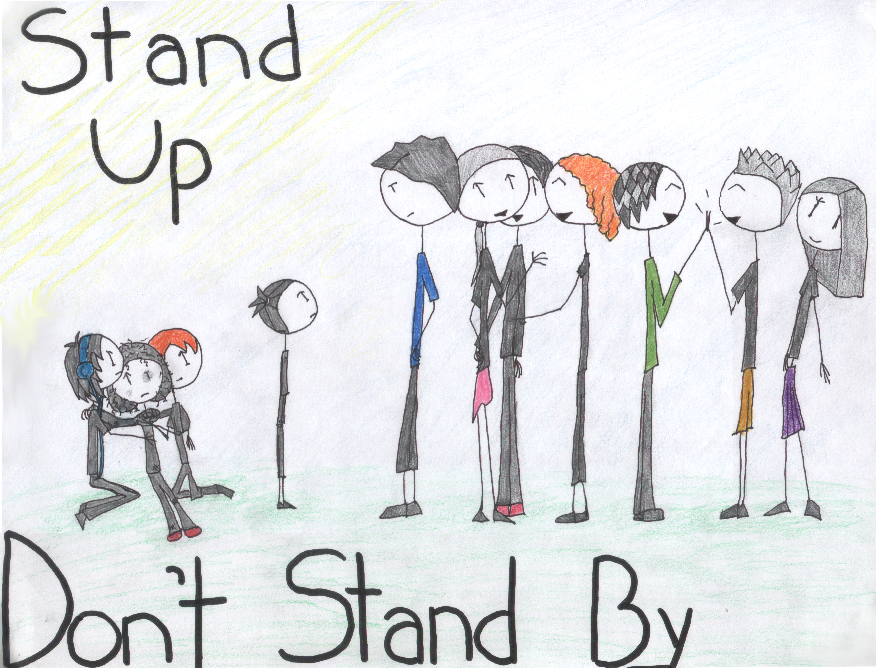
At age eleven, I hated Keith for good reason. Three years older than me, he and his younger friends made it their mission to make my life as miserable as possible. Twice Keith beat me to a pulp. Once he sneaked into my yard and cut the heads of the garter snakes I kept as pets (Yes, I know. Keeping snakes is pretty weird). He would routinely show up with his crew of followers in the ally in back of my house to hurl insults and rocks at me. He was probably the worst enemy I ever had.
Standing up to Keith on the field of battle was out of the question. But there are other ways to fight back. Keith’s home was a block away, separated from my yard by a vacant lot. From the safety of the underbrush, I could lob rocks, dirt clods and insults at Keith whenever I found him in the front yard. Sometimes he gave chase, but I knew the vacant lot like the back of my hand, every nook, cranny and hiding place. He soon grew tired of my little game of whack-a-mole and retreated home. I remember well the day I found him flirting with a neighbor girl he was obviously trying to impress. From my hiding place I made loud smooching noises that made his love interest laugh-and that only made Keith more livid. Of course, I knew I would pay dearly if Keith ever caught me out in the neighborhood. Consequently, whenever I left my yard, I kept a wary eye out for him.
In retrospect, I think it must have been an unhappy summer for both of us. I longed to be able to go where I wanted without always looking over my shoulder. I have no doubt that Keith longed to be left in peace to work on his dirt bike or chat with his love interest without harassment. But the conflict had gotten bigger than both of us. I think we both wanted it to end, but we didn’t know how. On one of the many occasions on which I was badgering Keith from the shelter of the vacant lot, I made an insulting remark about his mother. Suddenly, Keith exploded with an energy I had never seen before. He raced across the street to the lot as I hunkered down in my hiding place. “F@#k you Cotton Tail (his derogatory name for me)!” he shouted. “You don’t know nothing about my mom. Nothing!!! I swear to God that I’ll kill you the next time I see you!” Keith spent more time than usual hunting me down that day, but to no avail.
I think that was probably the last time I went out to harass Keith. Part of my reluctance was fear. I more than half believed he might kill me or make me wish he had. But there was something deeper. I knew that, somehow, I had inflicted a deeply hurtful blow. I had wounded Keith in way deeper than he had ever hurt me. To say that I now loved him would be a stretch. But for the first time, I saw him as something other than a bully. I saw him as someone who had a mom, someone who could be hurt. Tormenting Keith no longer seemed clever, funny or adventurous. I saw it for what it really was. Just plain mean.
Keith and I never became friends, but our mutual animosity gradually cooled as we both grew older. By the time he was in high school and I was in junior high, we were waving and greeting one another. Keith remained in our hometown after college and medical school where he started his dental practice. If I ever get back there again, perhaps I will pay him a visit. I would like to know what triggered his hostility against me. Was it because he, being short for his age, saw in a younger kid who was nevertheless four inches taller a threat or a challenge to his manhood? Was I just an easy target because I was weird. (You must admit, a kid who keeps garter snakes as pets is clearly on the far side of normal). I would also like to know how my remarks upset him. What was going on with his mother and his family? I am not interested in obtaining an apology or offering one, though one is probably owed on both ends. I only want to understand and, perhaps, be understood.
More than a few insightful people have said that the definition of an enemy is a person whose story we do not know. When threatened by hostility, real or imagined, we have a natural tendency to ascribe the most sinister of motives. In reality, however, there is always a lengthy and complex road that has led all of us to who, what and were we are today. Our lives have been shaped, for better or worse, by family, church, peers and education. We are the products of every life experience, every triumph and trauma, success and failure, friendship and betrayal. If we are to follow Jesus’ commands to love our enemies and “do unto others what we would have done unto us,” then we need to learn our enemies’ story. We need to get ourselves into their skin and view the world through their eyes. Only then does it become possible to love one’s enemies, forgive them and begin to address their needs.
I do not mean to suggest that any amount of trauma, tragedy or abuse one suffers can justify or excuse one’s own acts of cruelty, violence or abuse. But knowing where the enemy’s hostility is coming from can enable us to avoid needlessly triggering it and give us the tools to diffuse it. More importantly, knowing one’s story makes empathy possible. Knowing the pain, fear and loneliness from which hostility springs can help us become more understanding, generous and forgiving. We discover in our enemy’s story common ground and opportunities for building bridges and opening doors for justice to be done, reconciliation achieved and peace made.
Love is less a matter of feeling than of action. You don’t have to like your enemies to love them. You don’t have to respect their opinions, ideologies and bigotry. And under no circumstances must their abusive behavior be enabled by reluctance to provoke them. While Jesus absolutely enjoins his disciples from taking revenge against their enemies, employing violence against them or usurping the prerogative of God alone by executing judgment upon them, he does not advocate acquiescing in the face of their aggression. There are numerous manners by which hostility can be resisted nonviolently and constructively. Jesus’ entire life was one of resisting the forces of oppression, violence and cruelty with the power of love. He employed parables that deconstructed his opponents’ prejudices and opened their minds to a deeper and richer reality. He exercised radical hospitality embracing all who sought his help, begged for healing and came posing questions. He could be found in the banqueting halls of religious and civic leaders and in places where notorious sinners and outcasts gathered. He embraced even his torturers with a prayer for their forgiveness. In essence, love is the most potent act of resistance to evil. It is a refusal to be drawn into the vortex of retribution that knows no end. It is a refusal to allow the enemy to dominate space in our minds and hearts. It robs our enemies of the power to transform us by their malice into a mirror image of their hatred. Love breaks the cycle of tit for tat, leaving the enemy powerless.
Jesus’ command to love one’s enemies requires that we be truthful with them. Truthful speech is the deepest expression of love. It is no act of love to allow a bigot to continue in his bigotry. It is no act of love toward your congregation to smooth over or ignore abusive and bullying behavior by some members against others. It is no act of love for one’s nation to remain silent in the face of injustice. Love does not always inspire love in return. Sometimes it sparks hostility and resentment. But disciples of Jesus know that the truth, painful as it can sometimes be, sets one free. Disciples know that they have been saved from self destructive behavior by the Truth that is Jesus. How can they withhold that lifegiving Truth from those they are called to love?
Here is a poem by Frank Chipasula love for country that reflects the sort of clear eyed love that is truthful, passionate and hopeful.
A Love Poem for My Country
I have nothing to give you, but my anger
And the filaments of my hatred reach across the border
You, you have sold many and me to exile.
Now shorn of precious minds, you rely only on
What hands can grow to build your crumbling image.
Your streets are littered with handcuffed men
And the drums are thuds of the wardens’ spiked boots.
You wriggle with agony as the terrible twins, law and order,
Call out the tune through the thick tunnel of barbed wire.
Here, week after week, the walls dissolve and are slim
The mist is clearing and we see you naked like
A body that is straining to find itself, but cannot
And our hearts thumping with pulses of desire or fear
And our dreams are charred chapters of your history.
My country, remember I neither blinked nor went to sleep
My country, I never let your life slide downhill
And passively watched you, like a recklessly driven car,
Hurrying to your crash while the driver leapt out.
The days have lost their song and salt
We feel bored without our free laughter and voice
Every day thinking the same and discarding our hopes.
Your days are loud with clanking cuffs
On men’s arms as they are led away to decay.
I know a day will come and wash away my pain
And I will emerge from the night breaking into song
Like the sun, blowing out these evil stars.
Source: O Earth, Wait for Me. (c. 1984 by Frank Chipasula; pub by Ravan Press). Frank Mkalawile Chipasula (b. 1949) is a Malawian writer, editor and university professor. He earned his B.A. from the University of Zambia, Lusaka and, following graduation, worked as a freelance broadcaster for the Malawi Broadcasting Corporation while studying English and French. In 1978 Chipasula went into exile in the United States and studied for his M.A. in Creative Writing at Brown University. He earned a second M.A. in African American Studies at Yale University and earned his Ph.D. in English literature from Brown University in 1987. His first book, Visions and Reflections, published in 1972 was the first published poetry volume in English by a Malawian writer. You can read more about Frank Chipalusa and sample more of his poetry at the Poetry Foundation website.
 Peter's Outer Cape Portico
Good post, I subscribed. Have a happy day☘️
LikeLike
Welcome aboard!
LikeLiked by 1 person