Category Archives: Uncategorized

Is Original Sin Original?

FIFTH SUNDAY IN LENT

Jeremiah 31:31-34

Psalm 51:1-12 or

Psalm 119:9-16

Hebrews 5:5-10

John 12:20-33

Prayer of the Day: O God, with steadfast love you draw us to yourself, and in mercy you receive our prayers. Strengthen us to bring forth the fruits of the Spirit, that through life and death we may live in your Son, Jesus Christ, our Savior and Lord, who lives and reigns with you and the Holy Spirit, one God, now and forever.

Indeed, I was born guilty, a sinner when my mother conceived me. Psalm 51:5.

A parishioner at one of my churches, a young woman with small children, once took me to task for the language in our Lutheran Order of Confession: “we confess that we are captive to sin and cannot free ourselves.” “I find that offensive,” she said. “And I think making children recite it amounts to child abuse. Do you even understand what effect that has on their self-esteem?” I was tempted to inform her that our present language is tame compared to the confession I recited in my own childhood, to effect that “we are by nature sinful and unclean” deserving only “temporal and eternal punishment.” Of course, I refrained and what followed was a spirited and fruitful discussion of original sin, what it does and does not mean.

Offensive as it may be, “original sin” is a central teaching of the church and the psalm for this Sunday confirms as much. That being said, I do not believe our preaching and teaching on the subject of original sin have always been clear and correct. Indeed, some of our past liturgical expressions are just plain wrong. For example, to claim as does the Service of the Word in the old Missouri Synod Lutheran Hymnal, that human beings are sinful “by nature” suggests that they are essentially evil. But that is not what the biblical witnesses tell us. Human beings are, after all, God’s creatures whose creation God proclaims to be “very good.” Genesis 1:31. However much we may have fallen away from the intention God has had for us since the beginning, we remain God’s creatures in a world God deems precious enough to send the only Son to save. Still, though essentially good, we are nonetheless, “captive to sin and cannot free ourselves.”

Admittedly, it is difficult to view a newborn as “sinful.” Nevertheless, if sin is understood as being hopelessly turned in upon oneself and so incapable of loving God or neighbor, the baby is a perfect specimen.[1] An infant does not care that mom is completely worn out from caring for it all day or that dad, who has been walking it back and forth till midnight and is due to begin a project at work the next day, is also wiped. When a baby wants to eat, drink or just be amused, that is the extent of its concern. Even the best of us never quite escape the orbit of this natural self-centeredness. Through socialization, we learn that it is often in our long term best interest to consider the interests of others, sometimes even at the expense of our own. But even this is arguably a self-interested calculation. Yet, as compelling as this observation concerning human nature may be, I do not think it fully captures what it means for us to be “captive to sin.”

In discussing original sin, Saint Augustine traces its origin back to Adam and Eve with their transgression in the Garden of Eden. Through that “original” sin the rest of humanity is infected. Like a malicious congenital disease, sin is transmitted from one generation to the next through the act of procreation. While I think Augustine’s understanding of sin’s transmission through the reproductive act is mistaken, I believe that he was onto something important. Even if we were to be born a blank slate, a tabula rasa, we could not stay that way for long. We are born into families that have been shaped, for better or worse, by religious traditions, social conventions, cultural assumptions and parenting styles. Woven in with and under all these things are social pathologies, racial prejudices, class distinctions, nationalist loyalties and family animosities that invariably influence our developments. As a parent, I know that I have passed on false assumptions and prejudices my children have had to unlearn. Well meaning as I surely was, I nevertheless injured them with parenting practices that proved to be misguided. I did all of that in large part because I was shaped by the flawed customs, beliefs and practices of my own family of origin and the community in which it was situated. I was born in captivity to sin and was unable to free myself-and I suspect, sadly, that the same is true for my children and grandchildren.

We protestants tend to think of sin strictly in individual terms. Righteousness, we think, is a personal struggle. If only I were courageous enough to act with integrity; if only I were compassionate enough to be sufficiently generous; if only I had the will power to control my lust-then I would be righteous. But hungering and thirsting for righteousness is not an individual quest and it is not something individuals can attain alone. For example, it is impossible for a judge to apply the law fairly and impartially when law enforcement arrests and brings before the court a disproportionate number of defendants of color. It is impossible for a police officer to enforce the law in a just manner when the law favors some groups at the expense of others. It is impossible for an employer to treat male and female employees equally when health insurers routinely discriminate against women in the provision of health care. It is impossible for a preacher to proclaim with conviction the gospel of Jesus Christ for all people in a church that has been complicit in the sins of a nation guilty of displacing indigenous people with genocidal violence, kidnapping and enslaving African peoples for centuries and which continues to practice racial, gender and class discrimination to this day. As it turns out, an individual can only be as righteous as the society in which the individual lives. We are, individually and collectively, captive to sin and cannot free ourselves.

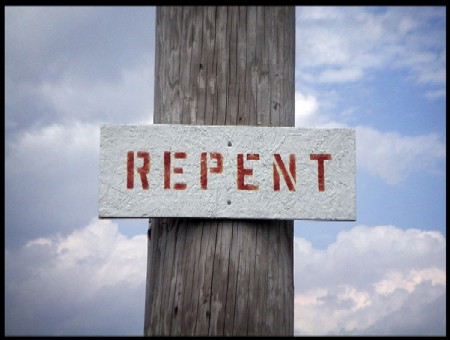
The really good news we call gospel is that, while we cannot free ourselves from sin, God sets us free. That happens through forgiveness. I hasten to add that forgiveness is not God’s shrugging the divine shoulders and remarking, “Well, boys will be boys. What are you going to do?” Forgiveness is not resignation to captivity in sin. It is instead the breaking open of the prison doors. Forgiveness does not make living with sin any easier. To the contrary, the struggle against it becomes all the more intense because we now know that sin does not have to dominate. The past need not determine the future. The violent cycles of vengeance between nations, clans and tribes do not have to continue. Because sin is forgiven, we can stop trying to justify it, make excuses for it and resign ourselves to it. We can name it, confess it for what it is and move on from it. In short, we are free to repent. Repentance, it must be understood, is more gift than obligation.

I am thankful for the gift of repentance and for those who have helped me find it. I am thankful for my children who have helped me recognize my blind spots and smallness of mind. It is rewarding to see them raising their children and avoiding many of the mistakes I made in raising them. I am thankful for teachers, mentors and friends who have enabled me to see beyond my own limited understanding of salvation and view more clearly God’s redemptive purpose for all creation. I am thankful for authors, actors, artists and musicians in whose work I have been able to envision a better world and a better version of myself. Am I righteous? Not by a long shot. But I am what “twelve step” folks would call “a recovering sinner.” By God’s grace, I am recognizing my addictions, their power over me and, with the support of my fellow disciples, struggling to remain sober in a world increasingly drunk on power, wealth and privilege. That is, I believe, the call and challenge of Lent.

Here is a poem by Sharon Olds whose reflection on prejudice approximates what the church has named “original sin.”      

Addiction Sonnet

A prejudice is an addiction, and it’s

contagious—parents infect their children.

And addiction’s obsessive, if a man finds it

difficult to show his love to his

son, it may be because his father

escaped with his life from the village in which

his own father had just been murdered

in a pogrom, his model as a father

a man in terror.

But addiction to such a silence can be

healed, as Carl and his son tried to do,

through hard work. Workers of the world,

unite, we have nothing to lose

but the death of the earth.

Source: Poetry (April 2023). Sharon Olds (b. 1942) is an American poet. Olds won the first San Francisco Poetry Center Award in 1980, the 1984 National Book Critics Circle Award and the 2013 Pulitzer Prize for Poetry. She was raised in Berkley, California in what she describes as an abusive family. She characterizes her alcoholic father as a staunch Calvinist. The strict religious environment in which Olds was raised restricted her exposure to the outside world. Olds was not permitted to go to the movies. The family did not own a television. She was, however, a voracious reader. Olds was sent to Dana Hall School, an all-girls high school in Wellesley, Massachusetts where she studied English History and Creative Writing. She earned her BA at Stanford University in 1964 and her Ph.D in 1972 from Columbia University in New York. She currently teaches creative writing at New York University. You can read more about Sharon Olds and sample more of her poetry at the Poetry Foundation Website.


[1] The biblical words for “sin” have numerous shades of meaning. A thorough examination of the context is required to understand what the word signifies in any given text. That discussion, however, requires more than any single article of this kind can deliver.  

My Boring Testimony

FOURTH SUNDAY IN LENT

Numbers 21:4-9

Psalm 107:1-3, 17-22

Ephesians 2:1-10

John 3:14-21

Prayer of the Day: O God, rich in mercy, by the humiliation of your Son you lifted up this fallen world and rescued us from the hopelessness of death. Lead us into your light, that all our deeds may reflect your love, through Jesus Christ, our Savior and Lord, who lives and reigns with you and the Holy Spirit, one God, now and forever.

“All of us once lived among them in the passions of our flesh, following the desires of flesh and senses, and we were by nature children of wrath, like everyone else. But God, who is rich in mercy, out of the great love with which he loved us even when we were dead through our trespasses, made us alive together with Christ-” Ephesians 2:3-4.

I remember well listening to Rev. Nadia Boltz Webber speaking at a nationwide youth event for my Evangelical Lutheran Church in America in July of 2012. She told a moving story about her life journey from addiction, poor choices and unhealthy relationships to redemption through faith. It reminded me of the many “testimonies” I heard in the years of my evangelical youth given by persons who had undergone dramatic conversions. They typically highlighted the process of transition from a life of unbelief and sinfulness to faith and salvation. They all testified of a distinct “before” and “after” life in Christ. It is hard not to be impressed by such powerful witnesses to the transformative power of God’s Spirit in such people’s lives.

Still, I find it hard to identify with these stories on a personal level. That is because, for me, there was no “before.” There was no time when I was “alienated from the life of God” and “abandoned….to licentiousness, greedy to practice every kind of impurity.” Ephesians 4:18-19. Child of the 60s and 70s though I was, I never did “sex, drugs and rock and roll.” I was what most would call a “straight arrow.” To be sure, there were times in my life, particularly my early teenage years, when faith, worship and prayer seemed less relevant. Nevertheless, if you had asked me at any point during those times whether I believed in God, trusted Jesus or identified as a Christian, my answer would have been an unqualified yes. There was never a time when I was not a believer, though, to be sure, there were times when I did (and do) not act that way. In sum, the totality of my life has been lived in the “after.”

I want to make it perfectly clear that I do not regard myself any less sinful than Rev. Boltz-Webber or any of the other testifying believers I have heard over the years. My sins are every bit as wicked as theirs. They are just less interesting. My life does not lend itself to dramatic testimony. I have nothing in the way of trauma of which to tell. I grew up in a stable home with two happily married parents. I was not abused as a child or young adult. I have my own very good marriage with three well adjusted and successful adult children. Throughout all of this, I have been blessed to be part of communities of faith that have nurtured and sustained me and my family. Make no mistake, I am profoundly grateful for these undeserved graces-and that is exactly what they are. I do not envy anyone’s “before.” Still, I cannot imagine this “testimony” of mine holding the attention of a stadium filled with teenagers. Who wants to listen to true confessions of laziness, envy, selfishness, carelessness and ungratefulness?

I find it much easier to identify with the children of Israel in our lesson from the Hebrew scriptures than with the Ephesian converts. Like me, they knew themselves as descendants of Abraham and Sarah from as far back as they could remember. Just as they followed Moses imperfectly, sometimes fearfully, often resentfully with plenty of doubts and questionings, so I have somehow managed, however imperfectly, to follow Jesus. Just as the people of Israel needed prodding, pushing, cajoling and a strong measure of “though love” to keep them on course to the Promised Land, so I have needed the discipline of loving parents, dedicated teachers and faithful pastors to show me the way of Jesus and restrain my most destructive impulses. I may be one of the ninety-nine sheep that did not stray. But that is due entirely to the tireless efforts of the Good Shepherd, not any inherent virtue of my own. By grace I have been saved from all that might have been, just as the strays have been saved from what was. Do not ask me why some of us feel the Shepherd’s rod reeling us back into the fold while others feel it barring us from wandering away. That is a matter well above my pay grade.  

I think that those of us who have never known a “before” have a particular need for Lenten discipline. That is because, for us, the “before” is so well hidden within our supposed “after.” Because we lead outwardly respectable lives, it is harder to see the many ways in which “the ruler of the power of the air, the spirit that is now at work among those who are disobedient” is wreaking havoc and destruction in and through us. We need to be reminded that our addictions to wealth and privilege are as evil and more destructive than addiction to drugs and alcohol. We need a reminder that cruelty, dishonesty, selfishness and envy are no less sinful merely because they manage to stay on the near side of the law. Jesus came “not to call the righteous, but sinners.” Mark 2:17. Until we can recognize ourselves as sinners, we cannot hear his gracious call to discipleship.

Here is a Lenten poem by Lawrence Rhu inviting just such self reflection.

Lenten Confessional

Morning again made promises it broke

though foolish hope had led us to expect

something somewhat different when we woke.

Now news reports from far and near reflect

the shaking image of another day,

and seven deadly sins seem to control

the better part of everybody’s soul.

But what made hope plate golden common clay?

Start with yourself, like the wise moralist,

and detail the disasters of your ways;

then, after you’ve compiled a nice long list,

turn to the errors that our earth displays;

if you still find good reason to express

the glowing void that stalks your skipping heart

and finds its likeness in the supermart,

play prophet, only after you confess.

Regard the riot of your furious blood,

its circuiting and surge at such swift pace

that hectic rhythms rock your simple head

and bring bright colors to your civil face.

Why here’s an animal who could make war,

who might not even pause at rape or pillage,

cruel tortures or the burning of a village,

the daily news you properly deplore.

And yet, enraged, you lavishly complain

of wrongs that centuries have failed to right

while torrid humors cause each fluent vein

and spawn, in all that foment, fierce insight:

perhaps it’s evil bothers us, or pain,

or maybe the way we try to counter it

and manage such a pleasant counterfeit

we’re loosely labelled as the so-called sane.

But when you see the castaway and odd,

who nightly prowl the brilliant thoroughfare

in lonesome discourse with the vagrant crowd,

you slip past fast, then, from a distance, stare.

You hear them rant their lectures to the dark,

and at your stomach’s fretful squirm of doubt,

blush lest the crazed eyes’ flicker pick you out.

You sense a kinsman in a madman’s lark.

Maybe you ought to join that brotherhood

and finally reckon with the wretch you’ve well

concealed, and simply yielding to the blood,

allow the rapid pulse to rage and swell

and flood. You can play the prophet to the air.

Since Brother Francis even deemed the words

of God and Gospel message for the birds,

you’ve a likely soul to follow, if you care.

Or since you’ve looked within awhile and seen

a little, but enough, you should perhaps

now offer thanks and vow to curb your spleen.

Accept the blessing of a moment’s lapse

when hints and glimpses undermine all cant.

We’ll someday learn what mercy’s up against.

We’ll suffer gladly someday when we’ve sensed

the terrible pardon clear-eyed love can grant.

Source: Poetry, February 1975. Lawrence Rhu is the Todd Professor of the Italian Renaissance emeritus at the University of South Carolina. He has written books and essays about the American and European Renaissances, edited Shakespeare’s The Winter’s Tale for the Evans Shakespeare series from Cengage. His poems have appeared in numerous publications. In 2018-19, three of his poems received named awards from the Poetry Society of South Carolina and a fourth received the 2018 Faulkner-Wisdom Poetry Award from the Pirate’s Alley Faulkner Society in New Orleans.            

The Discomforting Jesus

THIRD SUNDAY IN LENT

Exodus 20:1-17

Psalm 19

I Corinthians 1:18-25

John 2:13-22

Prayer of the Day: Holy God, through your Son you have called us to live faithfully and act courageously. Keep us steadfast in your covenant of grace, and teach us the wisdom that comes only through Jesus Christ, our Savior and Lord, who lives and reigns with you and the Holy Spirit, one God, now and forever.

 “Take these things out of here! Stop making my Father’s house a market-place!” John 2:16.

Jack was one of the most faithful people I have ever known. He had a zeal for Jesus that was unmatched. I will never forget the day he came down to the church on the day of our rummage sale and expressed his outrage. “Junk for Jesus!” he nearly shouted. “If Jesus were here, he’d knock over these tables the way he cleared the temple.” Jack was not simply being a killjoy. He felt very strongly that the church should be supported by committed giving, not by hawking everyone’s cast off junk. He believed that sales of the kind we were holding discredited the church and compromised its witness.

I tend to agree with Jack in principle. If a congregation is going to hold bake sales, rummage sales or raffles, the proceeds should go toward some community service such as the local food bank or to some larger church ministry beyond the congregation. The congregation’s operating costs and ministries should be supported by congregational stewardship. Yes, membership is shrinking in our churches and placing a greater burden on fewer people. Still, in a middle class congregation of twenty-five members, a congregation can still be viable if each of its members value their church and its ministry as much as they do a cruise or a trip to Disney World with the grandkids.

All that being said, I don’t think that is the issue for Jesus in our gospel lesson for this Sunday. In order to appreciate what is happening, we need some context. The temple in Jerusalem would surely be one of the world’s architectural wonders if it were still standing. Jesus’ disciples, who were perhaps seeing the temple for the first time after following him to Jerusalem, could not help but admire it. But the relationship of First Century Jews to their temple was complex. The temple was built by none other than Herod the Great of Holy Innocents fame. Herod was installed by the occupying Romans as “the King of the Jews,” though he didn’t have a drop of Jewish blood in his veins. For this and other reasons, he was not greatly loved and that is putting it mildly. The temple was as much a monument to Herod’s outsized ego as anything else. Still, the temple was the successor to that built by Solomon in the Eighth Century B.C and rebuilt following the return of the Jews from exile in Babylon in the Fifth Century B.C. As such, it had a claim to legitimacy, regardless whose power and money built it. Moreover, the arrangement with Herod made it possible for the Jews enjoy a minimal degree of autonomy in comparison with other colonized peoples and freedom to practice their religion without having to deify the emperor.

Of course, Rome did not grant these privileges free of charge. It retained the right to appoint and depose the high priests of the Sadducean party who oversaw the temple’s operations. That left the priesthood little choice other than to collaborate with its Roman overlords. Naturally, Rome took a substantial cut from taxes levied by the Sadducees in support of the temple and profits made by the “money changers” who sold animals for sacrifice to pilgrims coming to worship in the holy city. The temple was therefore a valuable cash cow for both Rome and the priestly families though which the empire exercised its control. Whatever else the Temple might have been, it had become under the operation of the Sadducees an instrument of imperial exploitation. Thus, Jesus’ cleansing of the Temple was a stark political protest, a frontal attack upon the ruthless and oppressive regime crushing his people.

It is far too easy to vilify the Sadducees and their supporters for their collaboration with Rome and for being complicit in Jesus’ crucifixion under Pilate. Yet however much we might criticize them, the Sadducees found a way to navigate the demands of an occupying power while preserving their religion, culture and the most precious symbol of their faith. In so doing, they were forced to make compromises that I am sure they found distasteful. They were compelled to meet Rome’s demands for revenue which resulted in their “devouring widows’ houses,” but our capitalistic economy has done much the same on a far greater scale and for less noble reasons than preserving faith and culture.

Most of us have lived our lives in a culture that is highly protective of religion in general and Christianity in particular. The church in the United States enjoys substantial tax benefits and immunity from laws against discrimination governing all other entities. It seems to me, therefore, that our complicity in our nation’s sordid history of enslaving Africans, exterminating indigenous peoples and discriminating against people of color is all the more egregious. For generations, those of us serving as clergy have been called upon at civic events to sanctify a false and sanitized version of American history and give our blessing to its wars. We benefit from and are slow to take meaningful action against systemic injustice keeping millions in poverty. I think that Jesus probably has plenty of tables to overturn in our sanctuaries. Living as we do in a glass house, we ought to be careful about casting stones at the Sadducees.

Jesus does not give us what we want and expect from this gospel. But he gives us exactly what we need. We need for our comfortable existence to be shaken up, for the furniture to be rearranged, for the tables to be turned over and our comfortable coexistence with systemic injustice disrupted. This isn’t the “tender Jesus meek and mild” who simply loves us as we are. Yes, Jesus comes to meet us exactly where we are and accepts us in any condition. But he loves us too much to leave us there.

Here is a poem by Phil Ochs reflecting, I believe, the shocking and disturbing side of Jesus and the reaction he frequently elicits.  

The Crucifixion

And the night comes again to the circle studded sky.
The stars settle slowly, in loneliness they lie
‘Til the universe explodes as a falling star is raised.
Planets are paralyzed; the mountains are amazed
But they all glow brighter from the brilliance of the blaze
With the speed of insanity, then he dies.

In the green fields a-turning, a baby is born.
His cries crease the wind and mingle with the morn.
An assault upon the order, the changing of the guard.
Chosen for a challenge that is hopelessly hard.
And the only single sighing is the sighing of the stars
But to the silence of distance they are sworn

So dance dance dance
Teach us to be true.
Come dance dance dance
Cause we love you.

Images of innocence charge him to go on
But the decadence of destiny is looking for a pawn.
To a nightmare of knowledge he opens up the gate
A blinding revelation is laid upon his plate
That beneath the greatest love there is a hurricane of hate
And God help the critic of the dawn.

So he stands on the sea and he shouts to the shore
But the louder that he screams the longer he’s ignored.
For the wine of oblivion is drunk to the dregs;
The merchants of the masses almost have to be begged
‘Til the giant is aware that someone’s pulling at his leg
And someone is tapping at the door.

To dance dance dance
Teach us to be true.
Come dance dance dance
Cause we love you.

Then his message gathers meaning and it spreads across the land;
The rewarding of the fame is the falling of the man.
For ignorance is everywhere and people have their way.
Success is an enemy to the losers of the day.
In the shadows of the churches, who knows what they pray
And blood is the language of the band.

The Spanish bulls are beaten; the crowd is soon beguiled.
The matador is beautiful, a symphony of style.
The excitement is ecstatic, passion places bets;
Gracefully he bows to the ovations that he gets.
But the hands that are applauding him are slippery with sweat
And saliva is falling from their smiles.

So dance dance dance
Teach us to be true.
Come dance dance dance
Cause we love you.

Then this overflow of life is crushed into a lie;
The gentle soul is ripped apart and tossed into the fire.
It’s the death of beauty, the victory of night;
Truth becomes a tragedy limping from the light.
All the heavens are horrified, they stagger at the sight,
And the cross is trembling with desire.

They say they can’t believe it, it’s a sacrilegious shame.
Now, who would want to hurt such a hero of the game?
But you know I predicted it; I knew he had to fall.
How did it happen? I hope his suffering was small.
Tell me every detail, I’ve got to know it all
And do you have a picture of the pain?

So dance dance dance
Teach us to be true.
Come dance dance dance
Cause we love you.

Time takes a toll and the memory fades,
But his glory is growing in the magic that he made.
Reality is ruined; there’s nothing more to fear;
The drama is distorted into what they want to hear.
Swimming in their sorrow, in the twisting of a tear
As they wait for the new thrill parade.

The eyes of the rebel have been branded by the blind.
To the safety of sterility the threat has been refined.
The child was created; to the slaughterhouse he’s led;
So good to be alive when the eulogy is read.
The climax of emotion, the worship of the dead
As the cycle of sacrifice unwinds.

So dance dance dance
Teach us to be true.
Come dance dance dance
Cause we love you.

And the night comes again to the circle studded sky.
The stars settle slowly, in loneliness they lie;
‘Til the universe expodes as a falling star is raised.
Planets are paralyzed, mountains are amazed.
But they all glow brighter from the brilliance of the blaze
With the speed of insanity, then he dies

Phil Ochs (1940-1976) was born in El Paso, Texas. He was a folk singer/songwriter and contemporary of Bob Dylan, Pete Seeger and Arlo Guthrie. He wrote hundreds of songs in the 1960s and 1970s and released eight albums. He performed at numerous anti-Vietnam War, civil rights and organized labor rallies. Ochs’s mental health deteriorated in the 1970s owing to what is now known as bipolar disorder and alcoholism. Tragically, he took his own life in 1976. You can find out more about Phil Ochs and his music at this website. If you would like to listen to the above song as performed by Phil Ochs, click here.


Alabama Supreme Court Didn’t Go Far Enough

Kierkegaard’s Ghost

(News that’s fake, but credible)

The Ghost is pleased to offer this editorial opinion by its staff investigative reporter and commentator, Phucker Sharlitan.

Many so called conservative Republicans and pretend evangelical Christians are applauding the Alabama Supreme Court’s ruling that frozen embryos are persons under state law. For my part, I will acknowledge that this decision is a step forward. But it does not go near far enough. Human life will never be fully protected until we recognize each individual sperm as a unique human person. I want to emphasize that my view, not the court’s, is fully supported by the Holy Bible. The learned Alabama Justice cites in his opinion the first chapter of the prophet Jeremiah to the effect that “Before I [God] formed you in the womb I knew you.” The operative term here is “before.” Where was Jeremiah before he was in his mother’s womb? Clearly, he existed at that point as a single sperm that would one day be implanted in the body of his mother. I would also point out that in the Book of Hebrews the writer notes that the Israelite, Levi, was in the loins of his great grandfather Abraham two generations before he was born. That being the case, what else can we conclude but that the sperm is a complete human person in the image of its Maker?

My critics are greatly mistaken in their belief that human life begins at conception and that living beings prior thereto are expendable. God obviously takes a different view. The Lord went so far as to strike dead Onan, son of Judah because, rather than impregnating his wife, he “spilt his seed on the ground.” The implication is clear: human sperm have a right to implantation in a womb. The wonton killing of sperm by use of contraceptive devices or noncoital sex is no less than homicide. Masturbation is mass murder.

Given these unambiguous scriptures and indisputable facts, it is obvious to me that legislation seeking to regulate woman’s wombs is too little and too late. What we need is legislation strictly regulating men’s penises. I am sure that my male colleagues will protest that their bodies are their own and the government has no right to regulate them. But their bodies are not their own. Their bodies are vessels of precious human lives which we, as a Christian nation built on biblical values, are duty bound to protect. They will complain that such legislation will invade their privacy and involve the actions of government in their most intimate of relationships. Perhaps, but that is a small price to pay for protecting millions of human lives from indiscriminate slaughter. Thus, while I applaud the justices of Alabama’s supreme court for expanding the definition of human personhood to embryos, I would urge them, along with all jurists, legislators and voters, to go further and protect human life in its totality.

**************************************************************

FAKE NEWS ALERT: The above article is satirical. The events it describes didn’t happen.  “There are people who will say that this whole account is a lie, but a thing isn’t necessarily a lie even if it didn’t necessarily happen.” John Steinbeck


Living in Fear and Dying in Faith

SECOND SUNDAY IN LENT

Genesis 17:1-7, 15-16

Psalm 22:23-31

Romans 4:13-25

Mark 8:31-38

Prayer of the Day: O God, by the passion of your blessed Son you made an instrument of shameful death to be for us the means of life. Grant us so to glory in the cross of Christ that we may gladly suffer shame and loss for the sake of your Son, Jesus Christ our Savior and Lord, who lives and reigns with you and the Holy Spirit, one God, now and forever.

“…the Son of Man must undergo great suffering, and be rejected by the elders, the chief priests, and the scribes, and be killed, and after three days rise again.” Mark 8:31.

This week it was announced that Alexey Navalny, the Russian opposition leader died in a soviet style prison colony under highly suspicious circumstances. It did not have to end that way. Navalny was well known globally. He had a strong support base in his own country and powerful friends abroad. He could have remained in western Europe. He could have continued his opposition to the bloody reign of Vladamir Putin from the safety of exile, employing social media, lobbying world leaders for support and encouraging his supporters within Russia. I have no doubt that his friends, family and supporters urged him to do just that. Putin has proved repeatedly that he has no qualms about murdering anyone he deems a threat to his regime. Two nearly successful assassination attempts had been made against Navalny by the Russian government. Nevertheless, Navalny was not content to carry on his struggle from a safe distance. He chose to return to his homeland, knowing well the danger he faced. He chose to confront the powerful systemic evil in his country head on.  

“Why,” I can hear his friends asking. “Why do you want to throw your life away? We need you alive, not dead.” I am sure Saint Peter made much the same arguments in his rebuke of Jesus following Jesus’ declaration that he was destined to undergo great suffering, rejection and death. I am sure Peter pointed out to Jesus that he was walking into a trap, that he was playing into the hands of his enemies, that no matter how much popular support he might have, his movement was no match for the raw power of Rome and the religious establishment in Jerusalem facilitating it. “Stay here in Galilee, Jesus. Be the gadfly in the wilderness. Foment opposition from afar and wait to enter Jerusalem until the time is right.”

All of this sounds entirely reasonable. And it is, in terms of human survival instinct. But human survival instinct is not an ally of God’s reign. The life God desires for us is so much more than mere survival. The shape of that life is spelled out in the Sermon on the Mount. As I have said before repeatedly, the Sermon is not a set of ideals unattainable in the real world and meant only to convince us of our sin and our need of God’s forgiveness. To the contrary, the Sermon is a blueprint for the life of Jesus as it unfolded in the gospel. Jesus lived the reign of God he preached in the real world and he graciously invites his disciples to participate in that abundant and eternal life. Jesus had no illusions about what living under God’s reign means in a world hostile to it. He understood that the life of humility, peacemaking, pursuing justice and practicing radical generosity would lead to persecution. But he also knew, and would have his disciples know, that the reign of God is well worth surrendering all the rights and privileges the world has to offer. Indeed, God’s reign is more precious than life itself.

It might sound counterintuitive that one should gain one’s life by losing it. But that is the logic of the cross. One who seeks to preserve life at all costs wastes it. The notion that life can be preserved is a delusion. We all know that life is finite and will end one way or another. The obsession with preserving life, extending it and fleeing the shadow of death at every turn only robs it of its sweetness. The fear of death prevents one from focusing on what matters, from spending life’s precious moments on those things that are important. The choice is not between living or dying. The choice is between pouring out one’s one life loving God, loving one’s neighbor and being formed into a creature capable of living under God’s gentle reign, or having one’s life pried out one’s futile grasp without ever having learned what it was for. To put it in the words of Martin Luther King, Jr., “If a man has not discovered something that he will die for, he isn’t fit to live.”

For Jesus, the reign of God was more real than the tyrannical reign of the Roman empire. Only God knows how much Jesus knew about the particulars of what awaited him in Jerusalem. Suffice to say, he knew enough to understand that his confrontation with the empire there would likely, perhaps certainly, lead to his death. Yet he went to Jerusalem anyway. He went because his dying at the hands of his enemies was the only way to prove the extent of God’s passionate love for the world. He went because he needed to demonstrate the ultimate futility of tyranny, violence and terror. He went to show the world that death, the most powerful weapon of evil, cannot kill what is true, beautiful and good.

Rome surely did not believe that Jesus had been raised from death. But it knew his disciples believed that he had. Rome understood that the church, the congregations of Jesus’ disciples, had lost their fear of death. That is because Jesus took the cross, Rome’s most powerful symbol of imperial terror, and turned it into a sign of victory, driving it like a hollywood stake into the heart of the imperial vampire. Like every other kingdom, empire and modern nation state, Rome’s control over its subjects depended upon its power to inflict death. Rome knew well how to deal with hostile armies. It knew how to punish dissidents and crush violent insurrections. But its powerful military machine was impotent before a people who feared neither death nor persecution. It was now becoming clear to all the world that the people who worshiped Jesus as Lord would never recognize Ceasar as lord-even when threatened with death. And there wasn’t a damn thing Ceasar could do about it.

I have not seen much in the way of persecution for expressing my faith.[1] I have certainly never been threatened with bodily injury, imprisonment or death. I would like to believe that is because I live in a country that respects religious freedom. But I think folks like Martin Luther King, Jr., Father Daniel Barrigan, Clarance Jordan, Rep. John Lewis-all of whom encountered violence and/or threats of violence for their faithful witness to God’s reign proclaimed in Jesus Christ, might beg to differ. They know that praying for God’s will to be done on earth as in heaven means, as Luther’s Small Catechism reminds us, praying that it be done among us. It is a prayer that God might make our lives instruments of justice, reconciliation and peace in the shadow of oppressive empires and nation states trading only in the coin of violence. If we are not experiencing the weight of Christ’s cross on our shoulders, could it be because, like Peter, we are hell bent on avoiding it?

I believe that disciples of Jesus know the joy of living only after they learn that living is more than just survival. I believe ministry becomes an exciting task rather than a burden when ministers are inspired by faith in Jesus and the promise of God’s reign rather than driven by fear arising from all the uncertainties we face personally and professionally. I believe that renewal comes to the church when it ceases to fret about the viability of its institutions and its long term sustainability and turns its attention to opportunities in the present moment for witness in word and action to Jesus and the reign of God he proclaims. I believe fear is extinguished when we become convinced that the world’s worst day is behind it, namely, the day it killed the most precious gift God had to give-and instead of retaliating, God raised up this rejected gift and offered it to us again. The truth cannot be silenced by killing its messengers, banning their books, kicking them off social media and attempting to erase their names and faces from the public square. Alexey Navalny understood this. How much more so should disciples of the one called the Way, the Truth and the Life.

Here is a poem by Nikki Giovanni about some people who lived by faith and not by fear.

Rosa Parks

This is for the Pullman Porters who organized when people said
they couldn’t. And carried the Pittsburgh Courier and the Chicago
Defender to the Black Americans in the South so they would
know they were not alone. This is for the Pullman Porters who
helped Thurgood Marshall go south and come back north to fight
the fight that resulted in Brown v. Board of Education because
even though Kansas is west and even though Topeka is the birth-place of Gwendolyn Brooks, who wrote the powerful “The
Chicago Defender Sends a Man to Little Rock,” it was the
Pullman Porters who whispered to the traveling men both
the Blues Men and the “Race” Men so that they both would
know what was going on. This is for the Pullman Porters who
smiled as if they were happy and laughed like they were tickled
when some folks were around and who silently rejoiced in 1954
when the Supreme Court announced its 9—0 decision that “sepa-
rate is inherently unequal.” This is for the Pullman Porters who
smiled and welcomed a fourteen-year-old boy onto their train in
1955. They noticed his slight limp that he tried to disguise with a
doo-wop walk; they noticed his stutter and probably understood
why his mother wanted him out of Chicago during the summer
when school was out. Fourteen-year-old Black boys with limps
and stutters are apt to try to prove themselves in dangerous ways
when mothers aren’t around to look after them. So this is for the
Pullman Porters who looked over that fourteen-year-old while
the train rolled the reverse of the Blues Highway from Chicago to
St. Louis to Memphis to Mississippi. This is for the men who kept
him safe; and if Emmett Till had been able to stay on a train all
summer he would have maybe grown a bit of a paunch, certainly
lost his hair, probably have worn bifocals and bounced his grand-
children on his knee telling them about his summer riding the
rails. But he had to get off the train. And ended up in Money,
Mississippi. And was horribly, brutally, inexcusably, and unac-
ceptably murdered. This is for the Pullman Porters who, when the
sheriff was trying to get the body secretly buried, got Emmett’s
body on the northbound train, got his body home to Chicago,
where his mother said: I want the world to see what they did
to my boy. And this is for all the mothers who cried. And this is
for all the people who said Never Again. And this is about Rosa
Parks whose feet were not so tired, it had been, after all, an ordi-
nary day, until the bus driver gave her the opportunity to make
history. This is about Mrs. Rosa Parks from Tuskegee, Alabama,
who was also the field secretary of the NAACP. This is about the
moment Rosa Parks shouldered her cross, put her worldly goods
aside, was willing to sacrifice her life, so that that young man in
Money, Mississippi, who had been so well protected by the
Pullman Porters, would not have died in vain. When Mrs. Parks
said “NO” a passionate movement was begun. No longer would
there be a reliance on the law; there was a higher law. When Mrs.
Parks brought that light of hers to expose the evil of the system,
the sun came and rested on her shoulders bringing the heat and
the light of truth. Others would follow Mrs. Parks. Four young
men in Greensboro, North Carolina, would also say No. Great
voices would be raised singing the praises of God and exhorting
us “to forgive those who trespass against us.” But it was the
Pullman Porters who safely got Emmett to his granduncle and it
was Mrs. Rosa Parks who could not stand that death. And in not
being able to stand it. She sat back down.

Source: Quilting the Black-Eyed Pea (c. 2002 by Nikki  Giovanni, pub. by HarperCollins Publishers, Inc. 2002) Nikki Giovanni is one of the best-known African-American poets who reached prominence during the late 1960s and early 1970s. She was born 1943 in Knoxville, Kentucky and attended Fisk University, a prestigious, all-black college in Nashville, Tennessee from which she graduated in 1968. From there she went on to attend graduate school at the University of Pennsylvania and Columbia University in New York. Giovanni authored several volumes of poetry for children and adults. She is the recipient of multiple NAACP Image Awards, the Langston Hughes Award for Distinguished Contributions to Arts and Letters, the Rosa Parks Women of Courage Award and over twenty honorary degrees from colleges and universities around the country. You can read more about Nikki Giovanni and sample more of her poetry at the Poetry Foundation website.


[1] Of course, as a pastor I have experienced opposition, some loyal, well meaning and often constructive. Some not so much. I have experienced bullying, threats by members to leave the congregation or withhold their financial support and factious groups annoyed with me because of things I said in my preaching and teaching. But I don’t equate this sort of thing with persecution. It goes with the territory of shepherding a church which is and always has been the work of urging a less than perfect community to live into the Body of Christ that it truly is.

Temptation as a Lenten Discipline

FIRST SUNDAY IN LENT

Genesis 9:8-17

Psalm 25:1-10

1 Peter 3:18-22

Mark 1:9-15

Prayer of the Day: Holy God, heavenly Father, in the waters of the flood you saved the chosen, and in the wilderness of temptation you protected your Son from sin. Renew us in the gift of baptism. May your holy angels be with us, that the wicked foe may have no power over us, through Jesus Christ, our Savior and Lord, who lives and reigns with you and the Holy Spirit, one God, now and forever.

“And the Spirit immediately drove him out into the wilderness. He was in the wilderness for forty days, tempted by Satan; and he was with the wild beasts; and the angels waited on him.” Mark 1:12-13.

Mark’s account of Jesus’ temptations is brief, terse and short on detail. Still wet from the baptismal waters of the Jorden, Jesus is driven into the wilderness. To what end? Mark doesn’t tell us. We know only that he was “among the wild beasts,” “tempted by Satan” and “ministered” to by angels. But want was the Spirit’s purpose? What was the nature of the temptations Jesus faced? And what about the wild beasts-the one detail Mark gives us that is not found in the parallel accounts of Matthew and Luke? It is tempting to fill in these lacunae with information from the other gospels. But, this being Lent, we ought to be on the lookout for temptations of all kinds-including laziness of intellect. I believe the better course is to sit with Mark’s gospel as the Evangelist gives it to us and apply our imagination to the questions it raises and pray for the guidance of the Holy Spirit.

Temptation is a subtle creature. Seldom am I confronted with stark choices between good and evil. The most difficult decisions I have had to make in life are between one good and another. The demands and responsibilities of my job pull me in one direction while the needs and requirements of my family draw me in another. I have always considered the financial support of my church a priority-but so was saving money to provide a college education for my children. The most bitter church dispute I have ever witnessed grew out of a substantial undesignated bequest to the congregation. Some felt that the money should be used to make the century old sanctuary accessible for persons with mobility issues. Others felt that it should be used to open a drop in center for homeless teens. Those favoring the drop in center accused those supporting renovation of being selfishly fixated on the building instead of focused on mission. Those wishing to renovate the sanctuary insisted that the drop in supporters were excluding the most vulnerable members of the church from worship by failing to take the opportunity to make it fully accessible. Both proposed uses of the bequest were reasonable, compassionate and well intended. They were both good. But discernment requires ascertaining the highest good. Perhaps temptation can actually help us here. Rather than simply resisting temptation, maybe we need to listen carefully to the numerous desires calling us and reflect on how each of them might help or hinder us in loving God and our neighbor.

Saint Augustine of Hippo, one of the church’s greatest theologians, teaches us that what we call “sin” is not a matter of breaking rules. It is basically a matter of disordered desires. We were created to love God with all the heart, with all the mind and with all the strength. Thus, we are most genuinely human when God is the primary focus of our love and devotion. That does not mean that we are to love our families, friends or homes any less. To the contrary, love for God liberates and enables us to love them rightly and well. Problems arise when we begin to love things, people and God in the wrong order. The greatest temptations we face entice us to love people, pursue noble goals and strive for honorable positions with zeal, devotion and dedication to which only God is entitled.

There is nothing wrong with loving one’s spouse and children-unless that love becomes possessive, controlling and smothering, which is likely to happen when one looks to one’s family for the deepest love that only God can provide. There is nothing wrong with loving one’s country. But when loyalty to one’s country is elevated over faithfulness to God and love for our neighbor-wherever in the world that neighbor might be- patriotism degenerates into idolatrous nationalism. There is nothing wrong with desiring to serve Christ as his faithful minister, unless one’s ministry becomes a means for satisfying one’s own needs for recognition, importance and self worth. When love is disordered, it can become toxic, hurtful and destructive. The wilderness is a good place to go in order to sort out one’s many “loves.” It was the place to which Jesus went to figure out what it might mean to be God’s beloved and how he was to live as God’s Son in the world.

I get that. I spend a lot of time these days in the wilderness. As with walking on the beach, an hour in the woods is worth a month of therapy. It is the place I go when I need to re-order my loves. In the forest, surrounded by trees that sprouted before I was born and will likely be growing still when I am gone, it is hard to escape the reality that I am dust and to dust I will return. Coming upon centuries old stone fences in the midst of the woods that once demarcated the boundaries of someone’s farm, I am reminded how fleeting are the works of human beings on the land and the land’s remarkable ability to heal itself and erase the scars we inflict upon it. Those same stones hauled from some distance to build makeshift walls were formed before the dawn of humanity and sometimes bear the marks made by indigenous peoples sharpening their tools. If they could speak, I can only imagine the stories they could tell. I do not know how much Jesus knew or did not know about the particulars of his messianic destiny. But I am sure he came away from the wilderness knowing that, after pouring out his brief life in love for God’s world, he would be committing it back into the hands of the One from whom it came.

And then there are the beasts. I don’t know which animals Jesus encountered. The woods in which I walk these days are not home to any animals dangerous to human beings. I meet only coyotes, racoons, foxes and deer-the usual suspects. The only beast that strikes terror into my heart is the deer tick, bearer of lyme disease and other nasty ailments. Yet even dangerous animals, deer tick or grizzly, bear us no malice.  They seek only to live and take only what they need to that end. They do not strip forests, pollute rivers or foul the air, wasting the earth in an insatiable lust for more. They do not seek to dominate anyone or anything outside of their territory. I can see in their balanced existence within the biosphere echoes of Jesus’ sermon about the birds of the air and the lilies of the field. The wilderness is a parable of childlike trust in the Creator.

Every year as the season of Lent approaches, I can count on someone asking me what I plan to “give up” for Lent. In recent years, it has become fashionable to “take up” rather than give up something for Lent. That might be a spiritual discipline like reading a psalm per day, or spending an hour volunteering at a food pantry or forming a healthy habit such as a daily walk. I have nothing but praise for anyone taking up any of these things. There is certainly something to be said for the discipline of abstinence as well. Nevertheless, I have always been leery of both giving up and taking up things for Lent. To me it smacks too much of what Luther would call “works of the law.” They are promises we make to ourselves that bind rather than liberate. Like New Year’s resolutions, these Lenten commitments too often set us up for failure and guilt. Lent is not about being “guilted” into becoming a better person. It is about making space in your life for the Holy Spirit to form in you the mind of Christ.

With all of this in mind, I would like to suggest that, for this Lenten season, you make it a point to spend some time each week in the wilderness. Of course, I know that I am privileged in that respect, living as I do on the edge of the forest in the Cape Cod National Sea Shore. But even when I lived in the urban landscape of northern New Jersey there was wilderness to be found. There were wildlife sanctuaries, parks and wooded “green spaces” where wild things were given free reign. Spend an hour under an ancient tree, listen to the chatter of sparrows and the raucous screams of crows, run your hand over the soft, green moss and enjoy the scent of decayed leaves. Let these ministering angels school you in what is true, beautiful and good. No doubt the devil will attempt to distract you, reminding you of everything else that you should be doing and what you might be missing by disconnecting from your computer or cell phone. Do not give in to the temptation of rushing through your time in the wilderness. Be still, listen and allow what matters, what is genuinely important and the One who alone is worthy of your deepest devotion to come bubbling up to the surface.

Here is a poem by Wendell Berry about finding an island of wilderness in the shadow of urban wasteland. His reflections might very well have been those of Jesus during his time in the wilderness. I believe our gospel lesson invites us to find Jesus in the wilderness where our loves will be re-ordered.

The Wild

In the empty lot-a place

not natural, but wild-among

the trash of human absence,

the slough and shamble

of city’s seasons, a few

old locusts bloom.

A few woods birds

fly and sing

in the new foliage

-warblers and tanagers, birds

wild as leaves; in a million

each one would be rare,

new to the eyes. A man

couldn’t make a habit

of such color,

such flight and singing.

But they’re the habit of this

wasted place. In them

the ground is wise. They are

its remembrance of what is.

Source: The Peace of Wild Things, (c. 1964 by Wendell Berry; pub. by Penguin Random House 2018). Wendell Berry (b. 1934) is a poet, novelist, farmer and environmental activist. He is an elected member of the Fellowship of Southern Writers, a recipient of The National Humanities Medal and the Jefferson Lecturer for 2012. He is also a 2013 Fellow of The American Academy of Arts and Sciences. Berry was named the recipient of the 2013 Richard C. Holbrooke Distinguished Achievement Award. On January 28, 2015, he became the first living writer to be inducted into the Kentucky Writers Hall of Fame. You can read more about Wendell Berry and sample more of his works at the Poetry Foundation website.

A Picture of Easter in Front of Lent

TRANSFIGURATION OF OUR LORD

2 Kings 2:1-12

Psalm 50:1-6

2 Corinthians 4:3-6

Mark 9:2-9

Prayer of the Day: Almighty God, the resplendent light of your truth shines from the mountaintop into our hearts. Transfigure us by your beloved Son, and illumine the world with your image, through Jesus Christ, our Savior and Lord, who lives and reigns with you and the Holy Spirit, one God, now and forever.

“And [Jesus] was transfigured before [his disciples], and his clothes became dazzling white, such as no one on earth could bleach them. And there appeared to them Elijah with Moses, who were talking with Jesus.” Mark 9:2-3.

As I enter upon my sixty-nineth year, it is beginning to dawn on me at last that the time I have left and the bodily vitality remaining to me are insufficient to do all I imagined doing with my life. There are books I will not get around to reading, places I hoped to visit/revisit that I will never see, friends with whom I have been meaning to get together but won’t, skills I meant to acquire at some point that will never be mine-and the list goes on. But I am happy to say that I have been able to pursue at least one activity on my rapidly diminishing bucket list, that being photography. When Sesle and I retired and move up to the Cape, I decided it was finally time to follow this one desire of my heart. So, I purchased a Panasonic Lumix and the rest, as they say, is history.  

I have been interested in photography since the age of eleven when I inherited my older brother’s Kodak Brownie box camera. It was a big black box with a primitive view finder, single lens and a leather holding strap on top. It took grainy, black and white photos using bulky rolls of film. It had no flash attachments and so most of my pictures were taken outdoors. I did not take many pictures back then. Film was expensive and getting my shots developed even more so. On my allowance, photography was simply not a sustainable hobby; thus, I soon lost interest. Though I upgraded to a Kodak instamatic that I used throughout the 70s and early 80s, my picture taking was sporadic and infrequent. Film, flashcubes and the cost of developing photographs were still deterrents.

Shortly after my first daughter was born, Sesle and I invested in a high end Minolta complete with an adjustable flash attachment and telescopic lens. It was as far removed from the Brownie as was the space shuttle from the Wright brother’s first airplane. With it we were able to document our family’s growth through events like baptisms, confirmations, birthdays, vacations and instances when I felt inspired to capture endearing moments in our lives. The price of film and the cost of developing it was still a limiting factor. But by this time, we were both working and felt that the preservation of our most precious memories and the images of our children throughout their years with us was well worth the cost.

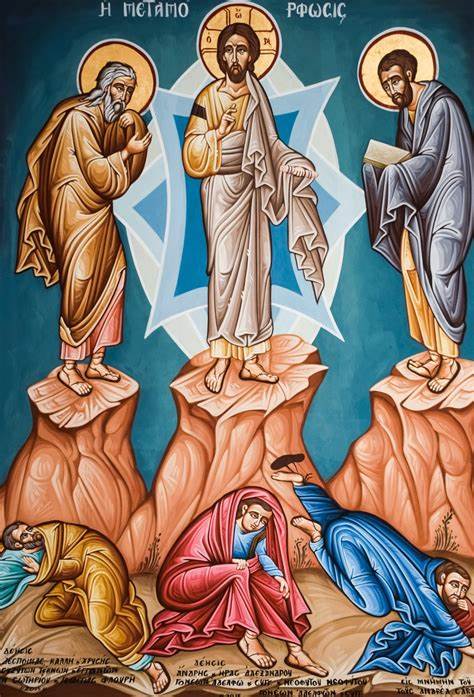
I faithfully preserved the photos we took in albums, numbering in the double digits, which are now sitting in our attic. I take a volume down to the coffee table every now and then. I find that pictures are a little like icons. They are portholes into our past-and only portholes. They do not tell the whole story of our family. Photo albums never do. How many families take pictures of their two year old having a tantrum? How many parents have pictures of their surly teenagers being surly? How many couples photographically document their fierce marital spats? Like a porthole through which you can view only a limited amount of the horizon, a photo gives you only as much as the camera can take in and whatever the photographer wishes for you to see, all compressed within a couple seconds. The space outside the reach of the lens, the ages before and the years to follow are not included in this one dimensional slice of life.

A photograph is a brief instant in the vast ocean of eternity that the photographer deems worthy of preservation. What is preserved can tell you a lot about what the photographer deems true, beautiful and good. It might be the carefree play of children at sunset on the beach. It might be a butterfly settling on a golden blossom, an osprey breaking into flight or just a mosaic of smooth stones spewed onto the sands by the ocean waves. These fragments of time, preserved like insects in amber, have a story to tell. They challenge us to apply our imaginations in order to hear what they have to say.

I think the gospels are rather like photo albums. They are not histories-nor were they intended to be. We can best understand the gospels as albums of preaching, stories and parables by and about Jesus woven together into a narrative illustrative of his faithful life, obedient death and glorious resurrection. They do not tell the whole story. As the closing remarks in John’s gospel remind us, if all that Jesus said and did were written down, “the world itself could not contain the books that would be written.” John 21:25. But what is written has been preserved “so that you may come to believe that Jesus is the Messiah, the Son of God, and that through believing you may have life in his name.” John 20:31.

That brings me, at long last, to this week’s Transfiguration story from Mark’s gospel. Mark is deemed by most scholars to be the first gospel composed and the one upon which Matthew and Luke relied in composing their own gospels. The prevailing opinion, with which I agree, is that Mark’s gospel ends at the eighth verse of the sixteenth chapter, where we read that the women who came to the tomb on Easter Sunday find it empty. A young man dressed in white informs them that Jesus has risen and is going before them to Galilee. The women then flee from the empty tomb in terror and say nothing to anyone about what they have seen and heard. There is, therefore, no encounter with the resurrected Christ in Mark’s gospel.

Or maybe there is. The renowned New Testament scholar, Rudolf Bultmann, is convinced that the Transfiguration story is an ancient resurrection account transposed in the gospel for literary reasons. Bultmann, Rudolf, History of the Synoptic Tradition, (c. 1963 by Basil Blackwell, pub. 1976 by Harper & Row) p. 259. However that might be, there is no denying the story has a resurrection glow to it. We are told that Moses, Elijah and Jesus appear “in glory.” In some manner beyond our capacity to comprehend, eternity is impinging on time, bending it into a single point where the beginning is fused with the end, the promise meets fulfilment and the line of demarcation between life and death dissolves. We get a foretaste of the Resurrection and a fleeting glance at what it means for God to be “all in all.” I Corinthians 15:28.

This is what Hollywood would call a “spoiler.” The Transfiguration of Jesus betrays the climactic end of creation’s story in the middle of the narrative. It is as though Mark had taken a photo from the end of history’s album and stuck it smack dab in the middle. A photograph misplaced within an album is disorientating. It disrupts the orderly flow of chronological time by projecting an instant from the future into the settled past.[1] Of course, the Resurrection is nothing if not disorienting and disruptive. It compels us to re-evaluate our understanding of the past, shatters our expectations for the future and opens our eyes to new possibilities for our present day lives.  

If my reading is correct, Mark is turning our observance of Lent, Holy Week and Easter on its head. He is placing the Resurrection before the cross. Maybe that is where it belongs. After all, that is where we are all living. The guns of war, the ravages of climate change, the rise of fascism and the daily occurrence of gun violence in our communities remind us that we live in a creation that is, as Paul would say, “groaning in labor pains.” Romans 8:22. Those of us on the far side of sixty cannot help but know that “our outer nature is wasting away.” But the story of the Transfiguration, this snapshot from the future, reminds us that such pains as creation is enduring are indeed “labor pains,” not death throws. So, too, we take comfort in Paul’s assurance that, even as our “outer nature” is wasting away, we are nonetheless being transformed into something altogether new. II Corinthians 4:16. We who follow the messiah who poured out his life in love for the world are on the right side of history. We who are called to bear Christ’s cross are destined to share in Christ’s resurrection life. In this case, the camera doesn’t lie.

Here is a poem about the iconic power of pictures to invoke memories.

Taking Pictures

Two swings hang from the arms of the old oak,

perpendicular to the ground,

motionless unless by chance a breeze should come

to shatter the stillness

and cause them to sway

be it ever so slightly.

Yet another reminder, these,

that you are gone, though only for a little while.

The day is coming

when these swings will launch you,

my children, up into the air

and fill it with your laughter

as you plunge toward the turquoise sky

glimpsed through a matrix of ancient limbs

laden with jade green foliage.

And I’ll keep that moment,

along with so many others,

holding it against the day

when this yard is healed

of its scars from little children’s feet,

the weary oak has rest from bearing your weight

and every other trace of you has gone away.

Source: Anonymous  


[1] The New Testament uses two words translated into English as “time.” There is the Greek word “chronos” denoting chronological time. This is time as we typically experience it. It can be measured in minutes, hours, days, years and centuries. The other word for time is “Chiros.” This word refers to a time within which transformative events take place. One example is in first chapter of Mark’s gospel where Jesus proclaims: “The time is fulfilled, and the kingdom of God has come near” Mark 1:15. The Transfiguration clearly qualifies as Chiros time.

Stars, Healing and Being Healed

FIFTH SUNDAY AFTER EPIPHANY

Isaiah 40:21-31

Psalm 147:1-11, 20c

1 Corinthians 9:16-23

Mark 1:29-39

Prayer of the Day: Everlasting God, you give strength to the weak and power to the faint. Make us agents of your healing and wholeness, that your good news may be made known to the ends of your creation, through Jesus Christ, our Savior and Lord.

“[God] heals the broken-hearted,
   and binds up their wounds.
He determines the number of the stars;
   he gives to all of them their names.
Great is our Lord, and abundant in power;
   his understanding is beyond measure.
The Lord lifts up the downtrodden;
   he casts the wicked to the ground.” Psalm 147:3-6

“That evening, at sunset, they brought to him all who were sick or possessed with demons. And the whole city was gathered around the door. And he cured many who were sick with various diseases, and cast out many demons…” Mark 1:32-34.

The International Star Registry (ISR) is an organization founded in 1979 for the purpose of giving the general public an opportunity to name stars in honor or memory of a loved one. The company claims to have named about two million stars since its formation. These christened stars are then copyrighted and published in a series of books. I don’t know what legal effect, if any, attaches to naming a star through the ISR. Nor do I understand quite how one can be certain that his or her star is not being resold under numerous different names and dedicated to any number of different individuals. But perhaps my concern is misplaced. After all, there are probably more stars in the heavens than we mortals can begin to count. Moreover, it is my understanding that the millions of stars we can see with the naked eye are but the tip of the iceberg. Our powerful space based telescopes reveal millions of galaxies filled with billions of stars that lie beyond our vision. It does not appear that we will be running out of stars anytime soon.

There is something reassuring about God’s knowing and even having names for each of these billions of stars, most of which we will never see. God knows intimately the stars beyond reach of our most powerful telescopes; stars that went dark ages before our planet was born but whose light continues to adorn our night sky; stars that will be born after our sun has gone dark-all of these stars and the worlds circling them are individually known and loved by the One who calls them into existence. Of course, that observation cuts both ways. When I made this same point in a prior post, an atheist with whom I occasionally correspond, one of the most thoughtful and compassionate people I have had the pleasure of meeting, replied as follows: “Why would a god who presides over the creation of such a vast and complex universe care whether a bunch of advanced apes on a single planet circling a single star in one of millions of galaxies worships him?”

My friend’s question zeros in on a critical point. The debate over God’s existence is pointless if God is unconcerned with the minutia of the universe God created. If God is indifferent to our worship, our prayers and our treatment of one another, then God might just as well not exist. Applying our best thinking can disclose much about the principles governing the world in which we live. Who can know and why should anyone care whether those principles are divinely established or just are? We could just as profitably debate the existence of unicorns on planets in the Andrameda galaxy. We will likely never know one way or the other and it doesn’t matter anyway.

But the remarkably good news Jesus proclaims is that the God he knows as “abba” is concerned with the minutia and does get involved with what God has made. No part of the universe is so small, so insignificant or so hopelessly broken to escape God’s notice and the reach of God’s healing love. That God so loved this one speck of air, water and mud floating in the arm of just one of a million galaxies of innumerable stars and existing for only a blink of an eye measured in cosmic time is the core of what we call gospel. This God who knows every star stoops down to “heal the broken hearted,” “bind up the wounds” of the sick, injured and oppressed and “lift up the downtrodden” in this one tiny corner of God’s vast universe. God puts God’s “skin in the game” by infusing Godself into our very DNA, reaching out to embrace us with human arms and to love us with a human heart. Moreover, this God’s love remains undeterred even when those embracing arms are nailed to a cross and that compassionate heart broken.

Healing is central to Jesus’ ministry. It is an extension of God’s character as the One whose creative activity is not limited to a single and discrete act at the dawn of time, but continues in the throbbing of every wave and particle of this expanding universe, redeeming what is lost, restoring what is broken and drawing the whole toward its proper end where, to use Paul’s language, “God is all in all.” I Corinthians 15:28.

Jesus’ healing work was intensely political. In the First Century, it was generally assumed that illnesses, injuries and physical impairments were inflicted as divine punishment for sin. Knowing this, we can better understand Jesus’ words to the paralytic lowered down to him on a stretcher through the roof of the house where he was staying. “Your sins are forgiven,” Jesus tells the paralytic. This, I believe, is not an absolution as much as a proclamation. Jesus is saying, in effect, “this paralysis is not your fault and you do not deserve it.” That is a word the man needed very much to hear. Naturally, Jesus’ critics who assume the contrary are deeply offended. “Who are you, Jesus, to question the wisdom of God in afflicting this man? Who are you to say that the sin obviously bringing this illness upon him is forgiven?” Jesus’ subsequent act of healing further reinforces the point. God is not the source of human sickness and suffering. God’s will is for people to be made whole. Thus, the sick, the blind, the lame and the injured are not under a harsh judgment for sin. They are God’s objects of compassion and, for the disciple, an invitation to “share in the works of God.” John 9:1-4.

I would like to believe that, given our deeper understanding of disease processes, we have left behind the notions of blame, fault and punishment formerly associated with sickness. But I am not sure that is the case. Though we generally manage to leave God out of the equation these days, it is not uncommon to place responsibility for illness, injury and disease upon the shoulders of the sufferer. People who suffer from Type II diabetes are frequently shamed for obesity, poor diet and lack of exercise. Cancer patients are often led to believe that their disease stems from lifestyles, diet and habits. That might be true in part, but it is hardly the rule. Serious illness strikes down otherwise healthy people in the prime of life and frequently leaves the profligate unmolested into old age. to A young woman I met during my seminary years was diagnosed with breast cancer. “I don’t understand it,” she said through tears. “I’ve been a vegetarian all my life. I exercise. I do meditation. I drink only distilled water. Why is this happening to me!” We seem to have an unwritten, unarticulated belief that if we eat well, exercise and stay away from unhealthy habits, we will remain healthy and live to a great old age. We reinforce this belief by telling ourselves stories about eighty year olds who run marathons, ninety year old business executives and hundred year old folks who still do New York Times crossword puzzles, as though such healthy longevity can be ours as well-as long as we follow the rules.  

Illness does not affect the sufferer alone. One’s family and friends are also involved in the disease process as caregivers and providers. The financial and emotional toll of caring for a chronically sick loved can be overwhelming. We are only human and the stress of being on duty 24/7 with little or no support leaves precious little opportunity to recharge our own battery. People who are sick and hurting are not their best selves. Caring for them can try one’s patience to the breaking point. Over and over in my ministry I have heard caregivers share feelings of anger and frustration adding, “Pastor, I know I shouldn’t feel this way.” Of course, I remind them that feelings are not right or wrong, they just are. Caregivers need support and care for their own needs-something that is frequently lacking.  

Sufferers are generally aware of stress facing their caregivers and carry their own load of guilt in these situations. None of us wants to be a “burden” on our families and friends. None of us wants to be in a position in which we cannot contribute to the household and feel we are taking more than we give. All of this is exacerbated or perhaps caused by flaws in our nation’s health care system-such that it is. Illness is hard enough to endure without having to negotiate the complex and confusing phone menus required simply to reach a genuine human being in a medical practice, to say nothing of the layers of byzantine procedural obstacles one must clear to obtain authorization from insurers for treatment. It is hardly surprising that people afflicted with chronic illness frequently suffer depression as well. It is hard to escape the feeling that you are useless, a burden on your family, a nuisance to your medical providers and an expense to society. We don’t need God to inflict guilt upon those who suffer. We are perfectly capable of doing that all by ourselves.

Attitudes toward the ill and impaired were not always so heartless. In the church of the middle ages, care for the poor was not merely a civic responsibility. To the faithful, it was a spiritual exercise. So far from being a burden, the blind, lame and lepers were considered holy opportunities for practicing compassion, patience and mercy. Caring for them was sacramental, for in their broken bodies and wounded flesh the sufferings of Christ became visible. The sick and suffering were not merely social problems to be solved, but icons in whom the face of Jesus could be seen.

The sick, the impaired and the dying face some formidable challenges in our culture beyond those inflicted by their infirmities. Reforming our inhumane and inadequate health care system can do much to alleviate such suffering. The burden of caring for chronically ill family members can be reduced significantly through improving and making more widely available and affordable home health care services. Anxiety over financial ruin can be eliminated where adequate health care is made available to everyone regardless of one’s ability to pay. Simplifying the methods by which medical care is provided and financed also reduces anxiety and ensures that no one falls through the cracks.

Nevertheless, while health care reform is critical, that alone cannot cure our culture’s ostracizing approach to the ill and infirm. Those of us who identify as disciples of Jesus are uniquely positioned to open the eyes of our world to the wealth of wisdom and understanding suffering people have to share with us. We need to recapture the message Jesus sends us in the gospels. We need to learn once more what we have forgotten, namely, that the sick and the dying have gifts to offer us. Living as they do on the frontiers of eternity, they can school us in recognizing our own mortality, our own frailty and the fragility of life itself. Like the most distant stars, they live their lives near to the line were our universe expands into its Maker. In the practice of healing the bodily sick, we are confronted with our own spiritual sickness, our failure to treat reverently every day as though it were our last, our arrogant presumption that our health is a sign of God’s blessing and approval, our coldness and indifference to the call of Jesus coming to us from the injured, disabled and chronically ill.   

Here is a poem by James Dicky bridging the gulf between illness and health and taking us near the frontiers of life.

The Hospital Window

I have just come down from my father.

Higher and higher he lies

Above me in a blue light

Shed by a tinted window.

I drop through six white floors

And then step out onto pavement.

Still feeling my father ascend,

I start to cross the firm street,

My shoulder blades shining with all

The glass the huge building can raise.

Now I must turn round and face it,

And know his one pane from the others.

Each window possesses the sun

As though it burned there on a wick.

I wave, like a man catching fire.

All the deep-dyed windowpanes flash,

And, behind them, all the white rooms

They turn to the color of Heaven.

Ceremoniously, gravely, and weakly,

Dozens of pale hands are waving

Back, from inside their flames.

Yet one pure pane among these

Is the bright, erased blankness of nothing.

I know that my father is there,

In the shape of his death still living.

The traffic increases around me

Like a madness called down on my head.

The horns blast at me like shotguns,

And drivers lean out, driven crazy—

But now my propped-up father

Lifts his arm out of stillness at last.

The light from the window strikes me

And I turn as blue as a soul,

As the moment when I was born.

I am not afraid for my father—

Look! He is grinning; he is not

Afraid for my life, either,

As the wild engines stand at my knees

Shredding their gears and roaring,

And I hold each car in its place

For miles, inciting its horn

To blow down the walls of the world

That the dying may float without fear

In the bold blue gaze of my father.

Slowly I move to the sidewalk

With my pin-tingling hand half dead

At the end of my bloodless arm.

I carry it off in amazement,

High, still higher, still waving,

My recognized face fully mortal,

Yet not; not at all, in the pale,

Drained, otherworldly, stricken,

Created hue of stained glass.

I have just come down from my father.

Source:The Whole Motion: Collected Poems 1945-1992 (c. 1992 by James Dicky; pub. by Wesleyan University Press). James L. Dicky (1923-1997) was an American poet and novelist. He is best known for his novel Deliverance, which was adapted into the acclaimed 1972 film of the same name, but he also authored several other novels and books of poetry. Dickey was born in Atlanta, Georgia. After graduating high school, he completed a postgraduate year at Darlington School in Rome, Georgia. Unhappy with that institution, he dropped out and enrolled a year later at Clemson Agricultural College of South Carolina. But after just one semester, he left school to enlist in the military. Dickey served with the U.S. Army Air Forces during the Second World War where he flew thirty-eight missions in the Pacific. He later served in the U.S. Air Force during the Korean War. Between these periods of service, he attended Vanderbilt University where he graduated with degrees in English and philosophy and a minor in astronomy. He also received an M.A. in English from Vanderbilt. Dicky’s teaching career was tumultuous. He began teaching English at Rice University in 1950, but left his position to serve his second stint with the Air Force. Following his discharge, he took a teaching position at the University of Florida. Dicky resigned from that position following a protest by the American Pen’s Women’s society over his reading of a poem deemed offensive, effectively ending his academic career for several years during which he worked as a copy writer for several corporations. Dicky returned to academic life seven years later, working as a visiting lecturer from 1963 to 1968 at several schools including Reed College, California State University, Northridge, University of Wisconsin–Madison, University of Wisconsin–Milwaukee, Washington University in St. Louis and Georgia Institute of Technology. Dickey accepted a position in1969 as professor of English and writer-in-residence at University of South Carolina where he continued to teach full time for the rest of his life. You can read more about James Dicky and sample more of his poetry at the Poetry Foundation website.

Demons, Exorcism and Trump Derangement Syndrome

FOURTH SUNDAY AFTER EPIPHANY

Deuteronomy 18:15-20

Psalm 111

1 Corinthians 8:1-13

Mark 1:21-28

Prayer of the Day: Compassionate God, you gather the whole universe into your radiant presence and continually reveal your Son as our Savior. Bring wholeness to all that is broken and speak truth to us in our confusion, that all creation will see and know your Son, Jesus Christ, our Savior and Lord.

“And the unclean spirit, throwing him into convulsions and crying with a loud voice, came out of him.” Mark 1:26.

“Pastor, I think we have evil spirits in our house,” said Carlos. “I hear voices at night calling me to ‘come with us.’ The children say they are seeing ghosts in their rooms. My wife says that there is an old woman watching her from the stairway while she is working in the kitchen, but whenever she goes to the stairs, she disappears. Is there anything you can do to get rid of them?” Carlos and his family were recent immigrants to the United States. In his culture, unlike ours, spirits and demons were not just the stuff of horror movies and occult classics. Our enlightenment skepticism over the supernatural had not penetrated the village in which Carlos grew up. The presence of supernatural evil beings and the mischief of which they were capable was taken for granted.

I took a walk with Carlos and his family over to his house-which was next to the church office. We walked through the house and I said a prayer for each room. I prayed that God would make the kitchen a place of bodily and spiritual nourishment, the living room a place of family togetherness and fellowship, the bedrooms places of sanctuary, refreshment and peace. I even blessed the basement-though I can’t remember what I said about that. Anyway, this is as close as I have ever come to performing an exorcism. No blood curdling scream of departing demons rent the air. For that I am thankful. I don’t know where I would have sent them, there being precious few herds of pigs in northern New Jersey. But I will say that, a week or so later, Carlos told me that he and the family got the best night’s sleep ever after my visit and that the spirits had not been troubling them since. Make whatever you will of that. For my part, I am not convinced that there were evil spirits afoot in Carlos’ house. But I am convinced of God’s power to confer peace where there is anxiety, faith where there is fear and joy in the face of despair.

So what are we to make of the evil spirits Jesus confronts in his ministry? Can we dismiss them as primitive explanations for diseases we now know as epilepsy or certain psychiatric disorders? That would make gospel narratives, such as our lesson for this Sunday, a lot more palatable to our modernist tastes. But I am always suspicious of interpretations that make Jesus more palatable. Moreover, as Lance B. Pape[1] reminds us, the foundational assumptions of modernism are crumbling fast, leading us to question the supposed infallibility of our empirical methodologies. We are slowly coming to the realization that the insights and world views of non-western cultures we enlightenment folk cavalierly dismiss as primitive superstition actually illuminate ecological and cosmic realities our colonialist regimes have neglected to the peril of us all. Hence, while I saw nothing to convince me that there were demons in Carlos’ house, I am too well aware of my cultural blind spots simply to dismiss them.

In his book, The Historical Jesus,[2] John Dominic Crossan discusses the phenomenon of demon possession in the context of colonial domination and military occupation. Citing the work of anthropologist Mary Douglas, Crossan points to her insight that a person’s physical body is a microcosm of the society of which s/he is a member. While the human body is common to us all, our social condition varies. An individual’s body is presented to the individual by instruction through society generally and, more specifically, through education and inculturation by family. It takes little in the way of imagination to understand how a people subjected to military occupation by a hostile power or a colonial government bent on converting its subjects to its religion, values and priorities might begin to view itself as “possessed.” When this powerful dialectic between one’s cultural self understanding and the occupying power’s determination to erase it collide within the microcosm of the oppressive circumstance which is the body, this possession manifests as an individual affliction.

Crossan further points out “the somewhat schizophrenic implications of demonic control: it indicates a power admittedly greater than oneself, admittedly ‘inside’ oneself, but that one declares to be evil and therefore beyond any collusion or cooperation. Yet one must surely, at some level, envy it or at least desire its power in order to destroy it.” p. 314. That goes a long way toward helping us understand the depraved violence serial killers who were frequently victims of abuse as children. It helps to understand the unspeakable violence recently inflicted upon Israeli civilians by Hamas terrorists. How long can a people go on living under a regime that denies their existence as a people, exercises suffocating control over every aspect of their lives and wields lethal power they can never hope to match? Oppression generates hatred and hatred transforms haters into the image of what they hate. When one becomes so thoroughly possessed by the object of one’s hatred, it is hardly surprising to find oneself out among the tombs bruising oneself with stones. How else can you get at this enemy inside you? That is what happens when your enemy manages to “get into your head.”

So now we come to “Trump Derangement Syndrome,” abbreviated “TDS.” The term has mainly been used by Trump supporters to discredit criticism of him. Instead of responding to such criticism, Trump’s supporters resort to ad hominem attacks on the mental stability of his critics. It is a typical “gas lighting technique.” Repeat the lie with consistency and regularity and before long, the hearers cease to doubt your word and instead begin to doubt their sanity. All that being said, I think Fox News & Co. might actually be onto something here. (Even a blind squirrel finds a nut every now and then.) It is admittedly maddening to view the flagrancy and frequency with which Donald Trump flat out lies about important matters. More maddening still is witnessing the ease with which his lies are accepted, excused and explained away by the Republican party[3] that he owns. Having to hear again and again about the stolen election, the armies of terrorists crossing our borders, the crime rampant in our cities streets, the crashing economy, WOK propaganda in our schools, to say nothing of the Satan worshiping pedophile cult run by Hillary Clinton and George Soros as though all of this malarky were credible-it is enough to make one a little crazy.

But I think that in this respect, us white liberals might finally be getting a little of our own medicine. What we have endured for less than a decade, Black Americans have been living with for centuries. Young black males know the indignity of being pulled over, stopped and frisked and asked to leave high end stores for no good reason. They know, too, the dangers they face should they question or fail to comply. People of color live daily with the awkwardness of being told that they are surprisingly articulate, unusually hard working or amazingly successful-for people of their kind. They learned in school, as did I, that America is a place of limitless opportunity for anyone who studies and works hard. Like me, they studied and worked hard, but unlike me they met with racial profiling, discriminatory hiring practices and limited housing choices. To add insult to injury, they are told repeatedly that such discrimination does not exist. Slavery ended when Lincoln freed the slaves. Jim Crow ended with the civil rights movement. All is now right with the world. People of color are reminded in so many ways that their failures are their fault, that racism is a thing of the past, that the daily indignities they experience are all in their head. In short, they are told that they are deranged.

Though I have a hard time integrating evil spirits into the world as I understand it, I believe in demonic possession. I believe that many of us are possessed by the myth of the “white race” and delusions about its superiority, fears of its being “replaced” and the malevolence of peoples of color. I believe that people of color are injured in body and soul by these ideologies and the systemic oppression they spawn and support. I believe it is possible for these ideologies and the lies upon which they are based to become internalized and make us sick. In extreme cases, they can get so thoroughly ensconced in our heads that they shape our character and drive our conduct. They can drive us to hateful acts of violence toward others. They can also drive us to violence against ourselves. It is no accident, I think, that so many mass shooters wind up killing themselves before they can be apprehended.

I think that individual instances of demonic violence are symptomatic of systemic racial hatred woven into the fabric of American culture. What we need is a collective exorcism. I am hardly an expert on that topic. But here are a few things that seem to be implied by the gospel lesson:

  1. Do not let the demons speak. I am all for freedom of expression, meaning that I believe all should be able to preach whatever they wish, however vile or offensive. That, however, does not translate into an obligation on society’s part to build them a pulpit. I was appalled when years ago NPR granted white nationalist leader Richard B. Spencer an interview and an opportunity to spew his sewage over the airwaves. I do not believe we need to remain discretely silent when Uncle Ned pops a racist joke at Thanksgiving dinner. The long discarded pseudoscience of racism, baseless racially charged claims and thinly veiled dog whistling should not be admitted into serious discourse. Spencer needs to be told to preach his garbage in whatever slimy hole he can find enough fellow sewer rats to listen, but that he will not be heard on any reputable media. Uncle Ned needs to be told to shut up or pack his bags and go home.
  2. Do not let the demons into your head. We are not Jesus. We cannot cast demonic ideology and racial bigotry out of anyone’s head. If we waste our energies trying to do that, we risk letting the poison of demonic anger and hatred poison us. The only weapon we have is the truth as we know it in Jesus. The Holy Spirit must do the rest. Truth requires only our witness, not our defense. So speak the truth, but do not be drawn into heated arguments. There is nothing to be gained by getting lured down rabbit holes of conspiracy theories, junk science and unsubstantiated claims. There are times when you simply have to say, “I am sorry. But it is obvious you lack the information, conceptual tools and capacity for learning to engage in the sort of discussion you want to have with me.” Do it as unabrasively as you can, but do it firmly and decisively.  
  3. Do not confuse the possessed with the demon. Saint Paul reminds us that “we do not contend with flesh and blood.” The devil would have us believe otherwise. The devil would have us at each other’s throats, killing each other and wounding ourselves in a vain effort to get at him. But our fight is with “the rulers, against the authorities, against the cosmic powers of this present darkness, against the spiritual forces of evil in the heavenly places.” Ephesians 6:12. The necessity of firmness and resolve toward the evil words and acts of the possessed does absolve us from the duty of love we owe them as neighbors. The Richard Spencers, Donald Trumps and Uncle Neds of the world are as much victims as they are predators. They have been consumed-possessed-by hateful myths and ideologies infecting nations, rulers and governments the world over. These demonic forces have twisted their characters, bent their minds and poisoned their souls. They are in the worst sort of bondage. They need our pity. They need our prayers. They, too, need Jesus.
  4. Exorcism begins with me. By now it should be clear that we are all caught up with the spiritual forces of wickedness that infect our government, schools, workplaces and justice system. Those of us who have benefited from racial injustice and exploitation built on the foundation of white supremacy and privilege need all the help we can get to extradite ourselves and begin dismantling the machinery of oppression. As a member and minister of one of the whitest churches in the United States, I count myself among this number. Saint Peter reminds us that “judgment is to begin with the household of God.” I Peter 4:17. So, too, does exorcism.

According to the gospels, casting out demons was central to Jesus’ ministry and a task entrusted to his disciples. Demonic forces are no less real today than they were in the First Century and so the commission to cast them out is no less urgent. The disciple’s task might aptly be described in the words of poet Sonia Sanchez as “hold[ing] oneself like a sliver to the heart of the world, to interrupt if necessary the rhythm of the world, to upset if necessary the chain of command but…to stand up to the world…do battle for the creation of a human world that is a world of reciprocal recognition.” Below is the poem in full.

Progress Report

In this country

where history and herstory stretches

in aristocratic silence,

our Black, white, brown activists

have come at the beginning

of the twenty-first century carrying

the quiet urgency of a star.

 And the country is not the same.

i say, who are these people singing down

the lids of the cities with color?

i say, i say, who are these people always

punctual with their eyes, their hearts, their hands?

i say, i say, i say, who are these

singers who resurrect summer

language on our winter landscape?

They remind each other

of what Fann said: “what is needed is to hold

one’s life like a sliver to the heart of the world, to

interrupt if necessary the rhythm of the world, to

upset if necessary the chain of command but…

to stand up to the world; I do battle for the

creation of a human world that is a world of

reciprocal recognition.”

What does honor taste like?

Does honor have a long memory?

What is the color of honor?

Jose Marti wrote: “in the world there must

be a certain degree of honor just as there must be

a certain amount of light. When there are many men

without honor, there will always be some others who

bear in themselves the honor of many men.”

i turn the corner

 of these honor-driven activists

find memory beneath their doors

taste the blessings of their midwifery

their miracle songs giving birth

to un-ghosted wounds

their words coming to us

glittering like silver stars,

and I catch them in mid-flight,

swallow them whole.

i say, behold our sisters and brothers

questioning the flesh of national monuments

peeling them down to waste of bones.

i say, behold our sisters and our brothers

shaking dew from their eyes, as they remember

Brother Floyd’s last words:

i can’t breathe, i can’t breathe, i can’t breathe…

And we greet him,

his body submerged with no air

and we anoint his eyes

with ancestral light

and we breathe…     

Source: The 1619 Project, edited by Nicole Hannah-Jones (c. 2021 by New York Times Co.; pub. by Penguin Random House) p. 479-480. Sonia Sanchez (born Wilsonia Benita Driver in 1934) is an American poet, writer and professor. She is a leading figure in the Black Arts Movement. Sanchez has written several books of poetry. She has also authored short stories, critical essays, plays and children’s books. She received Pew Fellowship in the Arts in 1993. In 2001 she was awarded the Robert Frost Medal for her contributions to American poetry. You can read more about Sonia Sanchez and sample more of her poetry at the Poetry Foundation website.


[1] The Scandal of Having Something To Say, Pape, Lance B. (c. 2013 pub. by Baylor University Press).

[2] Crossan, John Dominic, (c. 1991; pub. by HarperCollins Publishers).

[3] Please don’t tell me that Trump’s base is not all there is to the Republican party. There is little doubt that, criminal conviction or no, he will be the party’s presidential nominee. And there is less doubt that, as they have done every single time, the rest of the Republican leadership, including those who offered tepid criticism of him, will kneel to kiss his ring. For more on that, see “Unmasking the Republican Party.”

When God Repents

THIRD SUNDAY AFTER EPIPHANY

Jonah 3:1-5, 10

Psalm 62:5-12

1 Corinthians 7:29-31

Mark 1:14-20

Prayer of the Day: Almighty God, by grace alone you call us and accept us in your service. Strengthen us by your Spirit, and make us worthy of your call, through Jesus Christ, our Savior and Lord.

“When God saw what they did, how they turned from their evil ways, God changed his mind about the calamity that he had said he would bring upon them; and he did not do it.” Jonah 3:10.

The old RSV version of the Bible translates the Hebrew verb, “Nacham” as “repent” rather than to “change one’s mind” as is the case in NRSV. Perhaps the translators were concerned that, because the common understanding of repentance is so closely identified with sorrow over one’s sins, associating it with an act of God might create confusion in the minds of readers. Whatever the merits of the NRSV’s interpretive decision, I think the old RSV got it right. God repented of God’s intent to punish Nineveh for its many sins. The biblical word “Nacham,” it should be noted, has many shades of meaning. But in this case, according to my lexicon, it means to “to be sorry, suffer grief or repent of one’s own doings.”[1]

No matter which translation you choose, however, for many believers such language is clearly problematic. Many believers have learned, as I did in Sunday School and confirmation, that God is not only perfectly infallible, but “omnipotent, omniscient and omnipresent.”[2] So if God is infallible, how can God make a decision that God later regrets and must reverse? If God is omniscient, how could God not know in advance that the Ninevites would repent at the preaching of Jonah and that its destruction would not be required-unless Jonah’s dire warning was merely an idle threat God knew would bring about the necessary response. But then God would not really be repenting or changing God’s mind as the text clearly states that God does. Furthermore, Jonah would be justified in feeling that he had been “used” by God who gave him a word that God knew would not come to pass. Theologians, including such great minds as Augustine and Aquinas, have undergone numerous metaphysical gymnastics and theoretical contortions to get around this problem-with but limited success.

One might be tempted simply to dismiss all this consternation as ivory tower sophism, except that the stakes here are real. If God changes God’s mind, how can God’s word be trusted? If God does not know and control the outcome of future events, how can the hopes passed down to us by the prophets inspire hope in our hearts? If God is not in control, who is? An impotent God is hardly a God at all. On the other hand, if God possesses each of the three “omnies,” wherein lies human freedom? If God is “all” powerful, it follows that we have no power-or at least not enough to make any real difference in our lives or in the world. So why try to end world hunger, overcome injustice or address climate control? Why attempt anything significant if history is locked into a calendar of biblically determined events leading up to the great tribulation, the rapture and the final judgment? As one individual I know was heard to say, “climate change is good news! It means Jesus is coming soon.”

Most of us would be repelled by either extreme, but the problem remains. If God is not all powerful, how powerful is God? Powerful enough to save us? Then why isn’t God saving the victims of war and starvation who are dying as I compose this article? It is all well and good to say that God respects our free will, but are there not limits to that rationale? As a parent, I tried to respect my children’s agency and freedom of choice even when they were small. But when I saw them running headlong toward a busy street, I intervened to restrain them without much regard for their will to the contrary. Is it unreasonable to expect God to intervene when genocide is being conducted?

Though I would not call myself a process theologian by any stretch, I will say that the philosophies of Alfred North Whitehead and Charles Harthshorne have given me some valuable conceptual tools for understanding the scriptures and their multifaceted witness to God’s saving acts. The following passage from Whitehead’s Process and Reality has been particularly helpful:

“The consequent nature of God is his judgement on the world. He saves the world as it passes into the immediacy of his own life. It is the judgement of tenderness which loses nothing that can be saved. It is also the judgement of a wisdom which uses what in the temporal world is mere wreckage.

“Another image which is also required to understand [God’s] consequent nature is that of his infinite patience. The universe includes a threefold creative act composed of (i) the infinite conceptual realization, (ii) the multiple solidarity of free physical realizations in the temporal world, (iii) the ultimate unity of the multiplicity of actual fact. If we conceive the first term and the last term in their unity over against the intermediate multiple freedom of physical realizations in the temporal world, we conceive of the patience of God, tenderly saving the turmoil of the intermediate world by the completion of his own nature. The sheer force of things lies in the intermediate physical process: this is the energy of production. God’s role is not the combat of productive force with productive force, of destructive force with destructive force; it lies in the patient operation of the overpowering rationality of his conceptual harmonization. He does not create the world, he saves it; or, more accurately, he is the poet of the world, with tender patience leading it by his vision of truth, beauty, and goodness.”[3]

I cannot begin to unpack fully this dense and nuanced passage which can only be fully appreciated after first reading the prior chapters of Whitehead’s work. But I believe enough comes through to illustrate the point, namely, that God’s interrelationship with the world is persuasive rather than coercive. God’s power is God’s patient determination to bring to fruition what St. Augustine calls the City of God in and through participation in the universe’s processes, inviting it, prodding it, cajoling it to become more than what it is. One need not (and I do not) buy into Whitehead’s metaphysics hook line and sinker to recognize in it echoes of St. Paul’s insistence that this “weakness of God” is actually the power of God revealed in the cross of Christ.[4] The cross and Jesus’ subsequent resurrection demonstrate that our most depraved act of rebellion is not powerful enough to evoke a retributive response from God or deter God from bringing to fruition through God’s continued dance with creation the new heaven and earth to which John of Patmos testifies in the Book of Revelation.

Such an understanding of God’s interaction with the universe leaves room for human agency and responsibility. The decisions we make and the actions we take make a real difference. We cannot, by our own reason or strength usher in the reign of God. But our actions in conformity with God’s reign contribute to its growth and its richness. Similarly, our acts of violence, indifference and greed result in the destruction of opportunities for God’s reign to grow, prosper and flower. We cannot stop the kingdom from coming, but we can frustrate its progress, delay its coming and rob it of some of the richness it might have had, if only we had acted differently.

Because the creation has a degree of free agency, God’s actions are, of necessity, contingent upon those of its creatures. When creation throws God a curve ball, acts in a manner novel and unanticipated or presents God with a new opportunity for or a new threat to God’s purpose, God must change course, “repent” of God’s plan and respond in a new way. God’s acts are not, however, capricious. God always acts in furtherance of the end God has in mind for the universe-that God may finally be all in all. I Corinthians 15:28. To that extent, we can say that the end is predestined. God will complete what God has in store for creation through patient, compassionate persuasion, working for as long as it takes.

In sum, God changes God’s mind, but never God’s heart. God changes God’s approach but never God’s goal of bringing all things to completion in God’s self. God changes course, but never God’s redemptive purpose. Because God repents, we have the opportunity and freedom to do the same.  

Here is a poem by Jane Kenyon suggesting how God’s gentle, persuasive love might be at work under our noses.

Briefly It Enters, and Briefly Speaks

I am the blossom pressed in a book,

found again after two hundred years. . . .

I am the maker, the lover, and the keeper….

When the young girl who starves

sits down to a table

she will sit beside me. . . .

I am food on the prisoner’s plate. . . .

I am water rushing to the wellhead,

filling the pitcher until it spills. . . .

I am the patient gardener

of the dry and weedy garden. . . .

I am the stone step,

the latch, and the working hinge. . . .

I am the heart contracted by joy. . . .

the longest hair, white

before the rest. . . .

I am there in the basket of fruit

presented to the widow. . . .

I am the musk rose opening

unattended, the fern on the boggy summit. . . .

I am the one whose love

overcomes you, already with you

when you think to call my name. . . .

SourceOtherwise: New and Selected Poems, (c. 2005 by Estate of Jane Kenyon; pub. by Graywolf Press). Jane Kenyon (1947-1995) was born in Ann Arbor, Michigan. She attended the University of Michigan in her hometown and completed her master’s degree there in 1972. It was there also that she met her husband, the poet Donald Hall, who taught there. Kenyon moved with Hall to Eagle Pond Farm, in New Hampshire where she lived until her untimely death in 1995 at age 47. You can read more of Jane Kenyon’s poetry and find out more about her at the Poetry Foundation Website.


[1] A Hebrew and English Lexicon of the Old Testament, (Edited, Francis Brown; pub. by Oxford University Press, c.1907 reprinted 1953 and most recently edited in 1978).

[2] It should be noted that none of these three words are biblical.

[3] Process and Reality: An Essay in Cosmology, Whitehead, Alfred North, (c. 1978 by The Free Press) p. 346.

[4] Some of the theologians who have made creative use of process thought are John Cobb (A Christian Natural Theology c. 1975 by W.L. Jenkins, pub. Westminster Press; God and the World c. 1969 by Westminster Press) and David Ray Griffin (God, Power, and Evil, c. 1976 by Westminster Press). See also a fine collection of essays in Handbook of Process Theology (edited and c. 2006 by Jay McDaniel and Donna Bowman, pub. by Chalice Press).