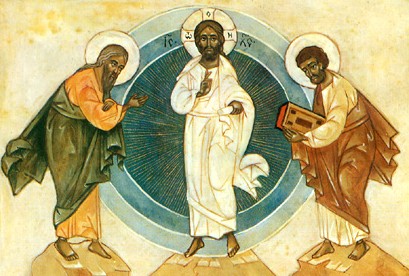
Category Archives: Uncategorized

John 3:16 Reconsidered

FOURTH SUNDAY IN LENT

Numbers 21:4-9
Psalm 107:1-3, 17-22
Ephesians 2:1-10
John 3:14-21

Prayer of the Day: O God, rich in mercy, by the humiliation of your Son you lifted up this fallen world and rescued us from the hopelessness of death. Lead us into your light, that all our deeds may reflect your love, through Jesus Christ, our Savior and Lord, who lives and reigns with you and the Holy Spirit, one God, now and forever.

“For God so loved the world that he gave his only Son, so that everyone who believes in him may not perish but may have eternal life.” John 3:16.

Like nearly everybody else of my generation raised in the church, I memorized John 3:16 at a very early age. I can’t say with absolute certainty that it was the first Bible verse I ever learned. My memory does not extend back that far. But if I had to bet on it, I would feel reasonably comfortable putting my money on John 3:16. Known among us protestants as “the little gospel,” John 3:16 was planted everywhere we set foot. It still is. You find this verse on bumper stickers, refrigerator magnets, baby onesies, billboards, commemorative plates, note book covers, key chains and welcome mats. John 3:16 has become so well known (or so it is assumed) that I often see the naked citation without any text or context. “Obey John 3:16” declares one billboard I used to see on Route 80 traveling through Pennsylvania.[1]

John 3:16 was the subject of many of the sermons I heard over the years. The pastor of one church I attended in my youth suggested that we insert our first names in place of the word “world” and then recite it to ourselves: “For God loved Peter so much that he gave his only Son…” The gist of what our pastor was communicating is true, as far as it goes. God does love us individually with an abounding, sacrificial love ready to pay any price to have us. But, strictly speaking, the verse does not say that God loves me, that God loves the church, that God loves believers or even that God loves human beings. It says that God loves “the world.” In the original New Testament Greek, the word “world” is “kosmos” from which we derive our word “cosmos.” That is to say, God so loved the cosmos, the universe and each individual molecule of it that God sent to it the only Son.

Rather than reducing the scope of John 3:16 to the personal and individual level, we ought to be recognizing the broad sweep of its inclusive embrace. That, however, is not the way I was taught to read John 3:16. I was always given to understand that God’s promise of eternal life was exclusively for human beings and, more specifically, for human beings who accept Jesus as their “personal Lord and Savior.” Moreover, eternal life was something experienced only after death. “Eternal life” was thus equated with the “after life.” From all of this it was abundantly clear that, notwithstanding God’s professed love for it, the world was not going to be saved. To the contrary, it was doomed to perish. Only a limited number of human beings would be saved from this mass extinction event-those who believed on Jesus Christ.

This restrictive interpretation of John 3:16 was supposed to inspire a feverish missionary zeal for “winning souls.” It was imperative for those of us who believed to lead as many other people to faith in Jesus Christ as was possible before their personal demise or the close of the age, whichever came first. This was so because the only way a person could be certain of obtaining eternal life was through believing in Jesus and so being “saved.” That led to many late night discussions at youth retreats I attended in my formative years. There was no shortage of agonizing questions raised by what was supposed to be a verse proclaiming good news: What about those who died before they were old enough to understand the gospel? Baptism? But what about kids that were never baptized? Will they be lost because of their parents’ negligence? What about people who live in parts of the world where the gospel has never been heard? [2]

Had we but read one verse further, we would have learned that “God did not send the Son into the world to condemn the world, but in order that the world might be saved through him…” John 3:17. That might have moved us to consider whether we were not getting John 3:16 all wrong. Perhaps God has bigger plans in mind than simply rescuing a few souls from the deck of a sinking ship. Perhaps God means to save the whole ship. If we had looked more carefully at the rest of John’s gospel, we might have discerned God’s sweeping divine intent. For example, Jesus tells us that “I have other sheep that do not belong to this fold. I must bring them also, and they will listen to my voice. So there will be one flock, one shepherd.” John 10:16. Whether in the fold or out of the fold, Jesus has more sheep than those presently among his disciples. Note well that Jesus nowhere tells us that we are responsible for bringing these sheep into God’s fold or that we must compel them to listen to his voice. Neither the salvation of the world nor any of its inhabitants weighs on our shoulders. Jesus promises to take care of that.

It is also important to look more carefully at what John’s gospel has to say about eternal life. First and foremost, it is not only a future hope, but a present reality. “And this is eternal life,” says Jesus, “that they may know you, the only true God, and Jesus Christ whom you have sent.” John 17:3. Note well the present indicative. Life that is eternal is not merely so in duration. It is life qualitatively different from the sort of life the world knows, different because it is lived out of faithfulness to Jesus and the eternal love binding the Trinity. Life is eternal when it is poured into those things which are eternal. Saint Paul would say that these eternals are faith, hope and love, the greatest being love. I Corinthians 13:13. Eternal life is therefore not a prize to be obtained after death, but a gift to be enjoyed now with the assurance that not even death can take it away from us.

So what is the point of having a church if salvation is for the whole world? Actually, one of Jesus’ disciples posed that very question to him during his final hours together with them. “Judas (not Iscariot) said to him, ‘Lord, how is it that you will reveal yourself to us, and not to the world?” John 14:22. Jesus responds, “Those who love me will keep my word, and my Father will love them, and we will come to them and make our home with them.” John 14:23. In other words, the Incarnation, the “Word becoming flesh” announced in the opening lines of John’s gospel will continue within the community of disciples. “As you have sent me into the world, so I have sent them into the world,” says Jesus. John 17:18. Jesus prays that his disciples will be one even as he and the Father are one “so that the world may know that you have sent me and have loved them even as you have loved me.” John 17:23. It is through a church, an “ekklesia,” built on mutual love of its members for one another and for the world that the world will come to know its worth, its value and the destiny intended for it by its Creator.

So the church is called to be what Koinonia Farm founder, Clarence Jordan, famously called a demonstration model for God’s reign on earth. It exists as a continuation of Jesus’ ministry as God incarnate. I would say, therefore, that it is not the church’s mission to convert everyone to Christianity or to increase its membership. It is, however, critical for the church to make disciples from among all nations and for the church to be present in all nations. It is critical that the church be a community made up of every nation, tribe, people and tongue putting the lie to nationalism, white supremacy and patriarchy while witnessing to the unity of the human family and its responsibility for the care of all creation. God’s will for the cosmos is that it be drawn into the restorative love that unites the Father with the Son in the unity of the Holy Spirit. Jesus graciously invites us to be part of that future now so that the world may know it, embrace it and welcome its arrival. That is eternal life.

Here is a poem by priest, poet and activist Daniel Berrigan that captures with great eloquence God’s incarnate love at work in the world and bears witness to the eternal life to which disciples of Jesus are called.

The Face of Christ  

The tragic beauty of the face of Christ
Shines in the face of man;

The abandoned old live on
in shabby rooms, far from comfort.
Outside,
din and purpose, the world, a fiery animal
reined in by youth. Within
a pallid tiring heart
shuffles about its dwelling.

Nothing, so little, comes of life’s promise.
0f broken men, despised minds
what does one make-
a roadside show, a graveyard of the heart?

Christ, fowler of street and hedgerow
cripples, the distempered old
-eyes blind as woodknots,
tongues tight as immigrants’-all
taken in His gospel net,
the hue and cry of existence.

Heaven, of such imperfection,
wary, ravaged, wild?

Yes. Compel them in.

Source: Selected & New Poems, (c. 1973 by Daniel Berrigan, pub. by Doubleday & Company, Inc.) p. 80. Daniel Berrigan was born May 9, 1921, in Virginia, Minnesota. He entered the Jesuit novitiate at St. Andrew-on-the-Hudson, New York in August 1939 and graduated in 1946. Thereafter, he entered the Jesuit’s Woodstock College in Baltimore graduating in 1952. He was ordained the same year and appointed professor of New Testament studies at Le Moyne College in Syracuse in 1957. Berrigan is remembered by most people for his anti-war activities during the Vietnam era. He spent two years in prison for destroying draft records, damaging nuclear warheads and leading other acts of civil disobedience. He also joined with other prominent religious figures like Rabbi Abraham Joshua Heschel, the Rev. Richard John Neuhaus and the Rev. Martin Luther King Jr. to found Clergy and Laity Against the War in Vietnam. In February of 1968 he traveled to North Vietnam and returned with three American prisoners of war he convinced the North Vietnamese to release. Berrigan died on April 30, 2016 of natural causes at a Jesuit health care facility in the Bronx. He was 94 years old.

[1] This is odd, because John 316 does not order, direct or even suggest that anyone do anything. It is simply a declarative sentence.

[2] There wasn’t much talk of hell and eternal punishment in the religion of my youth. The notion that this God who loved us would create a place where we might be tortured for eternity over a stolen apple was a bridge too far for me even in my “evangelical” days. Still, the prospect of a future that excluded people I knew and loved because they never arrived at a point where they could believe in Jesus was troubling enough.

Divine Weakness and Holy Foolishness

THIRD SUNDAY IN LENT

Exodus 20:1-17
Psalm 19
I Corinthians 1:18-25
John 2:13-22

Prayer of the Day: Holy God, through your Son you have called us to live faithfully and act courageously. Keep us steadfast in your covenant of grace, and teach us the wisdom that comes only through Jesus Christ, our Savior and Lord, who lives and reigns with you and the Holy Spirit, one God, now and forever.

“Destroy this temple, and in three days I will raise it up.” John 2:19

“For God’s foolishness is wiser than human wisdom, and God’s weakness is stronger than human strength.” I Corinthians 1:25.

No self respecting god would allow its temple to be destroyed. A god that cannot protect and defend its holy place is no god at all. That is why the Babylonian destruction of Israel’s temple in Jerusalem was such a traumatic blow. How could the God who brought Israel up out of Egypt and led them into the land promised to the matriarchs and patriarchs fail to defend the temple upon which God solemnly promised to place God’s name?

A similar question was raised by Saint Peter in last week’s gospel in which Jesus told his disciples that he would be rejected by the religious authorities, arrested and killed. How could such a thing happen to God’s messiah? So, too, in this Sunday’s gospel Jesus practically invites his opponents to “tear down this temple,” meaning the “temple of his body.” That does not sound reassuring. Yes, Jesus went on to say that he would “rebuild” the ruined temple in three days. But a true messiah would never allow his temple to be destroyed in the first place. The occurrence of such a sacrilege is a sure sign of divine weakness.

That, of course, brings us to Saint Paul’s odd comment in our second lesson from I Corinthians: God’s “weakness” is stronger than human strength. The cross, according to Saint Paul, stands our understanding of strength and weakness on its head. God’s strength lies in what appears to all the world as weakness and impotence. God’s strength is demonstrated in God’s resisting the temptation to employ coercive action to get what God wants. God’s strength lies in the power to forego retribution-even for the murder of the beloved Son. God is too powerful to be drawn into the vortex of tit for tat retaliation that has consumed nations, tribes and families from the dawn of time. God’s love is so deep, so respectful of its objects and so patient that it refuses to exercise force to have its own way. Instead, God’s love outlasts all resistance to it.

We have a hard time recognizing this “weakness” of God as “power.” Power, in common parlance, is the ability to make other people do what you want and make things happen in accord with your wishes. At the bottom of all my children’s “why” questions about what I told them to do was the answer “because I am the Daddy.” Nations are deemed powerful to the degree we fear their military might or depend on their economies. Your power is measured by the scope of your control. So it is not surprising that the “evangelical” god that steers the universe along an unalterable course toward the end of history, threatens to rapture its own out of the world and pound those who remain into submission through a “great tribulation” is so attractive to so many Americans. This god comports with our notions of what the “almighty” is supposed to be-like Rambo only bigger. We crave the protection of a “strong” god who is “in control.” The God who draws a resistant world toward new creation through suffering love and invites us to join in that enterprise is not attractive to a society that views “winning,” “victory” and the annihilation of enemies as the only way forward. To us, this powerful “weakness” of God looks like foolishness.

Following Jesus means submitting to the “foolishness” of God’s “weakness.” To a world fixated on “strong” militaries, “strong” economies and “strong” leaders, disciples of Jesus are called to warn all nations that the power they worship is the worst kind of impotence in the face of dangers that would destroy them. The world needs to know that there is no future in sealed borders, nationalist pride, faith in “strong men” and security through fire arms. It means telling the world that genuine power is the courage to rid our homes of weapons, break down border walls, un-gate exclusive gated communities, let go of privilege and release our death grip on wealth. When we are poor, meek, merciful, pure in heart and making peace we look foolish to a world in thrall to coercive power. But we are truly “strong” in the biblical sense. See Matthew 5:1-12.

How might such divine weakness and holy foolishness shape our lives as parents, spouses, siblings, church leaders, participants in civil government, employers, employees, business people and professionals? How does one lead without controlling? How does one resist hostility without becoming hostile? How can one be assertive without being aggressive? How can one be persuasive without being manipulative? How do we witness boldly to Jesus and the reign of God he proclaims without sounding arrogant and self-righeous? Answering these questions in any particular context always requires empathy, wisdom and integrity or, in other words, the “mind of Christ” formed within communities of faith.

Here is a poem by Edward R. Sill in which a fool speaks truth to power. Sill’s poem illustrates what looks very much like “weakness” and “foolishness,” that unleashes transformative power.

The Fool’s Prayer

The royal feast was done; the King
Sought some new sport to banish care,
And to his jester cried: “Sir Fool,
Kneel now, and make for us a prayer!”

The jester doffed his cap and bells,
And stood the mocking court before;
They could not see the bitter smile
Behind the painted grin he wore.

He bowed his head, and bent his knee
Upon the Monarch’s silken stool;
His pleading voice arose: “O Lord,
Be merciful to me, a fool!

“No pity, Lord, could change the heart
From red with wrong to white as wool;
The rod must heal the sin: but Lord,
Be merciful to me, a fool!

“‘T is not by guilt the onward sweep
Of truth and right, O Lord, we stay;
‘T is by our follies that so long
We hold the earth from heaven away.

“These clumsy feet, still in the mire,
Go crushing blossoms without end;
These hard, well-meaning hands we thrust
Among the heart-strings of a friend.

“The ill-timed truth we might have kept–
Who knows how sharp it pierced and stung?
The word we had not sense to say–
Who knows how grandly it had rung!

“Our faults no tenderness should ask.
The chastening stripes must cleanse them all;
But for our blunders — oh, in shame
Before the eyes of heaven we fall.

“Earth bears no balsam for mistakes;
Men crown the knave, and scourge the tool
That did his will; but Thou, O Lord,
Be merciful to me, a fool!”

The room was hushed; in silence rose
The King, and sought his gardens cool,
And walked apart, and murmured low,
“Be merciful to me, a fool!”

Source: This poem is in the public domain. Edward R. Sill (1841-1887) was born in Windsor, Connecticut. He graduated from Yale in 1861 where he was Class Poet and a member of Skull and Bones. He engaged in business in California and entered the Harvard Divinity School in 1867, but soon left for a position on the staff of the New York Evening Mail. He taught at Wadsworth and Cuyahoga Falls, Ohio from 1868 to 1871. Thereafter he became principal of Oakland High School in Oakland, California. From 1874 to 1882 Sill was professor of English literature at the University of California. He retired in 1883 and moved to Cleveland, Ohio. He devoted the rest of his life to literary work.


The Cross and the Death Penalty

SECOND SUNDAY IN LENT

Genesis 17:1-7, 15-16
Psalm 22:23-31
Romans 4:13-25
Mark 8:31-38

Prayer of the Day: O God, by the passion of your blessed Son you made an instrument of shameful death to be for us the means of life. Grant us so to glory in the cross of Christ that we may gladly suffer shame and loss for the sake of your Son, Jesus Christ our Savior and Lord, who lives and reigns with you and the Holy Spirit, one God, now and forever.

“If any want to become my followers, let them deny themselves and take up their cross and follow me.” Mark 8:34.

I would be more than rich if I had a dime for every time I’ve heard these words of Jesus employed metaphorically. The term “bearing one’s cross” has been used to describe the annoyance of dealing with disagreeable co-workers, getting along with a bothersome neighbor, aches and pains that accompany old age, a streak of bad luck and just about every other uncomfortable or inconvenient circumstance one might encounter. I am not making light of these afflictions. Life deals some of us more than our share of tragic and undeserved body blows. Some of us bear up under those blows with grace, courage and dignity. Yet as admirable as that surely is, it isn’t the same as taking up the cross of Christ.

In the gospels, the cross is not a metaphor. It is the way in which Jesus actually died. Jesus’ death was not a tragic accident, a miscarriage of justice or even a noble sacrifice made in the service of a lofty principle or ideal. His death was the expected and, one might say, inevitable consequence of the life he lived. Jesus lived fully under the reign of God he proclaimed, a reign of bread, shelter and dignity for all, especially those regarded as “the least.” That life put him on a collision course with the reign of Caesar, the only Lord Rome recognized. All who claimed that title for Jesus risked bearing the cross Jesus bore-and not in any metaphorical sense.

Sadly and with the church’s blessing, the cross has become a benign symbol with no more content than a heart or a shamrock. Seeing it suspended on slim gold chains, adorned with jewels and worn with everything from dungarees to formal attire, one would never guess that the cross is actually an instrument of torture and execution. Can you imagine anyone wearing the replica of a hangman’s noose on a gold chain around their neck? To call that an exercise in extremely poor taste would be an understatement. Yet Jesus’s call is for his disciples not merely to wear the cross on their lapels, but to hang on it.

Our gospel lesson reminds us that we follow a Lord who was tried as a criminal, found guilty in a court of law and executed by state authorities. It was not criminals, terrorists or foreign enemies that killed Jesus. Jesus was prosecuted by religious people who thought they were doing their duty, sentenced to death by a Roman governor in the interest of preserving the peace and executed by soldiers who were merely following orders. Jesus spent his final hours in the company of two fellow convicts under the same sentence of death. These two anonymous death eligible convicts held the honor James and John so coveted, namely, being present at Jesus’ right and left at his coming in glory. The cross is what glory looks like in a sinful world.

The United States Government began the new year by executing three people, one woman and two men, within days of each other. In the prior year, the federal government executed eight people. This federal killing spree was orchestrated by former Attorney General William Barr who, in the Summer of 2019, issued guidelines for the resumption of capital punishment under federal law following a hiatus stemming back to 2003. I understand, of course, that these inmates were tried and found guilty of particularly heinous crimes. I also know that the number of convicted felons killed by the state pales in comparison with the thousands dying each day from starvation, exposure and disease due to poverty, injustice and violence of various kinds. Should we not be focused on these many innocent victims rather than the few who brought the sentence of death upon themselves?

Evidently, Jesus does not buy into that logic. He makes his final stand on death row and dies along with his fellow convicts under the requirements of the law. In so doing, he demonstrates the limitations of law and the frailty of those who administer it. If those who write the laws, those who interpret the laws and those who carry out the requirements of the laws are capable of killing God’s only begotten Son-all perfectly legally-then we have to ask ourselves whether the law can ever be trusted to impose justly a sentence of death.

We know for a fact that the death sentence falls disproportionately upon the poor, people of color and people lacking in education. We also know that shoplifters often end up doing time, whereas investment bankers whose unbridled greed led to the ruination of millions in 2008, government officials whose policies separated migrant children from their families and special operations soldiers who murdered civilians faced no criminal consequences because, as evil and destructive as their acts were, they evidently did not break any laws. The law, being a human creation, is capable only of regulating imperfectly outward conduct of the most extreme type. It is an instrument far too fallible and far too blunt for dissecting each individual case and determining who is particularly deserving of the ultimate penalty.

In the final Christological analysis, we can only conclude that imposition of death as a penalty for any crime constitutes overreaching on our part. Taking up the cross means, perhaps more than anything else, standing between those condemned to death by the state and the machinery of any government that would carry out such sentence. There are many arguments that could be made for opposing the death penalty. But the one simple reason disciples of Jesus must stand with those sentenced to die is that this is where we find Jesus standing.

Here is a poetic account of the plea for remembrance by one of the criminals crucified with Jesus.

“Remember me” implored the Thief!

“Remember me” implored the Thief!
Oh Hospitality!
My Guest “Today in Paradise”
I give thee guaranty.

That Courtesy will fair remain
When the Delight is Dust
With which we cite this mightiest case
Of compensated Trust.

Of all we are allowed to hope
But Affidavit stands
That this was due where most we fear
Be unexpected Friends.

Source: The Poems of Emily Dickinson: Reading Edition, (c. 1999 by the President and Fellows of Harvard College; edited by Ralph W. Franklin, ed., Cambridge, Mass.) Emily Dickinson (1830-1866) is indisputably one of America’s greatest and most original poets. Born in Amherst, Massachusetts, she attended a one-room primary school in that town and went on to Amherst Academy, the school out of which Amherst College grew. In the fall of 1847 Dickinson entered Mount Holyoke Female Seminary where students were divided into three categories: those who were “established Christians,” those who “expressed hope,” and those who were “without hope.” Emily, along with thirty other classmates, found herself in the latter category. Though often characterized a “recluse,” Dickinson kept up with numerous correspondents, family members and teachers throughout her lifetime. You can find out more about Emily Dickinson and sample more of her poetry at the Poetry Foundation website.

Wilderness, Angels, Beasts and Temptation

FIRST SUNDAY IN LENT

Genesis 9:8-17
Psalm 25:1-10
1 Peter 3:18-22
Mark 1:9-15

Prayer of the Day: Holy God, heavenly Father, in the waters of the flood you saved the chosen, and in the wilderness of temptation you protected your Son from sin. Renew us in the gift of baptism. May your holy angels be with us, that the wicked foe may have no power over us, through Jesus Christ, our Savior and Lord, who lives and reigns with you and the Holy Spirit, one God, now and forever.

“And the Spirit immediately drove him out into the wilderness. He was in the wilderness for forty days, tempted by Satan; and he was with the wild beasts; and the angels waited on him.” Mark 1:12-13.

There isn’t as much wilderness as there used to be and there is getting to be less each day.  The United Nations Food and Agriculture Organization estimates that the annual rate of deforestation is about 1.3 million square km per decade. While the greatest threat today is posed to the world’s rain forests, temperate forests are at risk as well. It was only through the farsighted creation of the National Park system that some vast regions of wilderness remain in our own country today. How long they will remain depends on how firmly our elected leaders are prepared to stand against corporate interests chomping at the bit to move in and exploit them for oil, timber and private development. For the sake of my grandchildren, I hope they stand firm. It breaks my heart to think of them having no forests in which to take their children hiking, no wild animals outside of those bread in captivity and living in cages and only videoclips to show their children what the wilderness once looked like.

I am privileged to live next to a relatively large stretch of forest constituting the National Seashore. The forests of the Outer Cape, as well as the ocean beaches that line it, were saved from commercial development by the efforts of former President John F. Kennedy. On my regular forays into these woods, I have never encountered the devil. Nor have I been much in the company of wild beasts. Our forest residents include all of the usual suspects found as often in suburbia as in these parts-foxes, coyotes, racoons, deer and wild turkeys. There is only one creature in our woods that strikes terror into my heart, and that is the deer tick-blood sucking bearer of lime disease.

I have, however, encountered angels on my walks-if we use that term in its broadest biblical sense to include wind, rain, lightning, sunshine, frost, snow and other energetic forces pulsing through the arteries of the wilderness. Psalm 104:4.[1] In a way, they do minister to me. The sun bakes the back of my neck red; the wind from the ocean sand blasts my face and the rain soaks me to the skin notwithstanding the best rain gear to be had. All of this reminds me of my own fragility. These “angels” convince me, if I need convincing, that I would not fare well on my own for forty days in the forests of the National Seashore-to say nothing of the Rockies or the Amazon Rainforest. These angels of the wilderness remind me that I am, after all, a human creature. I am dependent on a network of family, social and commercial relationships for my wellbeing. As much as being in the wilderness invigorates me, I know I am out of my element. I need human community to thrive and a spell in the wilderness sharpens my gratitude for such community.

The wilderness has a way of putting you in your place. It is hard to take yourself seriously among trees that tower over you. It is nearly impossible to entertain delusions of grandeur standing in front of the ocean. The land, sea and sky have been around long before any human foot made an impression on the soil and they will be here when the last human artifact is worn down to dust. They take little notice of wars, acts of congress or any of the other historic events that excite us. After all, human history is but a second in terms of geological time. Moreover, geological time is but a nanosecond in light of eternity.

“Long ago you laid the foundation of the earth,
and the heavens are the work of your hands.
They will perish, but you endure;
they will all wear out like a garment.
You change them like clothing, and they pass away.” Psalm 102:25-26.

Mark’s gospel does not tell us what temptations the devil placed before Jesus while he was in the wilderness. It is tempting simply to import into the gospel lesson what we read in Matthew and Luke. But the first Sunday in Lent is hardly the time to be giving in to temptations-not even literary ones! I believe Mark would have us ponder Jesus’ lengthy sojourn in the wilderness and employ our imaginations here. I think that perhaps Jesus’ greatest temptation was simply to cut short the forty days. After all, Mark’s gospel has Jesus moving throughout his ministry at a breakneck pace. The word “immediately” appears in nearly every other sentence. We read that Jesus and his disciples were so feverously busy with their ministry that they had no time even to eat.

That is not unlike more than a few days of my own life in the parish. Always in the background of my morning prayers were nagging concerns over the phone calls I needed to return before eleven o’clock so that I could make it to the hospital for my visits before lunch was served. In much the same way, I knew I needed time for prayer and meditation during the years I practiced law. But what time alone I had was too often spent working and reworking in my head the argument I would need to make in an upcoming motion hearing. As one dear old colleague, a priest in one of the neighboring Roman Catholic churches put it, “I find myself so consumed dealing with the urgent that I never get around to doing the significant.” The wilderness has a way of helping you separate the two and prioritize them-if you have the patience to remain there long enough. Maybe Jesus was longing to be done with his forty days in the wilderness and to get on with his work. I can very well imagine the devil whispering in his ear, “You don’t have time for this! There’s important work to be done and you are already behind.”

Or perhaps the temptation consisted of precisely the opposite. Not everybody is as inept at survival as I am. There are plenty of folks who are quite at home in the wilderness. Such people have learned the skills of outdoor living. They find the solitude of life in the wilderness comforting. To whatever extent Jesus was aware of the challenges awaiting him in a world hostile to the reign of God he was called to proclaim, I suspect he might have considered the prospect of remaining in the wilderness an attractive alternative. The wild beasts might not be particularly good conversation partners, but they seem to have treated Jesus with greater kindness than his human opponents and, at times, even his disciples. Perhaps Jesus looked toward the end of his wilderness wandering with dread rather than relief.

Whatever shape temptation takes, it always lures one into the path of least resistance. Sometimes it comes in the form of pandemic fatigue, the desperate desire to “get back to normal.” We are all tired of masks, social distancing, putting off traveling and delaying our visits to loved ones. That desire can lead us to lapses in judgment, to letting our guard down and becoming reckless. Temptation comes in the form of denial. The events of this last year have brought into sharp focus the realities of systemic racism in law enforcement, education and the workplace. They have also taught us that there is an ugly, hostile, selfish and hateful side of America. We always knew it was there, but we took comfort in the belief that it represented only a small minority. When the Klan or the Aryan Nations committed acts of terror, we pretended to be shocked and declared, “This is not what America is about. This is not who we are.” Now we know that, yes, it is very much a part of who we are and what we are about.

It is tempting to deny the realities of the pandemic; to forget what we now know; to throw caution to the wind and listen again to comforting lies that make us deaf to the calls for justice that have been echoing throughout our land for the last four centuries. It is tempting to reassure ourselves that the way things are really isn’t so bad; that we are not really in such a bad place; that we should consider just staying put with the status quo. We would prefer to get out of the wilderness as soon as possible or, failing that, hunker down and make a patch of it as much like home as possible. A long, slow journey through the thick of it, a journey that requires a searching moral inventory, a journey that challenges our priorities, a journey that takes us where we need to go instead of where we want to go-none of that is very appealing. But as we of all people should know, there is no reaching the promised land without going through the wilderness.

The season of Lent, which begins Wednesday, is a call to the wilderness. It is a call to engage the demonic voices that would discourage us from discerning and doing the hard work of repentance. It is a sojourn among wild beasts as well as ministering angels. It is a time to remember that we are indeed dust and destined to return to dust. Yet it is also a time to recall that the God who speaks to us this terrible word is the same One who at the dawn of time breathed the Spirit of life into dust and promises to do so again.

Here is a poem by Reg Saner about the transformative voice of the wilderness.

What the Wilderness Tells You

No one goes back to before. By skies
fresh and ancient as the next raindrop

you were assembled, then from fog
frozen to pines, taught yourself wonder,

and from a single stalk of meadow rue
the vegetable kingdom. Off high rock

the rivers crashed and came running.
A raven matched its wingspan and glide

To the curve of a canyon. By reflection
Slow as your life gathering bits of the past

Your eyes gave birth to nature-
Whose stone, in a few tricky chemicals

Transacting your mind, now thinks you;
Without intent or consequences, so it says,

Having taken your skin for excitement,
Your bloodstream for love, your skull

For its sorrows and lightest of worlds,
Where wind among the forested mountains

Disowning all voice in the matter
Has taken your lips for its wisdom.

Source: Poetry (August 1992). Reg Saner (b.1931) is an American poet. He graduated from St. Norbert College and served as an infantry platoon leader in the Korean War. Following his discharge, he studied at the University of Illinois and received a Fulbright Scholarship to study at the University of Florence. From 1962 to 1998, he taught at the University of Colorado. He currently lives in Boulder, Colorado.

[1] The Hebrew word is “Melek,” meaning literally “messenger” or “emissary.”

When Easter Comes Before Lent

TRANSFIGURATION OF OUR LORD

2 Kings 2:1-12
Psalm 50:1-6
2 Corinthians 4:3-6
Mark 9:2-9

Prayer of the Day: Almighty God, the resplendent light of your truth shines from the mountaintop into our hearts. Transfigure us by your beloved Son, and illumine the world with your image, through Jesus Christ, our Savior and Lord, who lives and reigns with you and the Holy Spirit, one God, now and forever.

“Then a cloud overshadowed them, and from the cloud there came a voice, ‘This is my Son, the Beloved; listen to him!’” Mark 9:7.

The interesting thing about Mark’s gospel is that it doesn’t end in an encounter with the resurrected Christ. If the scholarly consensus of New Testament scholars holding that the gospel ends at Mark 16:8 is correct, and I believe it is, then the story concludes with an empty tomb and two terrified women running away, far too frightened to say anything to anyone. So the closest thing we have to a resurrection story in Mark is today’s gospel account of Jesus transfigured on the mountain top, a resurrection that occurs not at the end but smack dab in the middle of Jesus’ ministry of preaching, healing and casting out demons.

This is also the second time in Mark’s gospel we hear the voice of God speaking from heaven. The first was at Jesus’ baptism where the divine voice declared to Jesus: “You are my Son, the Beloved; with you I am well pleased.” Mark 1:11. Now we hear that same voice addressing the disciples with the same declaration and demanding, urging, pleading, with them to listen to that Son.

I don’t know what Peter had in mind when he offered to build three booths, one for Moses, one for Elijah and one for Jesus. Commentators put forth a number of theories, but quite possibly Peter had nothing in mind. The gospel tells us “he didn’t know what to say” which suggests to me that his mind was probably empty of everything except blind terror. Yet Peter, being Peter, feels compelled to speak anyway. Mark 9:6. Maybe Peter thought he was honoring Jesus by putting him on the same level as Moses and Elijah, by building him a shrine just like theirs. If that was case, the voice from the cloud is sure to set Peter straight. Jesus gains nothing from his association with these two great luminaries. It is quite the other way around. “‘This Jesus is my beloved son. Listen to him.” And after that, as the disciples looked around, they saw no one, not Elijah, not Moses, but Jesus only. If there is one sentence that summarizes the gist of today’s gospel it is this: “Listen to Jesus.”

Coming as it does at what I believe to be the climax of Mark’s gospel, this three word imperative deserves our full attention. Jesus’s voice is not the only one speaking. I am sure Moses and Elijah had plenty to say as well. As the greatest of teachers and the greatest of the prophets respectively, Moses and Elijah represent the sum total of the Hebrew scriptural witness. As such, they should not be ignored. Nevertheless, the one voice that, for Christians anyway, is ultimately authoritative is that of Jesus. Jesus tells us that everything in the law and the prophets hangs on loving God with all our being and our neighbors as ourselves. Mark 12:28-31. There is no commandment greater than these which are in fact one in the same. For there is no way to love God other than  by loving one’s neighbor. We must not follow any voice telling us to do otherwise, even if it comes from the Bible.

God knows there has been and still is a lot of Christianity around that is mighty short on Jesus and long on-well you name it. There was no shortage of crosses worn and carried by members of that mob that stormed the Capital Building on January 6th. There is a lot of nail biting, hand wringing and consternation these days about declines in church membership and financial support for the mainline denominations as well as some frantic discussions among us about how to turn that around, many of which, sad to say, have little to do with Jesus or the reign of God he proclaims. Just prior to my retirement from full time parish ministry, I attended the presentation of a program designed to spark congregational renewal. Aside from the opening devotion that included a reading from one of the gospels, the name of Jesus never came up during a nearly two hour session of PowerPoint, group exercises and lectures. It made me wonder whether the church is worth renewing. If the world sees nothing of Jesus in us, why is it so all fired important that we last into the next century?

In view of all this, I have to say that I found refreshing the words of Episcopalian Bishop Michael Curry spoken in a recent webinar to the effect that Christianity needs to recenter itself on the teachings, example and Spirit of Jesus of Nazareth. Curry is calling for a positive witness testifying to God’s priorities for humanity as revealed in Jesus Christ. “We need a standard,” he says, “of what Christianity looks like and it’s Jesus of Nazareth.”  I would only add that, if we are going be a living witness to Jesus, if we hope to be a church in which Jesus is recognized, then we need to start listening to him.

Perhaps that is a good segway into the season of Lent. What is the point of fasting, prayer, retreat and the other Lenten disciplines if not to hear with greater clarity the voice of Jesus over the din of all the other noise generated by an endless news cycle? What better opportunity to reflect upon where Jesus might be calling us? What better time than now to consider the shape love must take for our neighbors in a bitterly polarized cultural climate poisoned with racism, threatened with sickness and overshadowed by the specter of violence? And what better light to help us find our way through the darkness of these days than the light of Jesus’ resurrection, a generous glimpse of which Mark’s gospel has given us?

I don’t know about you, but this year I prefer receiving my resurrection now rather than later. A resurrection that takes place only in the distant future is of no use to me just now. I need the light of the resurrection now as I muddle through the grief and confusion that comes with losing so many of my family members and friends. I need the light of the resurrection now to help me navigate the ever changing terrain of a world turned upside down with pandemic, racial violence and a troubling global rise in nationalism. I need the light of the resurrection now to help me see and visualize hope when the daily news gives me so much reason for despair. I need for Jesus to shine into the dark corners of my day to day existence, into my marriage, into my family, into my work and ministry. And thanks be to God, that is what Jesus offers us.

Here is a hymn/poem by Ludämilia Elisabeth that captures what I believe is the thrust of Sunday’s gospel from Mark and, indeed, the thrust of Mark’s entire gospel.

Jesus, Jesus, Only Jesus

1 Jesus, Jesus, only Jesus
Can my heartfelt longing still.
Lo, I pledge myself to Jesus,
What He wills alone to will,
For my heart, which He hath filled,
Ever cries, “Lord, as Thou wilt.”

2 One there is for whom I’m living,
Whom I love most tenderly;
Unto Jesus I am giving
What in love He gave to me.
Jesus’ blood hides all my guilt–
Lord, O lead me as Thou wilt.

3 What to me may seem a treasure,
But displeasing is to Thee–
O remove such harmful pleasure;
Give instead what profits me.
Let my heart by Thee be stilled;
Make me Thine, Lord, as Thou wilt.

4 Let me earnestly endeavor
Thy good pleasure to fulfil;
In me, through me, with me, ever,
Lord, accomplish Thou Thy will.
In Thy holy image built,
Let me die, Lord, as Thou wilt.

5 Jesus, constant be my praises,
For Thou unto me didst bring
Thine own self and all Thy graces
That I joyfully may sing:
Be it unto me, my Shield,
As Thou wilt, Lord, as Thou wilt.

Source: The Lutheran Hymnal, (c. 1941 by Concordia Publishing House) # 348.  Ludämilia Elisabeth (1640-1672) was the second daughter of Count Ludwig Gunther I of Schwarzburg-Rudolstadt. She was born at the castle of Heidecksburg, near Rudolstadt and was educated there. In 1665 she went with her mother to the dowager castle of Friedensburg near Leutenberg, but after her mother’s death she returned to Rudolstadt. On Dec. 20, 1671 Ludämilia was formally betrothed to Count Christian Wilhelm of Schwarzburg-Sondershausen. Shortly thereafter her eldest sister Sophie Juliane contracted measles from which she died. While caring for her, Ludämilia caught the infection and died on March 12, 1672. Ludämilia was raised and thoroughly educated in a devout Christian family. She was a good Latin scholar and well read in theology and other branches of learning. She authored many poems showing her to have been a deeply faithful disciple with an intense love for Jesus. Her poems were written as personal prayers for her own edification rather than for public worship. Nonetheless, they were subsequently put to music and so used. The above hymn is taken from the hymnal in use by the Lutheran Church-Missouri Synod when I was a child. Unfortunately, it did not make the cut for subsequent worship books.

Former President and Others Implicated in 1/6/21 Insurection Run for Legal Cover as Impeachment Trial Approaches

Kierkegaard’s Ghost

(News that’s fake, but credible)

Since the failed insurrection of January 6, 2021, former president Donald J. Trump and everyone implicated in lawsuits arising from that event are running for legal cover.

Donald Trump is expected to deny all responsibility for the insurrection. “I never dreamed that crowd would become violent,” he told our reporters. “When I told them to march to the capital and fight, when Rudy called for trial by combat, I just expected they would peacefully link arms in front of the Capital building, light candles and sing ‘We Shall Overcome,'” Mr. Trump said. “How could I have known they would trash the place?”

The former president is expected to receive support from at least two prominent senators in his trial before the United States Senate. Senator Ted Cruz told Ghost reporters, “I stood by my president when he called my dad an assassin and said my wife was ugly. You think I’m going to desert him over a lousy little coup attempt?” So, too, Senator Josh Hawley declared, “Look, seventy million people believed Donald Trump when he told them the election was stolen. I don’t know about you, but where I come from, when somebody steals something from you, you go and take it back.” The former president’s legal team is confident Mr. Trump will be acquitted in his trial before the Senate. “It’s not like we have to persuade twelve impartial jurors of ordinary intelligence,” said Trump attorney, David Schoen. “We only need to give a little bit of political cover to fifty Republican senators.”

A number of persons arrested in connection with the storming of the Capital intend to argue that they were authorized by the former president to take over the Capital and lynch former Vice President Mike Pence. “We intend to argue that our clients were only following the orders of their president,” said Albert Watkins, attorney for Jacob Chansley, the infamous “QAnon Shaman. “I know that defense didn’t work so well at Nuremburg,” he added. “But it’s not like these people are Nazis. Well OK. They kind of are Nazis-but in a nice way.”

Fox News, which is facing lawsuits for falsely promoting baseless assertions of widespread election fraud, is denying liability. Said Fox’s CEO Suzanne Scott, “Hey, we fired Lou Dobbs as soon as we found out that the ‘stolen election’ narrative was a lie-well, shortly after we found out. Anyway, we fired him as soon as we got sued!”

Former New York Mayor and sometime attorney for former President Trump, Rudy Giuliani, who is facing a multi-million dollar defamation suit, likewise denied any wrongdoing. “I never claimed that Dominion voting machines were manufactured and designed by a dead guy in the jungle to flip the election for Joe Biden!” he said. “That was totally Sidney Powell.” Further distancing himself from Powell, Giuliani went on to say, “I never bought into her ridiculous and far fetched nonsense. I have maintained all along that Joe Biden’s election victory was engineered by corrupt election officials using electronic impulses generated over the internet to jolt dead people back to life and steer them into polling stations. And I’ve got documented proof of that!”

Sidney Powell claims that there is no evidence of defamatory statements on her part and adamantly maintains that her lawsuits on the former president’s behalf challenging the 2020 election were meritorious. “Just because sixty judges threw president Trump’s election lawsuits out of court doesn’t mean they are baseless,” Ms. Powell told our reporters. “I know there has got to be a judge out there that will see things our way.” She went on to explain that “there are thousands of judges in this country, but if you quit after going to only sixty, you haven’t even scratched the surface.” She went on to say that, “if we’d been given enough time to keep on suing, I know we’d have scored.”

Stay tuned with the Ghost to stay on top of further developments.

**************************************************************

FAKE NEWS ALERT: The above article is satirical. The events it describes didn’t happen.  “There are people who will say that this whole account is a lie, but a thing isn’t necessarily a lie even if it didn’t necessarily happen.” John Steinbeck

Healing-What and to What End?

FIFTH SUNDAY AFTER EPIPHANY

Isaiah 40:21-31
Psalm 147:1-11, 20
1 Corinthians 9:16-23
Mark 1:29-39

Prayer of the Day: Everlasting God, you give strength to the weak and power to the faint. Make us agents of your healing and wholeness, that your good news may be made known to the ends of your creation, through Jesus Christ, our Savior and Lord.

“Now Simon’s mother-in-law was in bed with a fever, and they told him about her at once. He came and took her by the hand and lifted her up. Then the fever left her, and she began to serve them.” Mark 1:30-31.

Healing was a big part of Jesus’ ministry. It has also been very much a part of the church’s mission. The “hospital” originated as a distinctively Christian institution. Religious orders began opening the doors of their monestaries to shelter abandoned children, those rendered homeless by fires, floods and earthquakes as well as persons too ill to care for themselves. Healing has also played a central role in our worship practices. For many Pentecostal churches, “faith healing” is a central aspect of ministry. Among us mainline believers, prayers and services for healing are a regular part of our worship culture. But what are these practices intended to accomplish? What do we mean when we pray for healing? How do we deal with the fact that, in spite of fervent prayer, many people are not healed of their illnesses and injuries?

While I don’t pretend to have pat answers to these questions, I think there are some biblical perspectives that can help us frame them more constructively. The first thing to keep in mind is that mortality is not a sickness to be healed. We are creatures living within finite limits. Our bodies were not designed to last forever. Thus, “healing,” whether by natural or miraculous means, is at best a temporary reprieve. Everyone Jesus healed from disease eventually died of some other cause. Even Jesus himself finally died. Mortality is part and parcel of humanity.

Too often, I think, Christians view healing as a weapon to be wielded against our mortality. In his recent book Todd Billings, Research Professor of Reformed Theology at Western Theological Seminary in Holland, Michigan, notes that a major study by the Dana-Farber Cancer institute found Christians to be three times as likely as other terminally ill patients to opt for extreme measures to prolong their lives. The End of the Christian Life (c. 2020 by Billings, J. Todd, pub. by Brazos Press). We seem to have adopted the notion that life is finally a struggle to survive at all costs and that we are under some moral obligation to stave off death until the last possible moment. Language we use to describe struggles of the terminally ill is replete with military imagery. “She’s a fighter,” we say of someone hanging between life and death in the ICU. When a person finally succumbs to terminal illness, we say something to the effect that “he lost his battle with cancer.” However ill a person might be, however much pain they may be in or however hopeless their prognosis, we expect them to go down fighting. To admit our human limits, accept and submit to them is a sign of weakness amounting to the ultimate sin of “giving up.”

At some point, prayers and hopes for healing become desperate and defiant acts of rebellion against God’s solemn declaration: ‘Turn back, you mortals.’ Psalm 90:3. At some point, the desire for healing must give way to a search for reconciliation, forgiveness and peace with God in the limited time one has left. At some point, fighting must give way to peaceful acceptance, gratitude for all that has been and openness to that “one more surprise” God has in store for us. “Borning Cry,” Evangelical Lutheran Worship # 732. Often I have found that well meaning relatives and friends of dying persons rob their loved ones of the opportunity to find such closure by encouraging them “not to give up hope,” to “hang on,” and to “keep fighting” even after it is clear that further fighting is futile.

It was not always so. During medieval times, death was at the very center of life. According to church teaching, the whole purpose of life was to prepare for death. Participation in worship and the sacraments was understood as a process of formation, readying one for a “good death.” Time was measured in saint’s days marking the death of biblical and post biblical heroes of faith. The landscape was dominated by parish churches and towering cathedrals which were the sites of local graveyards. The faithful were challenged to so live that in death their hope and confidence in the resurrection and eternal life might glorify God. Death was surrounded by familiar communal rituals and symbols of comfort and hope. It was sad, to be sure, but not so terrifying that it needed to be shielded from view, banned from polite conversation and hidden away in the sterile halls of haspice wards. Our present day fixation on pushing death as far from our consciousness as possible ends up robbing us of much joy, comfort and hope that comes with recognizing and accepting it for what it is: the end of a mysterious and wonderful gift that we have been given, namely, life. Part of what makes life precious is the knowledge that it is finite. Much of what makes life meaningful is the recognition that it is brief and what we choose to do with each minute of it matters.

That brings me to my second point: Healing is not an end in itself. For all the healing that goes on in this Sunday’s gospel reading, healing isn’t really the final point. Note well that, after Simon Peter’s mother in law was healed by Jesus, she got right to work in serving dinner. Putting aside the cultural and sexual stereotypes we might read into this text (or which might in fact be in the text) something important is being said. Our lives are not our own and whether God extends them through the gift of healing or, for that matter, simply by granting us the gift of waking up to another day, we are to understand that this gift is not simply a return to or extension of the status quo. A prayer for healing begs the question, “to what end?” So that we can pick up where we left off and get on with our lives? Perhaps we should begin by asking whether our lives are worth preserving and what we intend to do with renewed health or an extension of life.

A prayer for healing should recognize in illness or injury, not merely an inconvenient disruption, but an opportunity for change of direction, revision of priorities and new understandings of what it means to live well.[1] In biblical terms, healing is never simply a return to baseline. We learn from the Psalms that it involves a reorientation of one’s whole existence. Life will never be the same again. One who has experienced God’s healing touch carries the scars of their illness-memorials to God’s gracious gift and reminders of their vulnerability and continued dependence. True healing touches every inch of one’s being and always evokes praise, thankfulness and generosity.

Here is a poem by Karenne Wood speaking to the depth of the healing process and its transformative potential.

The Lilies

When I learned I might have cancer,
I bought fifteen white lilies. Easter was gone:
the trumpets were wilted, plants crooked with roots
bound in pots. I dug them into the garden,
knowing they would not bloom for another year.
All summer, the stalks stood like ramshackle posts
while I waited for results. By autumn, the stalks
had flopped down. More biopsies, laser incisions,
the cancer in my tongue a sprawling mass. Outside,
the earth remained bare, rhizomes shrunken
below the frost line. Spring shoots appeared
in bright green skins, and lilies bloomed
in July, their waxed trumpets pure white,
dusting gold pollen to the ground.
                                                                     This year,
tripled in number, they are popping up again. I wait,
a ceremony, for the lilies to open, for the serpentine length
of the garden to bloom in the shape of my tongue’s scar,
a white path with one end leading into brilliant air,
the other down the throat’s canyon, black
and unforgiving. I try to imagine
what could grow in such darkness. I am waiting

for the lilies to open.

Source: Markings on Earth, (c. 2001 by Karenne Wood; pub. by University of Arizona Press). Karenne Wood (1960-2019) was a poet and archivist for Native American tribal history. She was a member of the Monacan Indian tribe. Wood served as the director of the Virginia Indian Programs at Virginia Humanities in Charlottesville, Virginia. In addition to heading up a tribal history project for the Monacan Nation, she conducted research at the National Museum of the American Indian and served on the National Congress of American Indians’ Repatriation Commission. She was named one of the Library of Virginia’s “Virginia Women in History” in 2015. You can find out more about Karenne Wood and sample more of her poetry at the Poetry Foundation website.

[1] I want to steer clear of the notion that God sends illness as a punishment for sin or in order to teach us a lesson or to cultivate some virtue in us. While the Bible does speak in this way and the psalmists frequently link their suffering to God’s action or lack of it, I don’t think it is possible to make such a determination for anyone else in any particular case. Causation for illness is complex. To some extent, it is genetically predisposed. Environmental factors over which individuals have little control also contribute to disease. Sometimes illness is triggered by unhealthy lifestyles such as substance abuse, an overactive work ethic or simple carelessness. Frequently it is simply a matter of dumb luck. I suspect that much of the time our illnesses arise from a combination of these factors.  Nevertheless, I believe we can also say that in the occurrence of illness (as in all other occurrences), there is a “God factor” at work. As one of my professors once remarked, to say that God is omnipotent is not to say that God’s power determines the outcome in each transaction, but that God is a redemptive force to be reckoned with in all transactions. Part of the work of prayer for the sick, then, is discerning the way in which God is making Godself redemptively present and active.

False Prophets, Conspiracy Theorists and the Gospel Antidote

FOURTH SUNDAY AFTER EPIPHANY

Deuteronomy 18:15-20
Psalm 111
1 Corinthians 8:1-13
Mark 1:21-28

Prayer of the Day: Compassionate God, you gather the whole universe into your radiant presence and continually reveal your Son as our Savior. Bring wholeness to all that is broken and speak truth to us in our confusion, that all creation will see and know your Son, Jesus Christ, our Savior and Lord.

“But any prophet who speaks in the name of other gods, or who presumes to speak in my name a word that I have not commanded the prophet to speak—that prophet shall die.” Deuteronomy 18:20.

False prophets abound and they seldom fail to find a ready audience. Nearly a decade ago, Harold Camping, president of Family Radio and moderator for a talk radio program called “Open Forum,” famously predicted that all true Christians would be raptured to heaven on May 21, 2011, leaving the rest of humanity to suffer war, plagues and famine until the final conflagration that would consume the earth on October 11th of that year. Thousands of his listeners heeded his warning, some resigning their jobs, some quitting school and some liquidating their life savings to finance a final missionary push to warn the world of its impending doom and call as many as possible to repentance. As is evident, the final judgment did not unfold as predicted. Of course, I felt sorry for Camping’s duped followers, many of whom had staked their reputations and livelihood on his bogus claim. But on the other hand, I could not help but wonder how so many mature and educated adults with responsible jobs could be induced to believe such malarky.

These days I find myself asking the same question about Qanon disciples who are finding their faith in tatters following the collapse of former President Donald Trump’s failed attempts to overturn the election ending his presidency. For those of you who might have been living on another planet for the last four years, Qanon is a right-wing conspiracy theory. Its adherents claim that a secret cabal of Satan-worshipping, cannibalistic pedophiles constituting the “deep state” is running a global child sex-trafficking ring. They believe that former president Donald Trump has been fighting the cabal throughout his tenure. The wild fantasies of Qanon followers have been fed by regular internet information “dumps” originating from a person identified only as “Q.” Qanan loyalists have been living for the last couple of years in anticipation of “the storm,” a massive military style assault to be led by Donald Trump against this evil deep state cabal, arresting such of its supposed leaders as former secretary of state, Hilary Clinton, billionaire investor and philanthropist George Soros and other prominent “liberal elites.”

The decisive defeat of Donald Trump in the 2020 election temporarily rattled Qanon’s faith and its grandiose expectations. But its followers soon found new hope in Donald Trump’s unfounded claim that the 2020 election was “stolen” from him by fraudulent means and his failed efforts to invalidate the results. They were energized by the baseless assertion that Vice President Mike Pence had authority to reject the certified results of the electoral college and enraged when he did not do so. The Qanon faithful were well represented in the mob that attacked our Capital on January 6th. According to the latest Qanon prophecy, the long awaited “storm” would finally come on January 20th, the day of President Joe Biden’s inauguration. On that day there were supposed to be blackouts across the country, mass arrests of deep state actors to be tried in military tribunals and executed.

The altogether uneventful transfer of power on January 20th (albeit under the watchful eye of the military) seems to have dashed Qanon’s followers’ last hope for fulfilment of their apocalyptic dreams. “It’s done and we were played,” said one of them. “I just want to throw up. I’m so sick of all the disinformation and false hope,” said another. Refinery29 (January 21, 2021). “So, was Q just one big lie and psyop that I foolishly followed and believed for over 3 years?” another remarked. Insider, (January 20,2021). One Qanon follower interviewed by CBS at the nation’s capital early in the day just prior to the inauguration ceremony expressed the view that the inauguration would never happen. “I still have hope,” he told a reporter. “Something big is up. You can feel it coming.” He was considerably subdued when interviewed again in the late afternoon. “I can’t believe it” he said. “I’ve been just walking around all day wondering how it could all just be a lie.” Not only did the former president fail to come through with the dramatic “storm” Qanon was expecting, but he publicly condemned the very people who risked their lives and put themselves in legal jeopardy following what they thought was his order for them to storm the Capital building.

There remains a Qanon remnant, however, still clinging to faith in Trump, analyzing his every word and action for some clue that the game is still on. Several Qanon followers speculate that the seventeen flags planted on the site of Trump’s farewell speech at Andrews Air Force Base denote the seventeenth letter of the alphabet, Q. Ibid. Others suggest that President Biden is actually in league with Trump and will ultimately hand him back the presidency. They are snatching at every straw they can find to keep the dream alive as its theoretical framework, never all that solid to begin with, continues to collapse under the weight of undeniable facts. As with the followers of the late Harold Camping, so with the followers of the elusive Q, I can’t help asking, “How could you possibly have fallen for that load of corn?”

I am afraid the answer is almost too simple. People believe crack pot conspiracy theories because they want to. As the Simon and Garfunkel lyrics so aptly observe, “a man hears what he wants to hear and disregards the rest.” The Boxer, (Copyright: Edmund John Simons, Tim Burgess, Thomas Owen Rowlands). Conspiracy theories do what all false prophecy does. They tell us what we want to hear. They spin narratives in which we can view ourselves as righteous, justify our bigotry and blame the “enemy” (i.e., migrants, antifa, liberals, radicals, socialists, feminists, LGBTQ folk…fill in the blank) for our failures instead of taking responsibility for them. They help us make sense of a confusing and frightening world by putting a face on our fears and reducing complex issues to simple binary choices between good and evil. They make it possible for us to imagine ourselves the heroes of our own story. False prophets of conspiracy appeal to people who are too lazy to think for themselves and too cowardly to confront the truth.

The good news about Jesus is the antithesis of and antidote to false conspiracy prophecy. The gospels will not allow us to be the heroes of our own stories. There are no heroic disciples in the gospel Passion Narratives, but only cowards, traitors and deserters. There is a reason we tell these stories about disciples who fall asleep at their posts, deny their Lord under oath and turn tail and run away when the going gets rough. They are true stories, stories we tell on ourselves about ourselves. We do this not out of some masochistic impulse, but because we know that, when we find the courage to face the truth about ourselves, we find courage to speak the truth to a world desperately in need of it.

God knows that in this age of “alternative facts” we can use a good dose of truthful prophetic speech. The last four years have uncovered some ugly truths, “something brutal snaking underneath us” to borrow from poet Ada Limón. We have learned that ours is a nation lying to itself about its history of slavery, white supremacy and the ongoing effects of that legacy on its citizens of color. The Trump presidency has uncovered a huge swath of American Christianity complicit in defending white privilege and giving its full throated support to a morally degenerate leader in exchange for raw political power. It has simultaneously exposed the moral paralysis of another swath of the American Church which has remained largely silent about this shameful appropriation of its Lord’s name and the symbols of its faith in the service of these unholy objectives. Of course, we don’t need prophets to tell us that. But the world does need to be told and the church needs to be reminded of the God who judges us all, and that because God loves us too much to let us go on this way.

Here is the poem by Ada Limón quoted above in which we are challenged to view the truth under the superficial veneer of national mythology.

A New National Anthem

The truth is, I’ve never cared for the National
Anthem. If you think about it, it’s not a good
song. Too high for most of us with “the rockets
red glare” and then there are the bombs.
(Always, always, there is war and bombs.)
Once, I sang it at homecoming and threw
even the tenacious high school band off key.
But the song didn’t mean anything, just a call
to the field, something to get through before
the pummeling of youth. And what of the stanzas
we never sing, the third that mentions “no refuge
could save the hireling and the slave”?[1] Perhaps,
the truth is, every song of this country
has an unsung third stanza, something brutal
snaking underneath us as we blindly sing
the high notes with a beer sloshing in the stands
hoping our team wins. Don’t get me wrong, I do
like the flag, how it undulates in the wind
like water, elemental, and best when it’s humbled,
brought to its knees, clung to by someone who
has lost everything, when it’s not a weapon,
when it flickers, when it folds up so perfectly
you can keep it until it’s needed, until you can
love it again, until the song in your mouth feels
like sustenance, a song where the notes are sung
by even the ageless woods, the short-grass plains,
the Red River Gorge, the fistful of land left
unpoisoned, that song that’s our birthright,
that’s sung in silence when it’s too hard to go on,
that sounds like someone’s rough fingers weaving
into another’s, that sounds like a match being lit
in an endless cave, the song that says my bones
are your bones, and your bones are my bones,
and isn’t that enough?

Source: The Carrying (c. 2018 by Ada Limón; pub. by Milkweed Editions). Ada Limón (b. 1976) grew up in Sonoma, California. She attended drama school at the University of Washington where she studied theater. She received her MFA from New York University in 2001. Limón now lives alternately in Lexington, Kentucky and Sonoma, California, where she writes and teaches. She has authored five books of poetry and is the recipient of several awards and honors. You can read more about Ada Limón and sample more of her poetry at the Poetry Foundation website.

[1] Reference here is to the third verse of the Star Spangled Banner:

And where is that band who so vauntingly swore
That the havoc of war and the battle’s confusion,
A home and a country should leave us no more!
Their blood has washed out their foul footsteps’ pollution.
No refuge could save the hireling and slave
From the terror of flight, or the gloom of the grave:
And the star-spangled banner in triumph doth wave
O’er the land of the free and the home of the brave!

Living Well in a World that is Passing

THIRD SUNDAY AFTER EPIPHANY

Jonah 3:1-5, 10
Psalm 62:5-12
1 Corinthians 7:29-31
Mark 1:14-20

Prayer of the Day: Almighty God, by grace alone you call us and accept us in your service. Strengthen us by your Spirit, and make us worthy of your call, through Jesus Christ, our Savior and Lord.

“I mean, brothers and sisters, the appointed time has grown short…the present form of this world is passing away.” I Corinthians 7:29; 31.

Most of us mainline protestants tend to dismiss verses like these that warn us about the imminence of the “appointed time.” The conventional exegetical wisdom is that Paul was under the impression Jesus’ return and the close of the age were near at hand and likely to occur during or shorty after his lifetime. That being the case, one ought not to invest an inordinate amount of time and energy on one’s marriage, career or property. Who needs a 401K if the world is ending tomorrow? Now, of course, we know that Paul’s assumptions were incorrect. Now we understand that the church is on a long pilgrimage through history, the end of which we cannot predict. Knowing all of this, we can safely disregard Paul’s admonition as misguided, get back to the work of practical day to day living and put the passing of this world out of our minds.

Or can we? I believe Paul’s observation that “the present form of this world is passing away” is quite descriptive of our present reality. Just one year ago we were gathering in our sanctuaries for worship, dinning out at our favorite restaurants, walking crowded streets without a care, exchanging hugs and kisses without reservation and travelling as often and as far as our time and money would allow. Now that world is just a memory. Last year no one doubted that we, as the world’s oldest democracy, would see yet another presidential election ending either with four more years of an existing administration or a peaceful transfer of power to the next. But on January 6th of this year, the Feast of the Epiphany, we witnessed a violent and nearly successful coup d’etat incited by a president unwilling to accept the election results. Now the transition of power is taking place in a capital on lock down and under armed guard.

The world we know is fast passing away, says Paul. But that should not be heard as tidings of gloom and doom. The form of this world must pass away in order for the reign of God to establish itself. In our gospel lesson, Jesus tells us that the reign of God has drawn near; hence, the passing away of this world’s forms and structures. One thing the pandemic and the Black Lives Matter protests should have made clear to us is that much of the “form of this world” is not worth preserving. We have been made painfully aware of systemic racism, sexism and economic inequality deeply entrenched in government, education and the work place. We are feeling, I believe, the pressure of God’s reign of justice, mercy and peace breaking in upon us. That pressure is painful, especially for those of us who are a little too comfortable with the present form of this world. We fear change and tend to think of God as a bulwark against it. But according to what the New Testament witnesses tell us and as poet Wendy Videlock observes, God is change. Thus, the passing of this world’s form should be received with joy and expectation.

This isn’t to say with blithe optimism that “things are looking up.” I am not so sure they are. Though I am thankful that we have removed from power a sociopathic autocrat with dangerous delusions, one of our two major political parties continues to be dominated by a fascist faction that, sadly, represents the sentiments of a huge section of our population. There are an alarming number of people in our country for whom the passing away of this world’s form is a terrifying prospect. They have demonstrated that they are willing to kill in order to preserve that from. So while the new heaven and earth may be drawing near, the old one isn’t going down without a fight. The call issued to the four fishermen-and to all of us-is a call to engage in the struggle for God’s reign in a world bound and determined to reject it. Like our Lord, we might well be required to lay down our lives for the sake of a kingdom we will not live to see, trusting in God to complete what we can only begin and raise us up to participate in its consummation.

We need to understand that loyalty to God’s reign may require severance from all lesser loyalties, even family ties. Think of poor Zebedee left alone with his hired hands as his two sons depart with Jesus. Think of Jesus’ response when informed that his mother and brothers had come to take him home: “Who are my mother and my brothers?” And looking at those who sat around him, he said, “Here are my mother and my brothers! Whoever does the will of God is my brother and sister and mother.” Mark 3:33-34. Or consider Jesus’ admonition to his disciples: “Whoever comes to me and does not hate father and mother, wife and children, brothers and sisters, yes, and even life itself, cannot be my disciple.” Luke 14:26. I have listened to more than a few preachers try to dance around these hard words, using all manner of exegetical and hermeneutical acrobatics in vain efforts to get out from under them. But they are what they are and they say what they say.

I believe Saint Augustine can help us here. Augustine teaches us that what we call “sin” is not a matter of breaking rules. It is basically a matter of disordered desires. That is to say, we love things, people and God in the wrong order. There is nothing wrong with loving one’s spouse and children-unless that love becomes possessive, controlling and smothering, which is likely to happen when one looks to one’s family for what only God can provide. There is nothing wrong with loving one’s country. But when loyalty to one’s country is elevated over faithfulness to God and love for our neighbor-wherever in the world that neighbor might be, patriotism degenerates into idolatrous nationalism. If we would love our family, our nation and our world rightly, we need to renounce the distorted and dysfunctional affection that enslaves us to them. That is, we need to “hate” the disordered relationships that destroy the objects of our love so that we can learn to love them in a life-giving way through the prism of our communion with Jesus.

In Sunday’s gospel, Jesus invites us to life under God’s gentle reign, a life of rightly ordered desires. Following Jesus will challenge us to loosen our grip on the “form of this world” so that our hands will be free to take hold of the inbreaking reign of God.

Here is a poem by Wendy Videlock referenced above.

Change

Change is the new,

improved

word for god,

lovely enough

to raise a song

or implicate

a sea of wrongs,
mighty enough,

like other gods,

to shelter,
bring together,

and estrange us.

Please, god,
we seem to say,

change us.

Source: Poetry (January 2009) Wendy Videlock (b. 1961) lives with her husband and children in Palisade, Colorado, a town on the Western Slope of the Rocky Mountains. She is the author of three full length books of poetry and teaches in a freelance capacity. You can find out more about Wendy Videlock and sample more of her poetry at the Poetry Foundation website.

Sen. Ted Cruz is Recipient of “Benedict Arnold Award”

Kierkegaard’s Ghost

(News that’s fake, but credible)

Today the Commission for Recognition of Treason, Sedition and Incitement (CRTSI) announced the winner of its coveted Benedict Arnold Award. Named after the notorious traitor and trusted major general under George Washington who attempted to surrender West Point to the British during the Revolutionary War, the prize has been awarded to such infamous Americans as Brian Patrick Regan and Aldrich Ames. This year’s recipient is Senator Ted Cruz.

Senator Cruz had to fight off some tough competition. Josh Hawley, Kevin McCarthy, Matt Gaetz, Louie Gohmert, Devin Nunes and Jim Jordan were all serious contenders.“It was a tough call,” said Commission chairperson, Taran Feathers. “There were many formidable candidates. But in the end,” said Feathers, “we felt Mr. Cruz was the most deserving.” Feathers pointed out that Mr. Cruz demonstrated an exemplary degree of dedication to dismantling American democracy. “He was willing to throw his wife and father under the bus for the cause,” he said. “How much more committed can a man be?”

According to Feathers, many of the contestants are upset over Cruz’s first place finish. They feel Cruz’s win was fraudulent, that the CRTSI’s voting procedures were illegal and that the contest was rigged. In an effort to mollify the disappointment of losing contestants and avoid legal challenges, CRTSI is awarding “participation trophies” to all Republican senators and representatives. Each will receive a certificate stating: With gratitude from the American people for your support of our nation’s first coup d’etat. “It’s only fair,” said chairman Feathers. “The attack on our Capital could never have gotten off the ground without the silence and tacit support of all the Republicans in Congress.”

**************************************************************

FAKE NEWS ALERT: The above article is satirical. The events it describes didn’t happen.  “There are people who will say that this whole account is a lie, but a thing isn’t necessarily a lie even if it didn’t necessarily happen.” John Steinbeck