SIXTH SUNDAY AFTER PENTECOST
Prayer of the Day: You are great, O God, and greatly to be praised. You have made us for yourself, and our hearts are restless until they rest in you. Grant that we may believe in you, call upon you, know you, and serve you, through your Son, Jesus Christ, our Savior and Lord.
“He will cut off the chariot from Ephraim
and the war horse from Jerusalem;
and the battle bow shall be cut off,
and he shall command peace to the nations;
his dominion shall be from sea to sea
and from the River to the ends of the earth.” Zechariah 9:10.
This week we head into that orgy of patriotic celebrations commemorating the declaration of independence of the original thirteen colonies from Great Britain sparking the Revolutionary War. The United States is far from the only nation born out of lethal violence, nor is it the only one that celebrates such seminal conflicts. National mythologies grounded in wars portrayed as heroic struggles and which lionize military figures at the head of such wars abound. Most nations have their George Washingtons along with a pantheon of lesser veterans honored regularly at civil ceremonies. Violence is a key ingredient to nationalism.
Not so with God’s people Israel. Abraham, Sarah and their descendants existed for generations in the Promised Land as sojourners. They lived as resident aliens in the no man’s land between various Canaanite city states and always in the shadow of the Egyptian empire. They were enslaved for generations in Egypt and their liberation came about, not through any violent uprising or military struggle, but through the intervention of the God of their ancestors. In the final confrontation between the armies of Pharoah and the people of Israel at the Red Sea, there was no military resistance on Israel’s part. No heroic leader rose up to rally the people and lead them to victory. There was only Moses who told the terrified crowd corralled between an imperial army and the sea, “the Lord will fight for you, and you have only to keep still.” Exodus 14:14. Even the conquest of the land of Canaan was never attributed to Israel’s armies. As the psalmist attests:
“We have heard with our ears, O God;
our ancestors have told us
what deeds you performed in their days,
in the days of old:
you with your own hand drove out the nations,
but them you planted;
you afflicted the peoples,
but them you set free;
for not by their own sword did they win the land,
nor did their own arm give them victory,
but your right hand, and your arm,
and the light of your countenance,
for you delighted in them.” Psalm 44:1-3.
A holiday such as Veteran’s Day would have been unthinkable for Israel. Their “thank you for your service” was directed to God alone.
The God of the Bible abhors violence. Violence, we are told, was what drove God to bring a catastrophic flood upon the earth in the days of Noah. Genesis 6:11. It was the failure of such divine violence to remedy human violence that led God to renounce violence forever as a means of dealing with the earth. Genesis 8:20-22. God is worshiped throughout the scriptures as the one who
“makes wars cease to the end of the earth;
he breaks the bow and shatters the spear;
he burns the shields with fire.” Psalm 46:9.
Isaiah prophesies the rise of a ruler who will inaugurate an era of peace, but not through military might. This ruler will judge “with righteousness,” champion the cause of the “poor” and decide “with equity for the meek of the earth.” Isaiah 11:3-4. This ruler will indeed smite the powers of systemic injustice infecting the earth and slay the wicked, but not with military force. This ruler will defeat the powers and agencies of evil “by the rod of his mouth” and by “the breath of his lips.” Isaiah 11:4. God’s power is God’s Word exercised through the messiah as persuasive, not coercive. Under the gentle reign of this messianic ruler,
“The wolf shall live with the lamb;
the leopard shall lie down with the kid;
the calf and the lion will feed[a] together,
and a little child shall lead them.
The cow and the bear shall graze;
their young shall lie down together;
and the lion shall eat straw like the ox.
The nursing child shall play over the hole of the asp,
and the weaned child shall put its hand on the adder’s den.
They will not hurt or destroy
on all my holy mountain,
for the earth will be full of the knowledge of the Lord
as the waters cover the sea.” Isaiah 11:6-9.
God consistently chooses mercy over retribution. Though Adam and Eve were warned that they would die on the day they ate fruit from the tree of knowledge of good and evil, God did not bring death upon them. Instead, he clothed them before sending them forth from the garden of Eden. God did not impose the death sentence-or even life without parole-upon Cain for the murder of his brother. God spared the wicked city of Nineveh, much to the annoyance of the prophet Jonah. Even when God employs what we experience as violence, it is always measured and designed to bring about repentance, healing and reconciliation. Moreover, lethal violence is not a measure to be taken by human beings. While the psalmists cry out for vengeance against their enemies and sometimes tell God in bloodcurdling terms how their enemies should be punished, they leave the business of executing retributive justice in the hands of God where it rightly belongs. So it should come as no surprise that Jesus refused to permit his disciples to draw the sword in his defense.
Our reading from Zechariah makes the bold proclamation that God saves God’s people by disarming them, by taking from their hand instruments of violence and by eliminating from their portfolio the basic tools of warfare. Israel’s messiah comes not on a war horse, but “humble and riding on a donkey.” God’s just and gentle reign will not, indeed, cannot be implemented by means of violence. God has no desire to be Stalin on steroids. God will reign through love or not at all.
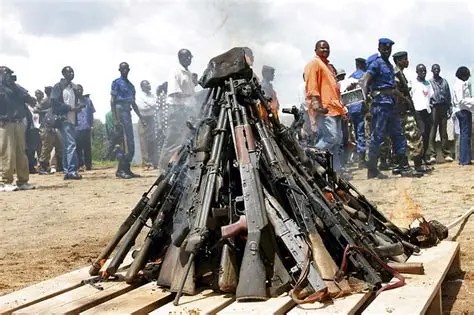
As those who follow me know, I identify as a Christological pacifist. As such, I do not condone the use of lethal force under any circumstances. I am well aware that my convictions constitute a minority position within the church catholic and that most of my siblings in the faith subscribe to some form of the “just war” doctrine. That teaching affirms Jesus’ words on the Sermon on the Mount to the effect that the default posture of a disciple is pacifism. When violently attacked, a disciple “turns the other cheek” and responds with love and prayer for the enemy. A narrow exception to that rule exists for persons engaged as soldiers and law enforcement officers, the rationale being that such persons exercise force, not to extract vengeance, but to protect the innocent from violence. Though you might disagree with my objections to the “just war” doctrine, I hope we can agree that war, and every other exercise of violence whether just or not, represents a tragic human failure. I hope we can agree that the idolatry of nationalism, the most extreme manifestation of which is war, constitutes a rupture in the human family, an exaltation of nation, tribe, race and class over the global unity God desires for the world. I hope that in our worship we can avoid the cultural tendency to glorify our nation’s wars and idolize those who fight them. In these days in which missiles and drones reign death from eastern Europe to the middle east and millions caught in the cross-fire are killed, wounded and uprooted from their homes, the church must not sugar coat these realities with patriotic jingoism. We need to say in no uncertain terms that war is not glorious, not to honorable, not righteous and certainly not an occasion for celebration and pride. It is sin, for which the only faithful response is repentance.
Here is a poem by Thomas McGrath that strips away the patriotic façade of glory, honor and heroism covering the unspeakable horror and obscenity of war.
Ode for the American Dead in Asia
1.
God love you now, if no one else will ever,
Corpse in the paddy, or dead on a high hill
In the fine and ruinous summer of a war
You never wanted. All your false flags were
Of bravery and ignorance, like grade school maps:
Colors of countries you would never see—
Until that weekend in eternity
When, laughing, well armed, perfectly ready to kill
The world and your brother, the safe commanders sent
You into your future. Oh, dead on a hill,
Dead in a paddy, leeched and tumbled to
A tomb of footnotes. We mourn a changeling: you:
Handselled to poverty and drummed to war
By distinguished masters whom you never knew.
2.
The bee that spins his metal from the sun,
The shy mole drifting like a miner ghost
Through midnight earth—all happy creatures run
As strict as trains on rails the circuits of
Blind instinct. Happy in your summer follies,
You mined a culture that was mined for war:
The state to mold you, church to bless, and always
The elders to confirm you in your ignorance.
No scholar put your thinking cap on nor
Warned that in dead seas fishes died in schools
Before inventing legs to walk the land.
The rulers stuck a tennis racket in your hand,
An Ark against the flood. In time of change
Courage is not enough: the blind mole dies,
And you on your hill, who did not know the rules.
3.
Wet in the windy counties of the dawn
The lone crow skirls his draggled passage home:
And God (whose sparrows fall aslant his gaze,
Like grace or confetti) blinks and he is gone,
And you are gone. Your scarecrow valor grows
And rusts like early lilac while the rose
Blooms in Dakota and the stock exchange
Flowers. Roses, rents, all things conspire
To crown your death with wreaths of living fire.
And the public mourners come: the politic tear
Is cast in the Forum. But, in another year,
We will mourn you, whose fossil courage fills
The limestone histories: brave: ignorant: amazed:
Dead in the rice paddies, dead on the nameless hills.
Source: Selected Poems 1938-1988 (c. 1988 by Thomas McGrath; pub. by Copper Canyon Press, 1988). Thomas McGrath (1916-1990) was a celebrated American poet and screenwriter of documentary films. He grew up on a farm in Ransom County, ND. He earned a B.A. from the University of North Dakota at Grand Forks and served in the Aleutian Islands with the U.S. Air Force during the Second World War. McGrath was awarded a Rhodes Scholarship at Oxford University and pursued postgraduate studies at Louisiana State University. He taught at Colby College in Maine and at Los Angeles State College. He was dismissed from the latter in connection with his refusal to cooperate with the House Committee on Un-American Activities in 1953. In refusing to participate in the committee’s “blacklisting” efforts, he testified that “[a] teacher who will tack and turn with every shift of the political wind cannot be a good teacher. I have never done this myself, nor will I ever.” McGrath later taught at North Dakota State University and Minnesota State University. He was married three times and had one son to whom much of his later work was dedicated. You can read more about Thomas McGrath and sample more of his poetry at the Poetry Foundation website.