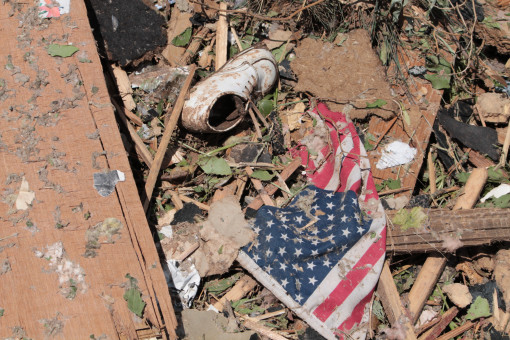
FIFTH SUNDAY AFTER PENTECOST
Prayer of the Day: O God, you direct our lives by your grace, and your words of justice and mercy reshape the world. Mold us into a people who welcome your word and serve one another, through Jesus Christ, our Savior and Lord.
“The prophets who preceded you and me from ancient times prophesied war, famine, and pestilence against many countries and great kingdoms. As for the prophet who prophesies peace, when the word of that prophet comes true, then it will be known that the Lord has truly sent the prophet.” Jeremiah 28:8-9.
There is a back story to our lesson from the Hebrew Scriptures. It all begins with God commanding Jeremiah to proclaim to the people of Judah that God is about to bring the Kingdom of David and the Temple in Jerusalem to an end by the hand of the King of Babylon whose armies are even now advancing upon Jerusalem. To make the point, Jeremiah is told to wear a yoke over his shoulders, the kind used for oxen. It is God who brings the yolk of Babylonian bondage upon Judah. To resist Babylon is to resist God. Jeremiah 27:1-11. You can imagine how that must have gone over. How would you like to be sent out to meet the Fourth of July parade with a yoke on your neck to tell everyone that God is about give victory to America’s national enemies?
The drama unfolds in Jerusalem where the prophet Hananiah is rallying the people of the city behind the flag. “Salvation is on the way! The Lord is coming to the aid of his people just like he always has in the past! The Lord is coming to rescue Jerusalem! The Lord is coming to save his people! Within two years we are going to see all the treasures taken from us by the Babylonians returned. We are going to see freedom! We are going to see peace! Do I hear an ‘Amen.’?” (Paraphrase of Jeremiah 28:1-4).
“Amen” shouts a voice from the midst of the cheering crowd. Everyone turns to see the prophet Jeremiah wearing his yoke. “Amen!” shouts Jeremiah. “I hope you are right Hananiah. I hope everything you say comes true. Nothing would make me happier than to be dead wrong about everything I have said. But this is much bigger than you and me, Hananiah. This is much more important than who is right and who is wrong. The question here is, ‘What is the word of the Lord for us this day?’ Don’t forget,” says Jeremiah to Hananiah, “there have been prophets before you and me. Not all of them prophesied salvation. Some foretold disaster and destruction. Remember Elijah, remember Amos, remember Micah who once prophesied that this very city would be laid bare as a mown field. Time will tell what the word of the Lord is, who proclaimed it and who received it faithfully.” (Paraphrase of Vss. 5-9). So ends the lectionary reading, but not the story. Next Hananiah, in a dramatic and brilliant show of rhetorical theater, jumps down from the podium, breaks in two the yoke from off Jeremiah’s neck and cries out, “So shall the Lord break the yoke of Babylon from the neck of his people.” Jeremiah 28:10-11. The crowd roars its approval and Jeremiah goes his way.
Jeremiah lost the rhetorical duel, but time proved the validity of his words which, as it turned out, were God’s Word. It was to the words of Jeremiah, faithfully preserved by his disciples, that Israel turned for comfort, hope and guidance during their exile in Babylon and throughout the coming ages. There are no writings of Hananiah known to exist today. Though he was surely more popular, influential and well connected in his day, commanding larger crowds and attracting a bigger following, Hananiah turned out to be a fraud. His promises proved cruelly misleading. His words were hollow, empty and unreliable. Sometimes, the Word of the Lord must endure long periods of rejection, neglect and distortion before it breaks forth again like a spring of pure water cleansed and purified by the dark underground through which it passes. Perhaps the time has come for Jeremiah’s prophecy to break forth again with words of judgment and hope.
Much has been written about the dangers of Christian nationalism though, as I have said before, attention has been focused principally on right wing religious movements. The explicit elevation of the United States to the status of a divine project whose interests coincide with God’s will is rightly denounced as heretical. Nevertheless, as I have frequently pointed out before, the symbiotic relationship between American Christianity and American national aspirations is not solely a right wing phenomenon. Mainline protestant Christianity has always been infected with the virus of American mythology, a belief that the United States is somehow exceptional and that its role as leader of the “free world” is essential to the common good. There has always been a faith in America’s essential goodness, a belief that, notwithstanding some significant flaws, failures and imperfections, America is progressing toward a “more perfect union.” Much of American Christian witness and mission has been more about saving, preserving and perfecting America than announcing the reign of God. Thus, while we can tolerate and even praise those who criticize, chastise and scold America, there is no tolerance whatsoever for those who dare to suggest that the United States itself might be altogether inconsistent with the values of God’s reign. Witness the national outcry against another Jeremiah, namely, the Rev. Jeremiah Wright who had the audacity to suggest that God might damn rather than bless America.
I think the one and only thing for which we can genuinely and sincerely thank Donald Trump is his putting the lie to the American mythology of the righteous nation, the city on the hill, the world’s best hope. Those of us who clung desperately to that myth dismissed the 2016 election as a fluke allowed by a scandal ridden and deeply unpopular democratic candidate. Following the January 6, 2021 failed Republican coup we insisted “this is not us.” But after the re-election of Donald Trump in 2024, we could no longer deny that the racism, misogyny, homophobia and outright cruelty of Donald Trump is a reflection of the American soul. His military threats against long time allies, his unprovoked aggression against neighboring countries and his needless wars initiated and provoked in the middle east, endorsed or at least tolerated by a substantial portion of the American public, demonstrate that the militaristic and authoritarian genes of Hitler and Stalin are firmly engrained in America’s DNA. The United States is not the world’s savior. To the contrary, it is currently the greatest threat to world peace, representative government and the planet’s ecological well being.
Should we, rather than praying for God’s blessing upon the United States, be praying instead for the end of its imperial power and influence? Should we be re-examining the unspoken assumption that the health of the global community depends on some version of a reformed, completed and redeemed America? Must we, like Jeremiah, announce to a church symbiotically fused with the United States and its myth of exceptionalism that there can be no redemption for America, only judgment and deconstruction? Is not our failure to conceive a hopeful future for the planet without the United States a damning indictment against a church that has lost sight of its prophetic calling? Does it not point to an idolatrous comingling of American mythology with the just and gentle reign of God? Unlike Jeremiah, I do not have a definitive Word from God on these questions, but I think they are the kinds of questions the church, particularly the church in America, ought to be asking.
To be clear, praying for an end to American imperialism is not the same as praying for the destruction of our country. There is much that I love about the United States of America, its diverse cultural traditions and the music, art and science they have produced. I have profound respect for the many Americans who have striven to and to some degree succeeded in building a more just and equitable society on our soil. None of this need be lost in the deconstruction of the American empire and its disproportional influence over the rest of the world. After all, the Roman Empire, the British Empire, the Spanish Empire all came to an end. Nevertheless, Italy, England and Spain are doing just fine. A United States of America shorn of its exceptionalist pretensions, its oversized military and its profit driven economy presided over by oligarchs, finally taking its place among the nations of the world as a partner rather than an overlord would surely be a welcome development. But it may be that such a promising future can be found only on the far side of judgment taking the shape of a painful dismantling of our delusions of grandeur, our systemically unjust institutions and our military industrial complex.
Here is a poem by Mary Oliver which, like the prophet Jeremiah, speaks a truth that is hard to hear. Yet, as Jeremiah and all true prophets know, there is no hope for redemption apart from confrontation by the truth, difficult as it may be to receive.
Of Empire
We will be known as a culture that feared death
and adored power, that tried to vanquish insecurity
for the few and cared little for the penury of the
many. We will be known as a culture that taught
and rewarded the amassing of things, that spoke
little if at all about the quality of life for
people (other people), for dogs, for rivers. All
the world, in our eyes, they will say, was a
commodity. And they will say that this structure
was held together politically, which it was, and
they will say also that our politics was no more
than an apparatus to accommodate the feelings of
the heart, and that the heart, in those days,
was small, and hard, and full of meanness.
Source: Red Bird, (c. 2009 by Mary Oliver; pub. by Beacon Press). Mary Oliver (1935-2019) was born in Maple Heights, Ohio. She was deeply influenced by poet, Edna St. Vincent Millay. Her work received early critical attention with the 1983 publication of a collection of poems entitled American Primitive. She is a recipient of both the Pulitzer Prize for Poetry and the National Book Award. She spent the latter years of her life in Provincetown on Cape Cod, MA before moving to Florida where she died. Many of her poems reflect the unique features, vegetation and wildlife of the Cape. You can read more about Mary Oliver and sample some of her other poems at the Poetry Foundation Website.
 Peter's Outer Cape Portico