TENTH SUNDAY AFTER PENTECOST
Prayer of the Day: Glorious God, your generosity waters the world with goodness, and you cover creation with abundance. Awaken in us a hunger for the food that satisfies both body and spirit, and with this food fill all the starving world; through your Son, Jesus Christ, our Savior and Lord.
“They are Israelites, and to them belong the adoption, the glory, the covenants, the giving of the law, the worship, and the promises; to them belong the patriarchs, and from them, according to the flesh, comes the Christ, who is over all, God blessed forever. Amen.” Romas 9:4-5.
I travel Cape Cod’s Route 6 frequently these days. That arterial highway is the only means of travel up through the Outer Cape stretching from Orleans to Provincetown. Along the way I pass a church that proudly proclaims “We stand with Israel” and frequently flies the Israeli flag. I have not spoken with the pastor of that congregation or any of its members about its support for Israel, but I strongly suspect that they view such support as an outgrowth of their faith. Identification with the State of Israel is common place among white evangelical Christians. For some, support for Israel amounts to a stand against antisemitism. As one evangelical woman with whom I recently spoke expressed it, “We don’t want to make the same mistake the church in Germany made during the second world war.” No doubt the horrific attack by Hamas against Israeli civilians evoked sympathy for the people of Israel-as well it should.
Many evangelicals, however, subscribe to a fringe doctrine known as “premillennialism.” According to this teaching, a blueprint for the imminent end of the world and the return of Christ to establish a one thousand year Christian theocracy is woven into the Hebrew and Christian scriptures. There is much disagreement among evangelicals holding these views over the details of how the end will unfold. But in premillennial thought, the nation of Israel plays a crucial role in igniting the wars and tribulations that will plunge the earth into a hopeless condition of demonic global rule. After this, Christ will return and with him the resurrected Christians to crush the powers of evil and rule the world for the next thousand years. Support of Israel, then, is to be allied with God’s plan for the windup of history. It is rather like lighting the fuse of Armageddon. While most of us mainliners do not hold premillennial views, I find support for the state of Israel to be for many a religious moral obligation. In their minds, opposition to Israel amounts to opposing or even persecuting the Jews.
To be clear, antisemitism is antithetical to faith in Jesus Christ. I have argued in a pervious article that Saint Paul would be baffled by the divorce between the modern church and the people of Israel. See Judaism, Christianity, Antisemitism and Saint Paul. As the apostle understood it, the church did not supersede Israel. Rather, the church was the door through which God invites the gentiles into Israel’s covenant relationship with God. The above passage illustrates Paul’s understanding that Israel was, is and always will be “adopted” by God and in primary possession not only of the ancient covenants, the Torah and the prophetic promises, but also the One we worship as the Christ. Though the Jewish faithful do not view Jesus as their messiah, they worship the God Jesus invoked as Father and whose covenant partnership with them continues unbroken. Though he was sometimes less than clear about the specifics, Paul was convinced that the destiny of Israel was integral to God’s redemptive purpose for all creation. To be a disciple of Jesus is to recognize God’s past faithfulness to God’s people Israel and God’s continuing faithfulness through the ancient covenants to which the Hebrew Scriptures testify. To denigrate the Jews is to blaspheme the God and Father of Jesus Christ.
That said, it needs also to be said clearly and unequivocally that recognizing, affirming and honoring God’s people Israel is not the same as supporting the policies, practices and geopolitical aims of the nation of Israel. The nation of Israel is just that: a nation. As such, it is a humanly established entity no more or less than any other nation. It does not have divine sanction any more than any other nation, including the United States, notwithstanding some very misguided notions to the contrary. The nation of Israel does not, on the basis of some biblical mandate, get a pass on practices that can fairly be characterized as unlawful annexation, war crimes and ethnic cleansing. Thus, while one might fairly argue that there are strategic, military and humanitarian reasons for supporting the government of Israel, one cannot argue, from a Christian perspective, that support for the nation of Israel is a religious duty. Accordingly, while disciples of Jesus must advocate for the rights of Jewish people everywhere and resist all forms of antisemitism, they must also decry and condemn in no uncertain terms the Israeli attacks on Palestinian civilians in Gaza and the violent dispossession of Palestinians living in the West Bank.
American Christians and Lutheran Christians in particular need to tread lightly here. We need to use sparingly such loaded and inflammatory terms as “colonialism,” “genocide,” and “ethnic cleansing.” What Israelis are rightly condemned for doing to the Palestinians over the last 80 years the United States government has been doing to our own indigenous population for the last three centuries. Moreover, the move to create a Jewish state arose from the well founded belief of Jews, having suffered centuries of pogroms in Europe culminating in the Holocaust, that there could be no safe place in the world for them unless they made one for themselves. Lest we be too hard on the Jews who migrated to and claimed land in Palestine, let us recall that we are among the many nations that refused asylum to the family of Ann Frank and thousands of other Jews seeking refuge from Hitler’s “final solution.” See The American Murder of Anne Frank-and now Syrian Refugees. Stripped of their citizenship in Germany and other Nazi occupied territories, the Jews were rendered non persons. They had no right to exist anywhere in the world. No nation was obliged to receive them. The history of the State of Israel illustrates the brutal reality that stateless refugees are not afforded human rights and have no protection against oppression and violence beyond a few toothless UN resolutions. It is one of history’s cruel ironies that Palestinians, another stateless people, are suffering the same fate their oppressors knew so well.
Finally, those of us in the Lutheran tradition must recognize that we played a particularly shameful role ignoring and, in many instances, facilitating the Nazi oppression of Jews in Europe. Martin Luther’s despicable writings denigrating the Jews constitute a dark blot on the Reformation at the heart of our religious identity. For example, Paul Althaus, a Lutheran scholar in Germany from the 1930s through the 1950s. Greeted the rise of Hitler as a “gift and miracle from God.” Gerhard Kittel, a German Lutheran theologian and New Testament scholar, joined the Nazi Party in 1933. He produced writings on the “Jewish Question” that promoted the Third Reich’s exclusionary policies. Though there were notable exceptions to the church’s complicity in the Nazi’s genocidal policies, such as Deitrich Bohnoeffer and Martin Niemöller, they were exceptions. At best, the church remained indifferent to the fate of the Jews throughout Europe. At worst, it facilitated their oppression.
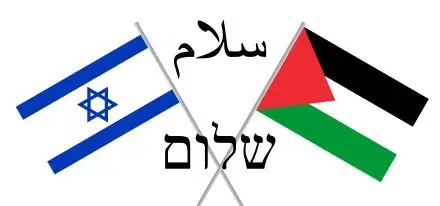
None of this is to say that the church is wrong to condemn Israel’s brutal wars of aggression against the Palestinians. But we need to do so with the full recognition and frank admission that the state of Israel came into existence as a result of centuries of exclusion, persecution and violence against Jews routinely sanctioned by the church. For Jews both in Israel and elsewhere, the state represents both a sanctuary and a bulwark of defense against a world filled with hostility toward them. To suggest that Israelis abandon their efforts to continue the existence of a Jewish state, acquiesce to a pan Palestinian democracy and trust in the good will of the international order that failed them so spectacularly in the 1930s and 1940s-that is a mighty big ask. A just and lasting peace must therefore ensure the safety and wellbeing of Jews in their ancestral homeland as well as freedom and self determination for Palestinians whose claim to the land, on the same grounds, is no less legitimate. What shape such a peace might take is well beyond the scope of this article. Suffice to say that Disciples of Jesus must stand with the Palestinian people against the violence of the Israeli government while standing with the Jewish people against the growing tide of antisemitism. That will surely prove more difficult in practice than in theory. But Jesus never asks us to do anything that is easy.
Here are two poems, one by Palestinian author Mahmoud Darwish and the other by the Israeli poet, Yehuda Amichai reflecting upon life in a land they both regard as theirs and holy.
To Our Land
To our land,
and it is the one near the word of god,
a ceiling of clouds
To our land,
and it is the one far from the adjectives of nouns,
the map of absence
To our land,
and it is the one tiny as a sesame seed,
a heavenly horizon … and a hidden chasm
To our land,
and it is the one poor as a grouse’s wings,
holy books … and an identity wound
To our land,
and it is the one surrounded with torn hills,
the ambush of a new past
To our land, and it is a prize of war,
the freedom to die from longing and burning
and our land, in its bloodied night,
is a jewel that glimmers for the far upon the far
and illuminates what’s outside it …
As for us, inside,
we suffocate more!
Source: The Butterfly’s Burden, by Mahmoud Darwish, (pub. by Copper Canyon Press, 2007)
Jews in the Land of Israel
We forget where we came from. Our Jewish
names from the Exile give us away,
bring back the memory of flower and fruit, medieval cities,
metals, knights who turned to stone, roses,
spices whose scent drifted away, precious stones, lots of red,
handicrafts long gone from the world
(the hands are gone too).
Circumcision does it to us,
as in the Bible story of Shechem and the sons of Jacob,
so that we go on hurting all our lives.
What are we doing, coming back here with this pain?
Our longings were drained together with the swamps,
the desert blooms for us, and our children are beautiful.
Even the wrecks of ships that sank on the way
reached this shore,
even winds did. Not all the sails.
What are we doing
in this dark land with its
yellow shadows that pierce the eyes?
(Every now and then someone says, even after forty
or fifty years: “The sun is killing me.”)
What are we doing with these souls of mist, with these names,
with our eyes of forests, with our beautiful children,
with our quick blood?
Spilled blood is not the roots of trees
but it’s the closest thing to roots
we have.
Source: The Poetry of Yehuda Amichai (Farrar Straus and Giroux, 2015)
Mahmoud Darwish (1941-2008) was a Palestinian author and poet. He was author of the Palestinian Declaration of Independence formally establishing the State of Palestine in November 1988. Darwish is widely regarded as the country’s national poet. His poetry and other literature, for which he won numerous awards internationally, was published in Arabic, though he was fluent in English, French and Hebrew. Darwish served as an editor for several literary magazines in both Israel and the Palestinian territories.
Darwish’s family fled to Lebanon during the 1948 Arab-Israeli war, but returned to Israel a year later where they were granted residency status. In 1970, Darwish left Israel to study in the Soviet Union, where he attended Moscow State University for one year. In 1971, he moved to Cairo, Egypt, where he worked for the daily newspaper al-Ahram. In 1973, Darwish joined the Palestine Liberation Organization (PLO) and was consequently banned from entering Israel. He was elected to the PLO Executive Committee in 1987. Over his lifetime of 67 years Darwish published more than thirty volumes of poetry and eight books of prose. You can read more about Mahmoud Darwish and sample more of his poetry at the Poetry Foundation website.
Yehuda Amichai is one of Israel’s most prominent poets. He was born in Germany in 1924 but left with his family for Palestine in 1935. As a young man he volunteered and fought in World War II as a soldier in the British Army. After discharge from the British Army in 1946, Amichai was a student at David Yellin College of Education in Jerusalem and became a teacher in Haifa. Amichai fought in the 1948 Arab/Israeli war on the southern front in the Negev. After the war, Amichai studied the Torah and Hebrew literature at the Hebrew University of Jerusalem. Encouraged by one of his professors at Hebrew University, he published his first book of poetry in 1955. In 1956, Amichai served in the Sinai War and in 1973 he served in the Yom Kippur War. Amichai was a visiting professor at the University of California, Berkeley during the 1970s and was a poet in residence at New York University in 1987. Amichai was invited in 1994 by Prime Minister Yitzhak Rabin to read from his poems at the ceremony of the Nobel Peace Prize in Oslo. His poems have been translated into English, French, German and Swedish. You can read more about Yehuda Amichai and his poetry on the Poetry Foundation Website.

 Peter's Outer Cape Portico