FOURTH SUNDAY AFTER PENTECOST
Prayer of the Day: Teach us, good Lord God, to serve you as you deserve, to give and not to count the cost, to fight and not to heed the wounds, to toil and not to seek for rest, to labor and not to ask for reward, except that of knowing that we do your will, through Jesus Christ, our Savior and Lord.
“Do not fear those who kill the body but cannot kill the soul; rather, fear the one who can destroy both soul and body in hell.” Matthew 10:28.
“Pastor, do you believe in hell?” That is a question I frequently get on Sundays when texts like this come up. My stock response is, “Why don’t you tell me what you think hell is and I will tell you whether I believe in it or not.” That usually gets the conversation going in a way that allows me to deconstruct a lot of harmful misconceptions and invite the entertainment of new perspectives. But sooner or later, I am pressed to respond to the question: What is hell and do I believe in it?
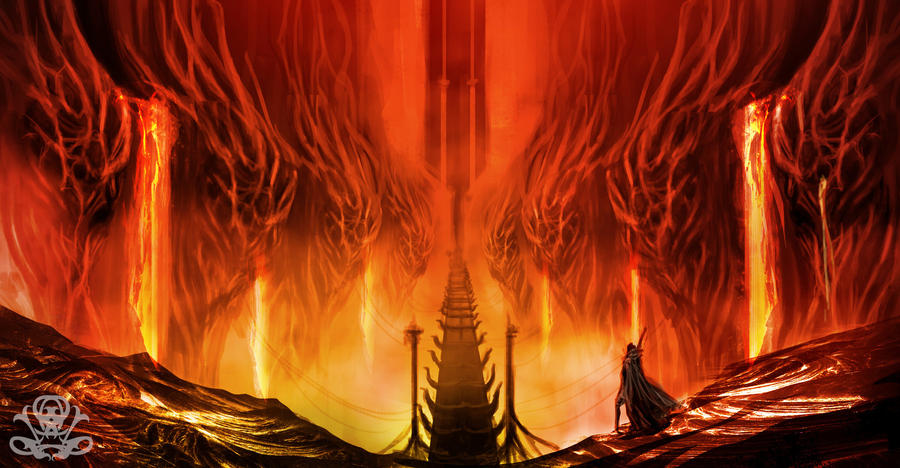
The short answer to the first part of the question is that I don’t know what hell is. The Bible speaks of it only in parabolic, apocalyptic and poetic terms from which I don’t think we can draw any concrete metaphysical conclusions. The Greek word used in the New Testament is “Geheneh,” which is the name of the place where garbage was burned outside the city, suggesting to me that it is figurative rather than literal. I therefore do not believe the scriptural references to hell, even the lurid images of the “lake of fire” in the Book of Revelation, support belief in a subterranean realm where damned souls are imprisoned for torment throughout all eternity. One of the most ancient creedal assertions found throughout the Hebrew Scriptures is that God is “merciful, slow to anger and abounding in steadfast love.” Even when God punishes, God does so with the ultimate aim of healing and reconciliation. Eternal punishment is simply not consistent with God’s character as so revealed.
Most of what can be gleaned about hell comes from the book of Revelation which employes apocalyptic imagery. I think so many people get Revelation entirely wrong because they give only a cursory glance to chapters 1-3, the letters to the seven churches of Asia Minor. These are small, vulnerable and demoralized communities living under the shadow of a hostile empire facing social ostracism, political infighting and struggles with heretical influences. One gathers from the tone and content of these letters that these churches are on the verge of giving up. No doubt they were beginning to wonder, what’s the point? The apostle is using the fantastic imagery throughout the rest of the book to make the point that his churches are precious in God’s sight, that their struggling communities represent God’s presence in the world and that the struggles they face are of cosmic significance. It is the lamb, the lamb who was slain no less, that is destined to triumph over the fearful and beastly powers of empire. The intent was clearly not to establish a timetable for the world’s demise, but a poetic vision of its redemption. The “lake of fire” was prepared for the demonic forces animating the Roman empire, not for human beings.
The biggest problem with hell is the obsession people seem to have with who is going there and who isn’t. I am not sure anyone is going to hell. The prophet Ezekiel tells us that God takes no pleasure in the death of anyone. Ezekiel 18:32. Saint Peter tells us that it is not God’s will that any perish. II Peter 3:9. John’s gospel tells us that God so loved the world (not Christians, not the church, not good people) that God sent the only beloved Son. John 3:16. That suggests to me that salvation is much bigger than the church. It is not God’s intent to save as many souls as possible from a sinking ship. God means to save the ship and everyone on it. Whatever and whoever God is able to work into the mosaic of the new heaven and the new earth, God will save to that end.
That being said, the passage must mean something. Jesus’ words are clearly intended, at least in part, as a dire warning. There is much that is irreconcilable with God’s reign and cannot be woven into the fabric of a new creation. Hatred, bigotry, cruelty, arrogance, lust for power and wealth come to mind. These things are therefore consigned to the garbage dump for burning. If we are all honest with ourselves, these moral faults infect us all to some degree. Thus, on that day when all that is “covered” is “uncovered” and all secrets are made known (Matthew 10:26), there will be some hell to pay for all of us. I quote again a passage from Fyodor Dostoyevsky’s monumental work, The Brothers Karamazov. The scene is the death bed of the sainted Father Zossima, elder of the local monastery from which he addresses the monks under his leadership for the last time.
“Fathers and teachers, I ponder, ‘What is hell?’ I maintain that it is the suffering of being unable to love. Once in infinite existence, immeasurable in time and space, a spiritual creature was given on his coming to earth, the power of saying, ‘I am and I love.’ Once, only once, there was given him a moment of active living love and for that was earthly life given him, and with it times and seasons. And that happy creature rejected the priceless gift, prized it and loved it not, scorned it and remained callous. Such a one, having left the earth, sees Abraham’s bosom and talks with Abraham as we are told in the parable of the rich man and Lazarus, and beholds heaven and can go up to the Lord. But that is just his torment, to rise up to the Lord without ever having loved, to be brought close to those who have loved when he has despised their love. For he sees clearly and says to himself, ‘Now I have understanding and though I now thirst to love, there will be nothing great, no sacrifice in my love, for my earthly life is over, and Abraham will not come even with a drop of living water (that is the gift of earthly, active life) to cool the fiery thirst of spiritual love which burns in me now, though I despised it on earth; there is no more life for me and will be no more time! Even though I would gladly give my life for others, it can never be, for that life is passed which can be sacrificed for love, and now there is a gulf fixed between that life and this existence.’”[1]
I cannot imagine that on the day of judgment when our lives are measured against the rich and numerous opportunities we have had to love deeply this good green earth, the many people whose lives have intersected with our own and the One from whom these opportunities come, we will not lament the time we have wasted on envy, bitterness and chasing after trivialities we thought would bring us happiness. Saint Paul alludes to something like this in his First Letter to the church in Corinth:
“According to the grace of God given to me, like a wise master builder I laid a foundation, and someone else is building on it. Let each builder choose with care how to build on it.For no one can lay any foundation other than the one that has been laid; that foundation is Jesus Christ.Now if anyone builds on the foundation with gold, silver, precious stones, wood, hay, straw—the work of each builder will become visible, for the daywill disclose it, because it will be revealed with fire, and the fire will test what sort of work each has done.If the work that someone has built on the foundation survives, the builder will receive a wage. If the work is burned up, the builder will suffer loss; the builder will be saved, but only as through fire.” I Corinthians 3:10-15.
Is it possible for a person to become so thoroughly distorted, so completely depraved that the image of God is entirely erased and the Creator must say, “I never knew you. Depart from me”? Since Jesus floats this possibility, it would be foolish to ignore it. Nonetheless, that is not a call I believe any of us can make. From the disciple’s perspective, it is assumed that all persons, however cruel and depraved they might appear to us, nevertheless bear the image of God and must be treated with love and compassion. When Jesus was asked whether many or few would be saved, he refused to answer. Instead, he told the inquirers to focus on their own walk on the narrow path rather than speculate on the destiny of others. Luke 13:23-24.
Finally, I am not sure what eternal punishment looks like-assuming anyone arrives there. I don’t think God gets any jollies from torturing people who call upon God by a different name, do not believe in God or do not have their doctrine quite right. If any are lost, it will be because they have become so thoroughly depraved that nothing of God’s image is recognizable or reconcilable with the kingdom of heaven. So what happens to those who become so thoroughly depraved that they cannot live peacefully under the gentle reign of God? Perhaps Father Zossima is right. The lost will finally be allowed into the kingdom in spite of themselves. That might be worse than any eternal flame. Can you imagine Donald Trump living in a world that no longer pays him any attention? Can you imagine Hitler living in a community that no longer remembers or cares about the Third Reich? What could be worse than realizing that you have thrown your life away on all the things that don’t matter and that everything you thought was important, all the accomplishments in which you took such pride and all the causes you gave your life to are worthless trinkets rusting in the dustbin of a world now past and that it is too late to change it?
The observations made by Father Zossima, speculative as they might be, are nonetheless in keeping with the gospel message, namely, that the Good News of Jesus is not merely life after death, but life now into which God’s reign is breaking. Eternal life is not eternal merely by virtue of its duration, but chiefly because of its quality. “Faith, hope and love, these three remain, but the greatest of these is love,” says St. Paul. I Corinthians 13:13. All who live in love are living a life that transcends death. To live for less is to waste one’s life on that which is only fit for burning in the dump.
To conclude where I began, I don’t know what hell is. I am convinced, however, that whatever it is, hell is of our own making and not the work of a merciful and compassionate Creator. Here is a poem by Carl Sanburg illustrating the point.
Our Hells
Milton unlocked hell for us
And let us have a look.
Dante did the same.
Each of these hells is special-
One is Milton’s, one Dante’s.
Milton put in all that for him
was hell on earth.
Dante put in all that for him
was hell on earth.
Each of the demons was done in
a dear personal idiom.
If you unlock your hell for me
And I unlock my hell for you
They will be two special hells
Done in our dear personal idioms.
Each of us showing what for us
is hell on earth.
Source: Poetry (October, 1932). Carl Sandburg (1878 – July 22, 1967) was a Swedish-American poet, biographer, journalist and editor. He won three Pulitzer Prizes, two for his poetry and one for a biography of Abraham Lincoln. Sandburg is widely regarded as a major figure in contemporary literature. At the age of thirteen Sandburg left school and began driving a milk wagon. Throughout his early years, he worked as a porter at the Union Hotel barbershop in Galesburg, Illinois, a bricklayer, a farm laborer in Kansas, a hotel servant in Denver, Colorado and a coal-heaver in Omaha. Sandburg began his writing career as a journalist for the Chicago Daily News. Later he wrote poetry, history, biographies, novels, children’s literature and film reviews. He also collected and edited books of ballads and folklore. He spent most of his life in Illinois, Wisconsin, and Michigan before moving to North Carolina. You can find out more about Carl Sandburg and sample more of his poetry at the Poetry Foundation Website.
[1] Dostoyevsky, Fyodor, The Brothers Karamazov (Trans. by Constance Garnett, c. 1950 by Random House, Inc., New York, NY) p. 387.

