Category Archives: Uncategorized

“Matthew 25 Christian”-The Only Kind There Is

SUNDAY OF CHRIST THE KING

Ezekiel 34:11-16, 20-24

Psalm 95:1-7

Ephesians 1:15-23

Matthew 25:31-46

Prayer of the Day: O God of power and might, your Son shows us the way of service, and in him we inherit the riches of your grace. Give us the wisdom to know what is right and the strength to serve the world you have made, through Jesus Christ, our Savior and Lord, who lives and reigns with you and the Holy Spirit, one God, now and forever.

“Truly I tell you, just as you did not do it to one of the least of these, you did not do it to me.”

No, it doesn’t matter that the least happen to be “collateral damage” incurred while taking out a legitimate military target. It doesn’t matter that the least happen to be on death row for horrendous crimes committed against innocent people. It doesn’t matter that the least were sent to die for high sounding principles like “democracy,” “freedom,” or “national security.” It won’t do to protest that the poor are poor by reason of their own laziness, bad decisions and lack of initiative. There can be no distinction between the least on our side of the border and the least on the other. No one will be heard to argue that there was no room in the budget to feed the hungry, cloth the naked, care for the sick or assist the prisoner and that, of course, the deficit had to be reduced somehow. The nations, all the nations, will be judged under just one standard: how well or poorly they treated the least among us.

This parable of Jesus is just that, namely, a parable. Like all parables, its focus is not on some event in the the distant future. Instead, it directs the disciples to the way Jesus would have them live in the moment. It is, first and foremost, a reflection of the life Jesus lived in the shadow of political violence, imperial oppression and ruthless economic exploitation. It is a life that honors God’s priorities and takes the shape of the cross in a world whose priorities are entirely different. It is life grounded in God’s eternal priorities and in which Jesus invites his disciples to share.   

That brings me to a further point. The parable is directed to the disciples, those who have been called by grace, redeemed by grace and set apart by grace as witnesses to Jesus and the kingdom he proclaims. Theirs is the privilege of testifying, in deed as much as in word, to God’s priorities in the world. As it happens, God’s priorities are those persons deemed the lowest priority among us. Note well that in this parable of the final judgment nothing is said about how many times a person has been married or to whom, what their sexual orientation is or is not, whether any of them has ever had an abortion, what their race or nationality might be, whether they have the proper documentation to live where they are living, what their religious commitments are, whether they have a criminal record, how they voted in the last election or any of those other “culture war” obsessions that posses so much of the deviant, sick and sadly dominant strains of America Christianity. One can only conclude from Jesus’ parable that God does not give a flying fruitcake about any of that crap-and neither should his disciples.

What disciples do care about are the least among us. That includes the millions in this richest of nations living in poverty, food insecurity and without adequate medical care because that clown[1] show known as the U.S. Congress must balance the budget on their backs. It includes the children dying violent deaths daily in Gaza, South Sudan and Ukraine at the expense of nationalism at home and the national interests of superpowers abroad pouring money and weapons into these conflicts. It includes millions of kids in our broken foster care system. It includes millions of incarcerated persons who, if they ever gain release, will enter into a society that stigmatizes them in ways that practically ensures their failure to rebuild their lives. It includes millions living in refugee camps all over the world who are hated, feared and unwanted everywhere. Jesus assures us that these are God’s priorities. They should be the priorities of his disciples, his church.     

The Sunday of Christ the King brings the liturgical year to a fitting close. At the end of the day, we are reminded that we have one Sovereign to whom we pledge allegiance. Jesus stands with those deemed “least.” As he taught us, where he is, there should his servants be. John 12:26. During a senatorial debate in 2021, Senator Raphael Warnock proclaimed that he was a “Matthew 25 Christian.” I have heard others use that term also. Frankly, I was not aware that there was any other kind. Jesus was always crystal clear that the commandment to love God and neighbor was “the first and greatest.” Mark 12:29-31. He was clear in his teaching that treatment of all people in the way we would be treated constitutes the heart and soul of the law and the prophets. Matthew 7:12. Thus, the parable of the judgment simply reinforces what Jesus taught in the Sermon on the Mount and lived throughout his ministry. Loyalty to Jesus and submission to God’s gentle reign as it is revealed in his obedient life, faithful death and glorious resurrection trumps all other commitments.

In our American context, we are confronted with numerous ideologies cloaked under the sheep’s clothing of patriotism, morality and religion. Some of them come from the radical fringe, making their way into the mainstream of our politics and culture. Others are already deeply imbedded in American orthodoxy. They reflect priorities entirely different from those of God’s reign revealed in Jesus Christ. We live under a government promoting, implementing and enabling unjust, inhumane and cruel policies that have devastating impacts on the poorest, sickest, hungriest and most vulnerable among us and around the world. Faithfulness to Jesus is faithfulness to these victims of “our way of life.” If we are not Matthew 25 Christians, then we are simply not Christians.

Here is a poem by Gilbert K. Chesterton. It was set to music and included in the Lutheran Book of Worship published in 1978. For reasons I cannot fathom, it failed to make the cut for our subsequent hymnal, Evangelical Lutheran Worship. That is unfortunate because I can hardly imagine a more appropriate hymn for the Sunday of Christ the King in this day and age.

O God of Earth and Altar

O God of Earth and Altar
Bow down and hear our cry
Our earthly rulers falter
Our people drift and die
The walls of gold entomb us
The swords of scorn divide
Take not thy thunder from us
But take away our pride

From all that terror teaches
From lies of tongue and pen
From all the easy speeches
That comfort cruel men
From sale and profanation
Of honour and the sword
From sleep and from damnation
Deliver us, good lord

Tie in a living tether
The prince and priest and thrall
Bind all our lives together
Smite us and save us all
In ire and exultation
Aflame with faith and free
Lift up a living nation
A single sword to thee

Source: Gilbert Kieth Chesterton (c. 1906), printed in the Lutheran Book of Worship (c. 1978 by Lutheran Church in America; The American Lutheran Church, the Evangelical Lutheran Church of Canada; the Lutheran Church-Missouri Synod) Hymn No. 428. Gilbert Keith Chesterton (1874-1936) was an English writer, philosopher, Christian apologist and literary/art critic. He was born in Campden Hill in Kensington, London. He is perhaps best known popularly for his creation of the character Father Brown, the priest-detective who appears in several of his short stores. The character has given rise to several adaptations for television in the United Kingdom and in the United States. Chesterton routinely referred to himself as an orthodox Christian. Baptized and raised Anglican, Chesterton ultimately came to identify more with Catholicism, to which he finally converted. His literary works are laced with interchanges reflecting moral and religious themes. Perhaps his best known work of fiction is the clever and fast moving novel, The Man who was Thursday. Chesterton loved to debate and often engaged in friendly public disputes with such personages as George Bernard Shaw, H. G. Wells, Bertrand Russell and Clarence Darrow. Chesterton delivered a series of radio talks over the BBC, about forty per year, from 1932 until his death four years later.  Near the end of Chesterton’s life, Pope Pius XI invested him as Knight Commander with Star of the Papal Order of St Gregory the Great. The poem recited above was written by Chesterton in 1906. If you would like to take a listen to the hymn version, click on this link.


[1] When I say clown, I am thinking Pennywise rather than Bozo.

Wisdom, Wide Open Spaces and Big Mistakes

TWENTY-FIFTH SUNDAY AFTER PENTECOST

Zephaniah 1:7, 12-18

Psalm 90:1-12

1 Thessalonians 5:1-11

Matthew 25:14-30

Prayer of the Day: Righteous God, our merciful master, you own the earth and all its peoples, and you give us all that we have. Inspire us to serve you with justice and wisdom, and prepare us for the joy of the day of your coming, through Jesus Christ, our Savior and Lord.

“So teach us to count our days
   that we may gain a wise heart.” Psalm 90:12.

Counting our days is about the only way to acquire a “wise heart.” It has been said that we learn nothing from history except that we learn nothing from history. Those of us who are parents should understand that. We ache to see our children making the same mistakes, falling into the same traps and chasing the same illusory promises of happiness that entangled us in our younger days. We would like to warn them of their peril and so spare them the heartaches we endured. Perhaps we have tried. But they are convinced we don’t understand, that we can’t possibly know what they are going through, that we just “don’t get it.” They spurn the hard won wisdom we would share with them. I see their point. After all, we have left them a dying planet, a nonfunctioning government and a world on the verge of potentially catastrophic wars. And now we presume to wag our moralistic fingers in their faces and impart to them our wisdom? I can hear the collective younger generational sigh already: “Give me a break!”

The truth is, wisdom is the product of learning from mistakes. Where there is no freedom to make mistakes, there is little learning and no maturation of wisdom. That point is made with blunt clarity in a saucy little song written by Susan Gibson and made famous by the country western trio, The Chicks.[1] The song Wide Open Spaces reflects the feelings of a young woman leaving home to start a new life in an unidentified western place. It is a place with “wide open spaces” representing a plethora of possibilities, choices and paths. It is a place wide enough to allow for making “the big mistakes.” As the young woman is brimming with excitement and expectation, her parents express the fear and anxiety parents typically feel as they watch their young, inexperienced and vulnerable children venture out into what they know is a dangerous world. We remind our children to do the common sense things like “check the oil,” but the weightier lessons in love, moral responsibility and vocational direction can only be learned the way we learned them, that is, by experience. The kindest thing we can do for our children is give them enough space to make mistakes.

Jesus would have his disciples know that faith gives them the freedom to make mistakes. I believe that is what the parable of the talents in Sunday’s gospel is all about. We might be tempted to pity the poor fellow in the parable who hid his talent in the ground rather than investing it. He had so little to work with compared to his fellow servants. He was afraid of losing that with which he had been entrusted. How could he know that the years ahead would bring a bull market? What if the market had gone south and his fellow servants had lost everything? If that had been the case, he could proudly bring forth his talent and boast of his prudence and care-unlike his risk taking companions. The worst you can say about this poor fellow is that he was “risk averse.” Depending on the state of the economy, that could well be the best strategy. We might view him as simply a victim of market vagaries. But that is a misreading of the parable. Note well that the master does not commend the two servants who increased their holdings for their success and business acumen. Instead, he commends them for their faithfulness. Faithfulness is all that is required of the disciple. God will see to the success.

The servant who hid his master’s money in the ground says to his master, “I knew you to be a ‘harsh man’.” But was that really the case? The servant says, “I was afraid” and that says it all. Perhaps it is because he saw his master, and everything else for that matter, through the lens of fear that he viewed him as a punishing tyrant rather than one who had enough confidence in him to place his own money under his care. The servant was so afraid of making a mistake, so terrified of failing, so fearful of doing something wrong that he did not do anything at all.

Jesus would have us know that ours is a God who gives us plenty of “wide open spaces” to make the “big mistakes.” To be clear, this is not a license to be reckless and irresponsible. It is a recognition, however, that we are creatures who learn the meaning of friendship through disappointment and betrayal; we learn love through heartbreak; we learn about the beauty and complexity of our world by having our simplistic notions about it shattered again and again; we learn to know our God by discovering, through sometimes bitter experience, that we cannot make a mess of our lives bigger than God is able to clean up.

This is incredibly good news for people like me who are by nature “risk averse.” It is incredibly good news for college seniors who are beginning to wonder whether they chose the right major, the right career or the right job offer. It is good news for two people about to enter into a lifelong relationship-and sometimes wonder whether they are doing the right thing. It is good news for a church about to launch an untried program of mission and ministry. The worst that can happen is that you will make a mistake-which means you will have the opportunity to “gain a wise heart.”

Here is the text of the song Wide Open Spaces written by Susan Gibson and performed by the Chicks cited above:

Who doesn’t know what I’m talking about?
Who’s never left home? Who’s never struck out?
To find a dream and a life of their own
A place in the clouds, a foundation of stone

Many precede and many will follow
A young girl’s dreams no longer hollow
It takes the shape of a place out West
But what it holds for her, she hasn’t yet guessed

She needs wide open spaces
Room to make her big mistakes
She needs new faces
She knows the high stakes

She traveled this road as a child
Wide-eyed and grinning, she never tired
But now she won’t be coming back with the rest
If these are life’s lessons, she’ll take this test

She needs wide open spaces
Room to make her big mistakes
She needs new faces
She knows the high stakes

And as her folks drive away, her dad yells, “Check the oil!”
Mom stares out the window and says, “I’m leavin’ my girl”
She said, “It didn’t seem like that long ago”
When she stood there and let her own folks know

She needed wide open spaces
Room to make her big mistakes
She needs new faces
She knows the high stakes

She knows the highest stakes
She knows the highest stakes (wide open spaces)
She knows the highest stakes
She knows the highest stakes (wide open spaces)

Source: Susan Gibson (c. Pie Eyed Groobee Music). Susan Gibson is a singer/song writer who works out of Wimberly Texas. She was born in Fridley, Minnesota. She has released six solo albums and was the lead singer for the country western band, The Groobees. You can read more about Susan Gibson and her music on her official website. The Chicks (formerly The Dixie Cicks) are an American country music band from Dallas. The band currently consists of Natalie Maines (lead vocals, guitar) and sisters Martie Maguire (vocals, fiddle, mandolin, guitar) and Emily Strayer (vocals, guitar, banjo, Dobro). The Chicks have won thirteen Grammy Awards. Days before the 2003 invasion of Iraq, Natalie Maines told a London audience that the Chicks did not endorse the war and were ashamed of President George W. Bush. The remarks triggered boycotts in the United States and a backlash from fans. Still the group’s popularity continued to grow. By July 2020 the Chicks had become the best-selling all-woman band and best-selling country group in the United States.


[1] Formerly known as the Dixie Chicks, the group dropped the Dixie label following the murder of George Floyd and the civil rights demonstrations that followed.

Imagining Justice

TWENTY-FOURTH SUNDAY AFTER PENTECOST

Amos 5:18-24

Psalm 70

1 Thessalonians 4:13-18

Matthew 25:1-13

Prayer of the Day: O God of justice and love, you illumine our way through life with the words of your Son. Give us the light we need, and awaken us to the needs of others, through Jesus Christ, our Savior and Lord.

“But let justice roll down like waters,
   and righteousness like an ever-flowing stream.” Amos 5:24.

More than half of U.S. adults believe the United States Constitution is inspired by God, according to a 2022 Faith in America survey released in March by Deseret News and Marist Poll. Even those who do not equate the document with holy writ still maintain that it represents America’s best hope for achieving and maintaining a just and righteous society. When I was admitted to the New Jersey State Bar and that of the United States District Court for the District of New Jersey, I took an oath to “defend the constitution.” Again, the underlying assumption was that, as the supreme law of the land, the constitution assures our liberties, equal treatment under the law and protection from government oppression. In fact, the constitution does no such thing.

Here are some facts about the constitution that cannot be gainsaid. First, it was a document drafted by wealthy white men. Second, the liberties it secured were principally for wealthy white men. The belief expressed in the Declaration of Independence that “all men are created equal” meant just that. All men-except slaves who were considered three fourths of a person and that only for determining the number of representatives allowed for each slaveholding state. Women were denied the right to vote in elections until a little more than a century ago. The personal and property rights of indigenous peoples were not included among “all men.” Slavery, patriarchy and genocide lived quite undisturbed under the constitution for centuries. The gains achieved in the areas of civil rights, equal treatment under the law and due process throughout American history have been won through political and legal battles by those determined to expand the scope of the constitution’s protections beyond those contemplated by the “Founding Fathers.” Those opposing them routinely invoked the constitution in opposition to these expansios of legal protection. Thus, when you hear people arguing that the constitution should be interpreted in accord with its “original intent,” they are simply saying that the constitution should be construed to protect the interest of wealthy, white men.

Do you wonder why the United States Congress cannot manage to do what churches, school boards and municipal townships do routinely every day, namely, pass a budget? Do you wonder why a single member of the Senate can hold up military promotions and paralyze whole sections of the defense department? Do you wonder why the majority of the populous favors stronger gun legislation, protection of abortion rights and universal health care, though none of these measures sands a snowball’s chance in hell of ever becoming law? Do you wonder why the people of the United States popularly elected Al Gore and Hillary Clinton, but got George Bush and Donald Trump instead? The answer is that our government was designed to work that way. Our government is designed to make change as difficult and burdensome as possible. A single senator can employ the filibuster to delay or prevent legislation altogether. The requirement that significant legislation needs a supermajority of the Senate paralyzes government when, as currently, both houses of congress are narrowly divided. The procedure for amending the constitution is cumbersome, making fundamental changes sought by a clear majority of the country’s population nearly impossible. In sum, the constitution has created a government that is anti-majoritarian and highly resistant to change. Who benefits most from suppressing change? People who enjoy privilege under the status quo, which are, you guessed it, wealthy, white men.

I am not simply dismissing the American experiment in democracy. I gladly acknowledge that our nation’s founders were brilliant thinkers and courageous leaders who broke new ground in the practice of government that, in turn, made way for unprecedented liberty, justice and opportunity for our nation and for countries throughout the world. For that we owe them a debt of gratitude. But we would be foolish to deny that they were nevertheless people of their age formed by patriarchal, class and white supremacist biases. We would be equally foolish to deny or ignore the ways in which those biases have been built into our system of government and continue to function oppressively. It is the job of prophets, such as our friend Amos, to expose the machinery of injustice in their social environments and, more importantly, to reveal God’s holy alternative, namely, to “let justice roll down like waters, and righteousness like an ever-flowing stream.”

American mainline churches, such as my own Evangelical Lutheran Church in America, are typically long on preachy-screechy social statements condemning injustice and calling for reform, but short on reflecting or acting upon those same injustices within their own polity. That is because, historically, we were all founded and financed to a large degree by wealthy white men. The American church as a whole, in all of its diverse denominational forms, is but a social and political microcosm of the nation as a whole. It need not be so. While reshaping American culture might appear to be beyond our ability altogether, reshaping ourselves is clearly not. The Book of Acts gives us a model for what our life together in the Body of Christ might look like:

“All who believed were together and had all things in common; they would sell their possessions and goods and distribute the proceeds to all, as any had need. Day by day, as they spent much time together in the temple, they broke bread at home and ate their food with glad and generous hearts, praising God and having the goodwill of all the people.” Acts 2:44-47.

I am not suggesting that congregations become communes. I maintain, however, that there is much we could do to create equity among pastors and congregations. For example, 20% of the pastors in my church are paid well below the church’s salary guidelines. This reflects, in turn, a substantial number of congregations unable to pay their pastors in accord with those guidelines. From a corporate standpoint, we might say, as did a member of our Board of Pensions two decades ago, that “there are congregations that need to come to grips with the fact that they can’t afford a pastor.” ELCA News, 3/17/2003. Saint Paul had a different view. When the Judean churches were experiencing famine, he spearheaded a drive to collect offerings from his churches throughout the Medetteranean basin to relieve those churches. As he explained it:

“I do not mean that there should be relief for others and pressure on you, but it is a question of a fair balance between your present abundance and their need, so that their abundance may be for your need, in order that there may be a fair balance.” II Corinthians 8:13-14.

I have served and been a member in small churches for all of my life. I know that, due to a number of factors, many of them are struggling to maintain themselves. I can testify, however, that they are lively, vibrant centers of discipleship and service to their communities. Determining that they are “not sustainable” in terms of what they are capable of paying their pastors and thus unfit for anything but dissolution and/or merger while their assets are absorbed by larger, richer and more “sustainable” congregations is not the way of the gospel. Saint Paul’s approach was precisely the opposite. The abundance of well endowed churches should be shared with those churches that are struggling-and their pastors. Not privilege or right of ownership, but equity within the Body of Christ should control.

Our churches also reflect the contours of our segregated society. As Dr. Martin Luther King, Jr. once observed, “11 o’clock in Sunday morning is one of the most segregated hours, if not the most segregated hours, in Christian America.” Not surprisingly, the lion’s share of wealth, resources and opportunities are centered in white churches. There may not be much appetite in the U.S. Congress for considering reparations for these disparities. But there should be no such reluctance within the Body of Christ. I have suggested one way in which our churches might begin the work of reparations leading to genuine unity and reconciliation. See Open Letter to the ELCA Presiding Bishop and Synodical Bishops: A Modest Proposal for Reparational Tithe. Some synods of my church have taken on the important work of making available to persons of color the training, education and exposure to our ministries, thereby preparing them for future leadership. See Jehu Jones Mission-NJ Synod-ELCA. These measures might seem all too small. Still, we have to start somewhere.

Sometimes I think that we suffer from an acute failure of imagination. Nothing changes because we are convinced that nothing can change. We cannot imagine a world different from what we know. We cannot free ourselves from the cultural assumptions about national sovereignty, the sanctity of property rights, the limits of human nature and the necessity of violent state action to achieve peace that shape our world view. The New Testament church was unable to topple the Roman Empire and I doubt that the contemporary church is capable of dismantling single handedly the oppressive structures of oppression in the United States. But, like the ancient church, we can become communities where justice and righteousness are practiced, however imperfectly. I find inspiring communities such as the Bruderhof communitiesReba Place Fellowship and Koinonia Farm. These communities are not necessarily models for what every congregation can or should be. Nevertheless, they spark our imagination, challenge our jaded assumptions and enable us to glimpse in some small measure a day when “justice roll[s] down like waters, and righteousness like an ever-flowing stream.”

Here is a poem by Langston Hughes which I believe expresses the kind of prophetic imagination capable of envisioning justice and righteous, the likes of which the prophet Amos proclaims.

Daybreak in Alabama

When I get to be a colored composer

I’m gonna write me some music about

Daybreak in Alabama

And I’m gonna put the purtiest songs in it

Rising out of the ground like a swamp mist

And falling out of heaven like soft dew

I’m gonna put some tall tall trees in it

And the scent of pine needles

And the smell of red clay after rain

And long red necks

And poppy colored faces

And big brown arms

And the field daisy eyes

Of black and white black white black people

And I’m gonna put white hands

And black hands and brown and yellow hands

And red clay earth hands in it

Touching everybody with kind fingers

Touching each other natural as dew

In that dawn of music when I

Get to be a colored composer

And write about daybreak

In Alabama.

Source: Selected Poems of Langston Hughes (c. 1926 by Alfred A. Knopf, pub. by Random House, LLC, 1990). Langston Hughes was an important African American voice in the “Harlem Renaissance” of the 1920s. Though well-educated and widely traveled, Hughes’ poetry never strayed far from his roots in the African American community. Early in his career, Hughes’ work was criticized by some African American intellectuals for portraying what they viewed as an unflattering representation of back life. In a response to these critics, Hughes replied, “I didn’t know the upper class Negroes well enough to write much about them. I knew only the people I had grown up with, and they weren’t people whose shoes were always shined, who had been to Harvard, or who had heard of Bach. But they seemed to me good people, too.”  Today Langston Hughes is recognized globally as a towering literary figure of the 20th Century. You can read more about Hughes and discover more of his poetry at the Poetry Foundation website (from which the above quote is taken).

In Defense of Cemeteries

ALL SAINTS SUNDAY

Revelation 7:9-17

Psalm 34:1-22

I John 3:1-3

Matthew 5:1-12

Prayer of the Day: Almighty God, you have knit your people together in one communion in the mystical body of your Son, Jesus Christ our Lord. Grant us grace to follow your blessed saints in lives of faith and commitment, and to know the inexpressible joys you have prepared for those who love you, through Jesus Christ, our Savior and Lord, who lives and reigns with you and the Holy Spirit, one God, now and forever.

“Beloved, we are God’s children now; what we will be has not yet been revealed. What we do know is this: when he is revealed, we will be like him, for we will see him as he is.” I John 3:2.

Duck Creek Cemetery is a historic cemetery located in my now home town of Wellfleet, Massachusetts. It is situated at the intersection of Route 6 and Cahoon Hollow Road-just a long block from my street. The cemetery has been in use since the early 1700s and is the final resting place of many of Wellfleet’s early settlers, some of whom were Revolutionary War veterans. All of the stones and monuments are weathered and worn, some so thoroughly that the inscriptions have been altogether erased. Those remaining are, for the most part, terse. They give the names, dates of birth and death of those resting beneath them. Often they display a favorite bible verse or line of poetry. A few provide glimpse of the deceased’s story. For example, the stone pictured below of Elisha Higgins indicates that he died in a ship wreck. He was the son of Elisha and Rebecca Higgins. Dated 1830, the stone bears the following verse:

“My body in the wreck was found

And now lies buried beneath the ground.

From the raging sea my spirit did fly

To reign with God beyond the sky.”

The rest of his family is also buried in the vicinity.

Recently there has been some backlash against cemeteries. The cost of traditional burials has increased substantially over the years, leading many of us to seek less expensive alternatives, such as cremation. Some folks object to the inordinate waste of space for the dead when there is a critical shortage of affordable housing for the living.[1] There also seems to be a movement away from traditional funeral and burial rites. Many of my friends and family members are opting for scattering of their ashes over the ocean or at some place that is meaningful to them. Others prefer “green burials” in which bodies are returned to the earth without embalming to be naturally re-absorbed into the biosphere.

I do not wish to disparage anyone’s decisions in these matters. But my own preference is for burial on ground that has been sanctified for that purpose. I tend to agree that the cost of embalming, caskets and burial vaults is excessive and wasteful. For that reason, I plan to be cremated and to have my remains interred at the columbarium behind my church. There are two reasons for my decision: the communion of saints and the resurrection of the body. As to the first, we need a reminder that we present disciples of Jesus are but a tiny part of a great parade of saints through time. We need to be reminded that the walk of faith we take from cradle to grave has been well traveled by many millions who have lived faithfully and died well in the faith we confess. The graveyards surrounding churches that once commonly served as a sign, symbol and reminder of that reality have all but disappeared. Our columbarium and those of other churches built over the last decade seek, in part, to reclaim that symbolism.

Burial should also be a testimony to our faith in the resurrection of the body. The grave is not, as is often said in common parlance, “the final resting place.” To be sure, the human body finally does decompose and return to the earth from which it was made. To be sure, there comes a time when even the headstone forgets the name inscribed upon it. But our faith insists that there is One who does not forget. Resurrection faith insists that God is bringing the physical universe into something totally and radically new. Moreover, we believe that it is the will and purpose of God that we share in this “new heaven and new earth.” For that, we will need a body. Think of it: we experience everything through the bodily senses of sight, hearing, touch, taste and smell. Our bodies are what differentiate us from one another and make us recognizable. For that reason, a body should be treated with reverence and respect in death. It should be planted in or on the earth with the same tenderness as one plants a seed, because that is, in effect, what we are doing in burial.

Cemeteries remind us that we are part of a larger narrative stretching back generations to the prophets and apostles of Holy Scripture. They remind us of who we are: “Beloved, we are God’s children now.” But they also direct our gaze forward. “Very truly, I tell you,” says Jesus, “unless a grain of wheat falls into the earth and dies, it remains just a single grain; but if it dies, it bears much fruit.” John 12:24. As Paul points out, “What you sow does not come to life unless it dies. And as for what you sow, you do not sow the body that is to be, but a bare seed, perhaps of wheat or of some other grain. But God gives it a body as he has chosen, and to each kind of seed its own body.”  I Corinthians 15:36-38. The cemetery testifies to God’s assurance that, what in our little lives we can but begin, God will complete and weave into the fabric of a new creation. It is not a final resting place. It is ground in which we plant seeds of hope.

Here is a poem by Don Thompson giving voice to the evocative power of a cemetery.

Oak Grove Cemetery

Just enough rain an hour ago

to give the wispy dry grass some hope,

turning it green instantly.

This place has been abandoned,

the old faith overgrown, confused

by brambles,

and in these hard times,

its upkeep cut from the budget.

But we walk, soaked to the knees,

making our slow pilgrimage

among gravestones, speaking

blurred names back into the world.

Source: The Cortland Review, (# 66,2016) c. 2016 by Don Thompson. Don Thompson (b. 1942) is an American poet born in Bakersfield, California. He has lived in the southern San Joaquin Valley for most of his life. Thompson has published six books of poetry and was the recipient of the Sunken Garden Poetry Prize in 2008 for his book, Back Roads. He retired recently from a teaching position at a nearby prison. He and his wife, Chris, currently live on her family’s cotton farm. You can learn more about Don Thompson and sample more of his poetry at the Poetry Foundation website.


[1] It seems to me that the same argument could be made against public parks, flower gardens, playgrounds and green spaces. I am all for affordable housing, but I don’t believe it has to come at the expense of public space dedicated to enjoyment of nature, play or, for that matter, honoring the memory of our departed loved ones.

What Holds the Bible Together

TWENTY SECOND SUNDAY AFTER PENTECOST

Leviticus 19:1-2,15-18

Psalm 1

I Thessalonians 2:1-8

Matthew 22:34-46

Prayer of the Day: O Lord God, you are the holy lawgiver, you are the salvation of your people. By your Spirit renew us in your covenant of love, and train us to care tenderly for all our neighbors, through Jesus Christ, our Savior and Lord.

 “‘You shall love the Lord your God with all your heart, and with all your soul, and with all your mind.’ This is the greatest and first commandment. And a second is like it: ‘You shall love your neighbor as yourself.’ On these two commandments hang all the law and the prophets.” Matthew 22:37-40.

“You like to quote all the lovey dovey passages in the Bible to convince me that the Bible is all about God’s love. But you overlook the passages about God ordering the slaughter of Cannan’s women and children, the stoning of people caught in adultery and the killing of those caught worshiping other gods. If you look at the Bible honestly, you have to agree that it is full of barbarism and violence.” So says one of my atheist acquaintances.

“You like to quote all the passages about what God loves. But you never talk about parts of the Bible that describe what God hates-like sin. You never talk about judgement and eternal punishment. That’s in the Bible too. You need to teach and preach the ‘whole counsel’ of God.” So says one of my conservative evangelical acquaintances.

Both critics are correct in one sense. I do not consider that all sections and passages of Scripture have equal weight. Neither did Jesus. He, as well as his opponents, recognized that the whole of scripture must be interpreted through the “Great Commandments,” that is, to love God with all one’s heart, soul and mind and to love one’s neighbor as oneself. On these two commandments, says Jesus, “hang all the law and the prophets.” In truth, the two commandents are one. There is no other way to love God than to love one’s neighbor. As the Apostle John points out, one who does not love the sibling that one has seen, cannot love God who cannot otherwise be seen. I John 4:19-21. John’s gospel, a portion of which you will be reading if your congregation is celebrating Reformation Sunday, takes this proclamation to its ultimate conclusion. Jesus says, “You will know the truth and the truth will make you free.” John 8:32. And we know that, in the final analysis, the truth is not a single fact, doctrine or philosophical principle. The truth is a person. “I am the way, the truth and the life,” says Jesus to his disciples. The truth is found in “abiding” with Jesus in his life giving mission for the world. John 15:1-11.

My critics also point to a potential pitfall. While disciples of Jesus interpret the scriptures through the lens of Jesus, they do not interpret Jesus apart from the scriptures. Jesus is a First Century Jew steeped in the Hebrew Scriptures. His heart and mind were formed by listening to readings from those scriptures, praying the psalms, observing the feasts of Tabernacles, Passover and Atonement. It is impossible to understand rightly the life and teachings of Jesus and the preaching of the early church without reference to Hebrew Scriptures. The New Testament, best understood as an interpretive commentary on the Hebrew Scriptures, represents the earliest witness we have to Jesus. It consists of documents the church, chiefly through the practice and experience of its many congregations, ultimately found to be faithful and reliable in their testimony to Jesus and the reign of God he proclaims and therefore authoritative for the church’s witness and teaching. Extracting Jesus from the biblical environment in which he understood himself and was understood by the early church leaves us with little more than a phantom.

I sometimes worry that those of us who identify as mainline protestants work too hard at smoothing off the rough biblical edges that offend our progressive white, ever polite and culturally squeamish sensibilities. In many instances, the common lectionary omits (frequently without notice) words of Jesus, sections of the prophets and passages of the epistles that offend our liberal sensibilities. I am not suggesting that all biblical material belongs in the lectionary and I am not a fan of presenting Bibles willy-nilly to Sunday school children. See The Bible: Handle with Care and Keep out of the Reach of Children.  But I think it is a mistake for us to ignore biblical material that is offensive, troublesome and out of sync with what we believe to be true and salutary.

The Bible is as messy, complicated, contradictory, shocking and offensive as the world we live in. It is the world in which Jesus lives and from which he comes to meet our own. We need to get to know Cain, Hagar, Tamar, the anonymous sex slave of the Levite in the Book of Judges who was brutally gang raped and murdered as much as we need to learn about Abraham and Sarah, Moses and Miriam, Ester, Ruth, Ezrah and Nehemiah. We will surely meet them in our mission and ministry. We need to hear the vengeful and angry words of the psalmists living through the savage destruction of their land and cruel exile. Doing so will shed light on the tragedies we are witnessing in Palestine today and similar conflicts throughout the world. To be a disciple of Jesus is to know and to feel the anguish, outrage and trauma of injustice and oppression. Love that flees from the hard human realities revealed in the pages of scripture is hardly capable of taking shape in the real world of today. It is nothing more than a sentimental ideal.

It takes more than commitment to an ideal to love our world. It requires instead an abiding allegiance to the One who is love and who does love the world-with all its unlovable cracks, crevices and perverse faults. Real love must be strong enough to reach out the hand of friendship, even when it gets a nail driven through it for its trouble. It must outlast the hatred, indifference and resistence it invariably meets in a world such as ours. That is the love on which everything in the Bible hangs.

Here is a poem by Norman Dubie narrating love within a community of lepers that approximates the hard nosed love God has and desires for the world, the love on which hangs “all the law and the prophets.”

The Pennaceese Leper Colony for Women, Cape Cod: 1922

(for Laura)

The island, you mustn’t say, had only rocks and scrub pine;
Was on a blue, bright day like a blemish in this landscape.
And Charlotte who is frail and the youngest of us collects
Sticks and branches to start our fires, cries as they burn
Because they resemble most what she has lost
Or has little of: long fingers, her toes,
And a left arm gone past the elbow, soon clear to her shoulder.
She has the mouth of sea perch. Five of our sisters wear
Green hoods. You are touched by all of this, but not by us.
To be touched by us, to be kissed! Sometimes
We see couples rowing in the distance in yellow coats.

Sometimes they fish with handlines; we offend
Everyone who is offended most
And by everything and everyone. The five goats love us, though,
And live in our dark houses. When they are
Full with milk they climb the steps and beg that
They be milked. Their teats brush the steps and leave thick
Yellow trails of fresh milk. We are all females here.
Even the ghosts. We must wash, of course, in salt water,
But it smarts or maybe even hurts us. Often with a rope
Around her waist Anne is lowered entirely into the water.
She splashes around and screams in pain. Her screams
Sometimes carry clear to the beaches on the Cape.

For us I say so often. For us we say. For us! We are
Human and not individual, we hold everything in common.
We are individual, you could pick us out in a crowd.
You did. This island is not our prison. We are not kept
In; not even by our skin.

Once Anne said she would love to be a Negro or a trout.

We live without you. Father, I don’t know why I have written
You all this; but be proud for I am living, and yet each day
I am less and less your flesh. Someday, eventually, you
Should only think of me as being a lightning bug on the lawn,
Or the Negro fishing at the pond, or the fat trout he wraps
In leaves that he is showing to someone. I’ll be

Most everything for you. And I’ll be gone.

Source: The Mercy Seat: Collected & New Poems 1967-2001 (c. 2001, Copper Canyon Press). Norman Dubie (b. 1945) is an American poet born in Barre, Vermont. He is the author of twenty-eight collections of poetry. Dubie is the recipient of numerous honors and awards, including fellowships from the National Endowment for the Arts and the Ingram Merrill Foundation, the Bess Hokin Prize from Poetry Magazine and the Modern Poetry Association and the John Simon Guggenheim Memorial Foundation Award. He currently teaches in the graduate Creative Writing Program of Arizona State University, Tempe, Arizona. You can read more about Norman Dubie and sample more of his poetry at the Poetry Foundation website.
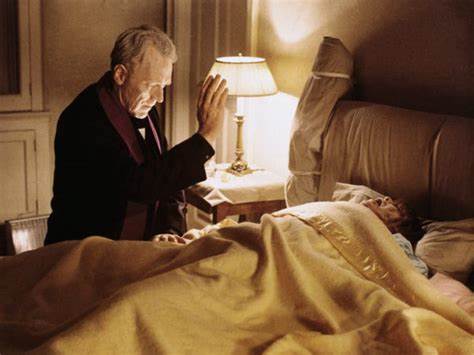
1  In 1905, Penikese (spelled by the poet “Pennacesse”) Island in Buzzard’s Bay off Cape Cod was designated as the site of the first (and only) leper colony in the Commonwealth of Massachusetts. Throughout its sixteen years of operation, thirty-six victims of Hansen’s disease, commonly referred to as leprosy, lived on the isolated island with a handful of caregivers. The onsite doctor, Frank Parker, M.D. and his wife, Marion, went to great lengths to make their patients comfortable. Their small staff provided good food, fresh air, exercise, entertainment and nursing. At that time, the disease bore the curse of stigma and social ostracism, largely due to public belief that it was highly contagious. The Penikese colony closed in 1922.

Rendering to God the Things That are God’s

TWENTY-FIRST SUNDAY AFTER PENTECOST

Isaiah 45:1-7

Psalm 96:1-13

1 Thessalonians 1:1-10

Matthew 22:15-22

Prayer of the Day: Sovereign God, raise your throne in our hearts. Created by you, let us live in your image; created for you, let us act for your glory; redeemed by you, let us give you what is yours, through Jesus Christ, our Savior and Lord.

 “Give therefore to the emperor the things that are the emperor’s, and to God the things that are God’s.” Matthew 22:21.

This text has often been a springboard for discussions about the role of government vs religion; faith and civic responsibility; patriotism and discipleship. Jesus is heard to say that paying taxes is a legitimate exercise of public duty. The state, kingdom or empire, as the case may be, is owed a duty of loyalty and support-unless and until the state’s demands encroach on those made by God. Thus, one must carefully weigh the requirements of the state against what God demands of us. Give to the emperor the things that are the emperor’s and to God the things that are God’s.

The emperor, however, demands a great deal. Roman emperors were worshiped as gods and their imperial cult was inseparable from civic displays of national loyalty and patriotism. Refusal to acknowledge the emperor’s divinity was considered treasonous. The religious leaders in Jesus’ day walked a fine line between placating the government of Rome whose legions occupied their land and controlled their nation while trying to remain true to the affirmation made by God through the Prophet Isaiah in our lesson from the Hebrew Scriptures: “I am the Lord, and there is no other.”  Isaiah 45:6.

I am not so sure we American Christians are free of that tension. We like to emphasize the “separation of church and state” in proclaiming our freedom from government influence and control. Yet while our government does not legislate any particular religion as such, it surely makes godlike demands. The most significant of these is the mandate to kill. The state alone is entitled to take life in order to uphold its laws, maintain civil order and protect its national interests. The state has the right to conscript its citizens, you and me, to use lethal force to protect its borders, defend its strategic priorities and fight its wars. Of course, just war theory would point out that this power to kill comes from God who establishes civil authority for these very purposes. But that seems to me a tacit admission that the power to kill is outside the scope of human authority and can only be justified by invoking the support of a “higher power.” That “higher power,” however specifically forbade his disciples’ from using lethal force. Thus, taking up the sword is an example of rendering to the emperor the things that belong to God.

A couple of things are worth noting about Sunday’ gospel. First, Jesus does not have a coin. To make his point, he must ask his questioners to produce one. Second, the coin itself is a clear violation of the second commandment forbidding the making of images. Not only so, but the image is that of an imperial figure demanding worship as a god. That Jesus’ opponents actually had such a coin in their possession put the ball squarely back in their court. Theirs is the problem of squaring allegiance to the emperor, whose image they carry on their persons, with their confession that God alone is God. Jesus did not have to respond to their question. As soon as they produced the denarius, they answered it for themselves. They demonstrated that they belong to the emperor. Jesus’ final word to his opponents was not meant to be a response to their question to him. It is rather a wry observation of their having been caught red handed with an idol: “Guess you folks have to figure out how to ‘render to Caesar the things that are Caesar’s and to God the things that are Gods.'” Of course, Jesus’ opponents knew that all things belong to God and nothing of God’s can belong to the emperor. They cannot explain away their possession of the denarius and so depart in silence.

Once, when I was serving as an assistant to the pastor, I came into the sanctuary on Sunday morning to find a troop of girl scouts practicing a ceremony planed for the beginning of the service. The plan was for the girls to march in formation behind the American flag which would be placed in a stand directly in front of the altar. The congregation would then be invited to stand and join in the pledge of allegiance. I told the senior pastor I wanted no part in this part of the service.

“Why?” he asked in an exasperated tone. “What’s the harm in it?’

The same question was asked of bishop Polycarp prior to his being burned alive for his allegiance to Jesus and his refusal to worship the emperor. “Look,” he was told by some of his companions. “We all know the emperor is not really a god. What’s the harm in burning a little incense on the altar in his name? It’s more a patriotic than religious thing.” Polycarp didn’t see it that way. He would not allow the emperor to inhabit the sacred realm of worship owed to God alone. I am quite sure, he would not have welcomed the flag of the United States into that space either. So it was that I spent the first half of the service that day sitting in the sacristy. My relationship with the senior pastor was a little frosty for a couple weeks after that. But that discomfort hardly compares with being burned to death.

I believe we American Christians would do well to ask ourselves a few fundamental questions: Why do we countenance the presence of a national symbol in sanctuaries dedicated to the worship of the God who shows no partiality among nations? Why are we so easily co-opted into blessing our nation’s wars, honoring its acts of violence and glorifying the taking and sacrificing of human life? Have we become spiritually schizophrenic? How else to explain our singing hymns of God’s gentle reign and the Prince of Peace Sunday morning and then on Sunday evening singing of bombs bursting in air with gusto as war planes stream overhead? What will it take for us to recognize all the things of God we have surrendered to the emperor?

Here is a poem by Ada Limón reflecting on the National Anthem and its dark underside that should give disciples of Jesus pause.

A New National Anthem

The truth is, I’ve never cared for the National

Anthem. If you think about it, it’s not a good

song. Too high for most of us with “the rockets

red glare” and then there are the bombs.

(Always, always, there is war and bombs.)

Once, I sang it at homecoming and threw

even the tenacious high school band off key.

But the song didn’t mean anything, just a call

to the field, something to get through before

the pummeling of youth. And what of the stanzas

we never sing, the third that mentions “no refuge

could save the hireling and the slave”? Perhaps,

the truth is, every song of this country

has an unsung third stanza, something brutal

snaking underneath us as we blindly sing

the high notes with a beer sloshing in the stands

hoping our team wins. Don’t get me wrong, I do

like the flag, how it undulates in the wind

like water, elemental, and best when it’s humbled,

brought to its knees, clung to by someone who

has lost everything, when it’s not a weapon,

when it flickers, when it folds up so perfectly

you can keep it until it’s needed, until you can

love it again, until the song in your mouth feels

like sustenance, a song where the notes are sung

by even the ageless woods, the short-grass plains,

the Red River Gorge, the fistful of land left

unpoisoned, that song that’s our birthright,

that’s sung in silence when it’s too hard to go on,

that sounds like someone’s rough fingers weaving

into another’s, that sounds like a match being lit

in an endless cave, the song that says my bones

are your bones, and your bones are my bones,

and isn’t that enough?

Source: The Carrying (c. 2018 by Ada Limón; pub. by Milkweed Editions). Ada Limón (b. 1976) is an American poet. Of Mexican-American descent, Limon grew up in Sonoma, California. She attended drama school at the University of Washington, where she subsequently studied theatre. She went on to receive her Master of Fine Arts from New York University in 2001. In 2022 she was named the 24th Poet Laureate of the United States by the Librarian of Congress, the first Latina to be so honored. It was announced on January 30, 2023, that Limon will be writing an original poem dedicated to NASA’s Europa Clipper. Scheduled for launch in 2024, the Europa Clipper will be orbiting Jupiter and Limón’s poem will be engraved onto the craft. You can read more about Ada Limon and sample more of her poetry at the Poetry Foundation website.
All That is Excellent and Worthy of Praise

TWENTIETH SUNDAY AFTER PENTECOST

Isaiah 25:1-9

Psalm 23

Philippians 4:1-9

Matthew 22:1-14

Prayer of the Day: Beloved God, from you come all things that are good. Lead us by the inspiration of your Spirit to know those things that are right, and by your merciful guidance, help us to do them, through Jesus Christ, our Savior and Lord.

“Finally, beloved, whatever is true, whatever is honorable, whatever is just, whatever is pure, whatever is pleasing, whatever is commendable, if there is any excellence and if there is anything worthy of praise, think about these things.”  Philippians 4:8.

Truth, honor, justice, purity and delight in these things are in short supply-or so it seems if your focus is on news media of just about every kind. This week brings yet another story of a congress member indicted for corruption. Senator Bob Menendez joins a growing rogue gallery of leaders like Donald Trump, George Santos and Chris Collins-among others. In a world of “alternative facts,” a person who steadfastly lies with impunity in the face of clear and indisputable evidence is praised for “being strong.” Grown men and women in the House of Representatives are behaving like a nursery a school kid threatening to smash all the toys in the room unless he can have them all to himself. Sometimes it seems as though there is nothing left by which to orient our moral compass-if your focus is on what most media consider news.

But Saint Paul’s admonition suggests that perhaps our focus should be elsewhere. Our attention would better be directed away from what makes the news and toward people and events that witness to God’s inbreaking reign. Paul would have us pay attention to examples of truthful speech, honorable actions and lives lived with integrity. Such examples abound. Our spiritual ancestor, Saint Stephen, the first to die for his witness to Jesus, prayed for the very people who were killing him. Irena Sendler, a Polish Catholic nurse risked certain death at the hands of the Nazis when she smuggled approximately 2,500 Jewish children out of the Warsaw Ghetto before its destruction. We look for inspiration to Kyla Mueller who dedicated her life to serving vulnerable populations in impoverished and war-torn areas of the world, and who ultimately was murdered by ISIS fighters while she was assisting a hospital caring for Syrian refugees from Aleppo. We can turn to the example of Archbishop of San Salvador, Oscar Romero who spoke out against social injustice and violence amid the escalating conflict between the military government of San Salvador and left-wing insurgents that led ultimately to civil war. Romero was shot by an assassin in 1980 while celebrating mass.  

Often, you don’t have to look far for examples of honor, truth, justice and purity. They frequently occur quietly and without fanfare or media coverage. One day my Dad was walking past the home of a neighbor who lived a couple of blocks away. It was a week or so before Christmas, but our neighbor was already taking down his Christmas lights. “Why?” asked Dad. The neighbor pointed to the house next door.

“Mel says he doesn’t like them. Says they keep him awake. He even said he’d call the police on me if I didn’t take them down.”

“He can’t do that!” said Dad. “It’s your house and it’s your right to decorate it for Christmas.”

“True,” said our neighbor. “But I decided that, before doing anything else, I’d go over and talk to Mel. You know, try to figure out what his problem is. I mean, I never had any trouble with him before. So I did. Talked to him, I mean. And did you know he was in a Nazi concentration camp? Still has one of those tattoos on his arm. The rest of his family, they didn’t make it out. Can you imagine? Anyway, those lights shining in his room, for some reason they bring back awful memories. They make him shaky and scared. It’s so bad he can’t sleep. So I decided to take them down. No big deal. I mean what the heck. Christmas isn’t about making people miserable, is it?”

Of course, our neighbor could have insisted on keeping his lights up. If the police had been called, they would surely have sided with him against Mel. It was his right to celebrate his holiday. A lot of so called Christians would say that it was his duty to stand up for his right to express his faith, that he had an obligation to preserve our nation’s “Chistian heritage” against the efforts of unbelievers to “silence us.” We have come to the point where the language of “rights” is the only tongue in which we know how to speak. Every dispute we have comes down to a matter of whose rights control. That is why so many of our disputes never get resolved amicably. Rights can only define what we are entitled to do. They cannot instruct us in what we should do. Only love can do that. Sometimes love compels us to forego the exercise of our rights for the wellbeing of our neighbors. My neighbor, whose name I can no longer recall, was a model of a justice grounded in something greater than rights. It was a justice that was true, honorable and pure.

Whether enshrined in historical narratives or hidden under the routines of everyday living, truth, honor, justice and purity are all around us. It is important for us to recognize them, acknowledge them and reflect on them. What occupies our hearts and minds and imaginations forms the lens through which we view the world and the building blocks of our character. Saint Paul understood, as should we, that focusing on what we are against only transforms us into the mirror image of our foes. It is all well and good to be antiracist, antifacist, against patriarchy and homophobia. But Paul would remind us that we cannot be defined merely by all that we are against. He would challenge us to contemplate the reign of God and long for the mind of Christ to be formed in us that we might learn to live under it. Focusing on what is true, beautiful and good supplies the Holy Spirit with the tools required to form in us the mind of Christ.

Here is a poem about beauty, joy and purity thriving in an unlikely place.

Roses in the Subway

The ground beneath us rumbles

As the crowded cars roll by.

The old bag lady mumbles.

A cranky baby cries.

The weeping of a saxophone

Cuts through the stagnant air.

A million soulless drones head home

Their faces worn with care.

None stops to drop a dime

Into the frail musicians case.

Everyone is pressed for time

And loath to break the pace.

This cavern deep beneath the ground,

Which knows no night or day,

Is where the wretched folk are found

Who have no place to stay.

Yet in these very bowls of hell

She hums a merry tune.

The fragrance of her wares dispel

The stench with scents of June.

Her smiles chase the blues away,

Her laughter mocks the gloom.

She sells roses in the subway,

Places flowers on the tomb.

Source: Anonymous

Just Daily Bread???

SEVENTEENTH SUNDAY AFTER PENTECOST

Jonah 3:10-4:11

Psalm 145:1-8

Philippians 1:21-30

Matthew 20:1-16

Prayer of the Day: Almighty and eternal God, you show perpetual lovingkindness to us your servants. Because we cannot rely on our own abilities, grant us your merciful judgment, and train us to embody the generosity of your Son, Jesus Christ, our Savior and Lord.

As I write these lines, the United Auto Workers union is commencing an unprecedented strike against automakers General Motors, Ford and Stellantis. This is one of many labor disputes leading to strikes throughout the country including those threatened or in progress against UPS, Hollywood producers, Hormel and Kaiser Permanente. The growing shortage of workers in nearly all sectors resulting from numerous demographic shifts has strengthened unions and the workers they represent, giving them an upper hand they have not experienced in decades. The tables appear to have turned. I see evidence of that in the “Help Wanted” signs hanging in the windows of businesses from my own little town of twenty-seven thousand to the large metropolitan centers like Boston. Gone are the days when employers sneered at their employees seeking a living wage and minimal benefits with the words, “Be glad you have a job!” “You can be replaced,” and “You’re a dime a dozen.” Workers and their labor, due largely to their current shortage, are finally gaining recognition for their true value that has been lacking for a very long time.

Such was not the case for the workers in Jesus’ parable found in Sunday’s gospel. Clearly, there was a labor surplus such that day workers filled the market place hoping to be hired early for a full day’s wage. Still, they were desperate enough to work wherever, for whoever and for as long as they had the opportunity for whatever they might get paid. They were in no position to strike. This is as it should be according to the American religion of capitalism. Value is measured strictly in monetary terms. The market determines the value of everything from apples to human beings. If you are too sick, too weak, too old or too crippled to do a day’s work in the vineyard, well, the market has spoken. You lack sufficient value to be kept alive. Doing so would not be cost effective-and that, after all, is what capitalism is all about. The moral perversity of all this is made painfully clear in a terse but poignant paragraph from John Steinbeck’s Grapes of Wrath:

“There is a crime here that goes beyond denunciation. There is a sorrow here that weeping cannot symbolize. There is a failure here that topples all our success. The fertile earth, the straight tree rows, the sturdy trunks, and the ripe fruit. And the children dying of pellagra must die because a profit cannot be taken from the orange. And coroners must fill in the certificates-died of malnutrition-because the food must rot, must be forced to rot.”

The story Jesus tells follows what must have been a well understood and predictable pattern. The owner of the vineyard hires what must have been the best, strongest and most promising workers in the early hours of the day. Later, he comes back to hire others who are promised only that they will be paid “whatever is right.” That, of course, will be determined by the owner of the vineyard. Jesus’ audience likely uttered a collective groan at this point. Clearly, the owner is taking advantage of the workers’ desperation. He knows they need to work and that with each passing hour their anxiety is growing. He knows he can get their labor on the cheap. The last group of workers to be approached is asked, perhaps with a note of sarcasm and condescension, “why do you stand idle all day?” The only answer they can give is the same answer every unemployed person gives when asked why they are not at work. “No one has hired us.” These, too, are sent into the vineyard with the same seemingly vacuous promise.

But then, Jesus’ parable takes a remarkable turn. The owner of the vineyard not only pays first those who worked last and least. He pays them a full day’s wage. He breaks the cardinal rule of capitalism by paying his employees more than their labor is worth. Maybe he is just a poor businessman. Or perhaps he understands that the workers are more than the sum of their capacity for increasing profit. Perhaps the owner of the vineyard understands what we Americans, brainwashed as we are by the religion of capitalism, fail to comprehend. That a living wage is not a privilege. It is a human entitlement. Simply by being human one is entitled to eat, to be sheltered, to receive medical care, to be treated with dignity and respect. The United States Constitution may not say that. Jesus, however, makes clear in the twenty-fifth chapter of Matthew’s gospel that the nations are to be judged, not by how economically efficient they have been, but by how well or poorly they treated the most vulnerable among them. At the court of final judgment, appeals to constitutional law will not avail. A higher law controls.

Understand that I am not advocating “socialism” over “capitalism” or “command economies” over “market economies.” Truth is, I distrust anything that has an “ist” or an “ism” at the end of it. I am not opposed to “markets” or “business” or “free enterprise” per se. What I do oppose, as does Jesus, Moses and the Hebrew prophets, is raising the “Market” to the level of a deity that can be trusted to produce a just society; business designed to produce profit at the expense of the public good, the environment and the most vulnerable among us; and unrestrained greed and accumulation of the earth’s good gifts in the hands of a few. What God demands of us is an economy that works for everyone. While I am glad to see the growing strength of the labor movement in our nation, I am grieved that workers must strike for what their employers ought to recognize is their just entitlement. I am grieved that employers’ hearts have grown so cold and hard that hitting them in the pocket book is the only way they can be moved. I am grieved that so many of us still harbor such mean spirited resentment and contempt for those unable earn a living wage who must depend upon our compassion and generosity to make ends meet.

The only material good for which Jesus ever taught his disciples to pray was for “this day’s bread.” That, along with clothing and shelter, should make us content. I Timothy 6:8. Our problem is that we crave a great deal more. We imagine that our efforts and accomplishments entitle us to more. We have bought into the American cultural lie that one has a right to accumulate as much as one is able to amass without breaking the law. Therefore, in a world where God’s will is done, where all are entitled to their daily bread-and no more, those of us who have become accustomed to “more” cry foul. We imagine that our “rights” are being violated by the loss of what we were never intended to have in the first place and the resulting equitable treatment of our neighbors. When it becomes clear that God would have all people enjoy daily bread, regardless their earning potential, degree of work or accomplishment, the daily bread God has freely given us looks paltry and poor in our hands. Rather than giving thanks, we grumble at the seeming unfairness of it all. The coming of God’s kingdom looks more like a threat to us than the wonderful promise and gift that it is.

Here is a poem that playfully explores the great wealth to be had in having everything while owning nothing.

Net Worth

I own the golden sunlight
breaking over the pines.
I own my neighbor’s pansies
growing neatly in spaced lines.
I own the orange harvest moon
that hangs above the hills.
I own the sparrows that come to feed
at the seed troughs on my sills.
I own the pathway through the woods
that leads down to the river.
I own the song the waters sing,
the pebbles they deliver
as on their journey to the sea
they run their endless course.
They haven’t time for worry,
nor the patience for remorse.
I own the nighttime sky
and every star on its dark vale.
I own the mighty ocean
where the ocean liners sail.
Someday I will be through
with checkbooks, funds and property.
I’m sure that once I’m broke
the world will have no use for me.
Creditors will seize my goods,
the tax man take my home.
And once they have these trifles,
then they’ll leave me on my own.
With all distractions gone
and not one penny in my plate,
at last I’ll have the leisure
to enjoy my vast estate!

Source: Anonymous

Religious Spirituality

FIFTEENTH SUNDAY AFTER PENTECOST

Ezekiel 33:7-11

Psalm 119:33-40

Romans 13:8-14

Matthew 18:15-20

Prayer of the Day: O Lord God, enliven and preserve your church with your perpetual mercy. Without your help, we mortals will fail; remove far from us everything that is harmful, and lead us toward all that gives life and salvation, through Jesus Christ, our Savior and Lord.

“Teach me, O Lord, the way of your statutes,
   and I will observe it to the end.
Give me understanding, that I may keep your law
   and observe it with my whole heart.
Lead me in the path of your commandments,
   for I delight in it.” Psalm 119:33-35.

Those who have the patience to read this 176 verse Psalm from beginning to end know that it is an extended prayer for deeper understanding of Torah. The entire Psalm revolves constantly around the Torah experienced by the psalmist as reliable guide, faithful companion, relentless judge, purifying fire and source of endless joy. It weaves together the life experiences of friendship and betrayal, triumph and tragedy, grief and joy, fear and faith, the challenges of youth and the approach of old age. The psalm paints a magnificent portrait of life woven into and shaped by Torah and the psalmist’s desire for an ever deeper understanding of it.  

Much is lost in translation through the rendering of “Torah” as “law” in our English bibles. Torah is far more than a dry set of laws, statutes and ordinances. For Israel, Torah is the shape of the covenant; “the mode of God’s life giving presence.” Brueggemann, Walter, The Message of the Psalms, Augsburg Old Testament Studies (c. 1984 by Augsburg Publishing House), p. 40. It is “a launching pad form which to mount an ongoing conversation with God through daily experience.” Ibid. p. 41. Still, “[i]t is Yahweh who is the portion of the speaker (v. 57), not the Torah nor one’s keeping of the Torah.” Ibid. The psalm affirms Torah as the medium through which prayer is made possible. As a rabbi friend once remarked, “Torah is the rope in an extended tug-of-war. We continue to pull on it because we firmly believe there is One on the other end with whom we are in constant tension.”

The psalmist’s understanding of spiritual maturation through engagement with Torah runs counter to our American modernist aversion to rules, regulations and “formal ritual” as antithetical to true spirituality. “I’m spiritual, not religious,” a visitor to my church once told me-and she was hardy the first or only one I have met expressing that sentiment. Of course, that statement makes no rational sense on its face. If you are talking about spirit or spirituality, that is inescapably religions. So, too, what is religion about if not spirituality? I understand, of course, that many people seeking spiritual engagement have not been able to find it in the church. I also agree that faith and spiritual growth involve more than mere ascent to creedal and doctrinal formulae, rote recitation of liturgies and going through the actions of worship. You cannot swim in an Olympic sized rectangular depression if it doesn’t hold any water. On the other hand, 660,430 gallons of water dumped randomly on the ground is not likely to materialize as a working pool. If you are going to swim, you need both water and something to hold it, give it form, depth and direction.

This is where religious practices and disciplines come in. They are not, to be sure, ends in themselves. Think of them rather as well worn paths which generations have followed faithfully. They are maps revealing the lay of the land and giving us a sense of where we are. They are the means by which the “highways to Zion” are engraved upon our hearts through the recitation of liturgies, the singing of hymns, the reading of scriptures and faithful preaching. These practices are not static, remaining unchaged throughout history. Like a snowball rolling downhill, they accumulate richer and deeper meanings as they are contemplated and re-interpreted by each succeeding generation. Religious practices unite us with past generations and current members of our faith communities. They give us a language with which we can share, discuss, question and explore this ultimately inexplicable mystery we worship. When we engage in religious practices with our whole selves, they form in us the “mind of Christ” so that the “body of Christ” can become visible to the world.

The God we worship is as complex as the world God created. A lifetime is not long enough even to scratch the surface of that mystery we call God. For this reason, I am not particularly concerned that my congregation’s worship might not be intelligible to someone unfamiliar with our faith or that they might not be able “to relate to it” after attending one of our Sunday Eucharists. I would not expect such a person to understand us after little more than an hour. Our scriptures, creeds and liturgy are deep, layered and complex. Like everything else worth learning, becoming fluent in the language of faith takes time, patience and commitment. I don’t apologize for that. Physicists do not apologize for the complexity of the universe. Why should we apologize for the complexity of the One who made it? Language teachers do not apologize to their students because conjugating verbs and declining nouns is difficult and boring. Why should we apologize because understanding the language of faith requires the learning of narrative, poetry, song, symbol and ritual? If Christianity were something I could pick up after sitting through a single worship service, I wouldn’t be interested in it. Any faith that can be distilled on a bumper sticker isn’t worth giving up a peaceful Sunday morning with a good bagel, cup of coffee and the New York Times.

Here is a poem by Howard Nemerov about learning, the creative tension between study and experience that might reflect in some measure our psalmists dance with the Torah.

Learning the Trees
 
Before you can learn the trees, you have to learn
The language of the trees. That’s done indoors,
Out of a book, which now you think of it
Is one of the transformations of a tree.

The words themselves are a delight to learn,
You might be in a foreign land of terms
Like samara, capsule, drupe, legume and pome,
Where bark is papery, plated, warty or smooth.

But best of all are the words that shape the leaves—
Orbicular, cordate, cleft and reniform—
And their venation—palmate and parallel—
And tips—acute, truncate, auriculate.

Sufficiently provided, you may now
Go forth to the forests and the shady streets
To see how the chaos of experience
Answers to catalogue and category.

Confusedly. The leaves of a single tree
May differ among themselves more than they do
From other species, so you have to find,
All blandly says the book, “an average leaf.”

Example, the catalpa in the book
Sprays out its leaves in whorls of three
Around the stem; the one in front of you
But rarely does, or somewhat, or almost;

Maybe it’s not catalpa? Dreadful doubt.
It may be weeks before you see an elm
Fanlike in form, a spruce that pyramids,
A sweetgum spiring up in steeple shape.

Still, pedetemtim as Lucretius says,
Little by little, you do start to learn;
And learn as well, maybe, what language does
And how it does it, cutting across the world

Not always at the joints, competing with
Experience while cooperating with
Experience, and keeping an obstinate
Intransigence, uncanny, of its own.

Think finally about the secret will
Pretending obedience to Nature, but
Invidiously distinguishing everywhere,
Dividing up the world to conquer it,

And think also how funny knowledge is:
You may succeed in learning many trees
And calling off their names as you go by,
But their comprehensive silence stays the same.

Source:  The Collected Poems of Howard Nemerov (c. 1977 by Howard Nemerov, pub. by The University of Chicago Press). Howard Nemerov (1920-1991) was an American poet. He was twice Poet Laureate Consultant in Poetry to the Library of Congress, from 1963 to 1964 and again from 1988 to 1990. He also won the National Book Award for Poetry, Pulitzer Prize for Poetry, and Bollingen Prize. Nemerov was raised in New York City where he attended the Society for Ethical Culture’s Fieldston School. He later commenced studies at Harvard University where he earned his BA. During World War II he served as a pilot in the Royal Canadian Air Force as well as the United State Air Force. He was honorably discharged with the rank of Lieutenant and thereafter returned to New York to resume his writing career. Nemerov began teaching, first at Hamilton College and subsequently at Bennington College and Brandeis University. He ended his teaching career at Washington University in St. Louis, where he was elevated to Edward Mallinckrodt Distinguished University Professor of English and Distinguished Poet in Residence from 1969 until his death in 1991. Nemerov’s poems demonstrated a consistent emphasis on thought, the process of thinking and on ideas themselves. Nonetheless, his work always displayed the full range of human emotion and experience. You can find out more about Howard Nemerov and sample more of his poetry at the Poetry Foundation website.

Vengeance, Justice and Donald Trump

FOURTEENTH SUNDAY AFTER PENTECOST

Jeremiah 15:15-21
Psalm 26:1-8
Romans 12:9-21
Matthew 16:21-28

Prayer of the Day: O God, we thank you for your Son, who chose the path of suffering for the sake of the world. Humble us by his example, point us to the path of obedience, and give us strength to follow your commands, through Jesus Christ, our Savior and Lord.

“Beloved, never avenge yourselves, but leave room for the wrath of God; for it is written, ‘Vengeance is mine, I will repay, says the Lord.’ No, ‘if your enemies are hungry, feed them; if they are thirsty, give them something to drink…”

Saint Paul, Romans 12:19-20.

“I can hear you, the rest of the world can hear you and the people who knocked these buildings down will hear all of us soon.”

President George W. Bush to a crowd in New York following the attack on the World Trade Center, 2001.

“God bless America. God damn Afghanistan. You bastards are all going to die.”

Spray painted on the side of a van parked in Ridgewood, New Jersey the Sunday after September 11, 2001.

Vengeance has been with us from the dawn of our species. Cain vengefully murdered his brother, Abel, and was driven into exile by fear of vengeance. A generation later, the first love song recorded in the Bible is laced with boasts of vengeance:

“Lamech said to his wives:
‘Adah and Zillah, hear my voice;
   you wives of Lamech, listen to what I say:
I have killed a man for wounding me,
   a young man for striking me.
If Cain is avenged sevenfold,
   truly Lamech seventy-sevenfold.’” Genesis 4:23-24.

Paul reminds us, however, that vengeance is not a human prerogative. God alone is entitled to execute vengeance. The Hebrew scriptures make this point repeatedly. The psalmists cry out for God to execute vengeance against their enemies. They are not shy about telling God exactly how they would like to see their enemies punished. Often the psalmists’ expressions of their desired vengeance are spelled out in appalling detail:

“Remember, O Lord, against the Edomites
   the day of Jerusalem’s fall,
how they said, ‘Tear it down! Tear it down!
   Down to its foundations!’
O daughter Babylon, you devastator!
   Happy shall they be who pay you back
   what you have done to us!
Happy shall they be who take your little ones
   and dash them against the rock!” Psalm 137:7-9  

Nevertheless, the psalmists leave the business of actually doing vengeance in the hands of God where it rightly belongs.

As it turns out, God is usually not inclined to carry out vengeance. God imposed neither the death penalty nor incarceration without possibility of parole in sentencing the first murderer, Cain. Moreover, God put God’s mark of protection on Cain so that no one else would take it upon themselves to seek revenge against him either. As the prophet Jonah had to learn, God’s ideas about who deserves to be punished for what and how and when are often very different from our own myopic views on the subject, colored as they often are by the pain of our wounds. Unlike ourselves, God is,

“is gracious and merciful,
slow to anger, and abounding in steadfast love,
   and relents from punishing.” Joel 2:12-13.  

Revenge is sweet in the imagination. In real life, not so much. The vengeance promised and, to a large degree, delivered under President Bush did not bring back the victims of the 9/11 attacks. It did, however, lead to a baseless attack on a nation that was not involved in those attacks resulting in the deaths of 4,492 Americans and countless more Iraqi civilians. The war in Afghanistan resulted in the death of 2,402 American soldiers and, again, the death of civilians in multiples of that number. The Iraq war opened the door for the rise of ISIS. Afghanistan ended in a calamitous retreat leaving that country war torn, poorer and in the hands of the very ones who made it a haven for terrorists in the first place. The lust for revenge, our seemingly deep seated need to “settle the score” and “end it once and for all” draws us like moths to a flame into endless cycles of violence and death. What we ought to have learned from history is that revenge is a dish best foregone.

Jesus understood this well. That is why he declined the devil’s invitation to usurp the glory of the world’s kingdoms-and the raw power to crush one’s enemies that comes with it. That is why Jesus teaches us to “turn the other cheek” rather than return blow for blow. That is why he firmly commanded his disciples not to use the sword in his defense. That is why, instead of retaliating against the world that rejected and crucified the only begotten Son, God raised the Son from death and offered him again to this recalcitrant world. In the death and resurrection of Jesus, God breaks once and for all the cycle of vengeance. God proves too strong to be sucked into that toxic cycle.

This strength of God appears as weakness to those still caught up in the cycle of vengeance. But to a world convinced that the only way to stop a bad guy with a gun is a good guy with a gun, Saint Paul counters that the only way to stop a bad guy, with or without a gun, is to refuse his invitation to engage on his terms. We will not give to the enemy power to ignite hatred in our hearts or to stain our hands with blood. To lose our lives in this way is, as Jesus points out in Sunday’s gospel, to gain our lives. To preserve our lives at the cost of becoming the mirror image of what we hate is to lose them. Of course, this “weakness of God,” to use Saint Paul’s term (I Corinthians 1:25), is nonsensical to those who have been so thoroughly indoctrinated into the creed of retribution or, again to cite Saint Paul, “conformed to this world,” (Romans 12:2) that they lack the conceptual tools required to imagine any way other than vengeance or the threat of it to repel evil.

Paul’s message to us this Sunday could hardly come at a better time. For the first time in our history, a former president is being indicted for serious crimes he allegedly committed before, during and after his presidency. Anybody who follows me with regularity knows that I am no friend of Donald Trump. Part of me is gleeful about his legal woes. Finally, the man who managed all his life to evade the law, abuse his power, all the while treating his employees, his country and even his supporters with contempt, is “getting his.” Part of me would love to see the man paraded out of the courtroom in cuffs to be fitted with an orange jump suit and plastic sandals. But to what end? To make him suffer? To inflict on him the pain I know he has inflicted on others? To see him “cut down to size”? However cathartic that might be for me, it will surely not end the animosity and polarization into which Donald Trump and his supporters have brought us. If anything, convicting and incarcerating Trump will only heighten the distrust of his followers for our government, its laws and its institutions. It will, as vengeance always does, evoke a hostile and vengeful response-and the cycle will continue. Make no mistake about it, I want Donald Trump and his co-conspirators to be held accountable. I want them to answer for their actions and I want their lies, conspiracies and crimes to be exposed. Most of all, I want to see them made to take responsibility for their actions.  But that is something far different than mere punishment.

I am not sure what I am proposing here. Perhaps it means making Donald Trump’s release from incarceration contingent on his agreement, under strict supervision, to work with Habitat for Humanity for the provision of affordable housing. Perhaps it means making Rudy Giuliani’s release contingent upon his agreeing to work with agencies providing legal services to those unable to afford them. Am I letting them off the hook to easily? If the objective is punishment that fits the crime, undoubtedly so. But what if punishment is not the objective? What if the objective is restitution in whatever measure is possible? What if the objective is reconciliation and peace? In short, I am not suggesting anything different for Trump and his co-defendants than what I have always advocated for persons convicted of crime, namely, that they be made to take responsibility for the harm they have caused, forgiven and given the opportunity for redemption. As an added bonus, the state would be spared the substantial cost incarcerating them.

Supporters of Donald Trump complain that the United States Department of Justice has been “weaponized” against them and that Trump is the victim of political retribution. I have not seen a scrap of evidence to that effect. Still, it is a fact that our criminal justice system in the United States is essentially punitive in nature. Those on the receiving end of it experience it as a “weapon.” A conviction frequently results in incarceration and, upon release, severely limits one’s options for housing, employment and travel. To be branded a “criminal” is to be stigmatized, loathed and excluded. Furthermore, it should not be lost upon us that the weapon of criminal justice falls most heavily and disproportionately upon persons of color, particularly young Black men. Public media reinforce this perverse concept of criminal justice. A popular police drama refers in its opening lines to police and prosecutors as participants in the “war on crime.” Our numerous police dramas regularly televised for public consumption frequently portray “criminals” as entirely depraved, dangerous and deserving of whatever fate they suffer. They are enemies deserving no pity, no mercy, no empathy.

In fact, however, “criminals” are ordinary people who, like us, make bad decisions, do and say harmful things and manage to do a lot of damage in the process. The only difference between them and us is that their harmful conduct happens to be against the law. None of us, I am sure, would want to be judged by the meanest, ugliest and most hurtful thing we have ever done. So, in the spirit of the “Golden Rule,” we ought not to withhold from persons convicted of crime the same consideration we would wish for ourselves: forgiveness and an opportunity for redemption. As hard as it is for me to say so, that goes for Trump & Company as well.

Here is a poem by George Horton Moses reflecting on the carnage of the American Civil War and the cost of retributive justice wrought by violence.

 Weep

Weep for the country in its present state,

And of the gloom which still the future waits;

The proud confederate eagle heard the sound,

And with her flight fell prostrate to the ground!

Weep for the loss the country has sustained,

By which her now dependent is in jail;

The grief of him who now the war survived,

The conscript husbands and the weeping wives!

Weep for the seas of blood the battle cost,

And souls that ever hope forever lost!

The ravage of the field with no recruit,

Trees by the vengeance blasted to the root!

Weep for the downfall o’er your heads and chief,

Who sunk without a medium of relief;

Who fell beneath the hatchet of their pride,

Then like the serpent bit themselves and died!

Weep for the downfall of your president,

Who far too late his folly must repent;

Who like the dragon did all heaven assail,

And dragged his friends to limbo with his tail!

Weep o’er peculiar swelling coffers void,

Our treasures left, and all their banks destroyed;

Their foundless notes replete with shame to all,

Expecting every day their final fall,

In quest of profit never to be won,

Then sadly fallen and forever down!

Source: “Words for the Hour”: A New Anthology of American Civil War Poetry, edited by Faith Barrett; (c. 2005 by University of Massachusetts Press).

George Moses Horton (b. 1798 d. 1882?) was born into slavery on a North Carolina tobacco plantation in Chatham County. From the time he was a child, Horton composed poetry. Though unable to read or write, he had a remarkable memory in which he retained his verse. Horton was sold in 1815 to another owner who sent him on trips to Chapel Hill where he befriended students from the University of North Carolina. Recognizing his talent, his new friends urged him to pursue writing and donated books to assist him in his efforts to educate himself. A university professor’s wife tutored him in grammar and promoted his work to local publishers. In 1829, Horton published his first book of poetry. His hope was to purchase his freedom with his earnings on this work, but that plan never came to fruition. He subsequently published two more books of poetry gaining him the distinction of being the only enslaved person ever to publish. Early in 1865, Horton left his enslaver’s farm and joined the Union army. Following the end of the Civil War, he moved to Philadelphia. The exact date and the circumstances of his death remain unknown. You can read more about George Moses Horton at the Poetry Foundation website.