TWENTY-FIRST SUNDAY AFTER PENTECOST
Prayer of the Day: Sovereign God, raise your throne in our hearts. Created by you, let us live in your image; created for you, let us act for your glory; redeemed by you, let us give you what is yours, through Jesus Christ, our Savior and Lord.
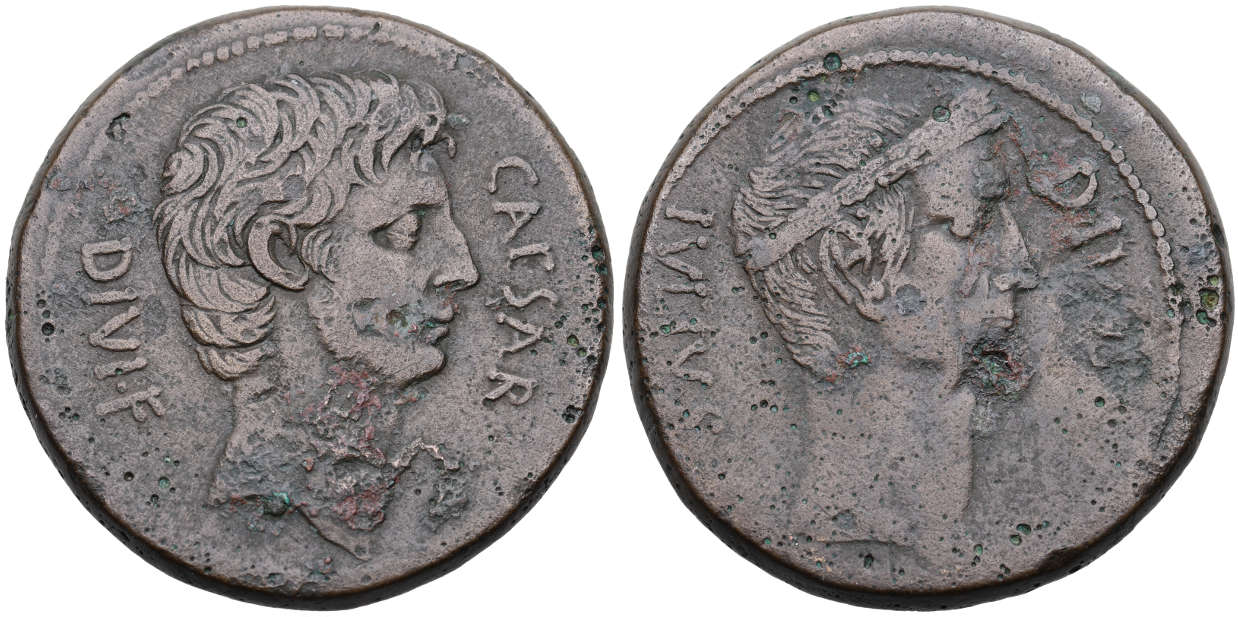
“Give therefore to Caesar the things that are Caesar’s and to God the things that are God’s.” Matthew 22:21.
For too long this encounter between Jesus and his opponents has been interpreted through the lens of our American understanding of the separation of church and state. The role of government relates to “secular” concerns like national security, law enforcement and the filling of potholes. It is an imperfect, but necessary instrument employed by God to impose a semblance of order on the world until the end of time when the reign of God will come in all its fullness. Until the end, the reign of God exists only as an inward spiritual reality that is given expression in the personal piety of believers. Because Caesar is God’s instrument for secular order and God’s reign dwells chiefly within the hearts of believers until the end of the age, the two realms coexist peacefully-unless one or the other oversteps its boundaries. “Jesus is not political,” an old friend of mine was fond of saying. “He came to change hearts, not governments.”
My friend was an evangelical of the better sort. She abhorred nationalistic rhetoric such as frequently championed by the likes of Secretary of Defense/War Pete Hegseth. Though firmly pro-life, she was genuinely concerned about possible effects on the health and welfare of women that might (and ultimately did) flow from the reversal of Roe v. Wade. While she would tell you that there is no salvation apart from personal faith in Jesus Christ and that nothing is more important than bringing others to that faith, she firmly opposed any efforts by public schools to use coercive measures like mandatory prayer in furtherance of that mission. “God doesn’t need the government to do the church’s mission,” she was fond of saying. With that I heartily agree!
Nevertheless, is it true to say that “Jesus is not political?” If that were really the case, I doubt the governing authorities in Jerusalem would have bothered to arrest him. If Jesus were preaching a purely spiritual kingdom content to stay out Caesar’s way, I doubt he would have ended up on the cross. Indeed, a purely spiritual, solely personal and nonpolitical religion is precisely the sort Rome would have been inclined to encourage. A religion that accepts the status quo as God’s established order, keeps religious practice within the realm of personal piety and places its hope on a kingdom far away in the indefinite future seems like one made to order for an empire desiring to exercise exclusive jurisdiction over the here and now. It is, I believe, the kind of religion that led to my own Lutheran church’s acquiescence and complicity with the Third Reich. It is the kind of religion that moved white church leaders to beg Dr. Martin Luther King, Jr. to urge Black Americans not to demonstrate, but rely instead on prayer, patience and the eventual work of God in the hearts of white southerners to abolish Jim Crow, thereby rendering to Caesar what is Caesar’s and to God what is God’s. It is the kind of religion that, sadly, has resulted in the tepid, weak kneed and half hearted response to America’s war crimes, the mass arrest and deportation of its residents and the killing of its citizens by masked gunmen under color of law. Whatever else you might call such “nonpolitical religion,” it is nothing like the preaching that got Jesus crucified.
Understand that the question posed to Jesus was designed to trap him. His opponents would never have asked Jesus whether they should pay taxes to Caesar unless they knew already that Jesus stood squarely against imperial power. Jesus did not equivocate. Note well that Jesus had to ask his opponents for the coin used to pay the tax. He had no such coin in his possession. That was not because he was short on change. The coin given him by his opponents had on it an image-the image of Caesar with bold declarations affirming the emperor’s deity. As such, the coin was a blatant violation of the First Commandment, a violation to which Jesus’ opponents pled guilty as soon as they produced it. When Jesus told them to give “to Caesar what is Caesar’s and to God what is God’s,” he was making clear to them that they must decide who will be their Lord: God or Caesar. It cannot be both. Jesus’ opponents were bent on pinning Jesus down to an incriminating position on imperial taxation, but Jesus instead pinned them down on the far greater question of who they were and to whom they belonged. The coin in their possession was damning evidence settling that question decisively.
Make no mistake about it, Jesus is political. His passionate love for the outcast, his empathy for the sick and disabled, his zeal for feeding the hungry and his solidarity with the poor puts him at odds with the claims of empire in all of its governmental, corporate and economic manifestations.[1] Whether Caesar wears the mask of Nero, Hitler, Putin, Trump, Musk, Bezos or Zuckerberg; whether his violence takes the form of public crucifixion or live streamed execution by firing squad; whether torture is inflicted by means of the cross or by paralyzing infusions; whether oppression takes the form outright slavery or labor extracted without payment of a living wage, housing discrimination and crushing medical debt, the same demonic specter of empire exercises its toxic oppression against those least able to resist it. Caesar would be lord and lord alone. He has no intention of sharing his reign with Jesus or anyone else. To that end, he exercises his power through threats, oppression and violence. But that is his only power. Caesar’s power ends at the cross, which is precisely where God’s power begins. God’s resurrection of Jesus following his execution under the legal authority of Rome is God’s verdict against Caesar and the demonic reach of empire in all its forms.
American Christians of all denominational and theological perspectives are, I think, largely blind to the imperial powers that claim control over every aspect of our thinking and our lives. Our churches have accepted all too eagerly our nation’s invitation to become its chaplain, the spokesperson for morality based on its cultural and economic ideologies. We have traded the revolutionary message of the gospel for the hope of evolutionary improvement through the status quo. We have been distracted with efforts to make the empire a little kinder and gentler rather than preaching the empire’s demise under the advent of God’s just and gentle reign. It is for this reason that the Jesus we preach fits so comfortably into civil ceremonies celebrating our wars, praising our settlement of land stolen from its indigenous inhabitants and ignoring the systemic injustice that continues to oppress the most vulnerable among us. Ours is a Jesus that stays out of the way and does not make waves. As pointed out by Professor Joerg Rieger,[2]
“Both the liberal theological projects of “demythologization” and the fundamentalist visions of the end of the world represent extrapolations from the history of empire. In order to say something meaningful and striking about the resurrection and the parousia, theologians felt that they had to do so in ways that would be acceptable to those who make and shape history and that would correspond with their methods of shaping history. Thus, the resurrected Christ of liberal demythologization fits in with the modern world view and does not rock the boat (not even putting a minor scratch on our commonly accepted worldviews), and the yet-to-come Christ of the fundamentalists uses fire and sword and all the other apocalyptic terrors of empire to accomplish his goal.”[3]
So let us be clear. Christ is Lord of heaven and earth. Caesar is lord of nothing. There can be no Christ and Caesar. It is Christ or Caesar. A believer’s life is not split between the governance of empire and the claim of Jesus upon his disciples. Empire has no legitimate claim of authority over disciples of Jesus rising above the great commandment to love God and to love one’s neighbor as oneself. Thus, for example, when Caesar demands that we support, acquiesce in, enable or participate in the violent attack, imprisonment and deportation of our neighbors, whether “documented” or not, disciples of Jesus cannot comply. When Caesar commands us to support, acquiesce in, enable or participate in military action that is disproportionate to any perceived threat, will result in the death of noncombatants and is not likely to succeed in bringing about a just and lasting peace, disciples of Jesus, no matter what uniform they wear, no matter what oath they may have taken, no matter what their position in the chain of command, must refuse to obey. Jesus challenged his opponents, as he does each of us, to decide to whom we will belong.
The first poem by Mary Oliver is one I have shared before. I share it once again because I believe it speaks articulately to the present moment. The question for us: How are we to live obediently in the way of Jesus and witness faithfully to that alternative way of being human known as the reign of God? The second poem by Martin Espada suggests the cruciform shape such faithfulness might take and the resurrection hope that inspires it.
Of Empire
We will be known as a culture that feared death
and adored power, that tried to vanquish insecurity
for the few and cared little for the penury of the
many. We will be known as a culture that taught
and rewarded the amassing of things, that spoke
little if at all about the quality of life for
people (other people), for dogs, for rivers. All
the world, in our eyes, they will say, was a
commodity. And they will say that this structure
was held together politically, which it was, and
they will say also that our politics was no more
than an apparatus to accommodate the feelings of
the heart, and that the heart, in those days,
was small, and hard, and full of meanness.
Source: Red Bird, (c. 2009 by Mary Oliver; pub. by Beacon Press). Mary Oliver (1935-2019) was born in Maple Heights, Ohio. She was deeply influenced by poet, Edna St. Vincent Millay. Her work received early critical attention with the 1983 publication of a collection of poems entitled American Primitive. She is a recipient of both the Pulitzer Prize for Poetry and the National Book Award. She spent the latter years of her life in Provincetown on Cape Cod, MA before moving to Florida where she died. Many of her poems reflect the unique features, vegetation and wildlife of the Cape. You can read more about Mary Oliver and sample some of her other poems at the Poetry Foundation Website.
Vivas to Those Who Have Failed
Strikers without shoes lose strikes. Twenty years after the weavers
and dyers’ helpers returned hollow-eyed to the loom and the steam,
Mazziotti led the other silk mill workers marching down the avenue
in Paterson, singing the old union songs for five cents more an hour.
Once again the nightsticks cracked cheekbones like teacups.
Mazziotti pressed both hands to his head, squeezing red ribbons
from his scalp. There would be no buffalo nickel for an hour’s work
at the mill, for the silk of bow ties and scarves. Skull remembered wood.
The brain thrown against the wall of the skull remembered too:
the Sons of Italy, the Workmen’s Circle, Local 152, Industrial
Workers of the World, one-eyed Big Bill and Flynn the Rebel Girl
speaking in tongues to thousands the prophecy of an eight-hour day.
Mazziotti’s son would become a doctor, his daughter a poet.
Vivas to those who have failed: for they become the river.
Source: Vivas To Those Who Have Failed (c. 2015 by Martin Espada; pub. by W. W. Norton and Company, Inc., 2015). Martín Espada (b.1957) is a Puerto Rican-American poet, and a professor at the University of Massachusetts, Amherst where he teaches poetry. He was born in Brooklyn, New York where he was exposed to political activism at an early age through the work of his father, Frank Espada, a leader in the Puerto Rican community and the civil rights movement. Espada received a B.A. in history from the University of Wisconsin–Madison and a J.D. from Northeastern University (Boston, Massachusetts). For many years he worked as a tenant lawyer and a supervisor of a legal services program. In 1982 Espada published his first book of political poems. In 2001 he was named the first Poet Laureate of Northampton, Massachusetts. In 2018 Espada received the Ruth Lilly Poetry Prize, a lifetime achievement award given by the Poetry Foundation to a living U.S. poet. Espada was the first Latino recipient of the honor. You can read more about Martin Espada and sample more of his poetry at the Poetry Foundation website.
[1] Rejection of empire is not an appeal to anarchy. Government can rightly be understood as a gift of God by means of which we share responsibility for promoting the common good, protecting one another from violence and injustice and caring for the most vulnerable among us. In this context, the often reviled practice of politics is nothing more than the corporate means by which we fulfil the great commandment to love our neighbors. When government (or any other economic, political or corporate entity) purports to assume godlike powers to take life, demands ultimate loyalty or imposes any requirement hindering us from loving our neighbors, including those deemed enemies, it morphs into the demonic character of empire.
[2] Professor Joerg Rieger is Distinguished Professor of Theology and Cal Turner Chancellor’s Chair in Wesleyan Studies at the Divinity School and the Graduate Program of Religion at Vanderbilt University. He is also the Founding Director of the Wendland-Cook Program in Religion and Justice at Vanderbilt Divinity School.
[3] Rieger, Joerg, Christ & Empire (c. 2007 by Fortress Press), p. 321.

